
#boundless
boundless
6.1M Aufrufe
94,354 Kommentare
Hot
Zuletzt

·
--
🚀 Boundless gewinnt an Aufmerksamkeit — und die nächste Phase könnte wichtig sein.
Boundless entwickelt eine ambitionierte plattformübergreifende Vision mit dem Ziel, Blockchain-Liquidität und Anwendungen stärker zu vernetzen und zugänglicher zu machen.
Was für mich besonders hervorsteht, ist der Fokus auf Interoperabilität, Skalierbarkeit und eine reibungslosere Multi-Chain-Erfahrung. Während sich das Krypto-Ökosystem weiter in Richtung einer stärker vernetzten Zukunft bewegt, könnten Projekte, die Cross-Chain-Fragmentierung lösen, eine bedeutende Rolle spielen.
Ich werde darauf achten:
🔹 Wachstum des Ökosystems
🔹 Entwickleraktivitäten
🔹 Nutzerakzeptanz
🔹 Neue Integrationen
🔹 Netzwerkleistung
Die entscheidende Frage ist: Kann Boundless seine Technologie in eine bedeutungsvolle Akzeptanz umwandeln?
Die nächsten Entwicklungen sollten uns viel verraten. 👀
#Boundless $ZKC #BinanceSquare #Crypto #Web3 #Blockchain
🚀 Boundless gewinnt an Aufmerksamkeit — und die nächste Phase könnte wichtig sein.
Boundless entwickelt eine ambitionierte plattformübergreifende Vision mit dem Ziel, Blockchain-Liquidität und Anwendungen stärker zu vernetzen und zugänglicher zu machen.
Was für mich besonders hervorsteht, ist der Fokus auf Interoperabilität, Skalierbarkeit und eine reibungslosere Multi-Chain-Erfahrung. Während sich das Krypto-Ökosystem weiter in Richtung einer stärker vernetzten Zukunft bewegt, könnten Projekte, die Cross-Chain-Fragmentierung lösen, eine bedeutende Rolle spielen.
Ich werde darauf achten:
🔹 Wachstum des Ökosystems
🔹 Entwickleraktivitäten
🔹 Nutzerakzeptanz
🔹 Neue Integrationen
🔹 Netzwerkleistung
Die entscheidende Frage ist: Kann Boundless seine Technologie in eine bedeutungsvolle Akzeptanz umwandeln?
Die nächsten Entwicklungen sollten uns viel verraten. 👀
#Boundless $ZKC #BinanceSquare #Crypto #Web3 #Blockchain
Boundless entwickelt eine ambitionierte plattformübergreifende Vision mit dem Ziel, Blockchain-Liquidität und Anwendungen stärker zu vernetzen und zugänglicher zu machen.
Was für mich besonders hervorsteht, ist der Fokus auf Interoperabilität, Skalierbarkeit und eine reibungslosere Multi-Chain-Erfahrung. Während sich das Krypto-Ökosystem weiter in Richtung einer stärker vernetzten Zukunft bewegt, könnten Projekte, die Cross-Chain-Fragmentierung lösen, eine bedeutende Rolle spielen.
Ich werde darauf achten:
🔹 Wachstum des Ökosystems
🔹 Entwickleraktivitäten
🔹 Nutzerakzeptanz
🔹 Neue Integrationen
🔹 Netzwerkleistung
Die entscheidende Frage ist: Kann Boundless seine Technologie in eine bedeutungsvolle Akzeptanz umwandeln?
Die nächsten Entwicklungen sollten uns viel verraten. 👀
#Boundless $ZKC #BinanceSquare #Crypto #Web3 #Blockchain
146

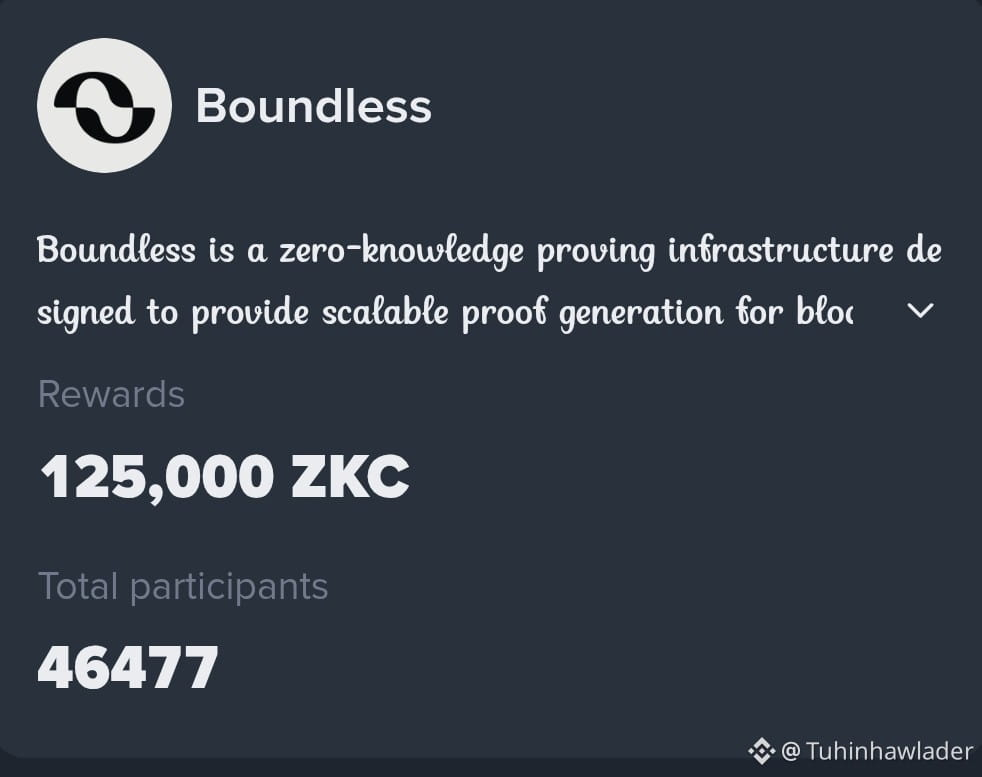
🚀 Grenzenlose Kampagne — 125.000 ZKC-Belohnungen
Boundless ist eine Zero-Knowledge-Proving-Infrastruktur, die entwickelt wurde, um die Generierung von Proofs für Blockchain-Anwendungen skalierbarer und effizienter zu machen.
Die aktuelle Kampagne zeigt einen Gesamt-Belohnungstopf von 125.000 ZKC, wobei bereits 46.477 Teilnehmende mitmachen. Das bedeutet, dass die Kampagne in der Community auf großes Interesse stößt.
Wenn du am Boundless-Ökosystem interessiert bist, ist das eine gute Zeit, um mehr über das Projekt zu erfahren, die Kampagnenanforderungen zu erkunden und über die offiziellen Kanäle teilzunehmen.
🔥 125.000 ZKC-Belohnungen
👥 46.477+ Teilnehmende
⚡ Zero-Knowledge-Technologie
🚀 Wachsende Community & Ökosystem
DYOR (Do Your Own Research) bevor du teilnimmst, und verifiziere immer die offiziellen Kampagnendetails. #boundless @boundless_network
🚀 Grenzenlose Kampagne — 125.000 ZKC-Belohnungen
Boundless ist eine Zero-Knowledge-Proving-Infrastruktur, die entwickelt wurde, um die Generierung von Proofs für Blockchain-Anwendungen skalierbarer und effizienter zu machen.
Die aktuelle Kampagne zeigt einen Gesamt-Belohnungstopf von 125.000 ZKC, wobei bereits 46.477 Teilnehmende mitmachen. Das bedeutet, dass die Kampagne in der Community auf großes Interesse stößt.
Wenn du am Boundless-Ökosystem interessiert bist, ist das eine gute Zeit, um mehr über das Projekt zu erfahren, die Kampagnenanforderungen zu erkunden und über die offiziellen Kanäle teilzunehmen.
🔥 125.000 ZKC-Belohnungen
👥 46.477+ Teilnehmende
⚡ Zero-Knowledge-Technologie
🚀 Wachsende Community & Ökosystem
DYOR (Do Your Own Research) bevor du teilnimmst, und verifiziere immer die offiziellen Kampagnendetails. #boundless @Boundless
Boundless ist eine Zero-Knowledge-Proving-Infrastruktur, die entwickelt wurde, um die Generierung von Proofs für Blockchain-Anwendungen skalierbarer und effizienter zu machen.
Die aktuelle Kampagne zeigt einen Gesamt-Belohnungstopf von 125.000 ZKC, wobei bereits 46.477 Teilnehmende mitmachen. Das bedeutet, dass die Kampagne in der Community auf großes Interesse stößt.
Wenn du am Boundless-Ökosystem interessiert bist, ist das eine gute Zeit, um mehr über das Projekt zu erfahren, die Kampagnenanforderungen zu erkunden und über die offiziellen Kanäle teilzunehmen.
🔥 125.000 ZKC-Belohnungen
👥 46.477+ Teilnehmende
⚡ Zero-Knowledge-Technologie
🚀 Wachsende Community & Ökosystem
DYOR (Do Your Own Research) bevor du teilnimmst, und verifiziere immer die offiziellen Kampagnendetails. #boundless @Boundless
1
169

·
--
$ZKC HAT HEUTE EINEN SEHR UNTERSCHIEDLICHEN KATALYSATOR.
Binance hat ein Boundless $ZKC -Trading-Wettbewerb mit einem 5M ZKC Token-Voucher-Preisfonds angekündigt, beginnend am 3. September.
Das kann kurzfristige Aufmerksamkeit und Volumen erzeugen.
Aber hier ist der wichtige Teil:
Kampagnen-Volumen ≠ organische Nachfrage.
Das echte Signal kommt, nachdem die Anreize verschwunden sind.
Wenn die Aktivität stark bleibt, ohne Belohnungen, dann bin ich wirklich interessiert.
#ZKC #Boundless .#Binance
#Crypto
$ZKC HAT HEUTE EINEN SEHR UNTERSCHIEDLICHEN KATALYSATOR.
Binance hat ein Boundless $ZKC -Trading-Wettbewerb mit einem 5M ZKC Token-Voucher-Preisfonds angekündigt, beginnend am 3. September.
Das kann kurzfristige Aufmerksamkeit und Volumen erzeugen.
Aber hier ist der wichtige Teil:
Kampagnen-Volumen ≠ organische Nachfrage.
Das echte Signal kommt, nachdem die Anreize verschwunden sind.
Wenn die Aktivität stark bleibt, ohne Belohnungen, dann bin ich wirklich interessiert.
#ZKC #Boundless .#Binance
#Crypto
Binance hat ein Boundless $ZKC -Trading-Wettbewerb mit einem 5M ZKC Token-Voucher-Preisfonds angekündigt, beginnend am 3. September.
Das kann kurzfristige Aufmerksamkeit und Volumen erzeugen.
Aber hier ist der wichtige Teil:
Kampagnen-Volumen ≠ organische Nachfrage.
Das echte Signal kommt, nachdem die Anreize verschwunden sind.
Wenn die Aktivität stark bleibt, ohne Belohnungen, dann bin ich wirklich interessiert.
#ZKC #Boundless .#Binance
#Crypto
226

·
--
#🚨 $ZKC — Grenzenlos
$ZKC gehört heute zu den stärksten Gewinnern auf Binance und verzeichnet Gewinne von rund +60%. Nach einem 24H-Hoch nahe $0.0744 ist der Token zurückgekommen, wodurch die nächste Unterstützungszone entscheidend wird. 📈
📊 Marktblick
• Preis: ~$0.065
• 24H: ~+60%
• 24H High: ~$0.0744
• Trend: 🔥 Stark bullischer Momentum
🔥 Warum es im Trend liegt
Binance Square hebt derzeit zkc unter den Markt-Performer hervor, während Binance die ZKC-Handelspaare unterstützt, einschließlich ZKC/USDT.
📈 Wichtige Levels
• Widerstand: $0.070 → $0.0744
• Unterstützung: $0.064 → $0.060
🚀 Bullisches Szenario
Wenn der Kurs über $0.064–$0.065 gehalten wird, könnten Käufer erneut einen Anlauf auf $0.070 und das Hoch von $0.0744 bekommen.
⚠️ Risikoszenario
Nach so einer starken Bewegung ist die Volatilität extrem hoch. Wenn $0.064 verloren geht, könnte es zu einem tieferen Rücksetzer kommen.
👀 Schlüssellevel: $0.064
Kann $ZKC als Nächstes über $0.0744 ausbrechen? 👀🔥
#ZKC #Boundless #BinanceSquare #Crypto #TechnicalAnalysis
DYOR. Das ist keine Finanzberatung. Krypto-Handel ist mit Risiken verbunden.
{spot}(ZKCUSDT)
#🚨 $ZKC — Grenzenlos
$ZKC gehört heute zu den stärksten Gewinnern auf Binance und verzeichnet Gewinne von rund +60%. Nach einem 24H-Hoch nahe $0.0744 ist der Token zurückgekommen, wodurch die nächste Unterstützungszone entscheidend wird. 📈
📊 Marktblick
• Preis: ~$0.065
• 24H: ~+60%
• 24H High: ~$0.0744
• Trend: 🔥 Stark bullischer Momentum
🔥 Warum es im Trend liegt
Binance Square hebt derzeit zkc unter den Markt-Performer hervor, während Binance die ZKC-Handelspaare unterstützt, einschließlich ZKC/USDT.
📈 Wichtige Levels
• Widerstand: $0.070 → $0.0744
• Unterstützung: $0.064 → $0.060
🚀 Bullisches Szenario
Wenn der Kurs über $0.064–$0.065 gehalten wird, könnten Käufer erneut einen Anlauf auf $0.070 und das Hoch von $0.0744 bekommen.
⚠️ Risikoszenario
Nach so einer starken Bewegung ist die Volatilität extrem hoch. Wenn $0.064 verloren geht, könnte es zu einem tieferen Rücksetzer kommen.
👀 Schlüssellevel: $0.064
Kann $ZKC als Nächstes über $0.0744 ausbrechen? 👀🔥
#ZKC #Boundless #BinanceSquare #Crypto #TechnicalAnalysis
DYOR. Das ist keine Finanzberatung. Krypto-Handel ist mit Risiken verbunden.
$ZKC gehört heute zu den stärksten Gewinnern auf Binance und verzeichnet Gewinne von rund +60%. Nach einem 24H-Hoch nahe $0.0744 ist der Token zurückgekommen, wodurch die nächste Unterstützungszone entscheidend wird. 📈
📊 Marktblick
• Preis: ~$0.065
• 24H: ~+60%
• 24H High: ~$0.0744
• Trend: 🔥 Stark bullischer Momentum
🔥 Warum es im Trend liegt
Binance Square hebt derzeit zkc unter den Markt-Performer hervor, während Binance die ZKC-Handelspaare unterstützt, einschließlich ZKC/USDT.
📈 Wichtige Levels
• Widerstand: $0.070 → $0.0744
• Unterstützung: $0.064 → $0.060
🚀 Bullisches Szenario
Wenn der Kurs über $0.064–$0.065 gehalten wird, könnten Käufer erneut einen Anlauf auf $0.070 und das Hoch von $0.0744 bekommen.
⚠️ Risikoszenario
Nach so einer starken Bewegung ist die Volatilität extrem hoch. Wenn $0.064 verloren geht, könnte es zu einem tieferen Rücksetzer kommen.
👀 Schlüssellevel: $0.064
Kann $ZKC als Nächstes über $0.0744 ausbrechen? 👀🔥
#ZKC #Boundless #BinanceSquare #Crypto #TechnicalAnalysis
DYOR. Das ist keine Finanzberatung. Krypto-Handel ist mit Risiken verbunden.
226

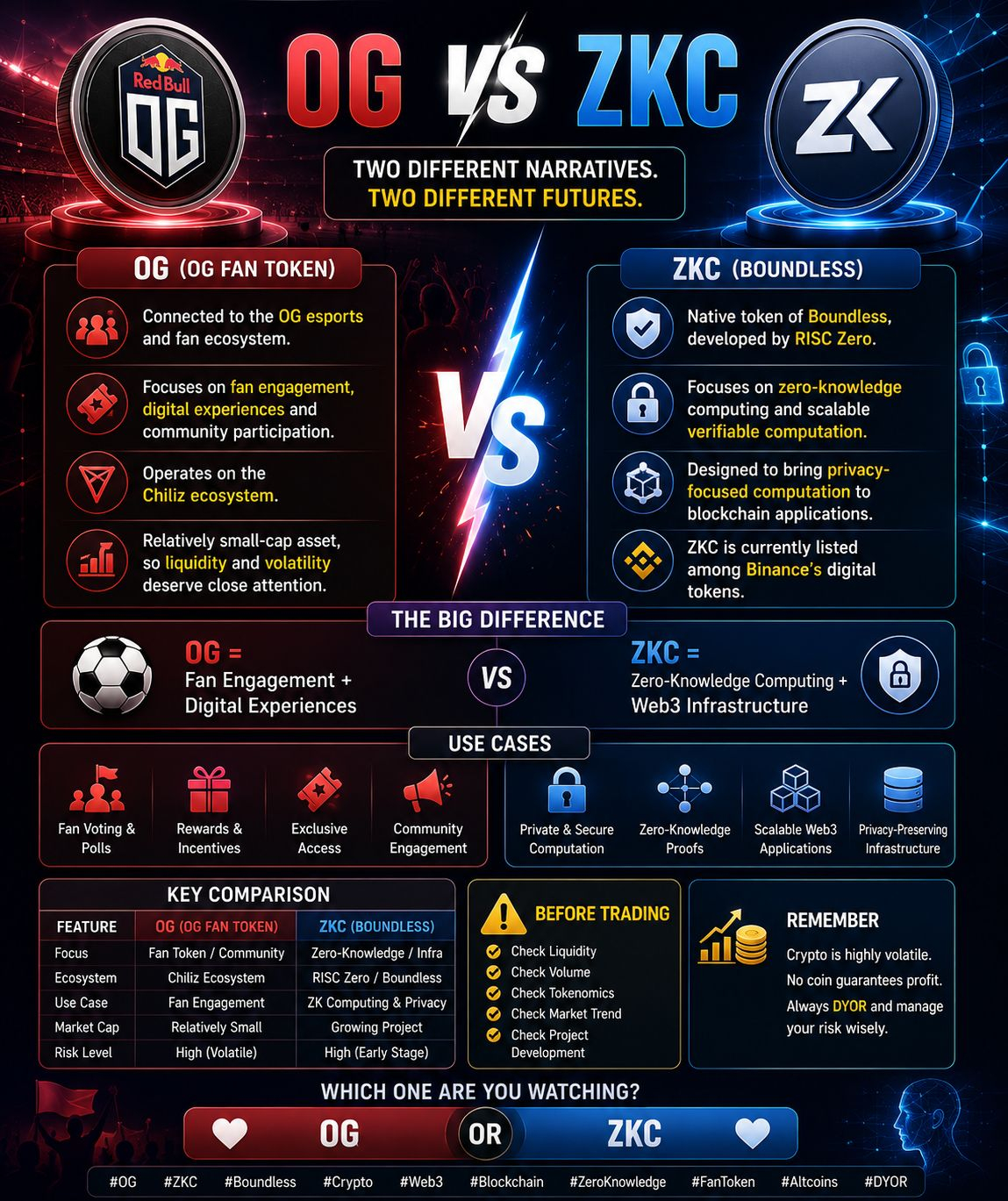
⚔️ OG vs ZKC — Fan Power vs Zero-Knowledge Infrastructure 🚀
Zwei sehr unterschiedliche Krypto-Narrative treten gegeneinander an:
⚽ OG Fan Token (OG)
• Verbunden mit dem OG E-Sports-/Fan-Ökosystem
• Fokussiert auf Fan-Engagement, digitale Erlebnisse und Community-Beteiligung
• Arbeitet im Chiliz-Ökosystem
• Ein eher kleines Asset mit geringer Marktkapitalisierung, daher verdienen Liquidität und Volatilität besondere Aufmerksamkeit. �
Coinbase +1
🔐 ZKC (Boundless)
• Nativer Token von Boundless, entwickelt von RISC Zero
• Fokus auf Zero-Knowledge-Computing und skalierbare verifizierbare Berechnungen
• Entwickelt, um datenschutzorientiertes Computing in Blockchain-Anwendungen zu bringen
• ZKC ist derzeit unter den digitalen Tokens von Binance gelistet. �
Coinbase +1
📊 DER GROẞE UNTERSCHIED
⚽ OG = Fan-Engagement + Digitale Erlebnisse
🔐 ZKC = Zero-Knowledge-Computing + Web3-Infrastruktur
💡 Das sind keine direkten Konkurrenten – sie stehen für völlig unterschiedliche Teile des Krypto-Ökosystems.
⚠️ Bevor du tradest: Prüfe Liquidität, Volumen, Tokenomics, Markttrend und die Projektentwicklung. Keine Münze garantiert Gewinn.
👇 Welches beobachtest du?
⚽ OG oder 🔐 ZKC
DYOR — Mach deine eigene Recherche.
#OG #ZKC #Boundless #Crypto_Jobs🎯 #Write2Earrn
⚔️ OG vs ZKC — Fan Power vs Zero-Knowledge Infrastructure 🚀
Zwei sehr unterschiedliche Krypto-Narrative treten gegeneinander an:
⚽ OG Fan Token (OG)
• Verbunden mit dem OG E-Sports-/Fan-Ökosystem
• Fokussiert auf Fan-Engagement, digitale Erlebnisse und Community-Beteiligung
• Arbeitet im Chiliz-Ökosystem
• Ein eher kleines Asset mit geringer Marktkapitalisierung, daher verdienen Liquidität und Volatilität besondere Aufmerksamkeit. �
Coinbase +1
🔐 ZKC (Boundless)
• Nativer Token von Boundless, entwickelt von RISC Zero
• Fokus auf Zero-Knowledge-Computing und skalierbare verifizierbare Berechnungen
• Entwickelt, um datenschutzorientiertes Computing in Blockchain-Anwendungen zu bringen
• ZKC ist derzeit unter den digitalen Tokens von Binance gelistet. �
Coinbase +1
📊 DER GROẞE UNTERSCHIED
⚽ OG = Fan-Engagement + Digitale Erlebnisse
🔐 ZKC = Zero-Knowledge-Computing + Web3-Infrastruktur
💡 Das sind keine direkten Konkurrenten – sie stehen für völlig unterschiedliche Teile des Krypto-Ökosystems.
⚠️ Bevor du tradest: Prüfe Liquidität, Volumen, Tokenomics, Markttrend und die Projektentwicklung. Keine Münze garantiert Gewinn.
👇 Welches beobachtest du?
⚽ OG oder 🔐 ZKC
DYOR — Mach deine eigene Recherche.
#OG #ZKC #Boundless #Crypto_Jobs🎯 #Write2Earrn
Zwei sehr unterschiedliche Krypto-Narrative treten gegeneinander an:
⚽ OG Fan Token (OG)
• Verbunden mit dem OG E-Sports-/Fan-Ökosystem
• Fokussiert auf Fan-Engagement, digitale Erlebnisse und Community-Beteiligung
• Arbeitet im Chiliz-Ökosystem
• Ein eher kleines Asset mit geringer Marktkapitalisierung, daher verdienen Liquidität und Volatilität besondere Aufmerksamkeit. �
Coinbase +1
🔐 ZKC (Boundless)
• Nativer Token von Boundless, entwickelt von RISC Zero
• Fokus auf Zero-Knowledge-Computing und skalierbare verifizierbare Berechnungen
• Entwickelt, um datenschutzorientiertes Computing in Blockchain-Anwendungen zu bringen
• ZKC ist derzeit unter den digitalen Tokens von Binance gelistet. �
Coinbase +1
📊 DER GROẞE UNTERSCHIED
⚽ OG = Fan-Engagement + Digitale Erlebnisse
🔐 ZKC = Zero-Knowledge-Computing + Web3-Infrastruktur
💡 Das sind keine direkten Konkurrenten – sie stehen für völlig unterschiedliche Teile des Krypto-Ökosystems.
⚠️ Bevor du tradest: Prüfe Liquidität, Volumen, Tokenomics, Markttrend und die Projektentwicklung. Keine Münze garantiert Gewinn.
👇 Welches beobachtest du?
⚽ OG oder 🔐 ZKC
DYOR — Mach deine eigene Recherche.
#OG #ZKC #Boundless #Crypto_Jobs🎯 #Write2Earrn
1
120

·
--
🫵 $ZKC zieht Händler nach einem weiteren Ausbruch der Volatilität zurück in den Chart. 👀
Boundless schafft einen Markt für verifizierbare Zero-Knowledge-Berechnungen und verbindet Proof-Requests mit unabhängigen Provern.
Die Technologie ist real — jetzt muss das Volumen zeigen, ob die Marktaufmerksamkeit anhalten kann. Fortsetzung oder Abkühlung?
#ZKC #Boundless #ZeroKnowledge #CryptoMarket
{spot}(ZKCUSDT)
🫵 $ZKC zieht Händler nach einem weiteren Ausbruch der Volatilität zurück in den Chart. 👀
Boundless schafft einen Markt für verifizierbare Zero-Knowledge-Berechnungen und verbindet Proof-Requests mit unabhängigen Provern.
Die Technologie ist real — jetzt muss das Volumen zeigen, ob die Marktaufmerksamkeit anhalten kann. Fortsetzung oder Abkühlung?
#ZKC #Boundless #ZeroKnowledge #CryptoMarket
Boundless schafft einen Markt für verifizierbare Zero-Knowledge-Berechnungen und verbindet Proof-Requests mit unabhängigen Provern.
Die Technologie ist real — jetzt muss das Volumen zeigen, ob die Marktaufmerksamkeit anhalten kann. Fortsetzung oder Abkühlung?
#ZKC #Boundless #ZeroKnowledge #CryptoMarket
2
312

·
--
🚨 $ZKC bewegt sich — aber die wahre Story ist nicht nur das Chart.
Boundless bekommt Aufmerksamkeit als universelle ZK-Proving-Layer, und das heutige Handelsvolumen zeigt, dass Trader genau hinschauen.
Der interessante Teil? ZKC ist nicht nur ein Momentum-Play. Seine Story ist mit verifizierbarem Computing und dem Skalieren von Blockchain-Workloads verknüpft.
Nach einem starken Move würde ich lieber Volumen + wichtige Unterstützung beobachten, statt grünen Kerzen hinterherzulaufen.
$ZKC | #ZKC | #Boundless
Ist das nur Momentum, oder der Start einer größeren Bewegung? 👀
🚨 $ZKC bewegt sich — aber die wahre Story ist nicht nur das Chart.
Boundless bekommt Aufmerksamkeit als universelle ZK-Proving-Layer, und das heutige Handelsvolumen zeigt, dass Trader genau hinschauen.
Der interessante Teil? ZKC ist nicht nur ein Momentum-Play. Seine Story ist mit verifizierbarem Computing und dem Skalieren von Blockchain-Workloads verknüpft.
Nach einem starken Move würde ich lieber Volumen + wichtige Unterstützung beobachten, statt grünen Kerzen hinterherzulaufen.
$ZKC | #ZKC | #Boundless
Ist das nur Momentum, oder der Start einer größeren Bewegung? 👀
Boundless bekommt Aufmerksamkeit als universelle ZK-Proving-Layer, und das heutige Handelsvolumen zeigt, dass Trader genau hinschauen.
Der interessante Teil? ZKC ist nicht nur ein Momentum-Play. Seine Story ist mit verifizierbarem Computing und dem Skalieren von Blockchain-Workloads verknüpft.
Nach einem starken Move würde ich lieber Volumen + wichtige Unterstützung beobachten, statt grünen Kerzen hinterherzulaufen.
$ZKC | #ZKC | #Boundless
Ist das nur Momentum, oder der Start einer größeren Bewegung? 👀
2
195


·
--
🚀💥💥 Grenzenlos ($ZKC) 🚀💥💥
Grenzenlos baut dezentrale Infrastruktur für verifizierbares Rechnen mithilfe von Zero-Knowledge-Beweisen auf.
Mit wachsender ZK-Akzeptanz könnte $ZKC mehr Aufmerksamkeit auf sich ziehen.
📈 Prognose:
0,08–0,10 kurzfristig
0,12–0,15, wenn der Ausbruch bestätigt wird
0,20+ in einem starken Bullenmarkt
Beobachte $ZKC genau. 👀
#ZKC #Boundless #ZK
$ZKC
{spot}(ZKCUSDT)
🚀💥💥 Grenzenlos ($ZKC ) 🚀💥💥
Grenzenlos baut dezentrale Infrastruktur für verifizierbares Rechnen mithilfe von Zero-Knowledge-Beweisen auf.
Mit wachsender ZK-Akzeptanz könnte $ZKC mehr Aufmerksamkeit auf sich ziehen.
📈 Prognose:
0,08–0,10 kurzfristig
0,12–0,15, wenn der Ausbruch bestätigt wird
0,20+ in einem starken Bullenmarkt
Beobachte $ZKC genau. 👀
#ZKC #Boundless #ZK
$ZKC
Grenzenlos baut dezentrale Infrastruktur für verifizierbares Rechnen mithilfe von Zero-Knowledge-Beweisen auf.
Mit wachsender ZK-Akzeptanz könnte $ZKC mehr Aufmerksamkeit auf sich ziehen.
📈 Prognose:
0,08–0,10 kurzfristig
0,12–0,15, wenn der Ausbruch bestätigt wird
0,20+ in einem starken Bullenmarkt
Beobachte $ZKC genau. 👀
#ZKC #Boundless #ZK
$ZKC
1
199

🔥 $ZKC (Boundless) Schnellüberblick! 🔥
$ZKC läuft mit starker KI/ZKP-Erzählung und hohem Handelsvolumen!
Wichtige Levels zum Beobachten:
🎯 Widerstand: $0.074 (24h-Hoch)
🛡️ Unterstützung: $0.038 - $0.040
🚀 Nächstes Ziel: $0.085+ wenn der Momentum hält
Keine Finanzberatung / Recherchiert selbst (NFA / DYOR)! Seid ihr bullish auf $ZKC ? 👇
#ZKC #Boundless #Binance #cryptotrading #TradingSignals
{future}(ZKCUSDT)
🔥 $ZKC (Boundless) Schnellüberblick! 🔥
$ZKC läuft mit starker KI/ZKP-Erzählung und hohem Handelsvolumen!
Wichtige Levels zum Beobachten:
🎯 Widerstand: $0.074 (24h-Hoch)
🛡️ Unterstützung: $0.038 - $0.040
🚀 Nächstes Ziel: $0.085+ wenn der Momentum hält
Keine Finanzberatung / Recherchiert selbst (NFA / DYOR)! Seid ihr bullish auf $ZKC ? 👇
#ZKC #Boundless #Binance #cryptotrading #TradingSignals
$ZKC läuft mit starker KI/ZKP-Erzählung und hohem Handelsvolumen!
Wichtige Levels zum Beobachten:
🎯 Widerstand: $0.074 (24h-Hoch)
🛡️ Unterstützung: $0.038 - $0.040
🚀 Nächstes Ziel: $0.085+ wenn der Momentum hält
Keine Finanzberatung / Recherchiert selbst (NFA / DYOR)! Seid ihr bullish auf $ZKC ? 👇
#ZKC #Boundless #Binance #cryptotrading #TradingSignals
1
117

·
--
Verifiziert
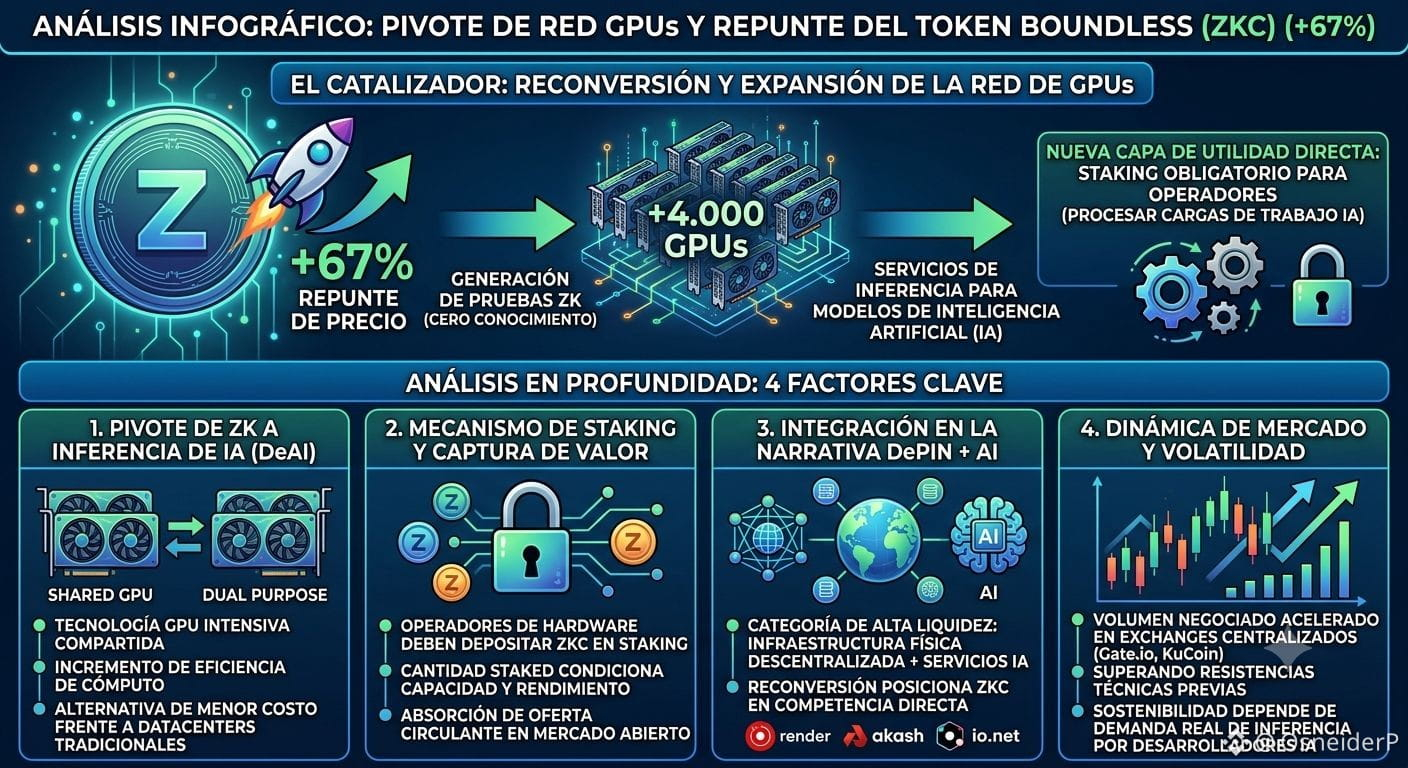
🚨 ZKC schießt um 67% nach dem Wechsel zu GPUs für KI 📈
Der Anstieg um 67% beim ZKC-Token spiegelt die Offenheit des Marktes für die Wiederverwendung von Recheninfrastruktur für den Sektor der Künstlichen Intelligenz wider. Indem Boundless die Beteiligung seines Netzwerks aus 4.000 GPUs an das obligatorische Staking von ZKC koppelt, stärkt es die Wertabschöpfung seines nativen Assets. Wie nachhaltig dieser Aufwärtstrend ist, hängt davon ab, wie effektiv seine Inferenz-Dienste von kommerziellen KI-Anwendungen übernommen werden.
#Token #Binance #boundless #cryptouniverseofficial $ZKC
{spot}(ZKCUSDT)
🚨 ZKC schießt um 67% nach dem Wechsel zu GPUs für KI 📈
Der Anstieg um 67% beim ZKC-Token spiegelt die Offenheit des Marktes für die Wiederverwendung von Recheninfrastruktur für den Sektor der Künstlichen Intelligenz wider. Indem Boundless die Beteiligung seines Netzwerks aus 4.000 GPUs an das obligatorische Staking von ZKC koppelt, stärkt es die Wertabschöpfung seines nativen Assets. Wie nachhaltig dieser Aufwärtstrend ist, hängt davon ab, wie effektiv seine Inferenz-Dienste von kommerziellen KI-Anwendungen übernommen werden.
#Token #Binance #boundless #cryptouniverseofficial $ZKC
Der Anstieg um 67% beim ZKC-Token spiegelt die Offenheit des Marktes für die Wiederverwendung von Recheninfrastruktur für den Sektor der Künstlichen Intelligenz wider. Indem Boundless die Beteiligung seines Netzwerks aus 4.000 GPUs an das obligatorische Staking von ZKC koppelt, stärkt es die Wertabschöpfung seines nativen Assets. Wie nachhaltig dieser Aufwärtstrend ist, hängt davon ab, wie effektiv seine Inferenz-Dienste von kommerziellen KI-Anwendungen übernommen werden.
#Token #Binance #boundless #cryptouniverseofficial $ZKC
199

🚀 Warum pumpt ZKC — Kann es abstürzen?
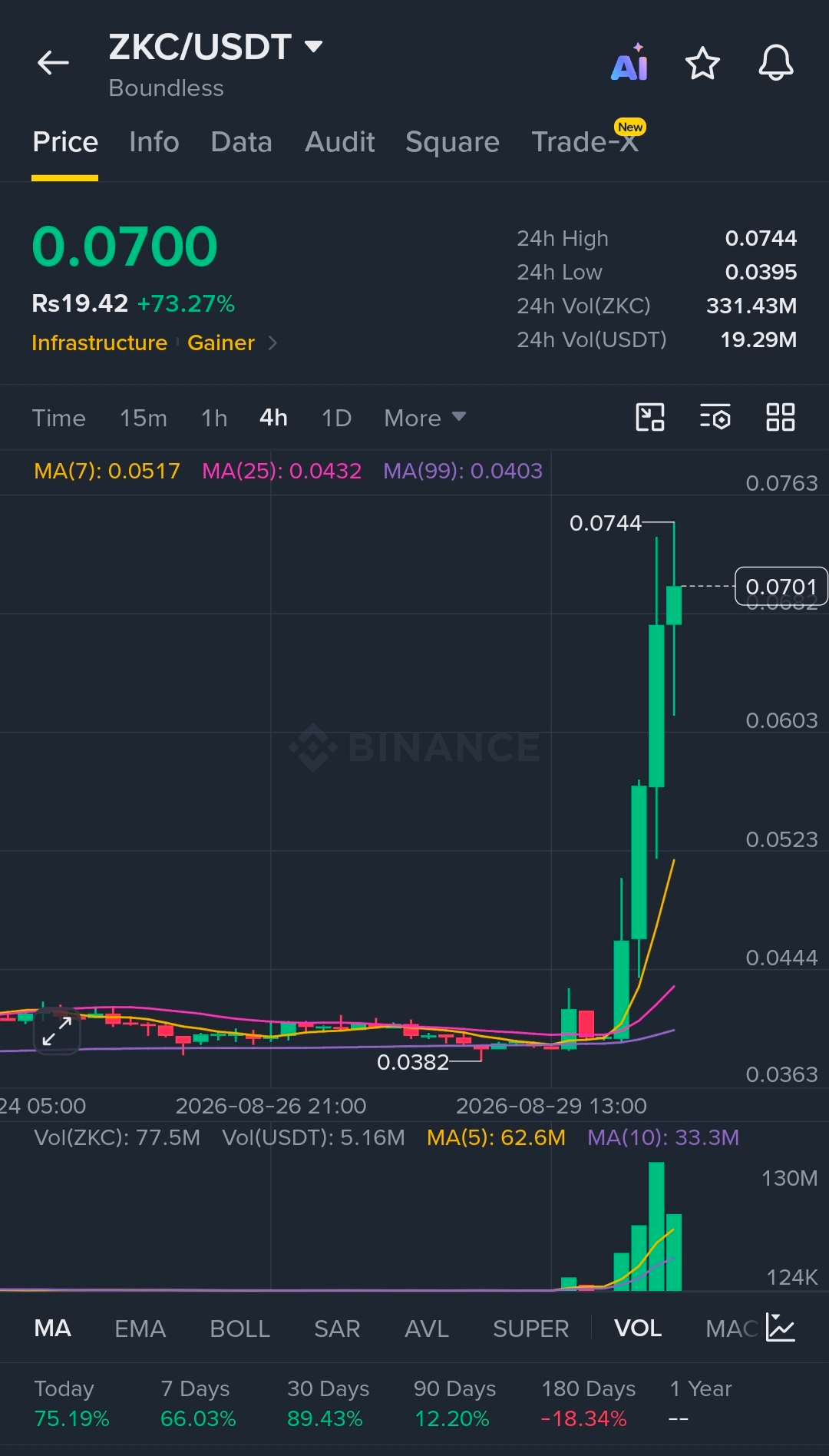
Boundless ( $ZKC ) liegt bei etwa 0,071 $ und ist um 78%+ gestiegen, mit extrem hohem Handelsvolumen. Boundless hat sein dezentrales GPU-Netzwerk in Richtung KI-Inferenz ausgeweitet, während $ZKC für das Staking durch KI-Operatoren vorgesehen ist. Allerdings ist kein einzelner neuer Auslöser für den heutigen explosiven Move bestätigt, sodass Momentum und Spekulation möglicherweise die Haupttreiber sind.
📊 4H-Chart: Starker Ausbruch + extremes Volumen, aber der Kurs ist stark über dem MA(7/25/99) ausgedehnt. Widerstände: 0,0744–0,0763 $. Unterstützungen: 0,0682 $, 0,0603 $, 0,0523 $. Eine Abweisung kann starkes Profit-Taking auslösen. Wenn 0,0603 $ fällt, steigt das Abwärtsrisiko. Das Projekt hat Fundamentals, aber der aktuelle Move bleibt ein Hochrisiko. Informiere dich selbst. $ZKC
#ZKC #Boundless #Crypto #BinanceSquare #VietnamPilotsCryptoAssetMarket
{spot}(ZKCUSDT)
🚀 Warum pumpt ZKC — Kann es abstürzen?
Boundless ( $ZKC ) liegt bei etwa 0,071 $ und ist um 78%+ gestiegen, mit extrem hohem Handelsvolumen. Boundless hat sein dezentrales GPU-Netzwerk in Richtung KI-Inferenz ausgeweitet, während $ZKC für das Staking durch KI-Operatoren vorgesehen ist. Allerdings ist kein einzelner neuer Auslöser für den heutigen explosiven Move bestätigt, sodass Momentum und Spekulation möglicherweise die Haupttreiber sind.
📊 4H-Chart: Starker Ausbruch + extremes Volumen, aber der Kurs ist stark über dem MA(7/25/99) ausgedehnt. Widerstände: 0,0744–0,0763 $. Unterstützungen: 0,0682 $, 0,0603 $, 0,0523 $. Eine Abweisung kann starkes Profit-Taking auslösen. Wenn 0,0603 $ fällt, steigt das Abwärtsrisiko. Das Projekt hat Fundamentals, aber der aktuelle Move bleibt ein Hochrisiko. Informiere dich selbst. $ZKC
#ZKC #Boundless #Crypto #BinanceSquare #VietnamPilotsCryptoAssetMarket
Boundless ( $ZKC ) liegt bei etwa 0,071 $ und ist um 78%+ gestiegen, mit extrem hohem Handelsvolumen. Boundless hat sein dezentrales GPU-Netzwerk in Richtung KI-Inferenz ausgeweitet, während $ZKC für das Staking durch KI-Operatoren vorgesehen ist. Allerdings ist kein einzelner neuer Auslöser für den heutigen explosiven Move bestätigt, sodass Momentum und Spekulation möglicherweise die Haupttreiber sind.
📊 4H-Chart: Starker Ausbruch + extremes Volumen, aber der Kurs ist stark über dem MA(7/25/99) ausgedehnt. Widerstände: 0,0744–0,0763 $. Unterstützungen: 0,0682 $, 0,0603 $, 0,0523 $. Eine Abweisung kann starkes Profit-Taking auslösen. Wenn 0,0603 $ fällt, steigt das Abwärtsrisiko. Das Projekt hat Fundamentals, aber der aktuelle Move bleibt ein Hochrisiko. Informiere dich selbst. $ZKC
#ZKC #Boundless #Crypto #BinanceSquare #VietnamPilotsCryptoAssetMarket
111

·
--
📊 $ZKC (Beschränkt) +63,78% PRO TAG — EXTREMARER IMPULS
Während die meisten Coins nur moderat steigen — $ZKC hat einen Ausbruch verursacht, den man nicht ignorieren kann 👀
📊 Nach einem langen, zähen Abwärtstrend ab März (vom Peak $0,2077 bis zum Tief $0,0361) hat sich die Münze abrupt gedreht und ist innerhalb von einem Tag auf $0,0642 gestiegen.
🔥 Wichtige Signale:
▪️ Das Handelsvolumen ist auf $14,95M USDT explodiert – von praktisch null aus – das ist ein starker Kapitalschub
▪️ Der Preis hat das obere Bollinger-Band durchbrochen (0,0520) — ein parabolischer Start
▪️ MACD lieferte ein klares bullisches Signal
RSI(6) liegt aktuell bei 90,8 — das ist extrem überkauft, eine der höchsten Zonen, die man im Chart sehen kann. RSI(12) ist ebenfalls hoch — 84,2. Das bedeutet: Das kurzfristige Risiko für eine abrupte Korrektur ist derzeit maximal.
💭 Solche schnellen, vertikalen Bewegungen mit RSI über 90 gehen oft mit einem schnellen Rücksetzer von 30–50% vom lokalen Peak einher — das ist eine natürliche Phase der Gewinnmitnahme nach der Parabel.
📌 Wer unten rechtzeitig dabei war — hat bereits ein Vielfaches-Ergebnis gezeigt.
Wer jetzt einen Einstieg betrachtet — sollte verstehen, dass ihr auf Spitzenwerten der Überkauftheit einsteigt.
#ZKC #Boundless #Binance #Crypto
{spot}(ZKCUSDT)
📊 $ZKC (Beschränkt) +63,78% PRO TAG — EXTREMARER IMPULS
Während die meisten Coins nur moderat steigen — $ZKC hat einen Ausbruch verursacht, den man nicht ignorieren kann 👀
📊 Nach einem langen, zähen Abwärtstrend ab März (vom Peak $0,2077 bis zum Tief $0,0361) hat sich die Münze abrupt gedreht und ist innerhalb von einem Tag auf $0,0642 gestiegen.
🔥 Wichtige Signale:
▪️ Das Handelsvolumen ist auf $14,95M USDT explodiert – von praktisch null aus – das ist ein starker Kapitalschub
▪️ Der Preis hat das obere Bollinger-Band durchbrochen (0,0520) — ein parabolischer Start
▪️ MACD lieferte ein klares bullisches Signal
RSI(6) liegt aktuell bei 90,8 — das ist extrem überkauft, eine der höchsten Zonen, die man im Chart sehen kann. RSI(12) ist ebenfalls hoch — 84,2. Das bedeutet: Das kurzfristige Risiko für eine abrupte Korrektur ist derzeit maximal.
💭 Solche schnellen, vertikalen Bewegungen mit RSI über 90 gehen oft mit einem schnellen Rücksetzer von 30–50% vom lokalen Peak einher — das ist eine natürliche Phase der Gewinnmitnahme nach der Parabel.
📌 Wer unten rechtzeitig dabei war — hat bereits ein Vielfaches-Ergebnis gezeigt.
Wer jetzt einen Einstieg betrachtet — sollte verstehen, dass ihr auf Spitzenwerten der Überkauftheit einsteigt.
#ZKC #Boundless #Binance #Crypto
Während die meisten Coins nur moderat steigen — $ZKC hat einen Ausbruch verursacht, den man nicht ignorieren kann 👀
📊 Nach einem langen, zähen Abwärtstrend ab März (vom Peak $0,2077 bis zum Tief $0,0361) hat sich die Münze abrupt gedreht und ist innerhalb von einem Tag auf $0,0642 gestiegen.
🔥 Wichtige Signale:
▪️ Das Handelsvolumen ist auf $14,95M USDT explodiert – von praktisch null aus – das ist ein starker Kapitalschub
▪️ Der Preis hat das obere Bollinger-Band durchbrochen (0,0520) — ein parabolischer Start
▪️ MACD lieferte ein klares bullisches Signal
RSI(6) liegt aktuell bei 90,8 — das ist extrem überkauft, eine der höchsten Zonen, die man im Chart sehen kann. RSI(12) ist ebenfalls hoch — 84,2. Das bedeutet: Das kurzfristige Risiko für eine abrupte Korrektur ist derzeit maximal.
💭 Solche schnellen, vertikalen Bewegungen mit RSI über 90 gehen oft mit einem schnellen Rücksetzer von 30–50% vom lokalen Peak einher — das ist eine natürliche Phase der Gewinnmitnahme nach der Parabel.
📌 Wer unten rechtzeitig dabei war — hat bereits ein Vielfaches-Ergebnis gezeigt.
Wer jetzt einen Einstieg betrachtet — sollte verstehen, dass ihr auf Spitzenwerten der Überkauftheit einsteigt.
#ZKC #Boundless #Binance #Crypto
2
432

🚨 $ZKC JUST EXPLODED +76% - AND IT'S NOT DONE YET 🚨
Während du BTC beobachtet hast, wurde Boundless (ZKC) still und leise HEUTE der #1 TOP-GEWINNER!
Preis: 0,06895 $ (+76,33%)
24H-Volumen: 140 Mio. $+ 🔥
Das ist kein zufälliger Pump. Zero-Knowledge-Story + irre Liquidität = GROßE BEWEGUNG steht bevor.
MEIN LIVE-TRADING-SETUP FÜR ZKC:
Ich VERFOLGE NICHT die grüne Kerze. Ich warte auf den smarten Einstieg.
EINSTIEG: 0,0650 $ - 0,0695 $
Warte auf einen kleinen Dip / Retest. Beste Zone zum Aufbauen.
STOP LOSS: 0,0590 $
Eng und logisch. Wenn das bricht, ist das Setup ungültig. Keine Emotionen.
ZIELE:
TP1: 0,0780 $ - Scalp & Buch 30% Gewinn
TP2: 0,0880 $ - Swing-Ziel
TP3: 0,1050 $ - MOON BAG
Risikomanagement: Nutze nur 2-3% deines Portfolios. Spot ist sicherer als 20x Hebel.
Warum ich bullish bin?
✅ #1 Gewinner auf Binance heute
✅ Volumen > Marktkapitalisierung (riesige Nachfrage)
✅ ZK ist die nächste KI-artige Story
Wale sind bereits drin. Retail wird FOMO bei 0,08 $.
Bist du früh dabei oder jagst du später hinterher?
Schreib in die Kommentare ein 🚀, wenn du mit mir unterwegs bist.
#ZKC #Boundless #CryptoSignals #TopGainer
{spot}(ZKCUSDT)
🚨 $ZKC JUST EXPLODED +76% - AND IT'S NOT DONE YET 🚨
Während du BTC beobachtet hast, wurde Boundless (ZKC) still und leise HEUTE der #1 TOP-GEWINNER!
Preis: 0,06895 $ (+76,33%)
24H-Volumen: 140 Mio. $+ 🔥
Das ist kein zufälliger Pump. Zero-Knowledge-Story + irre Liquidität = GROßE BEWEGUNG steht bevor.
MEIN LIVE-TRADING-SETUP FÜR ZKC:
Ich VERFOLGE NICHT die grüne Kerze. Ich warte auf den smarten Einstieg.
EINSTIEG: 0,0650 $ - 0,0695 $
Warte auf einen kleinen Dip / Retest. Beste Zone zum Aufbauen.
STOP LOSS: 0,0590 $
Eng und logisch. Wenn das bricht, ist das Setup ungültig. Keine Emotionen.
ZIELE:
TP1: 0,0780 $ - Scalp & Buch 30% Gewinn
TP2: 0,0880 $ - Swing-Ziel
TP3: 0,1050 $ - MOON BAG
Risikomanagement: Nutze nur 2-3% deines Portfolios. Spot ist sicherer als 20x Hebel.
Warum ich bullish bin?
✅ #1 Gewinner auf Binance heute
✅ Volumen > Marktkapitalisierung (riesige Nachfrage)
✅ ZK ist die nächste KI-artige Story
Wale sind bereits drin. Retail wird FOMO bei 0,08 $.
Bist du früh dabei oder jagst du später hinterher?
Schreib in die Kommentare ein 🚀, wenn du mit mir unterwegs bist.
#ZKC #Boundless #CryptoSignals #TopGainer
Während du BTC beobachtet hast, wurde Boundless (ZKC) still und leise HEUTE der #1 TOP-GEWINNER!
Preis: 0,06895 $ (+76,33%)
24H-Volumen: 140 Mio. $+ 🔥
Das ist kein zufälliger Pump. Zero-Knowledge-Story + irre Liquidität = GROßE BEWEGUNG steht bevor.
MEIN LIVE-TRADING-SETUP FÜR ZKC:
Ich VERFOLGE NICHT die grüne Kerze. Ich warte auf den smarten Einstieg.
EINSTIEG: 0,0650 $ - 0,0695 $
Warte auf einen kleinen Dip / Retest. Beste Zone zum Aufbauen.
STOP LOSS: 0,0590 $
Eng und logisch. Wenn das bricht, ist das Setup ungültig. Keine Emotionen.
ZIELE:
TP1: 0,0780 $ - Scalp & Buch 30% Gewinn
TP2: 0,0880 $ - Swing-Ziel
TP3: 0,1050 $ - MOON BAG
Risikomanagement: Nutze nur 2-3% deines Portfolios. Spot ist sicherer als 20x Hebel.
Warum ich bullish bin?
✅ #1 Gewinner auf Binance heute
✅ Volumen > Marktkapitalisierung (riesige Nachfrage)
✅ ZK ist die nächste KI-artige Story
Wale sind bereits drin. Retail wird FOMO bei 0,08 $.
Bist du früh dabei oder jagst du später hinterher?
Schreib in die Kommentare ein 🚀, wenn du mit mir unterwegs bist.
#ZKC #Boundless #CryptoSignals #TopGainer
110

·
--
Boundless-Trends vor dem Hintergrund der Krypto-Markaktivitätundefined (ZKC) Aktueller Preis: $undefined | 24h-Änderung: undefined%
Boundless ist laut Daten von CoinGecko im Kryptomarkt im Trend. Das Token hat Aufmerksamkeit auf Social-Media-Plattformen und in Suchtrends gewonnen, was auf einen Anstieg des Nutzerinteresses hindeutet. Obwohl die konkreten Treiber für den Anstieg in der Quelle nicht spezifiziert werden, beschreibt die Bezeichnung „trending“ typischerweise eine erhöhte Anzahl von Erwähnungen und Interaktionen im Vergleich zu anderen Assets. Marktbeobachter achten oft auf solche Signale, da sie Veränderungen in der Handelsaktivität oder der Stimmung in der Community vorwegnehmen können.
Boundless-Trends vor dem Hintergrund der Krypto-Markaktivität
undefined (ZKC) Aktueller Preis: $undefined | 24h-Änderung: undefined%
Boundless ist laut Daten von CoinGecko im Kryptomarkt im Trend. Das Token hat Aufmerksamkeit auf Social-Media-Plattformen und in Suchtrends gewonnen, was auf einen Anstieg des Nutzerinteresses hindeutet. Obwohl die konkreten Treiber für den Anstieg in der Quelle nicht spezifiziert werden, beschreibt die Bezeichnung „trending“ typischerweise eine erhöhte Anzahl von Erwähnungen und Interaktionen im Vergleich zu anderen Assets. Marktbeobachter achten oft auf solche Signale, da sie Veränderungen in der Handelsaktivität oder der Stimmung in der Community vorwegnehmen können.
Boundless ist laut Daten von CoinGecko im Kryptomarkt im Trend. Das Token hat Aufmerksamkeit auf Social-Media-Plattformen und in Suchtrends gewonnen, was auf einen Anstieg des Nutzerinteresses hindeutet. Obwohl die konkreten Treiber für den Anstieg in der Quelle nicht spezifiziert werden, beschreibt die Bezeichnung „trending“ typischerweise eine erhöhte Anzahl von Erwähnungen und Interaktionen im Vergleich zu anderen Assets. Marktbeobachter achten oft auf solche Signale, da sie Veränderungen in der Handelsaktivität oder der Stimmung in der Community vorwegnehmen können.
51

$ZKC Rebounds +20%! Kann es den $0.0493 Widerstand durchbrechen für eine $0.054+ Extension?
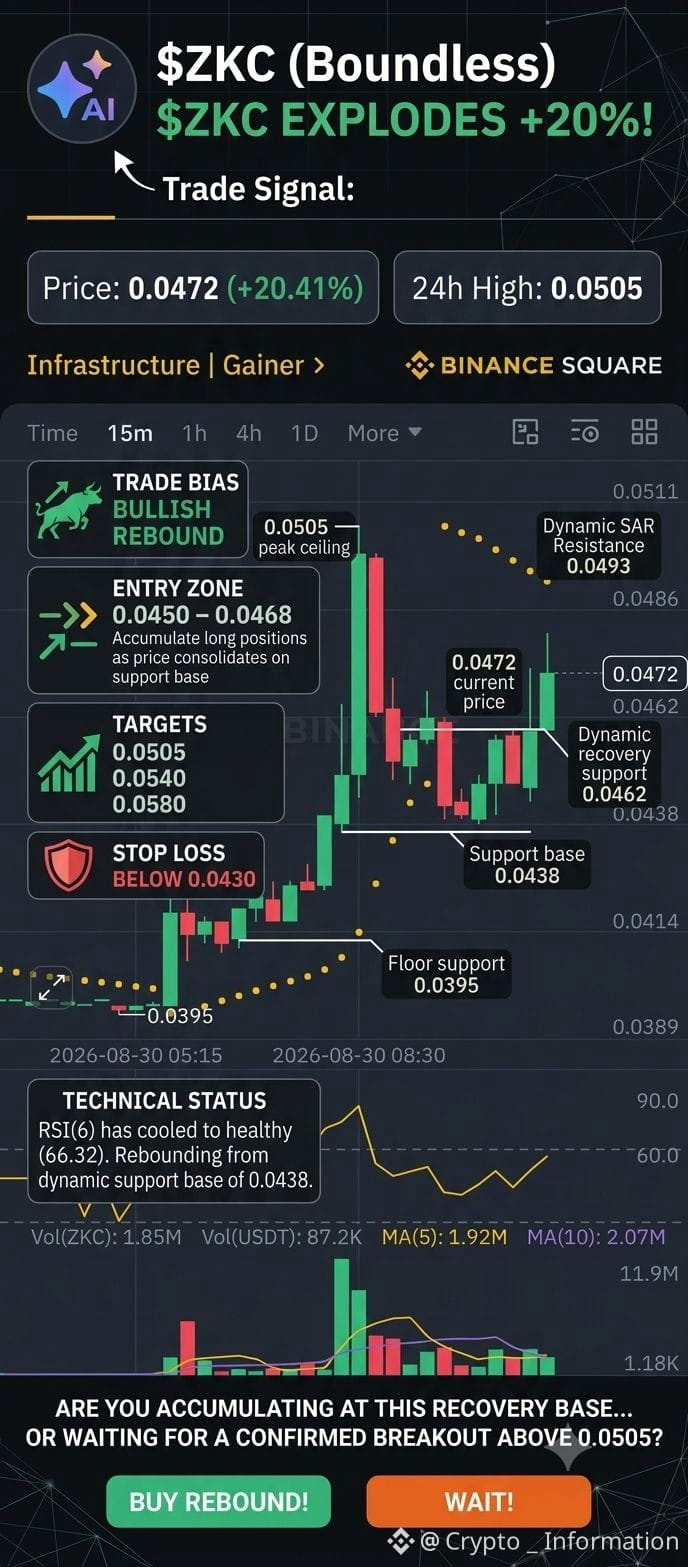
Beeindruckender Momentum im Infrastruktursektor auf Binance mit einem Plus von +20,41%, $ZKC (Boundless) baut einen scharfen V-förmigen Rebound von seinem lokalen Tief auf! Gestützt durch ein 24h-Volumen von 80,35M ZKC (3,54M USDT) stieg der Preis von 0,0438 auf ein Niveau nahe 0,0472.
Handelsausblick: Bullisher Rebound
Einstiegszone: 0.0450 – 0.0468 (Long-Positionen akkumulieren, während der Preis sich auf einer Unterstützungsbasis konsolidiert)
Ziele: 0.0505 ➡️ 0.0540 ➡️ 0.0580
Stop Loss: Unter 0.0430
Technisch gesehen dreht das Momentum wieder zugunsten der Käufer. Während Parabolic SAR nachlaufende Punkte einen unmittelbaren Widerstand um 0.0493 zeigen, wurde der RSI (6) sauber auf 66,32 zurückgesetzt und lässt viel Spielraum für einen Aufwärtsimpuls. Ein sauberer 15m-Kerzenabschluss über 0.0493 und das 24h-Hoch von 0.0505 werden den nächsten Ausdehnungsabschnitt in Richtung $0.054+ freischalten.
Kaufst du diese Erholungsbasis... oder wartest du auf einen bestätigten Ausbruch über 0.0505?
Jetzt handeln $ZKC
{spot}(ZKCUSDT)
#ZKC #boundless #BinanceSquare #altcoins
$ZKC Rebounds +20%! Kann es den $0.0493 Widerstand durchbrechen für eine $0.054+ Extension?
Beeindruckender Momentum im Infrastruktursektor auf Binance mit einem Plus von +20,41%, $ZKC (Boundless) baut einen scharfen V-förmigen Rebound von seinem lokalen Tief auf! Gestützt durch ein 24h-Volumen von 80,35M ZKC (3,54M USDT) stieg der Preis von 0,0438 auf ein Niveau nahe 0,0472.
Handelsausblick: Bullisher Rebound
Einstiegszone: 0.0450 – 0.0468 (Long-Positionen akkumulieren, während der Preis sich auf einer Unterstützungsbasis konsolidiert)
Ziele: 0.0505 ➡️ 0.0540 ➡️ 0.0580
Stop Loss: Unter 0.0430
Technisch gesehen dreht das Momentum wieder zugunsten der Käufer. Während Parabolic SAR nachlaufende Punkte einen unmittelbaren Widerstand um 0.0493 zeigen, wurde der RSI (6) sauber auf 66,32 zurückgesetzt und lässt viel Spielraum für einen Aufwärtsimpuls. Ein sauberer 15m-Kerzenabschluss über 0.0493 und das 24h-Hoch von 0.0505 werden den nächsten Ausdehnungsabschnitt in Richtung $0.054+ freischalten.
Kaufst du diese Erholungsbasis... oder wartest du auf einen bestätigten Ausbruch über 0.0505?
Jetzt handeln $ZKC
#ZKC #boundless #BinanceSquare #altcoins
Beeindruckender Momentum im Infrastruktursektor auf Binance mit einem Plus von +20,41%, $ZKC (Boundless) baut einen scharfen V-förmigen Rebound von seinem lokalen Tief auf! Gestützt durch ein 24h-Volumen von 80,35M ZKC (3,54M USDT) stieg der Preis von 0,0438 auf ein Niveau nahe 0,0472.
Handelsausblick: Bullisher Rebound
Einstiegszone: 0.0450 – 0.0468 (Long-Positionen akkumulieren, während der Preis sich auf einer Unterstützungsbasis konsolidiert)
Ziele: 0.0505 ➡️ 0.0540 ➡️ 0.0580
Stop Loss: Unter 0.0430
Technisch gesehen dreht das Momentum wieder zugunsten der Käufer. Während Parabolic SAR nachlaufende Punkte einen unmittelbaren Widerstand um 0.0493 zeigen, wurde der RSI (6) sauber auf 66,32 zurückgesetzt und lässt viel Spielraum für einen Aufwärtsimpuls. Ein sauberer 15m-Kerzenabschluss über 0.0493 und das 24h-Hoch von 0.0505 werden den nächsten Ausdehnungsabschnitt in Richtung $0.054+ freischalten.
Kaufst du diese Erholungsbasis... oder wartest du auf einen bestätigten Ausbruch über 0.0505?
Jetzt handeln $ZKC
#ZKC #boundless #BinanceSquare #altcoins
1
107

·
--
$ZKC(Boundless) hat kürzlich einige Bewegungen gemacht, die für Krypto-Investoren interessant sein könnten.
Das Projekt hat insgesamt 10.000 US-Dollar an Airdrop-Belohnungen für frühzeitige Community-Beitragszahler vorbereitet, was sicherlich einen positiven Einfluss auf den Preis haben könnte. Besonders bemerkenswert ist das Airdrop-Mechanismus für Discord-Rollen: Die extrem niedrigen Teilnahmebarrieren haben eine Menge kostenfreier Nutzer angezogen, was nicht nur die allgemeine Aktivität im Ökosystem schnell erhöht hat, sondern auch die Markterwartungen hinsichtlich zukünftigen Nutzerwachstums und der Ansammlung von Popularität gesteigert hat.
Der aktuelle Preis liegt bei 0,06288 US-Dollar, das 24-Stunden-Handelsvolumen beträgt 4,37 Millionen US-Dollar, und die Marktkapitalisierung liegt bei 18,87 Millionen US-Dollar. Als kleines Marktprojekt hat es ein relativ beachtliches Preisaufschlagspotenzial.
#Boundless #空投赛道 #kleineMarktmünzen
$ZKC (Boundless) hat kürzlich einige Bewegungen gemacht, die für Krypto-Investoren interessant sein könnten.
Das Projekt hat insgesamt 10.000 US-Dollar an Airdrop-Belohnungen für frühzeitige Community-Beitragszahler vorbereitet, was sicherlich einen positiven Einfluss auf den Preis haben könnte. Besonders bemerkenswert ist das Airdrop-Mechanismus für Discord-Rollen: Die extrem niedrigen Teilnahmebarrieren haben eine Menge kostenfreier Nutzer angezogen, was nicht nur die allgemeine Aktivität im Ökosystem schnell erhöht hat, sondern auch die Markterwartungen hinsichtlich zukünftigen Nutzerwachstums und der Ansammlung von Popularität gesteigert hat.
Der aktuelle Preis liegt bei 0,06288 US-Dollar, das 24-Stunden-Handelsvolumen beträgt 4,37 Millionen US-Dollar, und die Marktkapitalisierung liegt bei 18,87 Millionen US-Dollar. Als kleines Marktprojekt hat es ein relativ beachtliches Preisaufschlagspotenzial.
#Boundless #空投赛道 #kleineMarktmünzen
Das Projekt hat insgesamt 10.000 US-Dollar an Airdrop-Belohnungen für frühzeitige Community-Beitragszahler vorbereitet, was sicherlich einen positiven Einfluss auf den Preis haben könnte. Besonders bemerkenswert ist das Airdrop-Mechanismus für Discord-Rollen: Die extrem niedrigen Teilnahmebarrieren haben eine Menge kostenfreier Nutzer angezogen, was nicht nur die allgemeine Aktivität im Ökosystem schnell erhöht hat, sondern auch die Markterwartungen hinsichtlich zukünftigen Nutzerwachstums und der Ansammlung von Popularität gesteigert hat.
Der aktuelle Preis liegt bei 0,06288 US-Dollar, das 24-Stunden-Handelsvolumen beträgt 4,37 Millionen US-Dollar, und die Marktkapitalisierung liegt bei 18,87 Millionen US-Dollar. Als kleines Marktprojekt hat es ein relativ beachtliches Preisaufschlagspotenzial.
#Boundless #空投赛道 #kleineMarktmünzen
32
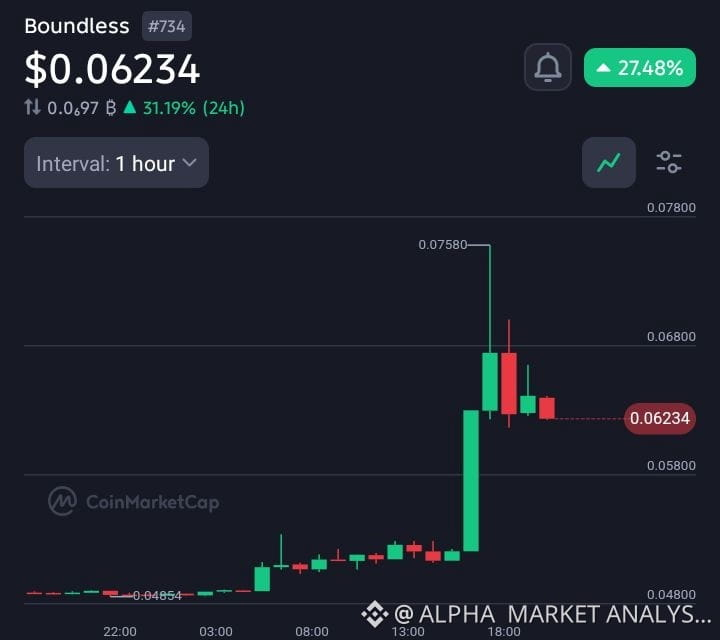
🚀 $ZKC (Boundless) schießt durch die Decke! Volumen übertrifft Marktkapitalisierung um das 4,6-Fache! 🚀
Boundless ($ZKC) ist auf dem Stundenchart parabolisch gegangen und hat einen explosiven Liquiditätsschub entfesselt:
Der Preis-Pump: Ist in 24h um +27,48% nach oben geschossen, mit einem Höhepunkt bei $0,0757, bevor er sich um $0,0623 stabilisierte. 📈
Der Volumen-Schock: Das 24h-Volumen erreichte astronomische $89,40M gegenüber einer winzigen Marktkapitalisierung von $19,33M—Wale schaufeln dieses Asset aggressiv durch! 🐋
📈 Was kommt als Nächstes? (Preisaktion)
Bull-Ziel: Ein Durchbruch über $0,0680 öffnet die Landebahn für einen heftigen Retest des lokalen Hochs bei $0,0757.
Unterstützungsboden: Die sofortige Verteidigung ist bei $0,0580 gesperrt. Das Halten dieses Regals hält die Ausbruchstruktur vollständig intakt. 🧱
Fährst du mit dieser vertikalen Rakete oder wartest du die Volatilität ab? Lass uns unten diskutieren! 👇
#Boundless #ZKC
{future}(ZKCUSDT)
🚀 $ZKC (Boundless) schießt durch die Decke! Volumen übertrifft Marktkapitalisierung um das 4,6-Fache! 🚀
Boundless ($ZKC ) ist auf dem Stundenchart parabolisch gegangen und hat einen explosiven Liquiditätsschub entfesselt:
Der Preis-Pump: Ist in 24h um +27,48% nach oben geschossen, mit einem Höhepunkt bei $0,0757, bevor er sich um $0,0623 stabilisierte. 📈
Der Volumen-Schock: Das 24h-Volumen erreichte astronomische $89,40M gegenüber einer winzigen Marktkapitalisierung von $19,33M—Wale schaufeln dieses Asset aggressiv durch! 🐋
📈 Was kommt als Nächstes? (Preisaktion)
Bull-Ziel: Ein Durchbruch über $0,0680 öffnet die Landebahn für einen heftigen Retest des lokalen Hochs bei $0,0757.
Unterstützungsboden: Die sofortige Verteidigung ist bei $0,0580 gesperrt. Das Halten dieses Regals hält die Ausbruchstruktur vollständig intakt. 🧱
Fährst du mit dieser vertikalen Rakete oder wartest du die Volatilität ab? Lass uns unten diskutieren! 👇
#Boundless #ZKC
Boundless ($ZKC ) ist auf dem Stundenchart parabolisch gegangen und hat einen explosiven Liquiditätsschub entfesselt:
Der Preis-Pump: Ist in 24h um +27,48% nach oben geschossen, mit einem Höhepunkt bei $0,0757, bevor er sich um $0,0623 stabilisierte. 📈
Der Volumen-Schock: Das 24h-Volumen erreichte astronomische $89,40M gegenüber einer winzigen Marktkapitalisierung von $19,33M—Wale schaufeln dieses Asset aggressiv durch! 🐋
📈 Was kommt als Nächstes? (Preisaktion)
Bull-Ziel: Ein Durchbruch über $0,0680 öffnet die Landebahn für einen heftigen Retest des lokalen Hochs bei $0,0757.
Unterstützungsboden: Die sofortige Verteidigung ist bei $0,0580 gesperrt. Das Halten dieses Regals hält die Ausbruchstruktur vollständig intakt. 🧱
Fährst du mit dieser vertikalen Rakete oder wartest du die Volatilität ab? Lass uns unten diskutieren! 👇
#Boundless #ZKC
1
128

Die kürzliche Marktperformance von Boundless ist bemerkenswert, und der Hauptantrieb kommt von ihrem einzigartigen Community-Incentive-Mechanismus. Das Projektteam hat 10.000 Dollar an Airdrop-Belohnungen für frühe Community-Beitragszahler eingerichtet, und noch wichtiger ist das clever gestaltete Airdrop-Mechanismus für Discord-Rollen, der viele Teilnehmer ohne Kosten angezogen hat.
Diese niedrigschwellige Teilnahme hat direkt zur Erhöhung der ökologischen Aktivität beigetragen, und das Interesse in der Community steigt weiterhin. Der aktuelle ZKC-Kurs liegt bei etwa 0.06288 Dollar, das 24-Stunden-Handelsvolumen beträgt 4,37 Millionen Dollar, die Marktkapitalisierung liegt bei 18,87 Millionen Dollar, und die Umlaufmenge ist relativ gering.
Der Erfolg des Airdrop-Mechanismus liegt darin, dass er nicht nur die Teilnahmebarriere für Benutzer senkt, sondern auch durch das Rollensystem die Community-Bindung stärkt. Wenn eine große Anzahl neuer Benutzer in Discord einströmt, erhöht sich natürlich die Interaktion innerhalb des Ökosystems, und dieser positive Kreislauf könnte die fundamentalen Werte des Tokens unterstützen.
#Boundless #ZKC
Die kürzliche Marktperformance von Boundless ist bemerkenswert, und der Hauptantrieb kommt von ihrem einzigartigen Community-Incentive-Mechanismus. Das Projektteam hat 10.000 Dollar an Airdrop-Belohnungen für frühe Community-Beitragszahler eingerichtet, und noch wichtiger ist das clever gestaltete Airdrop-Mechanismus für Discord-Rollen, der viele Teilnehmer ohne Kosten angezogen hat.
Diese niedrigschwellige Teilnahme hat direkt zur Erhöhung der ökologischen Aktivität beigetragen, und das Interesse in der Community steigt weiterhin. Der aktuelle ZKC-Kurs liegt bei etwa 0.06288 Dollar, das 24-Stunden-Handelsvolumen beträgt 4,37 Millionen Dollar, die Marktkapitalisierung liegt bei 18,87 Millionen Dollar, und die Umlaufmenge ist relativ gering.
Der Erfolg des Airdrop-Mechanismus liegt darin, dass er nicht nur die Teilnahmebarriere für Benutzer senkt, sondern auch durch das Rollensystem die Community-Bindung stärkt. Wenn eine große Anzahl neuer Benutzer in Discord einströmt, erhöht sich natürlich die Interaktion innerhalb des Ökosystems, und dieser positive Kreislauf könnte die fundamentalen Werte des Tokens unterstützen.
#Boundless #ZKC
Diese niedrigschwellige Teilnahme hat direkt zur Erhöhung der ökologischen Aktivität beigetragen, und das Interesse in der Community steigt weiterhin. Der aktuelle ZKC-Kurs liegt bei etwa 0.06288 Dollar, das 24-Stunden-Handelsvolumen beträgt 4,37 Millionen Dollar, die Marktkapitalisierung liegt bei 18,87 Millionen Dollar, und die Umlaufmenge ist relativ gering.
Der Erfolg des Airdrop-Mechanismus liegt darin, dass er nicht nur die Teilnahmebarriere für Benutzer senkt, sondern auch durch das Rollensystem die Community-Bindung stärkt. Wenn eine große Anzahl neuer Benutzer in Discord einströmt, erhöht sich natürlich die Interaktion innerhalb des Ökosystems, und dieser positive Kreislauf könnte die fundamentalen Werte des Tokens unterstützen.
#Boundless #ZKC
35
Boundless($ZKC)hat kürzlich nicht in die Top 5 der Geldströme/Interesse eingeordnet, was darauf hinweist, dass die kurzfristige Markthelligkeit eher schwach ist. Der aktuelle Preis liegt bei etwa 0.05052 USDT, das 24h Handelsvolumen beträgt etwa 12,14 Millionen US-Dollar und die Marktkapitalisierung liegt bei etwa 15,26 Millionen US-Dollar.
Meine Beobachtungen: Es geht nicht nur darum, "zu fallen und short zu gehen", sondern es fehlt an klaren Aufwärts-Signalen von den großen Börsen und dem Geldfluss, was dazu führt, dass der Preis leichter von Emotionen gedrückt wird. Kurzfristig sollten wir besonders darauf achten, ob das Handelsvolumen zunimmt und ob das Interesse wieder steigt; wenn das Volumen weiterhin schrumpft, ist der Preis nicht hoch genug, um nachzulegen.
Nur zur Marktbeobachtung, stellt keine Anlageberatung dar. #ZKC #Boundless
Boundless($ZKC )hat kürzlich nicht in die Top 5 der Geldströme/Interesse eingeordnet, was darauf hinweist, dass die kurzfristige Markthelligkeit eher schwach ist. Der aktuelle Preis liegt bei etwa 0.05052 USDT, das 24h Handelsvolumen beträgt etwa 12,14 Millionen US-Dollar und die Marktkapitalisierung liegt bei etwa 15,26 Millionen US-Dollar.
Meine Beobachtungen: Es geht nicht nur darum, "zu fallen und short zu gehen", sondern es fehlt an klaren Aufwärts-Signalen von den großen Börsen und dem Geldfluss, was dazu führt, dass der Preis leichter von Emotionen gedrückt wird. Kurzfristig sollten wir besonders darauf achten, ob das Handelsvolumen zunimmt und ob das Interesse wieder steigt; wenn das Volumen weiterhin schrumpft, ist der Preis nicht hoch genug, um nachzulegen.
Nur zur Marktbeobachtung, stellt keine Anlageberatung dar. #ZKC #Boundless
Meine Beobachtungen: Es geht nicht nur darum, "zu fallen und short zu gehen", sondern es fehlt an klaren Aufwärts-Signalen von den großen Börsen und dem Geldfluss, was dazu führt, dass der Preis leichter von Emotionen gedrückt wird. Kurzfristig sollten wir besonders darauf achten, ob das Handelsvolumen zunimmt und ob das Interesse wieder steigt; wenn das Volumen weiterhin schrumpft, ist der Preis nicht hoch genug, um nachzulegen.
Nur zur Marktbeobachtung, stellt keine Anlageberatung dar. #ZKC #Boundless
23

·
--
Boundless($ZKC)hat in letzter Zeit nicht in den Top 5 der Geldflüsse/Hotness erschienen, was darauf hindeutet, dass das Interesse am kurzfristigen Markt noch ziemlich niedrig ist. Der aktuelle Preis liegt bei etwa $0.05052, das 24h Handelsvolumen beträgt $12.14M, die Marktkapitalisierung liegt bei etwa 15,26 Millionen Dollar, und der Chart zeigt vorerst keine klaren bullischen Signale von den großen Börsen, sodass es kurzfristig weiterhin unter Druck stehen könnte.
Ich werde besonders zwei Punkte im Auge behalten: Kann das Handelsvolumen weiterhin zulegen, und wird es wieder in die Hotness-Liste aufgenommen? Wenn beides nicht besser wird, ist das Risiko beim Nachkaufen zu hoch, und es wäre besser, es vorerst auf die Beobachtungsliste zu setzen. Keine Anlageberatung. #Boundless #ZKC
Boundless($ZKC )hat in letzter Zeit nicht in den Top 5 der Geldflüsse/Hotness erschienen, was darauf hindeutet, dass das Interesse am kurzfristigen Markt noch ziemlich niedrig ist. Der aktuelle Preis liegt bei etwa $0.05052, das 24h Handelsvolumen beträgt $12.14M, die Marktkapitalisierung liegt bei etwa 15,26 Millionen Dollar, und der Chart zeigt vorerst keine klaren bullischen Signale von den großen Börsen, sodass es kurzfristig weiterhin unter Druck stehen könnte.
Ich werde besonders zwei Punkte im Auge behalten: Kann das Handelsvolumen weiterhin zulegen, und wird es wieder in die Hotness-Liste aufgenommen? Wenn beides nicht besser wird, ist das Risiko beim Nachkaufen zu hoch, und es wäre besser, es vorerst auf die Beobachtungsliste zu setzen. Keine Anlageberatung. #Boundless #ZKC
Ich werde besonders zwei Punkte im Auge behalten: Kann das Handelsvolumen weiterhin zulegen, und wird es wieder in die Hotness-Liste aufgenommen? Wenn beides nicht besser wird, ist das Risiko beim Nachkaufen zu hoch, und es wäre besser, es vorerst auf die Beobachtungsliste zu setzen. Keine Anlageberatung. #Boundless #ZKC
36
Anmelden und weiter Inhalte entdecken
Krypto-Nutzer weltweit auf Binance Square kennenlernen
⚡️ Bleib in Sachen Krypto stets am Puls.
💬 Die weltgrößte Kryptobörse vertraut darauf.
👍 Erhalte verlässliche Einblicke von verifizierten Creators.
E-Mail-Adresse/Telefonnummer
Trendthemen
1
#FedRateWatch
58,915 Aufrufe
330 Kommentare
2
#BitcoinReboundsTo$79K
36,880 Aufrufe
295 Kommentare
3
#BessentEndorsesFinalClarityActDraft
5,039 Aufrufe
173 Kommentare
4
#ZamaOpens16ConfidentialMorphoVaults
2,629 Aufrufe
97 Kommentare
5
#USDCOnChainVolumeTops$100Trillion
631 Aufrufe
24 Kommentare
6
#BitcoinSpotETFsNetInflow$160M
1,539 Aufrufe
76 Kommentare
7
#SouthKoreaCryptoTaxDelayPetitionTops50000
29,185 Aufrufe
793 Kommentare
8
#SolanaTransactionV1GoesLiveOnMainnet
20,909 Aufrufe
527 Kommentare
9
#RussianCentralBankFlagsCryptoAsFinancialRisk
15,243 Aufrufe
433 Kommentare
10
#GrayscalePutsXRPAt26.11%InAdvisorPortfolio
34,150 Aufrufe
578 Kommentare