

#vana
vana
6.4M Aufrufe
7,316 Kommentare
Hot
Zuletzt

🚨 BINANCE-ALERT — AUKTION | VANA
Binance hat die Entfernung zweier Spot-Handelspaare angekündigt:
🔻 $AUCTION /USDC
🔻 $VANA /USDC
Die Paare werden am 2. Oktober 2026 um 03:00 UTC den Handel einstellen, im Rahmen der regelmäßigen Überprüfung der gelisteten Spot-Märkte von Binance. Binance sagt, dass Faktoren wie Liquidität und Handelsvolumen bei diesen Überprüfungen berücksichtigt werden können.
🤖 Trading Bots:
Binance wird diese Spot Trading Bots für die genannten Paare ebenfalls zur gleichen Zeit beenden, sofern zutreffend. Nutzer mit aktiven Bots sollten diese vor Ablauf der Frist aktualisieren oder stornieren, um mögliche Verluste zu vermeiden.
⚠️ WICHTIG:
Diese Ankündigung bedeutet NICHT, dass AUCTION oder VANA vollständig von Binance Spot entfernt werden. Die Token können über andere unterstützte Handelspaare weiterhin verfügbar sein.
📌 Paarentfernung ≠ Token-Delisting.
Bleiben Sie aufmerksam und managen Sie Risiken sorgfältig.
$ALGO
#AUCTION #VANA #Binance #CryptoNews
🚨 BINANCE-ALERT — AUKTION | VANA
Binance hat die Entfernung zweier Spot-Handelspaare angekündigt:
🔻 $AUCTION /USDC
🔻 $VANA /USDC
Die Paare werden am 2. Oktober 2026 um 03:00 UTC den Handel einstellen, im Rahmen der regelmäßigen Überprüfung der gelisteten Spot-Märkte von Binance. Binance sagt, dass Faktoren wie Liquidität und Handelsvolumen bei diesen Überprüfungen berücksichtigt werden können.
🤖 Trading Bots:
Binance wird diese Spot Trading Bots für die genannten Paare ebenfalls zur gleichen Zeit beenden, sofern zutreffend. Nutzer mit aktiven Bots sollten diese vor Ablauf der Frist aktualisieren oder stornieren, um mögliche Verluste zu vermeiden.
⚠️ WICHTIG:
Diese Ankündigung bedeutet NICHT, dass AUCTION oder VANA vollständig von Binance Spot entfernt werden. Die Token können über andere unterstützte Handelspaare weiterhin verfügbar sein.
📌 Paarentfernung ≠ Token-Delisting.
Bleiben Sie aufmerksam und managen Sie Risiken sorgfältig.
$ALGO
#AUCTION #VANA #Binance #CryptoNews
Binance hat die Entfernung zweier Spot-Handelspaare angekündigt:
🔻 $AUCTION /USDC
🔻 $VANA /USDC
Die Paare werden am 2. Oktober 2026 um 03:00 UTC den Handel einstellen, im Rahmen der regelmäßigen Überprüfung der gelisteten Spot-Märkte von Binance. Binance sagt, dass Faktoren wie Liquidität und Handelsvolumen bei diesen Überprüfungen berücksichtigt werden können.
🤖 Trading Bots:
Binance wird diese Spot Trading Bots für die genannten Paare ebenfalls zur gleichen Zeit beenden, sofern zutreffend. Nutzer mit aktiven Bots sollten diese vor Ablauf der Frist aktualisieren oder stornieren, um mögliche Verluste zu vermeiden.
⚠️ WICHTIG:
Diese Ankündigung bedeutet NICHT, dass AUCTION oder VANA vollständig von Binance Spot entfernt werden. Die Token können über andere unterstützte Handelspaare weiterhin verfügbar sein.
📌 Paarentfernung ≠ Token-Delisting.
Bleiben Sie aufmerksam und managen Sie Risiken sorgfältig.
$ALGO
#AUCTION #VANA #Binance #CryptoNews

26



·
--
$VANA Key Decision Zone 👉 Ausbruch oder Pullback? 📈⚡
$VANA testet einen kritischen Widerstand, nachdem wichtige Support-Niveaus zurückerobert wurden. Hier ist die technische Aufschlüsselung:
Wichtigster Widerstandsbereich: $1.15 - $1.20 (Ausbruch über diesem Bereich mit Volumen bestätigt die Fortsetzung)
Unmittelbarer Support: $1.05 - $1.08 (Verteidigung dieses Levels erhält die bullische Higher-Low-Struktur)
Bullishes Kursziel: $1.25+ falls das Volumen beschleunigt, wenn es bei einem Daily-Close über dem Widerstand bestätigt.
Strategie:
Warte auf eine klare Kerzenbestätigung über dem Widerstand, statt FOMO hinterherzulaufen. Achte in Phasen hoher Volatilität auf Liquiditäts-Sweeps rund um die entscheidenden Levels.
Wie ist deine Einschätzung (Bias) für $VANA diese Woche?
Lass uns deine Ziele hören! 👇
$VANA
#VANA #Altcoins! #BinanceSquareTalks
$VANA Key Decision Zone 👉 Ausbruch oder Pullback? 📈⚡
$VANA testet einen kritischen Widerstand, nachdem wichtige Support-Niveaus zurückerobert wurden. Hier ist die technische Aufschlüsselung:
Wichtigster Widerstandsbereich: $1.15 - $1.20 (Ausbruch über diesem Bereich mit Volumen bestätigt die Fortsetzung)
Unmittelbarer Support: $1.05 - $1.08 (Verteidigung dieses Levels erhält die bullische Higher-Low-Struktur)
Bullishes Kursziel: $1.25+ falls das Volumen beschleunigt, wenn es bei einem Daily-Close über dem Widerstand bestätigt.
Strategie:
Warte auf eine klare Kerzenbestätigung über dem Widerstand, statt FOMO hinterherzulaufen. Achte in Phasen hoher Volatilität auf Liquiditäts-Sweeps rund um die entscheidenden Levels.
Wie ist deine Einschätzung (Bias) für $VANA diese Woche?
Lass uns deine Ziele hören! 👇
$VANA
#VANA #Altcoins! #BinanceSquareTalks
$VANA testet einen kritischen Widerstand, nachdem wichtige Support-Niveaus zurückerobert wurden. Hier ist die technische Aufschlüsselung:
Wichtigster Widerstandsbereich: $1.15 - $1.20 (Ausbruch über diesem Bereich mit Volumen bestätigt die Fortsetzung)
Unmittelbarer Support: $1.05 - $1.08 (Verteidigung dieses Levels erhält die bullische Higher-Low-Struktur)
Bullishes Kursziel: $1.25+ falls das Volumen beschleunigt, wenn es bei einem Daily-Close über dem Widerstand bestätigt.
Strategie:
Warte auf eine klare Kerzenbestätigung über dem Widerstand, statt FOMO hinterherzulaufen. Achte in Phasen hoher Volatilität auf Liquiditäts-Sweeps rund um die entscheidenden Levels.
Wie ist deine Einschätzung (Bias) für $VANA diese Woche?
Lass uns deine Ziele hören! 👇
$VANA
#VANA #Altcoins! #BinanceSquareTalks
Bullish
Bearish
4 Tage(n) übrig
1
2
184

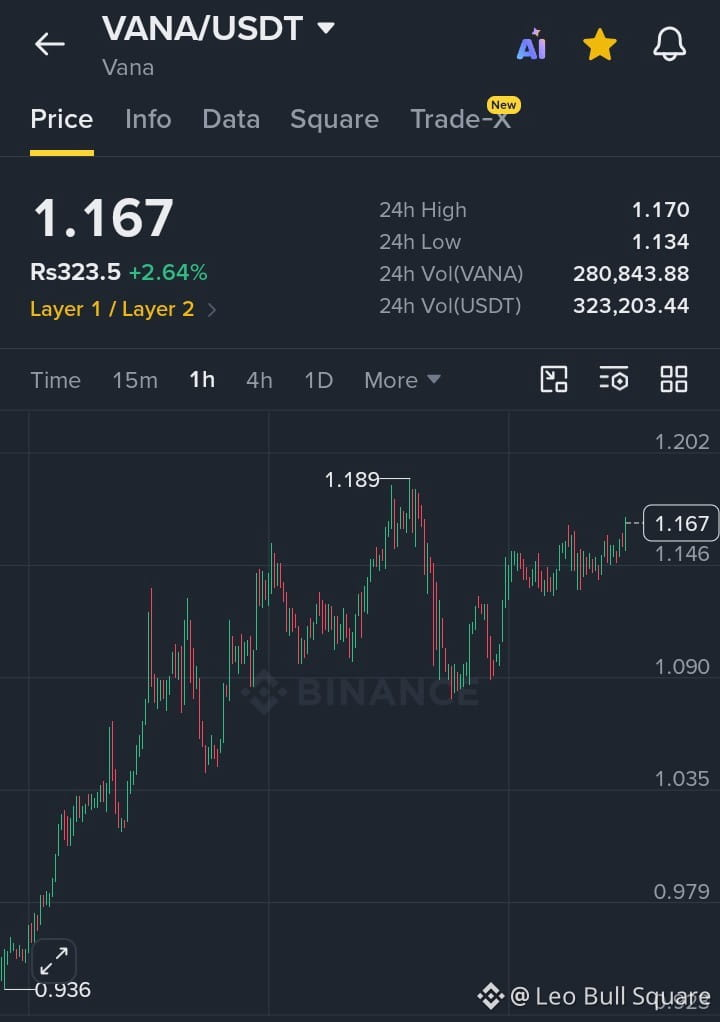
🚀 $VANA /USDT – Bullishes Ausbruchs-Alarm | Smart-Money-Ansammlungszone 🔥
$VANA zeigt nach einem Rückprall von der $0.936-Nachfragezone eine starke bullische Erholungsmomentum und bildet auf dem 1H-Zeitrahmen eine solide Struktur mit höherem Hoch. Derzeit konsolidiert der Kurs nahe $1.167 unter dem $1.189-Widerstand, was auf ein mögliches Breakout-Setup hindeutet. Ein klarer Move über $1.19 mit Volumenbestätigung könnte den nächsten bullischen Impuls freischalten, während Käufer die Kontrolle behalten.
📌 Long-Entry-Zone: $1.140 – $1.165
🎯 Take-Profit-Ziele:
• TP1: $1.190
• TP2: $1.250
• TP3: $1.320
🛑 Stop Loss: $1.085
Technische Highlights:
✅ Starker Rückprall von der wichtigen Liquiditätszone
✅ Bullishes BOS mit Höherem-Tief-Formation
✅ Kurs hält sich über dem $1.14-Support
✅ Dem Widerstands-Ausbruch näher, unterstützt durch Käuferdruck
VANA befindet sich in einem kritischen Entscheidungsbereich – beobachte den $1.19-Ausbruch und die Volumenausweitung zur Bestätigung des nächsten Moves. Handle mit richtigem Risikomanagement. 📈
#VANAUSDT #LongTrade #BreakoutSetup #SmartMoney #CryptoTrading
#Vana
{spot}(VANAUSDT)
🚀 $VANA /USDT – Bullishes Ausbruchs-Alarm | Smart-Money-Ansammlungszone 🔥
$VANA zeigt nach einem Rückprall von der $0.936-Nachfragezone eine starke bullische Erholungsmomentum und bildet auf dem 1H-Zeitrahmen eine solide Struktur mit höherem Hoch. Derzeit konsolidiert der Kurs nahe $1.167 unter dem $1.189-Widerstand, was auf ein mögliches Breakout-Setup hindeutet. Ein klarer Move über $1.19 mit Volumenbestätigung könnte den nächsten bullischen Impuls freischalten, während Käufer die Kontrolle behalten.
📌 Long-Entry-Zone: $1.140 – $1.165
🎯 Take-Profit-Ziele:
• TP1: $1.190
• TP2: $1.250
• TP3: $1.320
🛑 Stop Loss: $1.085
Technische Highlights:
✅ Starker Rückprall von der wichtigen Liquiditätszone
✅ Bullishes BOS mit Höherem-Tief-Formation
✅ Kurs hält sich über dem $1.14-Support
✅ Dem Widerstands-Ausbruch näher, unterstützt durch Käuferdruck
VANA befindet sich in einem kritischen Entscheidungsbereich – beobachte den $1.19-Ausbruch und die Volumenausweitung zur Bestätigung des nächsten Moves. Handle mit richtigem Risikomanagement. 📈
#VANAUSDT #LongTrade #BreakoutSetup #SmartMoney #CryptoTrading
#Vana
$VANA zeigt nach einem Rückprall von der $0.936-Nachfragezone eine starke bullische Erholungsmomentum und bildet auf dem 1H-Zeitrahmen eine solide Struktur mit höherem Hoch. Derzeit konsolidiert der Kurs nahe $1.167 unter dem $1.189-Widerstand, was auf ein mögliches Breakout-Setup hindeutet. Ein klarer Move über $1.19 mit Volumenbestätigung könnte den nächsten bullischen Impuls freischalten, während Käufer die Kontrolle behalten.
📌 Long-Entry-Zone: $1.140 – $1.165
🎯 Take-Profit-Ziele:
• TP1: $1.190
• TP2: $1.250
• TP3: $1.320
🛑 Stop Loss: $1.085
Technische Highlights:
✅ Starker Rückprall von der wichtigen Liquiditätszone
✅ Bullishes BOS mit Höherem-Tief-Formation
✅ Kurs hält sich über dem $1.14-Support
✅ Dem Widerstands-Ausbruch näher, unterstützt durch Käuferdruck
VANA befindet sich in einem kritischen Entscheidungsbereich – beobachte den $1.19-Ausbruch und die Volumenausweitung zur Bestätigung des nächsten Moves. Handle mit richtigem Risikomanagement. 📈
#VANAUSDT #LongTrade #BreakoutSetup #SmartMoney #CryptoTrading
#Vana
Sharell Vickey zkgx:
Miss u
1
3
48

·
--
$VANA zeigt heute Energie mit einem Anstieg von +4%. Diese Bewegung zeigt, dass, obwohl es sich um ein kleines Projekt handelt, es Aufmerksamkeit und Volumen auf dem Markt anzieht. Der Anstieg ist ein positives Zeichen. Jetzt in VANA einzusteigen bedeutet, auf ein aufstrebendes Projekt mit einer interessanten Story und Wachstumspotenzial zu setzen. #Vana
{spot}(VANAUSDT)
$VANA zeigt heute Energie mit einem Anstieg von +4%. Diese Bewegung zeigt, dass, obwohl es sich um ein kleines Projekt handelt, es Aufmerksamkeit und Volumen auf dem Markt anzieht. Der Anstieg ist ein positives Zeichen. Jetzt in VANA einzusteigen bedeutet, auf ein aufstrebendes Projekt mit einer interessanten Story und Wachstumspotenzial zu setzen. #Vana
20
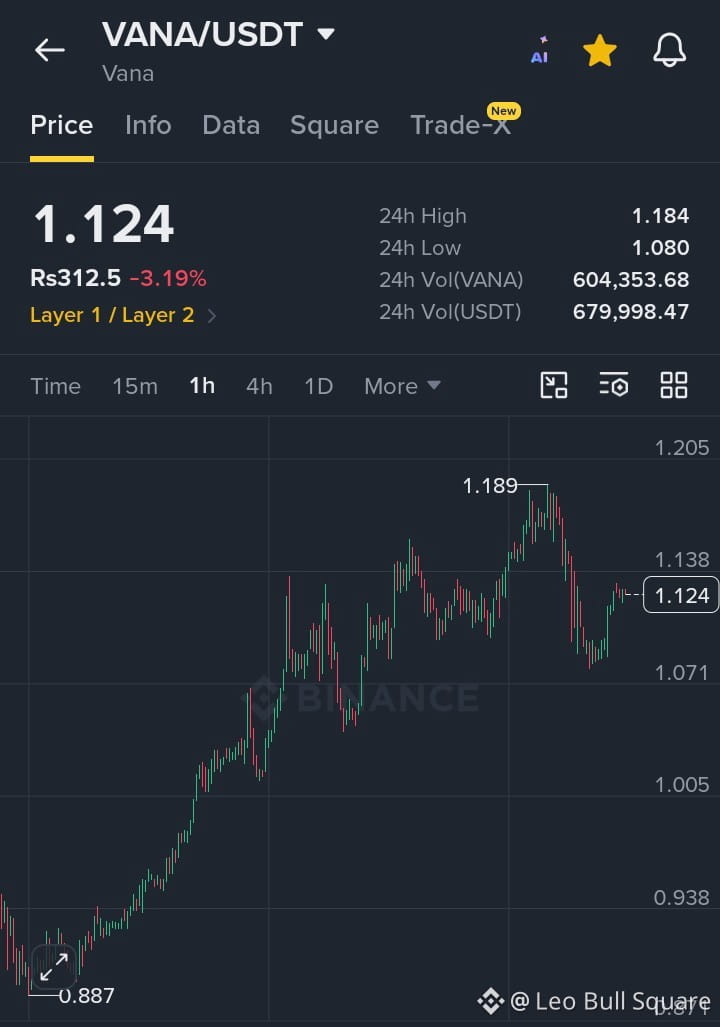
🚀 $VANA /USDT Bulls verteidigen den Support – Nächster Ausbruchsschritt im Gange? 🔥
$VANA zeigt einen starken Erholungsversuch, nachdem die Unterstützung bei 1.080 abgewiesen wurde, und springt zurück Richtung 1.124, während Käufer eingreifen. Die 1H-Struktur hält sich weiterhin über der entscheidenden Nachfragezone; der Preis konsolidiert unterhalb des Widerstandslevels bei 1.138. Ein bestätigter Ausbruch über 1.138 könnte den Weg zu 1.180–1.205 öffnen, während ein Fehlschlagen, 1.100 zu halten, einen erneuten Test der 1.080-Unterstützung nach sich ziehen kann.
📌 Trade-Setup:
Einstiegszone: 1.110 – 1.125
Ziel 1: 1.138
Ziel 2: 1.180
Finales Ziel: 1.205
Stop Loss: 1.075
Technischer Fokus: Support-Rückeroberung + Liquidity Sweep + Breakout-Bestätigung sind die wichtigsten Signale, auf die du achten solltest. Ein Volumenanstieg über dem Widerstand könnte den nächsten bullischen Impuls auslösen. Handle mit Risikomanagement und beobachte den Ausbruch genau. 📈
#VANA #CryptoTrading #BinanceSquare
#Vana
{spot}(VANAUSDT)
🚀 $VANA /USDT Bulls verteidigen den Support – Nächster Ausbruchsschritt im Gange? 🔥
$VANA zeigt einen starken Erholungsversuch, nachdem die Unterstützung bei 1.080 abgewiesen wurde, und springt zurück Richtung 1.124, während Käufer eingreifen. Die 1H-Struktur hält sich weiterhin über der entscheidenden Nachfragezone; der Preis konsolidiert unterhalb des Widerstandslevels bei 1.138. Ein bestätigter Ausbruch über 1.138 könnte den Weg zu 1.180–1.205 öffnen, während ein Fehlschlagen, 1.100 zu halten, einen erneuten Test der 1.080-Unterstützung nach sich ziehen kann.
📌 Trade-Setup:
Einstiegszone: 1.110 – 1.125
Ziel 1: 1.138
Ziel 2: 1.180
Finales Ziel: 1.205
Stop Loss: 1.075
Technischer Fokus: Support-Rückeroberung + Liquidity Sweep + Breakout-Bestätigung sind die wichtigsten Signale, auf die du achten solltest. Ein Volumenanstieg über dem Widerstand könnte den nächsten bullischen Impuls auslösen. Handle mit Risikomanagement und beobachte den Ausbruch genau. 📈
#VANA #CryptoTrading #BinanceSquare
#Vana
$VANA zeigt einen starken Erholungsversuch, nachdem die Unterstützung bei 1.080 abgewiesen wurde, und springt zurück Richtung 1.124, während Käufer eingreifen. Die 1H-Struktur hält sich weiterhin über der entscheidenden Nachfragezone; der Preis konsolidiert unterhalb des Widerstandslevels bei 1.138. Ein bestätigter Ausbruch über 1.138 könnte den Weg zu 1.180–1.205 öffnen, während ein Fehlschlagen, 1.100 zu halten, einen erneuten Test der 1.080-Unterstützung nach sich ziehen kann.
📌 Trade-Setup:
Einstiegszone: 1.110 – 1.125
Ziel 1: 1.138
Ziel 2: 1.180
Finales Ziel: 1.205
Stop Loss: 1.075
Technischer Fokus: Support-Rückeroberung + Liquidity Sweep + Breakout-Bestätigung sind die wichtigsten Signale, auf die du achten solltest. Ein Volumenanstieg über dem Widerstand könnte den nächsten bullischen Impuls auslösen. Handle mit Risikomanagement und beobachte den Ausbruch genau. 📈
#VANA #CryptoTrading #BinanceSquare
#Vana
2
70

·
--
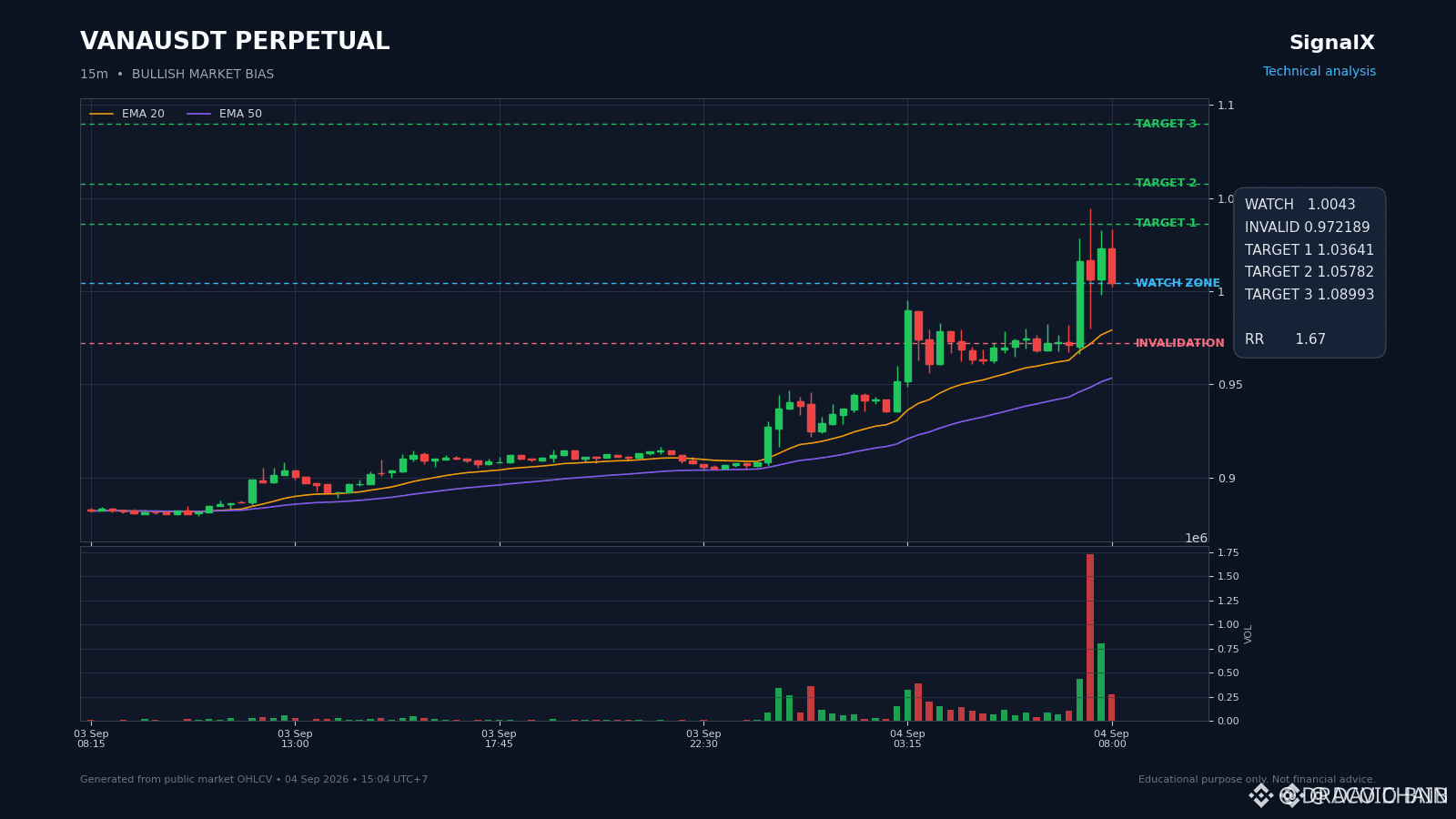
INSTITUTIONELLE NACHFRAGE SAMMELT SICH AN, WÄHREND $VANA EINE KRITISCHE STRUKTURELLE WENDE VERTEIDIGT 🟢⚡
Einstieg: 1.0043 ⚡
Ziel: 1.03641 - 1.08993 🚀
Stop Loss: 0.972189 ⚠️
$VANA hält fest oberhalb des 1.0043-Orderblocks stand und signalisiert ein klares institutionelles Interesse vor der nächsten Expansionsphase. 📊 Die kurzfristige Marktstruktur bleibt vollständig intakt und zeigt eine anhaltende Absorption des Angebots in dieser Schlüsselfläche.
Solange der Kurs oberhalb des 0.972189-Invalidierungs-Knackpunkts geschützt bleibt, begünstigt der Orderflow einen schnellen Sweep der Liquiditätsziele oberhalb bis 1.08993. 🔍 Bestätige die Reaktionen intraday, bevor du die Positionsgröße erhöhst, um sauber mit dem Footprint der Smart Money übereinzustimmen.
💬 Bietest du dieses strukturelle Nachfrageblock oder wartest du auf eine explizite Bestätigung in kleineren Timeframes? 👇
⚠️ Keine Finanzberatung. Verlängere stets dein Risikomanagement. 🛡️
🏷️ #VANA #LongSetup #MarketStructure #Crypto #Altcoins
🎯 🦈
INSTITUTIONELLE NACHFRAGE SAMMELT SICH AN, WÄHREND $VANA EINE KRITISCHE STRUKTURELLE WENDE VERTEIDIGT 🟢⚡
Einstieg: 1.0043 ⚡
Ziel: 1.03641 - 1.08993 🚀
Stop Loss: 0.972189 ⚠️
$VANA hält fest oberhalb des 1.0043-Orderblocks stand und signalisiert ein klares institutionelles Interesse vor der nächsten Expansionsphase. 📊 Die kurzfristige Marktstruktur bleibt vollständig intakt und zeigt eine anhaltende Absorption des Angebots in dieser Schlüsselfläche.
Solange der Kurs oberhalb des 0.972189-Invalidierungs-Knackpunkts geschützt bleibt, begünstigt der Orderflow einen schnellen Sweep der Liquiditätsziele oberhalb bis 1.08993. 🔍 Bestätige die Reaktionen intraday, bevor du die Positionsgröße erhöhst, um sauber mit dem Footprint der Smart Money übereinzustimmen.
💬 Bietest du dieses strukturelle Nachfrageblock oder wartest du auf eine explizite Bestätigung in kleineren Timeframes? 👇
⚠️ Keine Finanzberatung. Verlängere stets dein Risikomanagement. 🛡️
🏷️ #VANA #LongSetup #MarketStructure #Crypto #Altcoins
🎯 🦈
Einstieg: 1.0043 ⚡
Ziel: 1.03641 - 1.08993 🚀
Stop Loss: 0.972189 ⚠️
$VANA hält fest oberhalb des 1.0043-Orderblocks stand und signalisiert ein klares institutionelles Interesse vor der nächsten Expansionsphase. 📊 Die kurzfristige Marktstruktur bleibt vollständig intakt und zeigt eine anhaltende Absorption des Angebots in dieser Schlüsselfläche.
Solange der Kurs oberhalb des 0.972189-Invalidierungs-Knackpunkts geschützt bleibt, begünstigt der Orderflow einen schnellen Sweep der Liquiditätsziele oberhalb bis 1.08993. 🔍 Bestätige die Reaktionen intraday, bevor du die Positionsgröße erhöhst, um sauber mit dem Footprint der Smart Money übereinzustimmen.
💬 Bietest du dieses strukturelle Nachfrageblock oder wartest du auf eine explizite Bestätigung in kleineren Timeframes? 👇
⚠️ Keine Finanzberatung. Verlängere stets dein Risikomanagement. 🛡️
🏷️ #VANA #LongSetup #MarketStructure #Crypto #Altcoins
🎯 🦈
89
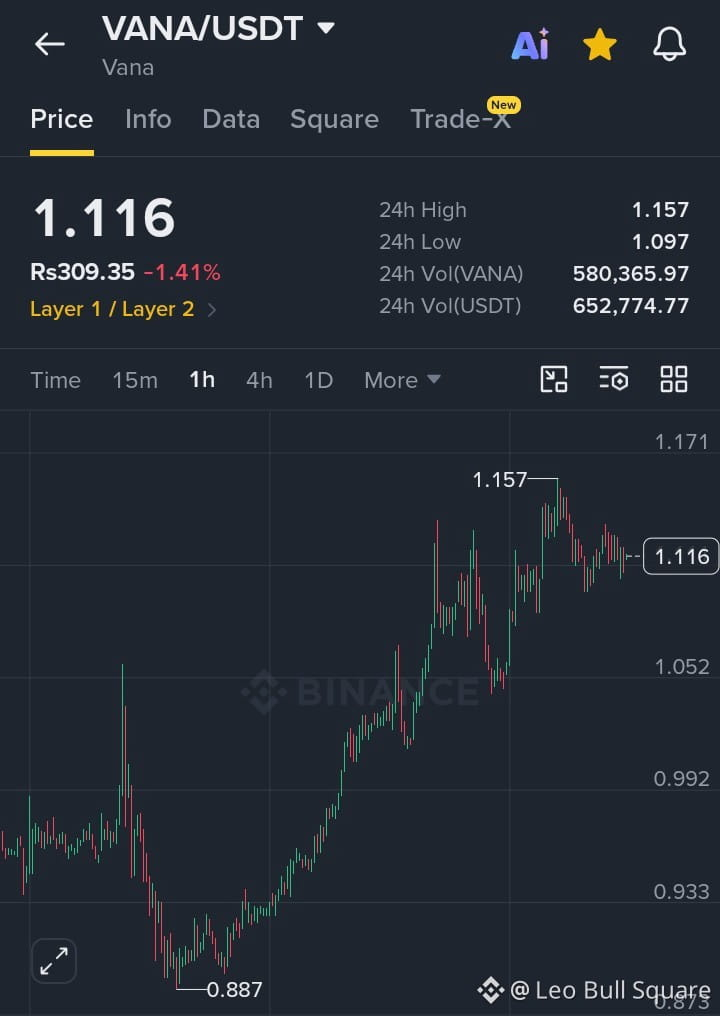
🚀 $VANA /USDT Bulls halten stark nach dem Rallye – Ausbruch oder Rücksetzer als Nächstes? 🔥
$VANA zeigt eine starke Erholungsstruktur, nachdem es von dem $0.887-Tief abgeprallt ist. Dabei entsteht ein klarer Trend mit höherem Hoch und höherem Tief im 1H-Chart. Derzeit wird der Preis bei $1.116 gehandelt (-1.41%), nachdem zuvor das jüngste Hoch von $1.157 getestet wurde. Das deutet darauf hin, dass Käufer die bullische Zone weiterhin verteidigen. Ein erfolgreicher Ausbruch über den Widerstand von $1.157 mit Volumenbestätigung könnte VANA in Richtung $1.20–$1.25 treiben, während eine Zurückweisung zu einem erneuten Test der Unterstützung bei $1.05 führen kann. Trade-Setup: Einstiegszone: $1.08–$1.12 | TP1: $1.157 | TP2: $1.20 | TP3: $1.25 | SL: Unter $1.04. Achte auf BOS, Liquiditätssweep und Momentum-Expansion – VANA befindet sich an einem entscheidenden Bereich, in dem die Bewegung von Smart Money den nächsten Schritt definieren kann. 📈 Folge für weitere technische Setups.
#Vana
{spot}(VANAUSDT)
🚀 $VANA /USDT Bulls halten stark nach dem Rallye – Ausbruch oder Rücksetzer als Nächstes? 🔥
$VANA zeigt eine starke Erholungsstruktur, nachdem es von dem $0.887-Tief abgeprallt ist. Dabei entsteht ein klarer Trend mit höherem Hoch und höherem Tief im 1H-Chart. Derzeit wird der Preis bei $1.116 gehandelt (-1.41%), nachdem zuvor das jüngste Hoch von $1.157 getestet wurde. Das deutet darauf hin, dass Käufer die bullische Zone weiterhin verteidigen. Ein erfolgreicher Ausbruch über den Widerstand von $1.157 mit Volumenbestätigung könnte VANA in Richtung $1.20–$1.25 treiben, während eine Zurückweisung zu einem erneuten Test der Unterstützung bei $1.05 führen kann. Trade-Setup: Einstiegszone: $1.08–$1.12 | TP1: $1.157 | TP2: $1.20 | TP3: $1.25 | SL: Unter $1.04. Achte auf BOS, Liquiditätssweep und Momentum-Expansion – VANA befindet sich an einem entscheidenden Bereich, in dem die Bewegung von Smart Money den nächsten Schritt definieren kann. 📈 Folge für weitere technische Setups.
#Vana
$VANA zeigt eine starke Erholungsstruktur, nachdem es von dem $0.887-Tief abgeprallt ist. Dabei entsteht ein klarer Trend mit höherem Hoch und höherem Tief im 1H-Chart. Derzeit wird der Preis bei $1.116 gehandelt (-1.41%), nachdem zuvor das jüngste Hoch von $1.157 getestet wurde. Das deutet darauf hin, dass Käufer die bullische Zone weiterhin verteidigen. Ein erfolgreicher Ausbruch über den Widerstand von $1.157 mit Volumenbestätigung könnte VANA in Richtung $1.20–$1.25 treiben, während eine Zurückweisung zu einem erneuten Test der Unterstützung bei $1.05 führen kann. Trade-Setup: Einstiegszone: $1.08–$1.12 | TP1: $1.157 | TP2: $1.20 | TP3: $1.25 | SL: Unter $1.04. Achte auf BOS, Liquiditätssweep und Momentum-Expansion – VANA befindet sich an einem entscheidenden Bereich, in dem die Bewegung von Smart Money den nächsten Schritt definieren kann. 📈 Folge für weitere technische Setups.
#Vana
1
90

·
--
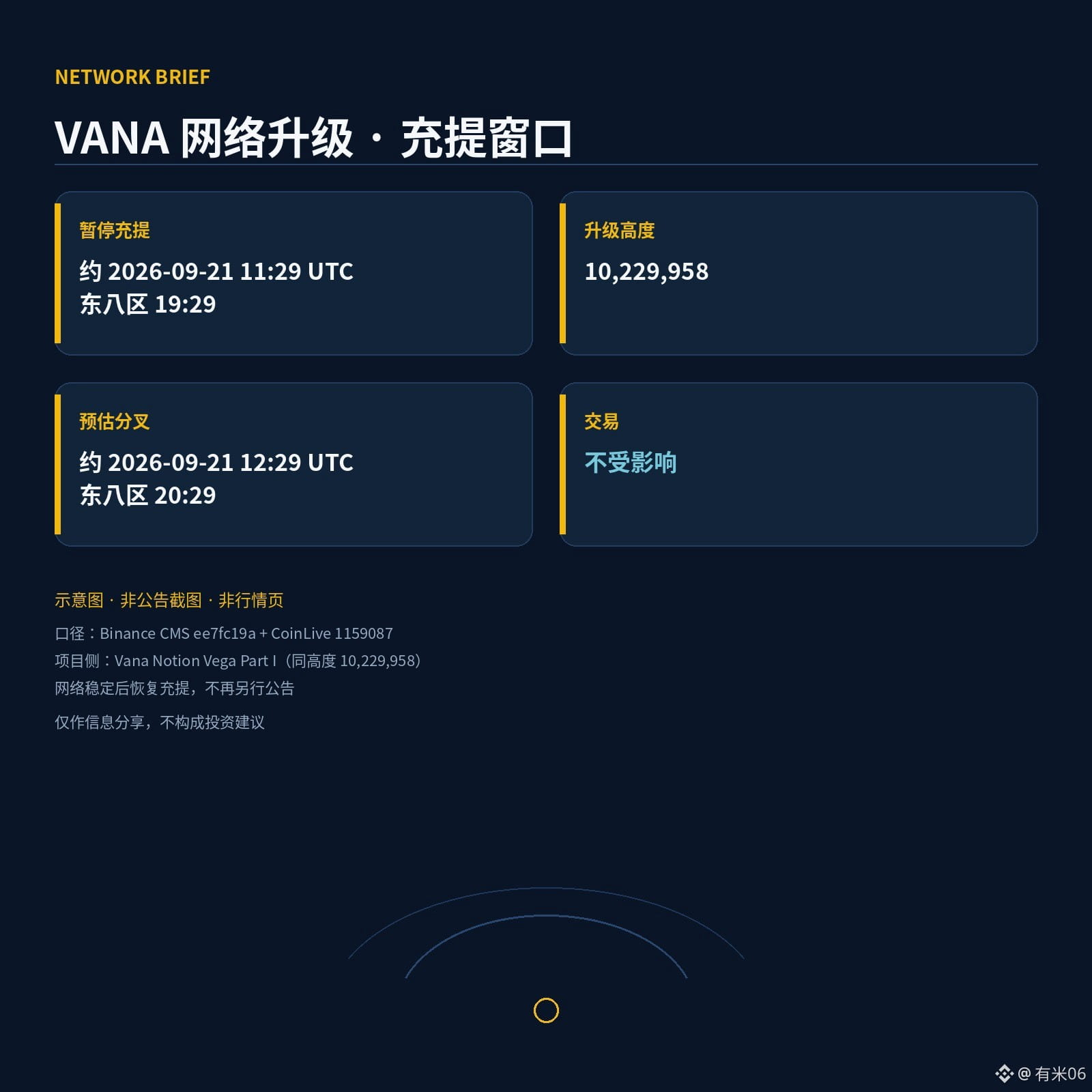
Einblick in die Schlussfolgerung: Das Zeitfenster für die VANA-Ein- und Auszahlungen ist jetzt erreicht/angehalten – ca. 2026-09-21 11:29 (UTC) / ab 19:29 (UTC+8). Binance setzt die Ein- und Auszahlungen des Vana (VANA) Netzwerk-Token aus, in Abstimmung mit der Netzwerkaktualisierung und einer Hard Fork; der Spot-Handel ist nicht betroffen.
Laut dem offiziellen Binance-CMS (Artikelcode ee7fc19a, mit Datum 2026-09-21): Start der Pause ca. 11:29 (UTC); die Hard Fork fällt bei Blockhöhe 10.229.958, geschätzt am selben Tag 12:29 (UTC) / 20:29 (UTC+8). In der Bekanntmachung steht, dass der Handel nicht beeinträchtigt ist, die technische Anpassung von Binance übernommen wird; nach Stabilisierung des Netzwerks werden Ein- und Auszahlungen wiederhergestellt, ohne weitere separate Bekanntmachung.
Unabhängige Gegenprüfung: CoinLive-Kurzmeldung (2026-09-16) paraphrasiert dieselbe Bekanntmachung; Zeitpunkt der Aussetzung, Blockhöhe und die geschätzte Fork-Zeit stimmen überein. Seitens des Projekts verweist Vana Notion „Vega Part I“ mit derselben Lesart auf Höhe 10.229.958 (geschätzt 12:29 UTC) und erklärt, dass es Sicherheits-Härtungen und Prysm-v7-bezogene Konfigurationen gibt, ohne Änderung bei Angebot/Zuteilung.
Die Abbildung ist eine schematische Darstellung, keine Bekanntmachung oder Browser-Screenshot.
Datenstand: Fenster bis 2026-09-21 11:29 UTC (Binance-CMS Veröffentlichungsangaben; CoinLive 1159087 + Vana-Notion-Gegenprüfung).
Nur zum Informationsaustausch, keine Anlageberatung.
#币安 #VANA
Einblick in die Schlussfolgerung: Das Zeitfenster für die VANA-Ein- und Auszahlungen ist jetzt erreicht/angehalten – ca. 2026-09-21 11:29 (UTC) / ab 19:29 (UTC+8). Binance setzt die Ein- und Auszahlungen des Vana (VANA) Netzwerk-Token aus, in Abstimmung mit der Netzwerkaktualisierung und einer Hard Fork; der Spot-Handel ist nicht betroffen.
Laut dem offiziellen Binance-CMS (Artikelcode ee7fc19a, mit Datum 2026-09-21): Start der Pause ca. 11:29 (UTC); die Hard Fork fällt bei Blockhöhe 10.229.958, geschätzt am selben Tag 12:29 (UTC) / 20:29 (UTC+8). In der Bekanntmachung steht, dass der Handel nicht beeinträchtigt ist, die technische Anpassung von Binance übernommen wird; nach Stabilisierung des Netzwerks werden Ein- und Auszahlungen wiederhergestellt, ohne weitere separate Bekanntmachung.
Unabhängige Gegenprüfung: CoinLive-Kurzmeldung (2026-09-16) paraphrasiert dieselbe Bekanntmachung; Zeitpunkt der Aussetzung, Blockhöhe und die geschätzte Fork-Zeit stimmen überein. Seitens des Projekts verweist Vana Notion „Vega Part I“ mit derselben Lesart auf Höhe 10.229.958 (geschätzt 12:29 UTC) und erklärt, dass es Sicherheits-Härtungen und Prysm-v7-bezogene Konfigurationen gibt, ohne Änderung bei Angebot/Zuteilung.
Die Abbildung ist eine schematische Darstellung, keine Bekanntmachung oder Browser-Screenshot.
Datenstand: Fenster bis 2026-09-21 11:29 UTC (Binance-CMS Veröffentlichungsangaben; CoinLive 1159087 + Vana-Notion-Gegenprüfung).
Nur zum Informationsaustausch, keine Anlageberatung.
#币安 #VANA
Laut dem offiziellen Binance-CMS (Artikelcode ee7fc19a, mit Datum 2026-09-21): Start der Pause ca. 11:29 (UTC); die Hard Fork fällt bei Blockhöhe 10.229.958, geschätzt am selben Tag 12:29 (UTC) / 20:29 (UTC+8). In der Bekanntmachung steht, dass der Handel nicht beeinträchtigt ist, die technische Anpassung von Binance übernommen wird; nach Stabilisierung des Netzwerks werden Ein- und Auszahlungen wiederhergestellt, ohne weitere separate Bekanntmachung.
Unabhängige Gegenprüfung: CoinLive-Kurzmeldung (2026-09-16) paraphrasiert dieselbe Bekanntmachung; Zeitpunkt der Aussetzung, Blockhöhe und die geschätzte Fork-Zeit stimmen überein. Seitens des Projekts verweist Vana Notion „Vega Part I“ mit derselben Lesart auf Höhe 10.229.958 (geschätzt 12:29 UTC) und erklärt, dass es Sicherheits-Härtungen und Prysm-v7-bezogene Konfigurationen gibt, ohne Änderung bei Angebot/Zuteilung.
Die Abbildung ist eine schematische Darstellung, keine Bekanntmachung oder Browser-Screenshot.
Datenstand: Fenster bis 2026-09-21 11:29 UTC (Binance-CMS Veröffentlichungsangaben; CoinLive 1159087 + Vana-Notion-Gegenprüfung).
Nur zum Informationsaustausch, keine Anlageberatung.
#币安 #VANA
165
🚀 $VANA +7,59% — Ausbruch über 1,157$ könnte die nächste Etappe zünden!
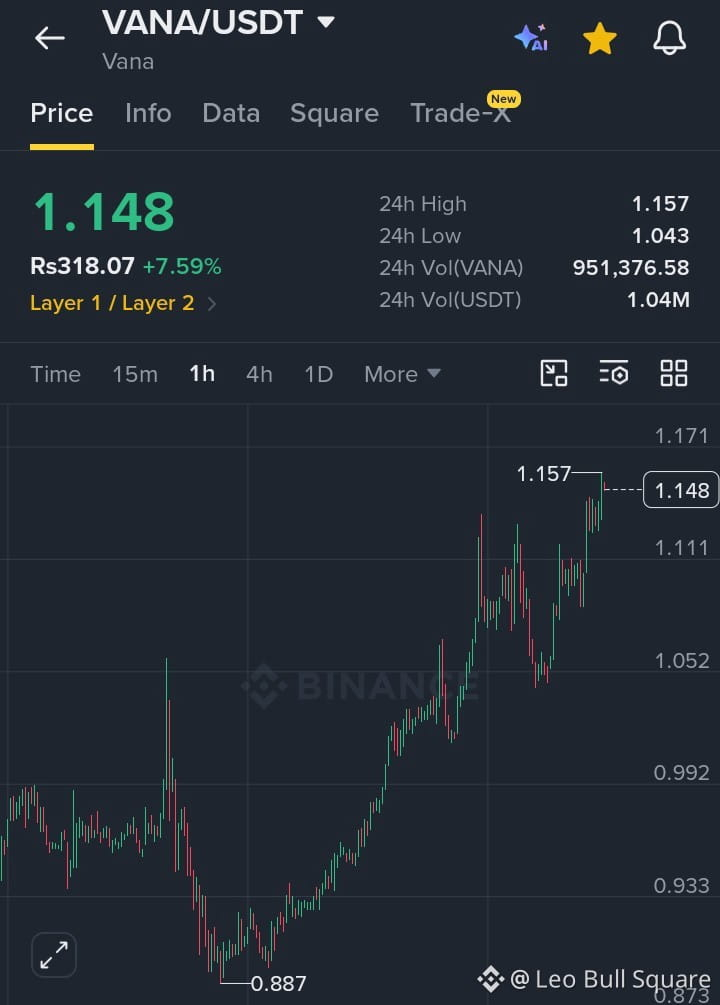
$VANA /USDT wird derzeit um 1,148$ gehandelt, +7,59% nach einem starken Rebound vom 1,043$-Tief der letzten 24h und einem größeren 1H-Swing von 0,887$. Der Kurs drückt jetzt direkt unterhalb des wichtigen Widerstands bei 1,157$, was diese Zone zu einem besonders interessanten Ausbruchsbereich macht. 🔥 Trading-Setup: Beobachte 1,135–1,145$ als unmittelbaren Support-/Retest-Bereich; ein starker 1H-Schluss über 1,157$ mit zunehmendem Volumen könnte TP1: 1,175$, TP2: 1,200$ und TP3: 1,230$ eröffnen. ⚡ Der Chart druckt weiterhin höhere Hochs und höhere Tiefs und zeigt eine klare bullische Struktur, aber ein Verlust von 1,111$ würde den Schwung schwächen und den Kurs möglicherweise zurück Richtung 1,052$ ziehen. Das sauberste Signal ist Ausbruch + Volume-Spike + erfolgreicher Retest von 1,157$ — erst Bestätigung, dann Einstieg.
#Vana
{spot}(VANAUSDT)
🚀 $VANA +7,59% — Ausbruch über 1,157$ könnte die nächste Etappe zünden!
$VANA /USDT wird derzeit um 1,148$ gehandelt, +7,59% nach einem starken Rebound vom 1,043$-Tief der letzten 24h und einem größeren 1H-Swing von 0,887$. Der Kurs drückt jetzt direkt unterhalb des wichtigen Widerstands bei 1,157$, was diese Zone zu einem besonders interessanten Ausbruchsbereich macht. 🔥 Trading-Setup: Beobachte 1,135–1,145$ als unmittelbaren Support-/Retest-Bereich; ein starker 1H-Schluss über 1,157$ mit zunehmendem Volumen könnte TP1: 1,175$, TP2: 1,200$ und TP3: 1,230$ eröffnen. ⚡ Der Chart druckt weiterhin höhere Hochs und höhere Tiefs und zeigt eine klare bullische Struktur, aber ein Verlust von 1,111$ würde den Schwung schwächen und den Kurs möglicherweise zurück Richtung 1,052$ ziehen. Das sauberste Signal ist Ausbruch + Volume-Spike + erfolgreicher Retest von 1,157$ — erst Bestätigung, dann Einstieg.
#Vana
$VANA /USDT wird derzeit um 1,148$ gehandelt, +7,59% nach einem starken Rebound vom 1,043$-Tief der letzten 24h und einem größeren 1H-Swing von 0,887$. Der Kurs drückt jetzt direkt unterhalb des wichtigen Widerstands bei 1,157$, was diese Zone zu einem besonders interessanten Ausbruchsbereich macht. 🔥 Trading-Setup: Beobachte 1,135–1,145$ als unmittelbaren Support-/Retest-Bereich; ein starker 1H-Schluss über 1,157$ mit zunehmendem Volumen könnte TP1: 1,175$, TP2: 1,200$ und TP3: 1,230$ eröffnen. ⚡ Der Chart druckt weiterhin höhere Hochs und höhere Tiefs und zeigt eine klare bullische Struktur, aber ein Verlust von 1,111$ würde den Schwung schwächen und den Kurs möglicherweise zurück Richtung 1,052$ ziehen. Das sauberste Signal ist Ausbruch + Volume-Spike + erfolgreicher Retest von 1,157$ — erst Bestätigung, dann Einstieg.
#Vana
3
98

·
--
🚨 $VANA TRADER — GROßER TAG HEUTE! 👀
VANA’s Netzwerk-Upgrade & Hard Fork ist für den 21. September geplant. ⚡
Binance sagt, dass der Handel während des Upgrades NICHT ausgesetzt wird. 📊
Das macht die Kursreaktion und das Volumen besonders interessant.
⚠️ Upgrade-News können in BEIDE Richtungen Volatilität auslösen — jage kein FOMO.
Ausbruch oder „News verkaufen“? Worauf achtest du? 👇
#Vana #Binance #Crypto #trading #altcoins
{future}(VANAUSDT)
🚨 $VANA TRADER — GROßER TAG HEUTE! 👀
VANA’s Netzwerk-Upgrade & Hard Fork ist für den 21. September geplant. ⚡
Binance sagt, dass der Handel während des Upgrades NICHT ausgesetzt wird. 📊
Das macht die Kursreaktion und das Volumen besonders interessant.
⚠️ Upgrade-News können in BEIDE Richtungen Volatilität auslösen — jage kein FOMO.
Ausbruch oder „News verkaufen“? Worauf achtest du? 👇
#Vana #Binance #Crypto #trading #altcoins
VANA’s Netzwerk-Upgrade & Hard Fork ist für den 21. September geplant. ⚡
Binance sagt, dass der Handel während des Upgrades NICHT ausgesetzt wird. 📊
Das macht die Kursreaktion und das Volumen besonders interessant.
⚠️ Upgrade-News können in BEIDE Richtungen Volatilität auslösen — jage kein FOMO.
Ausbruch oder „News verkaufen“? Worauf achtest du? 👇
#Vana #Binance #Crypto #trading #altcoins
175

·
--
👀 $VANA steht heute auf dem Radar…
KI + Data-Story 🤖
Netzwerk-Upgrade 🔥
Hard Fork findet heute statt ⚡
Aber wird das Upgrade für $VANA wirklich etwas ändern?
Das ist der interessante Teil. 👀
#VANA #Crypto #BinanceSquare #AI
{spot}(VANAUSDT)
$
👀 $VANA steht heute auf dem Radar…
KI + Data-Story 🤖
Netzwerk-Upgrade 🔥
Hard Fork findet heute statt ⚡
Aber wird das Upgrade für $VANA wirklich etwas ändern?
Das ist der interessante Teil. 👀
#VANA #Crypto #BinanceSquare #AI
$
KI + Data-Story 🤖
Netzwerk-Upgrade 🔥
Hard Fork findet heute statt ⚡
Aber wird das Upgrade für $VANA wirklich etwas ändern?
Das ist der interessante Teil. 👀
#VANA #Crypto #BinanceSquare #AI
$
144

VANA UPDATE
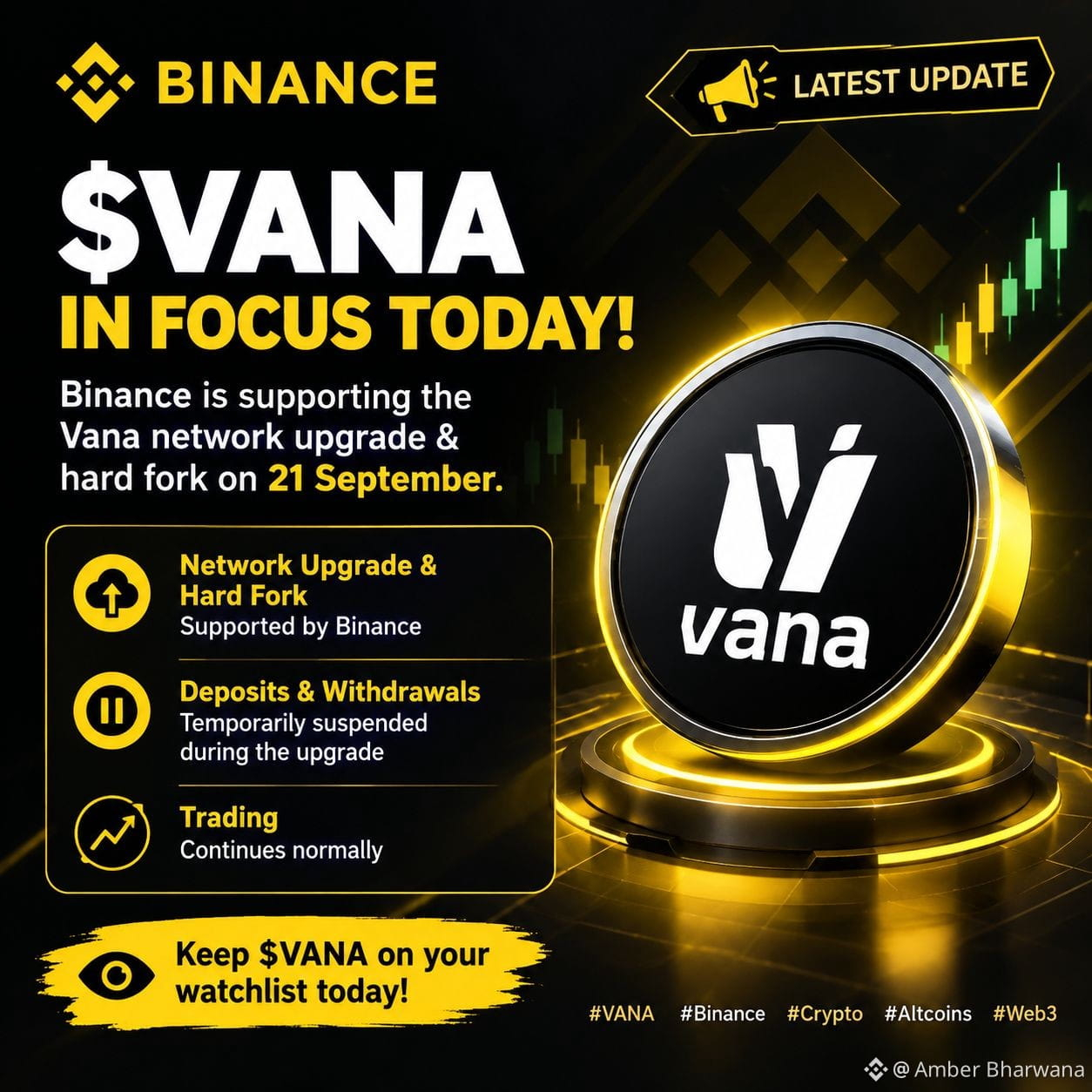
$VANA steht heute im Fokus, da Binance die Vana-Netzwerk-aktualisierung und den Hard Fork unterstützt.
Ein- und Auszahlungen werden während der Aktualisierung vorübergehend ausgesetzt, während der Handel wie gewohnt fortgesetzt wird.
Behalte $VANA heute auf deiner Watchlist!
#VANA #Binance #Crypto #Altcoins #Web3
VANA UPDATE
$VANA steht heute im Fokus, da Binance die Vana-Netzwerk-aktualisierung und den Hard Fork unterstützt.
Ein- und Auszahlungen werden während der Aktualisierung vorübergehend ausgesetzt, während der Handel wie gewohnt fortgesetzt wird.
Behalte $VANA heute auf deiner Watchlist!
#VANA #Binance #Crypto #Altcoins #Web3
$VANA steht heute im Fokus, da Binance die Vana-Netzwerk-aktualisierung und den Hard Fork unterstützt.
Ein- und Auszahlungen werden während der Aktualisierung vorübergehend ausgesetzt, während der Handel wie gewohnt fortgesetzt wird.
Behalte $VANA heute auf deiner Watchlist!
#VANA #Binance #Crypto #Altcoins #Web3
73

·
--
VANA Netzwerk-Upgrade-Hinweis|Beijing-Zeit 21. September
Offizieller Binance-Hinweis bestätigt: Ab heute 19:29 Uhr werden Einzahlungen und Auszahlungen für VANA-Token im VANA-Netzwerk pausiert; voraussichtlich erfolgt um 20:29 Uhr das Netzwerk-Upgrade und ein Hard Fork bei der Blockhöhe 10.229.958. Der Handel ist davon nicht betroffen; Binance wird die technischen Vorgänge übernehmen. Sobald das Netzwerk stabil ist, werden Ein- und Auszahlungen wieder aktiviert, ohne dass es eine weitere Ankündigung gibt.
Was ist passiert: Es handelt sich um ein Upgrade des Vana-Netzwerks und einen Hard Fork—nicht um das Entfernen von VANA von Binance und auch nicht um eine Schließung des Spot-Handels.
Wen betrifft es: Personen, die heute rund um 19:29 Uhr Ein- oder Auszahlungen planen, könnten im On-Chain-Übertragungszeitraum mit einer Pausen-Phase konfrontiert sein. Nur dann operieren, wenn die Wiederaufnahme von Binance oder auf der offiziellen Seite bestätigt wurde; keine alten Einzahlungsadressen oder Drittanbieter-Links verwenden.
Worauf Sie jetzt achten sollten: Wenn Sie nur halten oder handeln, ist laut der Ankündigung der Handel nicht betroffen. Wenn Sie jedoch überweisen möchten, planen Sie im Voraus Zeit ein und prüfen Sie die Netzwerkoptionen. Ein Upgrade ist kein Signal für eine Preisrichtung—die Volatilität von VANA und der Slippage müssen weiterhin von Ihnen selbst beurteilt werden.
$VANA {spot}(VANAUSDT)
#VANA #网络升级 #Risiko-Hinweis
Gibt es heute VANA Einzahlungs-/Auszahlungsplanungen?
VANA Netzwerk-Upgrade-Hinweis|Beijing-Zeit 21. September
Offizieller Binance-Hinweis bestätigt: Ab heute 19:29 Uhr werden Einzahlungen und Auszahlungen für VANA-Token im VANA-Netzwerk pausiert; voraussichtlich erfolgt um 20:29 Uhr das Netzwerk-Upgrade und ein Hard Fork bei der Blockhöhe 10.229.958. Der Handel ist davon nicht betroffen; Binance wird die technischen Vorgänge übernehmen. Sobald das Netzwerk stabil ist, werden Ein- und Auszahlungen wieder aktiviert, ohne dass es eine weitere Ankündigung gibt.
Was ist passiert: Es handelt sich um ein Upgrade des Vana-Netzwerks und einen Hard Fork—nicht um das Entfernen von VANA von Binance und auch nicht um eine Schließung des Spot-Handels.
Wen betrifft es: Personen, die heute rund um 19:29 Uhr Ein- oder Auszahlungen planen, könnten im On-Chain-Übertragungszeitraum mit einer Pausen-Phase konfrontiert sein. Nur dann operieren, wenn die Wiederaufnahme von Binance oder auf der offiziellen Seite bestätigt wurde; keine alten Einzahlungsadressen oder Drittanbieter-Links verwenden.
Worauf Sie jetzt achten sollten: Wenn Sie nur halten oder handeln, ist laut der Ankündigung der Handel nicht betroffen. Wenn Sie jedoch überweisen möchten, planen Sie im Voraus Zeit ein und prüfen Sie die Netzwerkoptionen. Ein Upgrade ist kein Signal für eine Preisrichtung—die Volatilität von VANA und der Slippage müssen weiterhin von Ihnen selbst beurteilt werden.
$VANA
#VANA #网络升级 #Risiko-Hinweis
Gibt es heute VANA Einzahlungs-/Auszahlungsplanungen?
Offizieller Binance-Hinweis bestätigt: Ab heute 19:29 Uhr werden Einzahlungen und Auszahlungen für VANA-Token im VANA-Netzwerk pausiert; voraussichtlich erfolgt um 20:29 Uhr das Netzwerk-Upgrade und ein Hard Fork bei der Blockhöhe 10.229.958. Der Handel ist davon nicht betroffen; Binance wird die technischen Vorgänge übernehmen. Sobald das Netzwerk stabil ist, werden Ein- und Auszahlungen wieder aktiviert, ohne dass es eine weitere Ankündigung gibt.
Was ist passiert: Es handelt sich um ein Upgrade des Vana-Netzwerks und einen Hard Fork—nicht um das Entfernen von VANA von Binance und auch nicht um eine Schließung des Spot-Handels.
Wen betrifft es: Personen, die heute rund um 19:29 Uhr Ein- oder Auszahlungen planen, könnten im On-Chain-Übertragungszeitraum mit einer Pausen-Phase konfrontiert sein. Nur dann operieren, wenn die Wiederaufnahme von Binance oder auf der offiziellen Seite bestätigt wurde; keine alten Einzahlungsadressen oder Drittanbieter-Links verwenden.
Worauf Sie jetzt achten sollten: Wenn Sie nur halten oder handeln, ist laut der Ankündigung der Handel nicht betroffen. Wenn Sie jedoch überweisen möchten, planen Sie im Voraus Zeit ein und prüfen Sie die Netzwerkoptionen. Ein Upgrade ist kein Signal für eine Preisrichtung—die Volatilität von VANA und der Slippage müssen weiterhin von Ihnen selbst beurteilt werden.
$VANA
#VANA #网络升级 #Risiko-Hinweis
Gibt es heute VANA Einzahlungs-/Auszahlungsplanungen?
81

·
--
{spot}(VANAUSDT)
🚨 VANA-Netzwerk-Upgrade ist da!
Vana schreitet mit einem großen Netzwerk-Upgrade und Hard Fork voran, unterstützt von Binance. 🔥
Der Handel bleibt unverändert, während Vana-Netzwerk-Einzahlungen & -Auszahlungen während des Upgrades vorübergehend ausgesetzt sind.
Ein Projekt mit Fokus auf KI, Datenhoheit & Web3. 🌐
#VANA #Binance #CryptoNewss #Web3 #AI
🚨 VANA-Netzwerk-Upgrade ist da!
Vana schreitet mit einem großen Netzwerk-Upgrade und Hard Fork voran, unterstützt von Binance. 🔥
Der Handel bleibt unverändert, während Vana-Netzwerk-Einzahlungen & -Auszahlungen während des Upgrades vorübergehend ausgesetzt sind.
Ein Projekt mit Fokus auf KI, Datenhoheit & Web3. 🌐
#VANA #Binance #CryptoNewss #Web3 #AI
Vana schreitet mit einem großen Netzwerk-Upgrade und Hard Fork voran, unterstützt von Binance. 🔥
Der Handel bleibt unverändert, während Vana-Netzwerk-Einzahlungen & -Auszahlungen während des Upgrades vorübergehend ausgesetzt sind.
Ein Projekt mit Fokus auf KI, Datenhoheit & Web3. 🌐
#VANA #Binance #CryptoNewss #Web3 #AI

1
151

·
--
Der Widerspruch an dem VANA-Upgrade morgen Abend liegt darin: Der Handel läuft weiter, aber die On-Chain-Ein- und Auszahlungen werden zuerst abgeschaltet; die Preisfindung und die Rebalancing-Kanäle könnten für kurze Zeit entkoppelt sein.
Fakt: In der Binance-Mitteilung vom 16.09. 10:00 Uhr heißt es, dass ab dem 21.09. 19:29 Uhr die Ein- und Auszahlungen des Vana-Netzwerks ausgesetzt werden und dass um 20:29 Uhr in Block 10,229,958 das Upgrade/der Hard Fork erfolgt. Der Spot-Handel ist hiervon nicht betroffen. Die Wiederaufnahme richtet sich nach der Stabilität des Netzwerks; weitere gesonderte Ankündigungen erfolgen nicht. Auf der Vana-Website wird das Ganze als eine offene Infrastruktur für menschengenerierte Daten positioniert, die sich an KI richtet. Laut CoinGecko-Daten vom 20.09. (UTC) liegt die Marktkapitalisierung von VANA bei ca. 33,94 Millionen USD, das Handelsvolumen bei etwa 2,79 Millionen USD. Das bedeutet: Small Cap, mit erhöhtem Risiko für Liquidität und Informationsasymmetrie.
Eher stark: Das Upgrade wird rechtzeitig abgeschlossen, Ein- und Auszahlungen laufen reibungslos wieder an und der Handel ist kein reines Einbahn-Ereignis. Neutral: Das Handelsvolumen fällt zurück, aber der Kurs hält sich innerhalb der Spanne vor dem Upgrade. Eher schwach: Verzögerung, langsame Wiederaufnahme oder dass die Markttiefe abgezogen wird. Die größte Ungültigkeitsbedingung ist, dass die Upgrade-Erklärung des Projekts weiterhin unklar bleibt und der Markt nur mit den Worten „Hard Fork“ handelt. Würdest du zuerst auf die On-Chain-Stabilität schauen oder zuerst auf die Wiederaufnahme der Binance-Ein- und Auszahlungen?
#VANA #AI #基础设施
Nur zu Informationszwecken. Keine Anlageberatung.
Der Widerspruch an dem VANA-Upgrade morgen Abend liegt darin: Der Handel läuft weiter, aber die On-Chain-Ein- und Auszahlungen werden zuerst abgeschaltet; die Preisfindung und die Rebalancing-Kanäle könnten für kurze Zeit entkoppelt sein.
Fakt: In der Binance-Mitteilung vom 16.09. 10:00 Uhr heißt es, dass ab dem 21.09. 19:29 Uhr die Ein- und Auszahlungen des Vana-Netzwerks ausgesetzt werden und dass um 20:29 Uhr in Block 10,229,958 das Upgrade/der Hard Fork erfolgt. Der Spot-Handel ist hiervon nicht betroffen. Die Wiederaufnahme richtet sich nach der Stabilität des Netzwerks; weitere gesonderte Ankündigungen erfolgen nicht. Auf der Vana-Website wird das Ganze als eine offene Infrastruktur für menschengenerierte Daten positioniert, die sich an KI richtet. Laut CoinGecko-Daten vom 20.09. (UTC) liegt die Marktkapitalisierung von VANA bei ca. 33,94 Millionen USD, das Handelsvolumen bei etwa 2,79 Millionen USD. Das bedeutet: Small Cap, mit erhöhtem Risiko für Liquidität und Informationsasymmetrie.
Eher stark: Das Upgrade wird rechtzeitig abgeschlossen, Ein- und Auszahlungen laufen reibungslos wieder an und der Handel ist kein reines Einbahn-Ereignis. Neutral: Das Handelsvolumen fällt zurück, aber der Kurs hält sich innerhalb der Spanne vor dem Upgrade. Eher schwach: Verzögerung, langsame Wiederaufnahme oder dass die Markttiefe abgezogen wird. Die größte Ungültigkeitsbedingung ist, dass die Upgrade-Erklärung des Projekts weiterhin unklar bleibt und der Markt nur mit den Worten „Hard Fork“ handelt. Würdest du zuerst auf die On-Chain-Stabilität schauen oder zuerst auf die Wiederaufnahme der Binance-Ein- und Auszahlungen?
#VANA #AI #基础设施
Nur zu Informationszwecken. Keine Anlageberatung.
Fakt: In der Binance-Mitteilung vom 16.09. 10:00 Uhr heißt es, dass ab dem 21.09. 19:29 Uhr die Ein- und Auszahlungen des Vana-Netzwerks ausgesetzt werden und dass um 20:29 Uhr in Block 10,229,958 das Upgrade/der Hard Fork erfolgt. Der Spot-Handel ist hiervon nicht betroffen. Die Wiederaufnahme richtet sich nach der Stabilität des Netzwerks; weitere gesonderte Ankündigungen erfolgen nicht. Auf der Vana-Website wird das Ganze als eine offene Infrastruktur für menschengenerierte Daten positioniert, die sich an KI richtet. Laut CoinGecko-Daten vom 20.09. (UTC) liegt die Marktkapitalisierung von VANA bei ca. 33,94 Millionen USD, das Handelsvolumen bei etwa 2,79 Millionen USD. Das bedeutet: Small Cap, mit erhöhtem Risiko für Liquidität und Informationsasymmetrie.
Eher stark: Das Upgrade wird rechtzeitig abgeschlossen, Ein- und Auszahlungen laufen reibungslos wieder an und der Handel ist kein reines Einbahn-Ereignis. Neutral: Das Handelsvolumen fällt zurück, aber der Kurs hält sich innerhalb der Spanne vor dem Upgrade. Eher schwach: Verzögerung, langsame Wiederaufnahme oder dass die Markttiefe abgezogen wird. Die größte Ungültigkeitsbedingung ist, dass die Upgrade-Erklärung des Projekts weiterhin unklar bleibt und der Markt nur mit den Worten „Hard Fork“ handelt. Würdest du zuerst auf die On-Chain-Stabilität schauen oder zuerst auf die Wiederaufnahme der Binance-Ein- und Auszahlungen?
#VANA #AI #基础设施
Nur zu Informationszwecken. Keine Anlageberatung.
1
506

·
--
Bullisch
$VANA sitzt an einer kritischen Entscheidungszone…!!
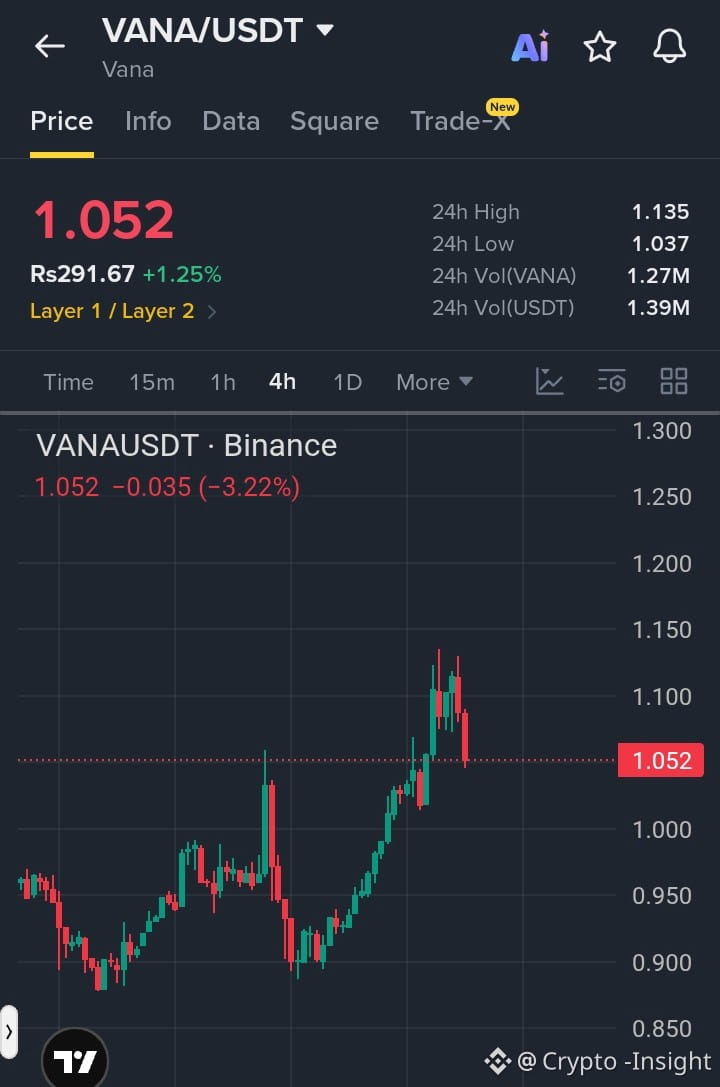
#VANA zeigt nach dem Rückzug von der 1,150-Widerstandszone schwachen bärischen Impuls, während der Kurs nun die 1,037-Unterstützungszone testet. Wenn Verkäufer diese Marke durchbrechen, könnten die nächsten Ziele 1,000 und 0,950 sein, während 1,100 die entscheidende Widerstandszone bleibt$AKE
{future}(AKEUSDT)
$ZEC
{spot}(ZECUSDT)
{spot}(VANAUSDT)
$VANA sitzt an einer kritischen Entscheidungszone…!!
#VANA zeigt nach dem Rückzug von der 1,150-Widerstandszone schwachen bärischen Impuls, während der Kurs nun die 1,037-Unterstützungszone testet. Wenn Verkäufer diese Marke durchbrechen, könnten die nächsten Ziele 1,000 und 0,950 sein, während 1,100 die entscheidende Widerstandszone bleibt$AKE
$ZEC
#VANA zeigt nach dem Rückzug von der 1,150-Widerstandszone schwachen bärischen Impuls, während der Kurs nun die 1,037-Unterstützungszone testet. Wenn Verkäufer diese Marke durchbrechen, könnten die nächsten Ziele 1,000 und 0,950 sein, während 1,100 die entscheidende Widerstandszone bleibt$AKE
$ZEC
1
710

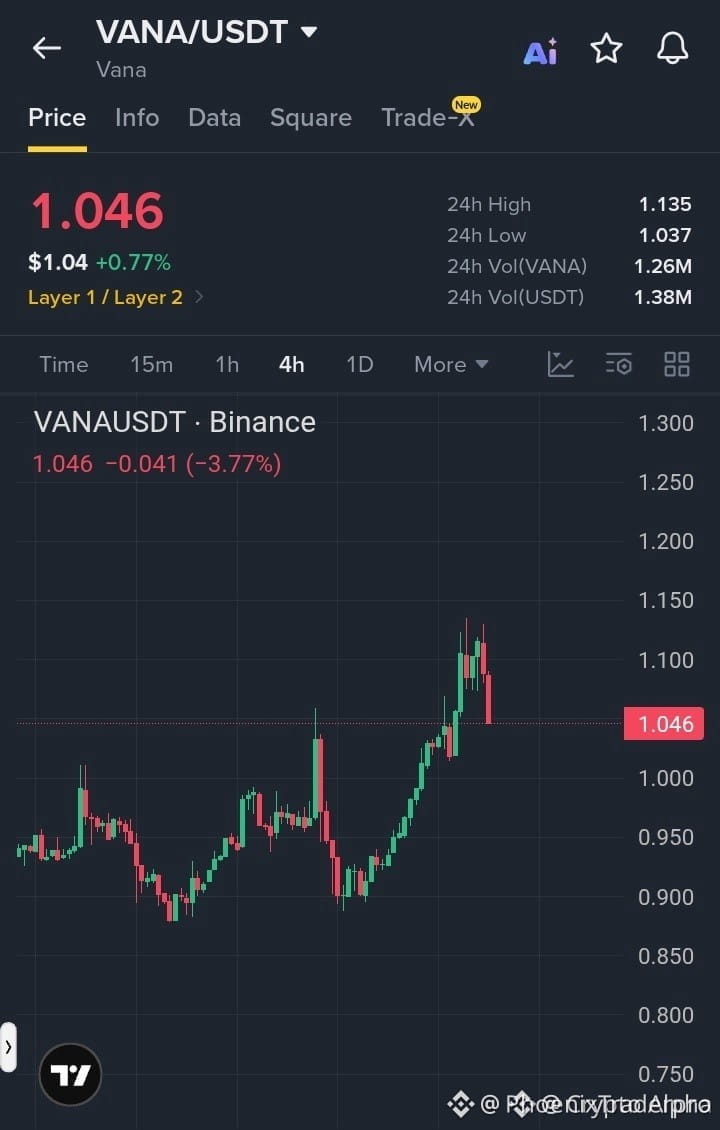
🚨 $VANA WURDE IM LIEFERSTAND ALS VERKÄUFER ABGELEHNT, WÄHREND VERKÄUFERDRUCK DEN PREIS AUF UNTER-DOLLAR-ZIELE ZU DRÜCKEN VERSUCHT 📉
Einstieg: 1.045 - 1.065 🔻
Ziel: 1.025 / 1.005 / 0.980 📉
Stop Loss: 1.105 ⚠️
Verkäufer knallten die Tür direkt auf $VANA am $1.10–$1.13-Deckel zu, ließen einen sauberen Ablehnungs-Schatten zurück und schoben den Orderflow direkt wieder nach unten. 📊 Der Momentum steht den Bären zur Seite, da der Preis aggressiv in die $1.04-Bruchzone hineindrückt, während mit hohem Volumen jede Delle weiter ausgebaut wird.
Da das Angebot oberhalb fest eingerastet ist, eröffnet dieser Rücksetzer ein Szenario mit hoher Wahrscheinlichkeit für einen Swing zurück in Richtung des $0.980-Liquiditätspools. 📌 Wenn $1.00 nicht hält, ist mit einer Beschleunigung zu rechnen, da späte Long-Positionen in der Short-Pressung gefangen werden.
💬 Positionierst du dich hier auf den Breakdown oder wartest du auf Support, um einen Verteidigungsversuch zu starten? 👇
⚠️ Keine Finanzberatung. Risikomanagement immer beachten. 🛡️
🏷️ #VANA #ShortSetup #Bearish #Crypto #Trading
🔻 🐻
🚨 $VANA WURDE IM LIEFERSTAND ALS VERKÄUFER ABGELEHNT, WÄHREND VERKÄUFERDRUCK DEN PREIS AUF UNTER-DOLLAR-ZIELE ZU DRÜCKEN VERSUCHT 📉
Einstieg: 1.045 - 1.065 🔻
Ziel: 1.025 / 1.005 / 0.980 📉
Stop Loss: 1.105 ⚠️
Verkäufer knallten die Tür direkt auf $VANA am $1.10–$1.13-Deckel zu, ließen einen sauberen Ablehnungs-Schatten zurück und schoben den Orderflow direkt wieder nach unten. 📊 Der Momentum steht den Bären zur Seite, da der Preis aggressiv in die $1.04-Bruchzone hineindrückt, während mit hohem Volumen jede Delle weiter ausgebaut wird.
Da das Angebot oberhalb fest eingerastet ist, eröffnet dieser Rücksetzer ein Szenario mit hoher Wahrscheinlichkeit für einen Swing zurück in Richtung des $0.980-Liquiditätspools. 📌 Wenn $1.00 nicht hält, ist mit einer Beschleunigung zu rechnen, da späte Long-Positionen in der Short-Pressung gefangen werden.
💬 Positionierst du dich hier auf den Breakdown oder wartest du auf Support, um einen Verteidigungsversuch zu starten? 👇
⚠️ Keine Finanzberatung. Risikomanagement immer beachten. 🛡️
🏷️ #VANA #ShortSetup #Bearish #Crypto #Trading
🔻 🐻
Einstieg: 1.045 - 1.065 🔻
Ziel: 1.025 / 1.005 / 0.980 📉
Stop Loss: 1.105 ⚠️
Verkäufer knallten die Tür direkt auf $VANA am $1.10–$1.13-Deckel zu, ließen einen sauberen Ablehnungs-Schatten zurück und schoben den Orderflow direkt wieder nach unten. 📊 Der Momentum steht den Bären zur Seite, da der Preis aggressiv in die $1.04-Bruchzone hineindrückt, während mit hohem Volumen jede Delle weiter ausgebaut wird.
Da das Angebot oberhalb fest eingerastet ist, eröffnet dieser Rücksetzer ein Szenario mit hoher Wahrscheinlichkeit für einen Swing zurück in Richtung des $0.980-Liquiditätspools. 📌 Wenn $1.00 nicht hält, ist mit einer Beschleunigung zu rechnen, da späte Long-Positionen in der Short-Pressung gefangen werden.
💬 Positionierst du dich hier auf den Breakdown oder wartest du auf Support, um einen Verteidigungsversuch zu starten? 👇
⚠️ Keine Finanzberatung. Risikomanagement immer beachten. 🛡️
🏷️ #VANA #ShortSetup #Bearish #Crypto #Trading
🔻 🐻
59

·
--
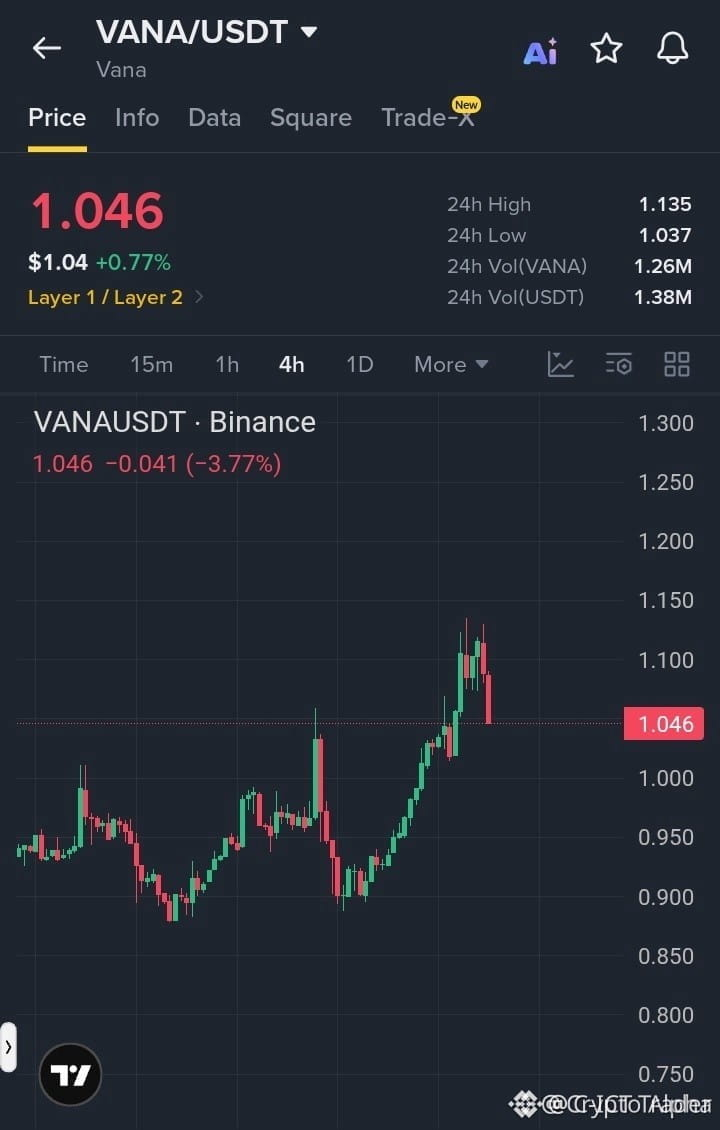
🚨 $VANA LEHNUNG BEI HOHEM WIDERSTAND: VERKÄUFER DRÜCKEN DIE FORTSETZUNG GENÜBER DER NACHUNTEN-LIQUIDITÄT! 📉
Einstieg: 1.045 - 1.065 ⚡
Ziel: 1.025 / 1.005 / 0.980 🎯
Stop Loss: 1.105 🛑
Smart Money hat den Premium-Angebotsblock aggressiv um 1.10 - 1.13 verteidigt und damit eine klare strukturelle Ablehnung ausgelöst. 🔍 Abwärtsdynamik nimmt an Fahrt auf, während der Kurs zurück nach unten bricht und sich dem entscheidenden Support bei 1.04 nähert. 📊
Da der institutionelle Orderflow auf Downside-Ineffizienz-Fills hindeutet, ist der Kurs darauf ausgerichtet, niedrigere Liquiditätspools bis hin zu 0.980 anzusteuern. 🌊 Um das Setup zu invalidieren, ist ein nachhaltiger Reclaim oberhalb der jüngsten Hochs erforderlich. 💬 Erwartest du einen Bounce bei 1.04, oder werden die Verkäufer dieses Setup direkt bis zum Ziel ausspülen? 👇
⚠️ Keine Finanzberatung. Immer dein Risiko managen. 🛡️
🏷️ #VANA #ShortSetup #MarketStructure #Trading #Crypto
🎯 🐻
🚨 $VANA LEHNUNG BEI HOHEM WIDERSTAND: VERKÄUFER DRÜCKEN DIE FORTSETZUNG GENÜBER DER NACHUNTEN-LIQUIDITÄT! 📉
Einstieg: 1.045 - 1.065 ⚡
Ziel: 1.025 / 1.005 / 0.980 🎯
Stop Loss: 1.105 🛑
Smart Money hat den Premium-Angebotsblock aggressiv um 1.10 - 1.13 verteidigt und damit eine klare strukturelle Ablehnung ausgelöst. 🔍 Abwärtsdynamik nimmt an Fahrt auf, während der Kurs zurück nach unten bricht und sich dem entscheidenden Support bei 1.04 nähert. 📊
Da der institutionelle Orderflow auf Downside-Ineffizienz-Fills hindeutet, ist der Kurs darauf ausgerichtet, niedrigere Liquiditätspools bis hin zu 0.980 anzusteuern. 🌊 Um das Setup zu invalidieren, ist ein nachhaltiger Reclaim oberhalb der jüngsten Hochs erforderlich. 💬 Erwartest du einen Bounce bei 1.04, oder werden die Verkäufer dieses Setup direkt bis zum Ziel ausspülen? 👇
⚠️ Keine Finanzberatung. Immer dein Risiko managen. 🛡️
🏷️ #VANA #ShortSetup #MarketStructure #Trading #Crypto
🎯 🐻
Einstieg: 1.045 - 1.065 ⚡
Ziel: 1.025 / 1.005 / 0.980 🎯
Stop Loss: 1.105 🛑
Smart Money hat den Premium-Angebotsblock aggressiv um 1.10 - 1.13 verteidigt und damit eine klare strukturelle Ablehnung ausgelöst. 🔍 Abwärtsdynamik nimmt an Fahrt auf, während der Kurs zurück nach unten bricht und sich dem entscheidenden Support bei 1.04 nähert. 📊
Da der institutionelle Orderflow auf Downside-Ineffizienz-Fills hindeutet, ist der Kurs darauf ausgerichtet, niedrigere Liquiditätspools bis hin zu 0.980 anzusteuern. 🌊 Um das Setup zu invalidieren, ist ein nachhaltiger Reclaim oberhalb der jüngsten Hochs erforderlich. 💬 Erwartest du einen Bounce bei 1.04, oder werden die Verkäufer dieses Setup direkt bis zum Ziel ausspülen? 👇
⚠️ Keine Finanzberatung. Immer dein Risiko managen. 🛡️
🏷️ #VANA #ShortSetup #MarketStructure #Trading #Crypto
🎯 🐻
40
Anmelden und weiter Inhalte entdecken
Krypto-Nutzer weltweit auf Binance Square kennenlernen
⚡️ Bleib in Sachen Krypto stets am Puls.
💬 Die weltgrößte Kryptobörse vertraut darauf.
👍 Erhalte verlässliche Einblicke von verifizierten Creators.
E-Mail-Adresse/Telefonnummer
Trendthemen
1
#EarningsSeason
389,446 Aufrufe
2,977 Kommentare
2
#SECChairWantsStockMarketsOnChain
1,142 Aufrufe
68 Kommentare
3
#MulticoinInvestsInGrass
187 Aufrufe
42 Kommentare
4
#CEARenamesToBNBStandardUnderBNC
1,505 Aufrufe
78 Kommentare
5
#BitwiseLaunchesFirstSpotNEARETF
48,411 Aufrufe
707 Kommentare
6
#USJobOpeningsFallToFiveMonthLow
52,883 Aufrufe
545 Kommentare
7
#ECBToTestAIAgentsInDigitalEuroPayments
35,394 Aufrufe
597 Kommentare
8
#JapanFSABacksFourthStablecoinTradeSettlementPilot
40,173 Aufrufe
625 Kommentare
9
#BitgetHackerFailsToMoveStolenFunds
57,280 Aufrufe
685 Kommentare
10
#BitMineETHHoldingsTop6Million
44,785 Aufrufe
752 Kommentare