

#security
security
1.8M Aufrufe
4,752 Kommentare
Hot
Zuletzt
·
--
Übersetzung ansehen
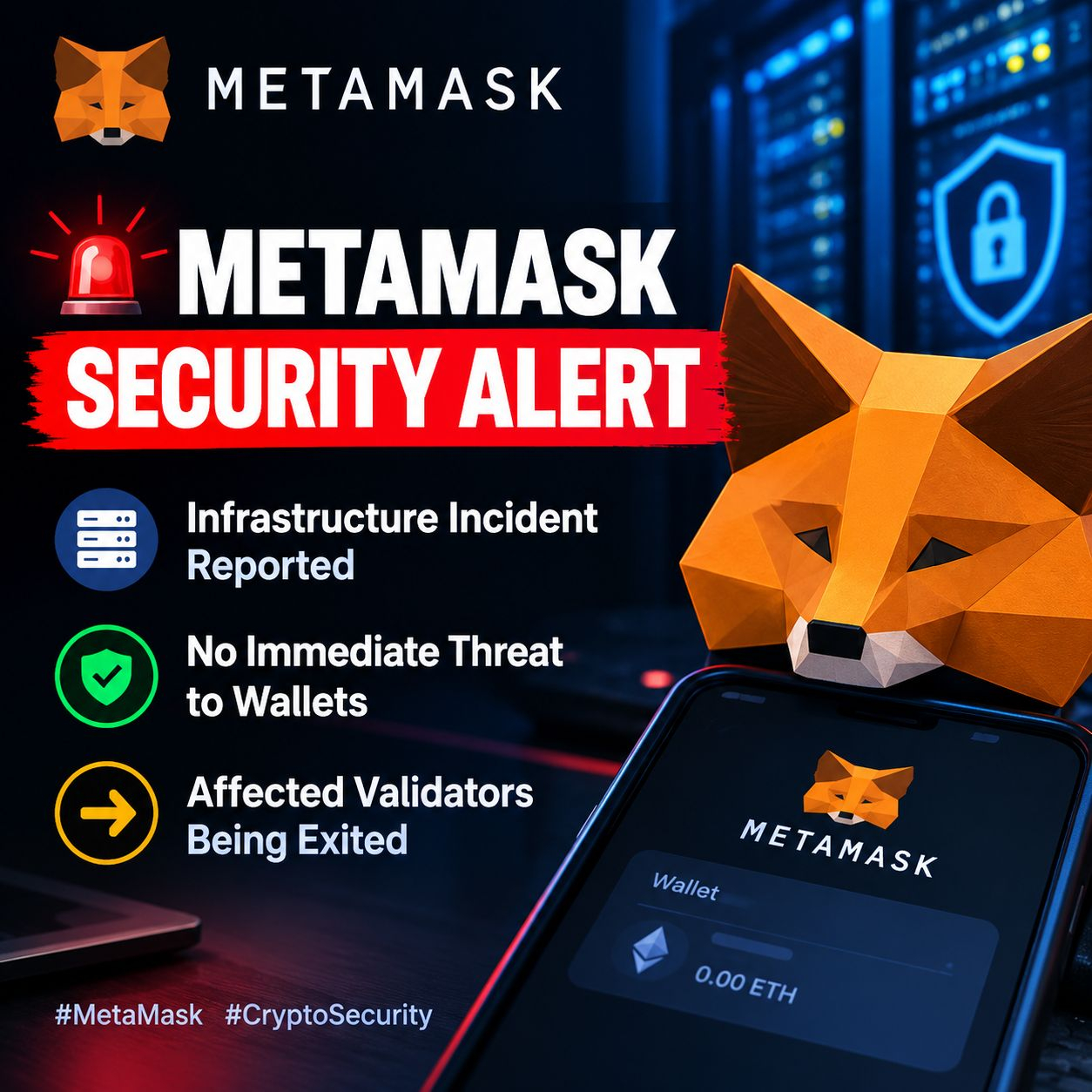
🚨 MetaMask Security Update MetaMask reports a security incident affecting part of its infrastructure, but says there is no immediate threat to wallets. As a precaution, affected staking validators are being exited. For now, this appears to be a containment measure rather than a confirmed user-funds breach. Market impact should remain limited unless the incident expands. #MetaMask #ETH #Crypto #security
🚨 MetaMask Security Update MetaMask reports a security incident affecting part of its infrastructure, but says there is no immediate threat to wallets. As a precaution, affected staking validators are being exited. For now, this appears to be a containment measure rather than a confirmed user-funds breach. Market impact should remain limited unless the incident expands. #MetaMask #ETH #Crypto #security
27

·
--
🛡️ EXCHANGE AUF SPITZENNIVEAU STÄRKT DEN USER-SCHUTZFONDS AUF 3,705 $BTC WERT VON ÜBER 300 Mio. $! 🏦
Smart-Money-Bewegungen werden nicht nur in Orderbüchern am Chart ausgeführt; Back-End-Reserven erzählen die wahre Geschichte institutioneller Stärke. 🏦 Eine erstklassige Börse hat ihren User-Schutzfonds gerade auf über 300 Millionen $ aufgestockt und damit ein riesiges Tresorvolumen von 3,705 $BTC für auf der Blockchain nachprüfbare Benutzersicherheit gesichert.
Dieser öffentliche Treasury-Mechanismus läuft seit 2022 transparent und zeigt, dass Liquiditätstiefe und Risikomanagement Hand in Hand gehen. 📊 Wenn starke Marktvolatilität zuschlägt, wirken vollständig nachverfolgbare On-Chain-Reserven wie eine unerschütterliche Mauer, die Systemstress abfedert. 💡
💬 Verändert das Erkennen vollständig transparenter On-Chain-Reserven, wo du dein Kapital während starken Marktverschiebungen parkst? 👇
⚠️ Keine Finanzberatung. Übernimm immer die Kontrolle über dein Risiko. 🛡️
🏷️ #BTC #Crypto #Security #MarketInsight
🛡️ 💎
🛡️ EXCHANGE AUF SPITZENNIVEAU STÄRKT DEN USER-SCHUTZFONDS AUF 3,705 $BTC WERT VON ÜBER 300 Mio. $! 🏦
Smart-Money-Bewegungen werden nicht nur in Orderbüchern am Chart ausgeführt; Back-End-Reserven erzählen die wahre Geschichte institutioneller Stärke. 🏦 Eine erstklassige Börse hat ihren User-Schutzfonds gerade auf über 300 Millionen $ aufgestockt und damit ein riesiges Tresorvolumen von 3,705 $BTC für auf der Blockchain nachprüfbare Benutzersicherheit gesichert.
Dieser öffentliche Treasury-Mechanismus läuft seit 2022 transparent und zeigt, dass Liquiditätstiefe und Risikomanagement Hand in Hand gehen. 📊 Wenn starke Marktvolatilität zuschlägt, wirken vollständig nachverfolgbare On-Chain-Reserven wie eine unerschütterliche Mauer, die Systemstress abfedert. 💡
💬 Verändert das Erkennen vollständig transparenter On-Chain-Reserven, wo du dein Kapital während starken Marktverschiebungen parkst? 👇
⚠️ Keine Finanzberatung. Übernimm immer die Kontrolle über dein Risiko. 🛡️
🏷️ #BTC #Crypto #Security #MarketInsight
🛡️ 💎
Smart-Money-Bewegungen werden nicht nur in Orderbüchern am Chart ausgeführt; Back-End-Reserven erzählen die wahre Geschichte institutioneller Stärke. 🏦 Eine erstklassige Börse hat ihren User-Schutzfonds gerade auf über 300 Millionen $ aufgestockt und damit ein riesiges Tresorvolumen von 3,705 $BTC für auf der Blockchain nachprüfbare Benutzersicherheit gesichert.
Dieser öffentliche Treasury-Mechanismus läuft seit 2022 transparent und zeigt, dass Liquiditätstiefe und Risikomanagement Hand in Hand gehen. 📊 Wenn starke Marktvolatilität zuschlägt, wirken vollständig nachverfolgbare On-Chain-Reserven wie eine unerschütterliche Mauer, die Systemstress abfedert. 💡
💬 Verändert das Erkennen vollständig transparenter On-Chain-Reserven, wo du dein Kapital während starken Marktverschiebungen parkst? 👇
⚠️ Keine Finanzberatung. Übernimm immer die Kontrolle über dein Risiko. 🛡️
🏷️ #BTC #Crypto #Security #MarketInsight
🛡️ 💎
11

·
--
Bitget wurde gerade für 388 Millionen Dollar gehackt, und die Nutzer reagieren wirklich schnell! Nur 1 Stunde nachdem Auszahlungen wieder aufgenommen wurden, wurden über 4000 BTC abgezogen. Das zeigt, wie schnell Vertrauen verschwinden kann, wenn die Sicherheit versagt. Börsen müssen jetzt wirklich ihr Sicherheitsniveau deutlich erhöhen!
#crypto #exchange #security #hack $BTC
Bitget wurde gerade für 388 Millionen Dollar gehackt, und die Nutzer reagieren wirklich schnell! Nur 1 Stunde nachdem Auszahlungen wieder aufgenommen wurden, wurden über 4000 BTC abgezogen. Das zeigt, wie schnell Vertrauen verschwinden kann, wenn die Sicherheit versagt. Börsen müssen jetzt wirklich ihr Sicherheitsniveau deutlich erhöhen!
#crypto #exchange #security #hack $BTC
#crypto #exchange #security #hack $BTC
98

·
--
$3 drei Zeichen, dass ein Krypto-„Giveaway“ ein Scam ist 🚩
1 . Es fordert dich auf, zuerst Krypto zu senden. Echte Giveaways fragen dich nie, dich durch das Senden von Geld zu „verifizieren“.
2 . Es verlangt deine Seed-Phrase oder Login-Codes. Kein echtes Unternehmen oder Projekt braucht diese jemals.
3 . Es drängt dich zur Eile. „Nur noch 10 Minuten übrig!“ soll dich daran hindern, nachzudenken.
Bevor du auf irgendeinen Link klickst, prüfe, ob er aus der offiziellen Binance-App oder von der offiziellen Website stammt. Bleib da draußen sicher!
#Krypto #Scam #security #EarningsSeason #scamriskwarning $GOOGL.US $NVDAB
$3 drei Zeichen, dass ein Krypto-„Giveaway“ ein Scam ist 🚩
1 . Es fordert dich auf, zuerst Krypto zu senden. Echte Giveaways fragen dich nie, dich durch das Senden von Geld zu „verifizieren“.
2 . Es verlangt deine Seed-Phrase oder Login-Codes. Kein echtes Unternehmen oder Projekt braucht diese jemals.
3 . Es drängt dich zur Eile. „Nur noch 10 Minuten übrig!“ soll dich daran hindern, nachzudenken.
Bevor du auf irgendeinen Link klickst, prüfe, ob er aus der offiziellen Binance-App oder von der offiziellen Website stammt. Bleib da draußen sicher!
#Krypto #Scam #security #EarningsSeason #scamriskwarning $GOOGL.US $NVDAB
1 . Es fordert dich auf, zuerst Krypto zu senden. Echte Giveaways fragen dich nie, dich durch das Senden von Geld zu „verifizieren“.
2 . Es verlangt deine Seed-Phrase oder Login-Codes. Kein echtes Unternehmen oder Projekt braucht diese jemals.
3 . Es drängt dich zur Eile. „Nur noch 10 Minuten übrig!“ soll dich daran hindern, nachzudenken.
Bevor du auf irgendeinen Link klickst, prüfe, ob er aus der offiziellen Binance-App oder von der offiziellen Website stammt. Bleib da draußen sicher!
#Krypto #Scam #security #EarningsSeason #scamriskwarning $GOOGL.US $NVDAB
NVDAB+0,64%
GOOGLUS+2,78%
1
102

·
--
Bevor du irgendeine Kryptowährungs-Überweisung machst, schau dir diese Checkliste an:
✅ Empfängeradresse
✅ Verwendetes Netzwerk
✅ Art der Kryptowährung
✅ Gebühren
✅ Betrag
✅ Netzwerk-Kompatibilität zwischen Absender und Empfänger
Wenn der Betrag groß ist, ist es sinnvoll, die Details mehr als einmal zu überprüfen.
Wichtig: Verlass dich nicht auf einen Screenshot oder eine Nachricht von jemandem als ausreichenden Nachweis. Prüfe die Transaktionsdaten bei der zuständigen/geeigneten Quelle.
In Krypto ist es viel einfacher, sich zu vergewissern, bevor man auf „Send“ drückt, als zu versuchen, eine falsche Überweisung nach ihrer Durchführung zu korrigieren.
#Crypto #Security #Blockchain #Binance
Bevor du irgendeine Kryptowährungs-Überweisung machst, schau dir diese Checkliste an:
✅ Empfängeradresse
✅ Verwendetes Netzwerk
✅ Art der Kryptowährung
✅ Gebühren
✅ Betrag
✅ Netzwerk-Kompatibilität zwischen Absender und Empfänger
Wenn der Betrag groß ist, ist es sinnvoll, die Details mehr als einmal zu überprüfen.
Wichtig: Verlass dich nicht auf einen Screenshot oder eine Nachricht von jemandem als ausreichenden Nachweis. Prüfe die Transaktionsdaten bei der zuständigen/geeigneten Quelle.
In Krypto ist es viel einfacher, sich zu vergewissern, bevor man auf „Send“ drückt, als zu versuchen, eine falsche Überweisung nach ihrer Durchführung zu korrigieren.
#Crypto #Security #Blockchain #Binance
✅ Empfängeradresse
✅ Verwendetes Netzwerk
✅ Art der Kryptowährung
✅ Gebühren
✅ Betrag
✅ Netzwerk-Kompatibilität zwischen Absender und Empfänger
Wenn der Betrag groß ist, ist es sinnvoll, die Details mehr als einmal zu überprüfen.
Wichtig: Verlass dich nicht auf einen Screenshot oder eine Nachricht von jemandem als ausreichenden Nachweis. Prüfe die Transaktionsdaten bei der zuständigen/geeigneten Quelle.
In Krypto ist es viel einfacher, sich zu vergewissern, bevor man auf „Send“ drückt, als zu versuchen, eine falsche Überweisung nach ihrer Durchführung zu korrigieren.
#Crypto #Security #Blockchain #Binance
aljapaly:
تابعني
1
1
1
100

·
--
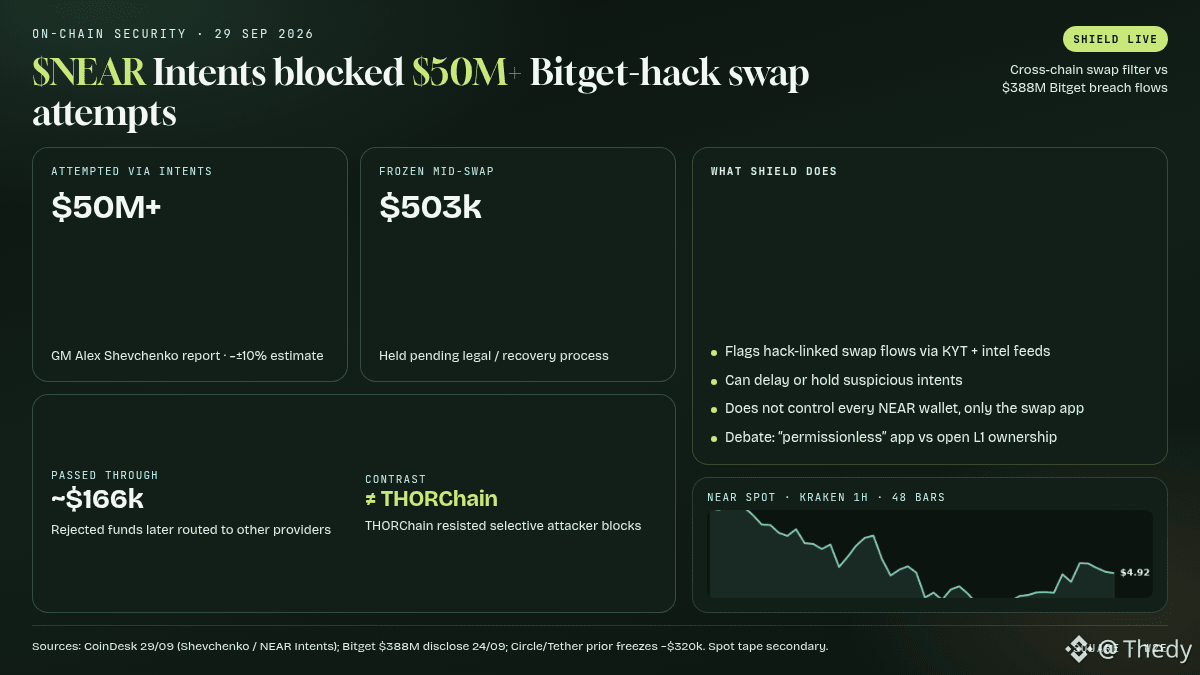
$NEAR Intents sperrte über 50 Mio. $ an Swap-Versuchen im Zusammenhang mit dem Bitget-Hack.
Fakten (CoinDesk 29.09., Bericht von GM Alex Shevchenko):
• Mehr als 50 Mio. $ an Flüssen, die mit dem Bitget-Diebstahl zusammenhingen (~388 Mio. $ laut Meldung vom 24.09.), versuchten, über NEAR Intents zu laufen
• Das SHIELD-System blockierte den Großteil; ~503 Tsd. $ wurden im laufenden Swap eingefroren
• Etwa 166 Tsd. $ kamen dennoch durch; die abgelehnten Gelder wurden anschließend anderweitig weitergeleitet (Schätzung ±10 %)
• Im Gegensatz zu THORChain, das die selektive Sperrung angreifender Adressen verweigerte
• Erinnerung: Circle und Tether hatten bereits ~320 Tsd. $ an mit dem Leck verbundenen Stables eingefroren
Einordnung: Die Debatte lautet nicht „NEAR zensiert die Chain“. Intents ist eine Cross-Chain-Swap-App mit KYT-Filtern. Illia Polosukhin ordnet das so ein: permissionless = besitzen, übertragen oder auf dem L1 ohne Erlaubnis bereitstellen, nicht die Pflicht für jede App, jeden einzelnen Stream zu behandeln. Offene Frage auf Prozess-Ebene: Wer autorisiert die Freigabe der eingefrorenen Gelder, und welche Rechtsmittel gibt es bei einem Fehlalarm.
Szenarien:
1. Rückerlangung über legale Kanäle Bitget / Strafverfolgungsbehörden: die ~503 Tsd. $ fließen in einen Erstattungsprozess
2. Die Kontroverse „permissionless“ belastet die Intents-Erzählung, ohne das Volumen zu brechen (~100 Mio. $+/Tag, von Shevchenko genannt)
3. Die Angreifer umgehen über andere Bridges/Swaps mit weniger strengen Filtern (bereits nach der Zurückweisung beobachtet)
Spot (Kraken ~17:05 UTC): $NEAR ~4,93 $, (+2 % 24h), $BTC ~83,1k, Fear & Greed 73.
Bevorzugen Sie Apps, die Beute aus Hacks gezielt filtern, oder eine Neutralität wie bei THORChain um jeden Preis?
#NEAR #Crypto #Security
$NEAR Intents sperrte über 50 Mio. $ an Swap-Versuchen im Zusammenhang mit dem Bitget-Hack.
Fakten (CoinDesk 29.09., Bericht von GM Alex Shevchenko):
• Mehr als 50 Mio. $ an Flüssen, die mit dem Bitget-Diebstahl zusammenhingen (~388 Mio. $ laut Meldung vom 24.09.), versuchten, über NEAR Intents zu laufen
• Das SHIELD-System blockierte den Großteil; ~503 Tsd. $ wurden im laufenden Swap eingefroren
• Etwa 166 Tsd. $ kamen dennoch durch; die abgelehnten Gelder wurden anschließend anderweitig weitergeleitet (Schätzung ±10 %)
• Im Gegensatz zu THORChain, das die selektive Sperrung angreifender Adressen verweigerte
• Erinnerung: Circle und Tether hatten bereits ~320 Tsd. $ an mit dem Leck verbundenen Stables eingefroren
Einordnung: Die Debatte lautet nicht „NEAR zensiert die Chain“. Intents ist eine Cross-Chain-Swap-App mit KYT-Filtern. Illia Polosukhin ordnet das so ein: permissionless = besitzen, übertragen oder auf dem L1 ohne Erlaubnis bereitstellen, nicht die Pflicht für jede App, jeden einzelnen Stream zu behandeln. Offene Frage auf Prozess-Ebene: Wer autorisiert die Freigabe der eingefrorenen Gelder, und welche Rechtsmittel gibt es bei einem Fehlalarm.
Szenarien:
1. Rückerlangung über legale Kanäle Bitget / Strafverfolgungsbehörden: die ~503 Tsd. $ fließen in einen Erstattungsprozess
2. Die Kontroverse „permissionless“ belastet die Intents-Erzählung, ohne das Volumen zu brechen (~100 Mio. $+/Tag, von Shevchenko genannt)
3. Die Angreifer umgehen über andere Bridges/Swaps mit weniger strengen Filtern (bereits nach der Zurückweisung beobachtet)
Spot (Kraken ~17:05 UTC): $NEAR ~4,93 $, (+2 % 24h), $BTC ~83,1k, Fear & Greed 73.
Bevorzugen Sie Apps, die Beute aus Hacks gezielt filtern, oder eine Neutralität wie bei THORChain um jeden Preis?
#NEAR #Crypto #Security
Fakten (CoinDesk 29.09., Bericht von GM Alex Shevchenko):
• Mehr als 50 Mio. $ an Flüssen, die mit dem Bitget-Diebstahl zusammenhingen (~388 Mio. $ laut Meldung vom 24.09.), versuchten, über NEAR Intents zu laufen
• Das SHIELD-System blockierte den Großteil; ~503 Tsd. $ wurden im laufenden Swap eingefroren
• Etwa 166 Tsd. $ kamen dennoch durch; die abgelehnten Gelder wurden anschließend anderweitig weitergeleitet (Schätzung ±10 %)
• Im Gegensatz zu THORChain, das die selektive Sperrung angreifender Adressen verweigerte
• Erinnerung: Circle und Tether hatten bereits ~320 Tsd. $ an mit dem Leck verbundenen Stables eingefroren
Einordnung: Die Debatte lautet nicht „NEAR zensiert die Chain“. Intents ist eine Cross-Chain-Swap-App mit KYT-Filtern. Illia Polosukhin ordnet das so ein: permissionless = besitzen, übertragen oder auf dem L1 ohne Erlaubnis bereitstellen, nicht die Pflicht für jede App, jeden einzelnen Stream zu behandeln. Offene Frage auf Prozess-Ebene: Wer autorisiert die Freigabe der eingefrorenen Gelder, und welche Rechtsmittel gibt es bei einem Fehlalarm.
Szenarien:
1. Rückerlangung über legale Kanäle Bitget / Strafverfolgungsbehörden: die ~503 Tsd. $ fließen in einen Erstattungsprozess
2. Die Kontroverse „permissionless“ belastet die Intents-Erzählung, ohne das Volumen zu brechen (~100 Mio. $+/Tag, von Shevchenko genannt)
3. Die Angreifer umgehen über andere Bridges/Swaps mit weniger strengen Filtern (bereits nach der Zurückweisung beobachtet)
Spot (Kraken ~17:05 UTC): $NEAR ~4,93 $, (+2 % 24h), $BTC ~83,1k, Fear & Greed 73.
Bevorzugen Sie Apps, die Beute aus Hacks gezielt filtern, oder eine Neutralität wie bei THORChain um jeden Preis?
#NEAR #Crypto #Security
1
257

·
--
⚠️ 7.300+ D’CENT-Geldbörsen GETROFFEN — 12,4 Mio.+ XRP ENTWENDET📝
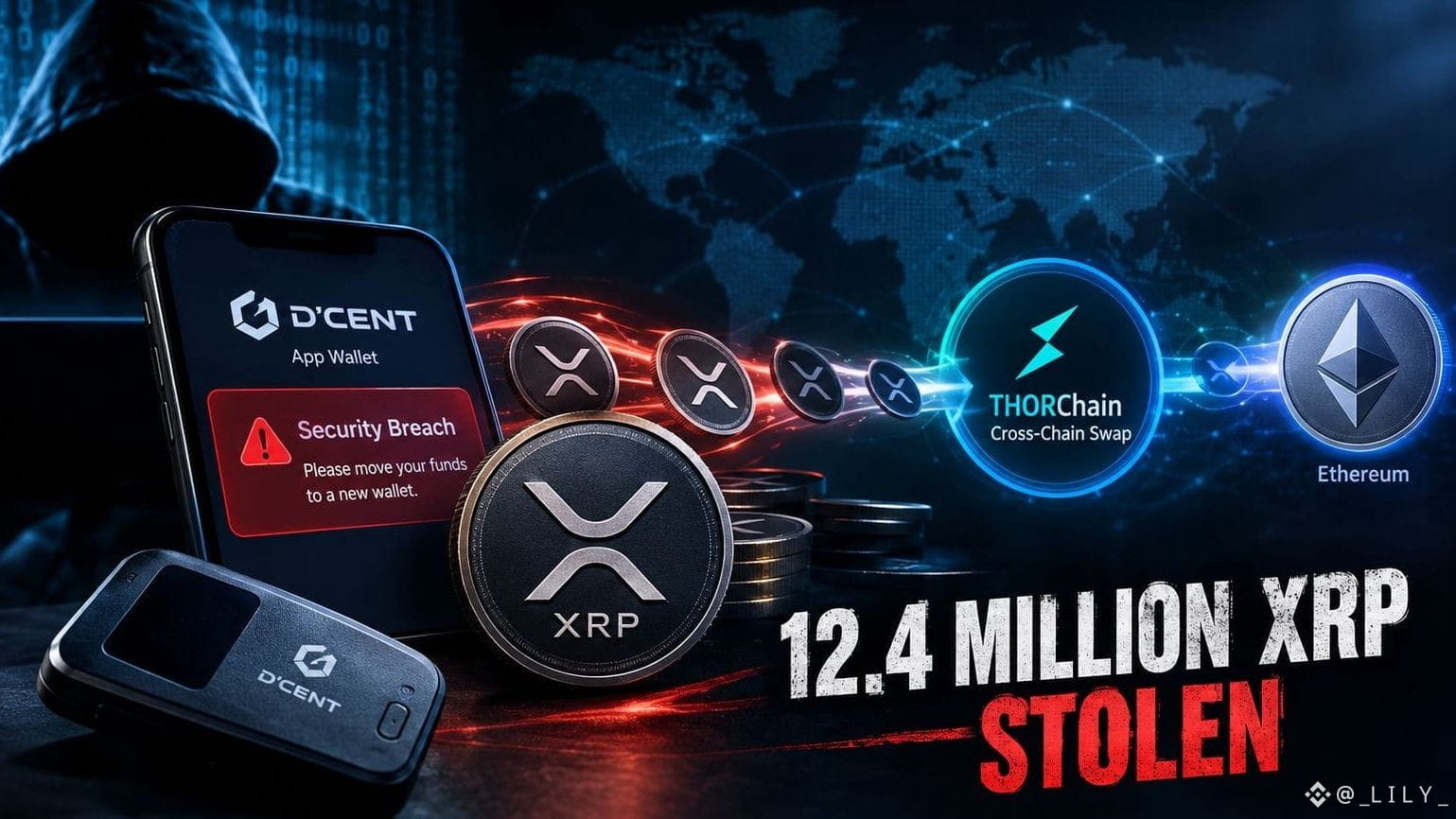
🚨 Ein schwerer Sicherheitsvorfall bei D’CENT-App-Geldbörsen soll dazu geführt haben, dass mehr als 12,4 Millionen $XRP aus über 7.300 Wallets abgezogen wurden.
🔐 Das XRP Ledger selbst wurde nicht ausgenutzt — Angreifer nutzten gültige Signaturen aus kompromittierten privaten Schlüsseln.
📉 Selbst nach Sicherheitshinweisen soll zusätzliches XRP gestohlen worden sein, wodurch sich die Gesamtlverluste auf etwa 18–20 Mio. $ belaufen.
🌉 Einige gestohlene Mittel sollen Berichten zufolge über THORChain in Ethereum weitergeleitet worden sein, was die Wiederherstellung erschwert.
⚠️ D’CENT hat betroffene Nutzer dazu aufgefordert, umgehend neue Wiederherstellungsphrasen zu generieren.
$XRP $ETH
{future}(ETHUSDT)
#XRP #Crypto #Hack #Dcent #Security
⚠️ 7.300+ D’CENT-Geldbörsen GETROFFEN — 12,4 Mio.+ XRP ENTWENDET📝
🚨 Ein schwerer Sicherheitsvorfall bei D’CENT-App-Geldbörsen soll dazu geführt haben, dass mehr als 12,4 Millionen $XRP aus über 7.300 Wallets abgezogen wurden.
🔐 Das XRP Ledger selbst wurde nicht ausgenutzt — Angreifer nutzten gültige Signaturen aus kompromittierten privaten Schlüsseln.
📉 Selbst nach Sicherheitshinweisen soll zusätzliches XRP gestohlen worden sein, wodurch sich die Gesamtlverluste auf etwa 18–20 Mio. $ belaufen.
🌉 Einige gestohlene Mittel sollen Berichten zufolge über THORChain in Ethereum weitergeleitet worden sein, was die Wiederherstellung erschwert.
⚠️ D’CENT hat betroffene Nutzer dazu aufgefordert, umgehend neue Wiederherstellungsphrasen zu generieren.
$XRP $ETH
#XRP #Crypto #Hack #Dcent #Security
🚨 Ein schwerer Sicherheitsvorfall bei D’CENT-App-Geldbörsen soll dazu geführt haben, dass mehr als 12,4 Millionen $XRP aus über 7.300 Wallets abgezogen wurden.
🔐 Das XRP Ledger selbst wurde nicht ausgenutzt — Angreifer nutzten gültige Signaturen aus kompromittierten privaten Schlüsseln.
📉 Selbst nach Sicherheitshinweisen soll zusätzliches XRP gestohlen worden sein, wodurch sich die Gesamtlverluste auf etwa 18–20 Mio. $ belaufen.
🌉 Einige gestohlene Mittel sollen Berichten zufolge über THORChain in Ethereum weitergeleitet worden sein, was die Wiederherstellung erschwert.
⚠️ D’CENT hat betroffene Nutzer dazu aufgefordert, umgehend neue Wiederherstellungsphrasen zu generieren.
$XRP $ETH
#XRP #Crypto #Hack #Dcent #Security
96
·
--
$NEAR erlebt einen Hackerangriff! Bitget-Hacker versuchten, 50 Millionen US-Dollar zu verlagern; ein Großteil wurde von NEAR Intents abgefangen. Das stellt NEARs Behauptungen von „permissionless“ direkt in Frage. Es scheint, dass selbst angeblich vollständig unbegrenztes DeFi zuerst Sicherheitschecks bestehen muss!
Bitget hacker attempted $50M transfer, blocked mostly by NEAR Intents. This directly challenges NEAR's "permissionless" claims. Seems even so-called unrestricted DeFi needs to pass security checks first!
#DeFi #Security $NEAR $BITGET
$NEAR erlebt einen Hackerangriff! Bitget-Hacker versuchten, 50 Millionen US-Dollar zu verlagern; ein Großteil wurde von NEAR Intents abgefangen. Das stellt NEARs Behauptungen von „permissionless“ direkt in Frage. Es scheint, dass selbst angeblich vollständig unbegrenztes DeFi zuerst Sicherheitschecks bestehen muss!
Bitget hacker attempted $50M transfer, blocked mostly by NEAR Intents. This directly challenges NEAR's "permissionless" claims. Seems even so-called unrestricted DeFi needs to pass security checks first!
#DeFi #Security $NEAR $BITGET
Bitget hacker attempted $50M transfer, blocked mostly by NEAR Intents. This directly challenges NEAR's "permissionless" claims. Seems even so-called unrestricted DeFi needs to pass security checks first!
#DeFi #Security $NEAR $BITGET
216

·
--
🚨 $XRP SICHERHEITSWARNUNG
Hacker haben in einem der größten XRP-Diebstähle von 2026 12,4 Mio.+ $XRP aus mehr als 7.000 D’CENT-Wallets abgezogen. 😳
Der Angriff betraf auch Vermögenswerte auf Bitcoin, Ethereum, Tron und Stellar.
D’CENT fordert betroffene Nutzer auf, eine neue Wiederherstellungsphrase zu erstellen und ihre Vermögenswerte sofort zu migrieren.
Wie sicher sind deine Krypto-Wallets gerade? 👀
#crypto #bitcoin #Ethereum #security
#hackersdrainover12.4mxrpfromdcentwallets
🚨 $XRP SICHERHEITSWARNUNG
Hacker haben in einem der größten XRP-Diebstähle von 2026 12,4 Mio.+ $XRP aus mehr als 7.000 D’CENT-Wallets abgezogen. 😳
Der Angriff betraf auch Vermögenswerte auf Bitcoin, Ethereum, Tron und Stellar.
D’CENT fordert betroffene Nutzer auf, eine neue Wiederherstellungsphrase zu erstellen und ihre Vermögenswerte sofort zu migrieren.
Wie sicher sind deine Krypto-Wallets gerade? 👀
#crypto #bitcoin #Ethereum #security
#hackersdrainover12.4mxrpfromdcentwallets
Hacker haben in einem der größten XRP-Diebstähle von 2026 12,4 Mio.+ $XRP aus mehr als 7.000 D’CENT-Wallets abgezogen. 😳
Der Angriff betraf auch Vermögenswerte auf Bitcoin, Ethereum, Tron und Stellar.
D’CENT fordert betroffene Nutzer auf, eine neue Wiederherstellungsphrase zu erstellen und ihre Vermögenswerte sofort zu migrieren.
Wie sicher sind deine Krypto-Wallets gerade? 👀
#crypto #bitcoin #Ethereum #security
#hackersdrainover12.4mxrpfromdcentwallets
2
106
·
--
NEAR-übergreifendes Intent-Protokoll hat 50 Millionen US-Dollar, die mit Bitget-Hackern in Verbindung stehen, aktiv abgefangen! Das steht im starken Kontrast zu dem Vorgehen anderer Protokolle, die Transaktionen nicht selektiv prüfen. In Sachen Kryptosicherheit zeigt NEAR eine proaktive Haltung! #DeFi #Security $NEAR $BIT
NEAR Intents haben gerade $50M blockiert, die mit Bitget-Hackern verknüpft sind! Dieses Cross-Chain-Protokoll verhindert aktiv, dass gestohlene Gelder gewaschen werden, im Gegensatz zu anderen wie THORChain, die Transaktionen nicht selektiv zensieren. NEAR nimmt Sicherheit ernst! #DeFi #Security $NEAR $BIT
NEAR-übergreifendes Intent-Protokoll hat 50 Millionen US-Dollar, die mit Bitget-Hackern in Verbindung stehen, aktiv abgefangen! Das steht im starken Kontrast zu dem Vorgehen anderer Protokolle, die Transaktionen nicht selektiv prüfen. In Sachen Kryptosicherheit zeigt NEAR eine proaktive Haltung! #DeFi #Security $NEAR $BIT
NEAR Intents haben gerade $50M blockiert, die mit Bitget-Hackern verknüpft sind! Dieses Cross-Chain-Protokoll verhindert aktiv, dass gestohlene Gelder gewaschen werden, im Gegensatz zu anderen wie THORChain, die Transaktionen nicht selektiv zensieren. NEAR nimmt Sicherheit ernst! #DeFi #Security $NEAR $BIT
NEAR Intents haben gerade $50M blockiert, die mit Bitget-Hackern verknüpft sind! Dieses Cross-Chain-Protokoll verhindert aktiv, dass gestohlene Gelder gewaschen werden, im Gegensatz zu anderen wie THORChain, die Transaktionen nicht selektiv zensieren. NEAR nimmt Sicherheit ernst! #DeFi #Security $NEAR $BIT
263

·
--
🚨 KRITISCHE SICHERHEITSWARNUNG FÜR ALLE $BTC HOLDERS AUF APPLE-GERÄTEN VOR SYSTEMEXPLOITS 🚨
Institutionelle Sicherheitsvektoren werden getestet, während SlowMist bestätigt, dass Black-Hat-Akteure aktiv Zero-Day-Schwachstellen in vor-iOS-27 Apple-Betriebssystemen ausnutzen, um Wallet-Vermögenswerte zu kompromittieren. 🔍 Kluge Akteure wissen, dass operative Sicherheit die Grundlage für den Kapitalerhalt ist, wenn Sie Ihre $BTC Position schützen. 🛡️
Angreifer führen gezielte Exploits über benutzerdefinierte Browser-Vektoren und nicht autorisierte App-Installationen aus, um die Client-seitige Verschlüsselung zu umgehen. 📥 Sofortige Systemupdates auf allen Geräten sowie die strikte Isolation von Wallet-Interaktionen von Safari oder nicht verifizierten Links sind nicht verhandelbare Protokollanforderungen. ⚡
Haben Sie Ihre mobile Firmware heute aktualisiert, um Ihren Self-Custody Cold Storage abzusichern? 💬
⚠️ Keine Finanzberatung. Verwalten Sie immer Ihr Risiko. 🛡️
🏷️ #BTC #CryptoSecurity #RiskManagement #Security
🛡️ 🔍
🚨 KRITISCHE SICHERHEITSWARNUNG FÜR ALLE $BTC HOLDERS AUF APPLE-GERÄTEN VOR SYSTEMEXPLOITS 🚨
Institutionelle Sicherheitsvektoren werden getestet, während SlowMist bestätigt, dass Black-Hat-Akteure aktiv Zero-Day-Schwachstellen in vor-iOS-27 Apple-Betriebssystemen ausnutzen, um Wallet-Vermögenswerte zu kompromittieren. 🔍 Kluge Akteure wissen, dass operative Sicherheit die Grundlage für den Kapitalerhalt ist, wenn Sie Ihre $BTC Position schützen. 🛡️
Angreifer führen gezielte Exploits über benutzerdefinierte Browser-Vektoren und nicht autorisierte App-Installationen aus, um die Client-seitige Verschlüsselung zu umgehen. 📥 Sofortige Systemupdates auf allen Geräten sowie die strikte Isolation von Wallet-Interaktionen von Safari oder nicht verifizierten Links sind nicht verhandelbare Protokollanforderungen. ⚡
Haben Sie Ihre mobile Firmware heute aktualisiert, um Ihren Self-Custody Cold Storage abzusichern? 💬
⚠️ Keine Finanzberatung. Verwalten Sie immer Ihr Risiko. 🛡️
🏷️ #BTC #CryptoSecurity #RiskManagement #Security
🛡️ 🔍
Institutionelle Sicherheitsvektoren werden getestet, während SlowMist bestätigt, dass Black-Hat-Akteure aktiv Zero-Day-Schwachstellen in vor-iOS-27 Apple-Betriebssystemen ausnutzen, um Wallet-Vermögenswerte zu kompromittieren. 🔍 Kluge Akteure wissen, dass operative Sicherheit die Grundlage für den Kapitalerhalt ist, wenn Sie Ihre $BTC Position schützen. 🛡️
Angreifer führen gezielte Exploits über benutzerdefinierte Browser-Vektoren und nicht autorisierte App-Installationen aus, um die Client-seitige Verschlüsselung zu umgehen. 📥 Sofortige Systemupdates auf allen Geräten sowie die strikte Isolation von Wallet-Interaktionen von Safari oder nicht verifizierten Links sind nicht verhandelbare Protokollanforderungen. ⚡
Haben Sie Ihre mobile Firmware heute aktualisiert, um Ihren Self-Custody Cold Storage abzusichern? 💬
⚠️ Keine Finanzberatung. Verwalten Sie immer Ihr Risiko. 🛡️
🏷️ #BTC #CryptoSecurity #RiskManagement #Security
🛡️ 🔍
11
·
--
THORChain steht wegen der Verarbeitung gestohlener Bitget-Assets in der Kritik.
Bitget bestätigte am 25. September, dass 387,5 Millionen US-Dollar bei den Angreifer-Adressen angekommen sind – gegenüber 351,6 Millionen US-Dollar, nachdem Zcash- und Tron-Assets hinzugefügt wurden.
CEO Gracy Chen forderte THORChain am 26. September auf, den Dienst für diese Adressen zu verweigern, und sagte: „Dezentralisierung ist ein Designprinzip, kein Schutzschild zur Unterstützung bekannter gestohlener Gelder.“
THORChain erwiderte, es sei dezentral und permissionless wie Bitcoin, Ethereum und die BNB Chain, und fragte, welche Verantwortung diese Netzwerke dafür tragen würden.
Der öffentliche Tracker von Bitget listet 2.377 Angreifer-Adressen auf, die 378 Millionen US-Dollar halten; 1.497 davon bewegen Gelder über THORChain für Cross-Chain-Swaps.
Der Sicherheitsforscher Taylor Monahan argumentierte, dass das Screening von Transaktionen einer Zensur gleichkomme; in der Diskussion wurde eine Einstellung im Mai erwähnt, nachdem es zu einem Exploit über 10,7 Millionen US-Dollar kam, der den Handel für fünf Wochen pausierte.
Bitget bot 5 % Prämien auf eingefrorene und wiedererlangte Gelder und kündigte stufenweise Abhebungen an; BTC soll am 28. September um 08:00 UTC wieder starten.
Sollen permissionless Protokolle eingreifen, wenn bekannte gestohlene Assets durch sie fließen?
#Crypto #DeFi #CrossChain #Security
THORChain steht wegen der Verarbeitung gestohlener Bitget-Assets in der Kritik.
Bitget bestätigte am 25. September, dass 387,5 Millionen US-Dollar bei den Angreifer-Adressen angekommen sind – gegenüber 351,6 Millionen US-Dollar, nachdem Zcash- und Tron-Assets hinzugefügt wurden.
CEO Gracy Chen forderte THORChain am 26. September auf, den Dienst für diese Adressen zu verweigern, und sagte: „Dezentralisierung ist ein Designprinzip, kein Schutzschild zur Unterstützung bekannter gestohlener Gelder.“
THORChain erwiderte, es sei dezentral und permissionless wie Bitcoin, Ethereum und die BNB Chain, und fragte, welche Verantwortung diese Netzwerke dafür tragen würden.
Der öffentliche Tracker von Bitget listet 2.377 Angreifer-Adressen auf, die 378 Millionen US-Dollar halten; 1.497 davon bewegen Gelder über THORChain für Cross-Chain-Swaps.
Der Sicherheitsforscher Taylor Monahan argumentierte, dass das Screening von Transaktionen einer Zensur gleichkomme; in der Diskussion wurde eine Einstellung im Mai erwähnt, nachdem es zu einem Exploit über 10,7 Millionen US-Dollar kam, der den Handel für fünf Wochen pausierte.
Bitget bot 5 % Prämien auf eingefrorene und wiedererlangte Gelder und kündigte stufenweise Abhebungen an; BTC soll am 28. September um 08:00 UTC wieder starten.
Sollen permissionless Protokolle eingreifen, wenn bekannte gestohlene Assets durch sie fließen?
#Crypto #DeFi #CrossChain #Security
Bitget bestätigte am 25. September, dass 387,5 Millionen US-Dollar bei den Angreifer-Adressen angekommen sind – gegenüber 351,6 Millionen US-Dollar, nachdem Zcash- und Tron-Assets hinzugefügt wurden.
CEO Gracy Chen forderte THORChain am 26. September auf, den Dienst für diese Adressen zu verweigern, und sagte: „Dezentralisierung ist ein Designprinzip, kein Schutzschild zur Unterstützung bekannter gestohlener Gelder.“
THORChain erwiderte, es sei dezentral und permissionless wie Bitcoin, Ethereum und die BNB Chain, und fragte, welche Verantwortung diese Netzwerke dafür tragen würden.
Der öffentliche Tracker von Bitget listet 2.377 Angreifer-Adressen auf, die 378 Millionen US-Dollar halten; 1.497 davon bewegen Gelder über THORChain für Cross-Chain-Swaps.
Der Sicherheitsforscher Taylor Monahan argumentierte, dass das Screening von Transaktionen einer Zensur gleichkomme; in der Diskussion wurde eine Einstellung im Mai erwähnt, nachdem es zu einem Exploit über 10,7 Millionen US-Dollar kam, der den Handel für fünf Wochen pausierte.
Bitget bot 5 % Prämien auf eingefrorene und wiedererlangte Gelder und kündigte stufenweise Abhebungen an; BTC soll am 28. September um 08:00 UTC wieder starten.
Sollen permissionless Protokolle eingreifen, wenn bekannte gestohlene Assets durch sie fließen?
#Crypto #DeFi #CrossChain #Security
1
545

·
--
Bullisch
🚨 Schock in der Krypto-Welt! Bitget enthüllt endlich, was hinter den Kulissen passiert ist!
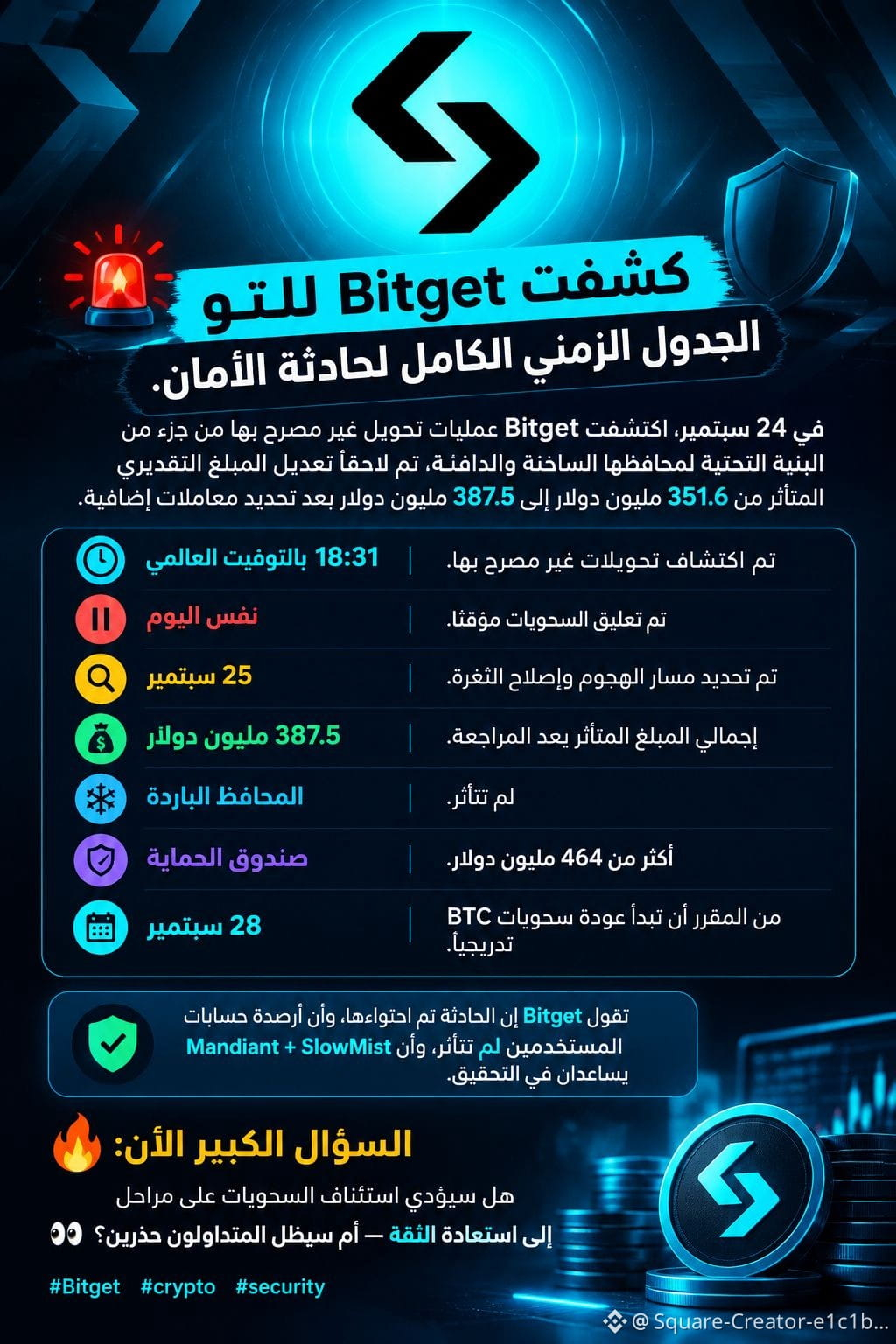
In einem der größten Sicherheitsvorfälle, die diesen Monat den Markt für digitale Währungen erschütterten, hat Bitget die vollständigen Details zum Hack veröffentlicht, der einen Teil seiner Infrastruktur ins Visier nahm.
💸 Der betroffene Betrag war nicht wie alle dachten… Die Zahlen wurden nach oben korrigiert, sodass das Ausmaß des Schadens von 351,6 Millionen US-Dollar auf 387,5 Millionen US-Dollar anstieg, nachdem zusätzliche Transaktionen entdeckt wurden!
📌 Was ist genau passiert?
⏰ 18:31 UTC – 24. September: Unautorisierte Überweisungen wurden festgestellt.
🛑 Danach wurden umgehend Auszahlungen gestoppt, um die Gelder der Nutzer zu schützen.
🔍 25. September: Angriffsweg ermittelt und die Sicherheitslücke geschlossen.
💰 387,5 Millionen US-Dollar: Gesamtbetrag, der nach ersten Ermittlungen betroffen ist.
🛡️ Beruhigende Nachricht: Cold Wallets waren nicht endgültig betroffen.
🏦 Ein Schutzfonds in Höhe von über 464 Millionen US-Dollar, um Stabilität zu sichern und die Plattform zu schützen.
📅 28. September: Auszahlungen starten wieder $BTC schrittweise.
🤝 Und Bitget bestätigt, dass die Guthaben der Nutzer nicht betroffen sind, während die Unternehmen Mandiant und SlowMist an den Ermittlungen teilnehmen, um alle Details des Vorfalls offenzulegen.
🔥 Doch die Frage, die den Markt gerade beschäftigt:
Wird Bitget es schaffen, das Vertrauen von Millionen nach der Wiedereröffnung der Auszahlungen zurückzugewinnen? Oder wird dieser Vorfall als richtungsweisendes Ereignis in der Geschichte der Plattform in Erinnerung bleiben? 👀
👇 Schreib deine Meinung: Vertraust du den zentralisierten Plattformen weiterhin, um dein Geld zu sichern, oder bevorzugst du eigene Wallets?
#Bitget #crypto #security
{spot}(BTCUSDT)
🚨 Schock in der Krypto-Welt! Bitget enthüllt endlich, was hinter den Kulissen passiert ist!
In einem der größten Sicherheitsvorfälle, die diesen Monat den Markt für digitale Währungen erschütterten, hat Bitget die vollständigen Details zum Hack veröffentlicht, der einen Teil seiner Infrastruktur ins Visier nahm.
💸 Der betroffene Betrag war nicht wie alle dachten… Die Zahlen wurden nach oben korrigiert, sodass das Ausmaß des Schadens von 351,6 Millionen US-Dollar auf 387,5 Millionen US-Dollar anstieg, nachdem zusätzliche Transaktionen entdeckt wurden!
📌 Was ist genau passiert?
⏰ 18:31 UTC – 24. September: Unautorisierte Überweisungen wurden festgestellt.
🛑 Danach wurden umgehend Auszahlungen gestoppt, um die Gelder der Nutzer zu schützen.
🔍 25. September: Angriffsweg ermittelt und die Sicherheitslücke geschlossen.
💰 387,5 Millionen US-Dollar: Gesamtbetrag, der nach ersten Ermittlungen betroffen ist.
🛡️ Beruhigende Nachricht: Cold Wallets waren nicht endgültig betroffen.
🏦 Ein Schutzfonds in Höhe von über 464 Millionen US-Dollar, um Stabilität zu sichern und die Plattform zu schützen.
📅 28. September: Auszahlungen starten wieder $BTC schrittweise.
🤝 Und Bitget bestätigt, dass die Guthaben der Nutzer nicht betroffen sind, während die Unternehmen Mandiant und SlowMist an den Ermittlungen teilnehmen, um alle Details des Vorfalls offenzulegen.
🔥 Doch die Frage, die den Markt gerade beschäftigt:
Wird Bitget es schaffen, das Vertrauen von Millionen nach der Wiedereröffnung der Auszahlungen zurückzugewinnen? Oder wird dieser Vorfall als richtungsweisendes Ereignis in der Geschichte der Plattform in Erinnerung bleiben? 👀
👇 Schreib deine Meinung: Vertraust du den zentralisierten Plattformen weiterhin, um dein Geld zu sichern, oder bevorzugst du eigene Wallets?
#Bitget #crypto #security
In einem der größten Sicherheitsvorfälle, die diesen Monat den Markt für digitale Währungen erschütterten, hat Bitget die vollständigen Details zum Hack veröffentlicht, der einen Teil seiner Infrastruktur ins Visier nahm.
💸 Der betroffene Betrag war nicht wie alle dachten… Die Zahlen wurden nach oben korrigiert, sodass das Ausmaß des Schadens von 351,6 Millionen US-Dollar auf 387,5 Millionen US-Dollar anstieg, nachdem zusätzliche Transaktionen entdeckt wurden!
📌 Was ist genau passiert?
⏰ 18:31 UTC – 24. September: Unautorisierte Überweisungen wurden festgestellt.
🛑 Danach wurden umgehend Auszahlungen gestoppt, um die Gelder der Nutzer zu schützen.
🔍 25. September: Angriffsweg ermittelt und die Sicherheitslücke geschlossen.
💰 387,5 Millionen US-Dollar: Gesamtbetrag, der nach ersten Ermittlungen betroffen ist.
🛡️ Beruhigende Nachricht: Cold Wallets waren nicht endgültig betroffen.
🏦 Ein Schutzfonds in Höhe von über 464 Millionen US-Dollar, um Stabilität zu sichern und die Plattform zu schützen.
📅 28. September: Auszahlungen starten wieder $BTC schrittweise.
🤝 Und Bitget bestätigt, dass die Guthaben der Nutzer nicht betroffen sind, während die Unternehmen Mandiant und SlowMist an den Ermittlungen teilnehmen, um alle Details des Vorfalls offenzulegen.
🔥 Doch die Frage, die den Markt gerade beschäftigt:
Wird Bitget es schaffen, das Vertrauen von Millionen nach der Wiedereröffnung der Auszahlungen zurückzugewinnen? Oder wird dieser Vorfall als richtungsweisendes Ereignis in der Geschichte der Plattform in Erinnerung bleiben? 👀
👇 Schreib deine Meinung: Vertraust du den zentralisierten Plattformen weiterhin, um dein Geld zu sichern, oder bevorzugst du eigene Wallets?
#Bitget #crypto #security
640

#bitgetdetailssecurityincidenttimeline
#bitgetdetailssecurityincidenttimeline
Hallo zusammen! 👋 Lass uns über die neuesten Updates zum Zeitplan des Sicherheitsvorfalls [Bitget](https://www.binance.com/square/hashtag/Bitget) sprechen.
Wie viele von euch wissen, sah [Bitget](https://www.binance.com/square/hashtag/Bitget) kürzlich unbefugte Übertragungen aus seinen Hot- und Warm-Wallets, wobei der final betroffene Betrag auf 387,5 Mio. $ aktualisiert wurde.
Hier ein kurzer Überblick, wie sich alles entwickelt hat:
24. Sept.: Unbefugte Überweisungen erkannt und Abhebungen vorübergehend ausgesetzt 🛑
25. Sept.: Angriffsweg identifiziert und die Schwachstelle erfolgreich behoben 🔍
28. Sept.: BTC-Abhebungen starteten wieder schrittweise 📅
Die großartige Nachricht: Cold Wallets waren vollständig unbetroffen, und der User Protection Fund in Höhe von 464 Mio. $+ deckt die Verluste vollständig ab – das bedeutet, dass die Kontostände der Nutzer sicher und geschützt bleiben! 🛡️
Was denkt ihr, wie sie damit umgegangen sind? Seid ihr zuversichtlich wegen der schrittweisen Wiederaufnahme der Auszahlungen, oder bleibt ihr vorsichtig? Lasst uns in den Kommentaren darüber sprechen! 👇
$BTC, $ZEC
{spot}(ZECUSDT)
, $HBAR
{spot}(HBARUSDT)
#Bitget #crypto #security
#bitgetdetailssecurityincidenttimeline
#bitgetdetailssecurityincidenttimeline
Hallo zusammen! 👋 Lass uns über die neuesten Updates zum Zeitplan des Sicherheitsvorfalls Bitget sprechen.
Wie viele von euch wissen, sah Bitget kürzlich unbefugte Übertragungen aus seinen Hot- und Warm-Wallets, wobei der final betroffene Betrag auf 387,5 Mio. $ aktualisiert wurde.
Hier ein kurzer Überblick, wie sich alles entwickelt hat:
24. Sept.: Unbefugte Überweisungen erkannt und Abhebungen vorübergehend ausgesetzt 🛑
25. Sept.: Angriffsweg identifiziert und die Schwachstelle erfolgreich behoben 🔍
28. Sept.: BTC-Abhebungen starteten wieder schrittweise 📅
Die großartige Nachricht: Cold Wallets waren vollständig unbetroffen, und der User Protection Fund in Höhe von 464 Mio. $+ deckt die Verluste vollständig ab – das bedeutet, dass die Kontostände der Nutzer sicher und geschützt bleiben! 🛡️
Was denkt ihr, wie sie damit umgegangen sind? Seid ihr zuversichtlich wegen der schrittweisen Wiederaufnahme der Auszahlungen, oder bleibt ihr vorsichtig? Lasst uns in den Kommentaren darüber sprechen! 👇
$BTC, $ZEC
, $HBAR
#Bitget #crypto #security
#bitgetdetailssecurityincidenttimeline
Hallo zusammen! 👋 Lass uns über die neuesten Updates zum Zeitplan des Sicherheitsvorfalls Bitget sprechen.
Wie viele von euch wissen, sah Bitget kürzlich unbefugte Übertragungen aus seinen Hot- und Warm-Wallets, wobei der final betroffene Betrag auf 387,5 Mio. $ aktualisiert wurde.
Hier ein kurzer Überblick, wie sich alles entwickelt hat:
24. Sept.: Unbefugte Überweisungen erkannt und Abhebungen vorübergehend ausgesetzt 🛑
25. Sept.: Angriffsweg identifiziert und die Schwachstelle erfolgreich behoben 🔍
28. Sept.: BTC-Abhebungen starteten wieder schrittweise 📅
Die großartige Nachricht: Cold Wallets waren vollständig unbetroffen, und der User Protection Fund in Höhe von 464 Mio. $+ deckt die Verluste vollständig ab – das bedeutet, dass die Kontostände der Nutzer sicher und geschützt bleiben! 🛡️
Was denkt ihr, wie sie damit umgegangen sind? Seid ihr zuversichtlich wegen der schrittweisen Wiederaufnahme der Auszahlungen, oder bleibt ihr vorsichtig? Lasst uns in den Kommentaren darüber sprechen! 👇
$BTC, $ZEC
, $HBAR
#Bitget #crypto #security
1
3.6k

#bitgetdetailssecurityincidenttimeline
🚨 Bitget hat gerade den vollständigen Zeitplan der Sicherheitsvorfall-Aktion offengelegt.
Am 24. September stellte Bitget nicht autorisierte Abflüsse aus einem Teil der Infrastruktur seiner Hot- und Warm-Wallets fest. Später wurde der betroffene geschätzte Betrag von 351,6 Millionen USD auf 387,5 Millionen USD angepasst, nachdem zusätzliche Transaktionen identifiziert wurden.
⏰ 18:31 UTC: Nicht autorisierte Überweisungen wurden entdeckt
🛑 Am selben Tag: Auszahlungen wurden vorübergehend ausgesetzt
🔍 25. September: Der Angriffspfad wurde ermittelt und die Schwachstelle behoben
💰 387,5 Millionen USD: Gesamtbetrag der nach der Überprüfung betroffenen Summe
🛡️ Cold Wallets: nicht betroffen
🏦 Schutzfonds: mehr als 464 Millionen USD
📅 28. September: Die schrittweise Wiederaufnahme der BTC-Auszahlungen soll beginnen
Bitget sagt, dass der Vorfall eingedämmt wurde, dass die Guthaben der Konten der Nutzer nicht betroffen seien und dass Mandiant + SlowMist die Untersuchung unterstützen.
🔥 Die große Frage jetzt:
Wird die stufenweise Wiederaufnahme der Auszahlungen das Vertrauen zurückgewinnen — oder werden Trader weiterhin vorsichtig bleiben? 👀
Bitte weiterlesen
#Bitget #crypto #security
#bitgetdetailssecurityincidenttimeline
🚨 Bitget hat gerade den vollständigen Zeitplan der Sicherheitsvorfall-Aktion offengelegt.
Am 24. September stellte Bitget nicht autorisierte Abflüsse aus einem Teil der Infrastruktur seiner Hot- und Warm-Wallets fest. Später wurde der betroffene geschätzte Betrag von 351,6 Millionen USD auf 387,5 Millionen USD angepasst, nachdem zusätzliche Transaktionen identifiziert wurden.
⏰ 18:31 UTC: Nicht autorisierte Überweisungen wurden entdeckt
🛑 Am selben Tag: Auszahlungen wurden vorübergehend ausgesetzt
🔍 25. September: Der Angriffspfad wurde ermittelt und die Schwachstelle behoben
💰 387,5 Millionen USD: Gesamtbetrag der nach der Überprüfung betroffenen Summe
🛡️ Cold Wallets: nicht betroffen
🏦 Schutzfonds: mehr als 464 Millionen USD
📅 28. September: Die schrittweise Wiederaufnahme der BTC-Auszahlungen soll beginnen
Bitget sagt, dass der Vorfall eingedämmt wurde, dass die Guthaben der Konten der Nutzer nicht betroffen seien und dass Mandiant + SlowMist die Untersuchung unterstützen.
🔥 Die große Frage jetzt:
Wird die stufenweise Wiederaufnahme der Auszahlungen das Vertrauen zurückgewinnen — oder werden Trader weiterhin vorsichtig bleiben? 👀
Bitte weiterlesen
#Bitget #crypto #security
🚨 Bitget hat gerade den vollständigen Zeitplan der Sicherheitsvorfall-Aktion offengelegt.
Am 24. September stellte Bitget nicht autorisierte Abflüsse aus einem Teil der Infrastruktur seiner Hot- und Warm-Wallets fest. Später wurde der betroffene geschätzte Betrag von 351,6 Millionen USD auf 387,5 Millionen USD angepasst, nachdem zusätzliche Transaktionen identifiziert wurden.
⏰ 18:31 UTC: Nicht autorisierte Überweisungen wurden entdeckt
🛑 Am selben Tag: Auszahlungen wurden vorübergehend ausgesetzt
🔍 25. September: Der Angriffspfad wurde ermittelt und die Schwachstelle behoben
💰 387,5 Millionen USD: Gesamtbetrag der nach der Überprüfung betroffenen Summe
🛡️ Cold Wallets: nicht betroffen
🏦 Schutzfonds: mehr als 464 Millionen USD
📅 28. September: Die schrittweise Wiederaufnahme der BTC-Auszahlungen soll beginnen
Bitget sagt, dass der Vorfall eingedämmt wurde, dass die Guthaben der Konten der Nutzer nicht betroffen seien und dass Mandiant + SlowMist die Untersuchung unterstützen.
🔥 Die große Frage jetzt:
Wird die stufenweise Wiederaufnahme der Auszahlungen das Vertrauen zurückgewinnen — oder werden Trader weiterhin vorsichtig bleiben? 👀
Bitte weiterlesen
#Bitget #crypto #security

206 Atlas:
Phase-outs rarely restore trust quickly. If the cold wallet wasn't breached, the liquidity crunch from these withdrawals will likely pressure BTC prices significantly.
4
8
7.6k

·
--
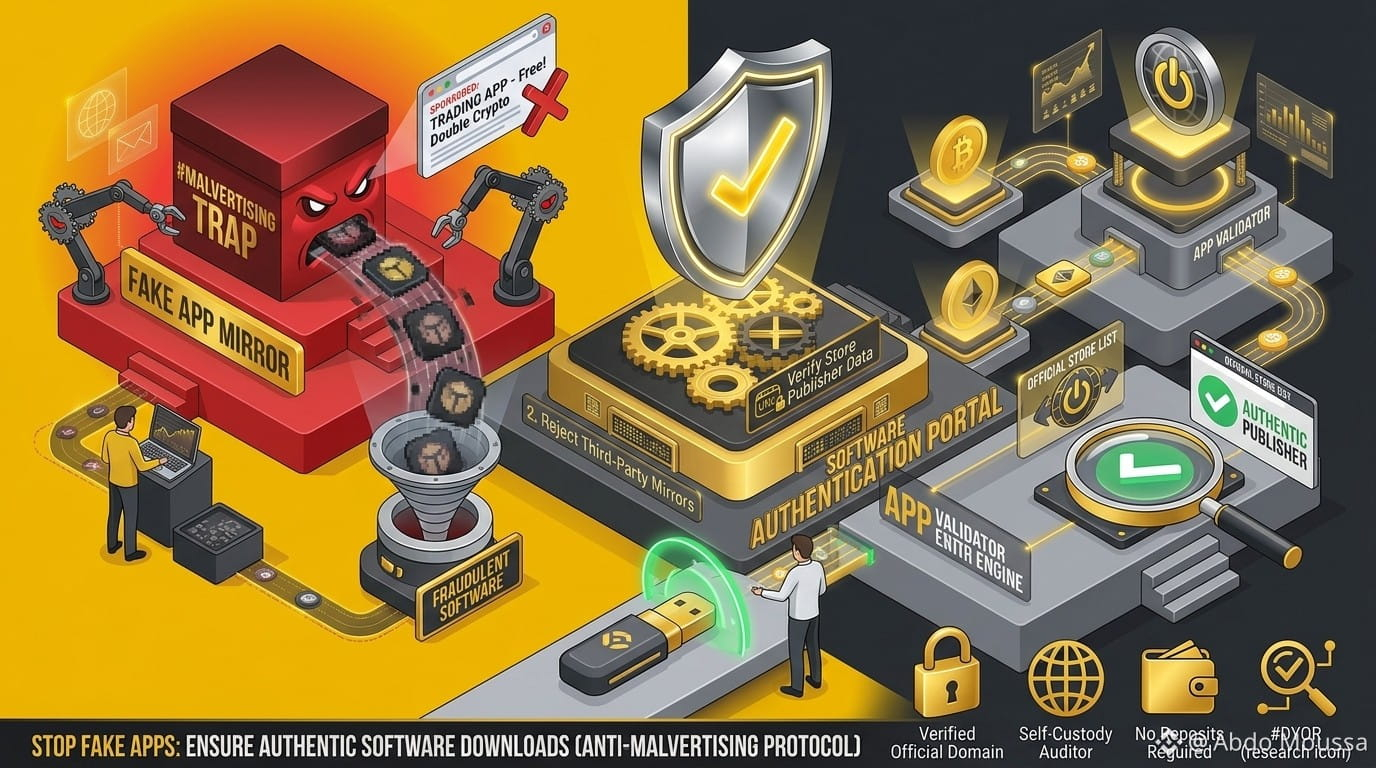
📥 Malvertising & Fake-App-Bedrohungen: Sicherstellen authentischer Software-Downloads
Böswillige Akteure nutzen häufig gesponserte Suchmaschinen-Anzeigepositionen – bekannt als Malvertising – sowie bösartige Drittanbieter-Spiegelseiten, um Nutzer dazu zu verleiten, gefälschte Handelsanwendungen herunterzuladen, die darauf ausgelegt sind, Kontozugangsdaten abzugreifen.
💡 Kernelemente für Software-Authentizität
Gesponserte Anzeigelinks vermeiden: Wenn Sie Suchmaschinen verwenden, umgehen Sie die ganz oben angezeigten „Gesponsert“-Ergebnisse und navigieren Sie direkt zu offiziellen, verifizierten Web-Domänen.
Store-Publisher-Daten prüfen: Wenn Sie Apps aus offiziellen Stores (Google Play oder Apple App Store) installieren, prüfen Sie den Namen der Publisher-Entität sowie die Download-Kennzahlen.
Externe APK-Installationen ablehnen: Vermeiden Sie das Herunterladen von Drittanbieter-Android-Paketdateien (.apk) oder Software-Installern, die über Messaging-Plattformen oder nicht verifizierte Foren verteilt werden.
Entwickler-Signaturen abgleichen: Stellen Sie sicher, dass die Gerätesicherheit das Side-Loading unbekannter Anwendungen blockiert.
⚠️ Sicherheits- & Bildungshinweis
Die Gewährleistung der Software-Integrität verhindert Remote-Keylogging und Diebstahl von Zugangsdaten. Diese Veröffentlichung ist ausschließlich zu Bildungs- und Sicherheitszwecken sowie zur Sensibilisierung erstellt.
[https://www.binance.com/en/academy/glossary/malware](https://www.binance.com/en/academy/glossary/malware)
Prüfen Sie Ihre Download-Quellen, schützen Sie Ihre Endpunkte und machen Sie immer DYOR (Do Your Own Research) 💡
#Binance #security #AntiPhishingCode #CryptoSafety #dyor
📥 Malvertising & Fake-App-Bedrohungen: Sicherstellen authentischer Software-Downloads
Böswillige Akteure nutzen häufig gesponserte Suchmaschinen-Anzeigepositionen – bekannt als Malvertising – sowie bösartige Drittanbieter-Spiegelseiten, um Nutzer dazu zu verleiten, gefälschte Handelsanwendungen herunterzuladen, die darauf ausgelegt sind, Kontozugangsdaten abzugreifen.
💡 Kernelemente für Software-Authentizität
Gesponserte Anzeigelinks vermeiden: Wenn Sie Suchmaschinen verwenden, umgehen Sie die ganz oben angezeigten „Gesponsert“-Ergebnisse und navigieren Sie direkt zu offiziellen, verifizierten Web-Domänen.
Store-Publisher-Daten prüfen: Wenn Sie Apps aus offiziellen Stores (Google Play oder Apple App Store) installieren, prüfen Sie den Namen der Publisher-Entität sowie die Download-Kennzahlen.
Externe APK-Installationen ablehnen: Vermeiden Sie das Herunterladen von Drittanbieter-Android-Paketdateien (.apk) oder Software-Installern, die über Messaging-Plattformen oder nicht verifizierte Foren verteilt werden.
Entwickler-Signaturen abgleichen: Stellen Sie sicher, dass die Gerätesicherheit das Side-Loading unbekannter Anwendungen blockiert.
⚠️ Sicherheits- & Bildungshinweis
Die Gewährleistung der Software-Integrität verhindert Remote-Keylogging und Diebstahl von Zugangsdaten. Diese Veröffentlichung ist ausschließlich zu Bildungs- und Sicherheitszwecken sowie zur Sensibilisierung erstellt.
https://www.binance.com/en/academy/glossary/malware
Prüfen Sie Ihre Download-Quellen, schützen Sie Ihre Endpunkte und machen Sie immer DYOR (Do Your Own Research) 💡
#Binance #security #AntiPhishingCode #CryptoSafety #dyor
Böswillige Akteure nutzen häufig gesponserte Suchmaschinen-Anzeigepositionen – bekannt als Malvertising – sowie bösartige Drittanbieter-Spiegelseiten, um Nutzer dazu zu verleiten, gefälschte Handelsanwendungen herunterzuladen, die darauf ausgelegt sind, Kontozugangsdaten abzugreifen.
💡 Kernelemente für Software-Authentizität
Gesponserte Anzeigelinks vermeiden: Wenn Sie Suchmaschinen verwenden, umgehen Sie die ganz oben angezeigten „Gesponsert“-Ergebnisse und navigieren Sie direkt zu offiziellen, verifizierten Web-Domänen.
Store-Publisher-Daten prüfen: Wenn Sie Apps aus offiziellen Stores (Google Play oder Apple App Store) installieren, prüfen Sie den Namen der Publisher-Entität sowie die Download-Kennzahlen.
Externe APK-Installationen ablehnen: Vermeiden Sie das Herunterladen von Drittanbieter-Android-Paketdateien (.apk) oder Software-Installern, die über Messaging-Plattformen oder nicht verifizierte Foren verteilt werden.
Entwickler-Signaturen abgleichen: Stellen Sie sicher, dass die Gerätesicherheit das Side-Loading unbekannter Anwendungen blockiert.
⚠️ Sicherheits- & Bildungshinweis
Die Gewährleistung der Software-Integrität verhindert Remote-Keylogging und Diebstahl von Zugangsdaten. Diese Veröffentlichung ist ausschließlich zu Bildungs- und Sicherheitszwecken sowie zur Sensibilisierung erstellt.
https://www.binance.com/en/academy/glossary/malware
Prüfen Sie Ihre Download-Quellen, schützen Sie Ihre Endpunkte und machen Sie immer DYOR (Do Your Own Research) 💡
#Binance #security #AntiPhishingCode #CryptoSafety #dyor
6
68
·
--
🍪 Browsersicherheit: Aktive Sitzungen vor Cookie-Diebstahl schützen
Sich ausschließlich auf Multi-Faktor-Authentifizierung zu verlassen, reicht nicht aus, wenn aktive Browsersitzungen weiterhin für Session-Hijacking-Malware anfällig sind, die Zugriffs-Cookies und Autorisierungstokens stehlen soll.
💡 Session-Hijacking & Token-Diebstahl eindämmen
Cookies-Diebe verstehen: Spezialisierte Malware (InfoStealers) zielt auf lokale Browserdatenbanken, um aktive Sitzungs-Cookies zu exportieren. So können Angreifer eine authentifizierte Sitzung auf einer entfernten Maschine nachbilden.
Explizite Abmeldungen: Klicke beim Beenden sensibler finanzieller Aktivitäten immer auf die Schaltfläche „Abmelden“, statt einfach nur den Browser-Tab zu schließen.
Browser-Erweiterungen prüfen: Untersuche regelmäßig und entferne unnötige oder nicht verifizierte Browser-Erweiterungen von Drittanbietern, die weitreichende Berechtigungen zum Lesen von Webinhalten besitzen.
Handelsumgebungen isolieren: Nutze ausschließlich ein sauberes Browserprofil ohne Erweiterungen oder ein isoliertes Gerät, um digitale Vermögenswerte auszuführen.
⚠️ Sicherheits- & Bildungs-Hinweis
Die strikte Pflege der Browser-Umgebung verhindert das unbefugte Klonen von Sitzungen und das Auslesen von Zugangsdaten. Diese Veröffentlichung ist ausschließlich für Bildungs- und Sicherheitsbewusstseinszwecke vorbereitet.
[https://www.binance.com/en/academy/articles/what-are-cookies](https://www.binance.com/en/academy/articles/what-are-cookies)
Leere deinen Browser-Cache, melde dich von sensiblen Sitzungen ab und mache immer DYOR (Do Your Own Research) 💡
#Binance #Security #AccountSecurity #dyor
🍪 Browsersicherheit: Aktive Sitzungen vor Cookie-Diebstahl schützen
Sich ausschließlich auf Multi-Faktor-Authentifizierung zu verlassen, reicht nicht aus, wenn aktive Browsersitzungen weiterhin für Session-Hijacking-Malware anfällig sind, die Zugriffs-Cookies und Autorisierungstokens stehlen soll.
💡 Session-Hijacking & Token-Diebstahl eindämmen
Cookies-Diebe verstehen: Spezialisierte Malware (InfoStealers) zielt auf lokale Browserdatenbanken, um aktive Sitzungs-Cookies zu exportieren. So können Angreifer eine authentifizierte Sitzung auf einer entfernten Maschine nachbilden.
Explizite Abmeldungen: Klicke beim Beenden sensibler finanzieller Aktivitäten immer auf die Schaltfläche „Abmelden“, statt einfach nur den Browser-Tab zu schließen.
Browser-Erweiterungen prüfen: Untersuche regelmäßig und entferne unnötige oder nicht verifizierte Browser-Erweiterungen von Drittanbietern, die weitreichende Berechtigungen zum Lesen von Webinhalten besitzen.
Handelsumgebungen isolieren: Nutze ausschließlich ein sauberes Browserprofil ohne Erweiterungen oder ein isoliertes Gerät, um digitale Vermögenswerte auszuführen.
⚠️ Sicherheits- & Bildungs-Hinweis
Die strikte Pflege der Browser-Umgebung verhindert das unbefugte Klonen von Sitzungen und das Auslesen von Zugangsdaten. Diese Veröffentlichung ist ausschließlich für Bildungs- und Sicherheitsbewusstseinszwecke vorbereitet.
https://www.binance.com/en/academy/articles/what-are-cookies
Leere deinen Browser-Cache, melde dich von sensiblen Sitzungen ab und mache immer DYOR (Do Your Own Research) 💡
#Binance #Security #AccountSecurity #dyor
Sich ausschließlich auf Multi-Faktor-Authentifizierung zu verlassen, reicht nicht aus, wenn aktive Browsersitzungen weiterhin für Session-Hijacking-Malware anfällig sind, die Zugriffs-Cookies und Autorisierungstokens stehlen soll.
💡 Session-Hijacking & Token-Diebstahl eindämmen
Cookies-Diebe verstehen: Spezialisierte Malware (InfoStealers) zielt auf lokale Browserdatenbanken, um aktive Sitzungs-Cookies zu exportieren. So können Angreifer eine authentifizierte Sitzung auf einer entfernten Maschine nachbilden.
Explizite Abmeldungen: Klicke beim Beenden sensibler finanzieller Aktivitäten immer auf die Schaltfläche „Abmelden“, statt einfach nur den Browser-Tab zu schließen.
Browser-Erweiterungen prüfen: Untersuche regelmäßig und entferne unnötige oder nicht verifizierte Browser-Erweiterungen von Drittanbietern, die weitreichende Berechtigungen zum Lesen von Webinhalten besitzen.
Handelsumgebungen isolieren: Nutze ausschließlich ein sauberes Browserprofil ohne Erweiterungen oder ein isoliertes Gerät, um digitale Vermögenswerte auszuführen.
⚠️ Sicherheits- & Bildungs-Hinweis
Die strikte Pflege der Browser-Umgebung verhindert das unbefugte Klonen von Sitzungen und das Auslesen von Zugangsdaten. Diese Veröffentlichung ist ausschließlich für Bildungs- und Sicherheitsbewusstseinszwecke vorbereitet.
https://www.binance.com/en/academy/articles/what-are-cookies
Leere deinen Browser-Cache, melde dich von sensiblen Sitzungen ab und mache immer DYOR (Do Your Own Research) 💡
#Binance #Security #AccountSecurity #dyor

7
67

·
--
Bullisch
#bitgetdetailssecurityincidenttimeline
🚨 BITGET HAT DIE KOMPLETTE ZEITLINIE DES SICHERHEITSVORFALLS ENTHÜLLT.
Am 24. September stellte Bitget unautorisierte Überweisungen aus Teilen seiner Hot- und Warm-Wallet-Infrastruktur fest. Der geschätzte betroffene Betrag wurde später nach der Identifizierung weiterer Transaktionen von 351,6 Mio. $ auf 387,5 Mio. $ revidiert.
⏰ 18:31 UTC: Unautorisierte Überweisungen erkannt
🛑 Am selben Tag: Auszahlungen vorübergehend ausgesetzt
🔍 25. Sept.: Angriffspfad identifiziert und Schwachstelle behoben
💰 387,5 Mio. $: Überarbeiteter Gesamtbetrag der betroffenen Summe
🛡️ Cold Wallets: Nicht betroffen
🏦 Schutzfonds: Über 464 Mio. $
📅 28. Sept.: BTC-Auszahlungen sollen phasenweise wieder starten
Bitget sagt, dass der Vorfall eingedämmt ist, die Kontostände der Nutzer nicht beeinträchtigt sind und Mandiant + SlowMist bei der Untersuchung unterstützen.
🔥 Jetzt die große Frage:
Wird der gestaffelte Neustart der Auszahlungen das Vertrauen wiederherstellen — oder bleiben Trader vorsichtig? 👀
#Bitget #crypto #security
#bitgetdetailssecurityincidenttimeline
🚨 BITGET HAT DIE KOMPLETTE ZEITLINIE DES SICHERHEITSVORFALLS ENTHÜLLT.
Am 24. September stellte Bitget unautorisierte Überweisungen aus Teilen seiner Hot- und Warm-Wallet-Infrastruktur fest. Der geschätzte betroffene Betrag wurde später nach der Identifizierung weiterer Transaktionen von 351,6 Mio. $ auf 387,5 Mio. $ revidiert.
⏰ 18:31 UTC: Unautorisierte Überweisungen erkannt
🛑 Am selben Tag: Auszahlungen vorübergehend ausgesetzt
🔍 25. Sept.: Angriffspfad identifiziert und Schwachstelle behoben
💰 387,5 Mio. $: Überarbeiteter Gesamtbetrag der betroffenen Summe
🛡️ Cold Wallets: Nicht betroffen
🏦 Schutzfonds: Über 464 Mio. $
📅 28. Sept.: BTC-Auszahlungen sollen phasenweise wieder starten
Bitget sagt, dass der Vorfall eingedämmt ist, die Kontostände der Nutzer nicht beeinträchtigt sind und Mandiant + SlowMist bei der Untersuchung unterstützen.
🔥 Jetzt die große Frage:
Wird der gestaffelte Neustart der Auszahlungen das Vertrauen wiederherstellen — oder bleiben Trader vorsichtig? 👀
#Bitget #crypto #security
🚨 BITGET HAT DIE KOMPLETTE ZEITLINIE DES SICHERHEITSVORFALLS ENTHÜLLT.
Am 24. September stellte Bitget unautorisierte Überweisungen aus Teilen seiner Hot- und Warm-Wallet-Infrastruktur fest. Der geschätzte betroffene Betrag wurde später nach der Identifizierung weiterer Transaktionen von 351,6 Mio. $ auf 387,5 Mio. $ revidiert.
⏰ 18:31 UTC: Unautorisierte Überweisungen erkannt
🛑 Am selben Tag: Auszahlungen vorübergehend ausgesetzt
🔍 25. Sept.: Angriffspfad identifiziert und Schwachstelle behoben
💰 387,5 Mio. $: Überarbeiteter Gesamtbetrag der betroffenen Summe
🛡️ Cold Wallets: Nicht betroffen
🏦 Schutzfonds: Über 464 Mio. $
📅 28. Sept.: BTC-Auszahlungen sollen phasenweise wieder starten
Bitget sagt, dass der Vorfall eingedämmt ist, die Kontostände der Nutzer nicht beeinträchtigt sind und Mandiant + SlowMist bei der Untersuchung unterstützen.
🔥 Jetzt die große Frage:
Wird der gestaffelte Neustart der Auszahlungen das Vertrauen wiederherstellen — oder bleiben Trader vorsichtig? 👀
#Bitget #crypto #security
AngelOfCrypto_-:
nice
6
13
27.3k

·
--
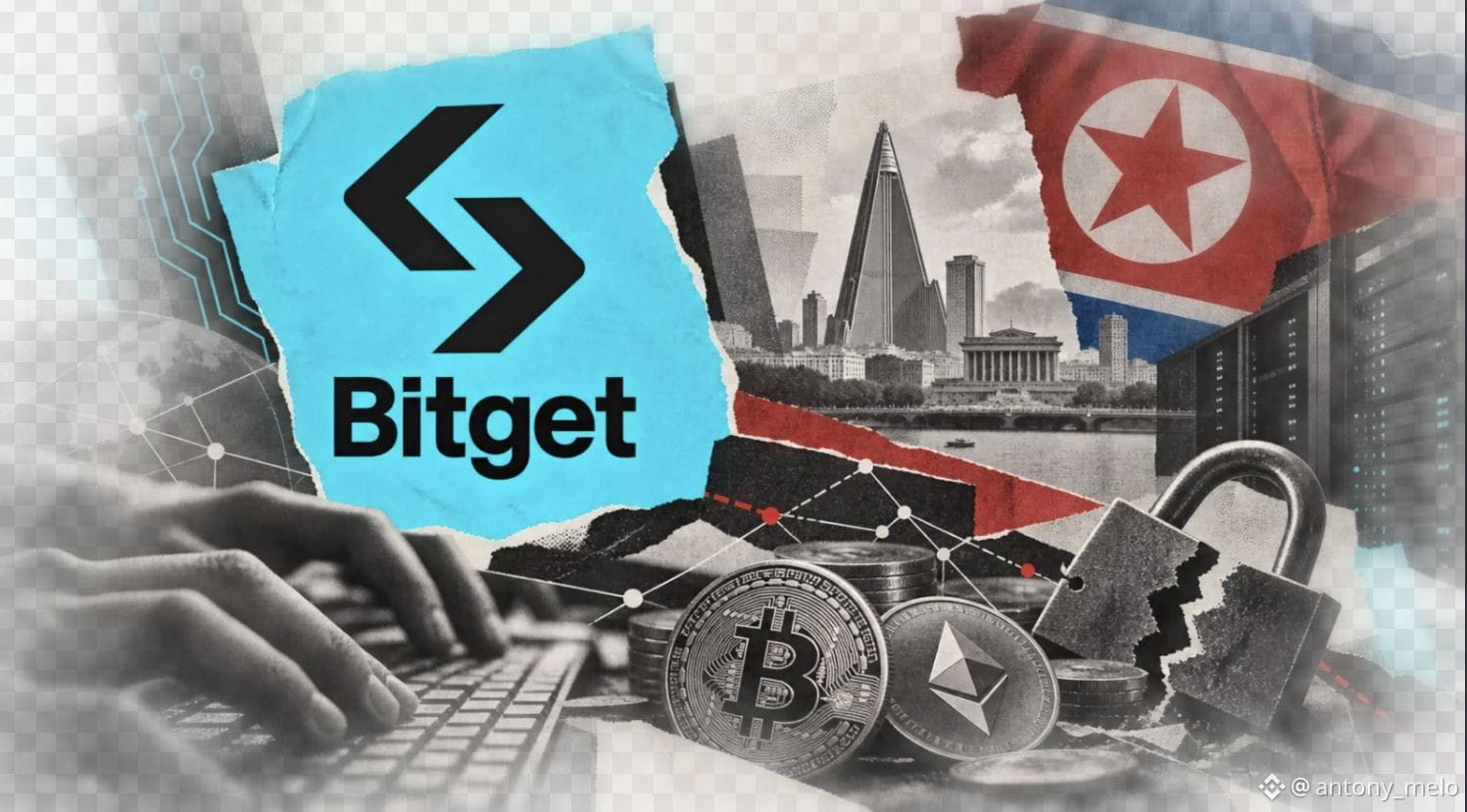
Bitget wurde für 387 Mio. $ gehackt — eine Lektion für jeden
Am 25. September griffen Angreifer die Wallets von Bitget an. Sie stahlen XRP, ETH und Stablecoins im Wert von 387,5 Mio. $. Der größte Hack des Jahres 2026.
Was passiert ist:
Die Hacker brachen das Backend auf, fälschten die Transaktionsdaten und umgingen die Autorisierung. Ein Schlüssel-Leak wurde ausgeschlossen. Man vermutet Verbindungen zu Nordkorea. Bereits 83 Mio. $ wurden über unverwaltete Adressen verschoben.
Warum das wichtig ist:
Bitget ist die Top-2-Börse für Derivate. Wenn man sie hacken konnte — ist keine CEX zu 100 % sicher.
Was tun:
Halte nicht alles auf einer Börse. Große Beträge — auf eine Cold Wallet. Diversifiziere die Speicherung genauso wie ein Portfolio.
Gute Nachrichten:
BTC hält sich bei rund 84.500 $. Fear & Greed ist auf 74 gestiegen. Ein einzelner Hack lässt den Markt nicht mehr einbrechen — ein Zeichen für Reife.
Interessante Parallele:
Vitalik hat diese Woche seine Vision für Ethereum bis 2030 als kryptografischen Computer vorgestellt. Während Hacker CEXs angreifen — wird die Dezentralisierung immer relevanter.
💬 Meine Meinung: Das ist kein Grund zur Panik. Es ist eine Erinnerung daran, dass Sicherheit wichtiger ist als Bequemlichkeit. Die Cold Wallet ist dein bester Freund.
Wo hältst du dein Geld — auf der Börse oder in einer Cold Wallet? 👇
#CryptoHack #security #bitcoin #CryptoNews
Bitget wurde für 387 Mio. $ gehackt — eine Lektion für jeden
Am 25. September griffen Angreifer die Wallets von Bitget an. Sie stahlen XRP, ETH und Stablecoins im Wert von 387,5 Mio. $. Der größte Hack des Jahres 2026.
Was passiert ist:
Die Hacker brachen das Backend auf, fälschten die Transaktionsdaten und umgingen die Autorisierung. Ein Schlüssel-Leak wurde ausgeschlossen. Man vermutet Verbindungen zu Nordkorea. Bereits 83 Mio. $ wurden über unverwaltete Adressen verschoben.
Warum das wichtig ist:
Bitget ist die Top-2-Börse für Derivate. Wenn man sie hacken konnte — ist keine CEX zu 100 % sicher.
Was tun:
Halte nicht alles auf einer Börse. Große Beträge — auf eine Cold Wallet. Diversifiziere die Speicherung genauso wie ein Portfolio.
Gute Nachrichten:
BTC hält sich bei rund 84.500 $. Fear & Greed ist auf 74 gestiegen. Ein einzelner Hack lässt den Markt nicht mehr einbrechen — ein Zeichen für Reife.
Interessante Parallele:
Vitalik hat diese Woche seine Vision für Ethereum bis 2030 als kryptografischen Computer vorgestellt. Während Hacker CEXs angreifen — wird die Dezentralisierung immer relevanter.
💬 Meine Meinung: Das ist kein Grund zur Panik. Es ist eine Erinnerung daran, dass Sicherheit wichtiger ist als Bequemlichkeit. Die Cold Wallet ist dein bester Freund.
Wo hältst du dein Geld — auf der Börse oder in einer Cold Wallet? 👇
#CryptoHack #security #bitcoin #CryptoNews
Am 25. September griffen Angreifer die Wallets von Bitget an. Sie stahlen XRP, ETH und Stablecoins im Wert von 387,5 Mio. $. Der größte Hack des Jahres 2026.
Was passiert ist:
Die Hacker brachen das Backend auf, fälschten die Transaktionsdaten und umgingen die Autorisierung. Ein Schlüssel-Leak wurde ausgeschlossen. Man vermutet Verbindungen zu Nordkorea. Bereits 83 Mio. $ wurden über unverwaltete Adressen verschoben.
Warum das wichtig ist:
Bitget ist die Top-2-Börse für Derivate. Wenn man sie hacken konnte — ist keine CEX zu 100 % sicher.
Was tun:
Halte nicht alles auf einer Börse. Große Beträge — auf eine Cold Wallet. Diversifiziere die Speicherung genauso wie ein Portfolio.
Gute Nachrichten:
BTC hält sich bei rund 84.500 $. Fear & Greed ist auf 74 gestiegen. Ein einzelner Hack lässt den Markt nicht mehr einbrechen — ein Zeichen für Reife.
Interessante Parallele:
Vitalik hat diese Woche seine Vision für Ethereum bis 2030 als kryptografischen Computer vorgestellt. Während Hacker CEXs angreifen — wird die Dezentralisierung immer relevanter.
💬 Meine Meinung: Das ist kein Grund zur Panik. Es ist eine Erinnerung daran, dass Sicherheit wichtiger ist als Bequemlichkeit. Die Cold Wallet ist dein bester Freund.
Wo hältst du dein Geld — auf der Börse oder in einer Cold Wallet? 👇
#CryptoHack #security #bitcoin #CryptoNews
1
538

Wenn du dein gesamtes Wallet/Bag noch auf einer zentralisierten Börse hältst, hör jetzt auf.
Der echte Schaden ist nicht nur der Hack. Es ist dieses Hängenbleiben während eines Auszahlungsstopps, während $BTC dumps oder ein Setup, das du wolltest, verdampft – und du hast keine Möglichkeit, etwas zu bewegen.
Bitget hat nach einem 388-Mio.-Dollar-Exploit damit begonnen, Auszahlungen schrittweise wieder freizuschalten. Manche nennen das einen Gewinn, weil die Börse Nutzer aus Reserven abdeckt und den Zugang in Etappen wieder öffnet. Andere sagen: Genau diese 388 Millionen Dollar Lücke sind der Grund, warum du einen CEX niemals wie einen Tresor behandeln solltest.
Ich bin bei der zweiten Gruppe. Schrittweiser Zugang heißt immer noch, dass du genau dann gesperrt warst, als es darauf ankam. Händler, die $ETH or halten oder in $USDT sitzen, können nicht hedgen, nicht aussteigen, nicht rotieren – bis jemand anders entscheidet, dass die Warteschlange wieder offen ist.
Börsen sind zum Handeln da. Sie sind nicht dafür gedacht, den Stack zu lagern, den du dir nicht leisten kannst zu verlieren. Behalte nur das, was du zum Handeln brauchst, und bewege den Rest.
Fühlst du dich nach diesem Vorfall immer noch damit wohl, den Großteil deiner Mittel auf einem CEX zu lassen, oder ändert $388M die Rechnung für dich?
#Crypto #Bitcoin #Security
Wenn du dein gesamtes Wallet/Bag noch auf einer zentralisierten Börse hältst, hör jetzt auf.
Der echte Schaden ist nicht nur der Hack. Es ist dieses Hängenbleiben während eines Auszahlungsstopps, während $BTC dumps oder ein Setup, das du wolltest, verdampft – und du hast keine Möglichkeit, etwas zu bewegen.
Bitget hat nach einem 388-Mio.-Dollar-Exploit damit begonnen, Auszahlungen schrittweise wieder freizuschalten. Manche nennen das einen Gewinn, weil die Börse Nutzer aus Reserven abdeckt und den Zugang in Etappen wieder öffnet. Andere sagen: Genau diese 388 Millionen Dollar Lücke sind der Grund, warum du einen CEX niemals wie einen Tresor behandeln solltest.
Ich bin bei der zweiten Gruppe. Schrittweiser Zugang heißt immer noch, dass du genau dann gesperrt warst, als es darauf ankam. Händler, die $ETH or halten oder in $USDT sitzen, können nicht hedgen, nicht aussteigen, nicht rotieren – bis jemand anders entscheidet, dass die Warteschlange wieder offen ist.
Börsen sind zum Handeln da. Sie sind nicht dafür gedacht, den Stack zu lagern, den du dir nicht leisten kannst zu verlieren. Behalte nur das, was du zum Handeln brauchst, und bewege den Rest.
Fühlst du dich nach diesem Vorfall immer noch damit wohl, den Großteil deiner Mittel auf einem CEX zu lassen, oder ändert $388M die Rechnung für dich?
#Crypto #Bitcoin #Security
Der echte Schaden ist nicht nur der Hack. Es ist dieses Hängenbleiben während eines Auszahlungsstopps, während $BTC dumps oder ein Setup, das du wolltest, verdampft – und du hast keine Möglichkeit, etwas zu bewegen.
Bitget hat nach einem 388-Mio.-Dollar-Exploit damit begonnen, Auszahlungen schrittweise wieder freizuschalten. Manche nennen das einen Gewinn, weil die Börse Nutzer aus Reserven abdeckt und den Zugang in Etappen wieder öffnet. Andere sagen: Genau diese 388 Millionen Dollar Lücke sind der Grund, warum du einen CEX niemals wie einen Tresor behandeln solltest.
Ich bin bei der zweiten Gruppe. Schrittweiser Zugang heißt immer noch, dass du genau dann gesperrt warst, als es darauf ankam. Händler, die $ETH or halten oder in $USDT sitzen, können nicht hedgen, nicht aussteigen, nicht rotieren – bis jemand anders entscheidet, dass die Warteschlange wieder offen ist.
Börsen sind zum Handeln da. Sie sind nicht dafür gedacht, den Stack zu lagern, den du dir nicht leisten kannst zu verlieren. Behalte nur das, was du zum Handeln brauchst, und bewege den Rest.
Fühlst du dich nach diesem Vorfall immer noch damit wohl, den Großteil deiner Mittel auf einem CEX zu lassen, oder ändert $388M die Rechnung für dich?
#Crypto #Bitcoin #Security
32
Anmelden und weiter Inhalte entdecken
Krypto-Nutzer weltweit auf Binance Square kennenlernen
⚡️ Bleib in Sachen Krypto stets am Puls.
💬 Die weltgrößte Kryptobörse vertraut darauf.
👍 Erhalte verlässliche Einblicke von verifizierten Creators.
E-Mail-Adresse/Telefonnummer
Trendthemen
1
#BitcoinClears$85200
18,599 Aufrufe
247 Kommentare
2
#AltcoinSeasonIndexHoldsAbove60For5Days
94,191 Aufrufe
1,376 Kommentare
3
#USADPAdds90000JobsInSeptember
41,472 Aufrufe
751 Kommentare
4
#USCorePCEEasesTo3%InAugust
30,518 Aufrufe
560 Kommentare
5
#KospiPostsWorstQuarterSince2020
18,936 Aufrufe
523 Kommentare
6
#SECToClarifyOnChainFundraisingRules
48,864 Aufrufe
708 Kommentare
7
#UKFCAOpensCryptoFirmAuthorization
46,712 Aufrufe
591 Kommentare
8
#JapanMOFStudyGroupOnTokenizedGovtBonds
24,486 Aufrufe
438 Kommentare
9
#QNTRises287%
120,248 Aufrufe
950 Kommentare
10
#TrumpRejectsAIRulesForVoluntaryAudits
68,387 Aufrufe
815 Kommentare