
Sofia VMare
4.3k Posts

Sofia VMare
 Square Verified+
Report
Block User
Trading with curiosity and courage 👩💻 X: @merinda2010
Occasional Trader
1.3 Years
368 Following
46.1K+ Followers
110.6K+ Liked
Posts
All
Quotes
Live
·
--
⚽ The closer we get to the final, the less room for error.
I’m especially looking forward to the match between Argentina 🇦🇷 and Switzerland 🇨🇭. At this stage, it’s not enough to just play well — it’s important to make the most of every chance and stay focused until the very last whistle.
It’ll be interesting to see which team is stronger exactly today. 👀
#BinancePickAndWin
⚽ The closer we get to the final, the less room for error.
I’m especially looking forward to the match between Argentina 🇦🇷 and Switzerland 🇨🇭. At this stage, it’s not enough to just play well — it’s important to make the most of every chance and stay focused until the very last whistle.
It’ll be interesting to see which team is stronger exactly today. 👀
#BinancePickAndWin
I’m especially looking forward to the match between Argentina 🇦🇷 and Switzerland 🇨🇭. At this stage, it’s not enough to just play well — it’s important to make the most of every chance and stay focused until the very last whistle.
It’ll be interesting to see which team is stronger exactly today. 👀
#BinancePickAndWin

1
8
256
·
--
⚽ Sometimes one lucky moment changes the whole match.
That’s why I love football — even after a tough start, the game can be completely turned around in just a few minutes.
Today it’s interesting again to see who will make better use of their chances. ⚽
And which moment in a match, in your opinion, most often becomes decisive?
#BinancePickAndWin
⚽ Sometimes one lucky moment changes the whole match.
That’s why I love football — even after a tough start, the game can be completely turned around in just a few minutes.
Today it’s interesting again to see who will make better use of their chances. ⚽
And which moment in a match, in your opinion, most often becomes decisive?
#BinancePickAndWin
That’s why I love football — even after a tough start, the game can be completely turned around in just a few minutes.
Today it’s interesting again to see who will make better use of their chances. ⚽
And which moment in a match, in your opinion, most often becomes decisive?
#BinancePickAndWin

6
103
·
--
Article
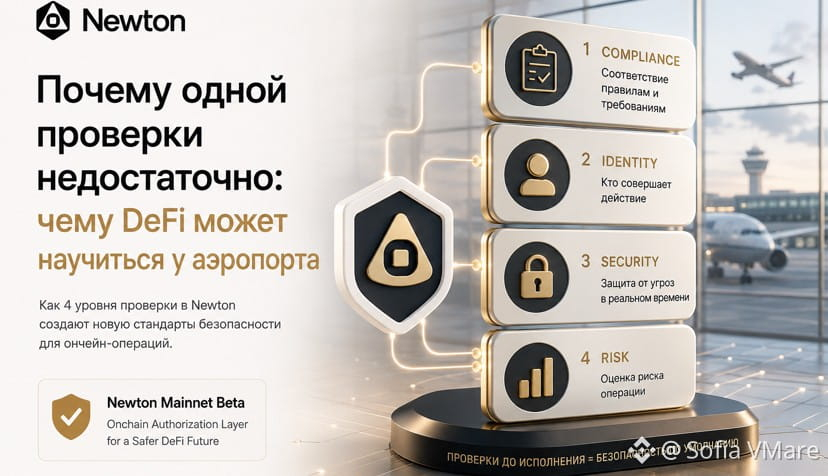
Why one check isn’t enough: what DeFi can learn from the airportWhen we were flying in Italy, I caught myself thinking. By the time we reached the airplane, we’d been checked several times. First, they looked at our passports, then our boarding passes, then asked us to put our bags on the belt, and only after that we went through the security gate.
At the time, it seemed like ordinary routine. But already on the plane I thought: no one is upset that there are so many checks. On the contrary, if they suddenly cut them down to just one, most people would feel uneasy.
Why one check isn’t enough: what DeFi can learn from the airport
When we were flying in Italy, I caught myself thinking. By the time we reached the airplane, we’d been checked several times. First, they looked at our passports, then our boarding passes, then asked us to put our bags on the belt, and only after that we went through the security gate.
At the time, it seemed like ordinary routine. But already on the plane I thought: no one is upset that there are so many checks. On the contrary, if they suddenly cut them down to just one, most people would feel uneasy.
At the time, it seemed like ordinary routine. But already on the plane I thought: no one is upset that there are so many checks. On the contrary, if they suddenly cut them down to just one, most people would feel uneasy.
6
295
·
--
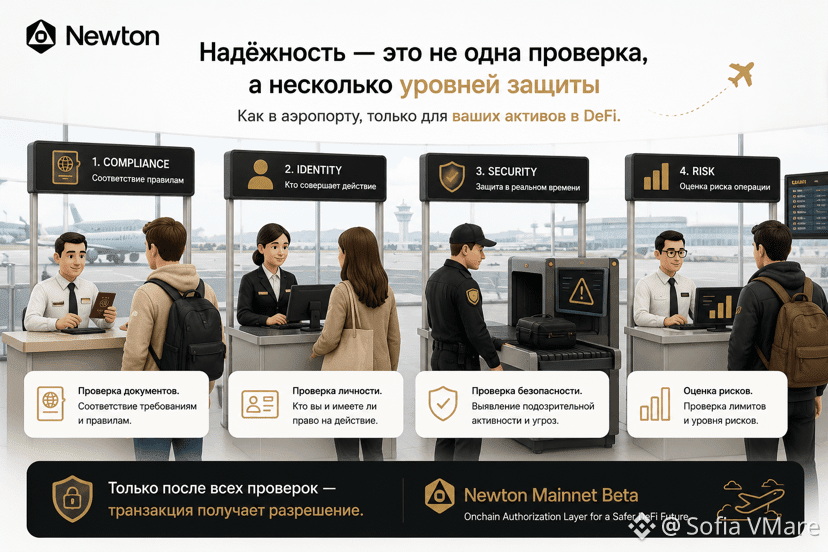
When you fly to go on vacation, you’re not checked by just one person. ✈️
First they look at your passport.
Then your luggage.
Then your boarding pass.
Then security screening.
Each check handles its own job.
And only after that do you board the plane.
When I read about the Newton Mainnet Beta, I unexpectedly remembered the airport.
Instead of one general check, there are also several separate layers here: compliance with the rules, identity verification, security, and risk assessment.
Honestly, this approach seems more logical than trying to solve everything with one universal check.
Sometimes reliability isn’t one big filter—it’s several small ones that work together.
#newt $NEWT @NewtonProtocol
When you fly to go on vacation, you’re not checked by just one person. ✈️
First they look at your passport.
Then your luggage.
Then your boarding pass.
Then security screening.
Each check handles its own job.
And only after that do you board the plane.
When I read about the Newton Mainnet Beta, I unexpectedly remembered the airport.
Instead of one general check, there are also several separate layers here: compliance with the rules, identity verification, security, and risk assessment.
Honestly, this approach seems more logical than trying to solve everything with one universal check.
Sometimes reliability isn’t one big filter—it’s several small ones that work together.
#newt $NEWT @NewtonProtocol
First they look at your passport.
Then your luggage.
Then your boarding pass.
Then security screening.
Each check handles its own job.
And only after that do you board the plane.
When I read about the Newton Mainnet Beta, I unexpectedly remembered the airport.
Instead of one general check, there are also several separate layers here: compliance with the rules, identity verification, security, and risk assessment.
Honestly, this approach seems more logical than trying to solve everything with one universal check.
Sometimes reliability isn’t one big filter—it’s several small ones that work together.
#newt $NEWT @NewtonProtocol
2
8
395
·
--
Article
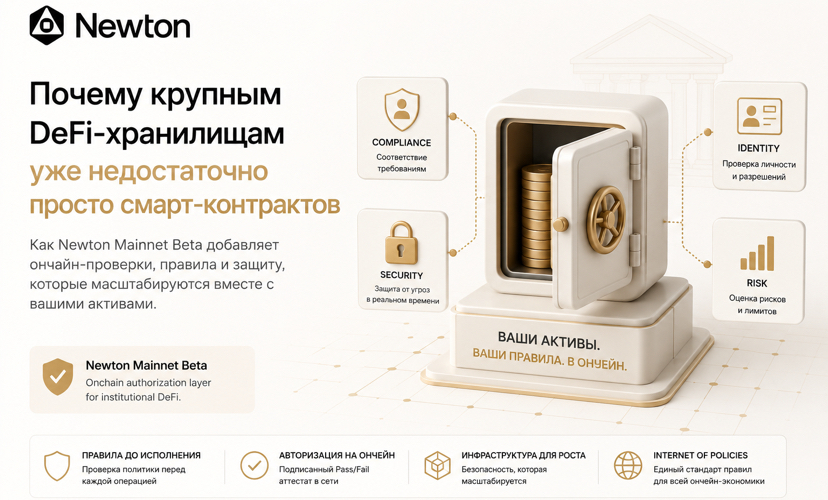
Why large DeFi vaults are no longer enough with just smart contractsI recently thought about a simple thing.
Imagine that you keep a small amount of cash at home.
Most likely, it’s just lying in a desk drawer.
But if we’re talking about millions of dollars, one drawer is clearly not enough.
There appear safes, alarms, cameras, fingerprint access, and a whole set of additional rules.
Why large DeFi vaults are no longer enough with just smart contracts
I recently thought about a simple thing.
Imagine that you keep a small amount of cash at home.
Most likely, it’s just lying in a desk drawer.
But if we’re talking about millions of dollars, one drawer is clearly not enough.
There appear safes, alarms, cameras, fingerprint access, and a whole set of additional rules.
Imagine that you keep a small amount of cash at home.
Most likely, it’s just lying in a desk drawer.
But if we’re talking about millions of dollars, one drawer is clearly not enough.
There appear safes, alarms, cameras, fingerprint access, and a whole set of additional rules.
1
6
389
·
--
⚽ Sometimes the fate of a match is decided not by a beautiful combination, but by a single set piece.
Corners, free kicks, and penalties often become that very moment that changes the course of the whole game.
That’s why I always watch with interest how teams make use of their chances.
And do you like goals from open play or from set pieces? ⚽
#BinancePickAndWin
⚽ Sometimes the fate of a match is decided not by a beautiful combination, but by a single set piece.
Corners, free kicks, and penalties often become that very moment that changes the course of the whole game.
That’s why I always watch with interest how teams make use of their chances.
And do you like goals from open play or from set pieces? ⚽
#BinancePickAndWin
Corners, free kicks, and penalties often become that very moment that changes the course of the whole game.
That’s why I always watch with interest how teams make use of their chances.
And do you like goals from open play or from set pieces? ⚽
#BinancePickAndWin

6
209
·
--
Sometimes the most important technologies are the ones we don’t even notice.
When I open the building entrance door, I don’t think about how the intercom works.
When I pay for coffee by card, I don’t dwell on how many checks the payment goes through in a couple of seconds.
I just expect everything to work.
It seems to me that this is exactly where DeFi is gradually headed.
Most users don’t want to dig into every technical process. They want to understand that their action will be carried out safely.
That’s why I’m interested in the Newton Mainnet Beta approach.
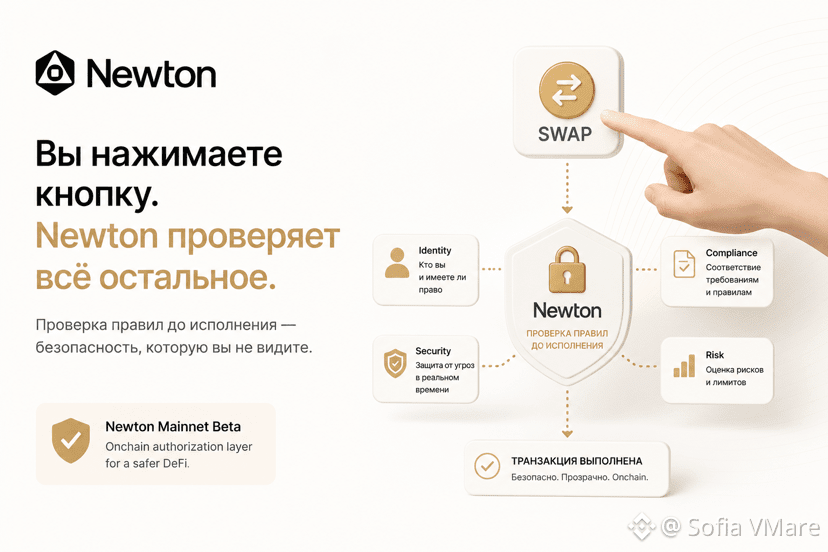
While we click the Swap or Deposit button, Newton can verify whether the operation complies with the specified rules before executing the transaction.
Probably the best sign of good infrastructure is when the user doesn’t even notice it’s working.
#newt $NEWT @NewtonProtocol
Sometimes the most important technologies are the ones we don’t even notice.
When I open the building entrance door, I don’t think about how the intercom works.
When I pay for coffee by card, I don’t dwell on how many checks the payment goes through in a couple of seconds.
I just expect everything to work.
It seems to me that this is exactly where DeFi is gradually headed.
Most users don’t want to dig into every technical process. They want to understand that their action will be carried out safely.
That’s why I’m interested in the Newton Mainnet Beta approach.
While we click the Swap or Deposit button, Newton can verify whether the operation complies with the specified rules before executing the transaction.
Probably the best sign of good infrastructure is when the user doesn’t even notice it’s working.
#newt $NEWT @NewtonProtocol
When I open the building entrance door, I don’t think about how the intercom works.
When I pay for coffee by card, I don’t dwell on how many checks the payment goes through in a couple of seconds.
I just expect everything to work.
It seems to me that this is exactly where DeFi is gradually headed.
Most users don’t want to dig into every technical process. They want to understand that their action will be carried out safely.
That’s why I’m interested in the Newton Mainnet Beta approach.
While we click the Swap or Deposit button, Newton can verify whether the operation complies with the specified rules before executing the transaction.
Probably the best sign of good infrastructure is when the user doesn’t even notice it’s working.
#newt $NEWT @NewtonProtocol
7
223
·
--
⚽ Beautiful goals are remembered by everyone, but very often victory is brought by precisely a reliable defense.
Sometimes one successful slide tackle, a timely interception, or an excellent save turn out to be just as important as a scored goal.
Today it’s interesting to see which team will do better at striking the right balance between attack and defense.
And what do you think: what’s more important—an exciting attack or a reliable defense? 👇
#BinancePickAndWin
⚽ Beautiful goals are remembered by everyone, but very often victory is brought by precisely a reliable defense.
Sometimes one successful slide tackle, a timely interception, or an excellent save turn out to be just as important as a scored goal.
Today it’s interesting to see which team will do better at striking the right balance between attack and defense.
And what do you think: what’s more important—an exciting attack or a reliable defense? 👇
#BinancePickAndWin
Sometimes one successful slide tackle, a timely interception, or an excellent save turn out to be just as important as a scored goal.
Today it’s interesting to see which team will do better at striking the right balance between attack and defense.
And what do you think: what’s more important—an exciting attack or a reliable defense? 👇
#BinancePickAndWin

1
4
154
·
--
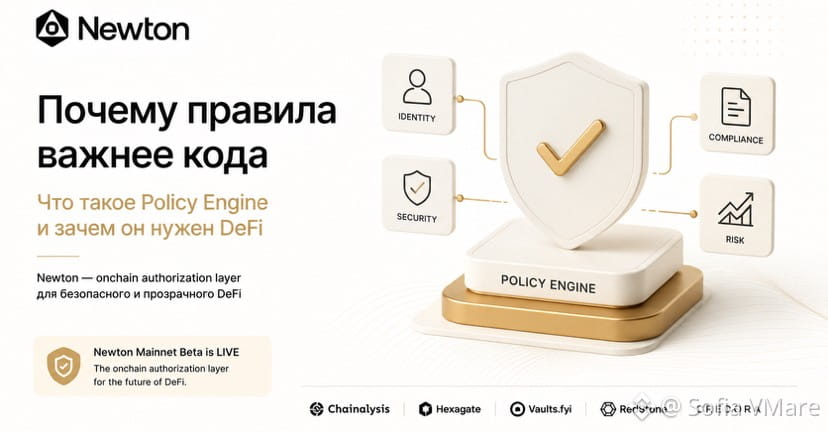
Article
Why rules matter more than code: what Newton can teach DeFiWhen we hear the word “politics,” we usually picture documents, instructions, or long legal texts.
But in everyday life, we run into them all the time.
The navigator won’t take you down a closed road.
The elevator won’t move while the doors are open.
An ATM won’t dispense more money than you have in your account.
Why rules matter more than code: what Newton can teach DeFi
When we hear the word “politics,” we usually picture documents, instructions, or long legal texts.
But in everyday life, we run into them all the time.
The navigator won’t take you down a closed road.
The elevator won’t move while the doors are open.
An ATM won’t dispense more money than you have in your account.
But in everyday life, we run into them all the time.
The navigator won’t take you down a closed road.
The elevator won’t move while the doors are open.
An ATM won’t dispense more money than you have in your account.
4
165
·
--
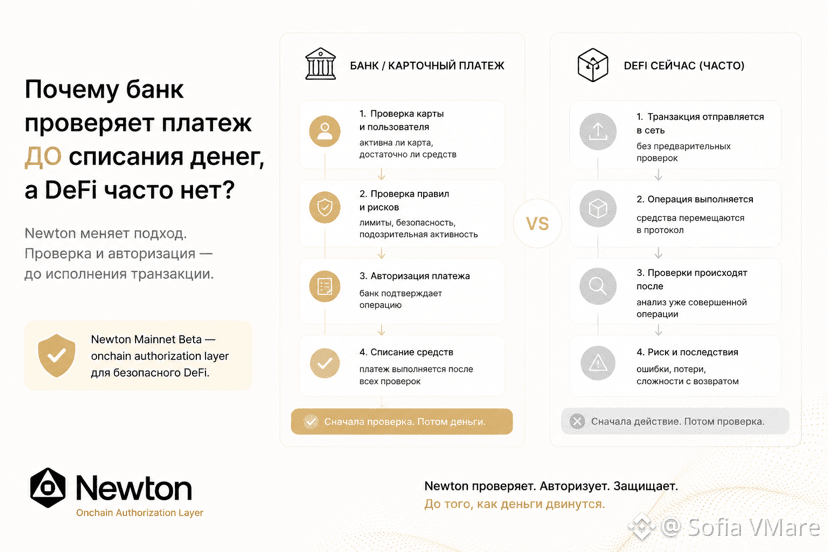
Today I caught myself thinking something.
When I pay for a purchase with a bank card, the money doesn’t leave instantly.
First, the bank checks dozens of things: whether there are enough funds, whether there’s any suspicious activity, and whether this operation can even be processed.
And only then does the payment get confirmed.
In crypto, things have worked the other way around for a long time.
First, the transaction goes out into the network, and only afterward do the services analyze what happened.
That’s why the idea of the Newton Mainnet Beta seemed interesting to me.
The project proposes verifying an operation before it reaches the blockchain. If the policy isn’t met, the transaction simply won’t go through.
The more I study this concept, the more I realize that exactly these “invisible” technologies could make DeFi much closer to the familiar financial world.
What do you think: is it better to prevent a mistake in advance or deal with the consequences afterward?
#newt $NEWT @NewtonProtocol
Today I caught myself thinking something.
When I pay for a purchase with a bank card, the money doesn’t leave instantly.
First, the bank checks dozens of things: whether there are enough funds, whether there’s any suspicious activity, and whether this operation can even be processed.
And only then does the payment get confirmed.
In crypto, things have worked the other way around for a long time.
First, the transaction goes out into the network, and only afterward do the services analyze what happened.
That’s why the idea of the Newton Mainnet Beta seemed interesting to me.
The project proposes verifying an operation before it reaches the blockchain. If the policy isn’t met, the transaction simply won’t go through.
The more I study this concept, the more I realize that exactly these “invisible” technologies could make DeFi much closer to the familiar financial world.
What do you think: is it better to prevent a mistake in advance or deal with the consequences afterward?
#newt $NEWT @NewtonProtocol
When I pay for a purchase with a bank card, the money doesn’t leave instantly.
First, the bank checks dozens of things: whether there are enough funds, whether there’s any suspicious activity, and whether this operation can even be processed.
And only then does the payment get confirmed.
In crypto, things have worked the other way around for a long time.
First, the transaction goes out into the network, and only afterward do the services analyze what happened.
That’s why the idea of the Newton Mainnet Beta seemed interesting to me.
The project proposes verifying an operation before it reaches the blockchain. If the policy isn’t met, the transaction simply won’t go through.
The more I study this concept, the more I realize that exactly these “invisible” technologies could make DeFi much closer to the familiar financial world.
What do you think: is it better to prevent a mistake in advance or deal with the consequences afterward?
#newt $NEWT @NewtonProtocol
5
181
·
--
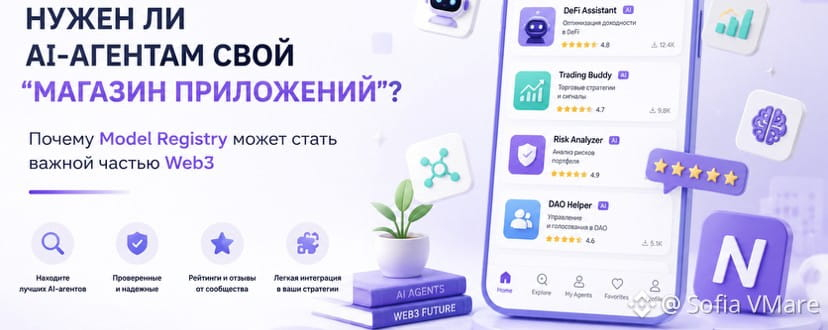
Article
Why AI agents will also need their own “app store”Recently, I was looking for a video editing app.
And I caught myself thinking about how familiar something has become.
We’re not searching for programs all over the internet anymore. We open the App Store or Google Play, read reviews, compare ratings, check the number of downloads, and choose what fits us best.
Why AI agents will also need their own “app store”
Recently, I was looking for a video editing app.
And I caught myself thinking about how familiar something has become.
We’re not searching for programs all over the internet anymore. We open the App Store or Google Play, read reviews, compare ratings, check the number of downloads, and choose what fits us best.
And I caught myself thinking about how familiar something has become.
We’re not searching for programs all over the internet anymore. We open the App Store or Google Play, read reviews, compare ratings, check the number of downloads, and choose what fits us best.
5
217
·
--
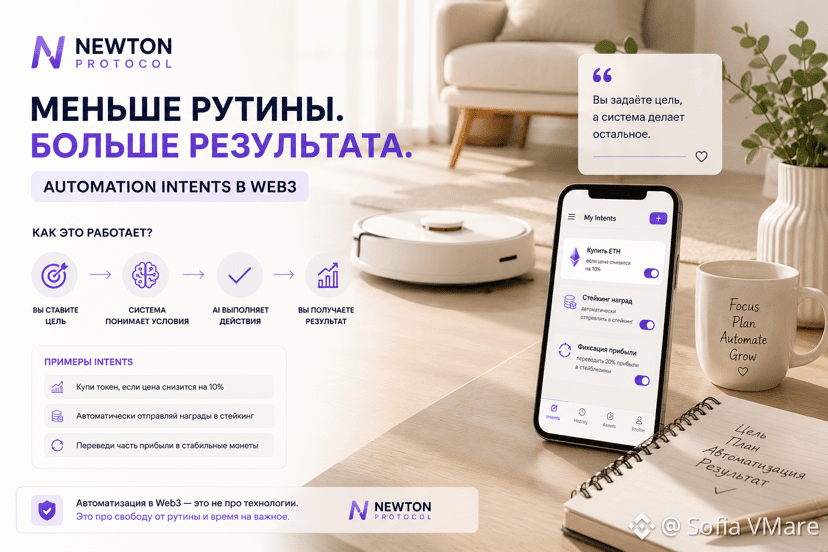
When I put the robot vacuum to clean, I’m not walking around after it through the apartment and saying every minute, “Now turn right,” “Now clean under the table” 😄
I just set the task—clean the apartment—and then it figures out what to do next.
And it seems to me that Web3 is gradually moving in the same direction.
Instead of manually doing dozens of repetitive actions every day, we’ll just tell the system what result we want.
That’s why the idea of Automation Intents in the Newton Protocol caught my attention.
Not to manage every transaction, but to set a goal: for example, automatically reinvest rewards or buy an asset when it hits a certain price.
The more I think about it, the more I realize that the future of Web3 isn’t “more buttons,” but less routine.
What do you think? Would you like to delegate these kinds of tasks to AI, or would you rather handle everything yourself for now?
#newt $NEWT @NewtonProtocol
When I put the robot vacuum to clean, I’m not walking around after it through the apartment and saying every minute, “Now turn right,” “Now clean under the table” 😄
I just set the task—clean the apartment—and then it figures out what to do next.
And it seems to me that Web3 is gradually moving in the same direction.
Instead of manually doing dozens of repetitive actions every day, we’ll just tell the system what result we want.
That’s why the idea of Automation Intents in the Newton Protocol caught my attention.
Not to manage every transaction, but to set a goal: for example, automatically reinvest rewards or buy an asset when it hits a certain price.
The more I think about it, the more I realize that the future of Web3 isn’t “more buttons,” but less routine.
What do you think? Would you like to delegate these kinds of tasks to AI, or would you rather handle everything yourself for now?
#newt $NEWT @NewtonProtocol
I just set the task—clean the apartment—and then it figures out what to do next.
And it seems to me that Web3 is gradually moving in the same direction.
Instead of manually doing dozens of repetitive actions every day, we’ll just tell the system what result we want.
That’s why the idea of Automation Intents in the Newton Protocol caught my attention.
Not to manage every transaction, but to set a goal: for example, automatically reinvest rewards or buy an asset when it hits a certain price.
The more I think about it, the more I realize that the future of Web3 isn’t “more buttons,” but less routine.
What do you think? Would you like to delegate these kinds of tasks to AI, or would you rather handle everything yourself for now?
#newt $NEWT @NewtonProtocol
6
213
·
--
Article
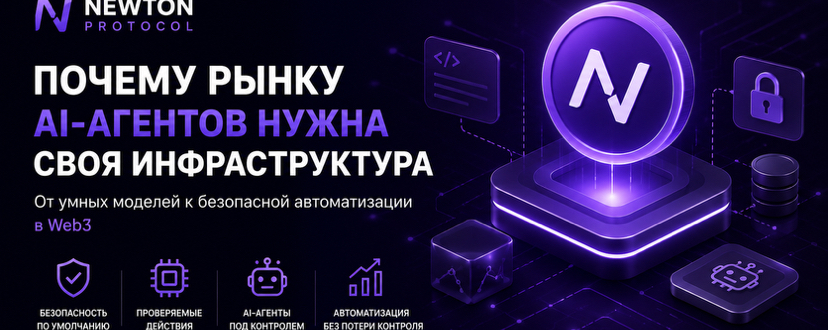
Why the AI-agent market needs not new models, but its own infrastructureWhen people talk about artificial intelligence in cryptocurrencies, attention is usually focused on the capabilities of models: how well they analyze the market, predict price movements, or help users make decisions.
But there is a less obvious problem.
Even the smartest AI will not be of any use if it cannot be trusted to carry out operations.
Why the AI-agent market needs not new models, but its own infrastructure
When people talk about artificial intelligence in cryptocurrencies, attention is usually focused on the capabilities of models: how well they analyze the market, predict price movements, or help users make decisions.
But there is a less obvious problem.
Even the smartest AI will not be of any use if it cannot be trusted to carry out operations.
But there is a less obvious problem.
Even the smartest AI will not be of any use if it cannot be trusted to carry out operations.
1
6
160
·
--
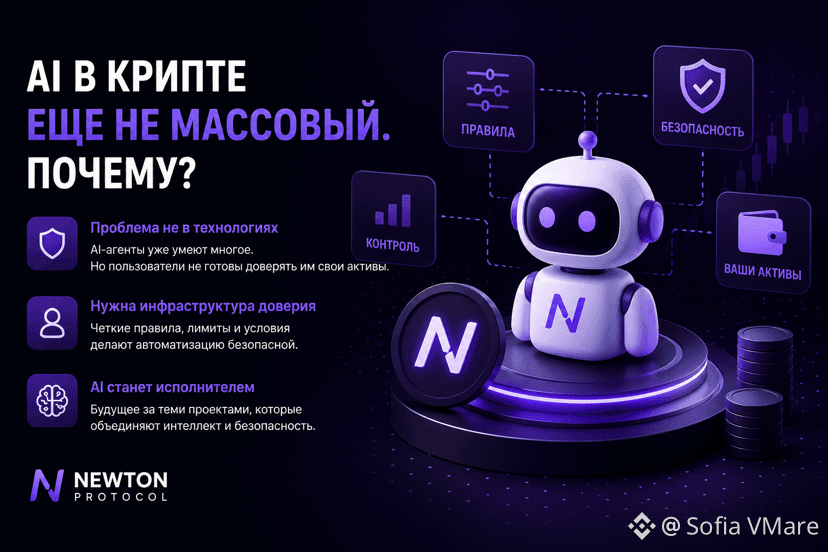
Why hasn’t AI in crypto become mainstream yet?
I think the problem isn’t really the technology.
Today, many AI agents can already analyze the market, look for opportunities, and even execute trades. But most users still aren’t ready to hand over control of their assets to them.
That’s why I liked the idea behind Newton Protocol.
Instead of asking users to simply trust the algorithm, the project proposes first defining the rules of the game, and only then enabling automation.
Probably, it’s trust—not AI capabilities—that will be the main factor driving growth in this market over the next few years.
What do you think will bring AI to mainstream Web3 faster: smarter models or a safer infrastructure?
#newt $NEWT @NewtonProtocol
Why hasn’t AI in crypto become mainstream yet?
I think the problem isn’t really the technology.
Today, many AI agents can already analyze the market, look for opportunities, and even execute trades. But most users still aren’t ready to hand over control of their assets to them.
That’s why I liked the idea behind Newton Protocol.
Instead of asking users to simply trust the algorithm, the project proposes first defining the rules of the game, and only then enabling automation.
Probably, it’s trust—not AI capabilities—that will be the main factor driving growth in this market over the next few years.
What do you think will bring AI to mainstream Web3 faster: smarter models or a safer infrastructure?
#newt $NEWT @NewtonProtocol
I think the problem isn’t really the technology.
Today, many AI agents can already analyze the market, look for opportunities, and even execute trades. But most users still aren’t ready to hand over control of their assets to them.
That’s why I liked the idea behind Newton Protocol.
Instead of asking users to simply trust the algorithm, the project proposes first defining the rules of the game, and only then enabling automation.
Probably, it’s trust—not AI capabilities—that will be the main factor driving growth in this market over the next few years.
What do you think will bring AI to mainstream Web3 faster: smarter models or a safer infrastructure?
#newt $NEWT @NewtonProtocol
1
4
361
·
--
The more AI projects that appear, the more often I find myself asking one question: are we really ready to entrust artificial intelligence with managing our assets? 🤔
That’s exactly why my attention was drawn to Newton Protocol $NEWT
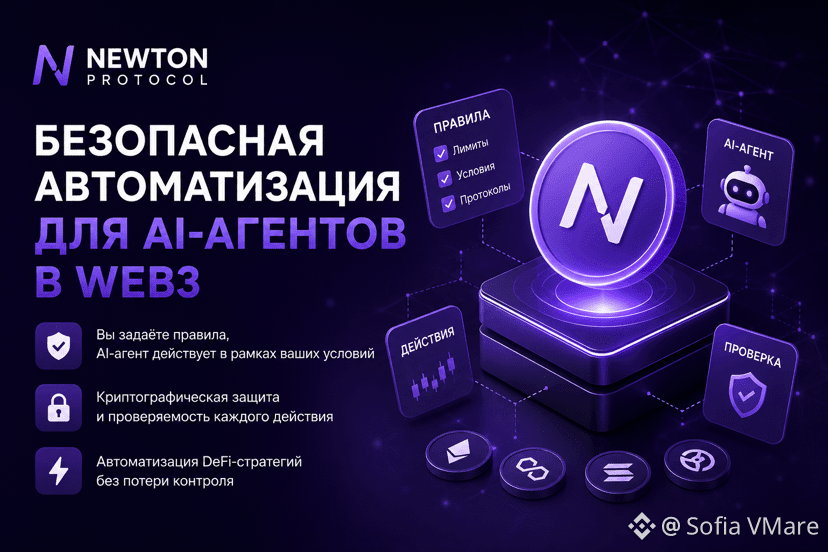
Their idea isn’t just to create another AI agent, but to make its actions controllable and verifiable. The user sets the rules the agent can follow: when to make trades, what limits to observe, and which operations to perform.
In my view, this kind of approach looks more realistic for large-scale AI adoption in Web3. Automation is great, but control must always remain with the user.
If Newton can implement this concept the way it’s intended, the project could very well carve out its niche in the AI and DeFi ecosystem.
And what do you think—are you ready to let an AI agent handle part of your crypto operations, or do you still prefer to control everything yourself?
#newt $NEWT @NewtonProtocol
{spot}(NEWTUSDT)
The more AI projects that appear, the more often I find myself asking one question: are we really ready to entrust artificial intelligence with managing our assets? 🤔
That’s exactly why my attention was drawn to Newton Protocol $NEWT
Their idea isn’t just to create another AI agent, but to make its actions controllable and verifiable. The user sets the rules the agent can follow: when to make trades, what limits to observe, and which operations to perform.
In my view, this kind of approach looks more realistic for large-scale AI adoption in Web3. Automation is great, but control must always remain with the user.
If Newton can implement this concept the way it’s intended, the project could very well carve out its niche in the AI and DeFi ecosystem.
And what do you think—are you ready to let an AI agent handle part of your crypto operations, or do you still prefer to control everything yourself?
#newt $NEWT @NewtonProtocol
That’s exactly why my attention was drawn to Newton Protocol $NEWT
Their idea isn’t just to create another AI agent, but to make its actions controllable and verifiable. The user sets the rules the agent can follow: when to make trades, what limits to observe, and which operations to perform.
In my view, this kind of approach looks more realistic for large-scale AI adoption in Web3. Automation is great, but control must always remain with the user.
If Newton can implement this concept the way it’s intended, the project could very well carve out its niche in the AI and DeFi ecosystem.
And what do you think—are you ready to let an AI agent handle part of your crypto operations, or do you still prefer to control everything yourself?
#newt $NEWT @NewtonProtocol
2
270
·
--
Article
Newton Protocol — how secure AI agents can change the future of Web3Artificial intelligence is gradually becoming part of the crypto industry. Today, AI bots are already emerging for trading, automated portfolio management, finding profitable strategies, and interacting with DeFi.
However, along with new opportunities comes the main question—can you trust your assets to an artificial intelligence?
Newton Protocol — how secure AI agents can change the future of Web3
Artificial intelligence is gradually becoming part of the crypto industry. Today, AI bots are already emerging for trading, automated portfolio management, finding profitable strategies, and interacting with DeFi.
However, along with new opportunities comes the main question—can you trust your assets to an artificial intelligence?
However, along with new opportunities comes the main question—can you trust your assets to an artificial intelligence?
3
351
·
--
Recently, my friend and I were discussing AI services we use every day.
He unexpectedly asked:
“ What happens if the service your AI runs on simply stops being available?”
Honestly, I’d never thought about it before.
We’re used to evaluating AI by the speed, the quality of the answers, and the number of features. But we rarely consider how resilient the infrastructure itself is.
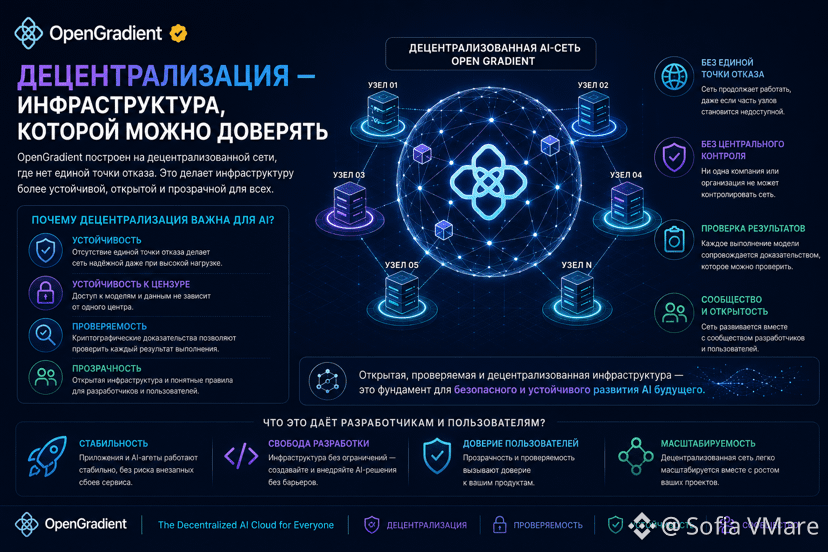
While looking into OpenGradient, I noticed that the project is built on a decentralized network. This means there’s no single point of failure, a more open architecture, and the ability to cryptographically verify model execution results. This approach makes the infrastructure more resilient and more transparent to developers.
That’s when I realized something.
The future of AI depends not only on how smart the models become. Just as important is that the infrastructure itself is reliable, open, and not dependent on a single provider.
I think that’s exactly why OpenGradient focuses not only on advancing AI, but also on the foundation it will run on.
And what do you think is more important for the AI future: the most powerful models or the infrastructure?
#opg $OPG @OpenGradient
Recently, my friend and I were discussing AI services we use every day.
He unexpectedly asked:
“ What happens if the service your AI runs on simply stops being available?”
Honestly, I’d never thought about it before.
We’re used to evaluating AI by the speed, the quality of the answers, and the number of features. But we rarely consider how resilient the infrastructure itself is.
While looking into OpenGradient, I noticed that the project is built on a decentralized network. This means there’s no single point of failure, a more open architecture, and the ability to cryptographically verify model execution results. This approach makes the infrastructure more resilient and more transparent to developers.
That’s when I realized something.
The future of AI depends not only on how smart the models become. Just as important is that the infrastructure itself is reliable, open, and not dependent on a single provider.
I think that’s exactly why OpenGradient focuses not only on advancing AI, but also on the foundation it will run on.
And what do you think is more important for the AI future: the most powerful models or the infrastructure?
#opg $OPG @OpenGradient
He unexpectedly asked:
“ What happens if the service your AI runs on simply stops being available?”
Honestly, I’d never thought about it before.
We’re used to evaluating AI by the speed, the quality of the answers, and the number of features. But we rarely consider how resilient the infrastructure itself is.
While looking into OpenGradient, I noticed that the project is built on a decentralized network. This means there’s no single point of failure, a more open architecture, and the ability to cryptographically verify model execution results. This approach makes the infrastructure more resilient and more transparent to developers.
That’s when I realized something.
The future of AI depends not only on how smart the models become. Just as important is that the infrastructure itself is reliable, open, and not dependent on a single provider.
I think that’s exactly why OpenGradient focuses not only on advancing AI, but also on the foundation it will run on.
And what do you think is more important for the AI future: the most powerful models or the infrastructure?
#opg $OPG @OpenGradient
2
4
247
·
--
⚽ At the playoff stage, the cost of every mistake becomes much higher.
If in the group stage there’s still a chance to fix things in the next match, then here one unfortunate incident can wipe out an entire team’s path in the tournament.
That’s why, in knockout matches, discipline, focus, and the ability to stay calm even under intense pressure are especially valued.
I’m always interested to see which teams handle this challenge best and deliver their maximum when it matters most.
Today I’ve made my choice again and I’m looking forward to the matches. Let’s see who can withstand the tension and take yet another step toward the trophy. ⚽
And what do you think more often decides the outcome of playoff matches: individual skill or a team’s ability to avoid mistakes?
#BinancePickAndWin
⚽ At the playoff stage, the cost of every mistake becomes much higher.
If in the group stage there’s still a chance to fix things in the next match, then here one unfortunate incident can wipe out an entire team’s path in the tournament.
That’s why, in knockout matches, discipline, focus, and the ability to stay calm even under intense pressure are especially valued.
I’m always interested to see which teams handle this challenge best and deliver their maximum when it matters most.
Today I’ve made my choice again and I’m looking forward to the matches. Let’s see who can withstand the tension and take yet another step toward the trophy. ⚽
And what do you think more often decides the outcome of playoff matches: individual skill or a team’s ability to avoid mistakes?
#BinancePickAndWin
If in the group stage there’s still a chance to fix things in the next match, then here one unfortunate incident can wipe out an entire team’s path in the tournament.
That’s why, in knockout matches, discipline, focus, and the ability to stay calm even under intense pressure are especially valued.
I’m always interested to see which teams handle this challenge best and deliver their maximum when it matters most.
Today I’ve made my choice again and I’m looking forward to the matches. Let’s see who can withstand the tension and take yet another step toward the trophy. ⚽
And what do you think more often decides the outcome of playoff matches: individual skill or a team’s ability to avoid mistakes?
#BinancePickAndWin

3
174
·
--
Recently, my friend and I were discussing AI and we touched on the topic of privacy.
He unexpectedly asked:
“ If I send important data to AI, who can actually see that request?”
I realized I had never seriously thought about it before.
We’re used to choosing AI based on the speed or the quality of its answers, but we rarely ask what happens to our data after we submit a query.
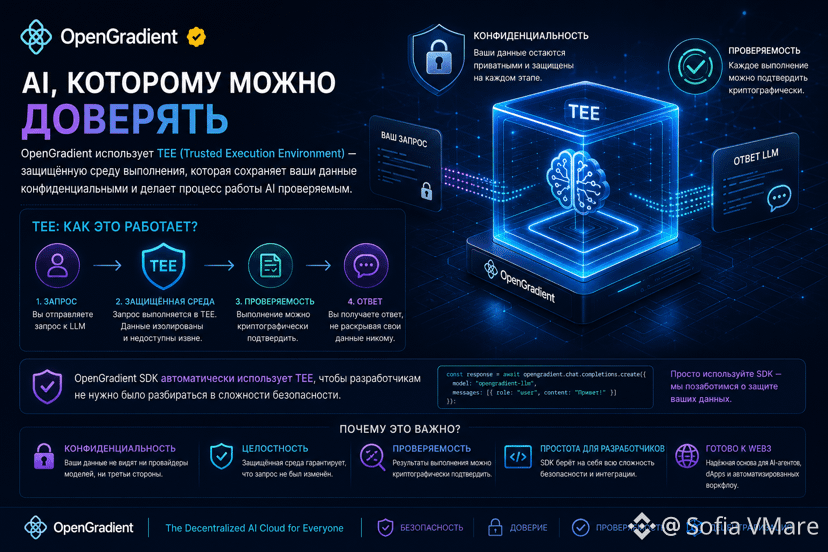
When I was learning about OpenGradient, I was interested to see that the project uses TEE — a trusted execution environment. This makes it possible to process requests to an LLM in an isolated way, with execution that can be verified. At the same time, the OpenGradient SDK automatically works with this mechanism, sparing developers from extra complexity.
That’s when I understood something.
In the future, AI will be chosen not only for the quality of its responses. Safety, privacy, and being able to trust how exactly the model processes a request will be just as important.
It seems that’s why OpenGradient is building infrastructure where AI is not only smarter, but also more reliable.
And what matters more to you when working with AI: the quality of the answers, or confidence that your data is processed securely?
#opg $OPG @OpenGradient
Recently, my friend and I were discussing AI and we touched on the topic of privacy.
He unexpectedly asked:
“ If I send important data to AI, who can actually see that request?”
I realized I had never seriously thought about it before.
We’re used to choosing AI based on the speed or the quality of its answers, but we rarely ask what happens to our data after we submit a query.
When I was learning about OpenGradient, I was interested to see that the project uses TEE — a trusted execution environment. This makes it possible to process requests to an LLM in an isolated way, with execution that can be verified. At the same time, the OpenGradient SDK automatically works with this mechanism, sparing developers from extra complexity.
That’s when I understood something.
In the future, AI will be chosen not only for the quality of its responses. Safety, privacy, and being able to trust how exactly the model processes a request will be just as important.
It seems that’s why OpenGradient is building infrastructure where AI is not only smarter, but also more reliable.
And what matters more to you when working with AI: the quality of the answers, or confidence that your data is processed securely?
#opg $OPG @OpenGradient
He unexpectedly asked:
“ If I send important data to AI, who can actually see that request?”
I realized I had never seriously thought about it before.
We’re used to choosing AI based on the speed or the quality of its answers, but we rarely ask what happens to our data after we submit a query.
When I was learning about OpenGradient, I was interested to see that the project uses TEE — a trusted execution environment. This makes it possible to process requests to an LLM in an isolated way, with execution that can be verified. At the same time, the OpenGradient SDK automatically works with this mechanism, sparing developers from extra complexity.
That’s when I understood something.
In the future, AI will be chosen not only for the quality of its responses. Safety, privacy, and being able to trust how exactly the model processes a request will be just as important.
It seems that’s why OpenGradient is building infrastructure where AI is not only smarter, but also more reliable.
And what matters more to you when working with AI: the quality of the answers, or confidence that your data is processed securely?
#opg $OPG @OpenGradient
4
4
296
·
--
Yesterday I was discussing with a friend whether AI agents will ever be able to make decisions on their own in DeFi.
He suddenly asked:
“Where does AI even get the current token price? Does it just guess?”
That question made me think.
Even the most powerful AI model is useless if it’s working with outdated data.
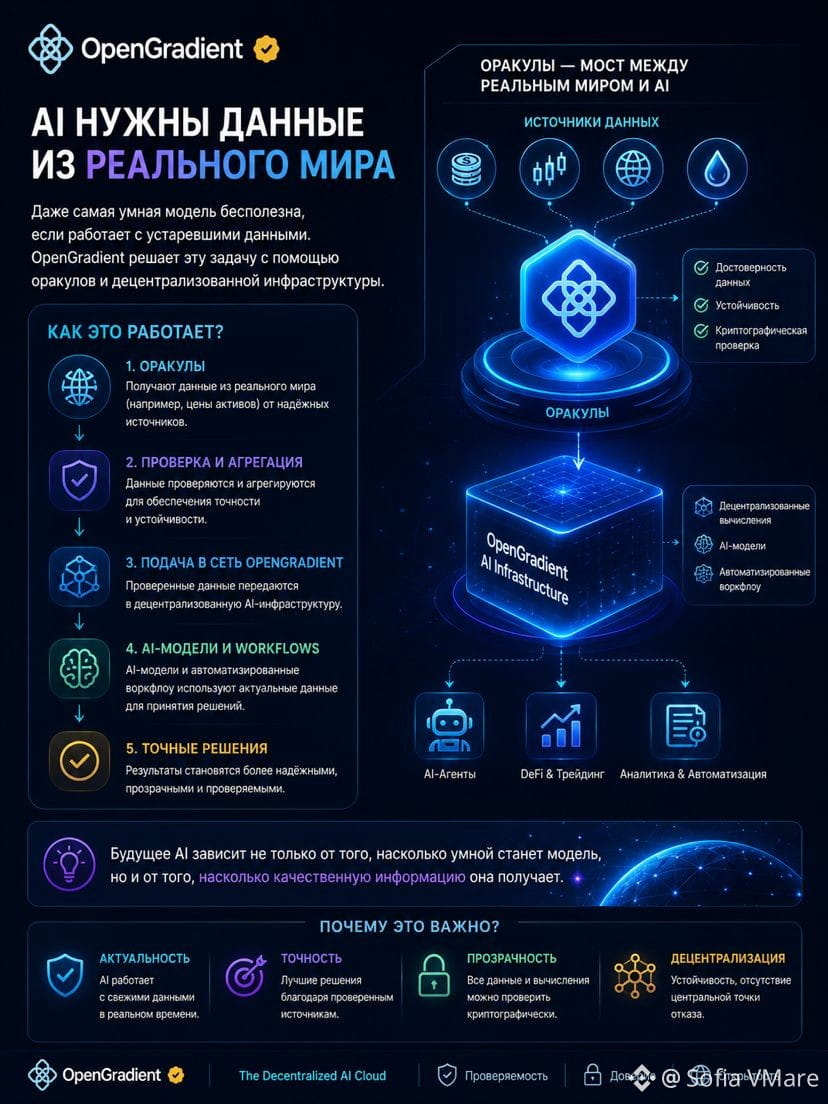
While studying OpenGradient, I learned that the project solves this problem with oracles. They send verifiable data from the outside world into the network—such as the current prices of assets. This allows AI models and automated workflows to make decisions based on fresh information rather than stale data.
That’s when I realized something.
The future of AI depends not only on how smart the model becomes, but also on the quality of the information it receives.
Without reliable data, even the best intelligence will make mistakes.
That’s why I like that OpenGradient is building not just AI infrastructure, but an ecosystem where computation, models, and data work together.
And what do you think is more important for the AI future: more powerful models or access to accurate real-time data?
#opg $OPG @OpenGradient
Yesterday I was discussing with a friend whether AI agents will ever be able to make decisions on their own in DeFi.
He suddenly asked:
“Where does AI even get the current token price? Does it just guess?”
That question made me think.
Even the most powerful AI model is useless if it’s working with outdated data.
While studying OpenGradient, I learned that the project solves this problem with oracles. They send verifiable data from the outside world into the network—such as the current prices of assets. This allows AI models and automated workflows to make decisions based on fresh information rather than stale data.
That’s when I realized something.
The future of AI depends not only on how smart the model becomes, but also on the quality of the information it receives.
Without reliable data, even the best intelligence will make mistakes.
That’s why I like that OpenGradient is building not just AI infrastructure, but an ecosystem where computation, models, and data work together.
And what do you think is more important for the AI future: more powerful models or access to accurate real-time data?
#opg $OPG @OpenGradient
He suddenly asked:
“Where does AI even get the current token price? Does it just guess?”
That question made me think.
Even the most powerful AI model is useless if it’s working with outdated data.
While studying OpenGradient, I learned that the project solves this problem with oracles. They send verifiable data from the outside world into the network—such as the current prices of assets. This allows AI models and automated workflows to make decisions based on fresh information rather than stale data.
That’s when I realized something.
The future of AI depends not only on how smart the model becomes, but also on the quality of the information it receives.
Without reliable data, even the best intelligence will make mistakes.
That’s why I like that OpenGradient is building not just AI infrastructure, but an ecosystem where computation, models, and data work together.
And what do you think is more important for the AI future: more powerful models or access to accurate real-time data?
#opg $OPG @OpenGradient
4
323
Log in to explore more content
Join global crypto users on Binance Square
⚡️ Get latest and useful information about crypto.
💬 Trusted by the world’s largest crypto exchange.
👍 Discover real insights from verified creators.
Email / Phone number