
#XRP is the name of a cryptocurrency based on the company name, Ripple. The history of both words is intertwined and comes from the same origin; becoming one of the most recognized projects in the #cryptocurrency ecosystem for its alliances with banks and other financial entities.

What is Ripple (XRP)?
XRP is a digital currency issued and managed on a ledger system inspired by #bitcoin technology. It is an open source project, but it has been managed by a private company since its inception, 7 years ago. This is where Ripple Labs comes into the equation, a business that has been building an international payment and exchange network for banks and other financial services.
A particular feature of Ripple as a network and company is that it not only offers the use of its XRP cryptocurrency to process payments, but the system can also work with other digital assets such as fiat money, goods and even job bonuses. The firm has worked on the development of additional financial products to its cryptoactive and accounting network, such as RippleNet, a system that allows companies to issue their own digital currencies.
In turn, some Ripple trading partners have tested the use of its network as a real-time gross settlement (RTG) system. This mechanism is commonly used in the financial sector to process payment orders, which are settled continuously and immediately. Ripple offers its clients a system that processes their transactions in an average of 5 seconds and with cheap rates.
It can be said that Ripple (XRP) is the name that encompasses a cryptocurrency, a distributed payment protocol, a private company, a system for creating digital assets, a settlement platform, and also a means of exchange. of digital assets. All of this makes up the Ripple ecosystem.
Origin and history: Birth of a network
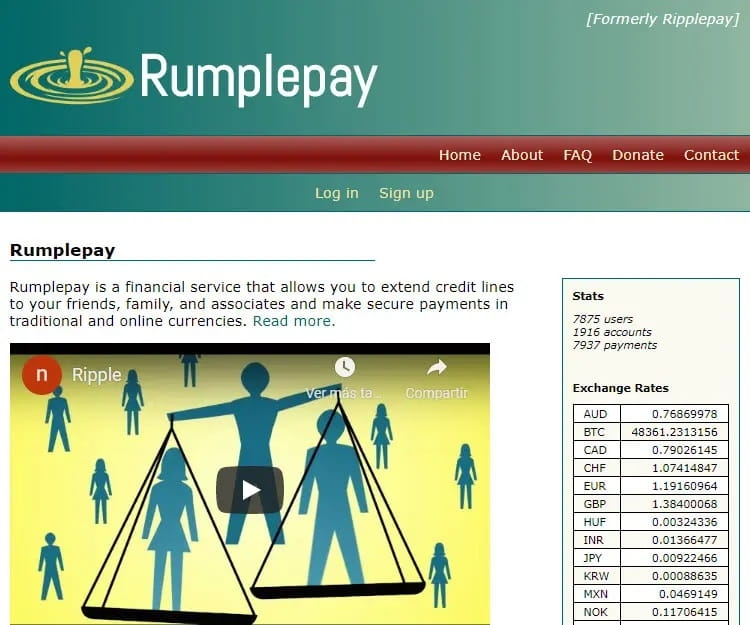
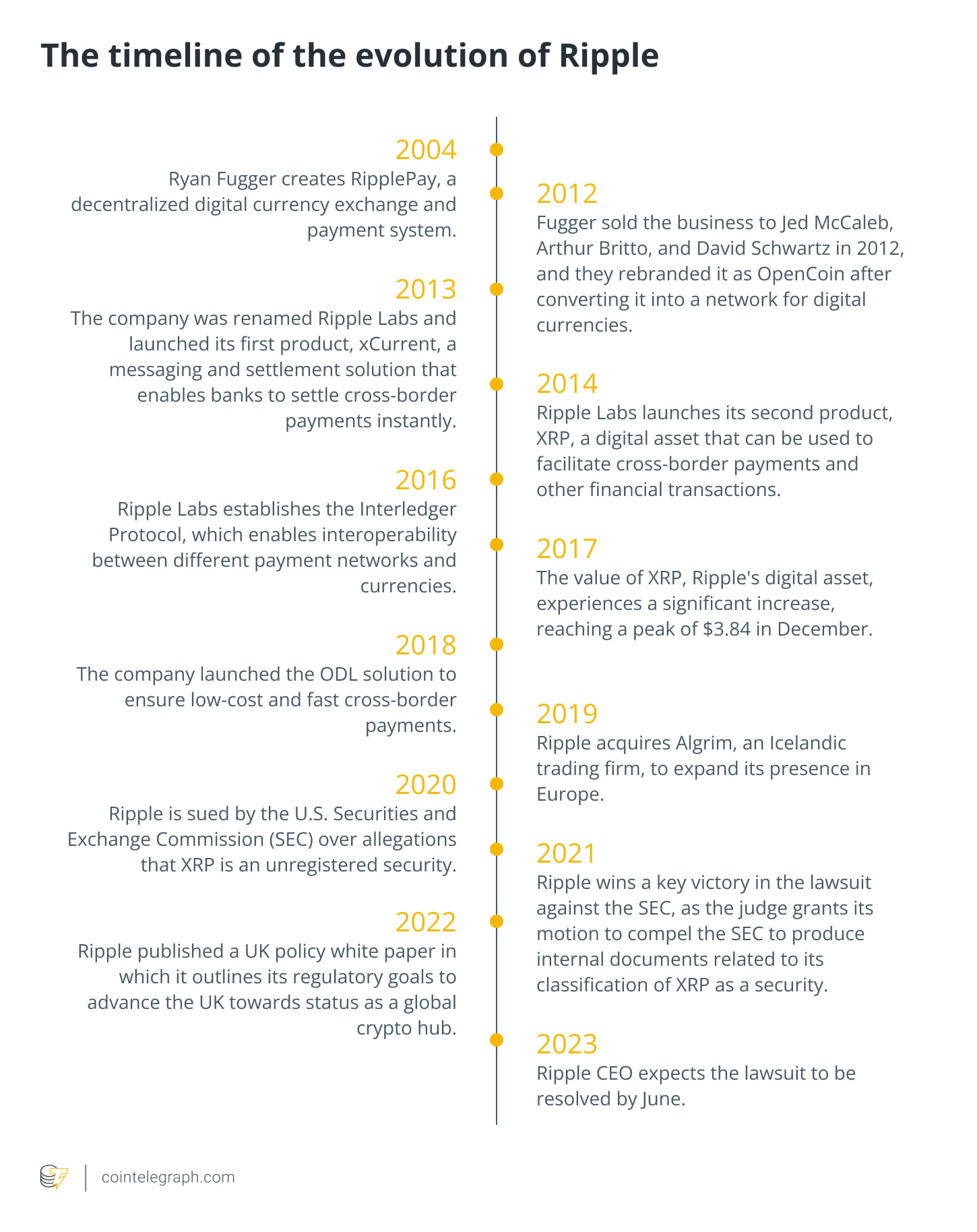
XRP and Ripple's background dates back to 2004, when software developer Ryan Fugger came up with a first prototype of a decentralized digital monetary system. Under the name of RipplePay, it was launched in 2005 and was intended to provide global payment solutions and extend credit lines. The platform is still operational on the Web, albeit under a new name Rumplepay.
However, it was in 2011 when Ripple began to have the technological profile that we know today. It all started when Fugger pitched his idea to entrepreneurs Jed McCaleb and Chris Larsen, who had the idea of designing a system that was faster than Bitcoin and used less electricity.
An interesting fact is that McCaleb, in addition to being one of the founders of Ripple, is also the creator of Stellar and the controversial Mt.Gox exchange. In this way, a technology based on blockchain and Fugger's previous work was developed.
By 2012, the project evolved into OpenCoin, and already had the facade of a technology company that specialized in payment methods in the United States. Then, over the months, they decided to launch their first crypto asset, known today as XRP. Consecutive years served, not only for the Ripple project to grow in services and alliances, but also for its name to mutate.
In 2013 the company renamed itself, leaving behind its OpenCoin idea, to identify itself as RippleLabs.
Ripple received over $30 million in funding
Ripple is a commercial project that has enjoyed considerable recognition in the financial sector for several years.
The cryptocurrency has been part of the TOP 10 cryptographic assets with the highest market capitalization, currently holding the number 7 position. Likewise, the Ripple company has been the focus of dozens of investors, who have placed their trust in the initiative.
Since its formation as a commercial product, Ripple has gained acceptance from key investors. As early as 2013, the firms Google Ventures and IDG Capital Partners invested about $3 million in Ripple. By the middle of that same year they managed to raise another 2.5 million dollars from the digital investment firms Andreesen Horowitz and Pantera Capital.
At the end of 2013, which was undoubtedly one of their best years in financing, they managed to get 14 investment companies to give them a vote of confidence of more than 28 million dollars. The financing did not stop in the consecutive years, since it received financial support from groups such as Santander InnoVentures, SBI Holdings, CME Group and Accenture.
Likewise, Ripple rose in the cryptocurrency market due to its alliances with important banks around the world.
For example, the company closed commercial agreements with Santander, Axis Bank, Yes Bank, Union Credit, Moneygram and the SBI Holding group.
In this way, several tests were carried out for the use of the Ripple network as a cross-border payment system, although not all of them were decisive for the adoption of the project.
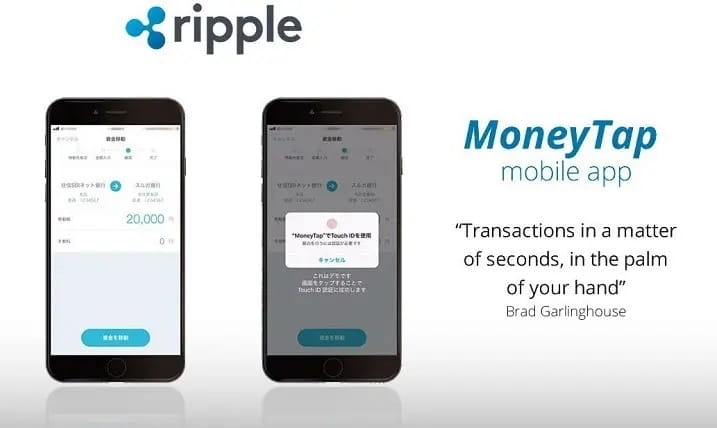
Despite this, the company's executives were in talks with high-level financial authorities, such as the Central Bank of Brazil and England.
Ripple stood out as one of the few cryptocurrency projects that was consolidated in the financial heart and met the requests of this commercial sector. And it is that, between 2017 and 2019, the firm enjoyed the recognition of these alliances and was even included in institutional investment funds.
However, the current reality of XRP is distanced from this success of yesteryear. A series of lawsuits and criticism of its operation has affected its performance in the United States market, as well as the price of its cryptoactive. As a result, the firm is now mostly focused on the financial sector in Asia, where it has gained support from large companies such as the Japanese group SBI Holding.
SEC Criticism and Lawsuit
2020 was perhaps the most complex year for the commercialization of XRP and the operation of Ripple as a company.
The initiative faced several lawsuits, both from investors and regulators. Similarly, constant criticism from the cryptocurrency ecosystem decimated its reputation as a decentralized crypto asset project.
By early 2020, a class action lawsuit was pending in the United States over Ripple's management. The investors who had filed the legal action point out that the company had violated the country's securities laws.
A few months later, under the signature of another group of retail investors, a new judicial process began to determine if Ripple had illegally sold securities due to the commercialization of XRP in the United States.
But, without a doubt, the most important lawsuit that Ripple has had to face since its function is the one filed in mid-2020 by the Securities and Exchange Commission ( #SEC ).
The legal action is against the founders of the company and Ripple Labs as a company, since the regulator considers that XRP is a security that has been traded without being properly registered.
Although several months have passed since this accusation was filed in court, at the time this article is published, no settlement has yet been established in this legal dispute. However, the move did have negative implications on the XRP market that are still affecting its trading and valuation.
For example, after the SEC's lawsuit against Ripple was published, the price of XRP fell sharply and the cryptocurrency was losing presence in the Top 10 of the cryptocurrency market. After being in third place by market capitalization for several years, it is currently in seventh place and has threatened to drop further.
RIPPLE vs. SEC 2023
In a 2018 speech, Hinman suggested that according to him, bitcoin (BTC) and Ethereum ether (ETH) were not securities. One of Hinman's emails stated:
"We don't need to see the need to regulate Ether, as it is currently offered, as a security."
In the last days, documents linked to former head of the US Securities and Exchange Commission (SEC) Division of Corporate Finance from 2017 to 2020, William Hinman, were made public after Ripple petitioned the court to release them.
XRP price rises 7.4% The XRP price jumped 7.4% following the release of the documents. However, the price had pulled back to $0.5374 cents at press time, but was still in the green.
Although the price rise resonates with nominal gains in the broader crypto market, XRP traders are betting on a favorable outcome for Ripple Labs in their ongoing lawsuit against Ripple vs. SEC.
According to Ripple Labs, Hinman's comments when he was leading the SEC leadership indicate that XRP should not be viewed as a security, which could favor the payments firm.
The SEC filed a lawsuit against Ripple in 2020 over claims that the firm sold unregistered securities. Since its inception, Ripple has maintained a distance between the XRP Ledger network and the token that powers some of its products, or XRP.