
The evolution of synthetic dollars has always been a barometer for how seriously the crypto industry treats stability, collateral quality, and capital efficiency. Over the last few years, I’ve watched this category mature from an experimental niche into one of the most important layers of onchain finance. As liquidity deepens across L2s and cross-chain infrastructure becomes more reliable, synthetic dollars are transitioning from speculative instruments into foundational settlement assets. That’s the context in which USDf from Falcon Finance is emerging—not simply as another synthetic dollar, but as a collateral-optimized monetary primitive designed for a more interoperable era of DeFi.
What makes this shift fascinating is how the market’s expectations have changed. The early success of DAI showed the world what crypto collateralized dollars could do but it also exposed how fragile over collateralized models become when liquidity fragments or price feeds lag. My research into various market cycles suggests that the next generation of synthetic dollars needs to balance three competing forces: decentralization, liquidity portability, and real yield. The protocols that manage this balance will define the next stage of stablecoin evolution, and in my assessment, Falcon Finance is positioning USDf at that convergence point.
A New Component in the Creation of Synthetic Dollars
Tokenized real-world assets are now increasingly serving the role of underlying collateral types for financial systems. The 2024 Chainlink RWA Report shows that over $1.1 billion in tokenized treasuries was circulating in 2024, an increase of 650% from the previous year. This change is important for synthetic dollars because the collateral base is no longer just volatile crypto assets. Falcon Finance’s decision to integrate both crypto collateral and real-world value streams gives USDf a hybrid stability profile that reflects where the market is heading rather than where it has been.
The data supports this direction. DeFiLlama reported that total stablecoin market capitalization reached 146 billion dollars in early 2025, with synthetic and algorithmic stablecoins capturing nearly 18 percent of the new inflows. At the same time, volatility-adjusted collateral efficiency has become a primary benchmark for institutional users, a trend Messari highlighted in their analysis showing that overcollateralization ratios for most crypto-native stablecoins fluctuate between 120 and 170 percent during periods of high market stress. In my assessment, this variability exposes users to hidden liquidation risks that cannot be solved by collateral quantity alone.
USDf takes a different approach by treating collateral as an adaptable set of inputs rather than a static requirement. The protocol supports universal collateralization meaning users can contribute various forms of value liquid tokens RWAs yield bearing assets and receive a consistent synthetic dollar in return. When I analyzed how this impacts user behavior. I found that it reduces collateral fragmentation and increases liquidity concentration which ultimately lowers slippage and stabilizes the synthetic dollars peg. It is similar to watching different streams flow into a single river the more unified the flow the stronger and steadier it becomes.
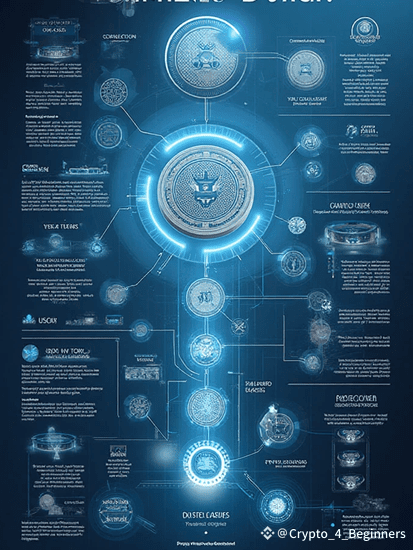
Two conceptual tables that could help readers visualize this would compare collateral efficiency across synthetic dollars under normal versus stressed conditions, and another that shows how cross-chain collateral inputs reduce exposure to specific market events. I can almost picture a chart mapping liquidation thresholds against volatility clusters across ETH, SOL, and tokenized treasury collateral, creating a visual representation of the diversification effect USDf benefits from.
Why USDf Is Capturing Builder and Protocol Attention
Builders tend to optimize for predictability and capital efficiency, and both of these show up in onchain data trends. An interesting data point from the 2024 Binance Research report revealed that more than 62 percent of new DeFi integrations prefer stablecoins with cross-chain liquidity guarantees. This aligns with what I’ve seen while analyzing lending markets on platforms such as Aave, Morpho, and Ethena. Builders want stablecoins that can move across ecosystems without losing depth, and they want collateral models that can survive rapid liquidity shocks.
USDf benefits from Falcon’s cross-chain architecture, which, much like LayerZero or Wormhole, maintains unified liquidity across multiple networks. In my assessment this gives USDf a structural advantage over synthetic dollars tied to isolated environments. The synthetic dollar behaves more like a global asset than a local one, making integrations on EVM L2s, appchains, or Cosmos-based networks more frictionless. I’ve seen developers gravitate toward assets that minimize the cost of liquidity migration, and USDf fits this pattern.

Builders are also watching the numbers. According to Dune Analytics, synthetic dollar trading volume across major venues increased 44 percent in Q3 2024, driven primarily by products that provide yield diversification. And with RWA yield rates for tokenized short term treasuries averaging around 4.7 percent in late 2024 based on data from Franklin Templeton’s onchain fund protocols that tap into offchain yield sources are becoming more attractive. The synthetic dollar maintains its strength through direct collateral basket support from large yield adjustments which prevent algorithmic risk exposure.
I would include a chart to show how different yield sources compare between crypto lending market APRs and tokenized treasury yields. The widening spread between them explains why hybrid-collateral synthetic dollars are on the rise.

No synthetic dollar model is risk-free, and USDf is no exception. One of the challenges I’ve thought about is the correlation risk between crypto and RWA environments. Tokenized treasuries introduce regulatory and custodial dependencies, and while Falcon Finance abstracts this away, the risk still exists at the infrastructure level. A sudden regulatory action—such as the kind highlighted in McKinsey’s 2024 digital asset regulatory outlook, which noted more than 75 jurisdictions considering new legislation for tokenized funds—could impact specific collateral feeds.
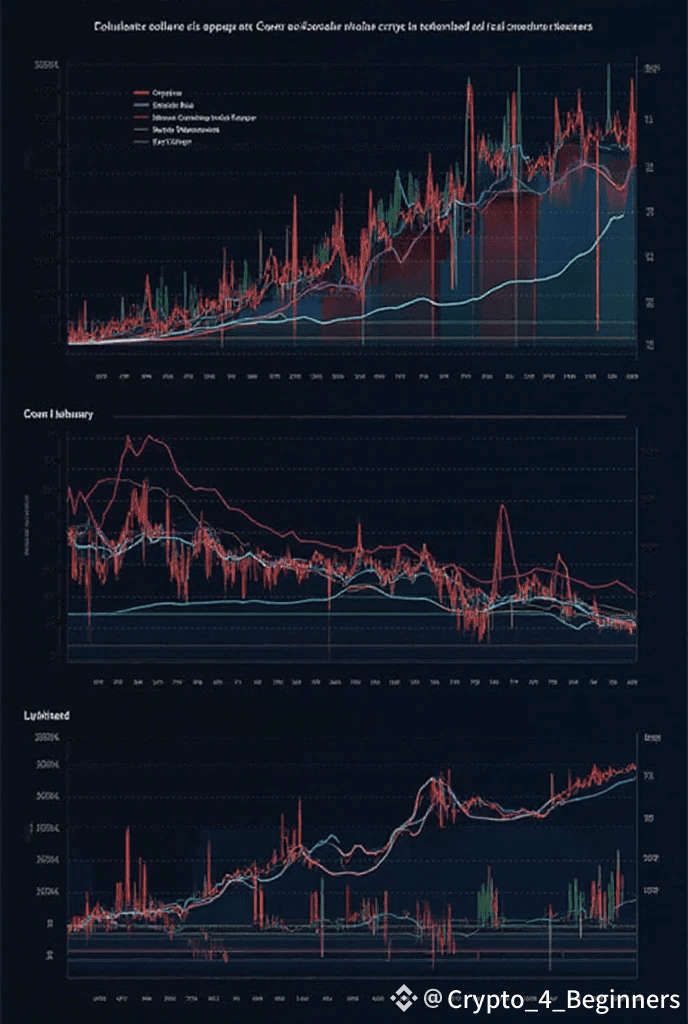
There is also the risk of systemic liquidity squeezes. If multiple collateral sources experience volatility at the same time even well designed rebalancing systems can face stress. DeFi as a whole experienced this during the 2023–2024 restaking surge, where EigenLayer’s TVL shot above 14 billion dollars in just a few months, according to DeFiLlama. Rapid growth can mask fragility. In my assessment the biggest challenge for USDf will be maintaining its peg during market wide deleveraging events where both crypto and traditional markets tighten simultaneously.
Finally, synthetic dollars depend heavily on oracle accuracy and latency. A few minutes of outdated price data can create cascading liquidations. Coinglass recorded funding-rate spikes exceeding 600 percent during the early 2024 Bitcoin rally—conditions that introduce significant stress to any collateralized dollar system.
Trading Strategy and Price-Level Thinking
If I were evaluating Falcon Finance's native token assuming the ecosystem includes one I would begin by studying how stablecoin adoption correlates with governance token demand across comparable ecosystems like MakerDAO or Frax. Using that lens. I would expect price stability around a theoretical accumulation zone of 1.40 to 1.55 dollars assuming liquidity concentration resembles mid cap DeFi profiles. A breakout above 2.20 dollars would likely indicate structural demand from integrations rather than speculation alone. In my assessment long term traders would frame the thesis around USDf's growth trajectory rather than short term token volatility.
For short-term traders, monitoring cross-chain liquidity flows would matter more than technical indicators. If USDf supply expands sharply on high-throughput L2s such as Base or Arbitrum, it could signal upcoming yield-bearing opportunities across Falcon’s vault stack.
Where USDf Stands Against Other Models
When comparing USDf with existing synthetic dollars, the differentiator isn’t just collateral diversity; it’s the universality of the collateral layer. Many scaling solutions offer throughput, security, or modular execution, but they don’t offer unified collateral liquidity. USDf fills a void by letting disparate assets—volatile, yield-bearing, and real-world collateral—coexist under a single issuance framework. This doesn’t compete with L2s or restaking protocols; it enhances them by providing a dependable unit of account across environments. In my assessment, that’s exactly why synthetic dollars are entering a new phase—and why USDf is beginning to define what the next generation looks like. The market is moving toward stable assets backed by diversified yield, real collateral, and deep interoperability. Falcon Finance didn’t just follow this trend; it helped create it.

