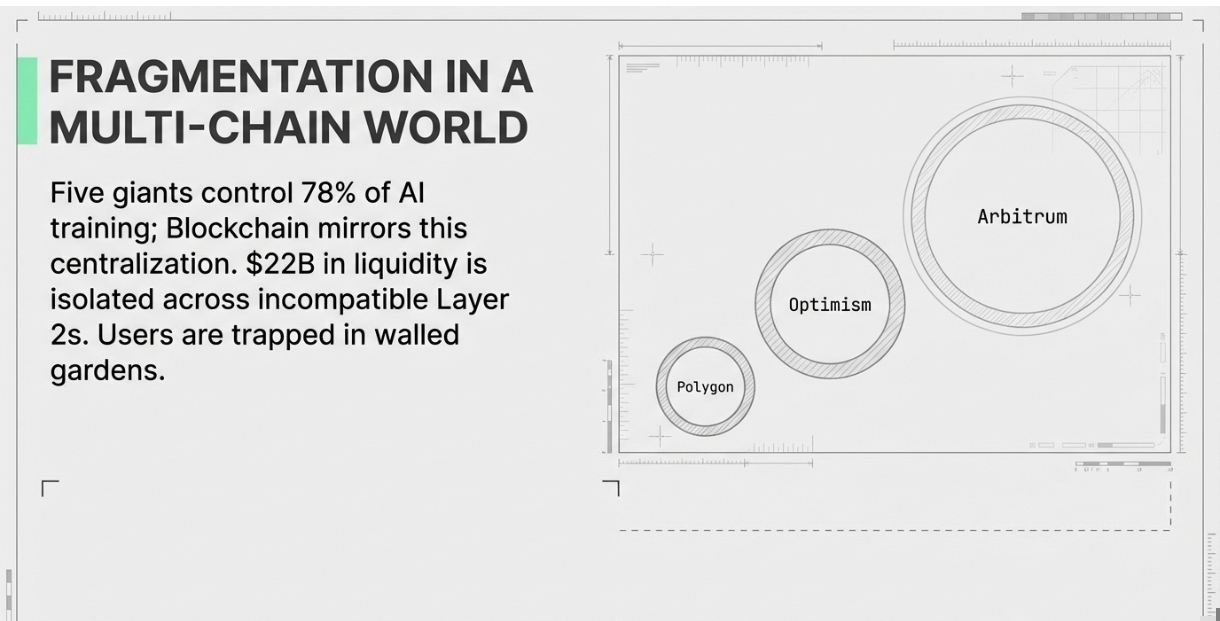
Five tech giants control 78% of global AI training capacity, creating a centralization problem that mirrors blockchain's current predicament. Today's multi-chain ecosystem suffers from similar fragmentation, where $22 billion in liquidity sits isolated across dozens of Layer 2 networks that cannot communicate efficiently.
Espresso Systems is building the base layer infrastructure to solve blockchain's interoperability crisis. The project provides a shared sequencing layer and data availability solution that enables rollups to maintain sovereignty while achieving seamless cross-chain composability. It's Founded by Stanford cryptographers and backed by $64 million from a16z and Sequoia, Espresso represents the missing piece in Ethereum's rollup-centric roadmap.
What makes Espresso compelling is its timing. As Layer 2 transaction volume grew 14x in 2025 to over $7 billion monthly, the inability for these chains to interoperate has become the single biggest bottleneck to mainstream adoption. Espresso's infrastructure enables the unified multi-chain experience that users expect but current technology cannot deliver.
▨ The Problem: What's Broken?
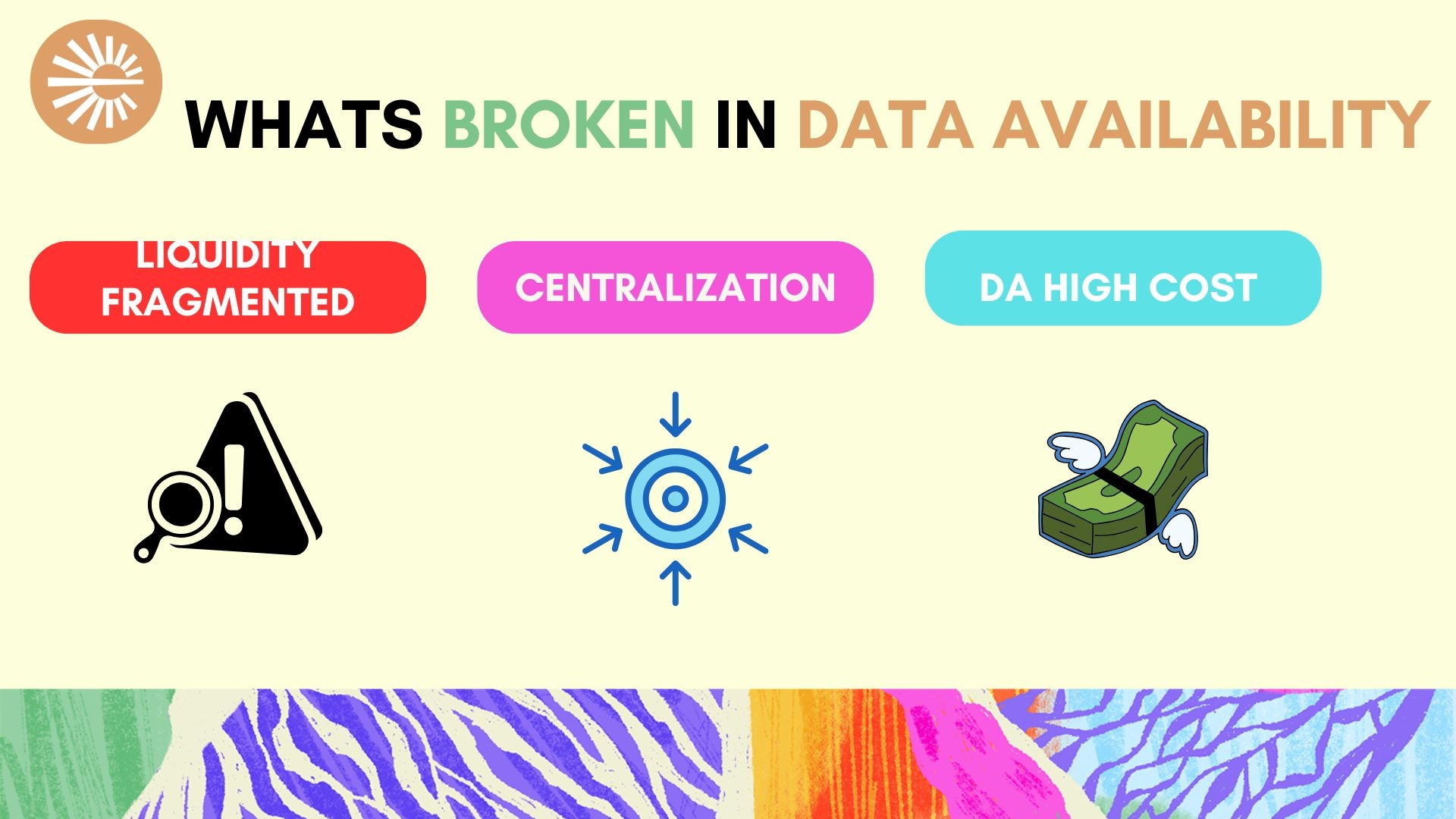
🔹Liquidity Fragmentation Across Isolated Chains
The multi-chain future has arrived, but it's a messy reality. Major Layer 2 networks like Arbitrum, Optimism, and Polygon operate as walled gardens where assets cannot natively move between chains. This forces users to rely on insecure bridges that have suffered $2.8 billion in exploits since 2022. Even legitimate bridging solutions require 12-15 minutes for Ethereum finality, creating unacceptable latency for real-time applications.
🔹Centralized Sequencers Create Single Points of Failure
Most Layer 2 networks rely on centralized sequencers that control transaction ordering. This creates censorship risks and represents a fundamental departure from blockchain's decentralized ethos. These sequencers also capture most of the MEV value that should accrue to the networks themselves. The situation is particularly problematic for smaller rollups that lack resources to build decentralized sequencing solutions.
🔹Cross-Chain Composability Remains Theoretical
While developers envision applications that seamlessly span multiple chains, current infrastructure makes this practically impossible. Smart contracts cannot natively call functions across different Layer 2 networks, forcing developers to build complex workarounds or limit their applications to single chains. This limitation stifles innovation and prevents the emergence of truly cross-chain decentralized applications.
🔹Data Availability Costs Constrain Innovation
Rollups must publish their data to Ethereum mainnet to ensure security, costing thousands of dollars daily in gas fees. This economic burden forces tradeoffs between security and affordability, particularly for newer projects with limited funding. The problem worsens as transaction volume increases, creating a scalability ceiling that affects all Layer 2 networks.
▨ What Espresso Is Doing Differently
Espresso approaches these problems with a fundamentally different architecture. Instead of building another bridge or middleware solution, they're creating a base layer that rollups can plug into for decentralized sequencing and cross-chain communication.
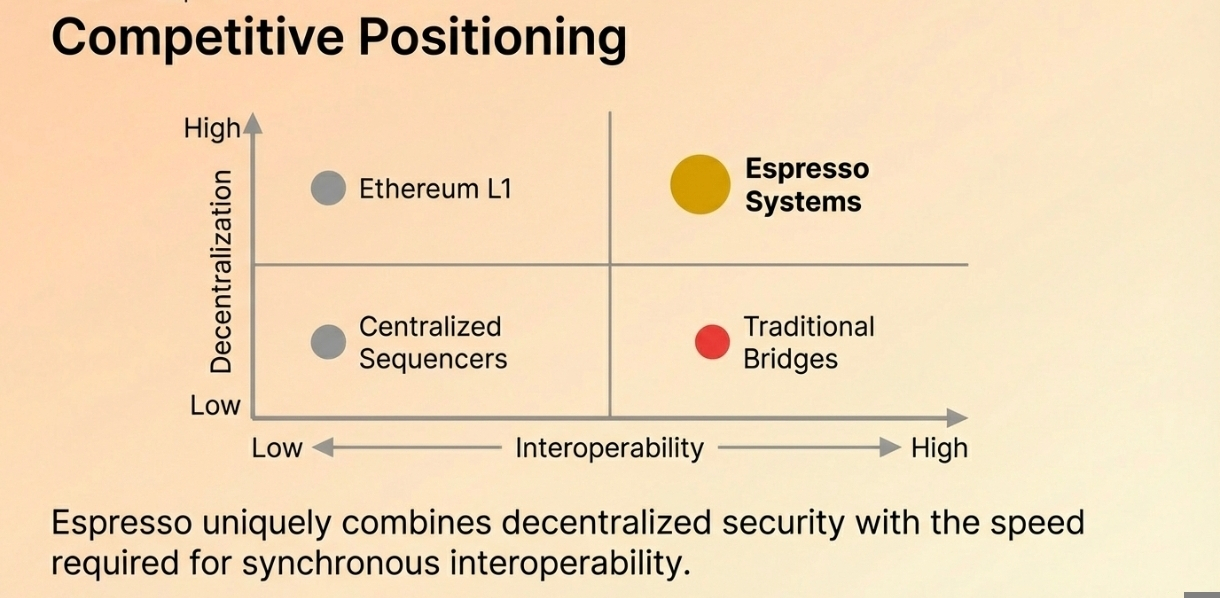
The core insight is simple, yet powerful. By providing a shared sequencing marketplace, Espresso allows multiple rollups to use the same decentralized network of sequencers. This eliminates the need for each rollup to build its own sequencing solution while maintaining their individual sovereignty. Rollups can choose to use Espresso for sequencing, data availability, or both, depending on their specific needs.
What makes this approach unique is how it handles cross-chain communication. Through their CIRC protocol (Coordinated Inter-Rollup Communication), Espresso enables synchronous composability between chains. This means smart contracts can actually call functions across different rollups in real time, not just transfer assets after long delay periods. The technical foundation for this is Espresso's HotShot consensus, which provides sub-second finality for transactions.
The system is designed to be rollup-agnostic. It doesn't matter if a chain uses Optimistic rollups, ZK-rollups, or any other execution environment. Espresso provides the neutral base layer that all can build upon. This flexibility has attracted major partners including Arbitrum Orbit chains, ApeChain, and multiple Rollup-as-a-Service providers who see Espresso as critical infrastructure for the next evolution of blockchain scaling.
Key Components & Features
1️⃣ HotShot Consensus Mechanism
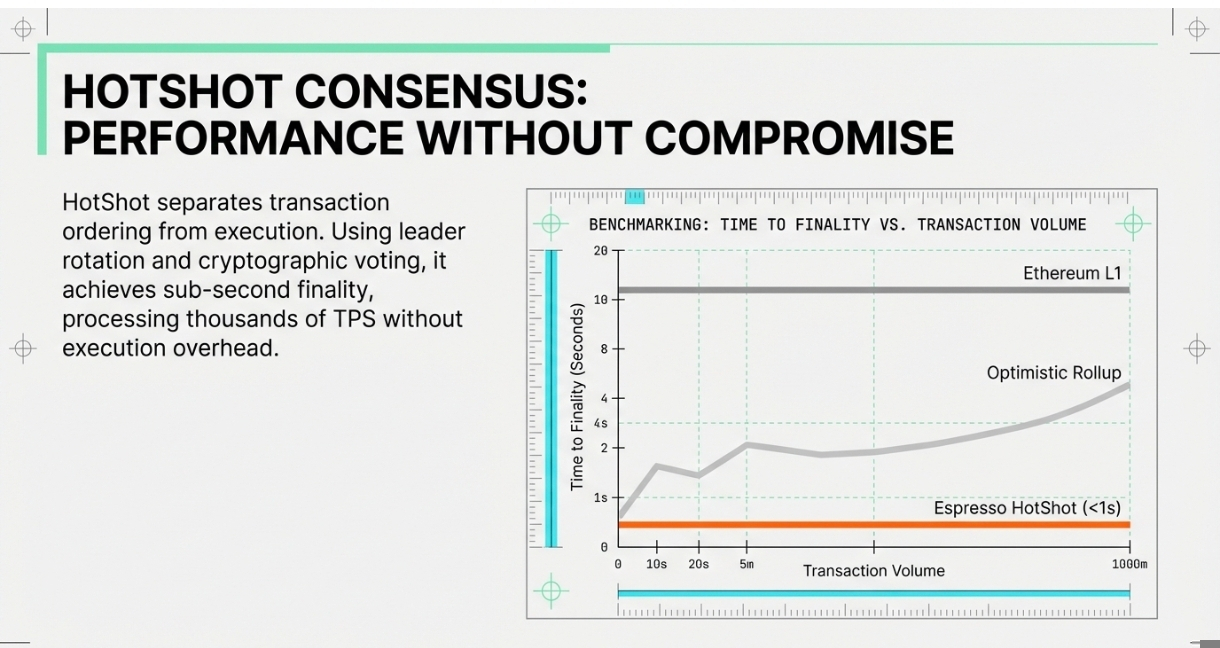
HotShot is Espresso's custom Byzantine Fault Tolerant consensus protocol optimized for high-throughput sequencing. It achieves sub-second finality by separating transaction ordering from execution, allowing it to process thousands of transactions per second without the computational overhead of smart contract execution. The protocol uses leader rotation and cryptographic voting to ensure security while maintaining lightning-fast performance.
2️⃣ Tiramisu Data Availability Layer
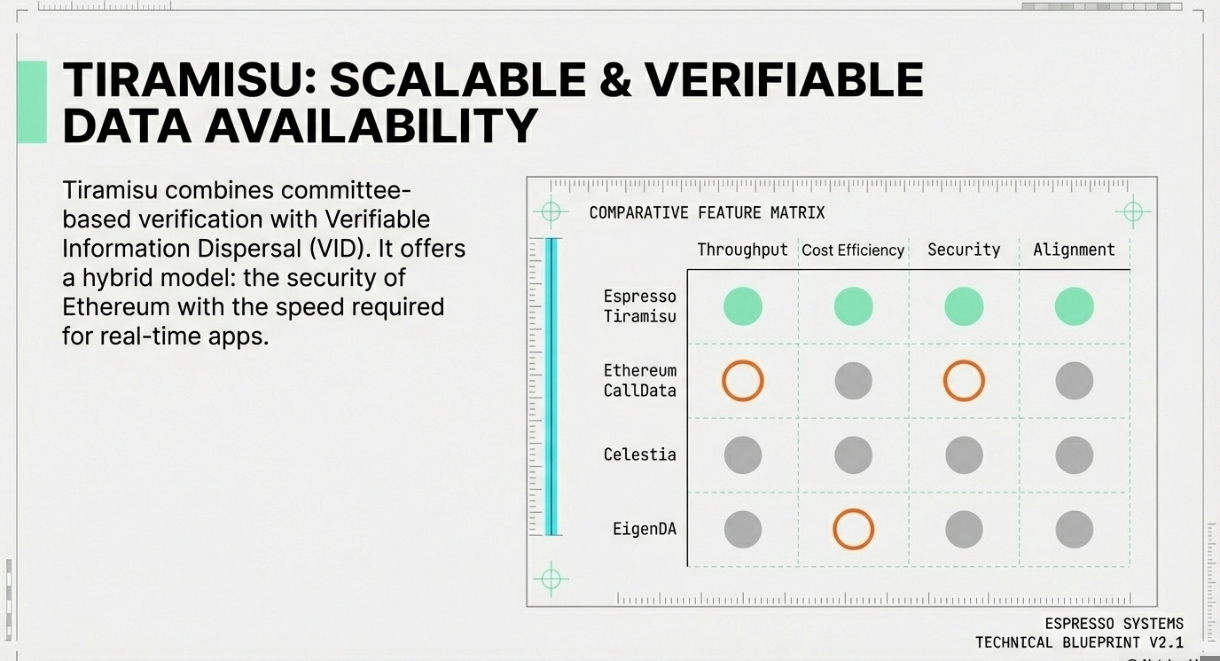
Tiramisu provides a scalable data availability solution that combines committee-based verification with Verifiable Information Dispersal. This hybrid approach ensures data is available to the network while maintaining the speed requirements for real-time applications.
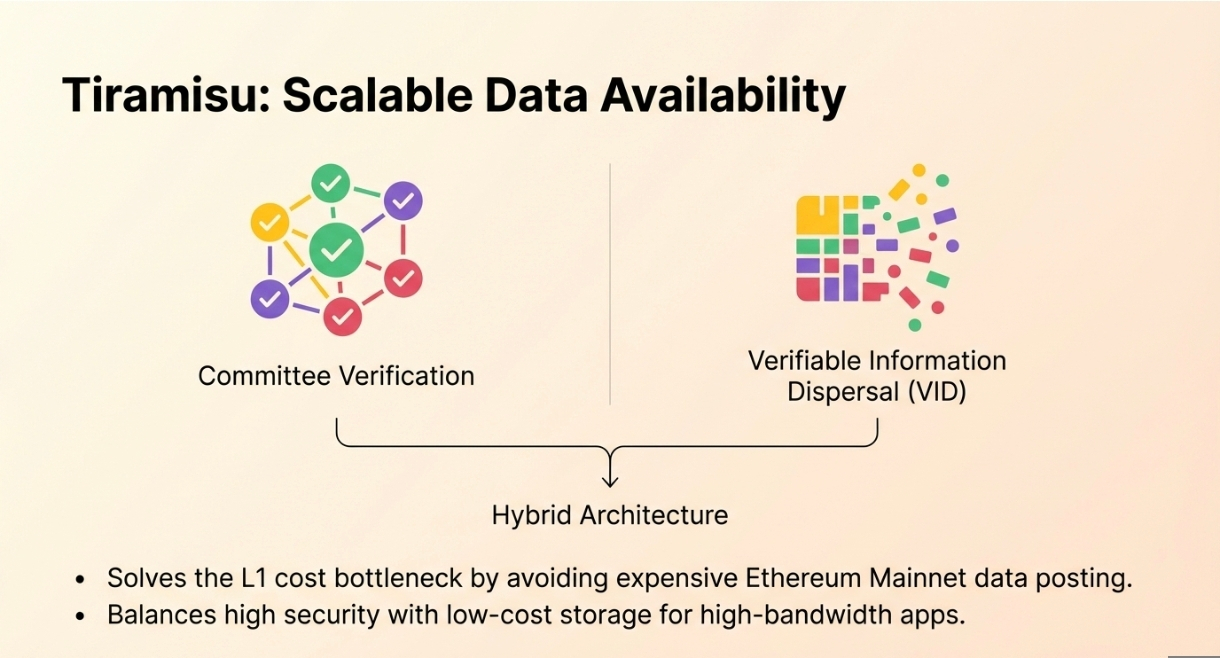
Rollups can use Tiramisu as their primary data availability layer or as a supplemental solution alongside Ethereum mainnet.
3️⃣ CIRC Messaging Protocol
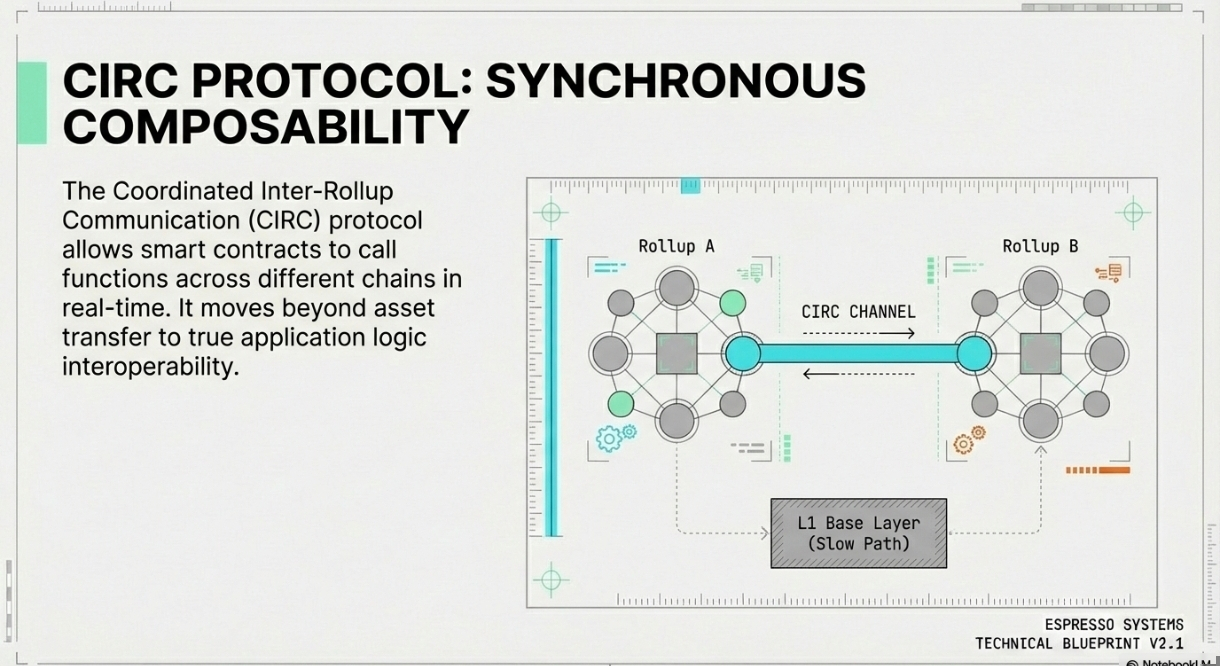
The Coordinated Inter-Rollup Communication protocol enables both asynchronous and synchronous composability between chains. Unlike traditional bridges that only transfer assets, CIRC allows smart contracts to directly communicate across rollups. This enables entirely new classes of applications that can leverage liquidity and functionality across multiple chains simultaneously.
4️⃣ Sequencer Marketplace
Espresso operates a decentralized marketplace where sequencers bid for the right to process transactions for specific rollups. This creates economic efficiency while maintaining decentralization. Rollups benefit from competitive pricing while sequencers earn fees for their services. The marketplace design ensures that no single entity controls transaction ordering across the ecosystem.
▨ How Espresso Works
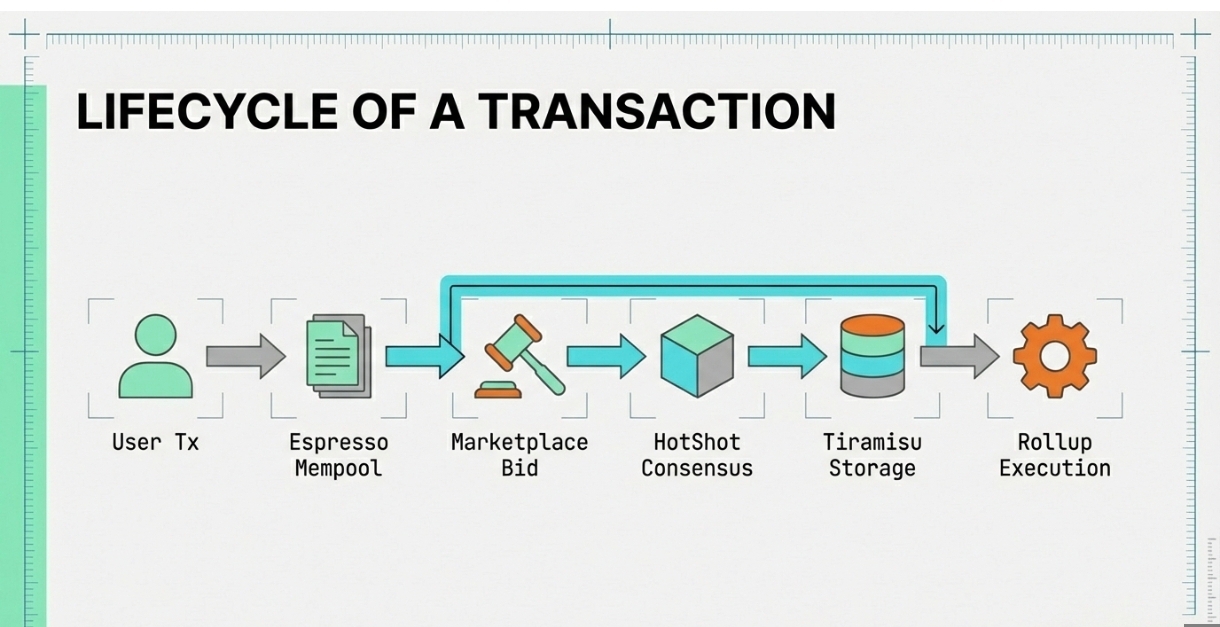
The process begins when a user submits a transaction to any rollup integrated with Espresso. Instead of going directly to that rollup's sequencer, the transaction enters Espresso's shared mempool where it becomes visible to all participating sequencers.
Sequencers then bid for the right to include this transaction in their block proposals through an auction mechanism. The winning sequencer creates a block proposal and submits it to the HotShot consensus network for validation. HotShot nodes reach consensus on the block ordering within seconds, providing immediate finality to the user.
Once consensus is reached, the block data is distributed through the Tiramisu data availability layer. Storage nodes receive shards of the block data and provide availability guarantees through cryptographic proofs. Rollups can then execute the transactions in their respective virtual machines using the ordered blocks from Espresso.
For cross-chain transactions, the CIRC protocol intercepts messages destined for other rollups. It uses Espresso's fast finality to verify transaction completion on the source chain before initiating execution on the destination chain. This entire process happens within seconds, enabling truly synchronous cross-chain applications.
The economic model ensures all participants are properly incentivized. Sequencers earn fees for their ordering services, stakers earn rewards for securing the network, and rollups pay only for the resources they actually use. This creates a sustainable ecosystem where value flows to those providing real services.
▨ Value Accrual & Growth Model
Espresso's value accrual model revolves around becoming essential infrastructure for the multi-chain ecosystem. As more rollups integrate with Espresso, the network effects become increasingly powerful. Each new integration makes the network more valuable for existing participants while lowering barriers for future adoption.
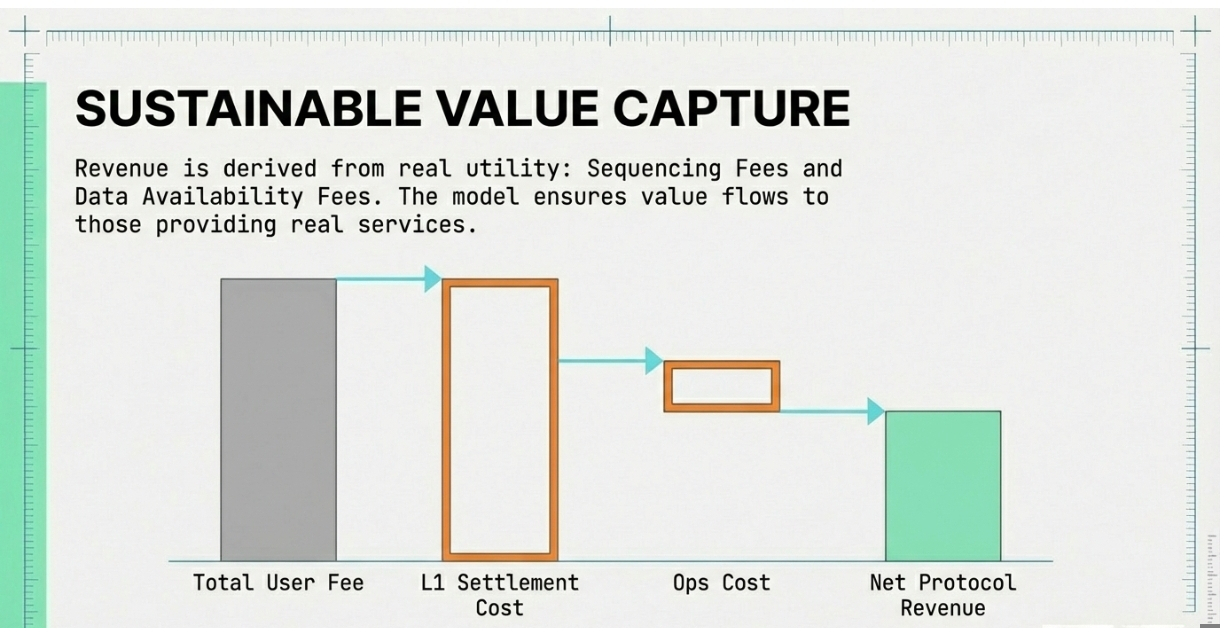
The primary revenue stream comes from sequencing fees paid by rollups. These fees are determined through market dynamics in the sequencer marketplace, ensuring competitive pricing while providing adequate compensation for sequencers. As transaction volume grows across all integrated rollups, these fees accumulate to significant revenue.
Data availability services through Tiramisu provide another revenue stream. Rollups can choose to use Tiramisu as their primary data layer or as a supplemental solution for faster access to recent data. This flexibility allows Espresso to capture value from both security-conscious and performance-oriented rollups.
The growth model leverages partnerships with Rollup-as-a-Service providers like Ankr, AltLayer, and Caldera. These providers integrate Espresso into their offerings, giving thousands of developers immediate access to Espresso's infrastructure without additional integration work. This bottom-up approach ensures rapid adoption across the ecosystem.
Network effects create powerful economic moats. As more rollups join, the shared sequencer marketplace becomes more efficient through increased competition. This lower costs for all participants while improving service quality. Similarly, more rollups mean better cross-chain composability, making the entire ecosystem more valuable for developers and users.
▨ Token Utility & Flywheel
The ESP token serves as the economic backbone of the Espresso network, with multiple utility functions that drive ecosystem growth and security.
❍ Token Use Cases
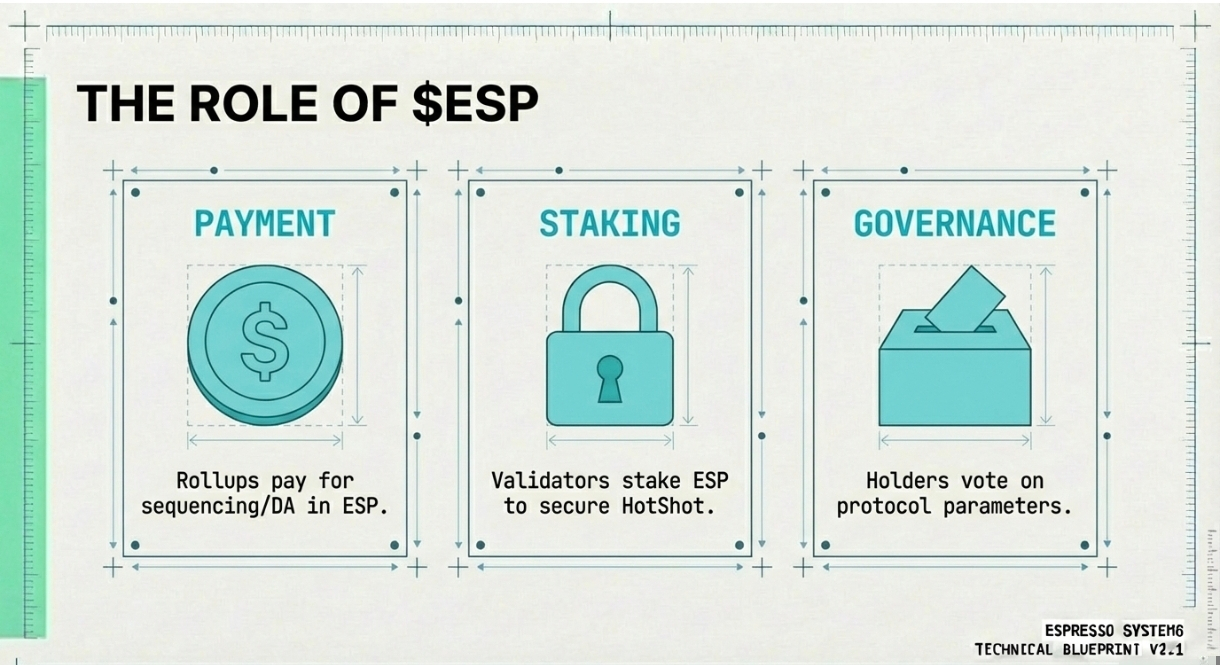
The ESP token enables three primary functions within the ecosystem. It serves as the payment mechanism for sequencing and data availability services, with rollups paying fees in ESP for using Espresso's infrastructure. Token holders can stake ESP to operate sequencer nodes or participate in consensus, earning rewards for securing the network. ESP also grants governance rights, allowing holders to vote on protocol upgrades, parameter changes, and treasury management decisions.
The economic flywheel begins with infrastructure demand. As more rollups use Espresso for sequencing and data availability, they need to acquire ESP tokens to pay for these services. This creates buying pressure and increases token value.
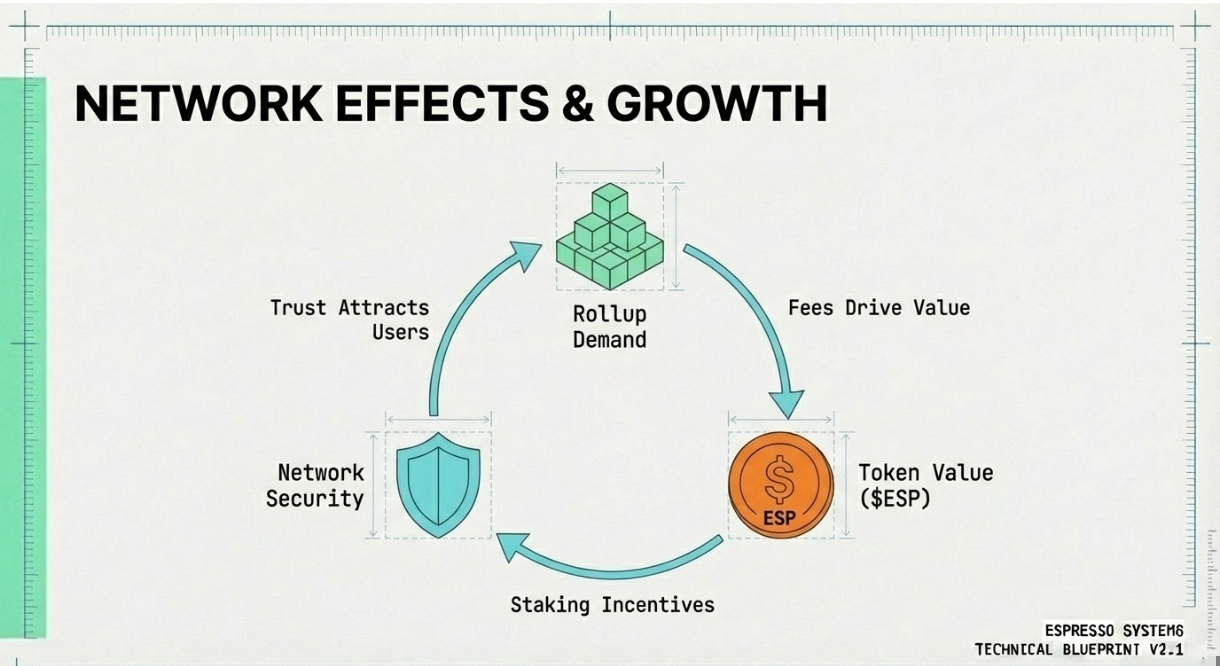
Increased token value makes staking more attractive for node operators. More stakers improves network security and decentralization, which makes the network more attractive for additional rollups to join. This creates a virtuous cycle where usage growth drives security improvements, which in turn drives further adoption.
The ecosystem fund accelerates this flywheel through strategic incentives. By allocating tokens to developer grants, integration bounties, and liquidity mining programs, Espresso actively encourages ecosystem growth. These investments generate returns through increased network usage and token appreciation.
▨ Team & Funding
Espresso boasts an exceptional team with deep expertise in cryptography and blockchain infrastructure. CEO Ben Fisch is a Stanford cryptography PhD who previously worked on groundbreaking zero-knowledge proof research. Chief Scientist Benedikt Bünz, another Stanford PhD, is renowned for his work on bulletproofs and cryptographic protocols. The team combines academic rigor with practical blockchain experience, having worked at leading organizations including Ethereum Foundation, Facebook Libra, and various crypto startups.
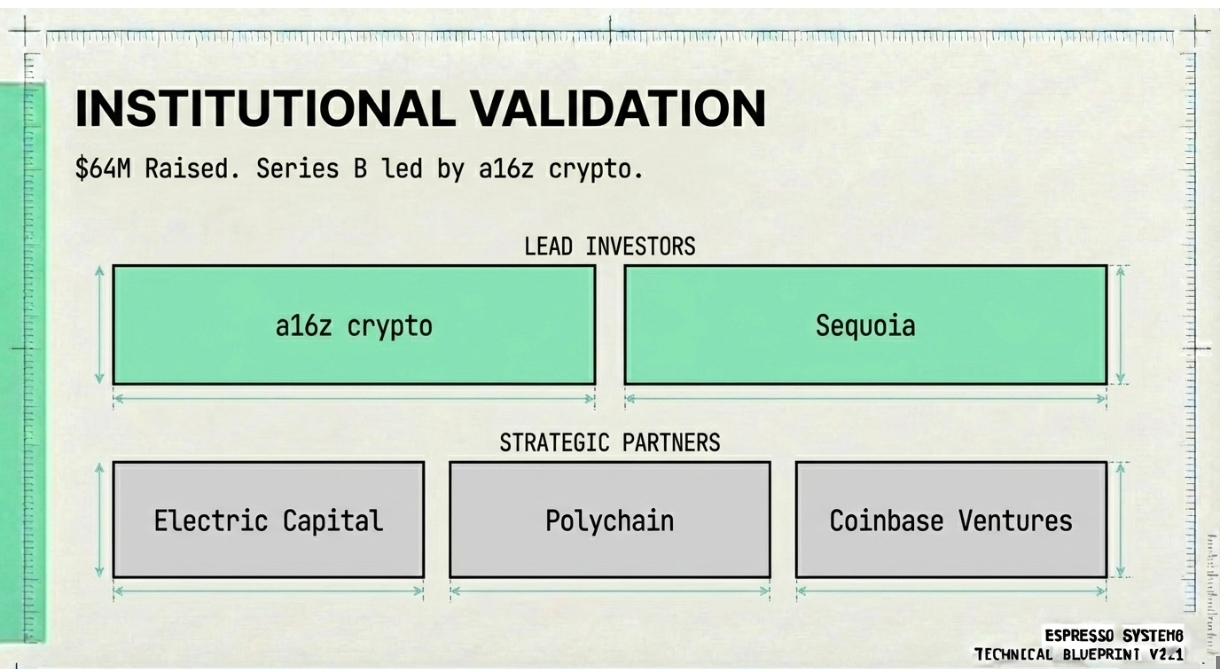
The project has raised $64 million across multiple funding rounds. Their $32 million Series B in March 2024 was led by Andreessen Horowitz (a16z crypto), with participation from previous investors including Sequoia Capital and Electric Capital. The seed round in 2022 included Coinbase Ventures, Polychain Capital, and Blockchain Capital, representing a who's who of top crypto investors.
This substantial funding provides Espresso with several years of runway to develop their technology and grow their ecosystem. The investor lineup also provides valuable connections and credibility when partnering with other projects in the space.
Espresso Systems addresses one of the most critical challenges in blockchain today, the fragmentation caused by the proliferation of Layer 2 networks. Their approach of providing shared sequencing and data availability infrastructure represents a pragmatic solution that maintains rollup sovereignty while enabling seamless interoperability.
The technology is technically sophisticated but practically focused on solving real problems for developers and users. It reduce cross-chain latency from minutes to seconds and then eliminate the security risks associated with bridges, and enables the multi-chain applications that users actually want to use.
The project's success will depend on execution and adoption. They face competition from other shared sequencing projects and established players like EigenLayer. However, their first-mover advantage, strong technical team, and growing ecosystem partnerships position them well to become fundamental infrastructure for the next generation of blockchain applications.