

The first time I started looking closely at Plasma XPL, it didn’t feel like another typical blockchain project trying to compete for attention. Instead, it felt more like infrastructure designed for a specific purpose. Plasma is built around stablecoin settlement, which means its main focus is not hype or complex ecosystems but making value transfer simple, fast, and reliable for everyday users and institutions.
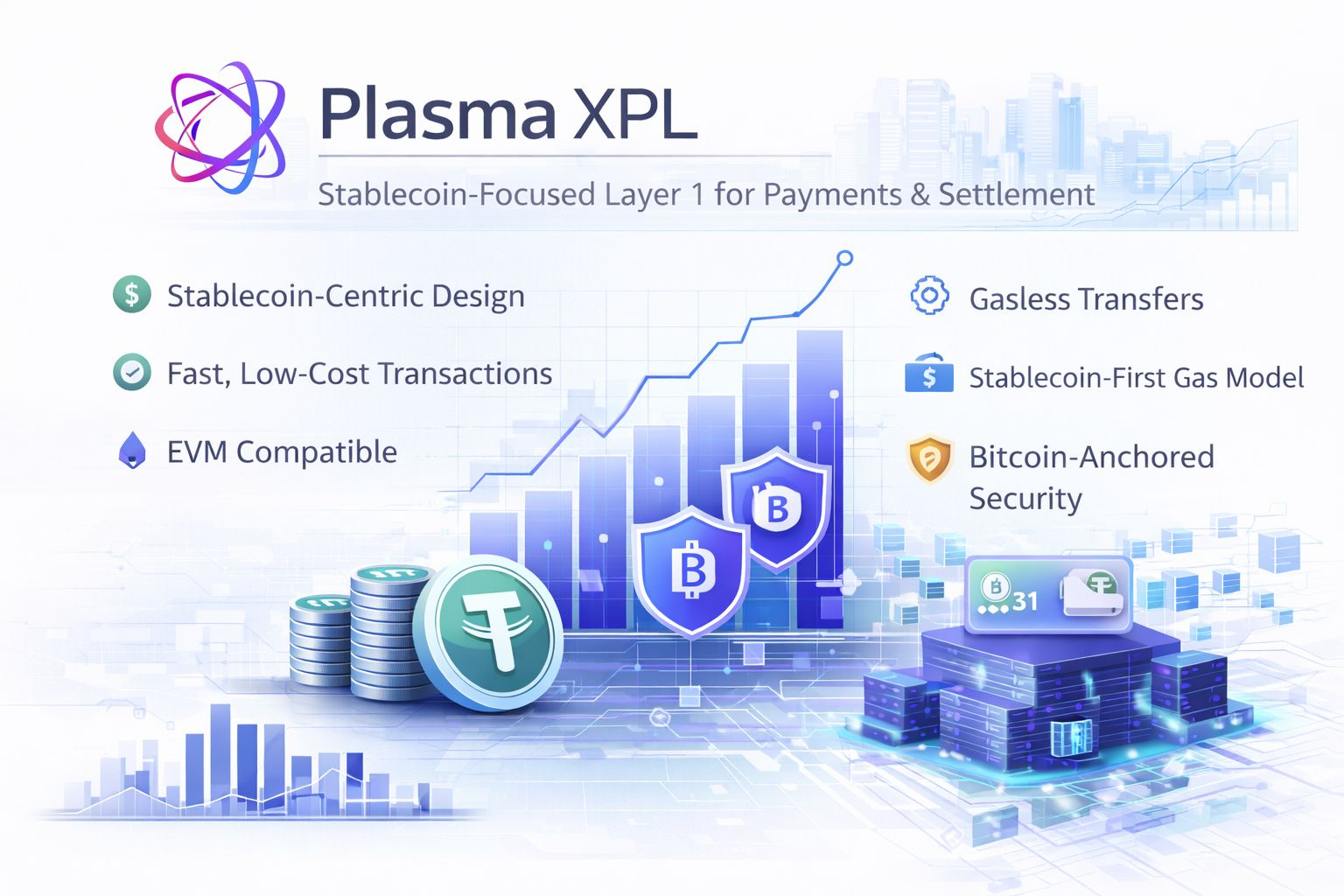
Many blockchains try to become everything at once. Plasma takes a different path by narrowing its vision toward payments and stable assets. This approach becomes more relevant as global adoption of stablecoins continues to grow. People increasingly want systems where transactions are quick, costs are predictable, and the process feels straightforward. Plasma aims to remove unnecessary friction by allowing stablecoins like USDT to move across the network without users needing to think about technical details behind the scenes.
One of the most interesting aspects of Plasma is how it combines full EVM compatibility with fast finality. Developers who are already familiar with Ethereum-based tools can build on Plasma without starting from scratch. At the same time, the network introduces its own consensus design focused on efficiency and speed. This balance makes it easier for projects to migrate or expand without sacrificing performance.
Recent discussions around the ecosystem highlight the importance of gasless transfers and stablecoin-first gas models. Instead of forcing users to hold multiple tokens just to pay transaction fees, Plasma simplifies the process. From a practical perspective, this makes blockchain interaction feel closer to traditional digital payments, where users focus on sending value rather than managing technical steps.
Security is another area where Plasma tries to differentiate itself. The concept of Bitcoin-anchored security introduces an additional layer of trust by connecting the network’s design to one of the most established blockchains. While many users may not notice this detail directly, it adds confidence for institutions and developers who want reliable infrastructure behind their applications.
What stood out to me personally while exploring Plasma was how quietly it positions itself. It does not try to overwhelm users with complicated features. Instead, it focuses on making the blockchain feel invisible. The idea is simple: people should be able to send stablecoins without worrying about which chain they are using or how the system works internally. This philosophy reflects a broader shift in Web3, where usability is becoming more important than technical complexity.
As adoption expands in regions where stablecoins play a major role in daily transactions, networks like Plasma may become more relevant. Retail users often look for reliability and low friction, while institutions look for predictable performance and security. By targeting both groups, Plasma builds a foundation that aligns with real-world financial behavior rather than speculative trends.
Looking forward, Plasma XPL seems to be moving toward a future where blockchain acts as invisible infrastructure. The goal is not to make users learn new systems but to integrate decentralized technology into experiences that already feel familiar. If this direction continues, Plasma could become an important layer for stablecoin-driven economies, supporting both consumer payments and institutional finance without unnecessary complexity.

