
When I first started paying attention to Plasma and its native token $XPL, it was mostly because of all the buzz about stablecoin infrastructure in Web3. Fast forward into late 2025 and early 2026, and Plasma is one of the most talked about blockchain launches in years. What was once a project idea focused on stablecoin payments has turned into a full ecosystem with real usage, real liquidity, and a real community though not without its fair share of volatility and heated discussions. In this article I’m going to break down the most recent developments, core technology, launches, price behavior, community response, adoption challenges, and what might come next in plain language that actually feels like it came from someone watching this unfold in real time.
A Major Launch With Massive Stablecoin Liquidity
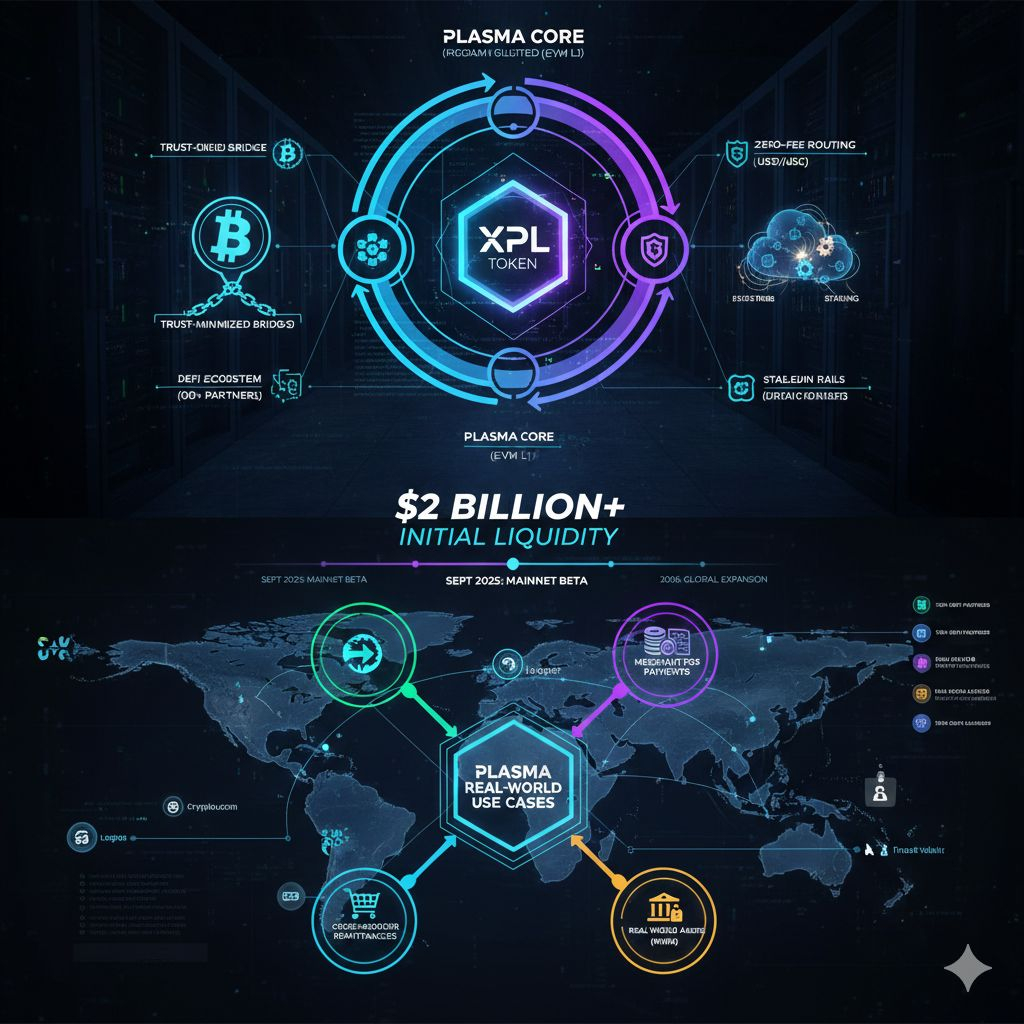
One of the biggest storylines for Plasma was its mainnet beta launch on September 25, 2025, a date that most people in this space still remember. On that day Plasma went live with its native blockchain and issued the XPL token, positioning itself immediately as a serious entry in the stablecoin infrastructure race. The network kicked off with over $2 billion in stablecoin liquidity from more than 100 DeFi partners, including major names across the industry. Zero‑fee stablecoin transfers were enabled right away, a feature that instantly gained attention from both users and developers.
What struck me when I read about this was the sheer scale of liquidity right out of the gate. It’s rare for a new blockchain to have that much value locked on day one, especially in something as always competitive as stablecoins and payments. Add in integrations with major platforms and instant support for USDT movements and you can see why the launch made headlines across crypto newsrooms.
What Plasma Is Really Built For
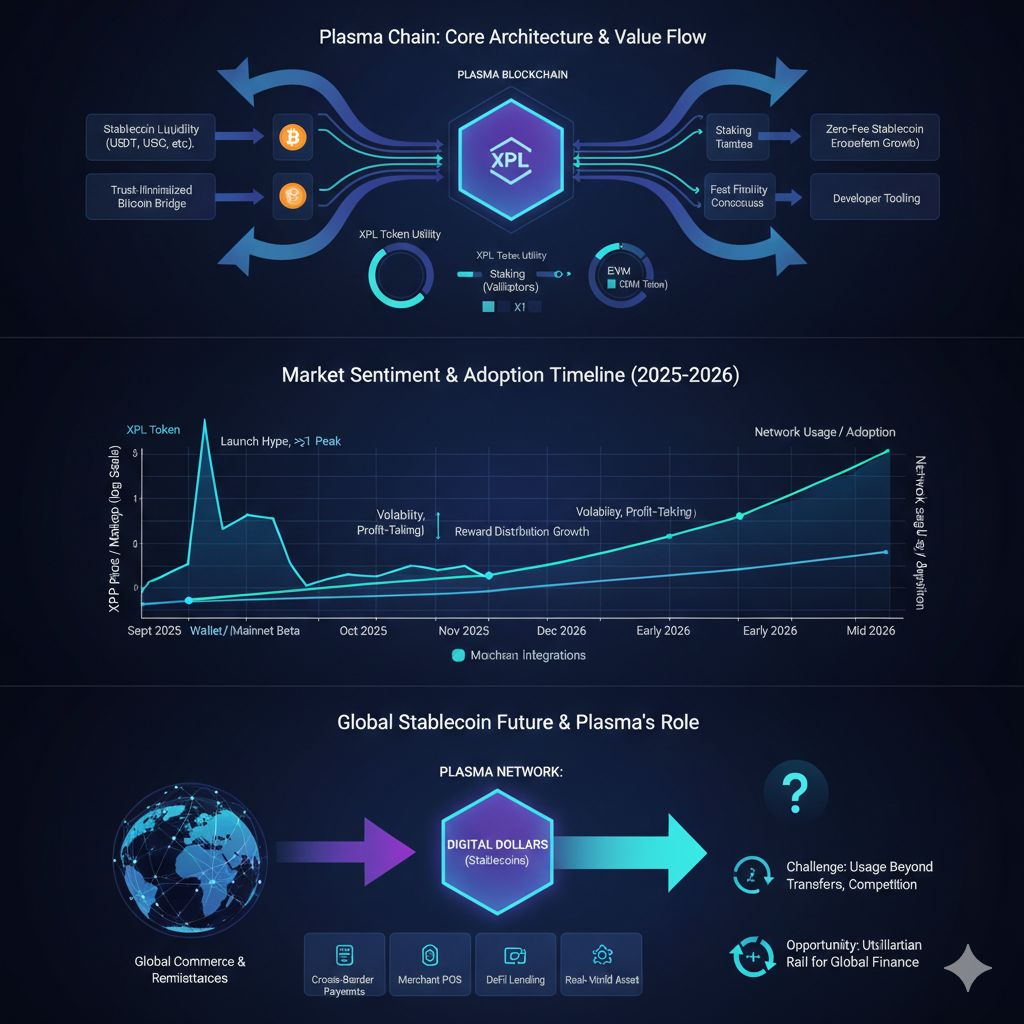
At its core, Plasma is a purpose built Layer 1 blockchain designed to move digital dollars efficiently. This means it wasn’t trying to be another all‑things‑to‑all people chain like some big ecosystems. Instead it has a clear thesis: enable stablecoin transfers at scale, at very low cost, and with the kinds of rails needed for real global usage. If you think about how payments work around the world especially for remittances and cross border movement there’s a massive opportunity for something that actually delivers on low fees and fast settlement.
The technical backbone includes things like:
EVM compatibility, meaning developers familiar with Ethereum tooling can build on it.
A consensus mechanism designed for fast finality and high throughput.
A trust minimized bridge to Bitcoin, anchoring security to the world’s most battle tested blockchain.
Support for zero fee transfers of simple stablecoin transactions through an optimized routing system.
It’s a very specific focus, and honestly that’s part of what makes the project compelling, you can see exactly what problem it’s trying to solve.
The XPL Token: More Than Just a Symbol
At launch the XPL token had a huge debut. It was listed on multiple exchanges including some of the biggest names, and its initial trading price pushed the market cap into the billions within hours. That kind of early valuation drew both excitement and scrutiny, especially as retail interest spiked immediately after launch.
The token itself serves several key functions:
Gas for transaction execution on the network.
Staking asset for validators who help secure the blockchain.
Reward distribution for network participants and governance alignment.
In other words, XPL is not just a shiny ticker, but central to how the entire system functions under the hood.
However, that doesn’t mean markets were calm about it.
Volatility and Market Reality
If you follow crypto prices like I do, you know that early days after a blockchain launch are often bumpy. Plasma was no exception. After an initial run that had XPL trading well over $1 per token on launch day, significant sell pressure emerged as some early recipients and airdrop participants began taking profits. Within a few weeks, the token had retraced significantly from its peak, and by late 2025, some reports noted that its price was down sharply from early highs.
That kind of fluctuation wasn’t entirely surprising, because when a token debuts with a large allocation unlocked to early participants and aggressive trading volume, markets will find their level. Volatility isn’t inherently bad, it just means you have to have a strong thesis for why you’re engaging with it rather than just hoping for a quick pump.
In fact, some of this selling pressure turned into a narrative about team selling or insider dumps which the founder publicly denied, explaining that team and investor tokens were subject to long vesting cliffs and lockups.
So if you were watching social feeds like I was, you’d see a mix of people celebrating what Plasma might do and others getting frustrated or sold on the token price. That’s just part of how hype cycles work.
Adoption Moves After Launch
Even after the volatility, some practical advances kept coming:
Wallet and Exchange Support – XPL became available in popular ecosystem services, including integration with custodial and non custodial wallets. Most recently, hardware wallet support was expanded to include Plasma network support for XPL and USDT, which is something I personally saw people rejoice about online because it meant they could finally store and control their tokens independently.
Listings on Multiple Platforms – The token was listed on major exchanges and rewarded through HODLer airdrops where platforms retroactively distributed XPL to subscribers of certain products. That boosted liquidity and helped the network reach a broader audience.
Launchpools and Community Events – Several exchanges ran campaigns where users could earn XPL by participating in pool campaigns or locking other assets to share rewards, which helped grow the community around the ecosystem.
But not everything was smooth sailing at the user interface level. Early confusion around wallet support caused some headaches when users tried to send XPL through incompatible wallet addresses. Thankfully those issues were clarified over time with broader support and clearer instructions.

The Broader Picture: Stablecoins and Real Money Rails
One of the most interesting angles on Plasma that I came away thinking about is how it fits into the bigger story of stablecoins becoming a form of global money. Unlike many chains that chase yield farming or speculative assets, Plasma’s thesis is clear: if digital dollars are going to be used as a global settlement asset, there needs to be an efficient network built specifically for that purpose.
That means supporting use cases that range from:
Cross border remittances
Merchant payments
DeFi lending and borrowing using stablecoins
Integration with real world payment stacks
If you think about how much global commerce runs on dollars, and how digital stablecoins are poised to be that next frontier of money movement, Plasma has carved out a very specific niche that isn’t just about decentralization it’s about practical money rails. This resonates with me personally because I’ve spent years watching infrastructure projects get overshadowed by meme tokens. Plasma feels like something that’s trying to tie technical strategy back to actual financial problems.
The Challenges Ahead
Of course, Plasma isn’t without hurdles:
Network Usage Beyond Transfers – Right now the core narrative is stablecoins and payments, but for long term sustainability, you want a rich ecosystem of apps, merchants, and developers building on the chain.
Price Discovery and Token Economics – The token’s volatility and market sentiment will continue to influence how people engage. Especially with token unlock schedules and vesting cliffs, price dynamics can be erratic in the short term.
Competing Technologies – There are other blockchains with payment‑oriented features, so Plasma has to prove its value not just in theory but in actual usage. That’s a challenge most new chains face, but it’s worth calling out.
Wrapping Up: Is Plasma Worth Watching?
From where I sit, Plasma has earned a spot on the list of crypto projects worth paying attention to not because of hype, but because of its clear mission, major liquidity commitments, real network launch, and ongoing ecosystem development. I’ve been following it closely since the mainnet debut, and even with price swings and community debates, the underlying technology and purpose still feel distinct compared to a lot of other layer one launches.
In the end, the question many people will ask themselves through 2026 and beyond is simple:
Will Plasma shift from being a promising launch story to a utilitarian rail for stablecoins and real money movement?
That’s the narrative I’m watching unfold, and whether you’re curious about stablecoin infrastructure or just want to understand where money might move next in Web3, Plasma is one of those projects that’s enabling interesting answers.

