


Dusk Network is one of those projects that makes more sense the longer you actually sit with it.
It wasn’t built to win the loudest narrative contest. It was built to solve the most uncomfortable truth about public blockchains.
That truth is this. Full transparency is not automatically better when the thing you’re trying to move on chain is real finance. Real positions. Real counterparties. Real assets that come with actual rules, obligations, and privacy expectations that can’t just be hand waved away.
They’re Not Playing the Privacy Maximalist Game
When Dusk describes itself as a privacy blockchain for financial applications, it’s not trying to compete in some who can hide more race.
It’s trying to build the kind of infrastructure that can host assets and transactions where confidentiality is a baseline requirement. While audits, enforcement, and compliance still have to exist in a controlled way.
Because institutions don’t operate in an environment where everything is either totally visible or totally hidden. They operate in an environment where some parties must see some information at some times. And the rest of the world should see absolutely nothing.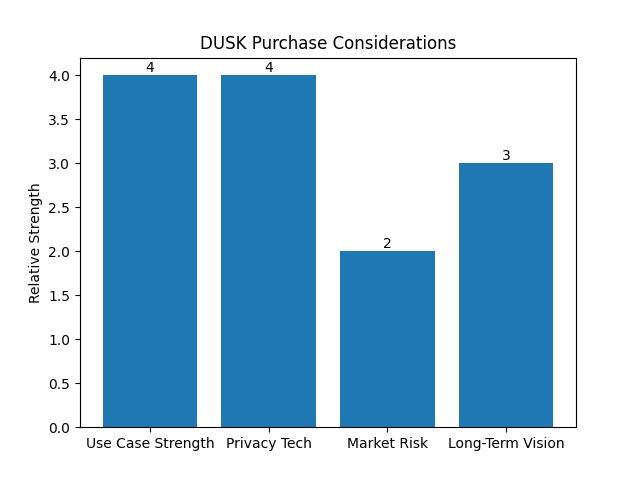
The Problem Is Obvious Once You Stop Treating Crypto Like Theater
The problem Dusk is aiming at becomes easy to spot once you stop looking at crypto like a social experiment and start looking at it like actual market plumbing.
If you run financial activity on a fully transparent chain, you turn every participant into a public dataset. Balances and flows can be studied by anyone. Competitors can map your behavior. Counterparties can be inferred. Strategies become trackable patterns.
Even if nobody is doing something wrong, the system itself becomes uncomfortable and unsafe for serious use. Because businesses don’t negotiate, invest, and settle in front of an audience. And regulated entities cannot accept a framework that leaks sensitive behavior by default.
Privacy Alone Isn’t Enough Either
At the same time, privacy alone is not enough in regulated environments.
Markets also require enforceable rules, reporting structures, and the ability to prove facts when actually required.
This is why Dusk’s direction has always felt like it’s trying to hold two ideas together simultaneously. Confidentiality on one side and audit ready truth on the other side.
This is also why the project spends so much time talking about design, standards, and models rather than only talking about speed benchmarks and hype cycles.
Phoenix Transaction Model Does the Heavy Lifting
A big part of that behind the scenes work is the Phoenix transaction model.
Dusk presents this as a way to bring privacy and anonymity to transactions and smart contract behavior. What stands out to me here is that Dusk has publicly emphasized formal security proofs for Phoenix.
That’s a different kind of signal than marketing language. It suggests the team is thinking about how the system behaves under serious scrutiny rather than only how it sounds in a pitch deck.
They’ve also discussed future evolution of Phoenix to match regulatory and integration realities. Which is subtle but important. It shows they’re treating privacy as a component that has to work inside real constraints, not a vibe that gets declared and then forgotten about.
XSC Is Where It Gets Really Different
On top of that privacy foundation, Dusk brings in Zedger and the Confidential Security Contract standard, often shortened to XSC.
This is where the project really separates itself from just another chain thinking.
XSC is not framed as a normal token standard that only focuses on transfers. It’s framed as a structure designed for security like assets that have lifecycle needs. Issuance and management logic. Transfer restrictions. Controlled participation. The kinds of requirements that regulated assets carry by default.
Regulated Assets Aren’t Supposed to Act Like Meme Coins
The reason this matters is that tokenized securities and real world assets are not supposed to behave like meme tokens.
They need rules. They need constrained movement. And they need a system that can enforce those rules without turning every sensitive detail into public data that anyone can scrape.
The Modular Architecture Tells a Story
Dusk’s modular architecture is basically the project saying it wants to be a foundation for institutional grade financial applications, compliant DeFi, and tokenized real world assets. While keeping privacy and auditability built into the design from the start.
The interesting thing is that the architecture story isn’t only theoretical anymore.
Documentation describes distinct components that reflect an actual stack mindset. Zedger and XSC represent a core way of handling regulated asset logic. Meanwhile Hedger running on DuskEVM points toward a path where privacy preserving logic becomes more accessible to builders in an EVM like execution environment.
Adoption Isn’t Just About Cryptography
This is strategically important because adoption isn’t only about having the best cryptography.
Adoption is also about reducing the friction that stops developers and products from ever shipping on your chain in the first place.
Moonlight Adds Public Rails When You Need Them
There’s also a practical angle to the network design that shows up in how Dusk talks about public and private modes.
The updated whitepaper messaging introduces Moonlight as a public transaction layer alongside Phoenix. While that might sound like a simple add on, it actually signals something meaningful.
Real systems usually need both public facing rails for some operations and private rails for sensitive operations. A chain that can support both modes without breaking its identity has a better chance at fitting into the messy reality of financial workflows.
The Token Story Is Straightforward
When it comes to the token story, DUSK is the network’s native token and also has an ERC 20 representation.
The tokenomics described in Dusk documentation are straightforward in structure. An initial supply of 500 million DUSK and an additional 500 million DUSK emitted over a long period of 36 years. Bringing the maximum supply to 1 billion DUSK.
This long tail matters because it tells you the project is not built around a short unlock cliff as the main event. Instead it’s built around a gradual emission schedule that expects the network to grow into its economic footprint over time.
As mainnet is live, Dusk documentation also explains that tokens can be migrated to native DUSK via a burner contract. Which is a practical bridge between the token’s earlier existence and the network’s current direction.
Utility Is Tied to Real Network Activity
Utility wise, Dusk positions DUSK as more than just a ticker symbol.
It’s used for staking and consensus participation. It supports rewards for consensus participants. It gets used for network fees. And it plays a role in deploying applications and paying for services on the network.
This fits the picture of Dusk trying to become a settlement layer where activity and security are tied to the token in a way that makes sense if the chain is actually being used for real products. Not only traded as a speculative asset.
The Bridge Incident Shows How Infrastructure Actually Works
Looking at latest updates, the most concrete official operational update in recent weeks has been the Bridge Services Incident Notice dated January 17, 2026.
Dusk stated that unusual activity involved a team managed wallet used in bridge operations. Bridge services were paused. Related addresses were recycled. Mitigations were shipped in the web wallet. They also emphasized it was not a protocol level issue and they did not expect user losses to materialize.
Regardless of how anyone feels about incidents in general, this kind of moment is important. It shows the difference between projects that talk like infrastructure and projects that actually have to act like infrastructure.
Once a network touches bridges, wallets, and operational rails, response discipline becomes part of the product experience.
What’s Next Is Execution Not Theory
If you ask what’s next, the clean answer is that Dusk is clearly moving deeper into the phase where infrastructure hardening, ecosystem readiness, and product facing experiences matter just as much as protocol theory.
The incident notice itself mentioned a follow up plan for bridge reopening. While the broader stack direction implies continued focus on DuskEVM execution and privacy capable building.
On the product side, the presence of Dusk Trade messaging around tokenized RWAs and compliance framing suggests Dusk wants to show what the end user entry point can look like once those rails are ready.
That’s exactly how infrastructure projects eventually mature. By moving from we can to here is how it will actually be used.
The Real Value Proposition Is Clear
The real value proposition here is that Dusk is trying to build a chain where confidentiality doesn’t break the ability to prove what needs to be proven.
Institutions and serious asset issuers do not want a world where everything is publicly visible. But they also cannot accept a world where nothing can be verified.
If Dusk gets that balance right, it becomes a very specific kind of settlement network. Not competing for every possible use case. But competing for the financial workflows that require privacy by default and disclosure by necessity.
My Takeaway After Watching This
My takeaway is that Dusk’s direction feels coherent in a way that many projects struggle to maintain.
Phoenix gives it a privacy foundation that the team has tried to formalize and strengthen. Zedger and XSC frame the chain around regulated asset behavior rather than simple transfers. And the move toward an EVM like execution layer suggests they understand that developer accessibility is not a luxury. It’s a requirement.
If those pieces keep aligning with real integrations and real product activity, Dusk has a path to become the kind of chain that quietly becomes essential.
Not because it’s loud. But because it solves a real constraint that serious finance cannot ignore.
