Plasma feels like one of those projects that stopped trying to impress people with a “do-everything” narrative and instead picked one job that the world actually needs, then started designing the entire chain around that job, because the core idea is simple and stubborn in a good way: stablecoins are already being used like global money, so the infrastructure should finally behave like global money infrastructure, with settlement that feels fast, predictable, and low-friction even when usage becomes heavy.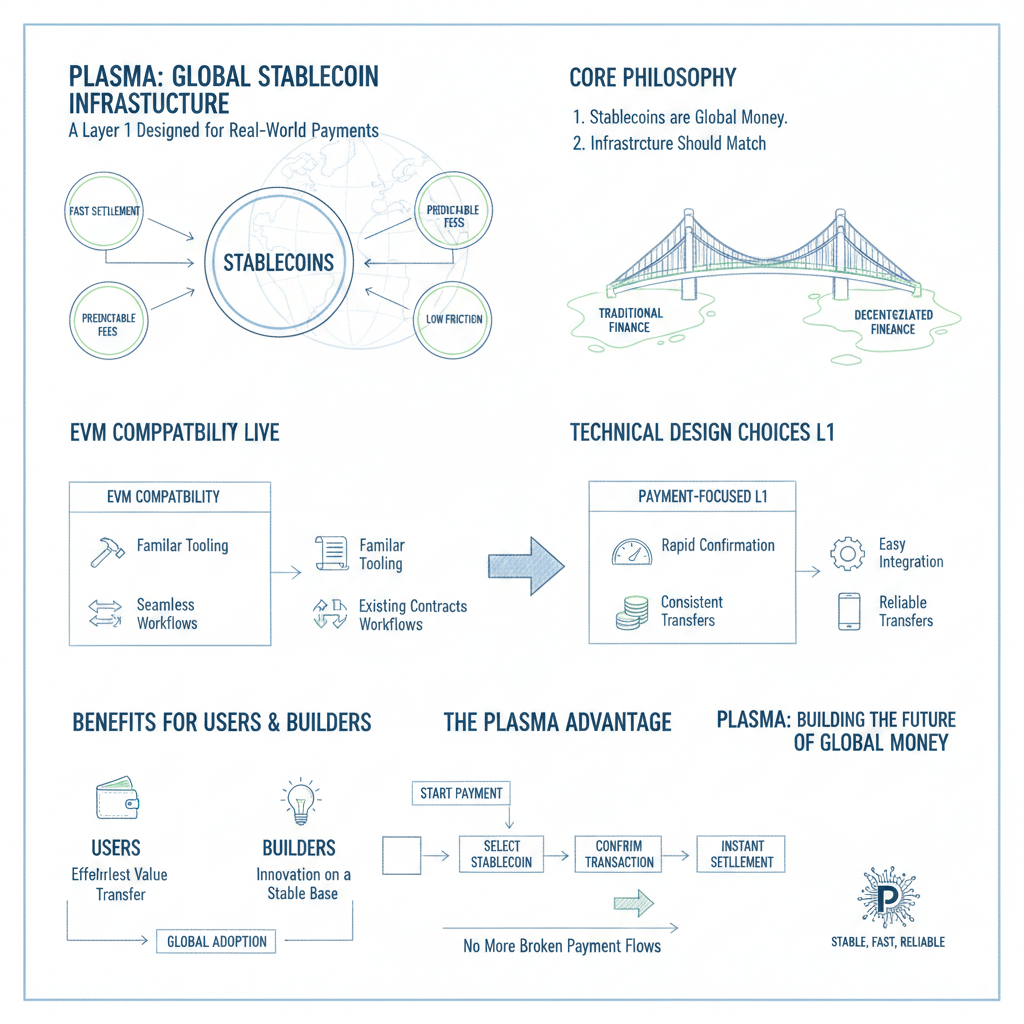
What Plasma is building is a Layer 1 that stays EVM-compatible so builders do not need to abandon familiar tooling, contracts, and workflows just to participate, but at the same time it does not treat “payments” as a marketing line, because the chain is framed as stablecoin settlement first, and that single focus shows up in the design choices, especially around confirmation behavior, fee experience, and the small details that normally break payment flows in real life when a user just wants to send value and move on.
The consensus side of Plasma is built around PlasmaBFT, which is presented as a BFT-style approach targeting fast finality, and the reason this matters is not because of the acronym but because payments are one of the few domains where uncertainty is unacceptable, since merchants, payroll systems, and high-frequency settlement flows cannot afford a “maybe later” experience, so the chain’s emphasis on very quick finality and stable block production is basically Plasma saying it wants settlement to feel like a completed action rather than a pending promise.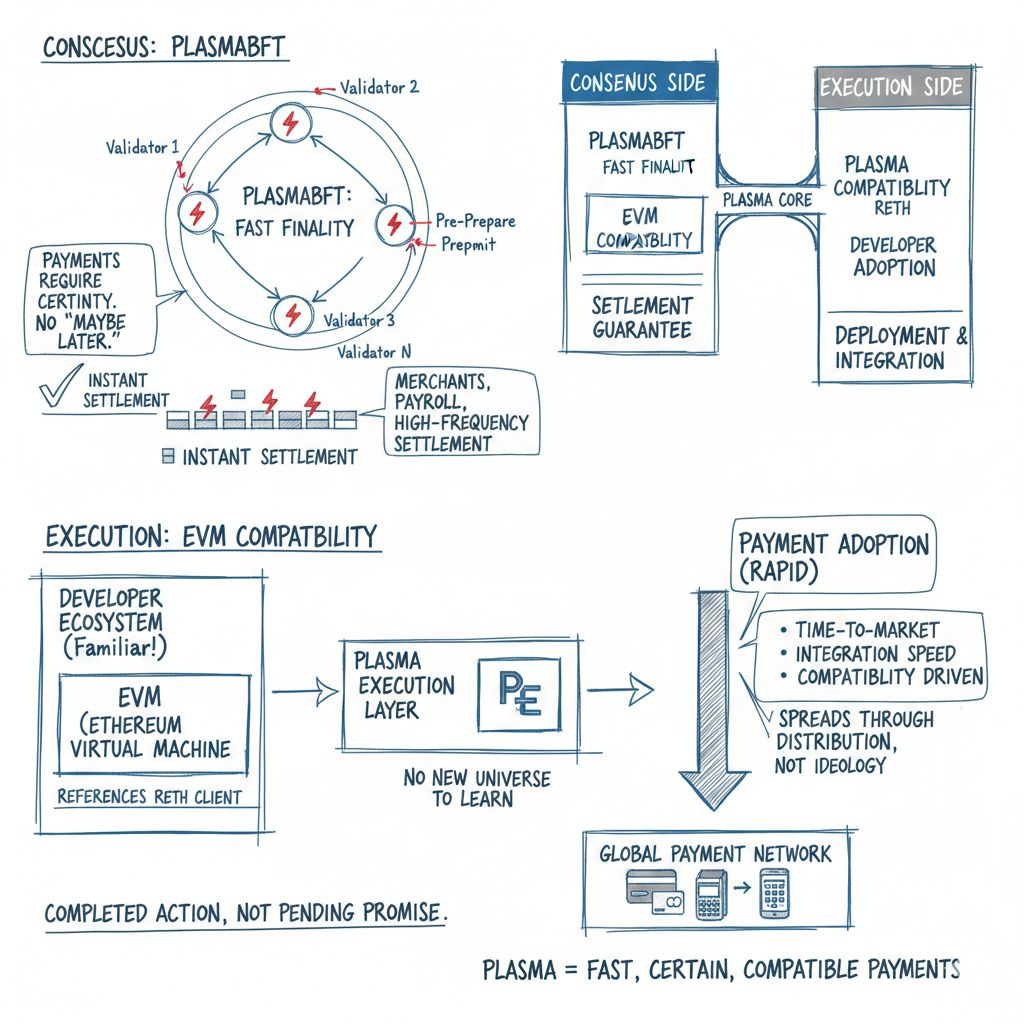
On the execution side Plasma leans into EVM compatibility and references Reth, and the strategic value here is that Plasma is not asking developers to learn a new universe before shipping, because if the goal is real payment adoption then the ecosystem cannot wait for a slow rebuild from scratch, so Plasma’s decision to keep the environment familiar is really about time-to-market and integration speed, which is exactly how payment rails usually spread, because they spread through compatibility and distribution more than through ideology.
The part that makes Plasma feel distinct, though, is the stablecoin-native toolkit, because Plasma is not just saying fees will be low, it is actively trying to remove the most common stablecoin UX failure point, which is the moment a user has a stablecoin and still cannot send it because they do not have the right gas token, so Plasma documents a gasless USDT transfer path that relies on a sponsored transaction model, with a relayer or paymaster covering costs for eligible transfers and with controls intended to limit abuse, and the point of that whole system is that the simplest stablecoin action, which is “send money,” should not require extra setup, extra tokens, or extra confusion.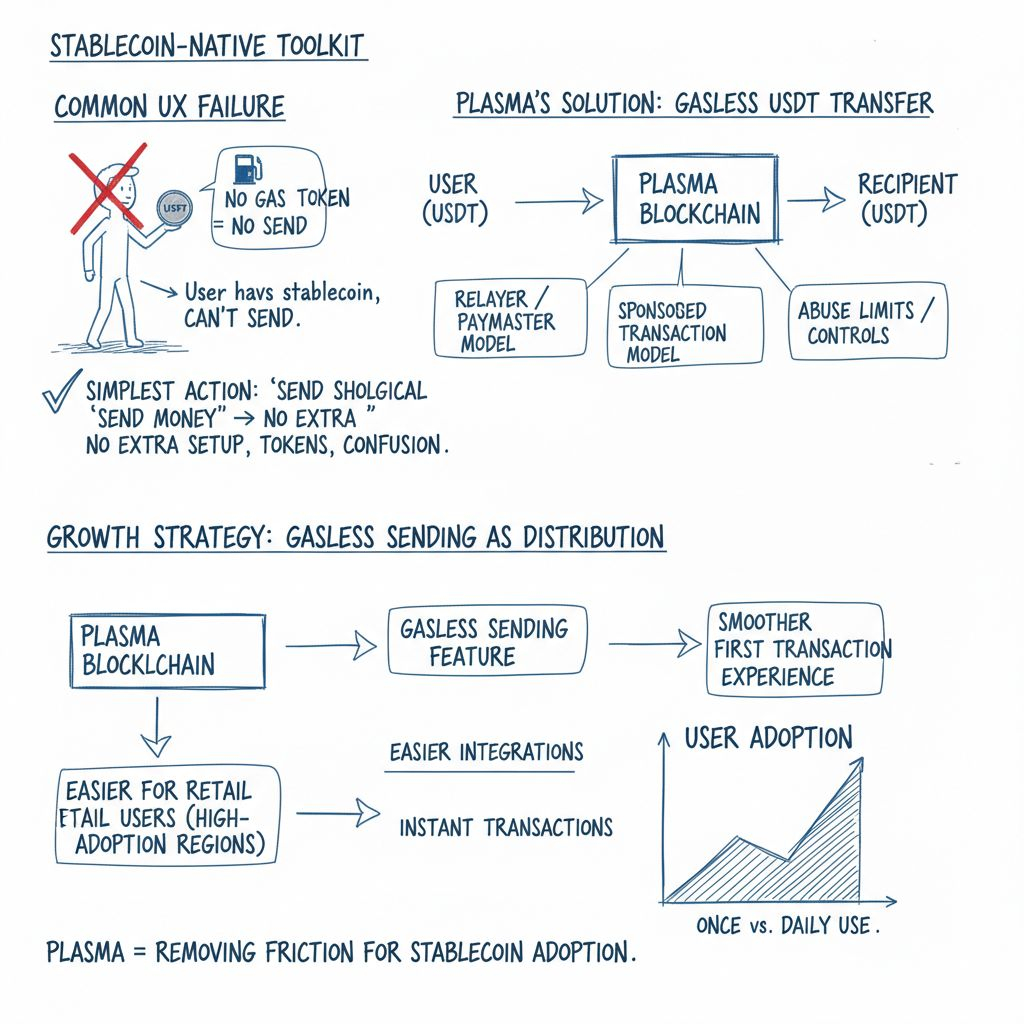
That approach also reveals how Plasma thinks about growth, because gasless sending is not only a feature, it is a distribution strategy, since removing the need to hold a separate token lowers the psychological barrier for retail users in high-adoption regions, and it also makes integrations easier for apps that want users to transact immediately, so Plasma is basically engineering a smoother first transaction experience, which is often the difference between someone using a chain once and someone using it daily.
Plasma also talks about Bitcoin-anchored security and a Bitcoin bridge design with pBTC, and what is important here is the clarity that the bridge is described as under development rather than being presented as fully live, because bridges are the area where a lot of promising chains get punished, and Plasma’s own documentation outlines concepts like verifier networks and MPC-based withdrawals as part of that planned architecture, so the bigger story is that Plasma wants a neutrality and censorship-resistance narrative that borrows strength from Bitcoin, while still delivering a stablecoin settlement chain that behaves like a modern EVM network, and that combination, if executed safely, can become a strong positioning in a world where people want stable value movement without political or infrastructure dependence.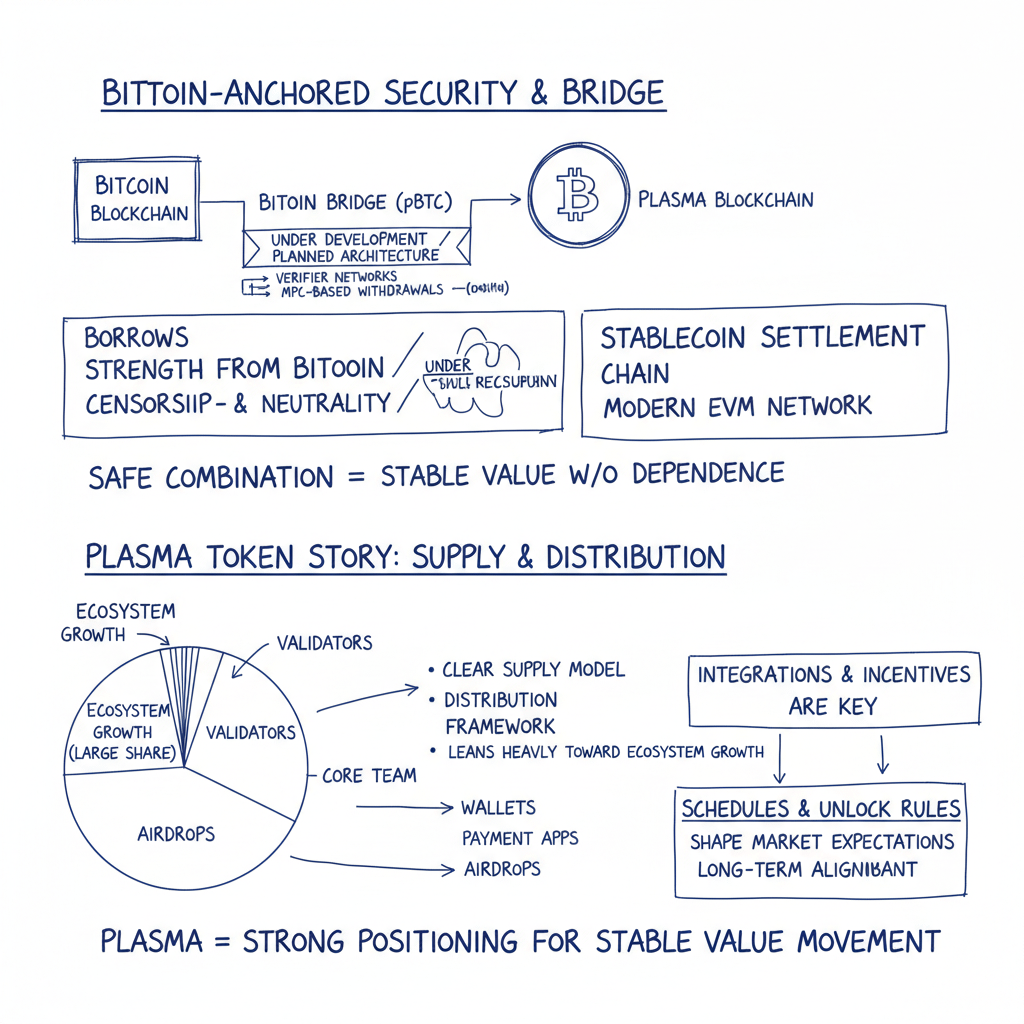
When you look at the token story, Plasma publishes a clear supply model and distribution framework that leans heavily toward ecosystem growth, and that is consistent with the reality that stablecoin settlement is won through integrations and incentives, because the chain must attract wallets, payment apps, and liquidity routes, not just developers writing contracts, and the schedules and unlock rules also matter because they shape market expectations and long-term alignment, especially when participation rules differ by jurisdiction and specific distribution dates are explicitly stated.
The reason Plasma can matter over the next cycle is that stablecoin usage is expanding in the places where people care less about narratives and more about outcomes, and Plasma is trying to make outcomes the main product, because if a chain can keep confirmations fast, costs low, and the stablecoin experience smooth enough that it feels almost invisible, then Plasma stops being “a crypto project” and starts behaving like a settlement layer that can sit behind real payment behavior, where users do not need to understand the chain to benefit from the chain.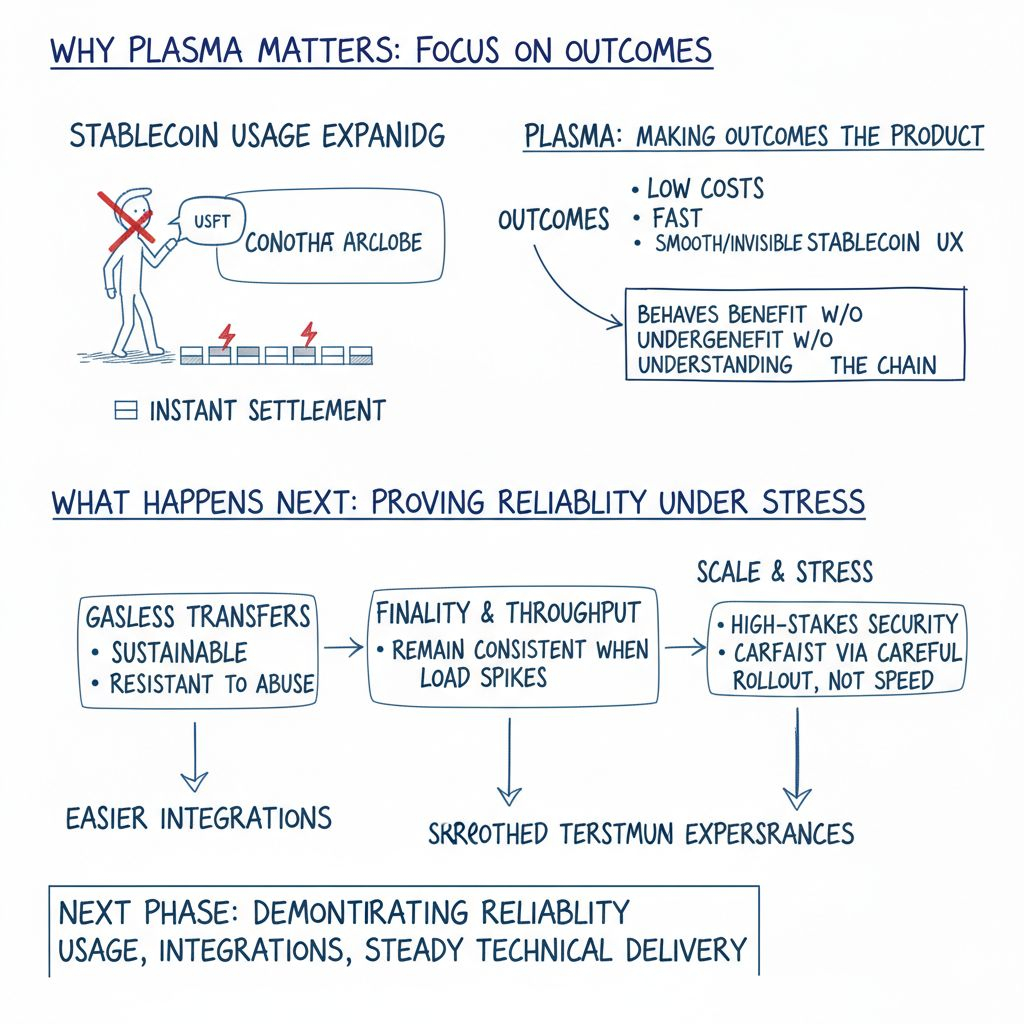
What happens next for Plasma, in a very practical sense, is that the project needs to prove that the stablecoin-native approach holds up under scale and stress, because gasless transfers must stay sustainable and resistant to abuse, because finality and throughput must remain consistent when transaction load spikes, and because the Bitcoin connectivity path must be treated as a high-stakes security surface that earns trust through careful rollout rather than through speed, so the next phase is less about announcing ideas and more about demonstrating reliability through usage, integrations, and steady technical delivery.
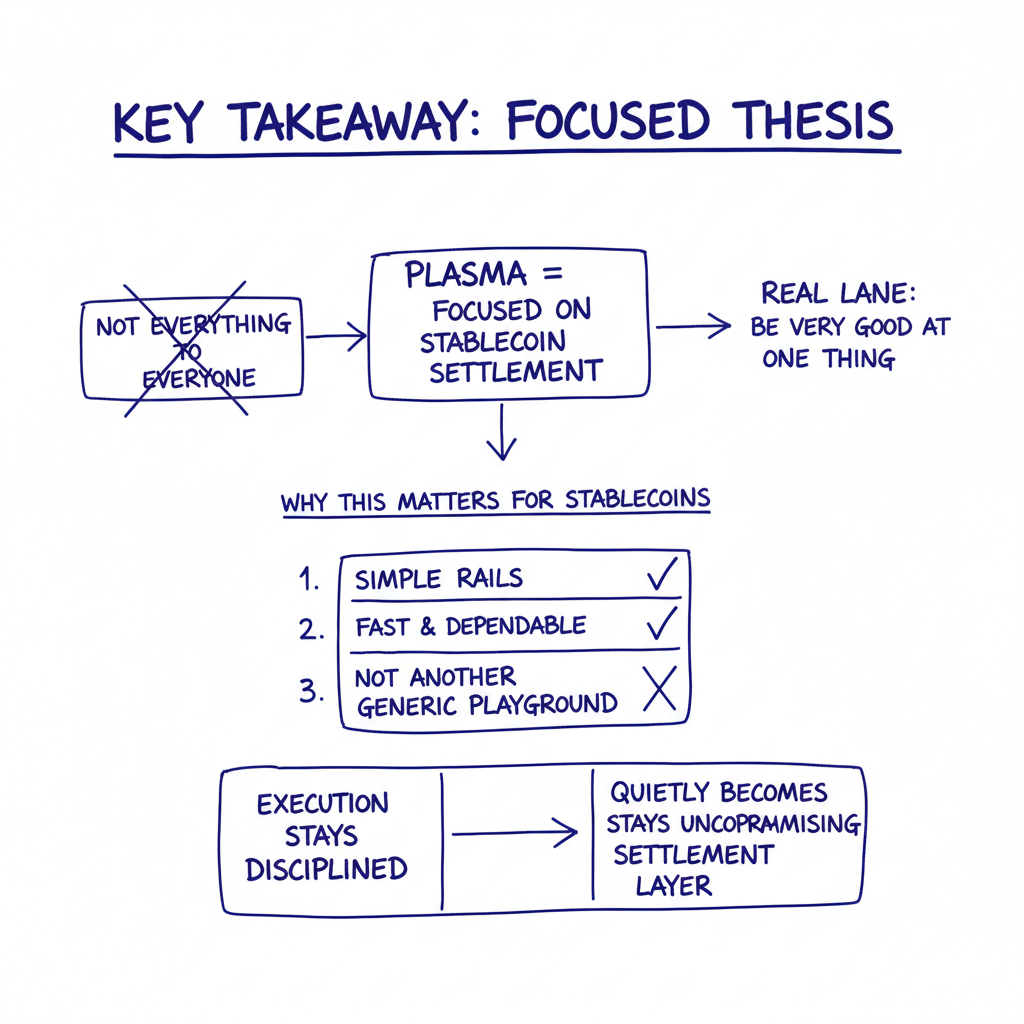
My takeaway is that Plasma is pursuing a clean and focused thesis that does not rely on being everything to everyone, because it is trying to be very good at stablecoin settlement, and that focus is exactly what can give it a real lane, since stablecoins do not need another generic playground, they need rails that feel simple, fast, and dependable, and Plasma is building itself like it wants to be those rails, which is the kind of direction that can quietly become important if execution stays disciplined and security stays uncompromising.