

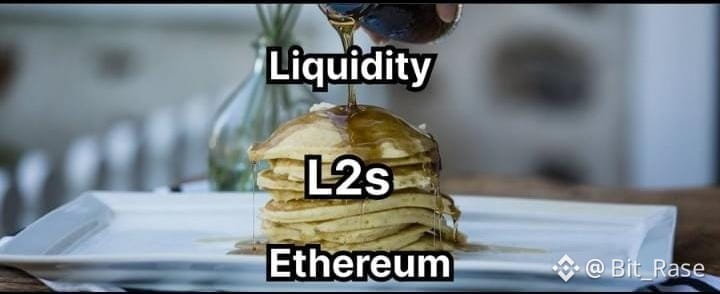
 In a bombshell post that sent shockwaves through the crypto community on February 3, 2026, Ethereum co-founder Vitalik Buterin essentially admitted what many have been whispering for months: the L2 strategy that was supposed to save Ethereum might have been the wrong bet all along.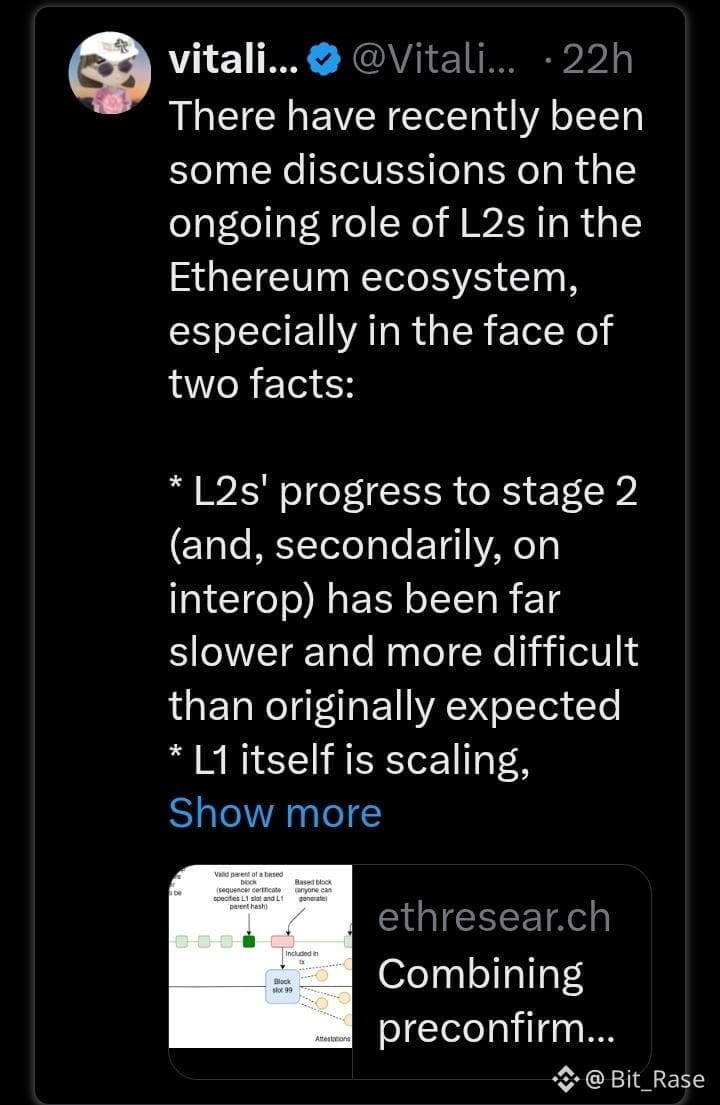
"The original vision of L2s and their role in Ethereum no longer makes sense, and we need a new path," Vitalik wrote, delivering a blunt reality check to an ecosystem that has spent years and billions (even hundreds of billions) of dollars building on the L2 narrative.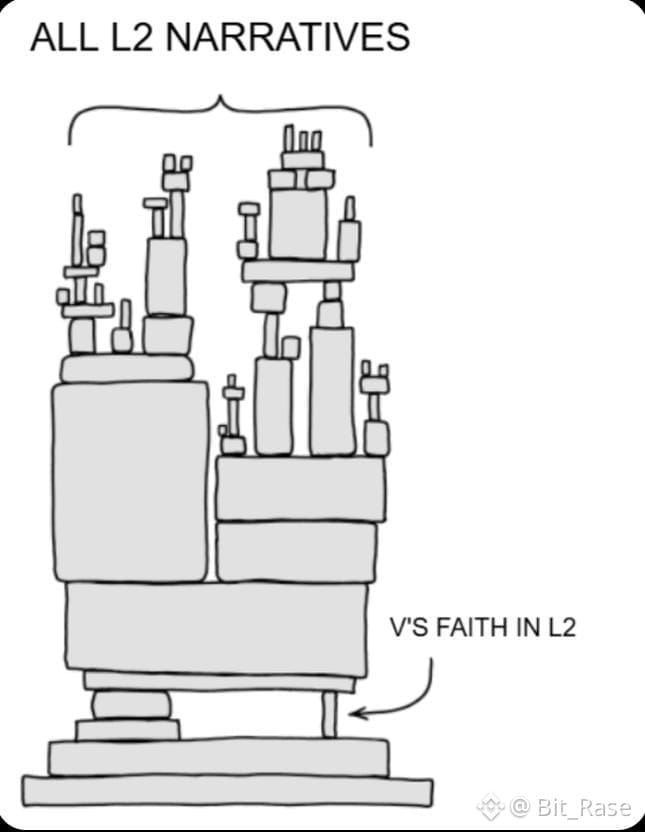
The Branded Sharding Dream
To understand how dramatic this shift is, we need to rewind to 2020-2021 when Vitalik first championed the "rollup-centric roadmap." Back then, the vision was elegant in its simplicity: Ethereum mainnet would become a secure settlement layer, while L2 rollups would handle the heavy lifting of transactions.
The concept was called "branded sharding." Think of it like this: instead of Ethereum itself splitting into multiple shards (which was technically complex and risky), independent L2 networks would act as unofficial shards. Each L2 would be its own execution environment, but all would inherit Ethereum's security and be recognized as legitimate extensions of the Ethereum ecosystem. 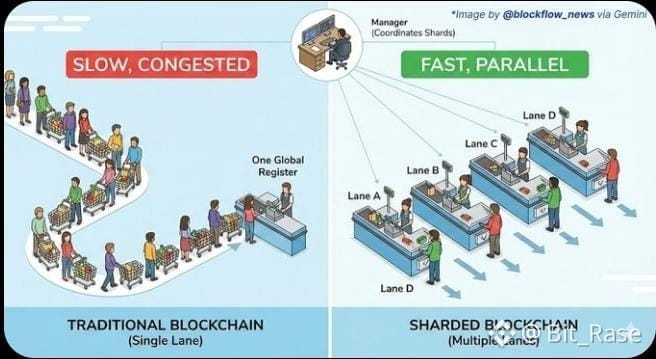
That's called "shared security" in blockchain. And it's essentail for anyone / any entity who hopes to launch a blockchain in a short time. In theory, it's beautiful: L2s could piggyback on Ethereum's thousands of validators and billions in staked ETH without building their own security from scratch. They'd bundle transactions, post cryptographic proofs to mainnet, and if anyone tried to cheat, Ethereum's validators would catch it. Fast, cheap, AND secure.
In Vitalik's 2020 post "A Rollup-Centric Ethereum Roadmap," he painted a future where "the Ethereum ecosystem is likely to be all-in on rollups as a scaling strategy for the near and mid-term future." The plan was straightforward: Ethereum mainnet would focus on being ultra-secure and decentralized, while rollups like Optimism, Arbitrum, and zkSync would compete to offer the fastest, cheapest transactions.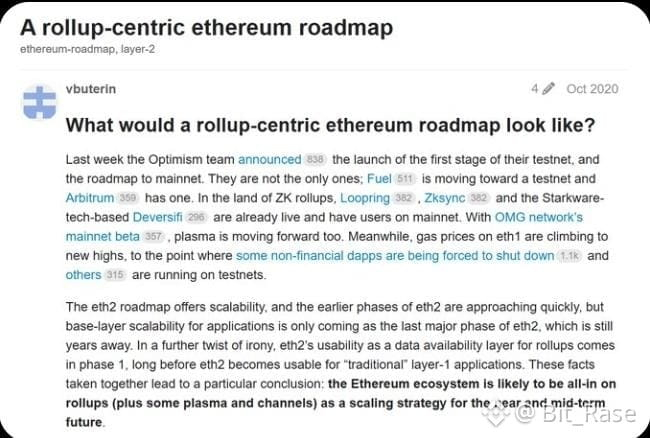
What Actually Happened
Fast forward to 2026, and the reality looks very different from the dream.
Vitalik's latest post pulls no punches: many L2s have made serious concessions when it comes to decentralization. They've centralized sequencers, training wheels that never came off, and governance structures that look more like corporate boards than decentralized protocols. As Vitalik bluntly put it, these networks shouldn't be "branded" as extensions of Ethereum if they're not meeting Ethereum's standards for security and decentralization.
The progress toward "Stage 2" decentralization (the holy grail where L2s are truly trustless) has been painfully slow. Most L2s are still stuck at Stage 0 or Stage 1, meaning users still have to trust centralized operators to some degree. The training wheels were supposed to be temporary. Instead, they've become permanent fixtures.
Forget about building thriving ecosystems. Most major L2s can't even guarantee basic uptime. Arbitrum One went down multiple times: 45 minutes in September 2021 right after launch, 2 hours in June 2023 from a software bug, and another 2 hours in December 2023 when traffic spiked. Base, Coinbase's flagship L2, halted block production twice, for 45 minutes in September 2023 and over 30 minutes in August 2025. The crown jewel of failures was Polygon zkEVM's 10-12 hour outage in March 2024, the longest L2 downtime in history, triggered by an Ethereum L1 reorg that completely broke the sequencer. 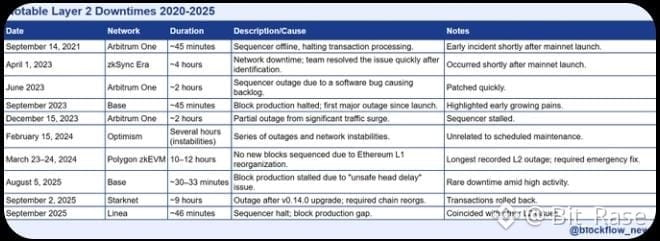
Also another fact today is: ETH Mainnet is not as expensive as the old time. The Dencun Upgrades slashed mainnet fees dramatically. Blob space made data availability cheap. Planned capacity increases for 2026 will push this even further.
Here's the kicker: if ETH mainnet can handle reasonable transaction volumes at reasonable costs, what's the point of L2s that only offer "a little faster than mainnet"?
As Vitalik noted in his post, "L1 is already scaling sufficiently that L2s need to find meaning beyond just scaling." Translation: the original reason L2s existed (to make Ethereum usable) is becoming obsolete.
The Token Graveyards
Let's talk about the elephant in the room: L2 tokens have been an absolute bloodbath. While Ethereum itself has had its struggles, L2 tokens have been decimated.
Most L2 tokens have declined 85-95% from their peak values. ARB down 94.94% from its all-time high of $2.40 in January 2024; OP down 95.47%; STRK down 98.46% ; ZK down 92.24%... And there's plenty of such cases.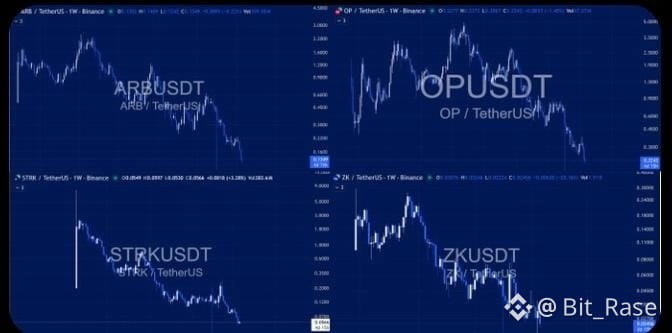
Beyond price performance, many established L2 networks are generating minimal daily fees. OP Mainnet recorded just $7,725 in 24-hour chain fees. Starknet brought in $3,480. Abstract managed $4,221. Near collected $3,174. These are networks with hundreds of millions in total value locked, yet most can't even break $5,000 in daily revenue. 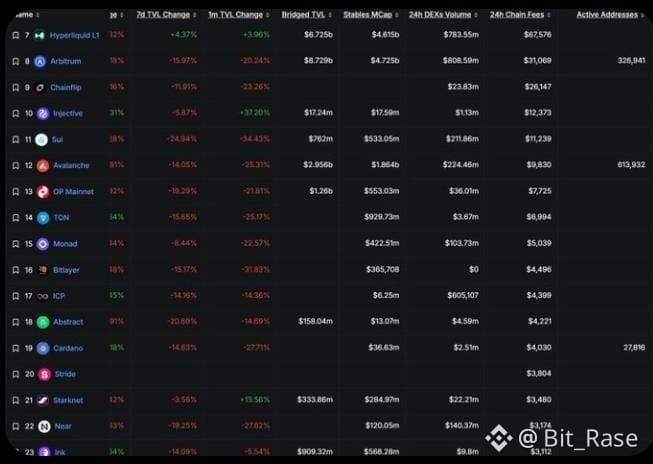
where different layers serve genuinely different purposes.
Rip The Band-aid Off
Vitalik's call for "a new path" is clear: making Ethereum itself more capable.
This doesn't mean L2s are going away. The first-rate students, Base, Arbitrum, and Optimism, have real users, real applications, and real network effects (to some extent). The dozens of other L2s are in their sunsets.
For investors and projects that went all-in on the L2 narrative, this is a painful moment. Billions evaporated. "The next big L2" strategies retire. But for the Ethereum community itself, this might be exactly the reset they need. Rather than offloading marketing and customer acquisition to others, perhaps it's time for Ethereum to muster the courage to face the real market and real users. #Binance #Ethereum


