
I recently conducted in-depth research on the Dusk network. Dusk is a Layer 1 blockchain designed specifically for the tokenization of regulated entity assets. Dusk's uniqueness lies in its privacy-compliance architecture, which provides a fully automated on-chain verification infrastructure while ensuring confidentiality.
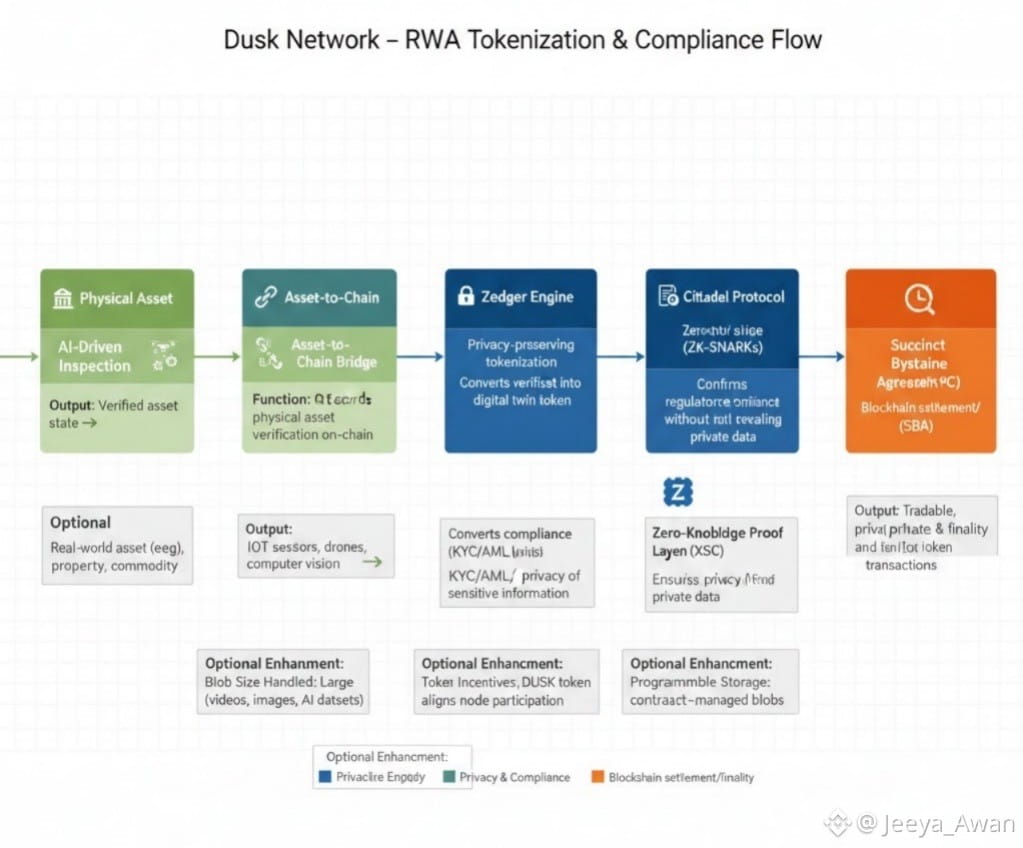 Unlike traditional blockchains, Dusk integrates zero-knowledge proof (ZKP) technology and the Piecrust virtual machine, enabling the direct application of legal and regulatory constraints through smart contracts. This innovation ensures the secure and compliant digitization of entity assets without disclosing any sensitive information.
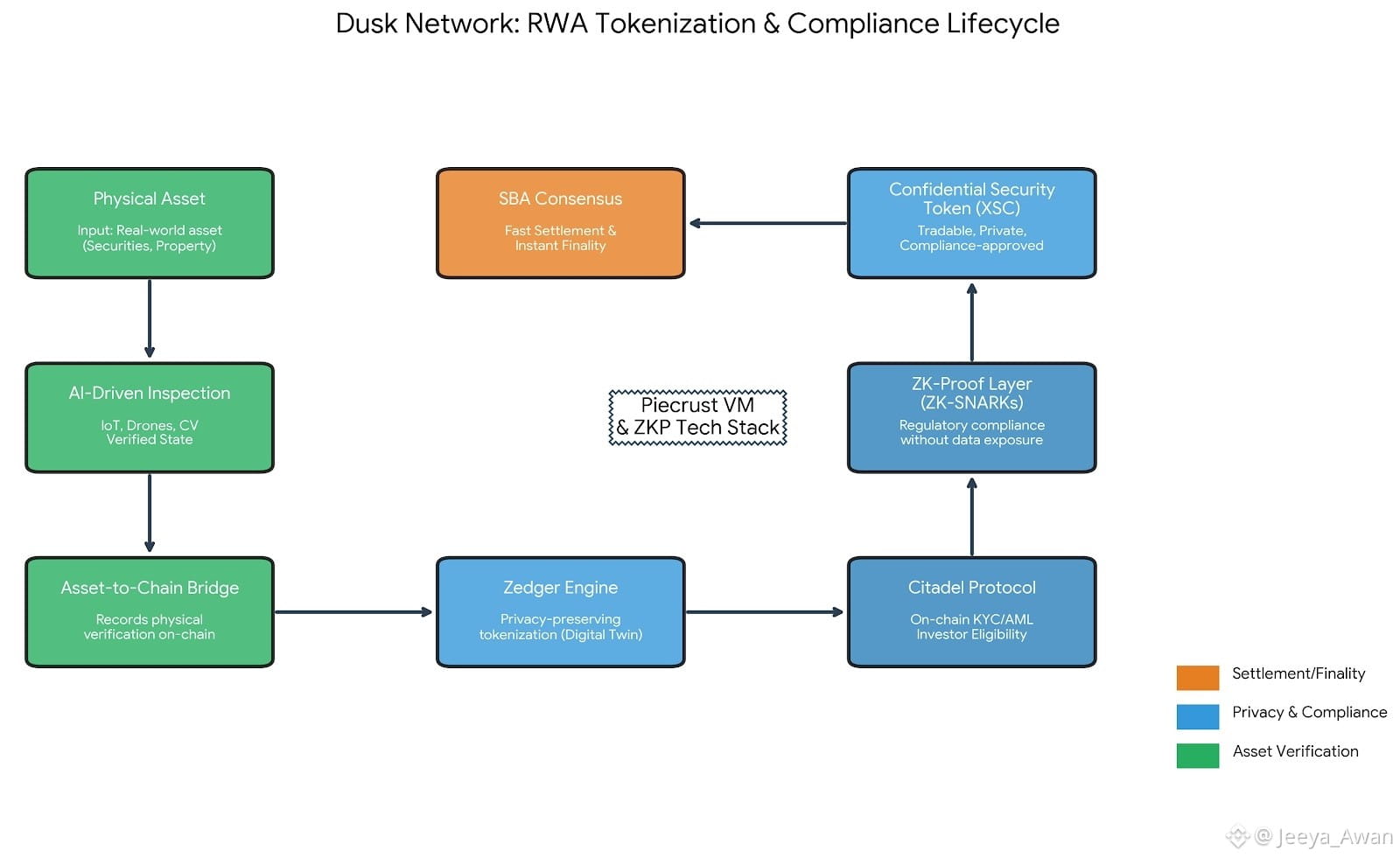
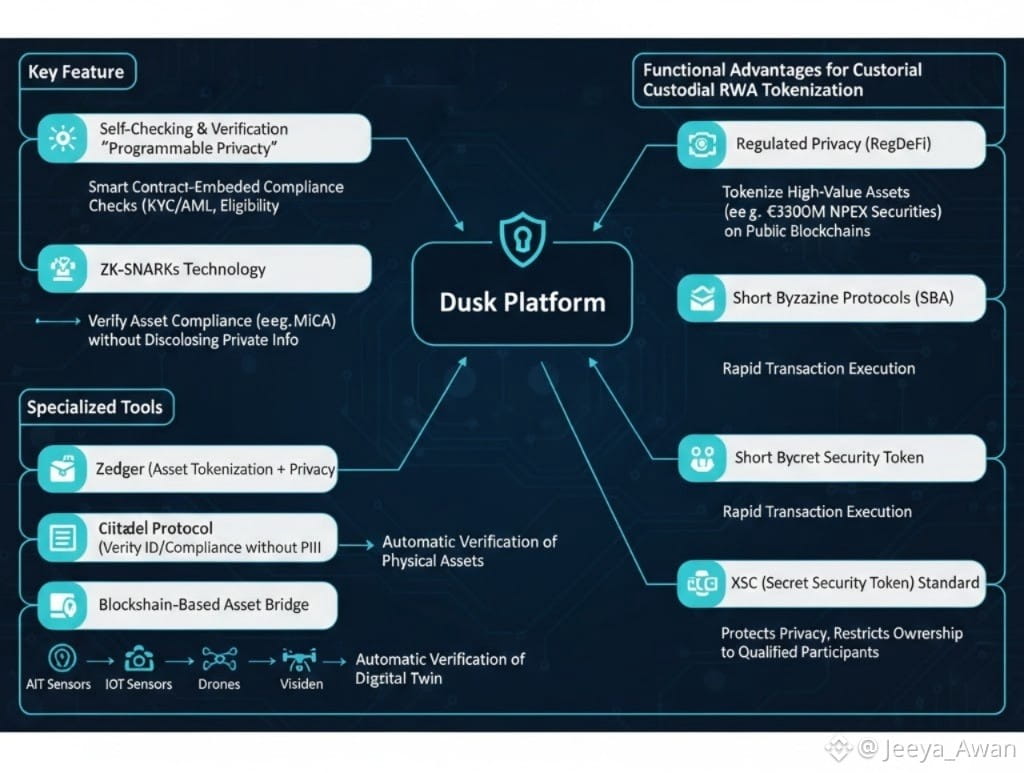
A key feature of Dusk is its self-checking and verification mechanism, often referred to as "programmable privacy." Compliance checks (such as Know Your Customer (KYC)/Anti-Money Laundering (AML) requirements or investor eligibility standards) are embedded at the smart contract level, minimizing reliance on human oversight. The Dusk platform utilizes ZK-SNARKs technology, enabling institutions to verify asset compliance with regulatory standards (such as compliance with the European Securities and Markets Act (MiCA)) without disclosing any private or confidential information.
The network includes specialized tools such as Zedger, enabling asset tokenization while protecting privacy; and the Citadel protocol, which allows participants to verify identity and compliance information without disclosing personally identifiable information (PII). Dusk also supports a blockchain-based asset bridge that integrates AI-driven inspection tools such as IoT sensors, drones, and computer vision systems. This bridge ensures the automatic verification and recording of the physical condition of assets on the blockchain, creating a reliable digital twin that reflects reality.
Functionally, Dusk offers several key advantages for custodial asset tokenization (RWA). Regulated privacy (RegDeFi) allows institutions to tokenize high-value assets (such as the €300 million securities in partnership with NPEX) on public blockchains without disclosing company secrets. Short Byzantine Protocols (SBA) ensure rapid transaction execution, crucial for efficient trading of physical assets. Furthermore, the XSC standard protects privacy while restricting asset ownership and transfer to qualified participants.
Through these innovations, the Dusk network transforms the process of converting physical assets into digital tokens from a document-intensive, manual process into a fully automated, auditable, and standards-compliant blockchain ecosystem. Its integration of privacy, compliance, and automation makes it a leading solution in the digitization of regulated assets and provides a paradigm for how blockchain technology can securely interact with real-world finance.
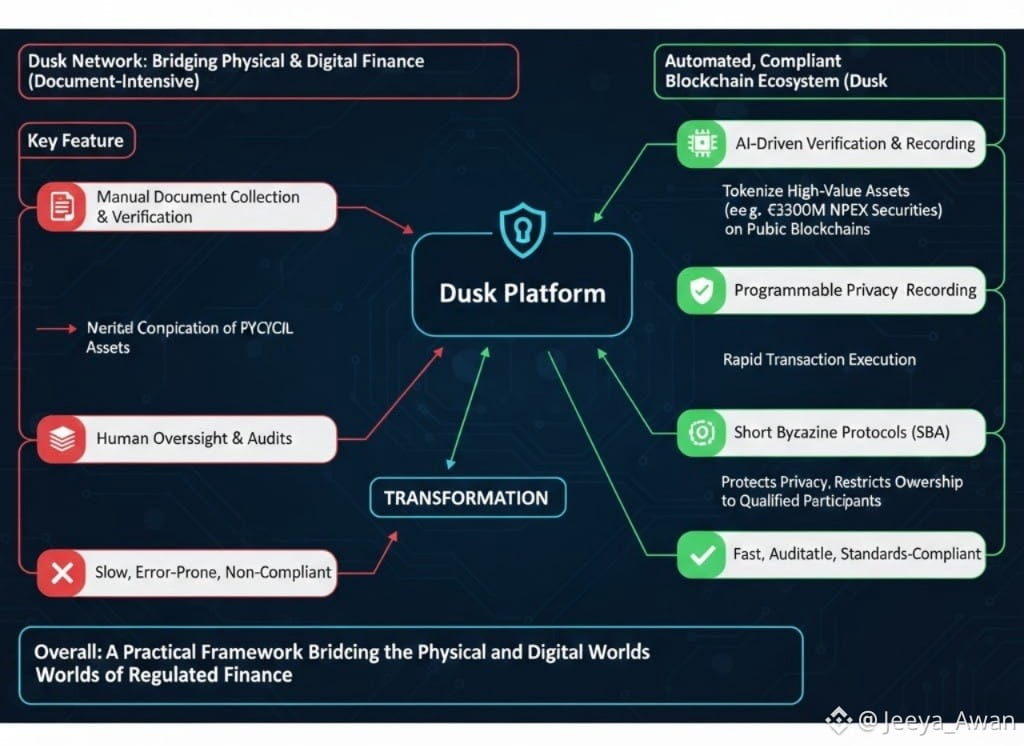
My research confirms that Dusk is not merely a technological innovation, but a practical framework bridging the physical and digital worlds of regulated finance.
