At first glance, Bitcoin’s 2026 performance feels underwhelming. While gold smashes historic highs, silver goes parabolic, and the US dollar quietly loses ground, Bitcoin appears stuck in neutral. Many investors have already written the verdict: Bitcoin missed the move.
That conclusion couldn’t be more misleading.
Bitcoin isn’t failing. It’s being misunderstood. And the reason has nothing to do with fundamentals, adoption, or demand. It has everything to do with time.
The Strange Case of Bitcoin’s “Invisible” Bull Market
Here’s the paradox no one talks about.
During the same period when precious metals soared and the dollar weakened, Bitcoin did not collapse. It didn’t even trend down meaningfully. Instead, it moved sideways just enough to frustrate holders and bore spectators.
But Bitcoin doesn’t trade like gold, stocks, or currencies.
Bitcoin trades all the time.
No closing bell.
No weekends off.
No pause for uncertainty.
That constant availability changes how pressure builds and releases. And in early 2026, that difference became everything.
Weekdays Tell One Story Weekends Tell Another
When Bitcoin’s price action is separated by days of the week, a shocking pattern appears.
From Monday to Friday, Bitcoin behaves exactly like an asset preparing for a breakout. Price grinds higher, momentum builds, confidence returns. The market looks constructive, even bullish.
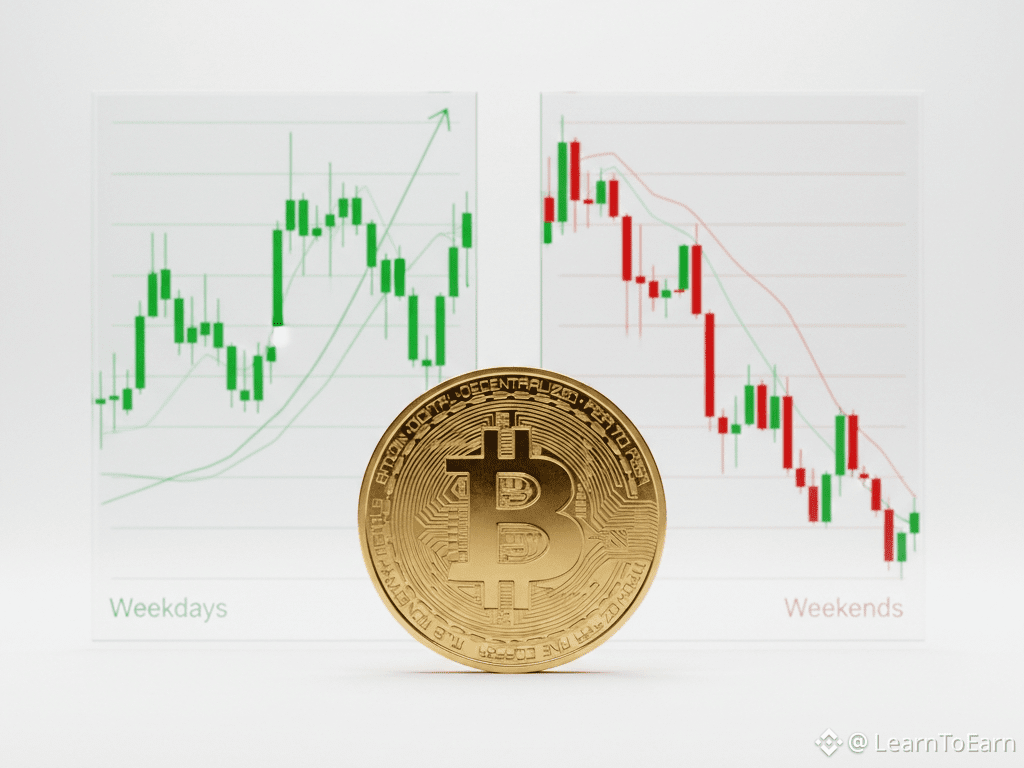
Then Saturday arrives.
Liquidity thins. Headlines get darker. Social media amplifies fear. And Bitcoin becomes the easiest place on Earth to unload risk. By Sunday night, much of the week’s progress is gone.
Repeat this cycle enough times, and the chart lies to you.
Zoomed out, Bitcoin looks stagnant. Zoomed in, it’s fighting a weekly tug-of-war between conviction and anxiety.
Why Bitcoin Absorbs Stress Other Markets Avoid
Traditional markets enjoy structural protection.
Stocks rest on weekends.
Futures pause.
Forex slows.
When uncertainty hits outside market hours, most assets simply don’t respond. Bitcoin does. Instantly.
That makes Bitcoin the world’s most liquid pressure valve.
When fear spikes late Friday night, Bitcoin sells.
When traders want cash on Sunday, Bitcoin sells.
When leverage needs to unwind before Monday, Bitcoin sells.
Not because Bitcoin is weak but because it’s available.
This is the hidden tax of 24/7 trading.
Measuring Bitcoin the Wrong Way Masks the Truth
Most investors judge performance in dollars. That’s already a mistake during periods of monetary stress.
When fear rises, people don’t measure wealth in fiat. They measure it against what holds value.
Gold.
Silver.
Energy.
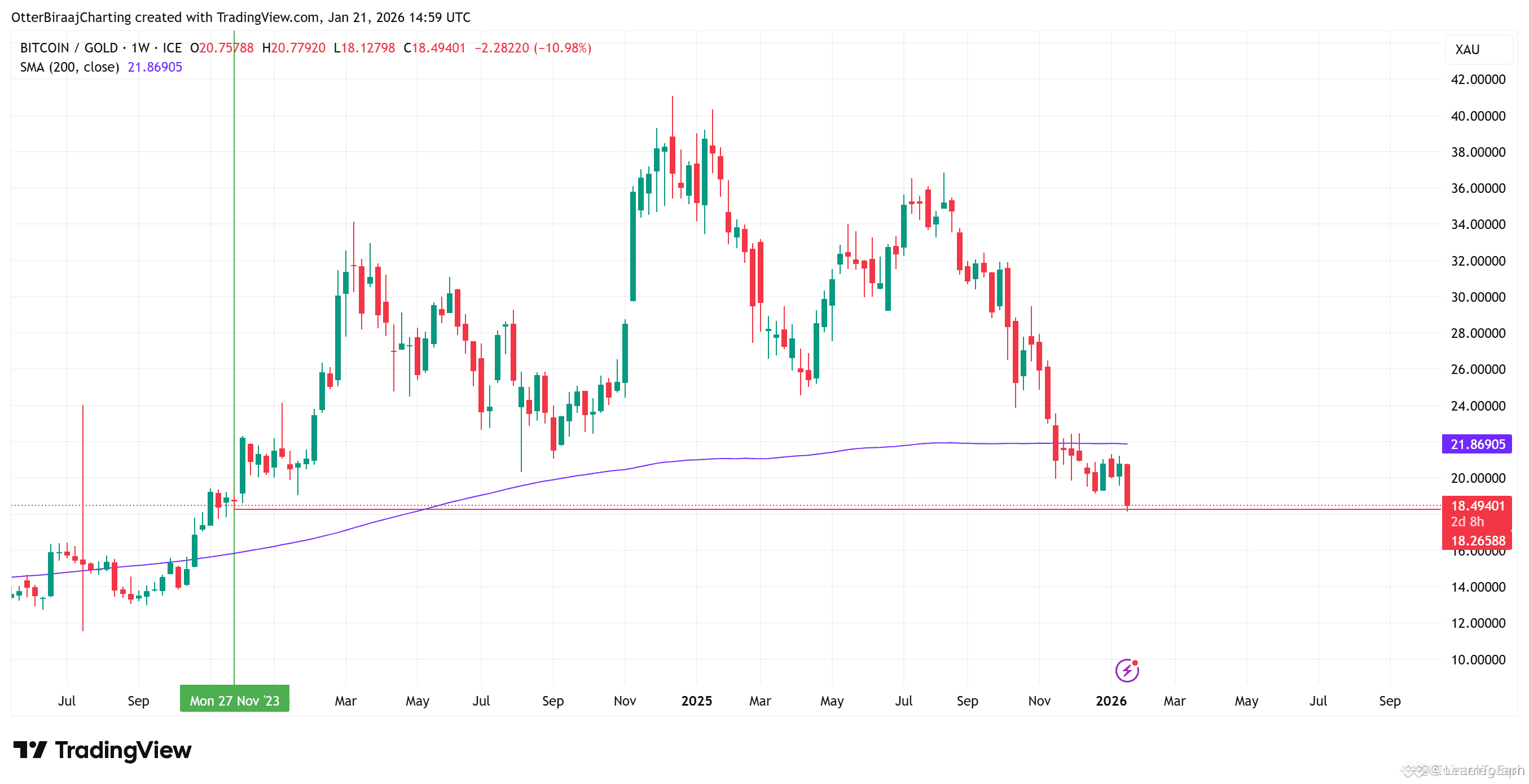
Against those assets, Bitcoin quietly lost purchasing power not because it collapsed, but because it failed to keep pace during a moment when safety trades dominated.
That’s the real frustration investors feel, even if they can’t articulate it. Bitcoin didn’t crash but it didn’t protect them either.
Bitcoin Is Acting Like Risk, Not Refuge
Despite its reputation as “digital gold,” Bitcoin’s recent behavior aligns far more closely with risk assets than with safe havens.
When stocks wobble, Bitcoin reacts. When metals surge, Bitcoin hesitates. When liquidity tightens, Bitcoin feels it first.
This doesn’t mean Bitcoin has lost its long-term thesis. It means its current role in portfolios hasn’t fully matured.
In moments of uncertainty, Bitcoin is still treated as something to reduce not something to hide in.
The Weekend Problem Is the Real Battleground
If Bitcoin wants to reclaim its anti-fiat narrative, the solution is surprisingly simple and brutally difficult.
It must stop bleeding on weekends.
That doesn’t require explosive rallies or viral headlines. It requires resilience. Flat weekends. Stable closes. Confidence that doesn’t vanish when traditional markets shut down.
Institutional flows matter here. Long-term capital doesn’t panic-sell on Sunday mornings. Deeper liquidity dulls emotional moves. Stability breeds trust.
Until that balance shifts, Bitcoin will continue to look disappointing on monthly charts even while building strength beneath the surface.
Why This Still Looks Like a Bull Market in Disguise
Here’s the part most people miss.
Bitcoin didn’t fail to rally because demand disappeared. It failed because selling pressure concentrated in a specific time window. That’s not a death sentence that’s a structural flaw waiting to be solved.
Every weekday showed intent. Every weekend erased it.
Fix the leak, and the chart rewrites itself.
The Emotional Reality Behind the Price
Markets are human before they are mathematical.
Monday feels hopeful.
Midweek feels rational.
Friday feels confident.
Saturday feels anxious.
Sunday feels desperate.
Bitcoin priced that emotional cycle with brutal honesty.
It became the mirror for modern uncertainty always open, always reacting, always absorbing what other markets delay.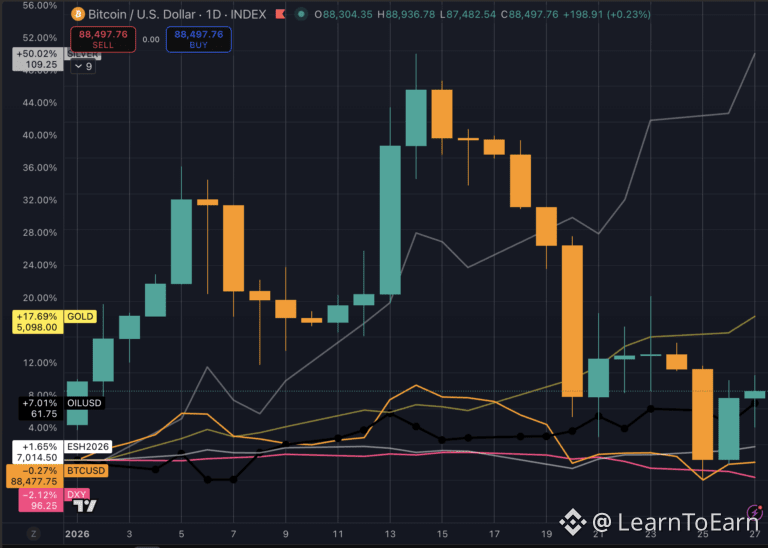
Final words: Bitcoin’s Issue Isn’t Demand It’s Timing
Bitcoin’s 2026 story is not about collapse or stagnation. It’s about when price moves happen, not whether they happen.
Take away the weekend damage, and Bitcoin looks alive. Strong. Relevant.
Meanwhile, the dollar keeps slipping, metals keep rising, and Bitcoin waits still liquid, still global, still open for the moment when confidence stops clocking out on Friday night.
The bull market didn’t disappear.
It just keeps getting postponed until Monday.