


For a long time we thought about storage as a simple place You put data somewhere and hope it stays there This idea worked for a while in traditional computers and cloud systems but it is not enough for the new world of decentralized technology
Walrus has a different approach It treats storage not as a place but as something that is always happening When data comes in it is not just stored somewhere and forgotten The system breaks it into strong pieces spreads them across different nodes and continuously checks them This way the data is protected even if some parts fail or some machines go offline
Over time things change Some data fragments fade Some network paths change and some machines may disappear This is normal in any decentralized system Walrus does not panic It keeps watching and when it finds a weak spot it repairs it When something is missing the system rebuilds it This is not an emergency this is everyday maintenance This makes storing data feel more like taking care of a living thing rather than stacking boxes in a storage room
Encoding is how data is planted into the system It divides the data into multiple fragments that can be reassembled even if some parts are lost Repair is how small problems are kept small Continuous maintenance is how data stays healthy and accessible for years All of this work is shared The community of nodes helps keep the system in good shape and in return the system ensures that everyone’s data remains usable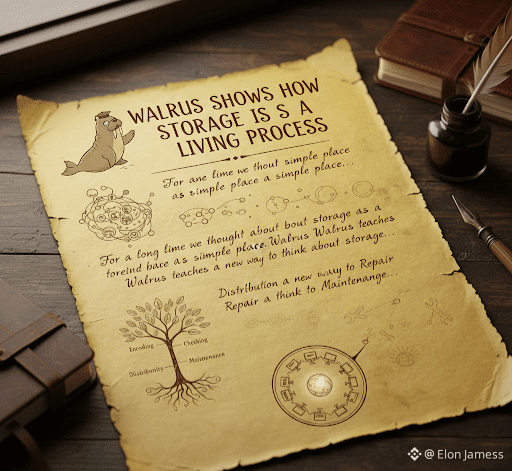
Walrus is also designed to expect change It does not ask for the network to be perfect Instead it is built to handle failures machine loss and network changes without stopping This makes it highly resilient and reliable even in the real world where things rarely stay the same
The key idea is that storage in Walrus is an ongoing process It is encoded distributed checked repaired and maintained constantly This makes it different from traditional systems where data is assumed to be safe just because it is stored somewhere Walrus makes sure the data is actually usable over time
This approach has big advantages for decentralized applications In traditional storage the data sits in one place and you have to fetch it before you can use it Walrus allows data to remain available verifiable and integrated with the network so applications can interact with it directly This is important for Web3 projects like decentralized websites NFTs or data marketplaces where availability and trustless verification are essential
Walrus also reduces waste compared to older decentralized storage systems It does not need to keep full copies on every machine Instead it uses encoded fragments so even if several nodes fail the data can still be restored This makes the system faster cheaper and more efficient than older replication-based approaches
The system is community driven and self sustaining The nodes participate in storage maintenance and in return the network shares rewards This keeps incentives fair and ensures the system continues to operate reliably even as the network grows or changes
In short Walrus treats storage as a living ongoing process not a fixed place Data is encoded distributed checked repaired and maintained continuously The network is built to handle change and failures gracefully The system is shared so everyone contributes to keeping it strong and reliable This approach makes storage more like caring for a living thing and less like storing boxes in a room It ensures data stays healthy and usable for years while being efficient and resilient
Walrus is teaching a new way to think about storage One where change is normal resilience is built in and data is never forgotten It is not asking for perfection it is designed to last in a world where nothing stays in one place forever

