
Most Web3 teams talk about performance first. Faster reads faster writes lower latency. Speed looks impressive in demos. But speed rarely decides whether a product survives. Ownership does. Storage systems fail most often when nobody knows who owns the data over time. Walrus is built by focusing on this silent problem that appears long after launch.
In the early days everything feels clear. A feature creates data. A team owns it. The purpose is obvious. The system feels tidy. As months pass things change. Features are removed. Logic is replaced. Teams rotate. The data stays exactly where it was. No one deletes it because no one feels confident enough to touch it. Nothing breaks so the safest action becomes doing nothing.
This is how ownership disappears. Data exists without a responsible owner. It still participates in checks. It still affects reads. It still adds weight to the system. Over time this forgotten data shapes behavior in ways nobody planned. When load increases the system feels unstable. Teams blame traffic but the real issue started much earlier.
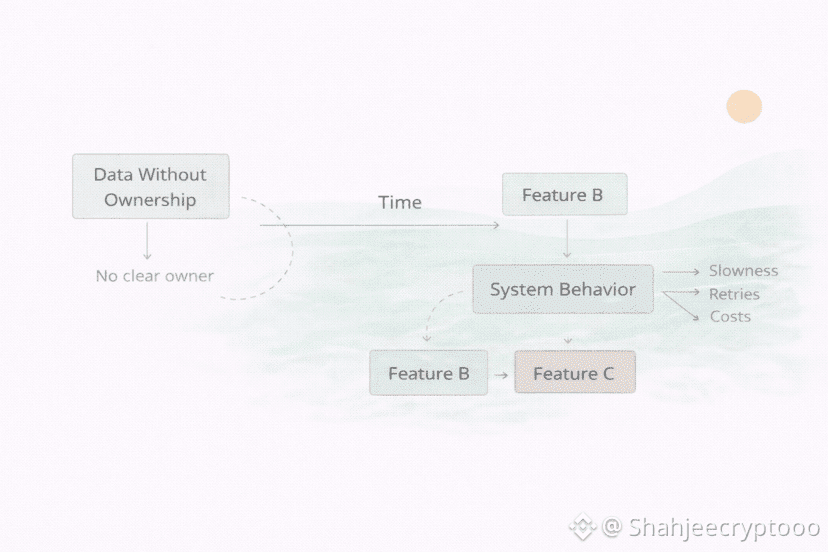
Many storage systems assume data can exist safely forever. This assumption works only in short timeframes. Over long periods it becomes risky. Old data carries old rules. Permissions that once made sense remain active. Access paths that were temporary become permanent. When pressure arrives these outdated rules collide with new logic.
Walrus treats ownership as a first class rule. Data is not just written. It is assigned responsibility. Someone owns its presence. Someone defines when it should end. This clarity changes behavior across the system. Cleanup becomes normal instead of dangerous. Teams are not afraid to remove data because rules are explicit.
Ownership also improves communication inside teams. New developers can understand why data exists. They do not rely on tribal knowledge. The system explains itself through structure. This reduces mistakes and shortens onboarding time. Systems that explain themselves age better than systems that rely on memory.
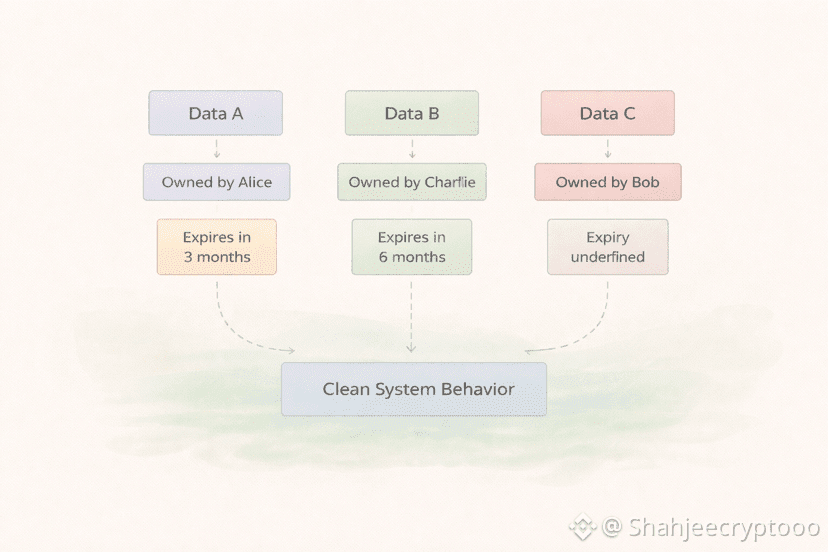
Another quiet benefit is cost control. Forgotten data still consumes resources. It increases storage size. It increases lookup time. It increases validation checks. Over months this becomes expensive without obvious cause. Walrus limits this by encouraging cleanup through clear ownership. Data that no longer has a purpose does not silently drain resources.
User experience also improves indirectly. Users never see ownership rules. They feel consistency. Apps behave the same week after week. There are fewer strange slow days. Fewer unexplained delays. Trust builds without marketing because the system feels reliable.
Many outages blamed on scale are actually ownership failures. Data without owners creates uncertainty. Uncertainty creates risk. Risk appears as instability under load. Walrus removes this chain by addressing the root cause early.
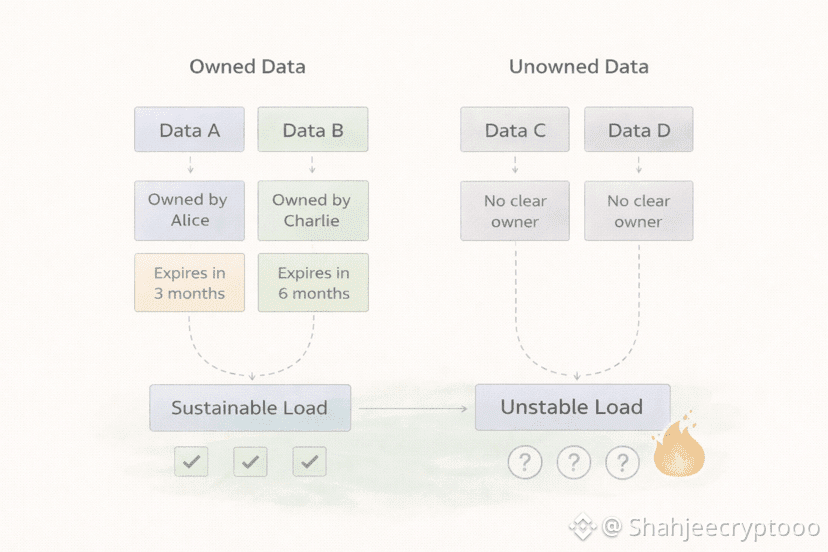
Ownership also protects decentralization. Nodes are not forced to carry unknown baggage. Participation stays fair. Contributors are not punished by hidden historical weight. The network stays healthier over time.
Speed can be optimized later. Ownership cannot be added easily after years of neglect. Walrus prioritizes what is hardest to fix early. By making ownership explicit it prevents systems from accumulating silent risk.
Products that last are not built only on speed. They are built on clarity. Walrus builds storage that knows who is responsible and for how long. This simple idea protects systems from their own past and keeps the future predictable.
