

$WAL was designed to support a specific behavior: long-term reliability. Many tokens reward activity spikes. More usage means more value. That logic does not work for data availability. Data matters most when activity slows down, not when it peaks.
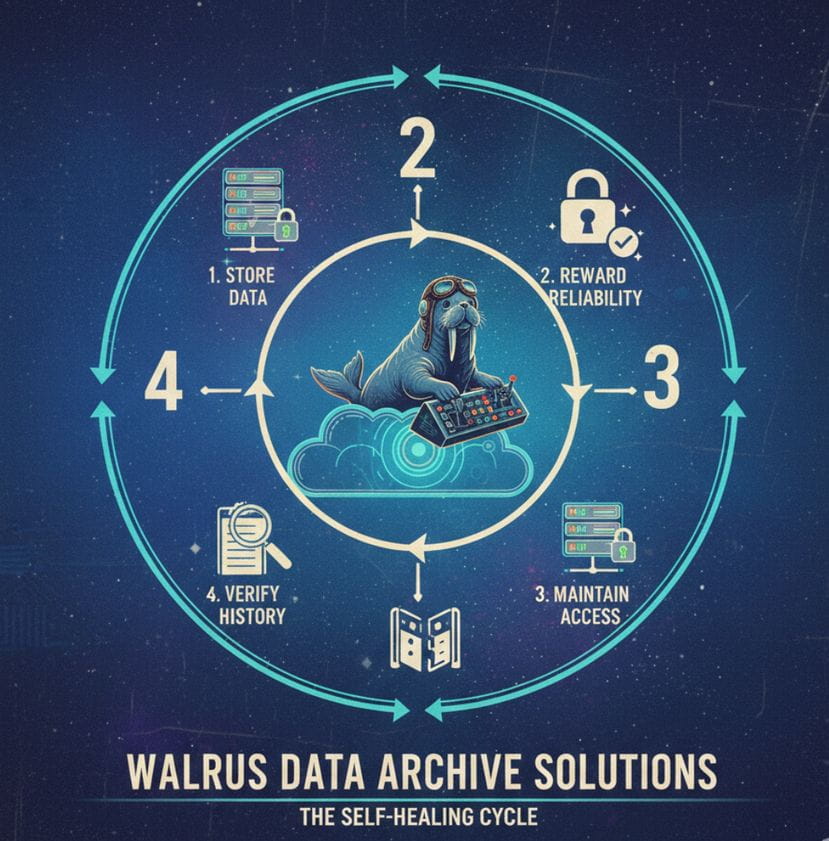
Walrus aligns incentives differently. Nodes are paid to stay online, keep data accessible, and behave honestly over time. There is no shortcut to earning. There is no benefit to cutting corners. Reliability is the work.
This makes $WAL closer to an operational token than a speculative one. It exists to coordinate behavior across many independent participants. It turns storage into a shared responsibility rather than a burden carried by a few.
Because Walrus does not execute transactions or manage state, it avoids hidden growth problems. There are no balances to inflate storage costs. There is no expanding execution layer. The system stays focused on availability only.
This restraint is intentional. It keeps Walrus predictable and sustainable. As time passes, predictability becomes more valuable than complexity.
When users or systems need to verify the past, they depend on data being there. Walrus ensures that dependency does not turn into trust. $WAL makes that possible by keeping incentives aligned even when attention is gone.
Infrastructure like this rarely looks exciting early. Its value becomes obvious later. When systems age. When data is old. When proof is needed and shortcuts fail.
Walrus was built for that moment.
