


Dusk opens clean.
The payment leg finalizes where it always does. Quiet. On time. The Dusk's settlement operator watches it because it is the only thing they're entitled to see close. The number lands. The state seals. Nothing argues back.
So they keep watching it.
Minutes stretch, but not enough to trip language. Not enough to justify a hold. Delivery is assumed to be walking in step because that is what DvP on Dusk promises when nothing looks wrong. The operator treats it as atomic because the last visible signal stayed green.
On Dusk, that green is scoped. Scope is the credential boundary... not the dashboard though.
The delivery confirmation exists, but not here. Not on this screen. Not for this role. What arrives instead is absence that looks like patience. Refresh. Same result. Final enough to act. Not enough to fill the close-out line "release basis under current scope", explaining why it was safe to release.
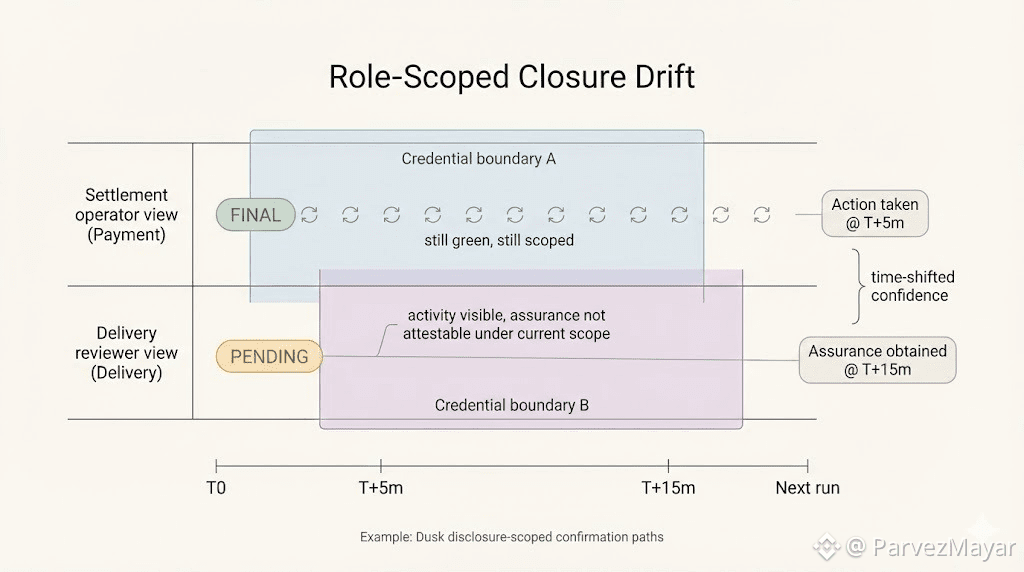
Routing continues because reversing would mean naming uncertainty the system hasn't forced. Nobody wants to be the first to hold when the chain already looks "done', and holding isnot passive either. To hold, the operator has to pull in a reviewer who wasn't entitled five minutes ago, and that changes the file, not just the mood in the room.
So you keep moving on partial closure. Payment is booked as if it's aligned. The other leg is still a question you are not allowed to ask out loud.
Somewhere else, a reviewer is stalled on the delivery side. They see activity but not assurance. The leg they care about hasn't crossed the line they're allowed to treat as reliable. They don't escalate because nothing violated a rule. They do not block because blocking requires a basis they can forward without widening scope. They mark it pending and keep the memo open.
By the time both sides are confident in their own view, they're confident about different timestamps. Payment is already being treated as aligned. Delivery on Dusk is still waiting for a confirmation that can't be pulled forward without changing who gets to see what.
When someone tries to write the sequence down later, it turns into an argument about "when we acted", not 'what happened'... There is not a shared moment to cite. Under Dusk's disclosure rules, confidence is role-specific, time-shifted and mostly invisible to anyone outside the entitlement set that saw it form.
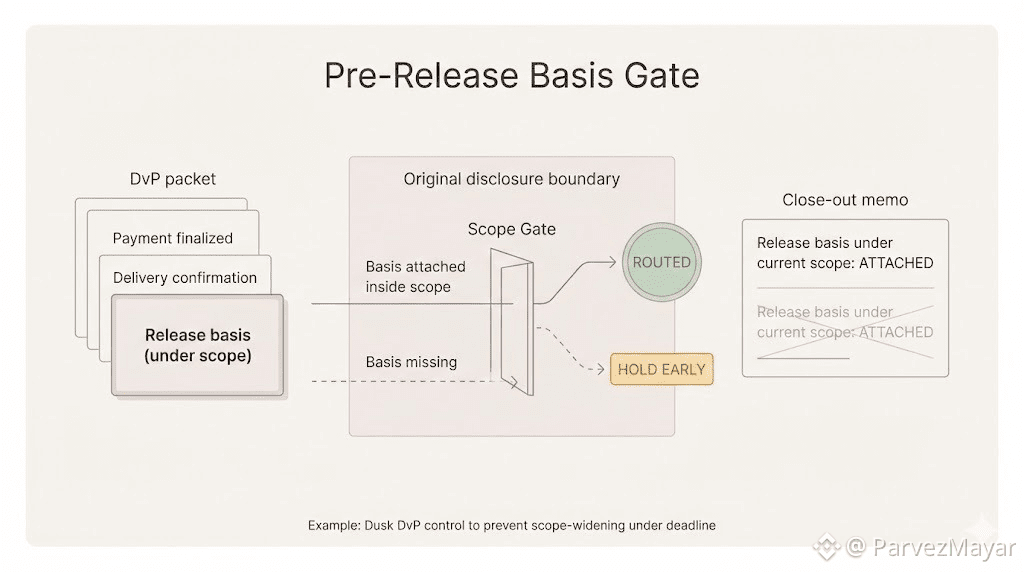
So the coping move shows up before the next run.
A new pre-check gets stapled to the DvP workflow: attach the basis for release inside the original disclosure boundary before routing, or hold earlier by default. Next time, the hold starts earlier. Not for risk... for paperwork under scope. #Dusk
