

Honestly, @Walrus 🦭/acc is starting to feel different from a lot of other crypto projects out there. Sure, the decentralized blob storage on Sui is impressive, but what’s really catching my eye lately is how seriously they take the “boring but important” stuff—like who gets paid what and who gets to decide big changes. In crypto, once the hype fades, solid ops and fair rules are what keep things alive long-term. Walrus gets this. They deliberately keep everyday node-running tasks completely separate from the dangerous stuff: withdrawing your earned commissions and approving protocol upgrades. It’s a simple but powerful choice that screams “we’re thinking about security and sustainability, not just launches.”
Over the last few months, you can actually feel the network waking up. More people are spinning up nodes, governance votes are happening in public, and it’s shifting from whitepaper vibes to real, working decentralization. When you dig into how commissions and governance actually work, it becomes pretty obvious why $WAL feels built to stick around.
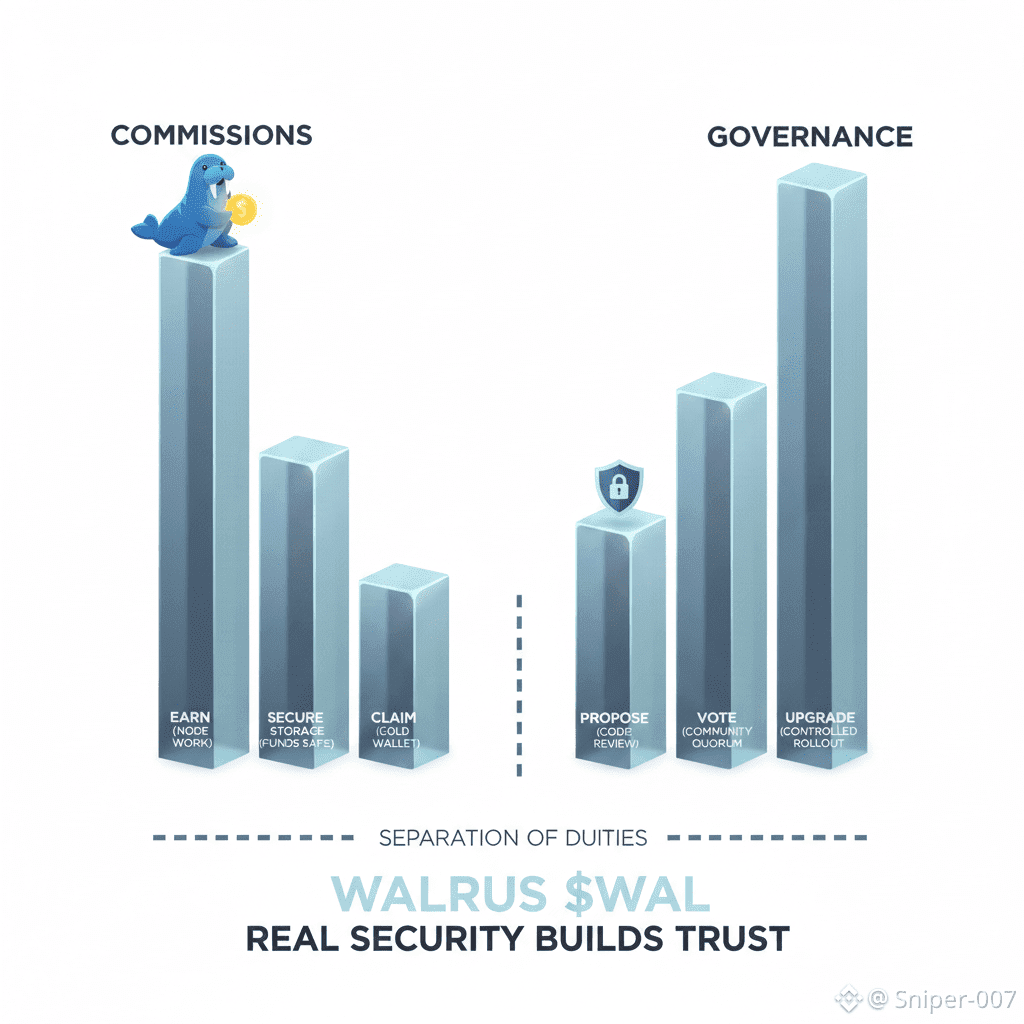
Why This Stuff Actually Matters
Nodes put in work storing and serving blobs → they earn commissions. At the same time, the whole protocol needs a safe, un-rushable way to upgrade its core contracts. If you kept both of those powers in the same hot wallet sitting on your always-online node… yeah, that’s a hacker’s dream. One breach = funds gone + potentially malicious code pushed to the network. Walrus said nope to that nightmare. They force separation: normal node config lives one place, but touching commissions or signing upgrades requires special, ideally offline authorization. It’s basic opsec 101, but applied thoughtfully to a live storage network.
Splitting Duties = Way Less Panic
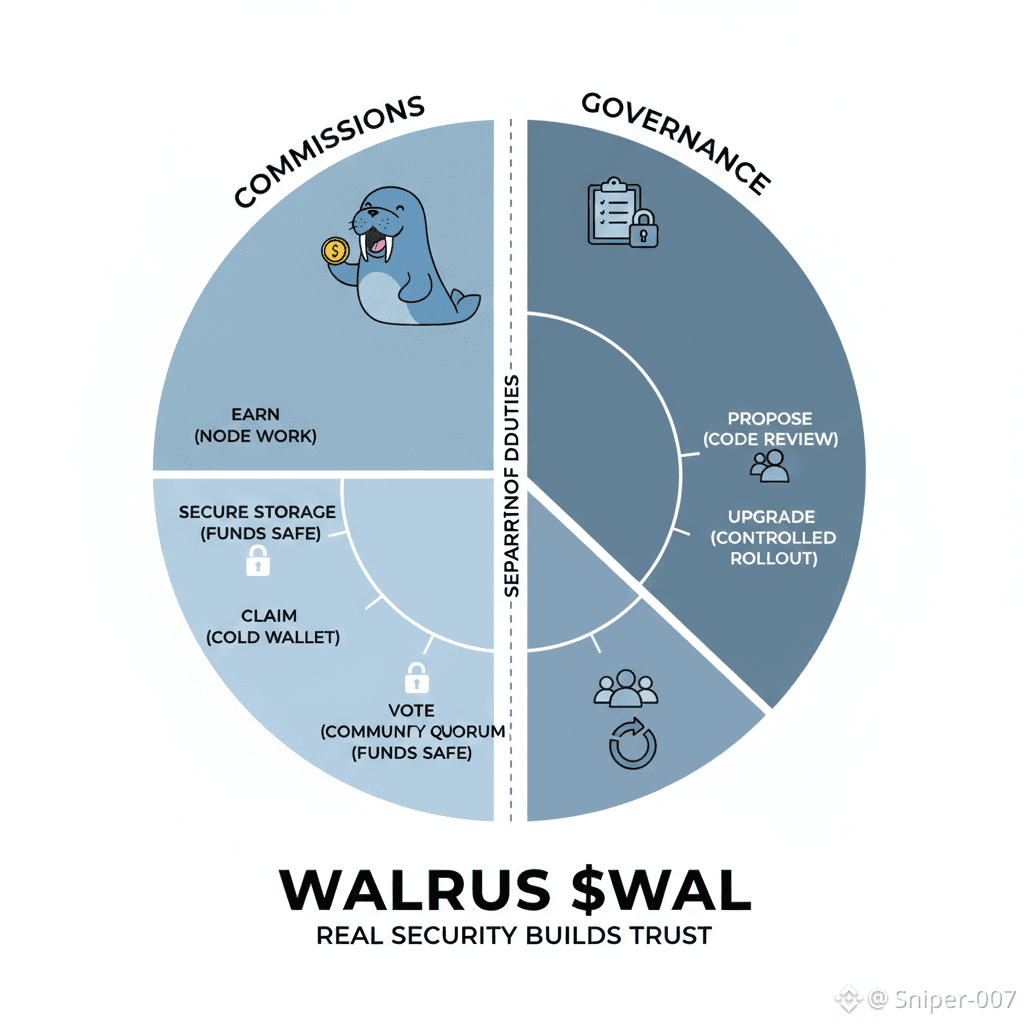
You can tweak most node settings automatically through config files—no big deal. But pulling commissions or voting on upgrades? That requires explicit permission from a designated secure address. The team keeps hammering home: please don’t keep those keys on the node machine. Use a hardware wallet, a cold setup, whatever—just keep them isolated. If your server gets owned or your node crashes hard, your earnings and your governance power stay safe. As someone who’s run nodes before, that kind of peace of mind is huge.
You Choose Who Gets Paid & Who Votes
One thing I really like: total flexibility. The commission receiver address and the governance authority can be (and usually should be) completely different wallets/objects. No forced coupling. You update these through either the CLI (for the terminal lovers) or the super clean web dashboard in the official staking portal. Whether you’re a command-line wizard or someone who just wants to click a few buttons, it works.
The Web Dashboard Makes Life Easy
Let’s be real—most people aren’t going to love typing long CLI commands. The web interface is honestly great: connect wallet → pick your node → follow the steps → boom, set your commission receiver or governance delegate. Same place lets you claim your earnings with a couple clicks and send them straight to your secure address. It’s approachable without being dumbed down, and that’s probably why more regular folks are jumping in to run nodes.
Commission Collection Done Right (No Surprises)
Only the authorized wallet can ever touch the commissions. Period. No accidental transfers, no “oops I copied the wrong address,” no funny business. You stay in full control of your rewards. And because it’s designed this way, it’s very natural to use cold storage or multisig for those funds. For a network whose whole job is safeguarding valuable user data, that level of financial hygiene feels appropriate.
Governance & Upgrades: Slow & Collective on Purpose
Upgrades aren’t dictator-style. They need votes from a quorum of node operators. One person can’t just push whatever they want. When a proposal drops, everyone gets the exact same git commit hash/code version to review. You vote yes/no on that specific artifact. There’s a clear voting window so things don’t drag on forever. It’s deliberate, transparent, and anti-rush.
This Is How You Actually Earn Trust
When changes require broad operator agreement and real code review, the network can’t be casually hijacked. Operators actually read proposals (or at least should), which makes decisions more considered. For users storing data, builders building on top, and investors holding $WAL—this kind of maturity matters. It shows the project cares about long-term health over short-term pumps.
Rolling Out Upgrades Without Drama
Once the votes clear the threshold, execution is controlled: gradual component migration, no sudden “everything breaks at block X.” Some upgrades apply instantly, others wait for the next epoch boundary. Flexible enough to move fast when needed, safe enough to avoid chaos.
Why It Feels Important Right Now
Walrus is gaining real traction because it’s showing operational adulthood. Commission flows and governance aren’t side features—they’re baked in with strong constraints from day one. As node count grows and more real value gets stored, these systems will only become more critical. $WAL is part of a network that clearly prefers careful scaling over reckless speed.
Personal Take
Coming from someone who’s watched plenty of projects implode from bad governance or sloppy key management—this feels refreshingly adult. Clear roles, minimized blast radius, no single points of catastrophic failure. If you’re looking at WAL beyond a quick trade, these details are exactly what make you think “okay, they might actually pull this off long-term.”
Bottom Line
Walrus ($WAL) commission & governance design is a textbook example of doing the unsexy things right. Strict separation of sensitive powers, secure-by-default patterns, community voting for upgrades, and tools that don’t scare normal people away—it all adds up to a balanced, trustworthy decentralized storage protocol. As it keeps growing, these foundations are what should give people confidence that Walrus is here to stay.
