

wanted to understand something that almost every summary about Newton skips.
most explainers focus on "authorization before settlement." that's true, but it isn't the design decision that kept me reading.
what actually caught my attention was much quieter.
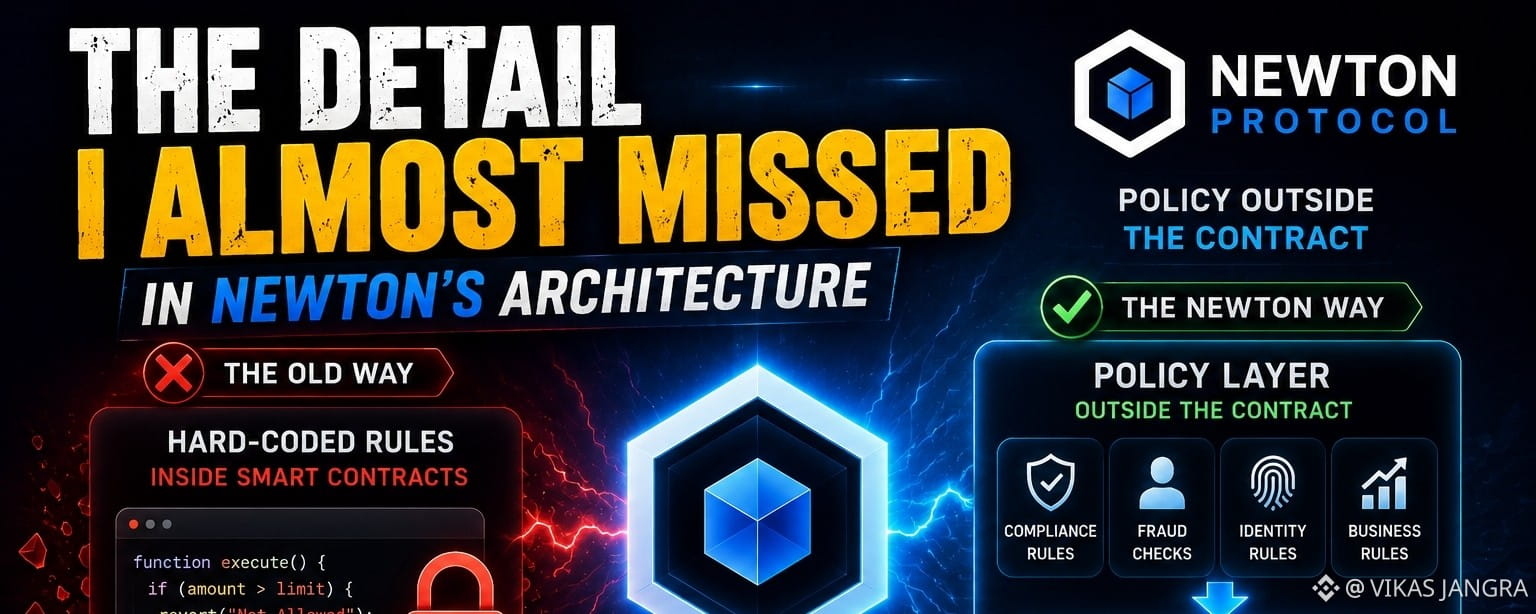
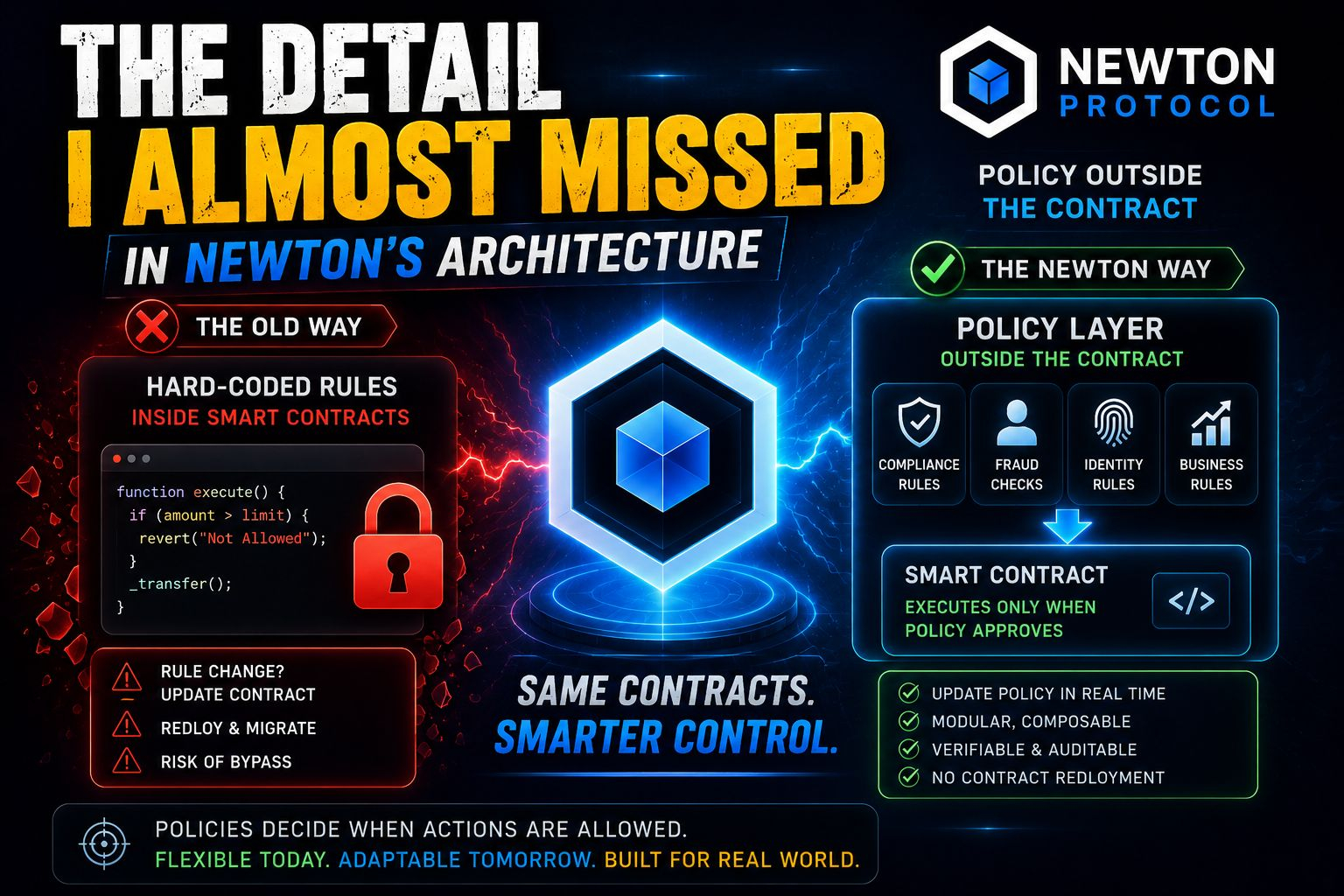
Newton doesn't ask developers to hardcode compliance, fraud checks, or business rules directly into smart contracts. instead, it separates the policy from the contract itself.
the application stays largely the same while the policy layer can evolve independently.
that sounds like a minor engineering detail until you compare it with how many blockchain applications normally work.
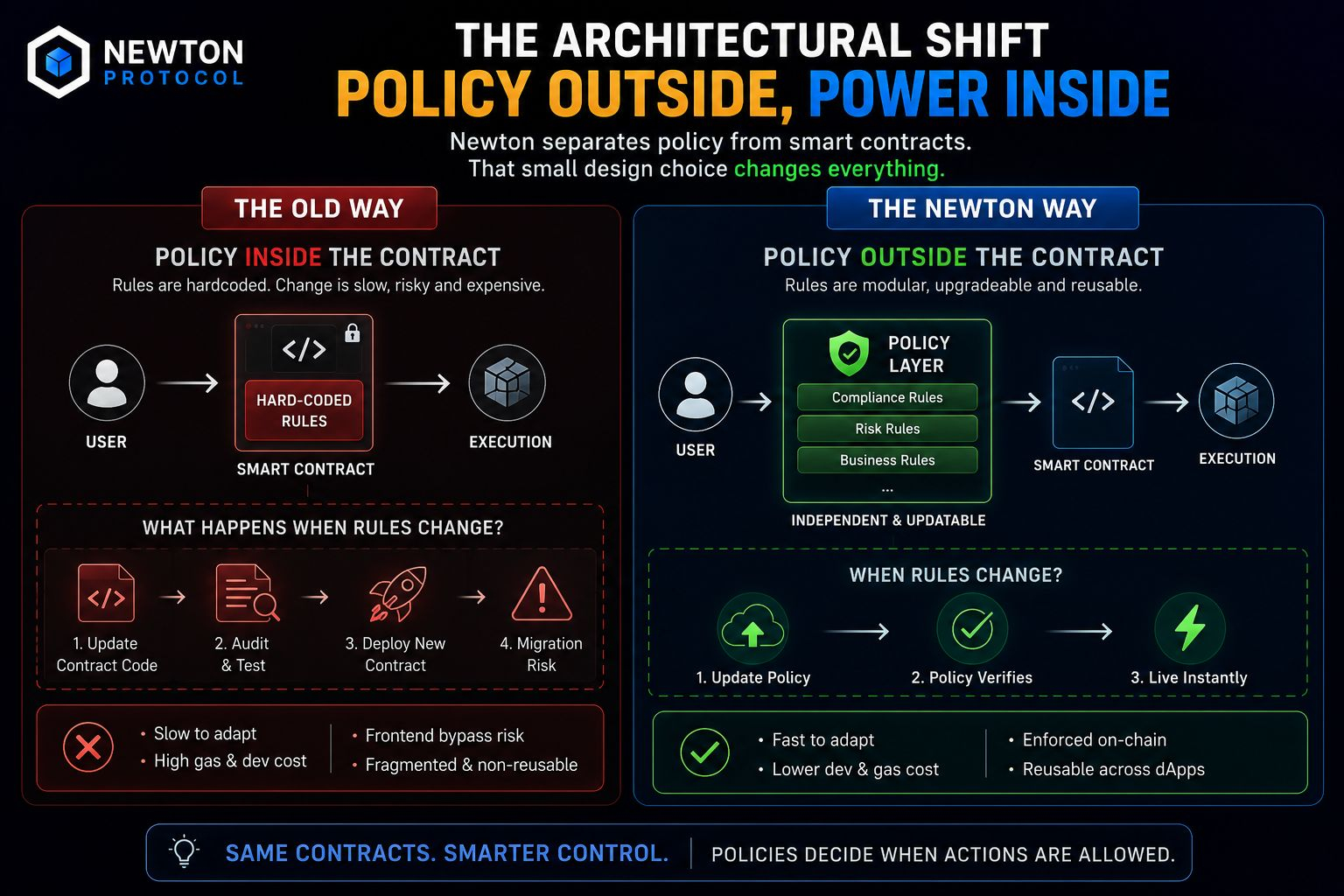
traditionally, changing an important rule often means updating contract logic, deploying new versions, or relying on frontend restrictions that can sometimes be bypassed through direct contract calls.
Newton is trying to move those decisions into a reusable policy layer that sits between intent and execution, instead of inside the application itself.
the more i thought about it, the more it reminded me of trading.
when i change my own risk rules, i don't rewrite my entire trading strategy from zero.
i adjust the risk framework while keeping the core system intact.
Newton seems to apply a similar philosophy to onchain infrastructure.
the contracts keep doing what they were designed to do.
the policies decide under what conditions they are allowed to do it.
that separation feels more important than i first realized.
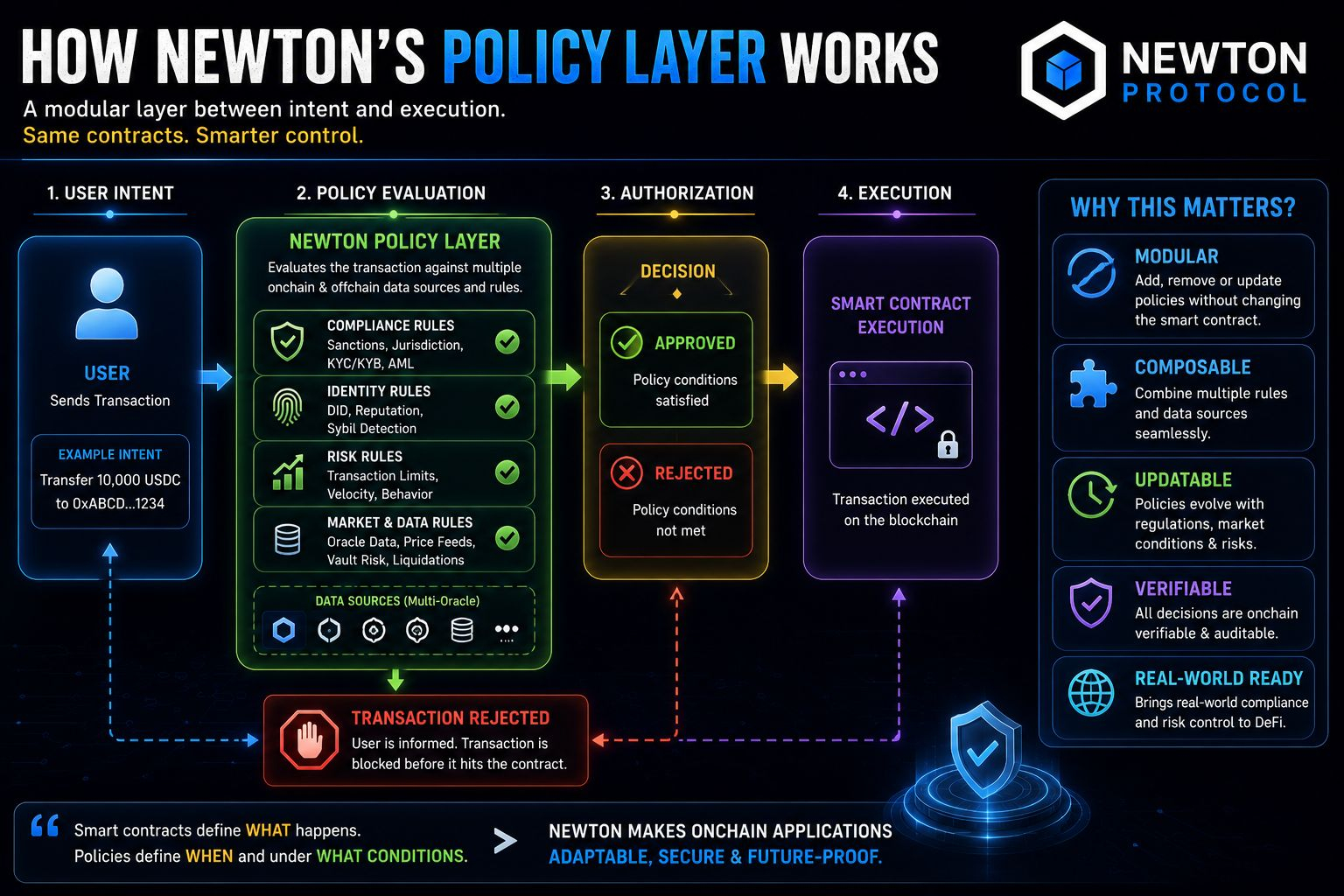
Magic Labs recently described the same advantage in a slightly different way: policies become modular, composable, updatable, and verifiable instead of being permanently baked into contract code.
if regulations change or new oracle providers become available, developers can update policies without redesigning the whole application.
that doesn't automatically make the system perfect.
moving logic into a policy layer also creates another critical dependency.
if the policy itself is poorly written...
or the external data feeding that policy becomes unreliable...
the contract may still execute the wrong decision even though every cryptographic proof verifies correctly.
good architecture doesn't remove judgment.
it changes where that judgment lives.
that's the part i'm still thinking about.
i actually prefer projects that leave me with unanswered questions instead of pretending every problem has already been solved.
worth saying the same thing i say in every article:
i'm separating protocol quality from token performance.
NEWT still has future unlocks ahead, circulating supply remains below one quarter of total supply, and adoption—not architecture alone—will determine whether the network captures meaningful long-term value.
the technical design genuinely interests me.
whether developers choose to build around it at scale is the question that matters far more.
what do you think is harder in Web3...
writing secure smart contracts...
or writing policy rules that thousands of different applications eventually trust?