
There was a time when I went into a hospital just as the power went out across the neighborhood. Strangely, inside, almost nobody seemed to notice. The lights didn’t turn off, the ventilators kept running, and the operating room continued as usual. The reason wasn’t that the hospital didn’t lose power, but that from the start they accepted that power loss was something that would happen. The backup generator didn’t exist to prove that the system was strong—it existed to prove that the system had prepared for when the system’s power was no longer enough.
I think about that a lot when looking at blockchain infrastructure. Most systems are evaluated by speed, throughput, or transaction costs under normal conditions. But market history rarely unfolds in normal conditions. A major liquidity pull, an unexpected attack, or a policy change can render assumptions that used to be correct meaningless within just a few minutes.
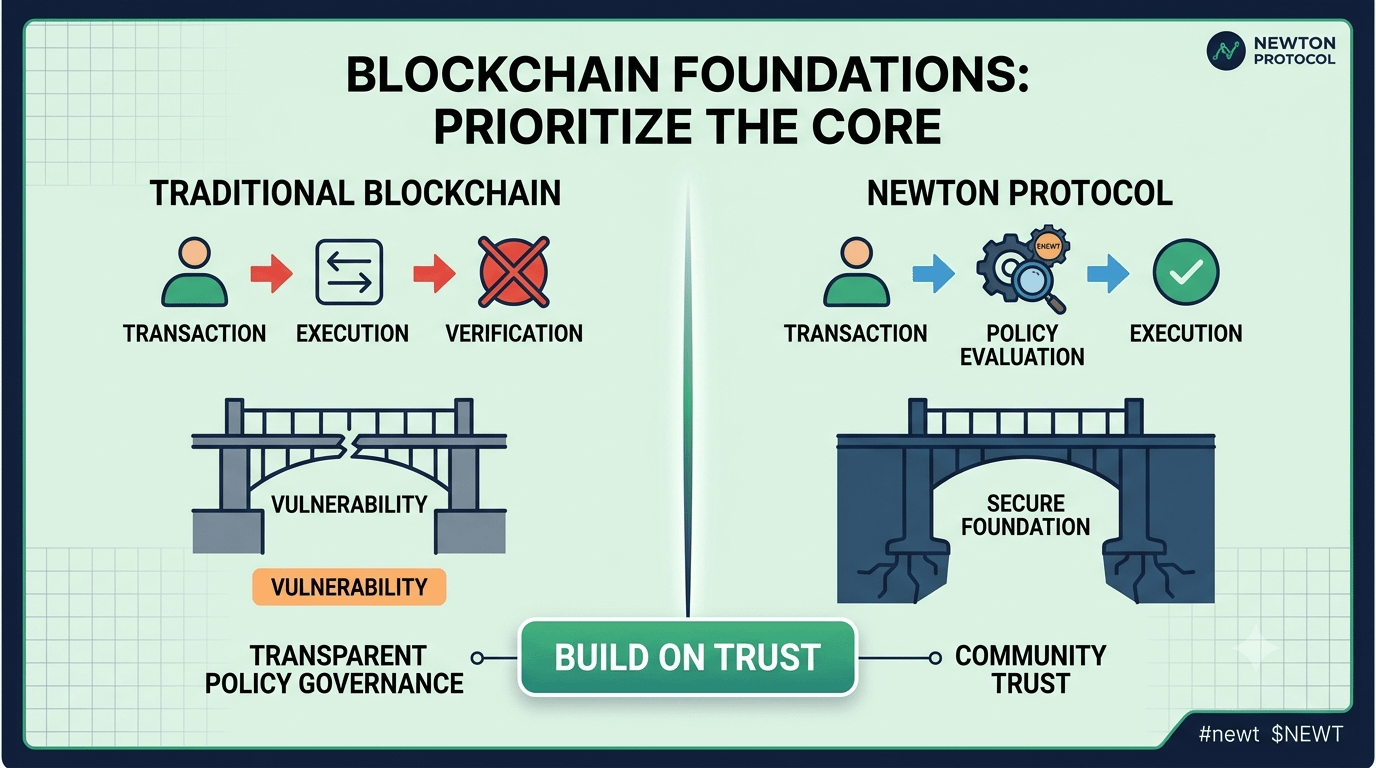
What I find interesting about @NewtonProtocol is how they put the policy layer ahead of the transaction—as if they were preparing a “generator” for the decision-making process. Instead of waiting for an incident to happen and only then checking whether a transaction should be blocked, the system tries to assess the conditions from the start. If this architecture operates as intended, $NEWT is not only the cost of enforcing policy, but also part of the mechanism that helps the system maintain consistency even when the surrounding environment changes very quickly.
Self-critique: but a generator is only valuable if people regularly test it. There are places that only discover a broken generator right when the power goes out. The policy layer is similar. If it’s only verified in familiar situations, no one knows how it will respond to an entirely new kind of risk. Resilience isn’t about having a backup plan—it’s about that plan having been tested, documented, and improved after every round of testing.
Perhaps what I want to see in @NewtonProtocol is not a claim that the system will always work when a crisis hits. Rather, it’s evidence that this very fail-safe mechanism is regularly tested—one with a clear track record and enough transparency for the community to understand why it’s still trustworthy when everything else starts to wobble.