at the beginning, pixels feels like something you’ve already figured out
you log in, farm a bit, use your energy, collect rewards, maybe craft something, and leave
it’s simple, predictable, and easy to repeat
and because it feels so straightforward, you assume progress is just about doing more of the same
more actions
more activity
more consistency
that assumption works… but only for a while
because there’s a point where you’re doing everything right on the surface
logging in regularly
using all your energy
not missing any obvious opportunities
and still, progress doesn’t feel clean
not stuck
just slightly out of sync
like everything is happening, but nothing is really connecting
and that’s the part most players never question
they assume the system is flat
so they either keep grinding the same way
or they slowly lose interest
but what’s actually happening is something else entirely
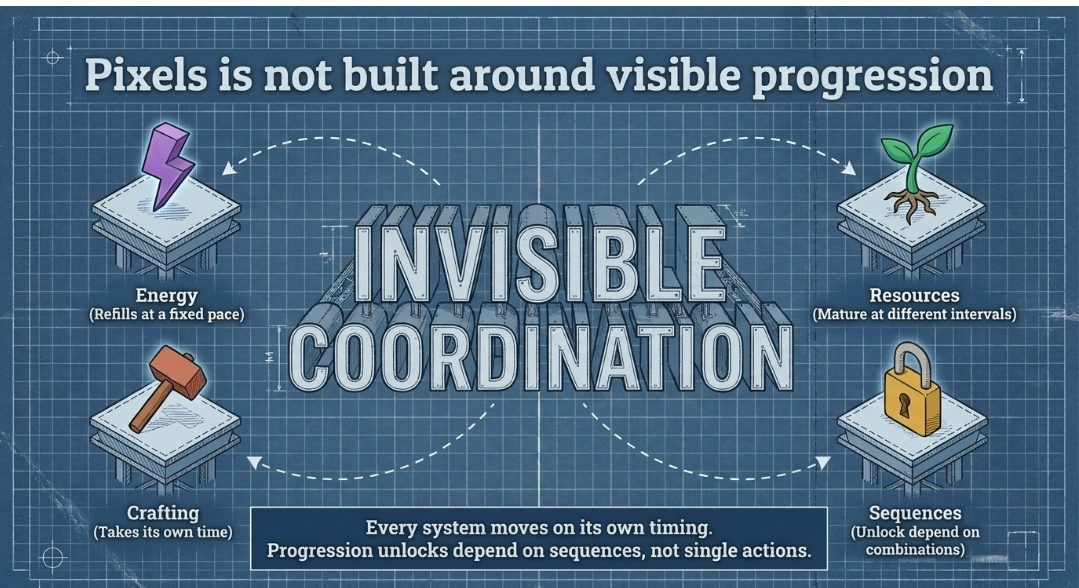
pixels is not built around visible progression
it’s built around invisible coordination
every system in the game moves on its own timing
energy refills at a fixed pace
resources mature at different intervals
crafting takes its own time
progression unlocks depend on sequences, not single actions
these aren’t just mechanics
they’re constraints designed to shape behavior
and if you ignore those constraints, everything feels random
that’s why early gameplay feels repetitive
because most players treat every action as immediate
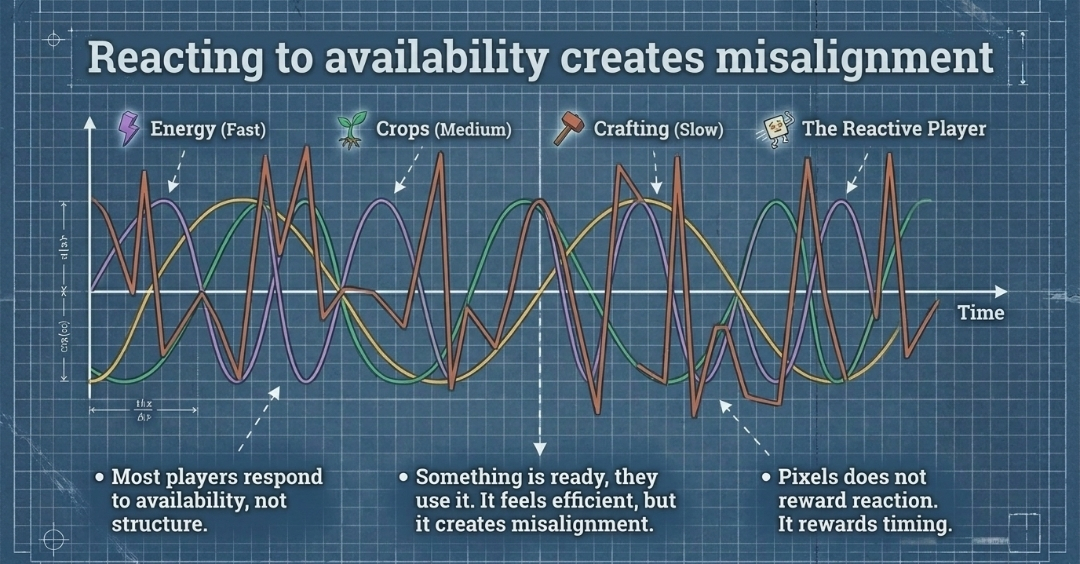
they respond to availability, not structure
something is ready, they use it
something appears, they complete it
it feels efficient
but it creates misalignment
because pixels doesn’t reward reaction
it rewards timing
and timing only matters if you allow space between actions
that’s where the shift happens
when you stop filling every gap instantly
even small pauses start changing outcomes
you begin to notice that some actions work better when delayed
some resources become more useful when combined later
some decisions only make sense when other parts of the system catch up
and suddenly, the same loop starts behaving differently
not faster
not easier
just more coherent
that’s when progress stops feeling random
and starts feeling directional
this is also where the design becomes more obvious
pixels limits how much you can do through energy
not to slow you down
but to prevent constant output
because constant output breaks balance
if everything could be done instantly, nothing would need planning
so instead, the game forces spacing
and inside that spacing, patterns start forming
players who stay in instant reaction mode never see those patterns
they experience repetition
players who slow down just slightly begin to see alignment
same actions
different results
and that difference compounds over time
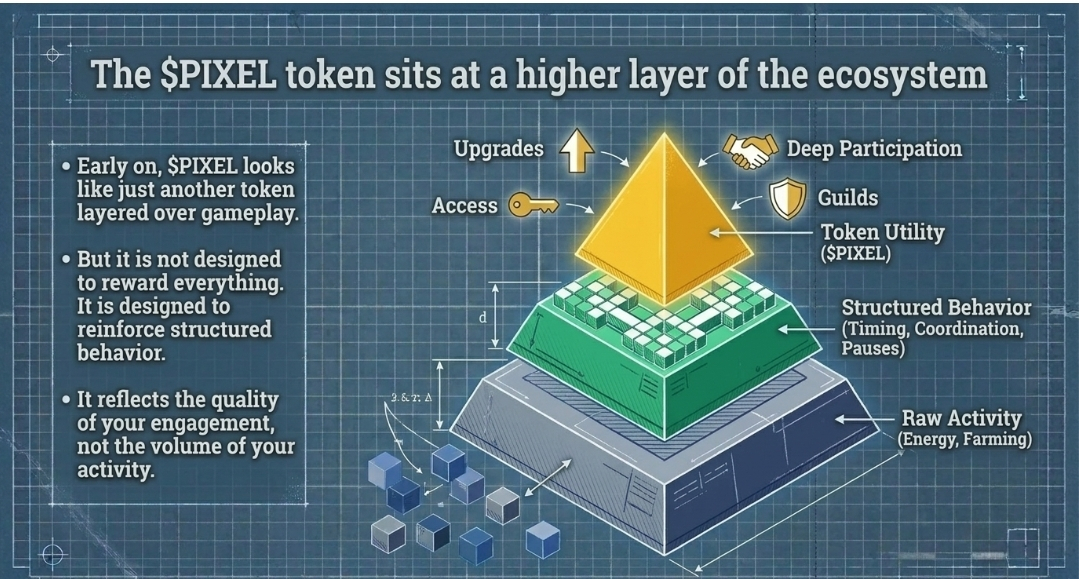
this is also why $PIXEL doesn’t feel meaningful early on
it looks like just another token layered on top of gameplay
something you earn occasionally
something you might use later
but once your actions start aligning with the system
its role becomes clearer
it’s not designed to reward everything
it’s designed to reinforce structured behavior
it sits at a higher layer of the ecosystem
used for upgrades, access, deeper participation, and social systems like guild interaction
which means it reflects engagement quality
not just activity
and that changes how you value it
because now it’s not about how much you play
it’s about how well your actions fit into the system
this is also where pixels separates itself from earlier gamefi models
most of those systems failed for a simple reason
they rewarded activity without control
players optimized everything instantly
extracted value quickly
and left just as fast when rewards dropped
pixels does the opposite
it limits output
spaces decisions
and connects systems so that value builds slowly
that design reduces short-term intensity
but increases long-term stability
and that’s not obvious at first
because in the early phase, it feels slower
less rewarding
less exciting
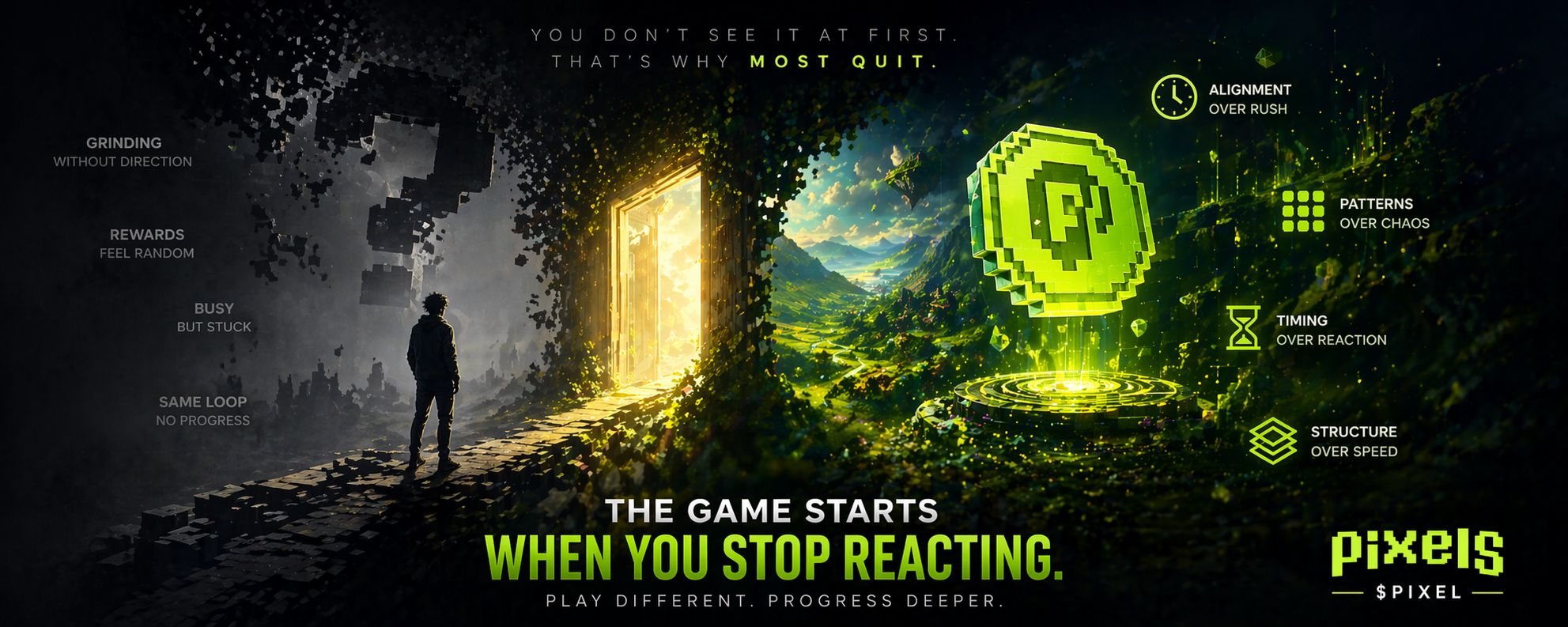
but that’s exactly why most players leave too early
they never reach the point where the system starts making sense
they experience the loop
but not the structure behind it
and once you miss that, everything looks repetitive
but if you stay just a bit longer
and adjust how you interact
you start noticing something subtle
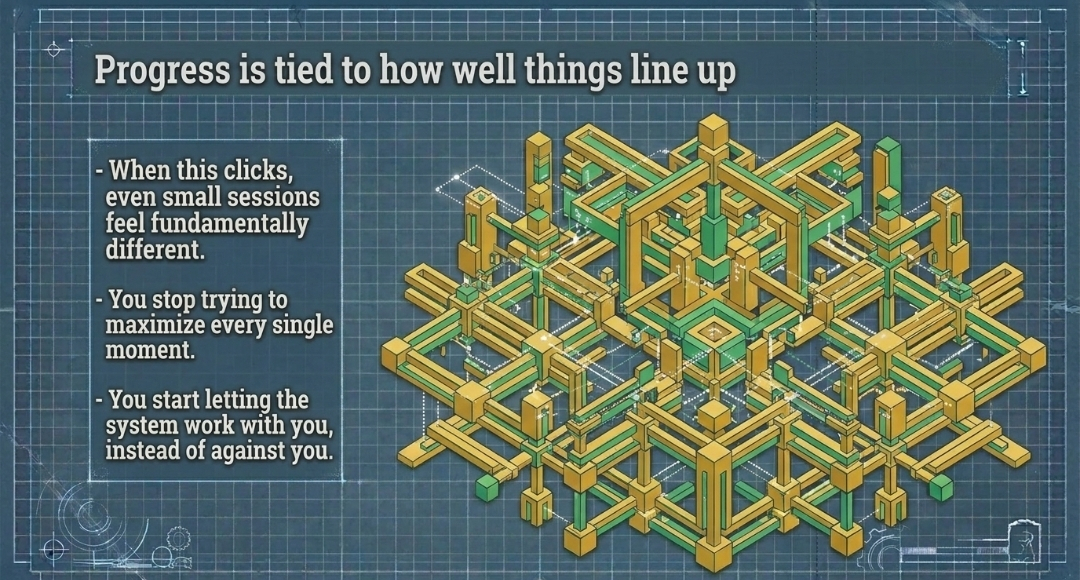
progress is not tied to how fast you act
it’s tied to how well things line up
and once that clicks
even small sessions feel different
you stop trying to maximize every moment
and start letting the system work with you
instead of against you
and that’s the moment where pixels actually begins
not when you start playing
but when you stop reacting