

In a market dominated by fast narratives, aggressive launches, and short attention cycles, Pixels stands out for a different reason — it feels like a place people genuinely want to return to.
Built on the Ronin network Pixels is an open-ended MMORPG focused on farming, exploration, social interaction, and land ownership. Instead of forcing blockchain mechanics into the spotlight, the game integrates digital ownership naturally into the experience.
That design choice matters.
Many Web3 games try to lead with tokens first and gameplay second. Pixels flips that formula. The game experience comes first, while blockchain acts as the infrastructure supporting ownership, assets, and player-driven economies.
And in Web3 gaming, the projects that last are usually the ones that get this order right.
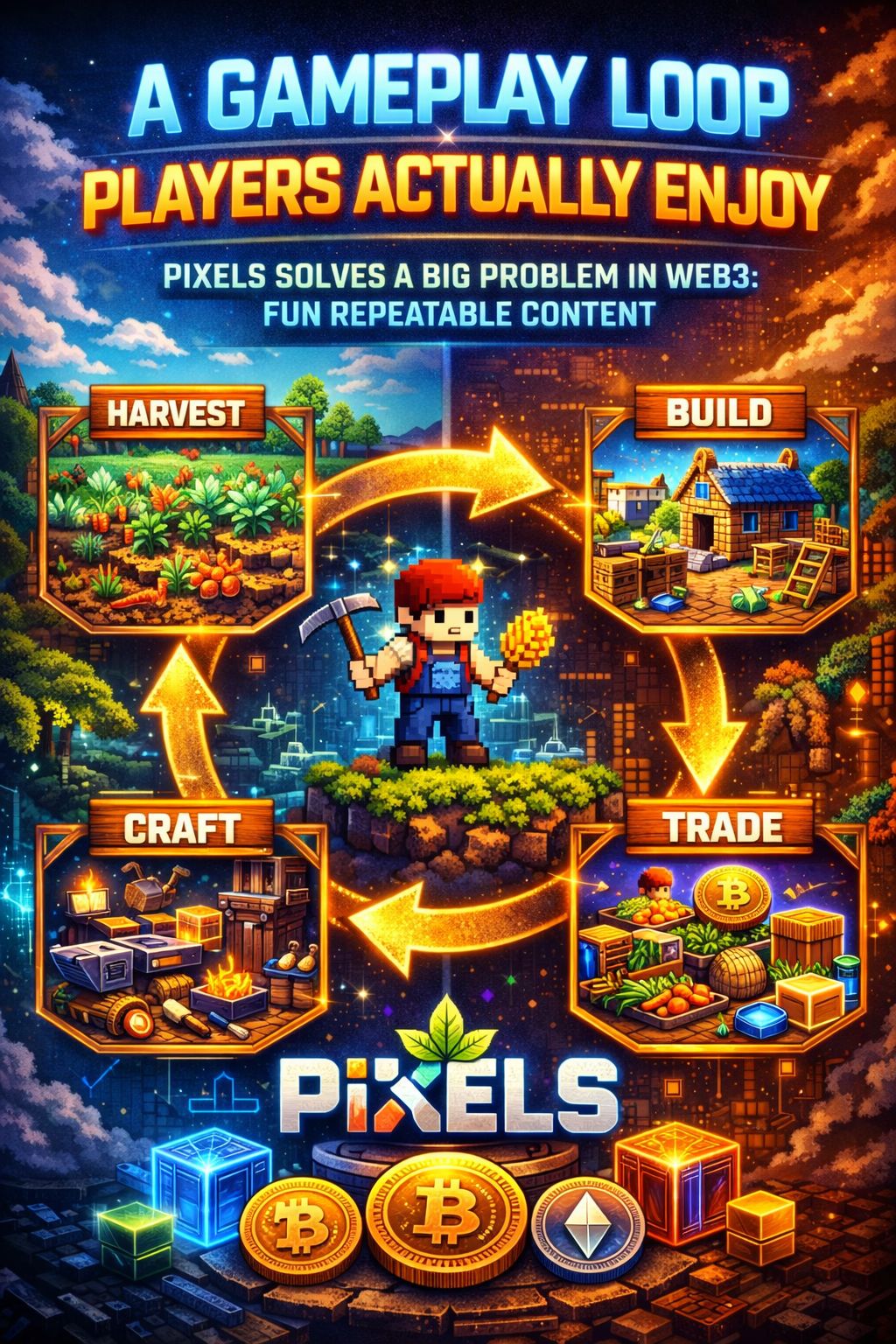 A Gameplay Loop Players Actually Enjoy
Pixels is interesting not simply because it uses blockchain technology, but because it attempts to solve one of the biggest problems in Web3 gaming: creating gameplay loops that players genuinely enjoy repeating.
According to the project’s official description, the game allows players to:
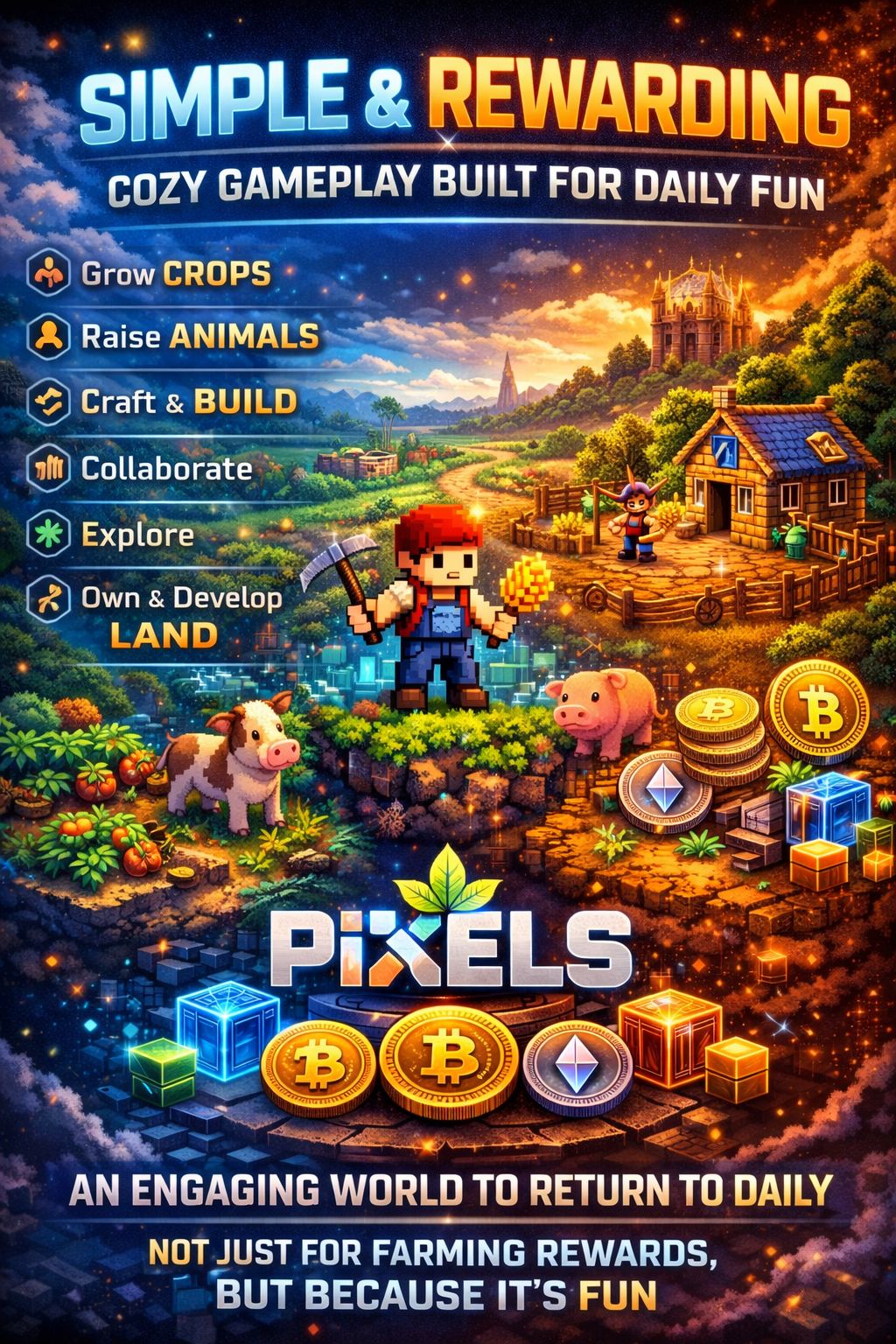
Grow and manage crops
Raise animals
Craft and build structures
Collaborate with other players
Explore a shared world
Own and develop land
The concept may sound simple, but that simplicity is intentional.
Pixels focuses on creating a cozy, routine-driven environment where players return daily not because they feel forced to farm rewards, but because the game world itself feels rewarding to engage with.
In many ways, the experience resembles traditional social farming games — but enhanced with true asset ownership and player economies.
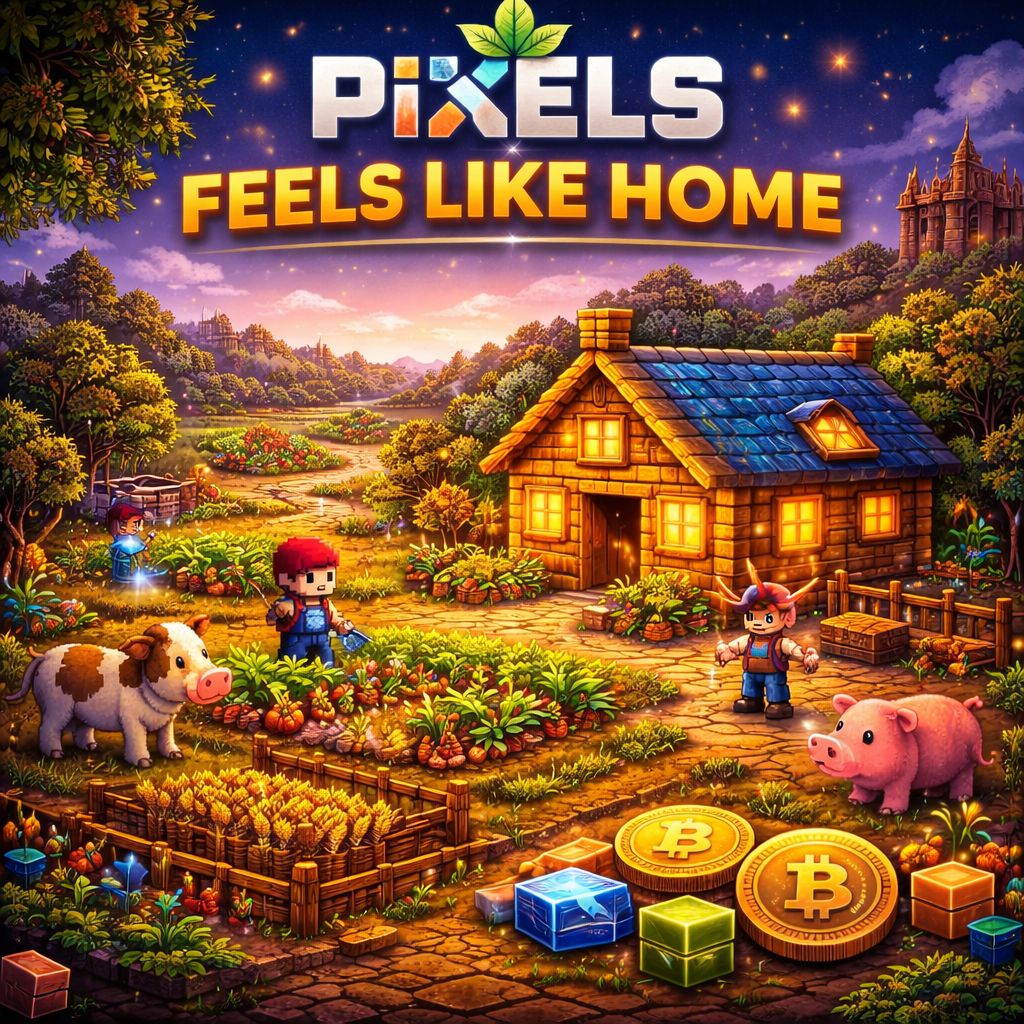 Why Pixels “Feels Like Home”
Calling Pixels a game that “feels like home” is more than just a metaphor.
Home in a game environment doesn’t mean intensity or constant excitement. It means consistency rhythm and familiarity.
Players plant crops.
They return later to harvest them.
They upgrade their land.
They interact with neighbors.
They slowly build something meaningful.
Progress happens gradually rather than explosively.
That steady rhythm is exactly what makes players feel comfortable staying in a game world over time.
Pixels leans heavily into this idea through farming systems, social cooperation, land progression, and crafting mechanics. The result is a gameplay loop that remains easy for beginners to understand while still offering long-term depth for dedicated players.
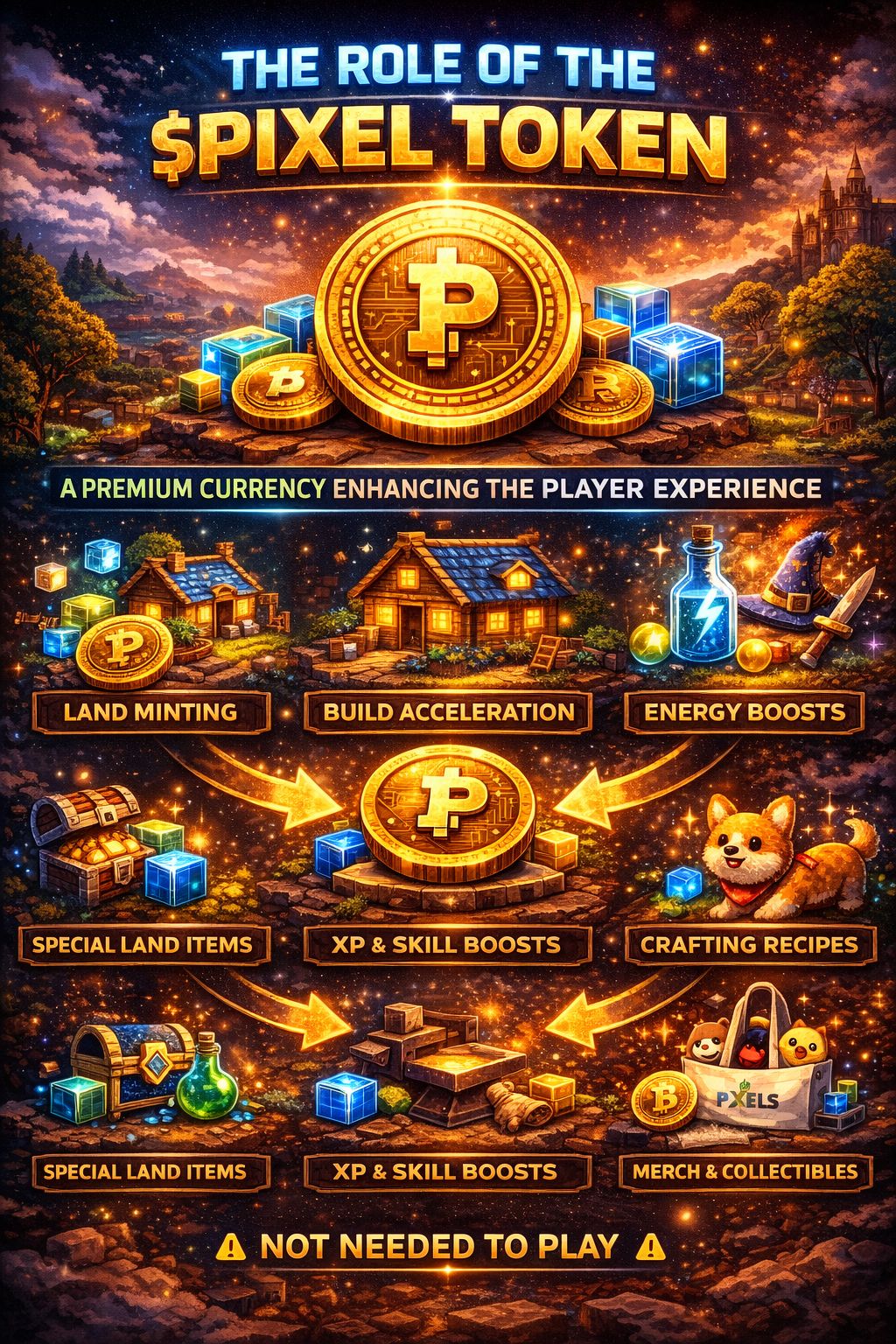 The Role of the $PIXEL Token
The PIXEL token follows the same design philosophy.
Rather than being required for core gameplay progression PIXEL functions as a premium in-game currency designed to enhance the player experience.
Players can use PIXEL for things such as:
Land minting
Accelerating build times
Energy boosts
Cosmetic upgrades and skins
Special land items
XP and skill enhancements
Crafting recipes
Player pets
Limited merchandise and collectibles
Importantly, the token is not required to play the game.
This separates Pixels from many earlier play-to-earn models where gameplay revolved almost entirely around extracting token rewards.
Instead, PIXEL acts as a value amplifier, improving convenience, customization, and status within the ecosystem.
A More Thoughtful Game Economy
One of the most notable aspects of Pixels is how carefully the team has approached economic design.
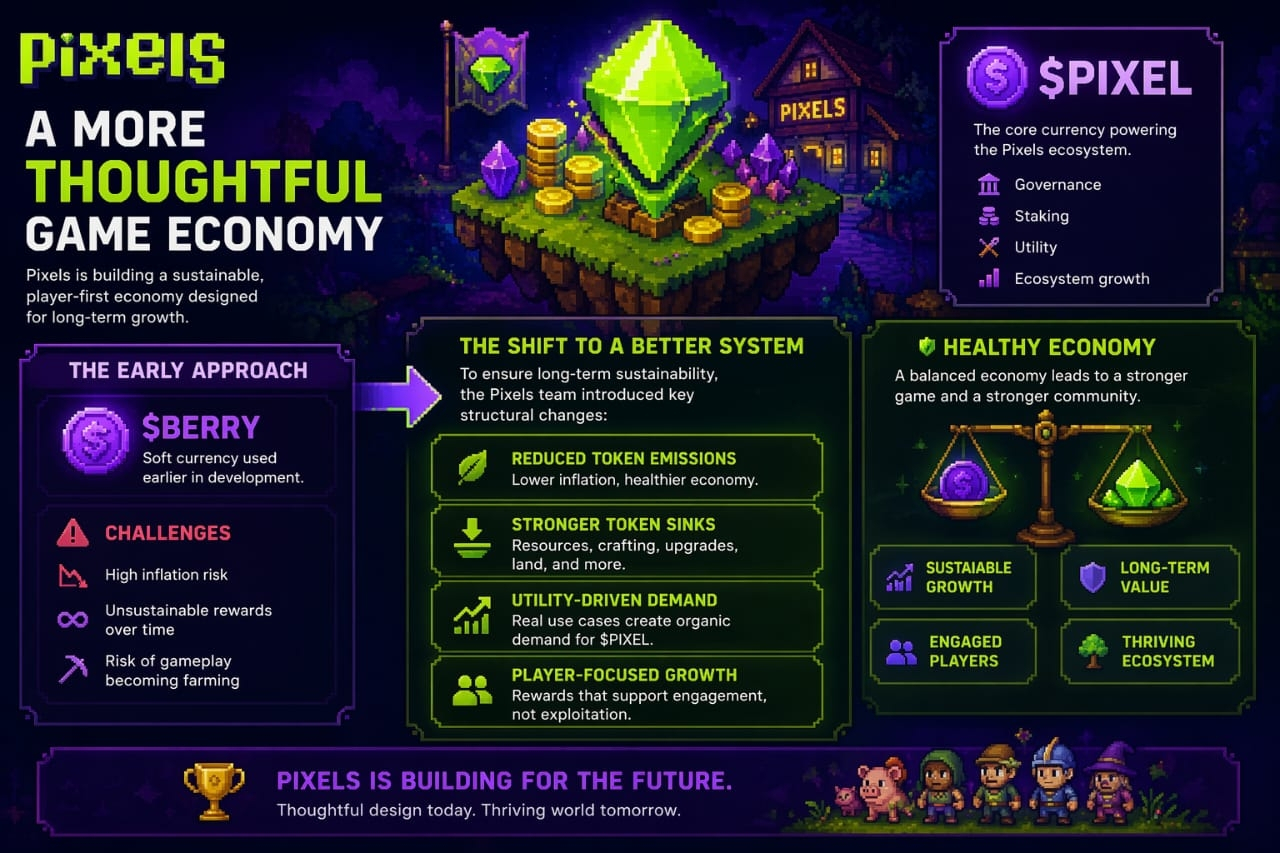
Earlier in the game's development, a soft currency called $BERRY was used within the ecosystem. However, the team eventually shifted toward a more focused economy centered around PIXEL due to concerns about inflation and long-term sustainability.
This change reflects an important reality in Web3 gaming:
Inflationary reward tokens are extremely difficult to balance in persistent online worlds.
If too many tokens enter the system too quickly, gameplay can devolve into reward farming rather than genuine engagement.
To address this, the Pixels team introduced structural changes including:
Strategic reward distribution
Increased gameplay requirements for earning tokens
The addition of off-chain Coins for general in-game transactions
These adjustments suggest the developers understand that a sustainable economy requires careful management, not just rapid growth.
 The Real Investment Thesis
For investors or traders analyzing the project, the key question is not simply whether PIXEL can rise in price.
The deeper question is
Can Pixels build long-term player retention?
If players remain engaged because the game world feels enjoyable, social, and meaningful, the ecosystem gains a strong foundation.
If participation only exists when token rewards are high the economy becomes fragile.
Pixels appears to be actively trying to solve this challenge by combining:
Gameplay-driven engagement
Social interaction
Asset ownership
Staking mechanisms
Land-based progression
This combination creates a more complex and potentially durable ecosystem compared with many short-lived GameFi experiments.
Risks Still Exist
Despite its promising structure, Pixels is not risk-free.
Web3 games often appear healthy when incentives are strong but struggle when reward systems change. Adjustments to currencies, token rewards, or gameplay economics can signal healthy development — but they can also indicate that the system is still evolving.
The Pixels team itself acknowledges that the economy continues to be refined.
For that reason, the project should ultimately be judged by long-term execution rather than early momentum.
 The Bigger Opportunity
Where Pixels may succeed is in understanding something many blockchain games miss:
Players don’t return to a world because a token exists.
They return because the world gives them a reason to care.
Farming routines, social collaboration, crafting systems, pets, and land building all contribute to creating emotional investment inside the game environment.
If Pixels continues improving gameplay while maintaining economic discipline, it could remain one of the strongest examples of a Web3 game built around habit and community rather than short-term speculation.
 Conclusion
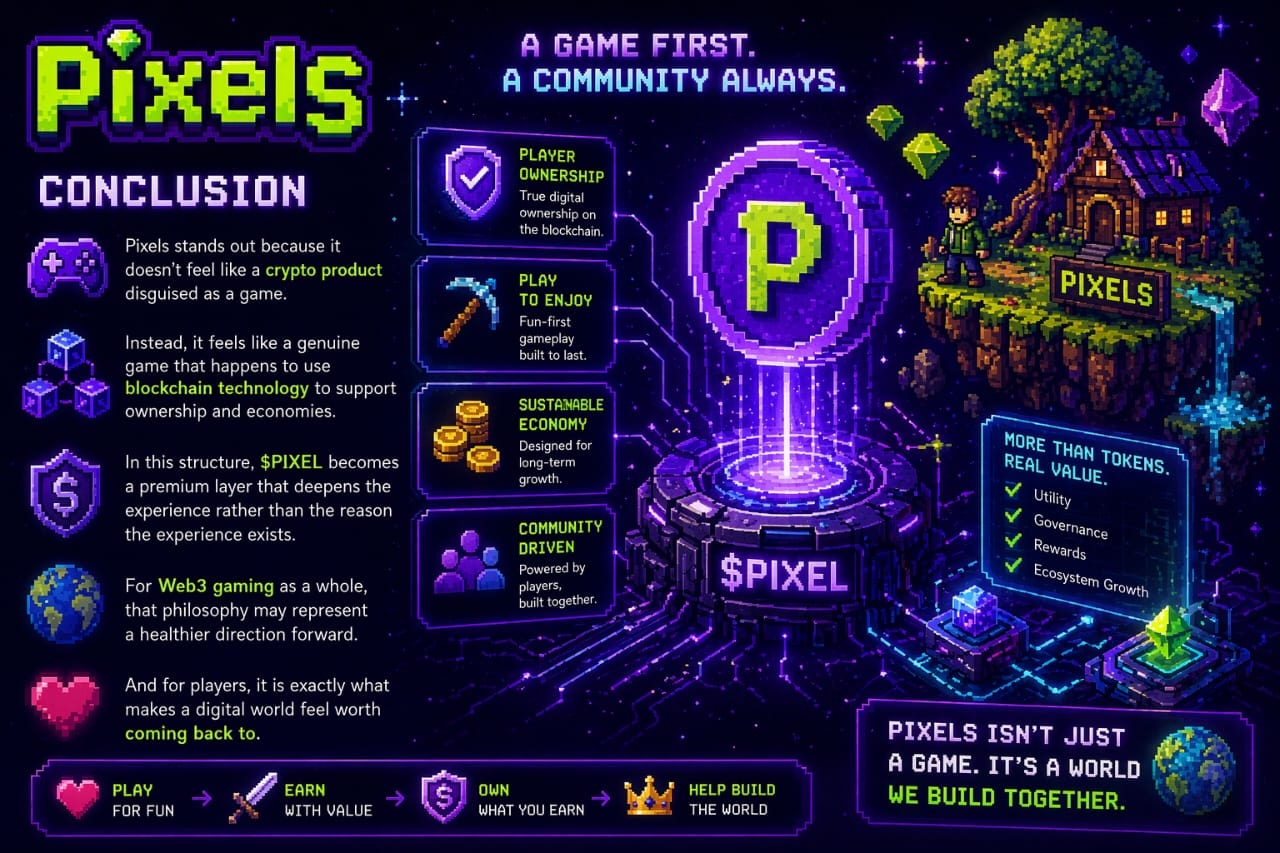
Pixels stands out because it doesn’t feel like a crypto product disguised as a game.
Instead, it feels like a genuine game that happens to use blockchain technology to support ownership and economies.
In this structure pixel becomes a premium layer that deepens the experience rather than the reason the experience exists.
For Web3 gaming as a whole, that philosophy may represent a healthier direction forward.
And for players, it is exactly what makes a digital world feel worth coming back to.