

@SignOfficial | #SignDigitalSovereignInfra | $SIGN
I’ve been in this crypto game long enough to spot the difference between hype and something that might actually stick. Most tokens? They’re built for quick flips, viral tweets, and “to the moon” memes. Then there’s $SIGN—the token from the team at Sign Global. This one doesn’t scream at you with celebrity shills or cartoon mascots. It’s quietly plugging away at the kind of stuff governments actually need: real digital infrastructure that works at country scale. And yeah, after digging into their docs, partnerships, and what they’ve shipped so far, I’m genuinely intrigued. Not financial advice or anything—just one guy geeking out over a project that feels built for the long haul.
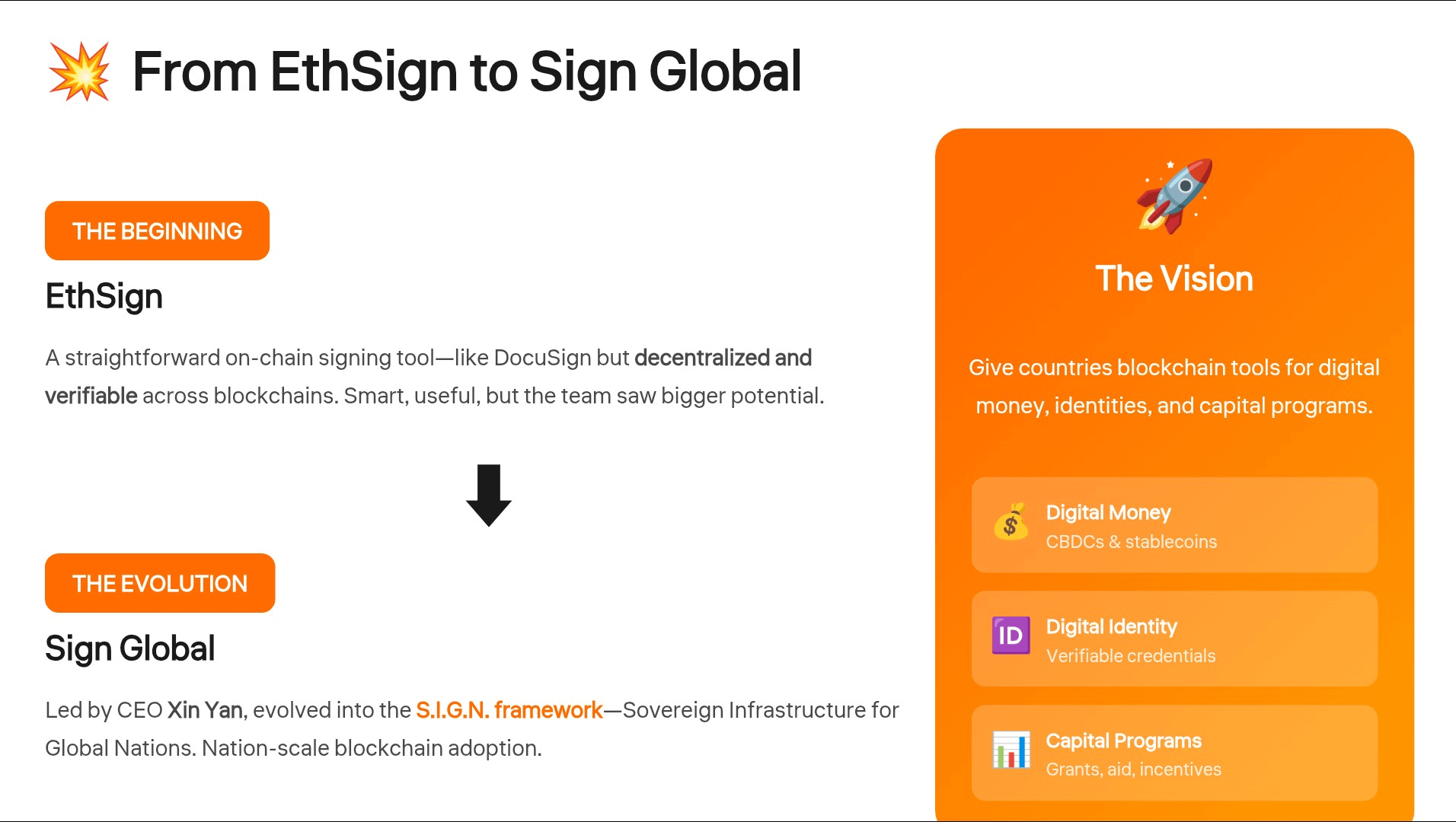
It all started back as EthSign, a straightforward on-chain signing tool—like DocuSign but decentralized and verifiable across blockchains. Smart, useful, but the team (led by CEO Xin Yan) saw bigger potential. Fast-forward to now, and they’ve evolved into Sign Global, with the whole S.I.G.N. framework—Sovereign Infrastructure for Global Nations. The pitch is simple on paper but huge in practice: give countries the blockchain tools to handle digital money (think CBDCs and stablecoins), digital identities (verifiable credentials that protect privacy but prove what matters), and capital programs (like grants, aid, or incentives that actually reach the right people without leaks or delays).
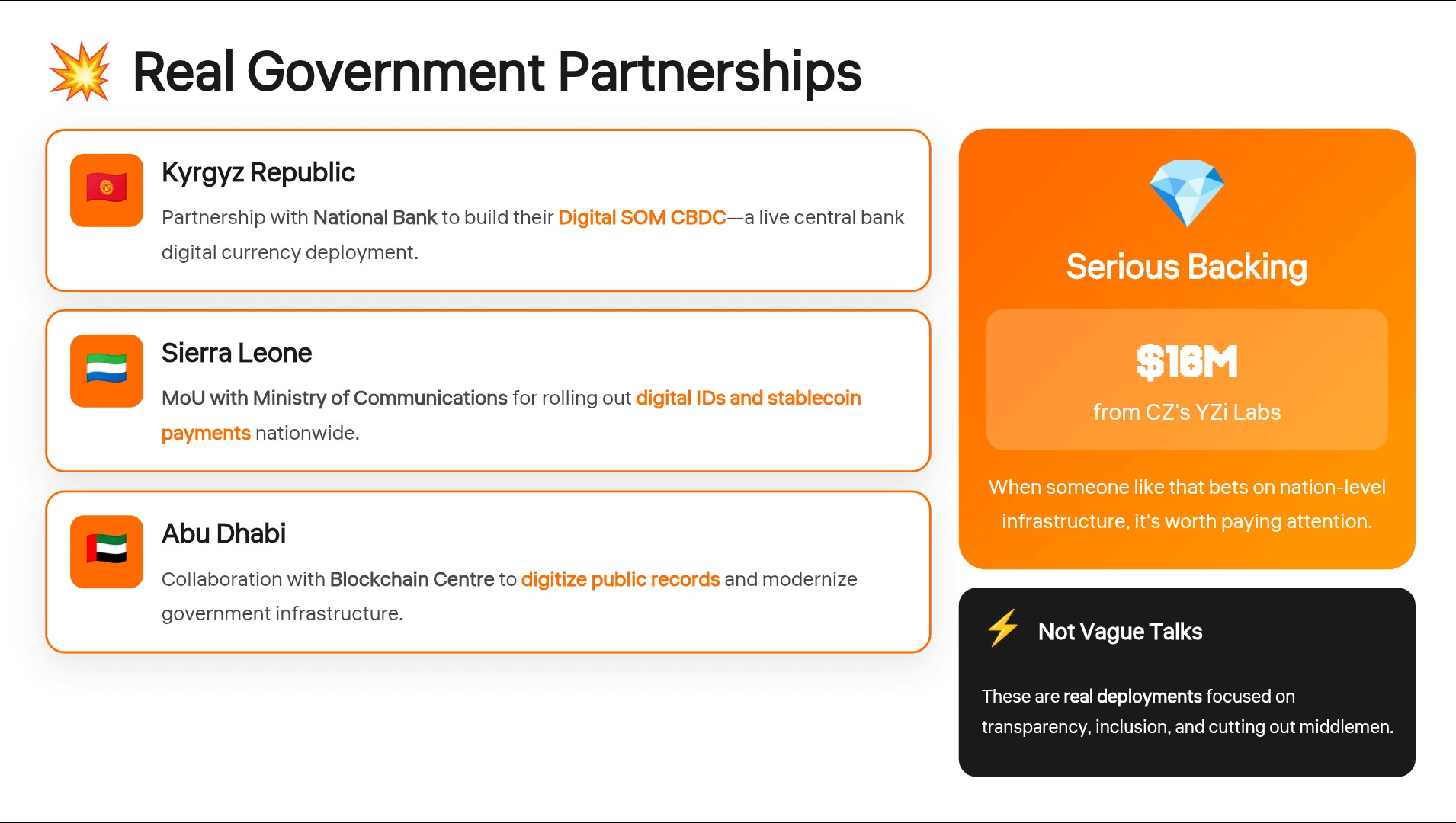
They’re not just talking about it either. They’ve got live momentum. There’s the partnership with the National Bank of the Kyrgyz Republic to build their Digital SOM CBDC. An MoU with Sierra Leone’s Ministry of Communications for rolling out digital IDs and stablecoin payments. A collab with the Blockchain Centre in Abu Dhabi to digitize public records. These aren’t vague “exploratory talks”—they’re real deployments focused on transparency, inclusion, and cutting out the middlemen that bog down traditional systems. Oh, and they snagged serious backing, including that $16 million from CZ’s YZi Labs (with follow-ons mentioned). When someone like that bets on you for nation-level stuff, it’s worth paying attention.
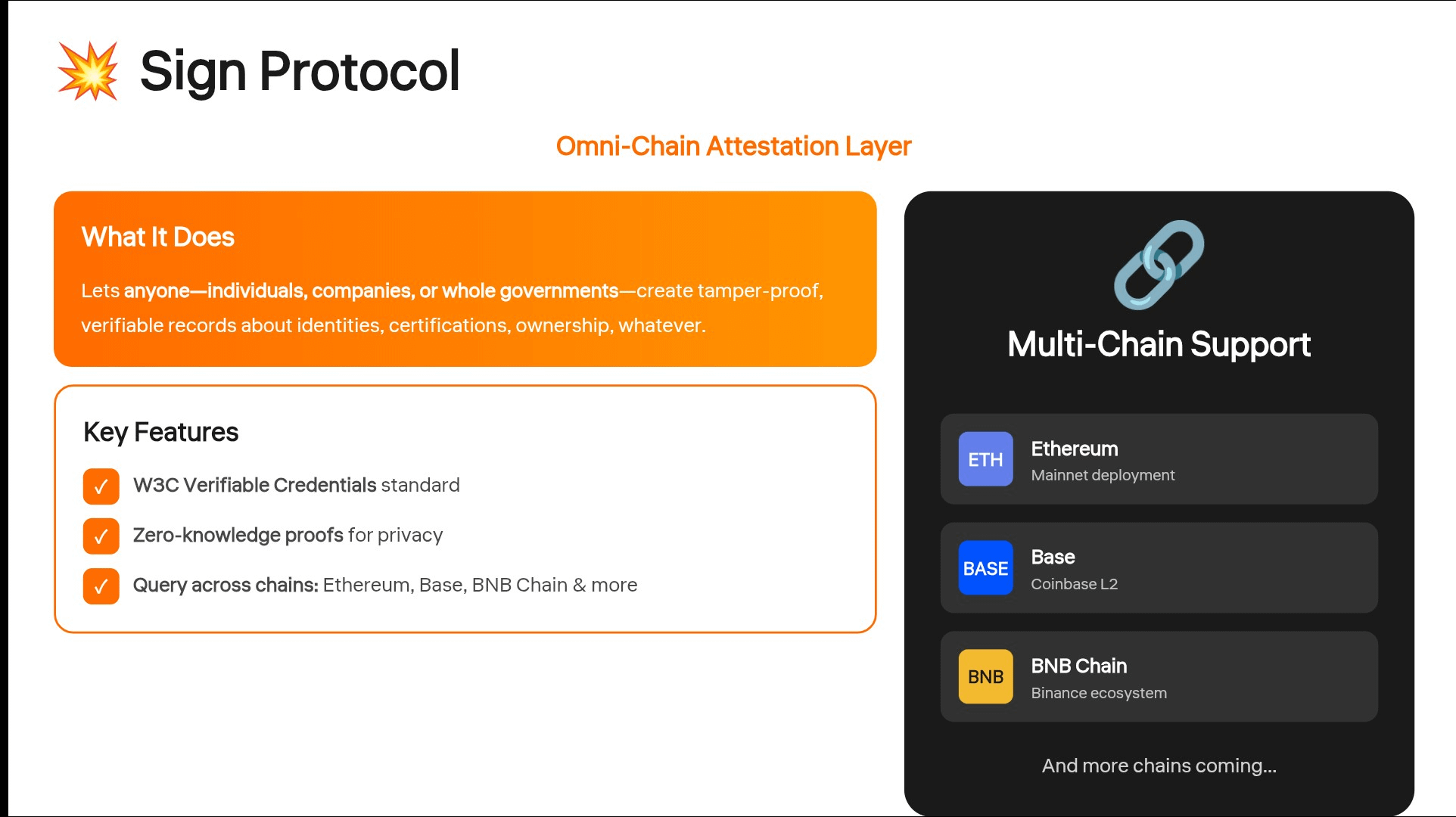
At the heart of it all is the Sign Protocol their omni-chain attestation layer. Basically, it lets anyone individuals, companies, or whole governments create tamper-proof, verifiable records about identities, certifications, ownership, whatever. Think W3C verifiable credentials with zero-knowledge proofs for privacy where it counts, all queryable across Ethereum, Base, BNB Chain, and more. Then there’s TokenTable, which handles massive, compliant token distributions—airdrop-style welfare, vesting schedules, grants—at scale, with built-in checks to prevent fraud or duplicates. $SIGN is the token that powers the whole machine: it covers fees for attestations, fuels distributions, lets you stake for rewards, and gives holders a real say in governance.
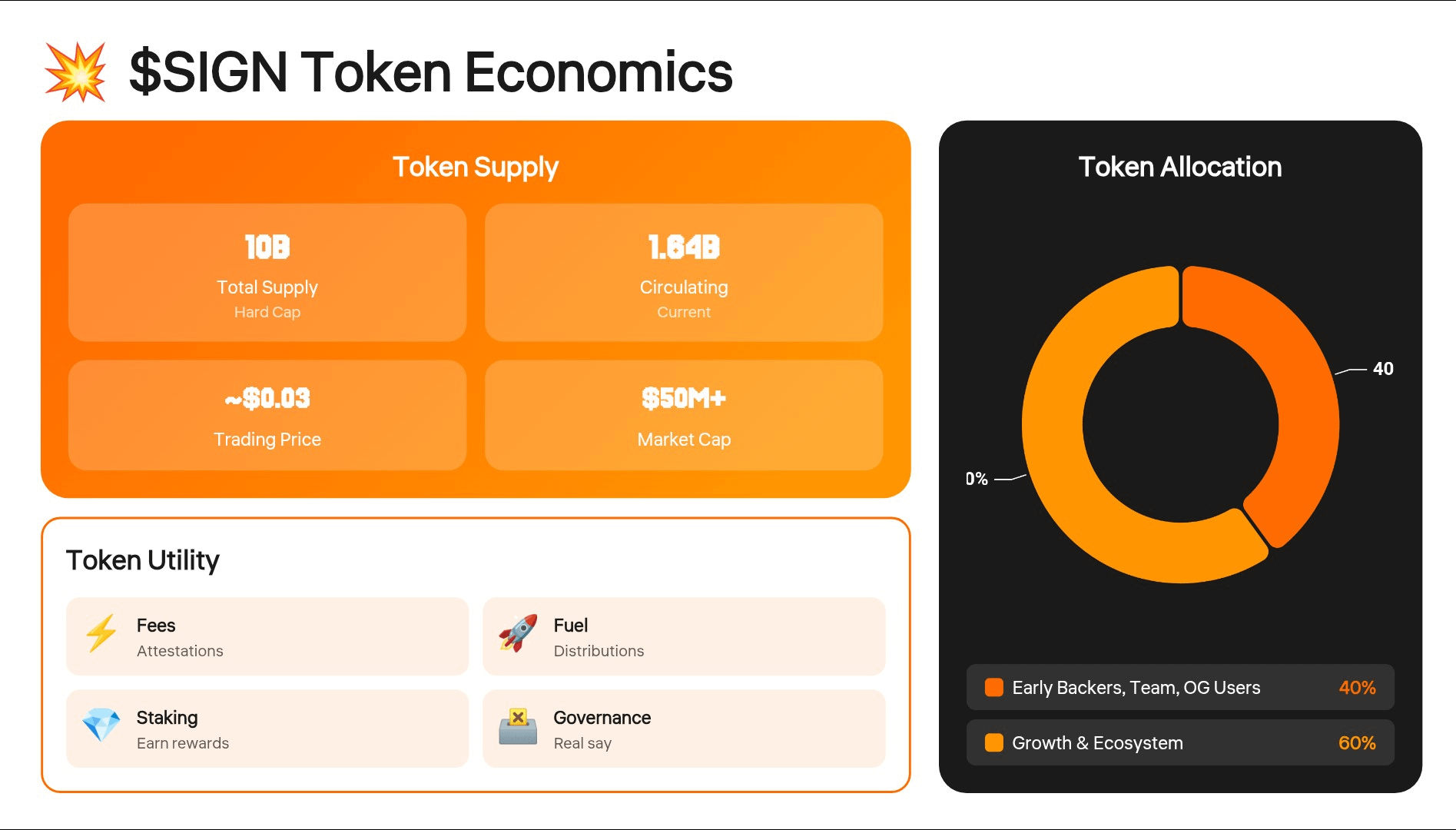
Token details are straightforward (no crazy inflation games here). Total supply capped at 10 billion. Circulating supply right now is about 1.64 billion, trading around the $0.03 mark with a market cap in the low $50M range last I checked—plenty of room if adoption kicks in. About 40% went to early backers, team, and OG users from the EthSign days; the rest is slotted for growth, community incentives, and ecosystem building. They’ve already served over 40 million wallets and distributed billions in value through TokenTable, which is wild for something still under the radar compared to meme coins.
What I like most—and what sets it apart—is how it’s engineered for the messy reality of governments and regulation. Sovereign control is baked in: countries keep their keys, set their own policies, and can run things in public, private, or hybrid modes. Audits are easy because everything leaves cryptographic evidence, but privacy isn’t sacrificed. It’s not “decentralize everything and hope for the best.” It’s “here’s reliable infrastructure that respects sovereignty while unlocking blockchain superpowers.” Their goal? Onboard 300 million people through national systems by 2028. Ambitious? Sure. But with the pilots already rolling, it doesn’t feel like pure vaporware.
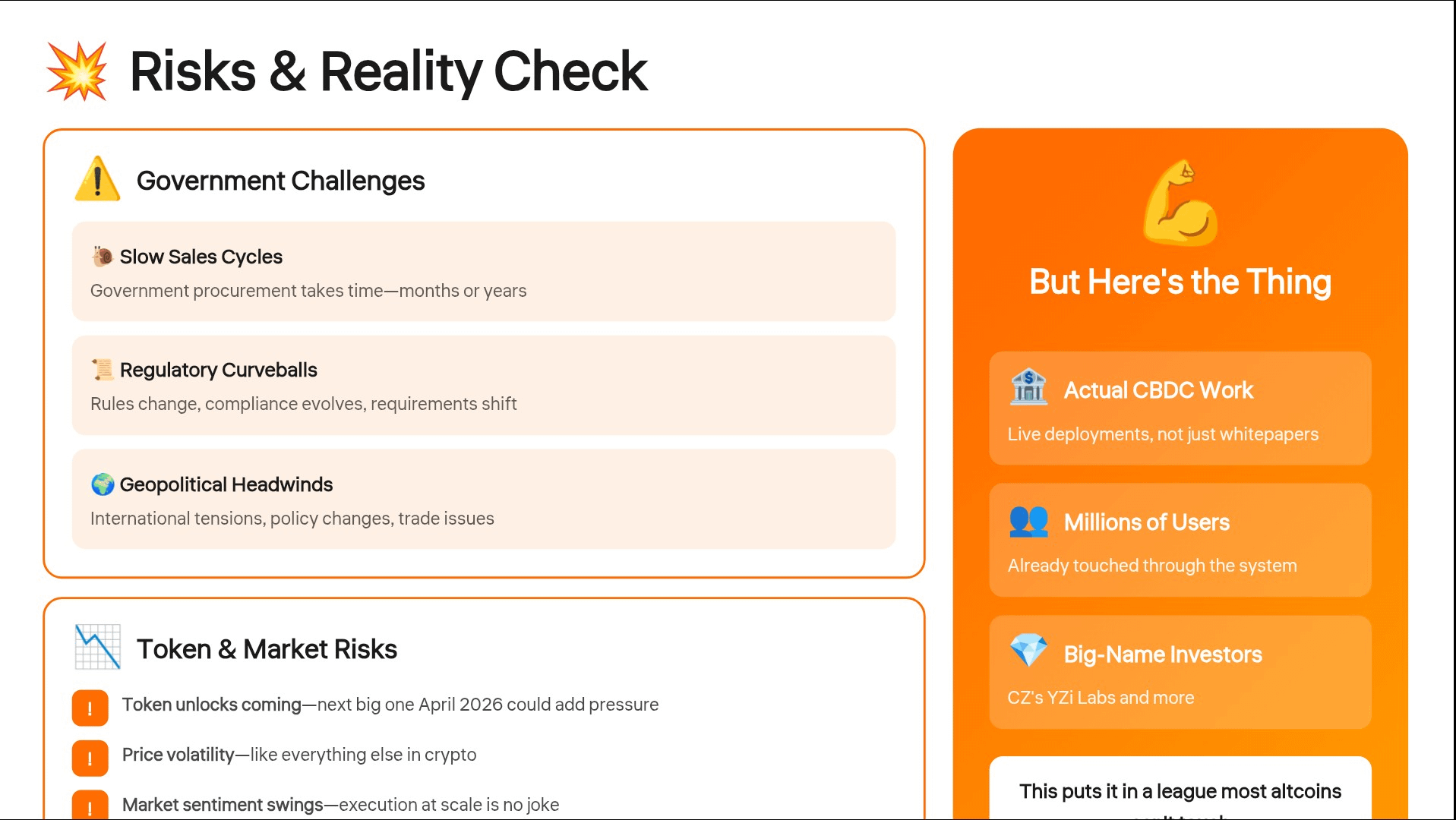
Of course, let’s keep it real—nothing in crypto is a sure thing. Building for nations means slow sales cycles, regulatory curveballs, and geopolitical headwinds that retail projects never touch. Token unlocks are coming (next big one in April 2026 could add pressure), and the price has had its dips like everything else. Market sentiment swings wild, and execution at this scale is no joke. But the traction—actual CBDC work, millions of users touched, big-name investors—puts it in a league most altcoins can’t touch.
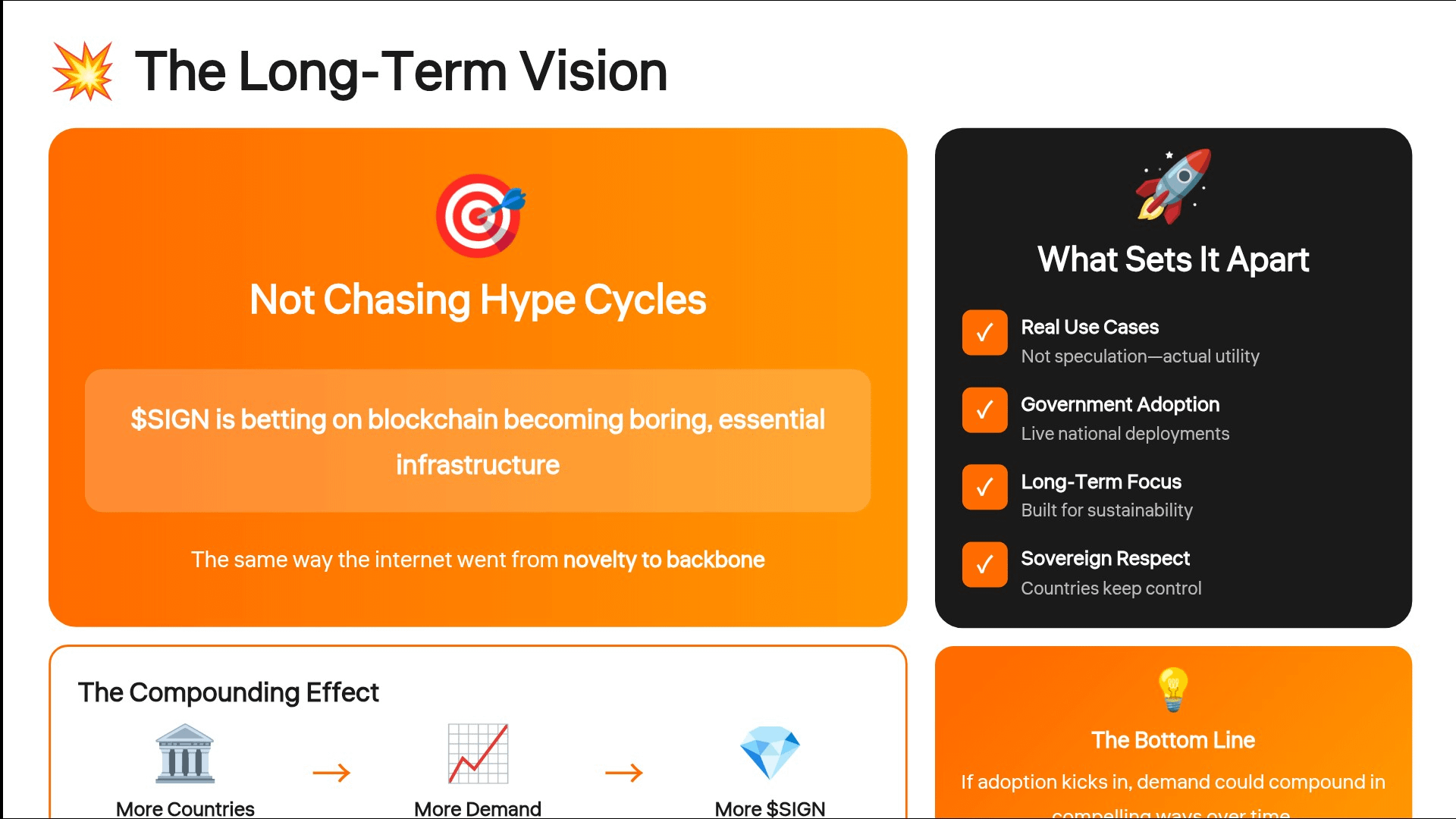
Bottom line: $SIGN isn’t chasing the next hype cycle. It’s betting on blockchain becoming boring, essential infrastructure, the same way the internet went from novelty to backbone. If a handful more countries jump on board, the demand for attestations, distributions, and all the $SIGN that powers them could compound in ways that feel pretty compelling over time.
I’m not saying go all in tomorrow, but if you’re tired of pure speculation and want something with teeth—real use cases, actual government adoption—it’s worth a closer look. DYOR, as always. What’s your take? Bullish on crypto finally going institutional and sovereign, or still all-in on memes? Hit me with your thoughts—I’m curious how this one ages.