

I’ve read enough “next-gen L1” narratives to know the pattern: they open with TPS, sprinkle some buzzwords, and hope you don’t ask what happens when the network is under real stress, with real users, in real market conditions. What pulled me into FOGO wasn’t hype—it was the way the project frames itself as infrastructure first.
FOGO positions its token as a utility token, and I actually like how clearly that boundary is drawn. No ownership. No equity. No governance promises dressed up as “community power.” Just a token that exists to run a protocol: you use it to pay for compute + storage, and you stake it to secure the chain if you’re validating (or you delegate to validators if you want to participate without running hardware). That “clean” definition matters, because it reduces narrative confusion and forces the conversation back to what I care about most: does the network design make sense, and is it honest about trade-offs?
What FOGO Is Really Trying to Be: A Low-Latency SVM Chain With Operational Intent
Here’s the core of how I understand FOGO: it’s a Layer-1 built around the Solana Virtual Machine (SVM) execution environment, so it can run programs in a way that supports parallel execution. That’s a big deal in practice—parallelism is one of the few real levers you can pull when you’re building for scale and you don’t want the chain to feel like it’s choking during busy periods.
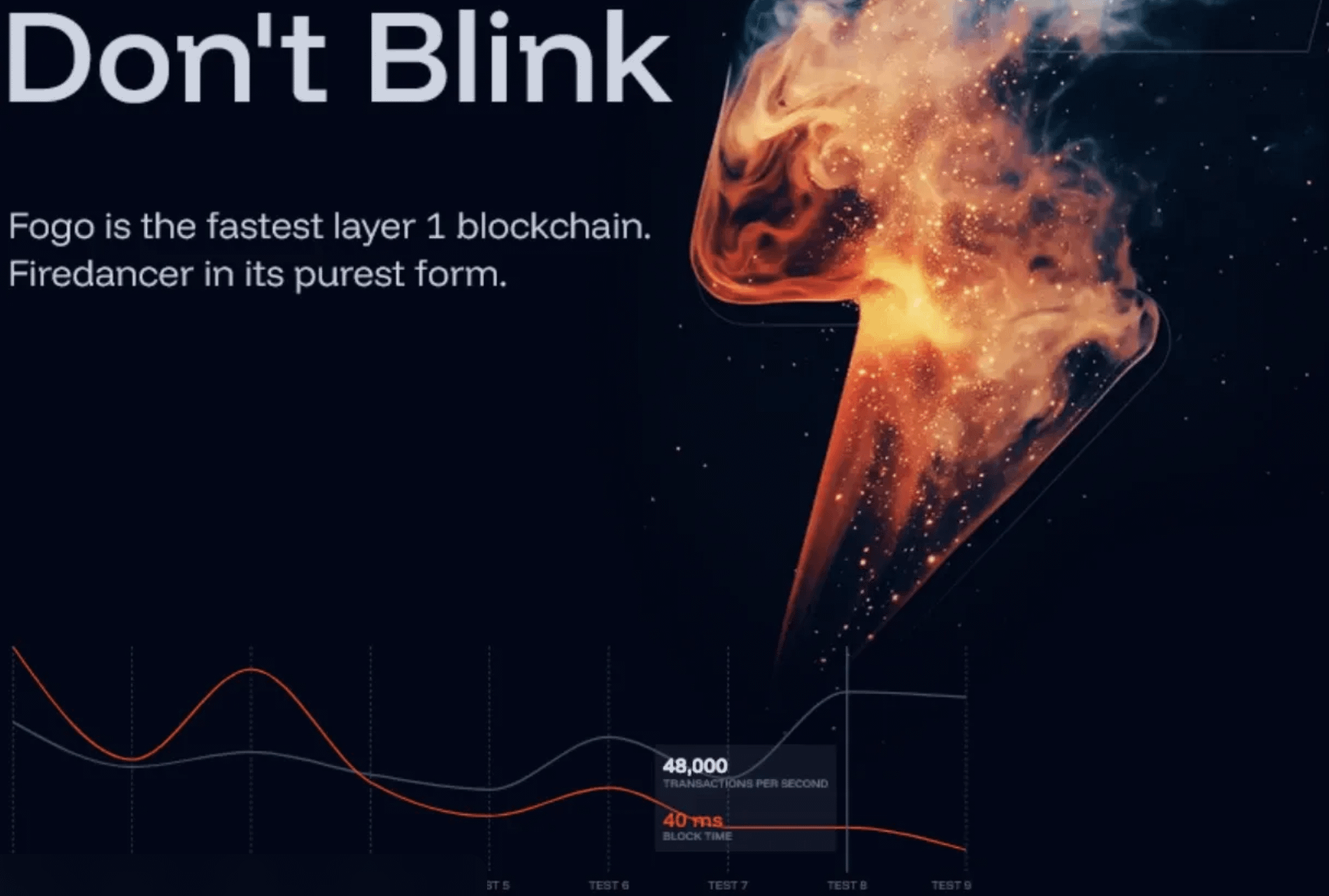
But the more interesting part to me isn’t just “SVM.” It’s how FOGO pairs SVM with a validator approach that’s clearly obsessed with performance and reliability. Their validator software is designed as an implementation of Firedancer, with the launch version described as a hybrid approach (they refer to it as “Frankendancer,” implementing portions of Agave code with FOGO-specific modifications). The signal I take from this is simple: they’re not trying to win the marketing war—they’re trying to win the systems war.
Because when you actually care about serious workloads—trading-heavy apps, data-heavy dApps, protocols that need consistency—latency becomes product. And FOGO’s choices feel aligned with that reality.
The “Multi-Local Consensus” Choice: A Performance Bet With a Very Clear Philosophy
This is where my opinion gets strong: I like that FOGO doesn’t pretend decentralization is one fixed shape. Instead, it designs around localized consensus clusters—a “multi-local consensus” model—so processing can be distributed across geographic zones.
At launch, they describe initial active validators co-located in a single high-performance data center in Asia, while also running full nodes elsewhere. If you’re only reading this as “centralization,” you’ll miss the point. The intention is to enable ultra-low latency block production by reducing network round-trip delays within a zone, while still preserving the ability to rotate zones across data centers globally.
Do I think this introduces trade-offs? Of course. But I respect when a chain is explicit about its architecture and what it’s optimizing for. It’s honest: this is a chain built for performance-sensitive environments, and it’s constructing the consensus topology to match that reality.
What the Token Does : Compute, Storage, and Security
When I boil the $FOGO token down, I see three practical functions:
1) It’s the access key to the network’s compute
If I’m deploying smart contracts, executing programs, or interacting with apps on-chain, I need the token as “gas.” That’s the base utility.
2) It pays for state and storage
This part matters more than people admit. Storage is a real cost on-chain, and FOGO frames the token as a way to ensure efficient use of network resources while compensating validators for maintaining state data. That’s a healthier framing than pretending storage is free forever.
3) It’s the collateral for consensus
Validators stake $FOGO o secure the network and earn rewards. Delegators can stake by delegating to validators. In other words, the token is also the economic engine behind security, not a decorative asset.
And I like the clarity: the token is intended to be issued fully functional, with the described utilities live—not “coming later.”
Incentives and Fees: How Validators Get Paid, and Why That Matters
FOGO’s incentives are built around a Proof-of-Stake model, where rewards flow to validators (and delegators) based on stake and performance. Rewards come from two main sources:
Inflationary issuance
Transaction fees
What stands out is how they describe fee dynamics: there’s a minimal base fee to keep ordinary usage cheap, and then priority fees that users can attach when they care about speed/ordering. Those priority fees accrue to the validator producing the block, and validator client software can order transactions by priority fee when assembling blocks.
I see this as a realistic design choice for a chain that expects high-performance usage. If users want urgency, they pay for urgency. If they don’t, they still get cheap access. That’s a practical market structure.

Inflation Schedule: A Measured Start, Then a Fast Step Down
Token emissions matter, and I pay attention to how teams describe them.
@Fogo Official states a fixed 6% annual inflation rate initially, then a linear decrease down to 2% after two years, using year-on-year decrements of roughly 42% of the prior year’s inflation rate until the long-term floor is reached.
I actually like the logic behind that: keep incentives strong early when bootstrapping security and validator participation, then reduce dilution as the network matures. It’s not “ultra-sound” marketing—it’s a pragmatic schedule aimed at sustaining validator incentives while reducing long-run issuance.
Trading Access: What I Take From the Admission-to-Trading Details
From the way the ecosystem frames listings, the key point is that admission to trading is meant to help users engage with the protocol—because a utility token that’s hard to access becomes a bottleneck to adoption.
They also make something very explicit that I think is healthy: trading platforms set their own restrictions(KYC/AML/CFT policies, regional compliance, etc.), and those restrictions are not controlled by the foundation entity seeking admission. So the listing environment is real-world: compliance gates will exist depending on where you trade.
The Foundation Layer: Why I Think It’s Structurally Important (Even Without “Control”)
There’s a foundation entity described as ecosystem-adjacent, created to support development and adoption. It explicitly states it’s not built to pursue profit, and that it exists to fund advancement, security, development, and adoption of the protocol.
They disclose concrete numbers around early resources: a fundraising figure, treasury holdings in cash/stablecoins, operating expenses primarily tied to development/marketing/R&D/engineering, and that there are no outstanding liabilities. I’m not reading that as a “token value promise.” I’m reading it as operational transparency: the ecosystem has runway, and the entity supporting it is positioned as a facilitator, not a revenue-maximizing company.
Sustainability Indicators: A Rare Section People Skip (But I Don’t)
Most people ignore sustainability disclosures, but I actually like when a project states its assumptions openly.
FOGO estimates energy usage for validation/finality and ledger maintenance to be under 500,000 kWh for the relevant period, with an expectation of under ~400,000 kWh yearly, based on assumptions like server power usage and fewer than 40 initial validators.
Whether those estimates land perfectly or not, the fact they acknowledge the estimates are preliminary—and may change based on hardware, validator participation, software optimizations, and operating conditions—is exactly the kind of realism I prefer.
The Risk Section: The Part That Makes Me Trust the Rest More
If I’m being honest, the risk disclosures are one of the strongest credibility signals here—because they don’t romanticize anything.
They explicitly call out:
Listing risk (token may not be listed everywhere people expect)
Exchange/counterparty risk (platform failures, custody problems, operational errors)
Market manipulation risk (wash trading, front-running, spoofing)
Smart contract risk (bugs, exploits, irreversibility)
Cybersecurity risk (phishing, malware, unauthorized access)
Ecosystem-level risk (protocol failures can cascade into token utility/value)
Key management risk (loss of private keys = loss of assets)
Regulatory/taxation risk (jurisdictions differ; rules can change)
I don’t “enjoy” reading these sections, but when they’re thorough, they reduce the temptation for fantasy narratives. And that helps me evaluate the project like an adult: as a new protocol with real upside and real failure modes.
My Personal Take: Where I Think $FOGO Could Win (If It Executes)
If #fogo succeeds, I don’t think it’ll be because it shouted “fastest” the loudest. I think it’ll be because it’s building around a more serious premise:
Real adoption happens when a chain behaves predictably under pressure.
FOGO is clearly designed for environments where milliseconds matter and where congestion resilience isn’t optional. The SVM choice, the Firedancer-oriented validator design, the zone-based approach, and the explicit incentive + fee mechanics all point in one direction: make the network feel like infrastructure you can rely on, not a demo you flex on social media.
And I’ll say this plainly: I like that the token story is intentionally limited. No vague promises. No “you own the future.” Just a utility token that powers compute, storage, and staking, with a defined inflation path and a real-world approach to listings and compliance.
That doesn’t guarantee success. Audits are still ongoing. Network assumptions will be tested in production. And every new L1 has to earn trust the hard way—through uptime, reliability, and developer traction.
But from what I see, FOGO is at least aiming at the right target: shipping a system that can survive real usage, not just win a benchmark.