


Cryptocurrency has always followed the North Star of speed. Until now, however, "fast" equated to Solana, with block times of 400 milliseconds - speedy by Ethereum standards of 12 seconds, but nothing of the kind compared to the true requirements of high-frequency traders.
Introducing FOGO: a SVM Layer-1 that is designed with sub-40ms block times in mind and is set to turn on-chain trading into a centralized exchange. It isn't if it is faster or not - it is, approximately 10x. Whether or not it matters to have a gap in speed is the question.
The Fogo team has long been interested in building a blockchain that allows them to experience a more efficient and well-organized on-chain trading experience, which will benefit the entire space as former traders and have been working with various L1s in the past several years.
The FOGO organization is not a team of crypto-native idealists. Robert Sagurton has worked years in Jump Crypto, JPMorgan, State Street and Morgan Stanley. Doug Colkitt developed his competitive advantage at Citadel. Douro Labs is the technical development team, the team behind Pyth Network, the most deployed financial oracle in crypto. These individuals are the ones who know what institutional finance requires, and they have developed FOGO with that exact purpose in mind.
No magic makes speed, there is trade-off in speed. FOGO has undertaken three specific architectural choices that isolate it against all other blockchains including Solana:
In contrast to Solana that allows having several validator clients, FOGO operates a single canonical Firedancer-based client. No other bottlenecks of weaker implementations - the entire network operates at the maximum speed, invariably.
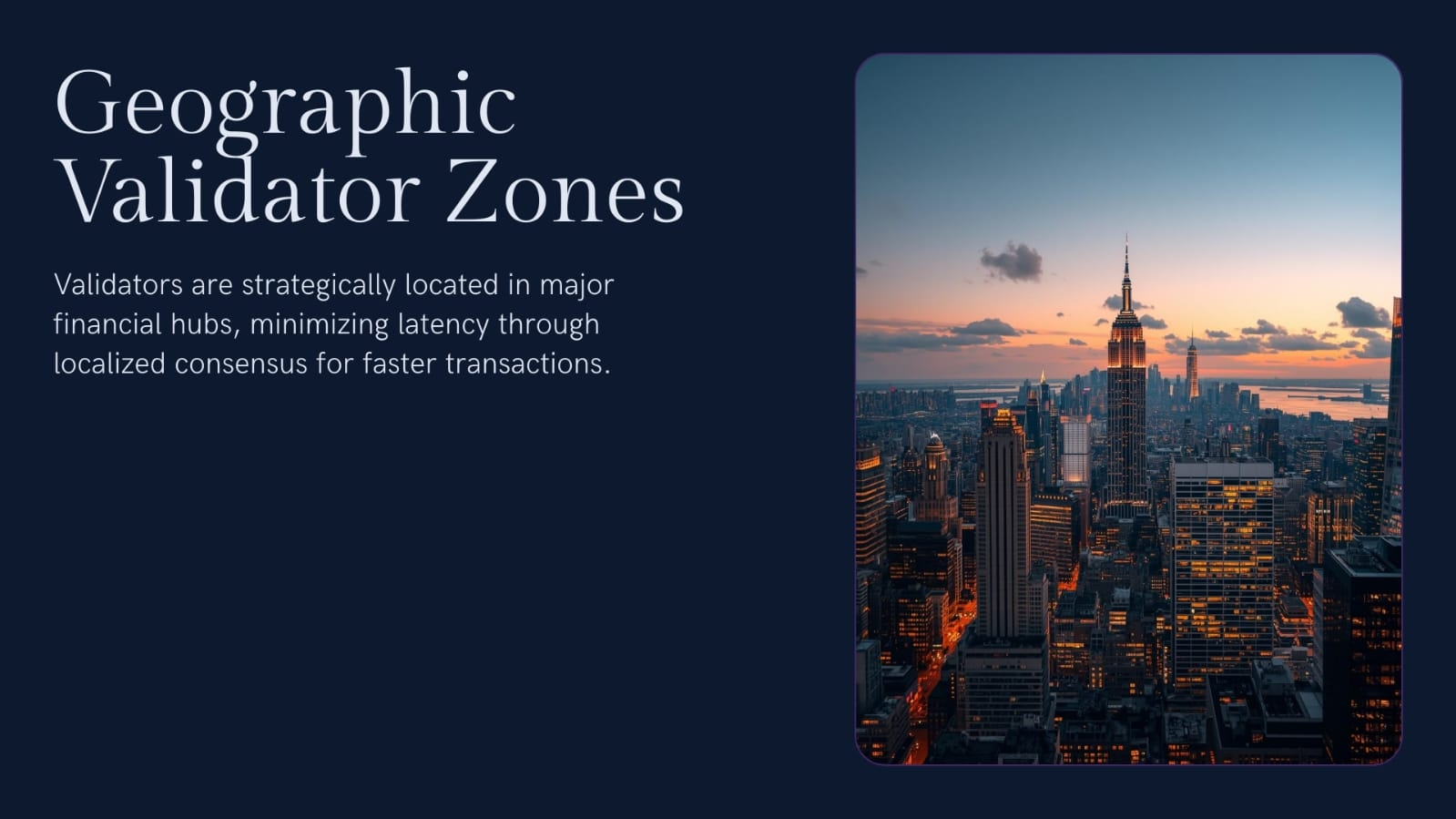
The validators belong to geographic areas (New York, Tokyo, London). Local agreement occurs locally and is then propagated around the world - reducing round trip latency drastically. It is the TradFi is the follow-the-sun model.
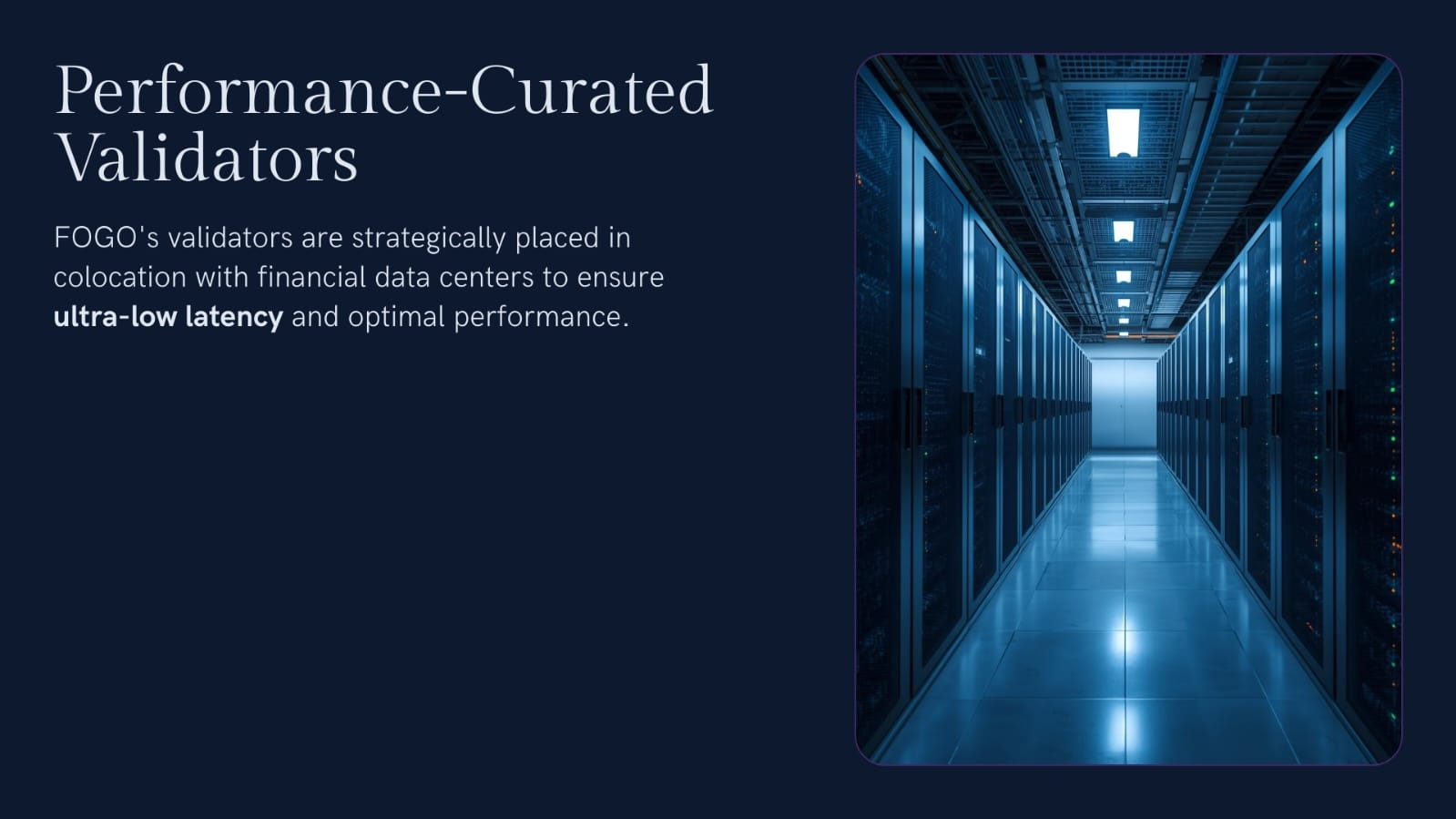
The validator set of FOGO is performance-curated and deployed colocally with the high-speed data centres around major financial centres - the same approach as the exchange matching engines. You do not receive 40ms blocks with validators distributed in a garage basement in Wisconsin.
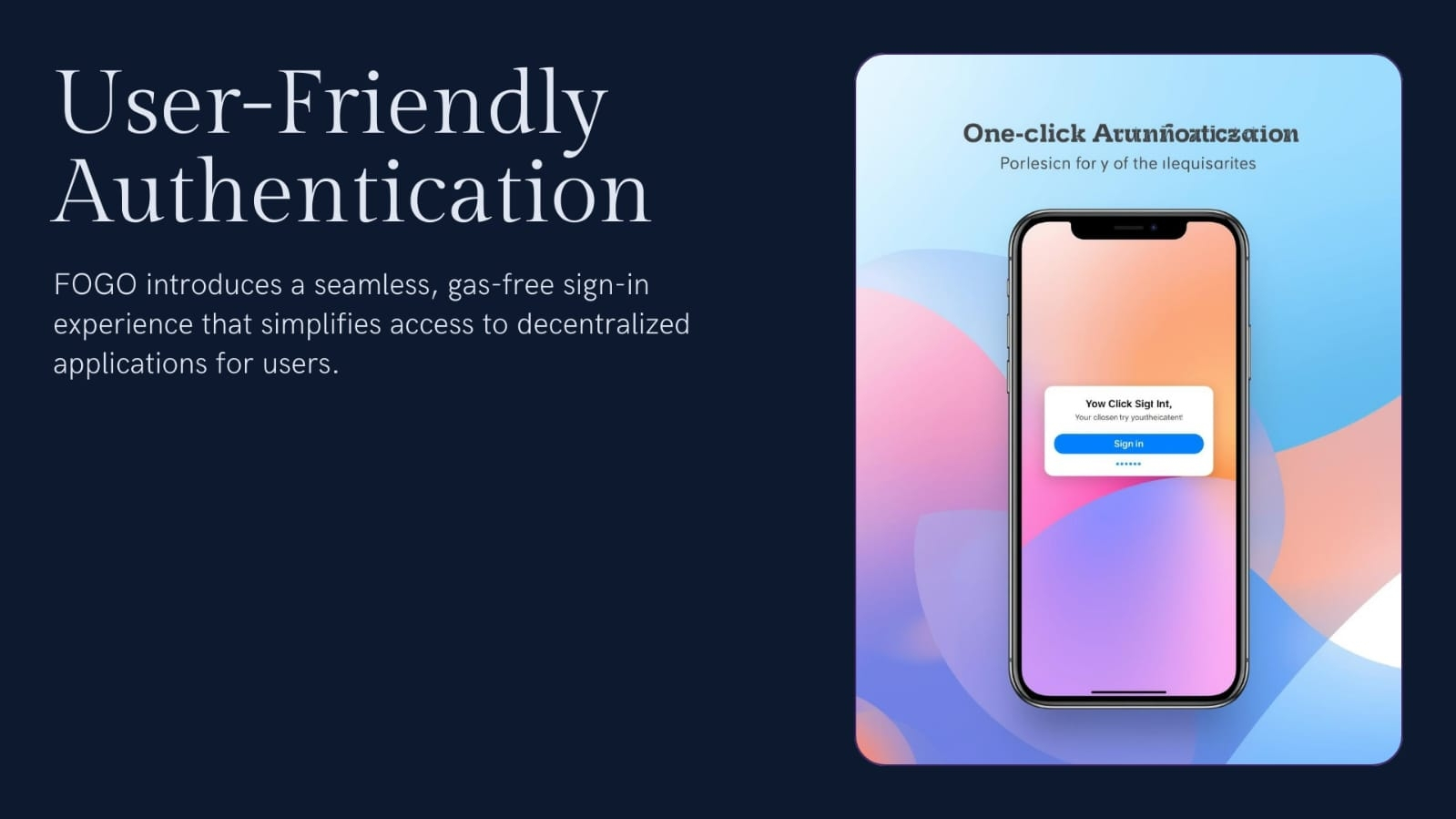
A Sign in with Google style authentication layer that will not require wallet signature prompts at all times. A single click, gasless access to all dApps in the FOGO ecosystem - the first Layer-1.
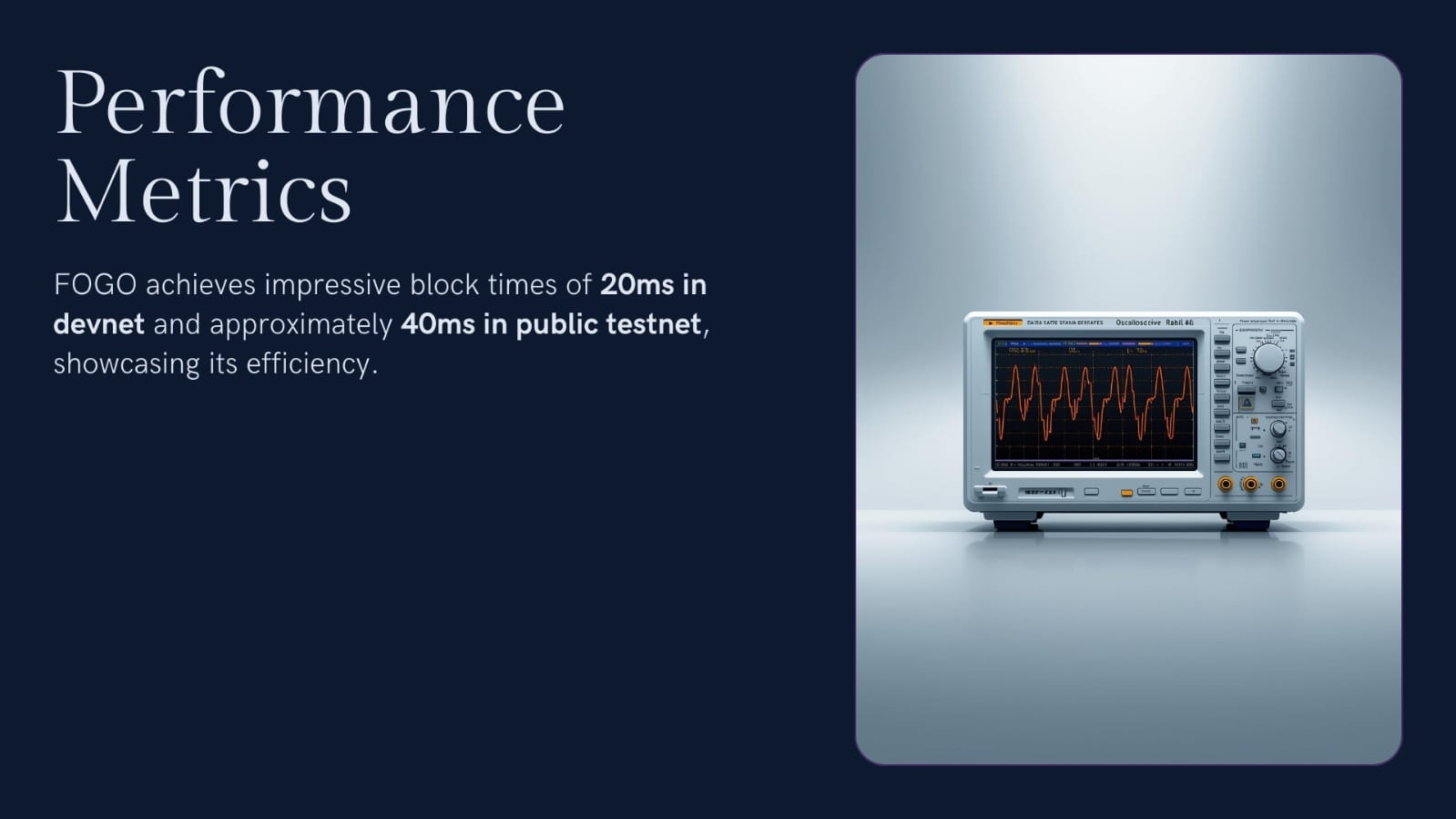
FOGO was able to realize block times of 20ms and throughput of more than 54,000 TPS in devnet. At real-world conditions, public testnet numbers smaller in the order of 40ms were achieved - which is an order of magnitude faster than Solana at scale.
FOGO vs Solana: That is What Each of the Sides does Right.
FOGO wins on:
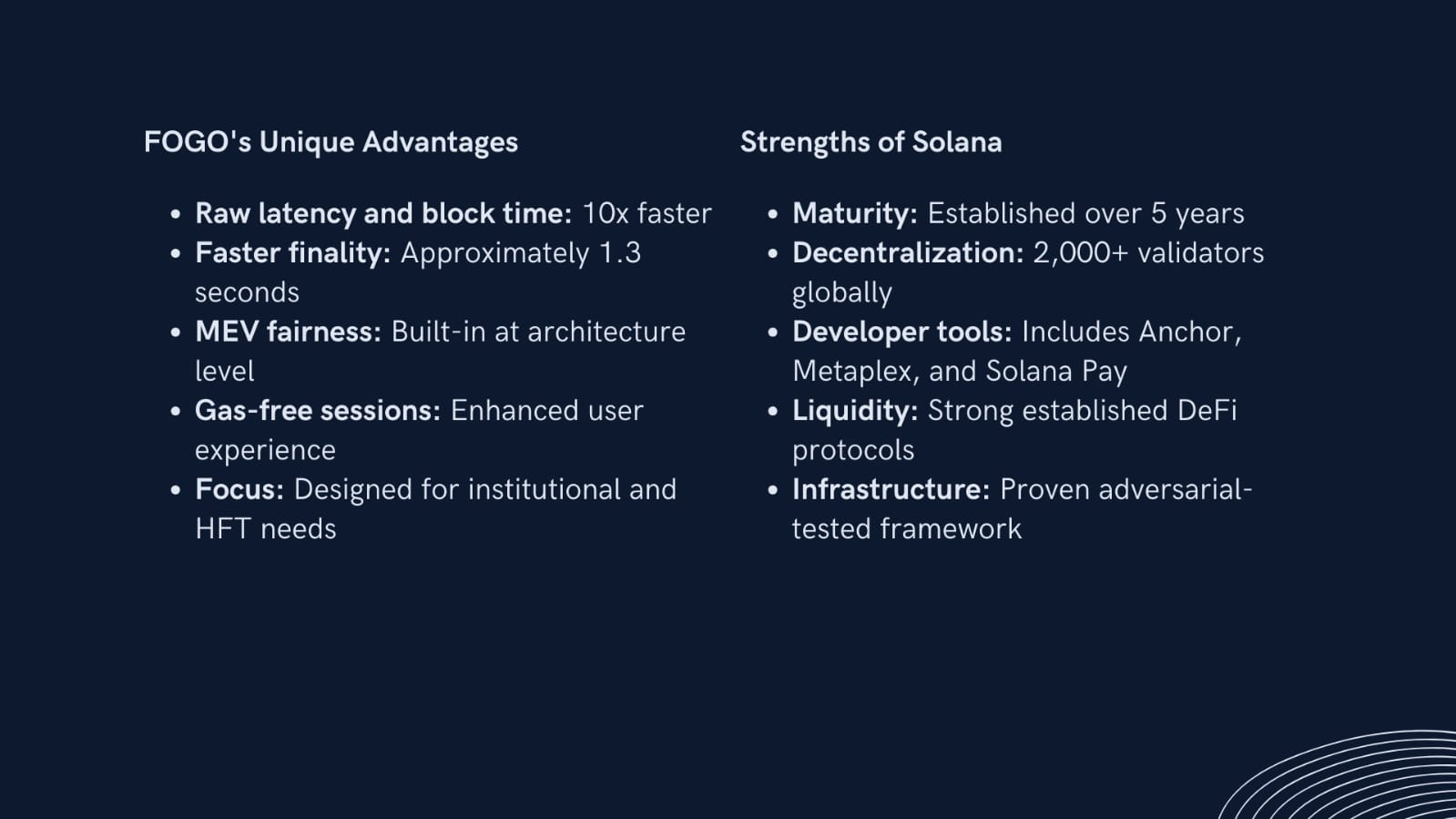
Raw latency and block time (by no means closer - 10 times higher)
Finality speed (~1.3s vs ~2.5-3s)
MEV fairness (not a bolt-on fix, architecture-level)
User experience (gas-free Sessions is actually new)
Institutional and HFT-specifically designed.
Only primitives of DeFi at this latency are possible.
Solana wins on:
Maturity (5 years, 2B Television Library)
Decentralization (2,000+ world-wide validators vs localized curated set)
Tooling developer (Anchor, Metaplex, Solana Pay, etc.)
Liquidity volume (Jupiter, Raydium, Kamino, Marinade)
Adversarial tested infrastructure.
Investment intensity (>300M VC Marketers)
The DeFi Use Cases Where Latency Changes Everything.
Equal applications of DeFi do not exist. In the case of a lending protocol, a couple of hundred milliseconds do not matter. However, there are particular use cases where the architecture of FOGO is more than an improvement, it is an enabler:
On-Chain Order Books (CLOBs)
At 400ms blocks, real-time order books devalue front-runners. It is only at 40ms that true CLOBs fully come on-chain without off-chain compromises.
DFBA: Dual Flow Batch Auctions.
In FOGO, this is being pioneered by Ambient Finance: trades are settled in batched form based on oracle prices, and all of the advantages of speed are eliminated. The end users are charged no fee - the market makers are charged to receive retail order flow in its place. This model cannot exist in a slower chain physically.
Real-Time Liquidations
In leveraged trading, the distance between a clear liquidation and a cascade wiping LPs is often calculated in milliseconds. This is precisely what FOGO aims at: real-time liquidations, minimal slippage and no centralized workarounds are required.
This is what most of them do on this subject overlook: FOGO is perfectly SVM compatible. Solana programs can be developed easily by developers. It is not a zero-sum game, it can be a market-segmentation narrative.
Imagine classic finance: NYSE and NASDAQ coexist with the dark pools, co-location facilities, and the direct market access facilities. Various players require various infrastructure. It is not a matter of which blockchain wins, it is whether the market is big enough to allow the two to flourish in their respective industries.
Solana still remains as the place of consumer DeFi, memecoins, NFTs, and apps where the full breadth of the ecosystem counts. FOGO is now the institutional trading layer - where the market makers and professional traders can transact with exchange-grade infrastructure and do things on-chain that previously could only be done at centralized venues.
The initial indications are good. The testnet of FOGO also had full-time DeFi builders, including ones not solely focusing on retail speculators. DFBA model is truly a new form of financial engineering. And the TradFi institutional experience of the team provides them with the contacts to bring in the institutional liquidity that would prove the FOGO thesis on a large scale.
Below 40ms block times open financial primitives that are actually impossible at 400ms. To professional traders and market makers, this infrastructure gap is the difference between DeFi and non-DeFi usage. FOGO is not trying to exist as a general-purpose blockchain but instead it is attempting to establish the argument that institutional money can be effectively executed on-chain, without having to make the trade-offs that have kept serious money out of the game.
Speed in itself has never created an ecosystem. Mainnet stability during adversarial situations and the ability to draw in a deep liquidity pool and create a signal that its trade-offs on decentralization are palatable by the market remains unproven by FOGO. These are unrestricted questions that can only be answered by time and actual practice.
What FOGO has accomplished in an exceptionally clear way is to express a vision of what on-chain finance might resemble in the event that the infrastructure was finally good enough - and construct the infrastructure to resemble it. Regardless of whether it takes the market share of Solana or stakes out a new institutional niche, the latency race Solana has already initiated will compel all Layer-1s to be faster. It is just worth listening to that.
