

As Web3 apps push for real-time performance, FOGO steps up as a Layer-1 chain that doesn’t just tweak old models—it goes for raw speed and reliability from the ground up.
Introduction — Where Web3 Stumbles
Decentralization? Web3 nailed that part. But scaling? That’s still a mess. Anyone who’s tried to swap tokens or play a blockchain game during busy hours knows the pain: slow approvals, random fees, and jammed networks. These headaches stall everything from DeFi trades to payment systems.
With adoption rising, the big question isn’t “Are blockchains secure?” It’s “Are they fast and cheap enough for the real world?” This is where FOGO makes its pitch—not as another experiment, but as a chain built for apps where performance isn’t optional.
Core Idea — Why FOGO Matters
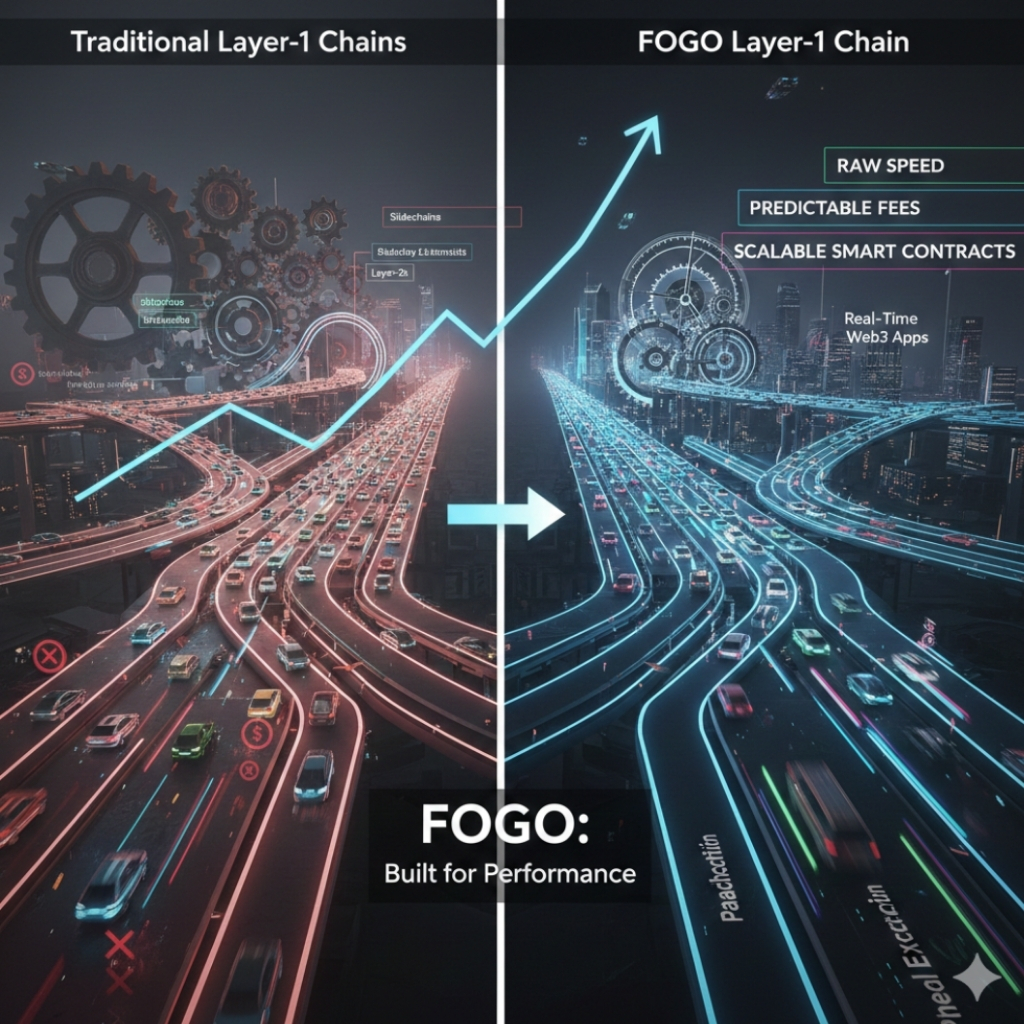
FOGO’s whole strategy is simple: put speed and predictable costs at the core of its Layer-1 design. Other chains stack on scaling solutions or rely on sidechains and workarounds. FOGO skips the band-aids and builds for throughput and low latency right from the start.
That makes it a strong fit for real-time trading, consumer apps with heavy traffic, and any use case where every millisecond counts.
What’s Holding Back Traditional L1s?
Chains like Ethereum focus on decentralization and security, but they process transactions one at a time. That keeps things safe, but it also limits how much the network can handle.
Even newer “fast” chains run into problems: traffic spikes, crazy gas fees, and complicated scaling setups that split activity across multiple layers. Solana, for example, has shown how tricky it is to keep up when apps demand instant responses.
FOGO’s big idea? If you want scale, start by making execution itself efficient—instead of adding endless layers on top.
How FOGO Stands Out
1. Parallel Execution
Instead of lining up transactions one by one, FOGO lets independent transactions run at the same time across the network. That means way more can happen at once—trading, gaming, whatever—without slowing down.
2. Smarter Scheduling
FOGO sorts transactions by their dependencies. If two don’t conflict, they go through together. Users see steady performance, even when the network’s slammed.
3. Predictable Fees
Unpredictable fees kill user experience. FOGO’s design keeps congestion low and execution lean, so developers and businesses know what they’ll pay. No surprises.
4. Smart Contract Environment That Scales
FOGO’s runtime targets performance-first languages and efficient code paths. Devs don’t have to keep reworking contracts or chasing gas optimizations just to handle growth.
Tackling Security Concerns
Sure, fast is good—but not if it’s fragile. FOGO doesn’t cut corners: strong validator decentralization, audited smart contracts, and constant network monitoring keep things safe. The aim is to boost performance without trading away reliability (a trap some high-speed chains fall into).
Who FOGO Is For
Instead of chasing the next DeFi hype cycle, FOGO goes for sectors that need reliable, real-time performance:
- High-frequency trading tools
- Blockchain-powered games
- Global payment systems
- Big consumer platforms
These apps keep transaction volume steady—and they need networks that won’t choke under pressure.
Where FOGO Fits In Blockchain History
You can see the trend. Early blockchains focused on decentralization. Then came programmability. Now, everyone’s fighting for efficient execution. FOGO is part of this new wave—building the backbone needed for apps that actually work at scale.
The Big Realization
FOGO’s main bet is this: the next wave of adoption won’t be won by shiny new features. It’ll go to the chains that deliver fast, cheap, reliable experiences—just like today’s internet services.
What to Watch Next
If you want to track FOGO’s progress over the next few months, look at these signals:
- Testnet speed and reliability benchmarks
- How many developers are building on it
- Real-world use cases going live
That’s how you’ll know if FOGO’s really breaking through—or just another name in the crowd.
