
FOGO is a Layer-1 blockchain built around the Solana Virtual Machine (SVM), and it stands out not for hype but for its focus on consistent execution and developer familiarity. At its core, FOGO aims to provide a reliable environment for decentralized applications that require predictable transaction processing. If you imagine blockchains as highways for digital transactions, FOGO is adding extra lanes to the highway, reducing congestion, and letting applications move without delay.
What makes FOGO interesting is how it positions itself among other SVM-compatible chains. While the Solana ecosystem itself is already known for high throughput, FOGO emphasizes stable performance under varied network conditions. This approach matters for developers who have seen other chains struggle during traffic spikes. For them, the promise of execution reliability rather than speculative speed can be more meaningful. The SVM compatibility ensures that developers familiar with Solana’s programming environment can adapt their applications with minimal changes. This reduces friction and allows projects to experiment without rebuilding their entire codebase.
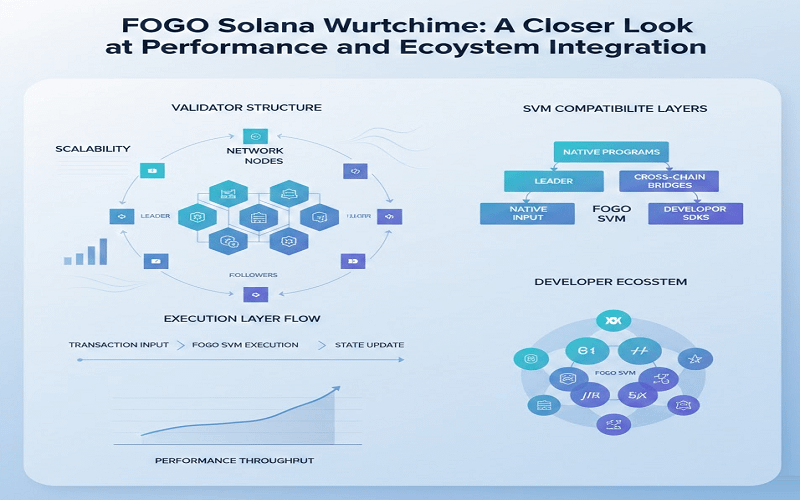
The practical side of FOGO’s architecture becomes clearer when looking at ecosystem integration. Developers are not only seeking speed but also a consistent framework for deployment, testing, and scaling. FOGO’s network is designed to support these needs by maintaining a predictable execution environment. Some decentralized applications have already started testing on FOGO, demonstrating that it can handle real-world workloads. While adoption is not yet widespread, the progress shows that the chain is more than an experimental layer, it’s moving toward practical usability.
One of the subtle advantages of FOGO is its validator structure. Validators play a critical role in any Layer-1 blockchain, and decentralization here is an ongoing challenge. FOGO’s approach attempts to balance performance with security, but like many newer chains, it still faces the task of expanding the validator network to reduce centralization risks. This is a realistic limitation, not a flaw. Developers and users need to consider the network’s maturity alongside its performance, particularly when evaluating applications for production use.
The $FOGO token fits naturally into this ecosystem. It serves as a means for governance, staking, and transaction fees, tying the economic incentives of the network to its operational reliability. For those looking to engage with $FOGO, a cautious approach is prudent. Entry points should be considered in moderate ranges based on market interest rather than emotional reactions to price movements. Similarly, take profit and stop loss levels can be defined realistically, reflecting broader trends rather than attempting to time short-term spikes. The token’s role is tied closely to network activity and adoption rather than speculative excitement.
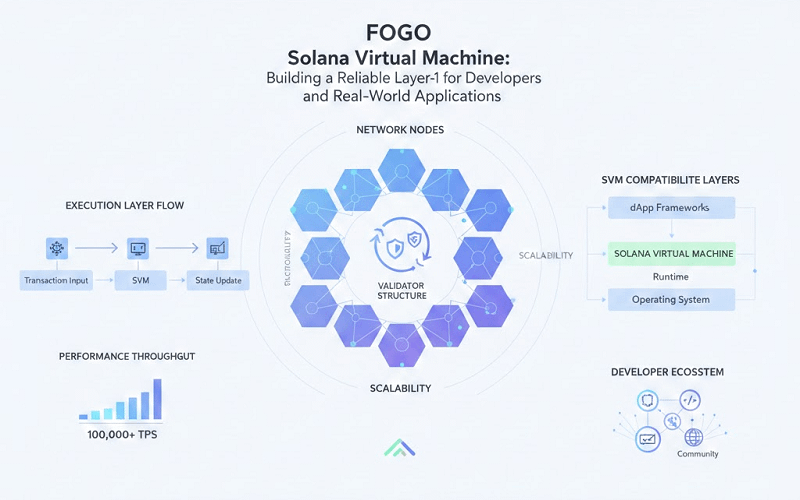
From a developer perspective, FOGO offers a familiar environment that doesn’t compromise on execution efficiency. Smart contracts written for Solana can generally be ported with minor adjustments, reducing learning curves and speeding up deployment cycles. This compatibility is significant because one of the major barriers to adopting a new Layer-1 is the time and effort required to rewrite or reconfigure code. FOGO addresses this by providing an SVM-consistent platform that feels like a natural extension of Solana’s ecosystem.
Ecosystem tools are gradually improving as well. While FOGO is not yet as mature as some older chains, core services for development, monitoring, and integration are steadily expanding. Wallet support, explorer functionalities, and testing frameworks are being refined, creating a more robust environment for developers and users alike. This slow but steady growth points to the network’s focus on foundational stability rather than flashy adoption metrics. Over time, these incremental improvements can make a significant difference in practical usability.
It’s also worth noting the competitive landscape. Many chains today claim SVM compatibility, and FOGO exists alongside them in a crowded field. This context frames expectations realistically: adoption will not happen overnight, and differentiation comes from reliable performance and thoughtful developer experience rather than aggressive marketing. Observing FOGO over time shows that its emphasis on consistent execution, integration readiness, and cautious network growth positions it as a chain designed for sustainable development rather than quick speculation.
For users considering engagement with FOGO, the network offers a quiet but tangible advantage in stability. High-performance Layer-1 chains often claim speed, but consistency is harder to maintain, especially under network stress. FOGO’s approach is methodical: predictable transaction processing, fewer unexpected delays, and a framework that developers can rely on for real-world applications. This approach aligns with broader patterns in blockchain adoption, where long-term usability often outweighs short-term hype.
The project account @Fogo Official serves as a central reference point for updates, discussions, and community engagement. Observers and developers alike can follow it to see how the network evolves and how real-world applications are interacting with the platform. The hashtags #Fogo and #fogo naturally accompany these discussions, marking the chain’s presence in broader conversations about Layer-1 ecosystems without resorting to exaggerated claims.
Looking at token dynamics again, $FOGO is primarily used within the network, making its activity a reflection of adoption rather than speculative momentum. For entry, take profit, and stop loss considerations, a measured perspective helps avoid impulsive decisions. Evaluating price ranges based on network performance, validator participation, and developer activity offers a more grounded approach than reacting to short-term market movements. This reinforces the overall narrative of FOGO as a chain built for stability and practical application.
In terms of real-world adoption, FOGO demonstrates its capabilities through practical testing by small and medium-scale decentralized applications. Early deployments reveal how the network handles execution under normal traffic and during short-term spikes. These case studies show that while FOGO is not yet dominating the SVM landscape, it provides a predictable environment where developers can plan deployments and scale gradually. This practical approach to adoption reflects the chain’s underlying philosophy: slow, steady growth with a focus on functional reliability.
FOGO also highlights the importance of ecosystem maturity. Tools for development, monitoring, and integration are evolving, but developers need to account for gaps when planning projects. Core services are improving, yet some features common on older, more established chains are still being refined. This gradual development is not a weakness but a realistic snapshot of any emerging Layer-1 network trying to balance performance, decentralization, and developer experience.

Validator decentralization remains a key point. While the network has made progress in increasing participation, there are still limitations in terms of geographic and organizational diversity. Achieving a fully decentralized validator structure is a work in progress. Observers should view these limitations as part of the natural development curve rather than flaws, understanding that decentralization at scale takes time and measured effort.
Ultimately, FOGO’s appeal lies in its thoughtful design and attention to execution reliability. By focusing on predictable transaction processing, developer compatibility with SVM, and gradual ecosystem growth, it positions itself as a practical option for Layer-1 applications. The network does not rely on hype or flashy announcements; it emphasizes substance over spectacle, which may appeal to developers and users who value stability over marketing noise.
The quiet, careful evolution of FOGO can be seen as a reflection of broader trends in blockchain technology. High-performance networks attract attention for their speed, but real-world adoption depends on consistency, ecosystem readiness, and realistic management of limitations like validator decentralization and tool maturity. FOGO demonstrates these principles in action, building a network that, while not the fastest in headlines, aims to be dependable and usable for those who engage with it thoughtfully.
Even in a crowded SVM-compatible space, FOGO quietly underscores the importance of foundational stability. Its methodical growth, reliable execution, and developer-friendly environment suggest that high performance and practical adoption can coexist without noise. Observing this evolution offers a subtle but meaningful insight into what sustainable Layer-1 development can look like in the Solana ecosystem.