

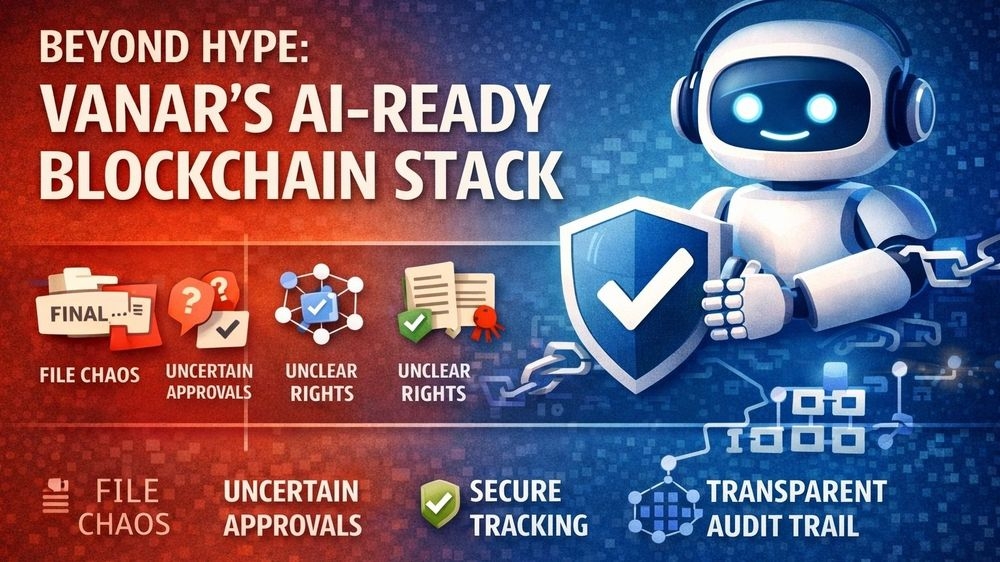
There’s a strange truth about builders: they fall in love with reliability, not flash. While headline-grabbing features and viral hype draw attention, the teams that actually build, ship, and scale products choose the predictable over the glamorous. That is Vanar’s real, underappreciated edge. Beneath the AI buzz and ambitious roadmaps, Vanar is quietly assembling the sort of infrastructure that teams can plug into and trust. It isn’t exciting to write about, but it is everything that matters when a product leaves the lab and starts carrying users.
Think of Vanar as plumbing. Plumbing is unsexy until your sink leaks at 2 a.m. Then plumbing becomes the only thing you want to talk about. A blockchain that behaves like dependable plumbing—one you can connect to in minutes, test safely, monitor easily, and ship from with confidence—wins over time. Builders don’t want to gamble on a shiny feature set if the network can’t be reached or if tools are missing. Vanar’s focus on reliable fundamentals turns it into a platform people don’t just try, they adopt.
The simplest measures reveal whether a chain is usable. Builders ask blunt, practical questions: What’s the RPC endpoint? Is there a WebSocket feed? What is the chain ID? Is there an explorer? Is the testnet stable? Can a team onboard in less than a week? If those answers are murky, teams move on. Vanar answers them plainly. Mainnet and testnet endpoints, WebSocket support, chain IDs, a token symbol, and an official explorer are all part of the documentation. That terseness and clarity is quiet power. It eliminates guesswork. It shortens the path from curiosity to deployment.
Developer friendliness is often pitched like a marketing line. Real developer ease is measurable in minutes spent configuring wallets, adding a network to MetaMask, or integrating with existing tooling. Vanar accepts the pragmatic default that works: EVM rails and standard network conventions. That choice is not lazy. It’s deliberate risk reduction. Teams already familiar with the EVM toolchain can bring their stacks, their CI pipelines, and their operational assumptions intact. When onboarding is a few clicks rather than a rewrite, the economic cost of experimentation drops. And communities grow because nontechnical stakeholders—designers, product managers, QA—can join the loop without friction.
Where a chain proves its mettle is not the hype around mainnet launches; it is the story of the testnet. Testnets are where bugs are uncovered, load patterns are simulated, and the repeatable workflows that support production are built. Vanar’s documentation separates endpoints and chain IDs for testnet and mainnet, and treats the testnet as a product. That matters because Vanar’s bigger vision depends on continuous activity—agents, automation, systems running around the clock. Those systems cannot be launched by guesswork. They require a safe environment to iterate, reproduce failures, and harden automation. Projects that treat their testnet as a second product are the ones teams trust to scale.
If you believe in an agent-driven future—software acting continuously, reacting in real time—then always-on connectivity is not optional. WebSockets are not a nicety. They are a requirement. Live feeds, event streams, and real-time feedback loops power automation, monitoring, and user-facing features that must feel instantaneous. Vanar’s support for WebSocket endpoints signals that it was designed with this reality in mind. That choice will not create Twitter storms, but it will show up where it matters: in uptime dashboards, in fewer midnight incidents, and in teams that choose stability over speculation.

A public block explorer is more than an index of blocks. It is the single source of truth. When things go wrong, people don’t reach for whitepapers—they open the explorer. Support teams, auditors, exchanges, and engineers all rely on explorers to trace transactions, diagnose failures, and build trust. Vanar includes an official explorer as part of its infrastructure story. That small, obvious inclusion changes perception: it signals that the chain expects real usage, real commerce, and the kinds of operational scrutiny that businesses demand.
Equally important is transparency around nodes and operators. Long-lived chains are maintained by an ecosystem of indexers, RPC providers, monitoring tools, and operators. Vanar’s documentation doesn’t stop at endpoints; it includes clear guidance for node and RPC setup. That matters for operators who ensure the network’s stability. It matters for enterprises that need to understand operational roles and runbooks. Documentation like this converts curiosity into commitment. It tells infrastructure teams that the chain was built to be maintained, not just launched.
Compatibility in Vanar’s case is risk management. Calling out EVM compatibility as convenient is understating it: for businesses, compatibility lowers the unknowns. Maintenance, hiring, audits, and integrations already carry high costs. Familiar tools and workflows mean fewer surprises. Vanar’s inclusion in mainstream infrastructure directories and compatibility with existing stacks shortens the runway for teams to move from proofs of concept to production systems. That’s why compatibility is less about convenience and more about survival when the stakes are real.
When you add these small, practical choices together—clean endpoints, reliable documentation, simple wallet setup, a stable testnet, an official explorer, operational playbooks, and seamless tooling compatibility—you get more than a chain. You get an environment where teams can experiment without existential fear. You get an AI-native thesis that can be tested, measured, and iterated on. That is what sets Vanar apart: not the loudest features, but the quiet infrastructure that lets features matter.
This is the kind of advantage that compounds. Marketing spikes can bring attention, but they do not create long-term products. What sustains ecosystems are platforms teams can depend on. When developers can connect in minutes, test reliably, and ship without anxiety, they stop treating a chain as a trial and start treating it as a home base. Once a platform becomes the default place teams ship from, everything else—agents, memory layers, payments, tokenized assets—has a much better chance of flourishing.
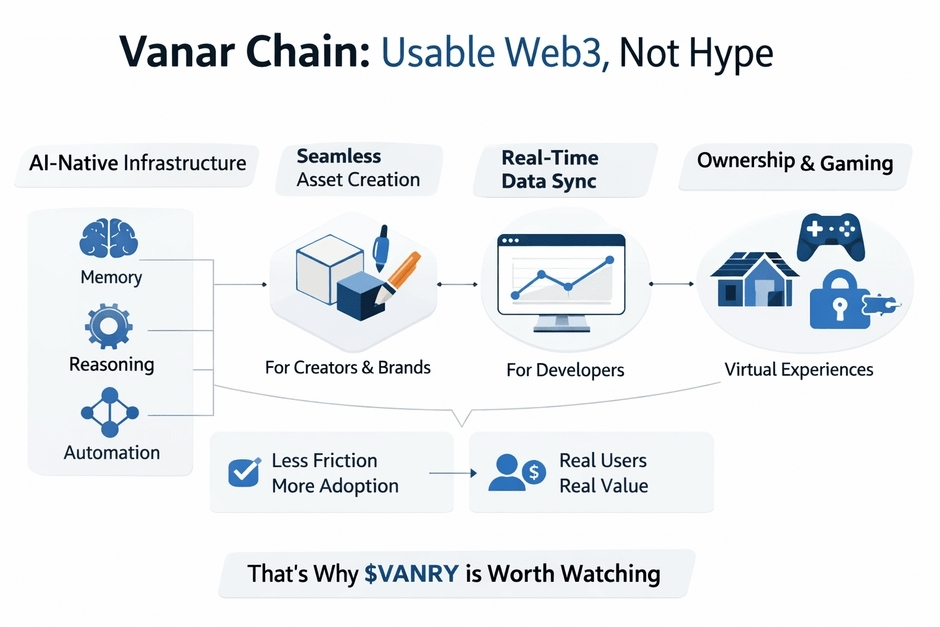
The final point is blunt: the most durable advantage in infrastructure is predictability. Predictability is unromantic. It won’t trend. But it will keep systems running when the lights go out and will earn the quiet loyalty of people who build the future. Vanar’s plumbing is boring by design. That is its strength. Over time, silent, dependable platforms don’t just survive. They become the foundation everything else is built on.
