
I’ll be honest. Most chains say they’re “built for payments,” but very few ever make crypto feel like real money. @Plasma is starting to break that pattern, not because of flashy announcements, but because people are actually using it.
What’s changed isn’t just technology. It’s behavior.
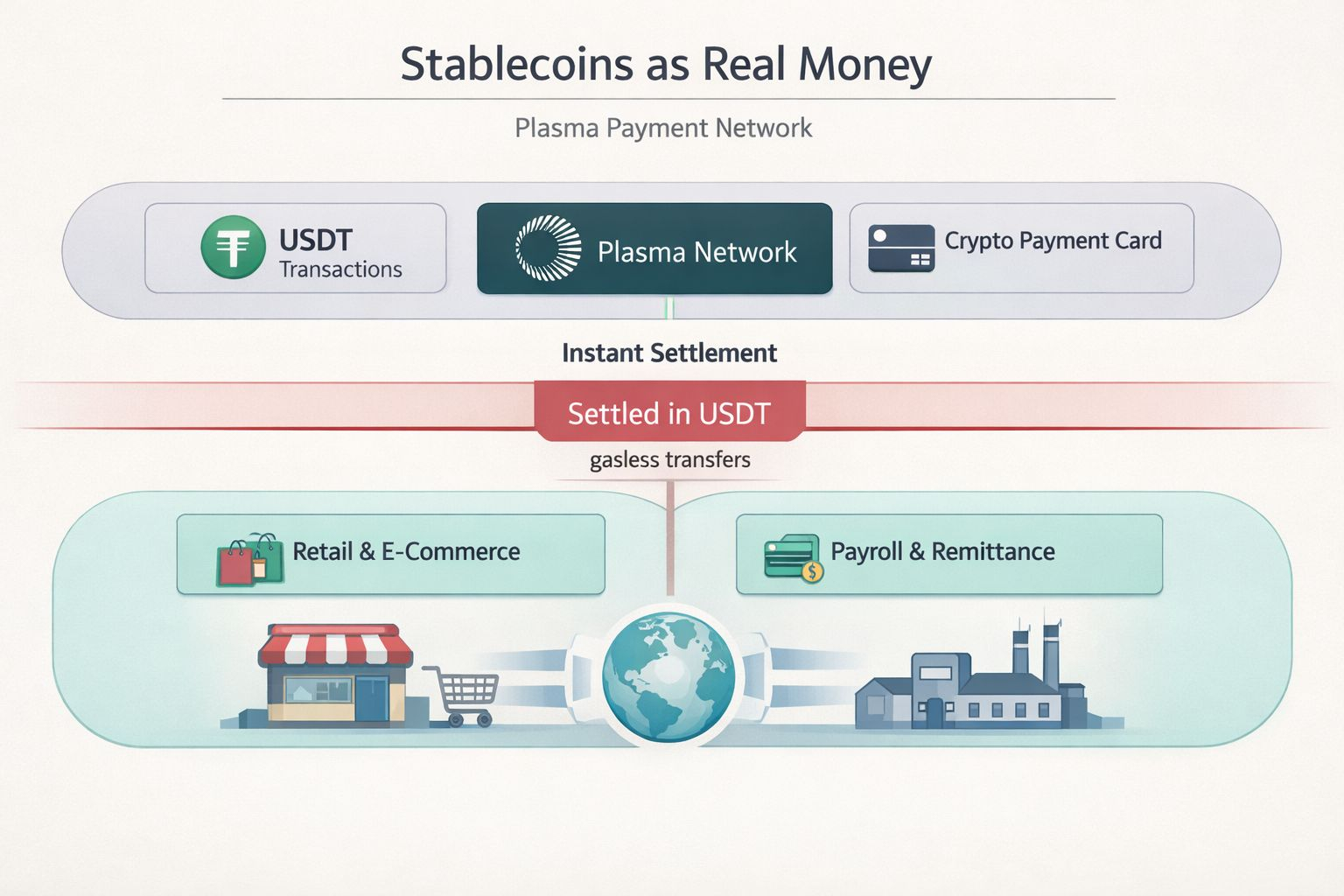
USDT on #Plasma is now being spent at millions of merchant locations globally through card integrations. This isn’t a pilot or a niche crypto card demo. From the user side, you pay like normal. From the merchant side, they receive USDT. And because transfers are gasless, fees don’t quietly eat into margins. That’s exactly how stablecoins are supposed to work.
Payments shouldn’t feel like crypto. They should feel like money.
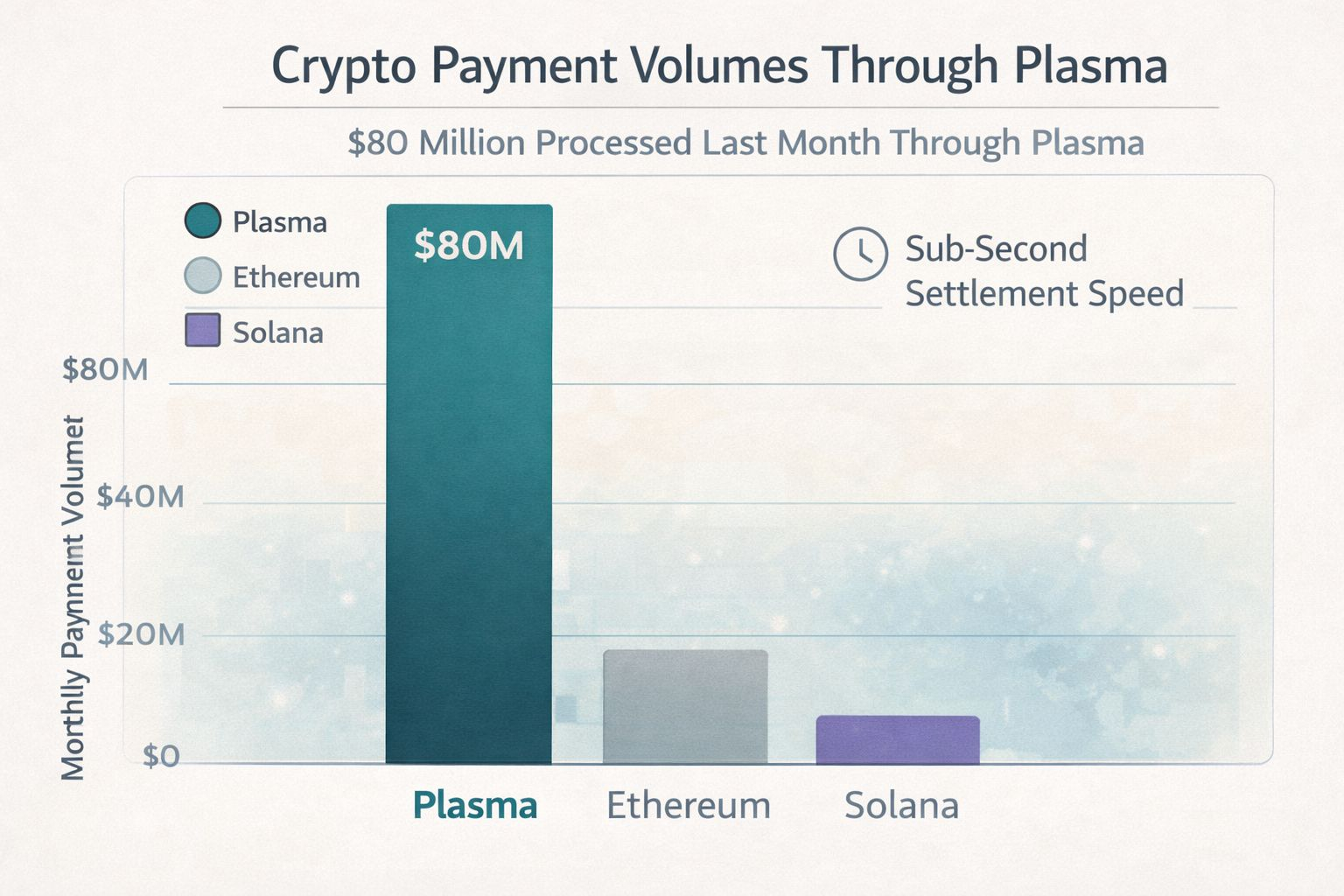
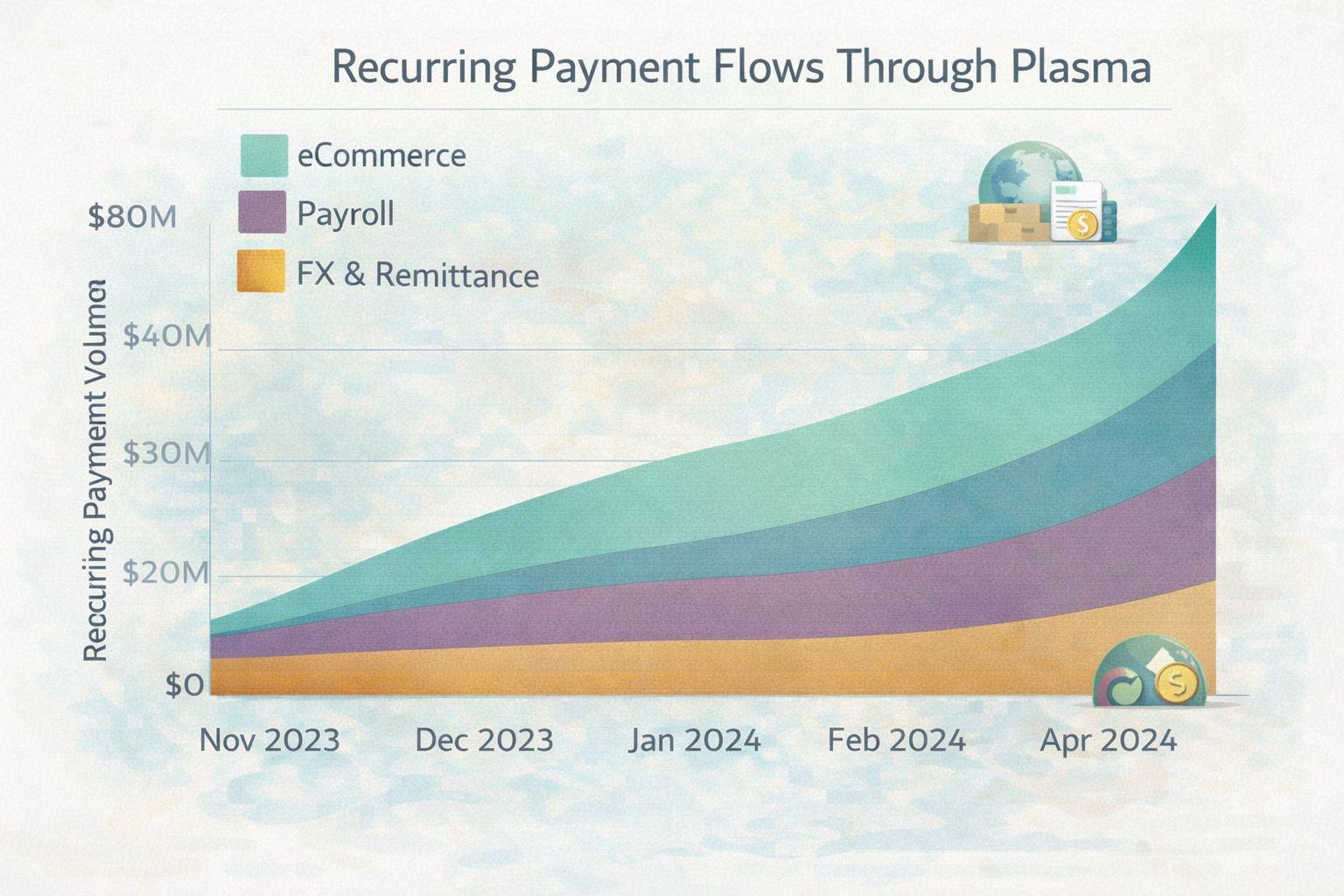
What makes this more interesting is who’s using it. This isn’t just retail experimentation. Real payment processors are running volume through Plasma today. One example is processing around $80 million per month, covering e-commerce, payroll, and FX-related flows.
This isn’t test volume.
This is recurring, operational payment flow.
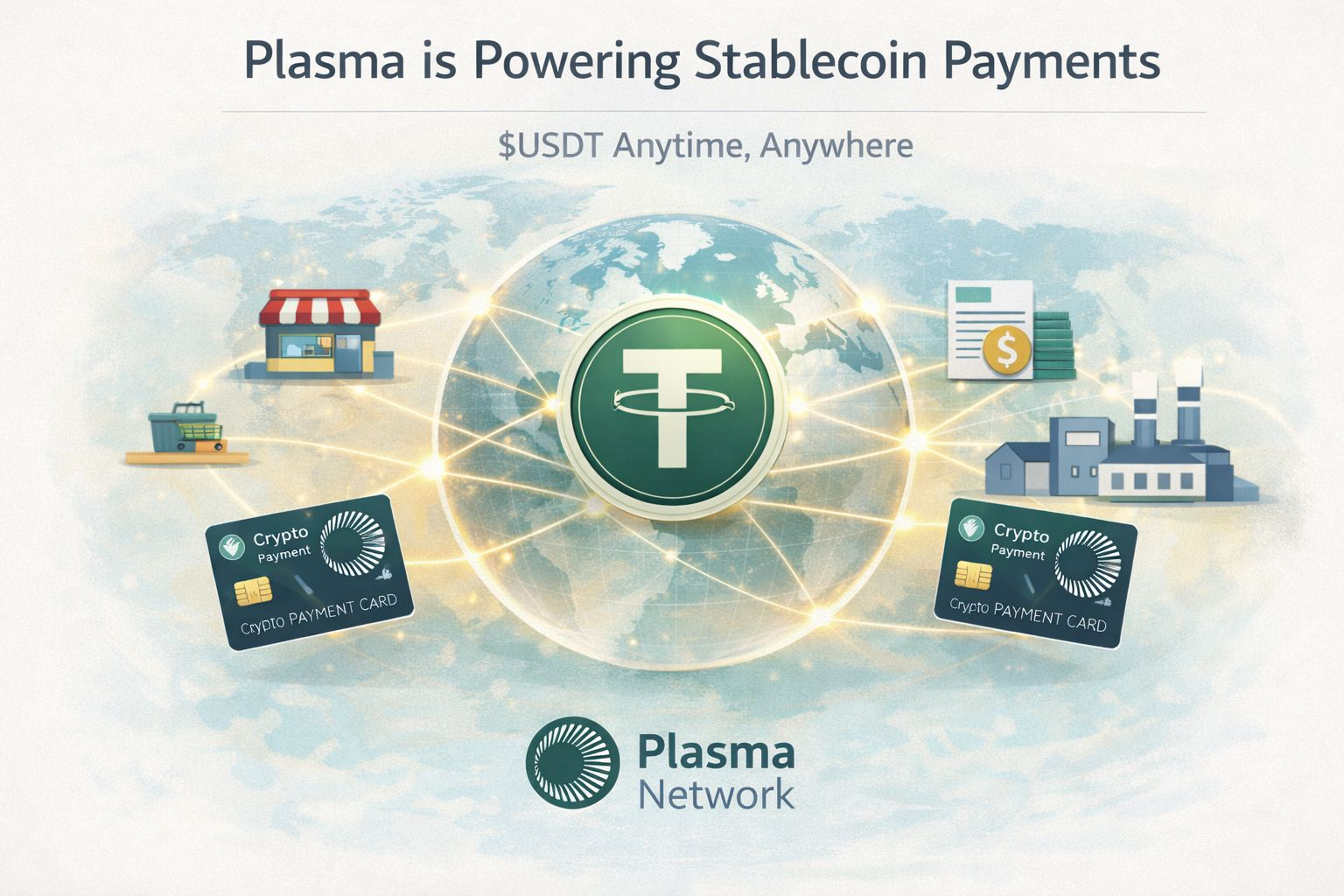
Businesses don’t care about narratives or roadmaps. They care about whether money settles fast, costs are predictable, and systems don’t break under load. Volume like this suggests Plasma is holding up under real-world conditions.
Speed plays a big role here. Sub-second finality sounds like a spec-sheet line until you remember how slow most crypto payments still feel.
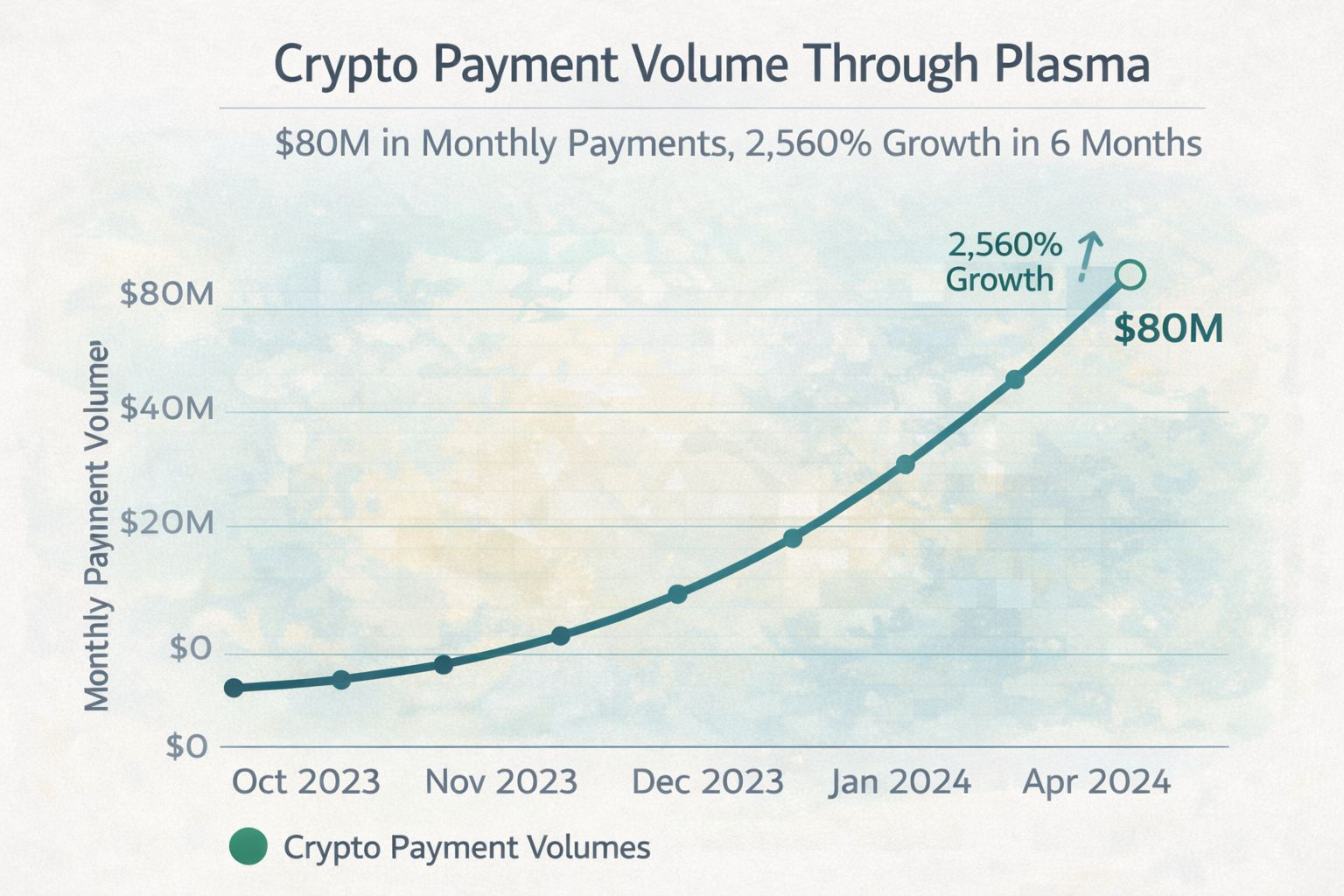
Instant settlement changes behavior. Merchants don’t wait for confirmations. Payroll doesn’t lag. Reconciliation becomes simpler. Plasma is clearly built for the moment when users stop asking, “Is this confirmed yet?” because it already is.
The UX decisions reinforce that focus. Gasless USDT transfers and stablecoin-first gas remove one of crypto’s longest-running pain points.
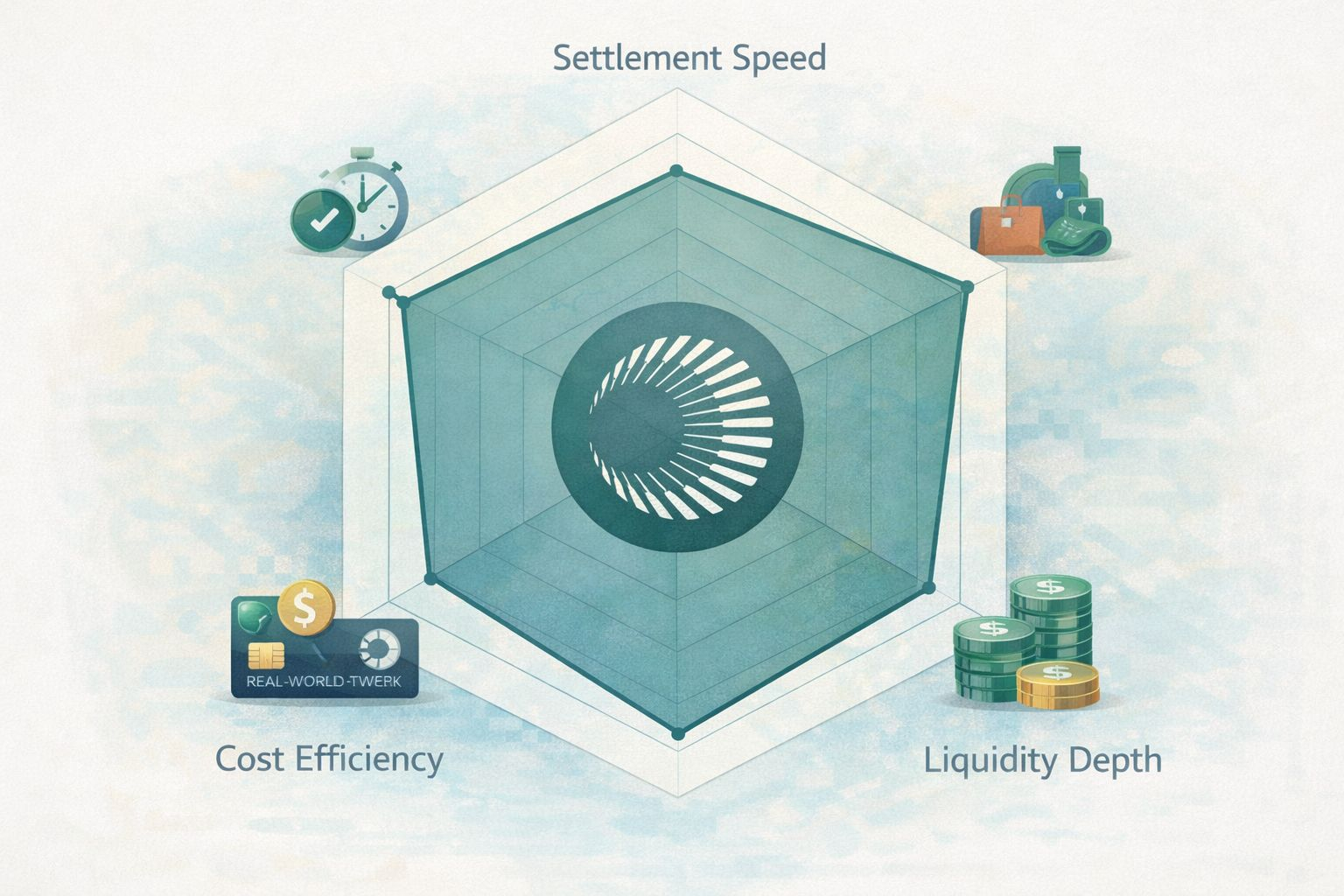
No volatile gas token. No mental math. No explaining fees in something that isn’t dollars. You send USDT. You pay in USDT. Done.
It sounds boring. And that’s the point.
Plasma’s ecosystem strategy also matters. Instead of locking liquidity inside one chain, it integrates with broader cross-chain settlement frameworks. USDT and $XPL can move across dozens of chains through aggregated liquidity pools. For a settlement layer, that’s essential. Money needs to flow through the fastest and cheapest route, not get stuck behind chain loyalty.
Liquidity depth is following usage. Stablecoin pools tied to USDT on Plasma have grown significantly, with connected ecos
ystems pushing into the hundreds of millions and beyond. Settlement chains don’t just need speed. They need enough liquidity to absorb real volume without slippage or instability.
On security, Plasma is playing a longer game. Its Bitcoin-anchored security model isn’t flashy, but it sends a clear message. As stablecoins become more politically sensitive, neutrality and censorship resistance stop being abstract ideas. They become requirements. Anchoring settlement guarantees to Bitcoin looks less like a design choice and more like future-proofing.
That doesn’t mean there are no risks. Competition is intense. Ethereum L2s are improving UX fast. New payment-focused chains keep launching. Upcoming token unlocks will test market confidence and liquidity dynamics. Plasma still needs to prove that growth in usage can consistently outpace market noise.
But Plasma isn’t trying to be everything. It’s trying to be dependable.
• Fast settlement.
• Predictable costs.
• Real-world integrations.
• Minimal friction.
That’s not the kind of story that explodes overnight. It’s the kind that compounds quietly.
If stablecoins really are becoming the default money layer of the internet, then the chains that treat them as actual money, not just DeFi tools, are going to matter most.
Do you think stablecoins win through better UX, or through regulation first?

