
Most chains feel like they’re built for people who already live inside crypto. Vanar feels like it’s aimed at the people who don’t because the starting point isn’t “learn wallets,” it’s “use products that feel normal.”
Vanar is an L1 blockchain designed from the ground up to make sense for real world adoption.
Vanar team has experience working with games, entertainment and brands, their technology approach is focused on bringing the next 3 billion consumers to web3.
Vanar incorporates a series of products which cross multiple mainstream verticals, including gaming, metaverse, AI, Eco and brand solutions. Known Vanar products include Virtua Metaverse and VGN games network. Vanar is powered by the VANRY token.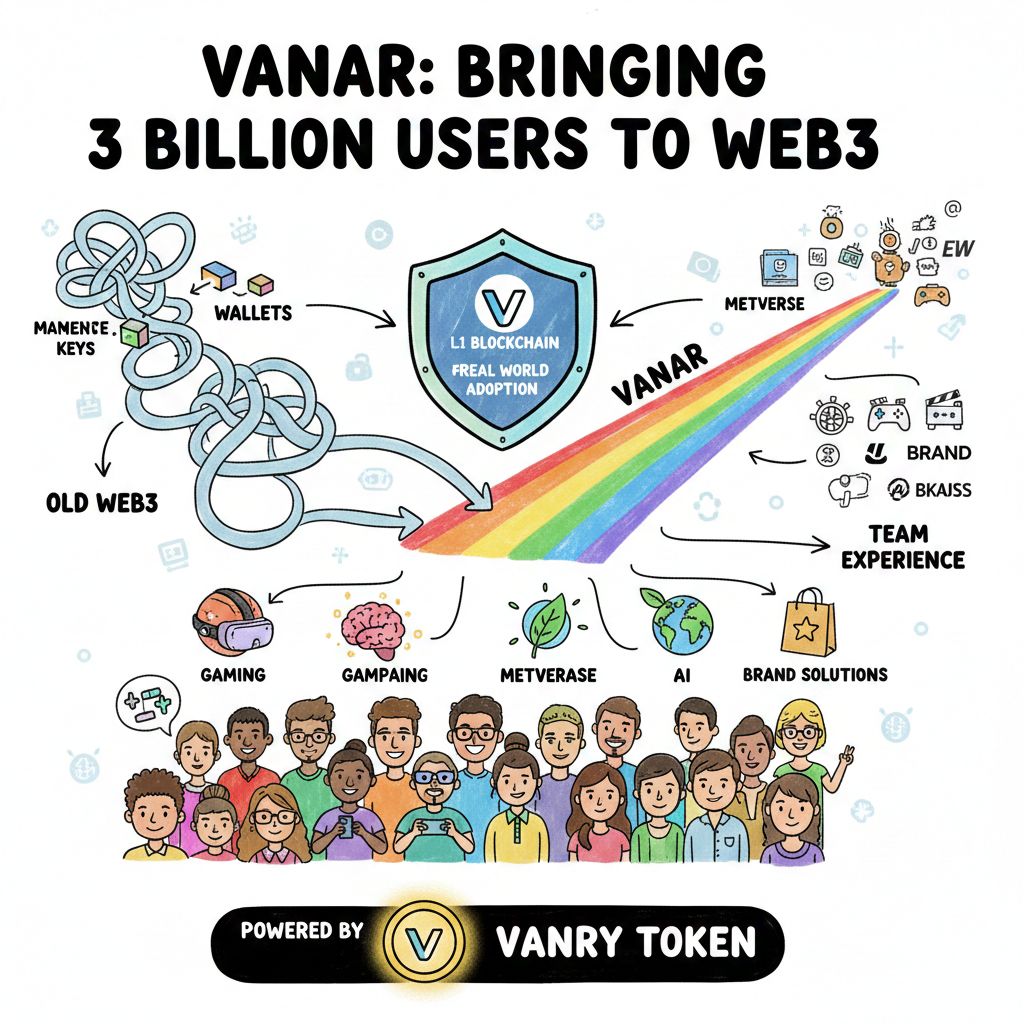
When I think about “real world adoption,” I don’t picture people debating block times. I picture someone buying a game item, unlocking a perk at an event, or proving they own somethingwithout needing to understand what chain they’re on. That’s where Vanar’s background in gaming, entertainment, and brands becomes more than a fun detail. Those industries punish friction. If the experience isn’t smooth, users leave. So a team coming from that world tends to build with a different kind of discipline: not just “does it work,” but “does it feel effortless.”
The ecosystem angle matters too. Virtua Metaverse is described as building its Bazaa marketplace on Vanar, which hints at actual consumer-facing use cases rather than purely crypto native experiments. And the overall product direction on Vanar’s site leans into turning data into something usable especially through its Neutron layer, which is presented as a way to transform raw files into compact “Seeds” that keep meaning attached, not just storage links.
One specific detail that sticks out is the Neutron claim about compression an example that says it can compress 25MB into 50KB. Even if you treat that as a best-case scenario, the intent is clear: make “messy real world stuff” (documents, content, records) cheaper and easier to bring into a form apps can verify and reuse. That’s the kind of boring, practical problem that actually blocks adoptionbecause the world runs on PDFs, forms, receipts, and rules, not just tokens.
And if you want a cold, numbers only reality check, Vanar’s mainnet explorer shows the network isn’t empty. The homepage counters list 193,823,272 total transactions, 28,634,064 wallet addresses, and 8,940,150 total blocks. Those figures don’t automatically equal “millions of real people,” but they do suggest there’s enough on chain activity to measure and evaluate, which is more than many projects can honestly show.
On the token side, the Ethereum token page for the contract you shared shows max total supply as 2,221,316,616 VANRY and lists 7,503 holders at the time of viewing. Again, not a victory lap just a footprint you can verify.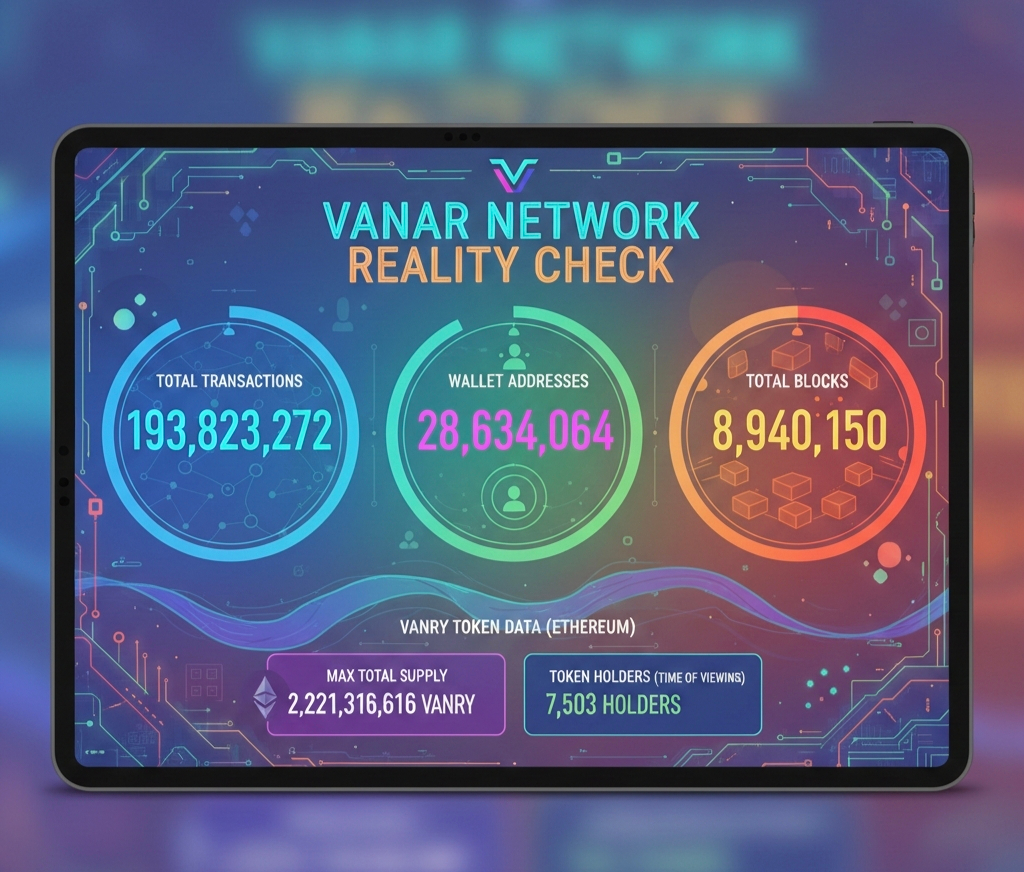
The reason I keep coming back to Vanar’s framing is simple: mainstream adoption won’t happen because crypto gets louder. It happens when crypto gets quieter when the chain fades into the background and the product feels like a normal app, but the proof and ownership still work. If Vanar keeps pushing in the direction of consumer-first experiences across gaming, metaverse, AI, eco and brand solutions, then “next 3 billion” stops sounding like a slogan and starts sounding like a design target you can actually test.
