
When I look at Dusk Network, I do not see another privacy focused token trying to stand out in a crowded field. I see an attempt to build the kind of base infrastructure that real financial systems can actually rely on. After more than six years of development, Dusk launched its main network on January 7, 2025. To me, that moment felt less like a finish line and more like the opening of a longer and more serious chapter.
The idea is simple but ambitious. Payments, asset issuance, and settlement should be able to happen directly on chain while sensitive information stays protected. At the same time, audits and regulatory checks should still be possible when required. Since launch, the team has pushed forward with upgrades that focus on regulated payments, Ethereum compatible smart contracts, new staking mechanics, and tools for real world asset tokenization. By splitting responsibilities across layers and enabling cross chain connections, Dusk is trying to appeal to builders and institutions that care about both privacy and legal certainty.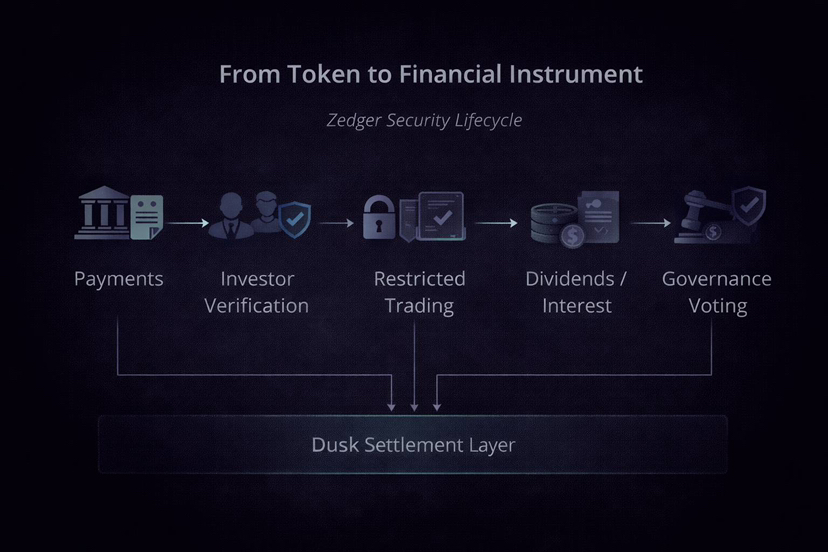
Regulated Payments That Fit Inside Existing Rules
One of the first things Dusk rolled out after mainnet was Dusk Pay. From my perspective, this is not just another payment feature. It is a system designed to operate within real financial frameworks while still using blockchain rails.
Dusk Pay is built around a digital token that represents real money in a regulated form. That allows individuals and institutions to make payments that can be legally recognized, especially under European financial rules. Compared to traditional payment systems, the transfers can be faster and cheaper, but they still live inside a compliant structure.
What I find important is how privacy is handled. Transaction details can remain confidential for everyday use, yet regulators are not locked out. Oversight is possible without turning the system into a public surveillance tool. In plain terms, users get discretion and authorities get accountability.
A Smart Contract Layer That Feels Familiar to Developers
To reduce friction for builders, Dusk introduced Lightspeed. Instead of forcing developers to learn an entirely new environment, Lightspeed is designed to work like Ethereum. Familiar tools and programming languages still apply.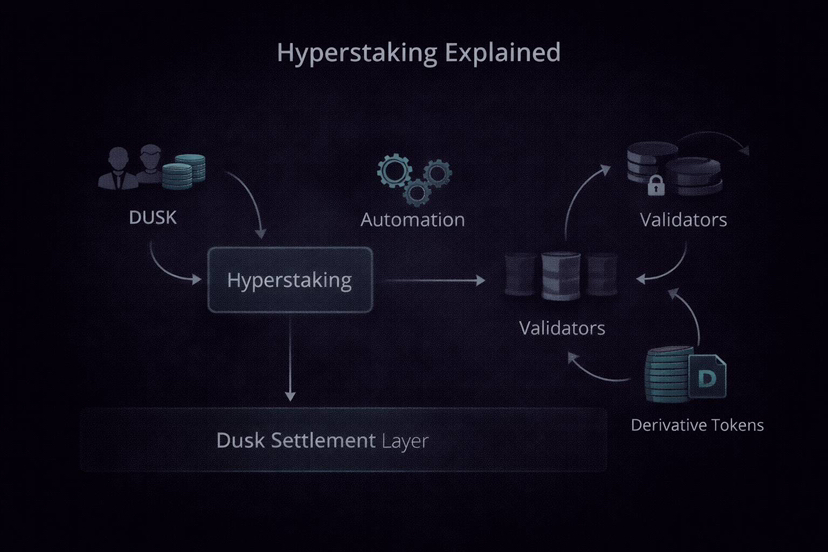
The architecture separates concerns. Execution happens on a smart contract layer, while settlement, security, and privacy stay on the core chain. I see this as a practical choice. It allows upgrades and experimentation without risking the integrity of the entire system.
Right now, transactions finalize after a short delay, but the roadmap points toward much faster settlement. For developers, the appeal is clear. You can deploy Ethereum style contracts and still benefit from built in privacy. Contracts can stay confidential by default and selectively reveal information only when proof is needed, such as during compliance checks. With cross chain connections planned, assets created on Dusk can also move between Ethereum, Solana, and the Dusk environment.
Making Staking Less of a Chore
Staking on many networks feels like work. You lock tokens, wait, manage delegations, and hope nothing goes wrong. Dusk takes a different approach with hyperstaking.
In this model, smart contracts can manage staking automatically. I can imagine users joining staking pools where the contract handles the complexity. At the same time, derivative tokens let users keep liquidity while still earning rewards.
Hyperstaking also opens the door to more creative setups, like sharing rewards with users who bring new participants. Staking starts to look more like a flexible financial tool rather than a technical obligation.
The traditional rules are still there. There is a minimum amount to stake, no maximum cap, and a short activation period. Unstaking does not come with penalties. Token issuance is stretched over decades, with rewards gradually declining. Validators who misbehave are suspended temporarily rather than permanently wiped out. To me, this signals a focus on long term stability instead of short term punishment.
Turning Real World Assets Into Usable On Chain Instruments
Beyond payments and staking, Dusk is clearly focused on real world assets. This is where Zedger comes into play.
Zedger is built for assets that must obey strict legal rules. These tokens know who is allowed to own them. Transfers are restricted. Investor identities are verified. All of this logic lives inside smart contracts instead of being bolted on later.
Real assets also come with edge cases. Dividends need to be paid. Votes must be counted. Courts sometimes require changes. Zedger includes these realities by design. If someone loses access to a wallet or a legal authority intervenes, authorized parties can act. Only approved investors can hold or trade these tokens. That turns tokenized assets into real financial instruments rather than symbolic representations.
One Chain With Both Public and Private Flows
Dusk supports two transaction styles on the same network. One is fully transparent, where balances and transfers are visible. The other is private, where sender, receiver, and amount are hidden using cryptography.
Even in private mode, the system still proves that transactions are valid. If needed, specific details can be revealed later for audits or disputes. What matters to me is that assets can move between public and private modes without leaving the chain. This allows open systems and regulated products to coexist instead of being split across different networks.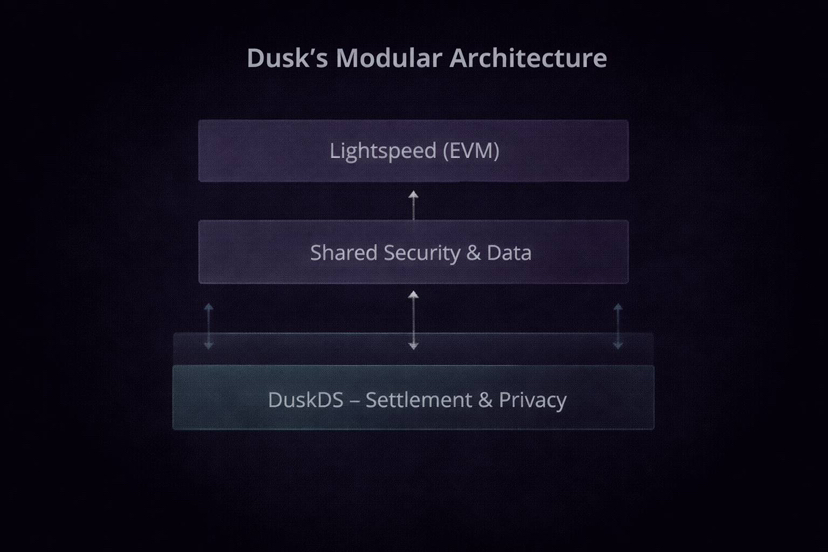
Bridges and Modular Growth
As the network becomes more modular, bridges play a larger role. Tokens can move between the settlement layer and the smart contract layer. Assets used in private transactions must first be made public before crossing layers, which keeps accounting clean.
Once bridged, DUSK tokens are used for fees and contract execution. Over time, secure cross chain connections will allow assets to interact with other ecosystems. When mainnet launched, older tokens were burned and replaced with native ones, creating a clean supply foundation. Ethereum compatibility lowers the barrier for developers who want privacy without abandoning existing tooling.
Why This Direction Matters
Finance needs privacy to protect users and markets, but it also needs rules, records, and proof. Dusk is built around that balance. I like that users can choose transparency or confidentiality depending on context. Payments follow regulations. Smart contracts support audits. Staking becomes liquid and flexible. Real world assets behave like they do off chain, just faster and more programmable.
By separating settlement from execution, Dusk can evolve without constant disruption. That mirrors how traditional finance splits roles between exchanges, clearing houses, and custodians. With cross chain links, assets created on Dusk are not isolated from the rest of the blockchain world.
Closing Thoughts on Dusk Network
To me, Dusk Network is not chasing hype. It is building quiet but serious financial plumbing. Regulated payments, Ethereum compatible smart contracts, advanced staking, compliant asset tokenization, and selective privacy all point in the same direction.
Privacy is native, but proof is never out of reach. If adoption grows and regulatory progress continues, Dusk could become a bridge between traditional finance and decentralized systems. Whether that future fully arrives will depend on real usage, but the groundwork laid in 2025 and 2026 shows a deliberate attempt to build the rails for on chain finance that institutions can actually trust.
