
A bear market is characterized by sustained lower highs, lower lows, declining liquidity, and reduced risk appetite. In such conditions, aggressive trading strategies that perform well during bullish phases tend to fail. Survival in a bear market depends on strict risk management, market structure awareness, and disciplined execution.

The primary objective during a bearish cycle is capital preservation. Position sizing should be reduced significantly, as volatility often expands while directional follow-through remains weak. Risk per trade must be tightly controlled, with predefined invalidation levels. Traders who focus on minimizing drawdowns maintain the flexibility to capitalize on future high-probability setups.
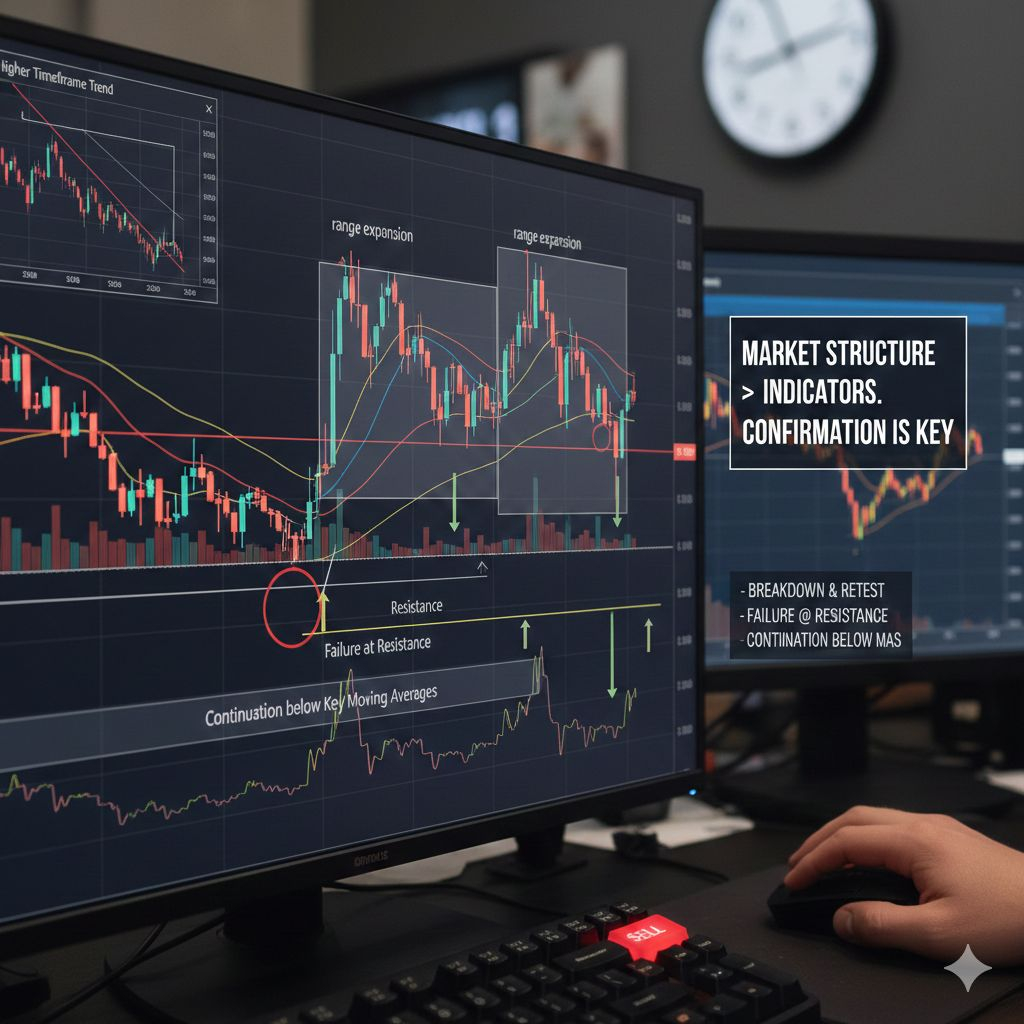
From a technical standpoint, market structure becomes more important than indicators. Bear markets are dominated by range expansions, false breakouts, and short-lived relief rallies. Trades should be taken only after confirmation of structure such as a clear breakdown-and-retest, failure at resistance, or continuation below key moving averages. Trading within the direction of the higher timeframe trend increases statistical edge.
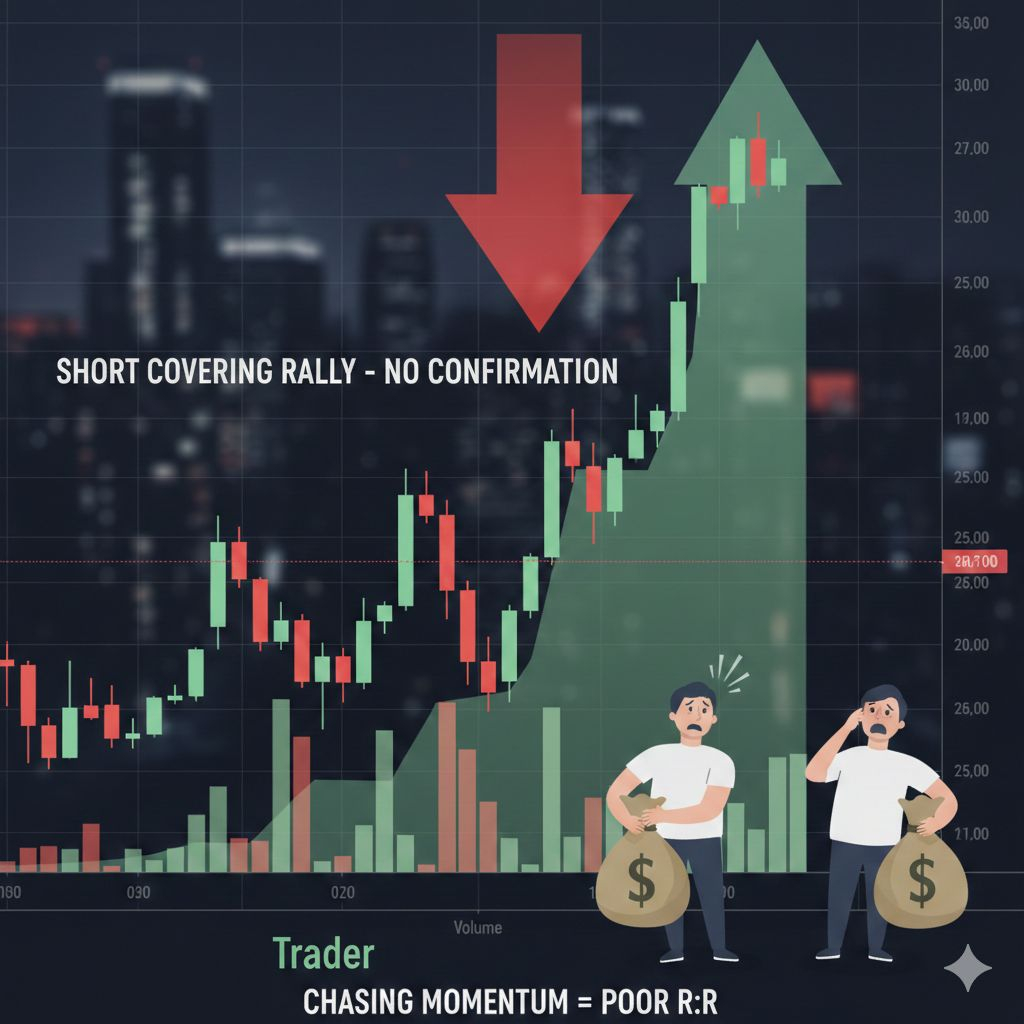
Liquidity behavior also plays a critical role. Sudden upward moves during bear markets are often driven by short covering rather than genuine demand. Without sustained volume and acceptance above resistance, these moves frequently reverse. Chasing momentum without confirmation exposes traders to unnecessary risk and poor reward-to-risk ratios.
Asset selection is another critical factor. Strong assets tend to show relative strength by holding higher timeframe support levels or consolidating while the broader market weakens. Technically weak assets display persistent distribution patterns, declining volume, and failure to reclaim previous value areas. Focusing on structurally strong markets reduces exposure to long-term decay.
Bear markets offer an ideal environment for process optimization and learning. This includes journaling trades, reviewing execution errors, refining entry models, and backtesting strategies under low-liquidity conditions. Studying risk-to-reward setups, support/resistance behavior, and how market participants react in different scenarios can build a trader’s edge. Observing failed trades is as valuable as observing winning trades it teaches discipline, patience, and timing.
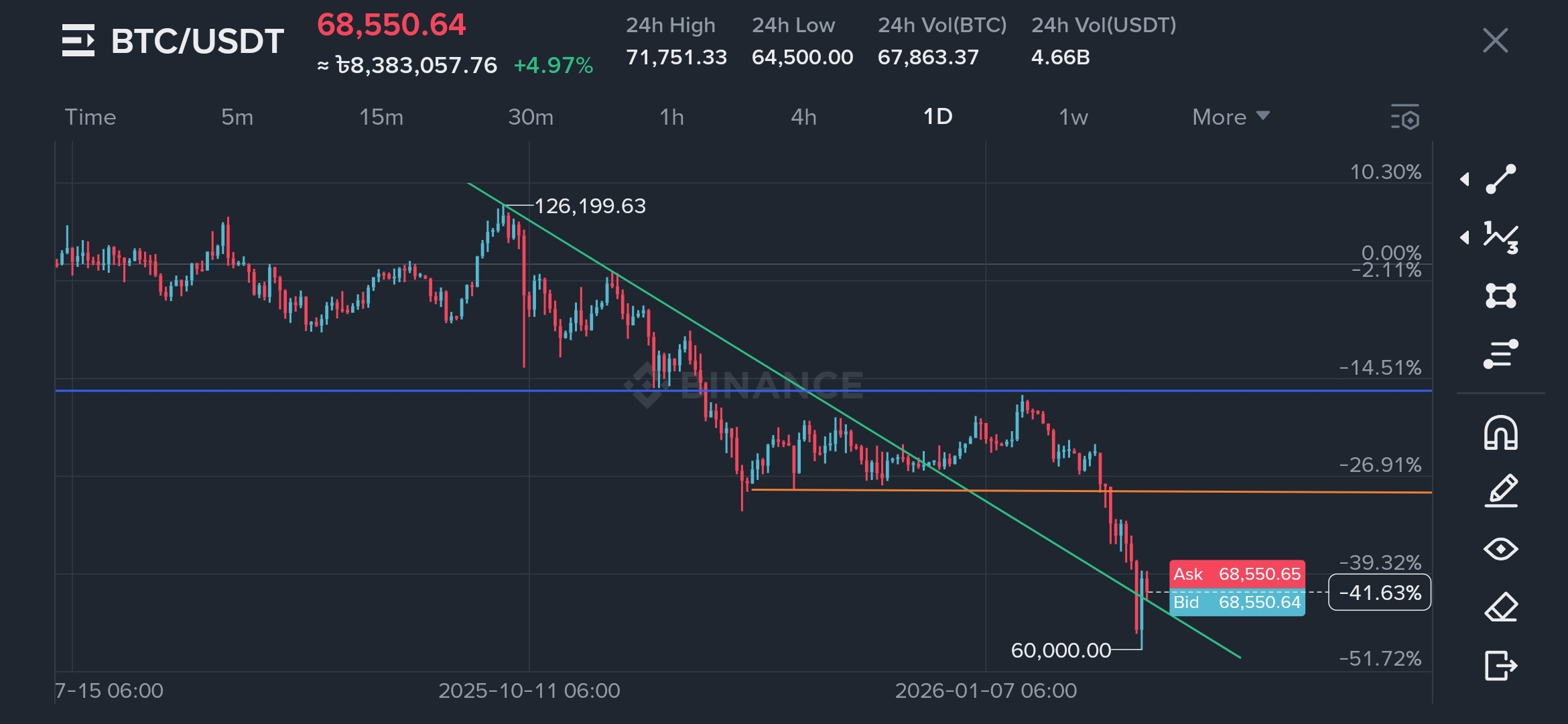
$BTC is still in a bearish trend, trading around $68,550 after months of lower highs and lower lows. The price is testing a long-term descending trendline holding above it could hint at a slow shift in momentum, but failure could send BTC back toward the $60k support level. Recent sharp bounces show that buyers are defending key floors, but the market is still fragile.
In this bear market, survival is key. Focus on strong support and resistance levels, avoid chasing breakouts, and watch for fakeouts. If BTC can hold $68k over the next few days, it might retest $75 - 78k, but a breakdown would put $60k back in the spotlight. Patience and discipline remain the best tools right now.
Additionally, traders should invest time in learning technical concepts, price action patterns, and macro market relationships during bearish phases. By combining theory with practical journaling, a trader can emerge from a bear market not only surviving but technically sharper and mentally stronger.
The objective in a bear market is not performance maximization, but risk minimization, process improvement, and consistency. Traders who maintain discipline, respect structure, and preserve capital position themselves to scale effectively when trend conditions shift.

