
The blockchain industry has witnessed countless projects emerge with promises of revolutionary change, yet few manage to address fundamental infrastructure challenges that limit mainstream adoption. Plasma, operating under the ticker $XPL, represents a different approach to solving one of the most persistent problems in digital finance: the seamless movement and settlement of assets across fragmented blockchain networks. Rather than focusing on consumer-facing applications or speculative token mechanics, Plasma positions itself as foundational infrastructure designed to operate beneath the surface of the blockchain ecosystem, enabling interoperability and liquidity in ways that remain invisible to end users yet critical to the entire system’s function.
The project emerged from a recognition that the blockchain space was developing into isolated silos, each with its own assets, protocols, and communities. Developers and early contributors observed that while individual chains were becoming more sophisticated, the ability to transfer value between them remained clunky, expensive, and often required centralized intermediaries that contradicted the core principles of decentralization. This fragmentation wasn’t merely a technical inconvenience but a structural barrier preventing blockchain technology from achieving the kind of seamless interoperability that traditional financial systems, despite their flaws, had already mastered. If blockchain networks couldn’t communicate and exchange value efficiently, they would remain niche technologies serving separate communities rather than forming the backbone of a truly interconnected digital economy.
Understanding the Core Architecture
Plasma operates as a cross-chain settlement layer, which means it functions as infrastructure that sits between different blockchain networks and facilitates the transfer of assets without requiring users to navigate complex bridging protocols or face the security risks associated with many existing solutions. The architecture relies on a network of validators who monitor multiple chains simultaneously, verifying transactions and ensuring that assets moved from one network to another maintain their integrity and value throughout the process. This isn’t achieved through a single monolithic bridge but rather through a distributed system of verification that spreads risk and eliminates single points of failure.
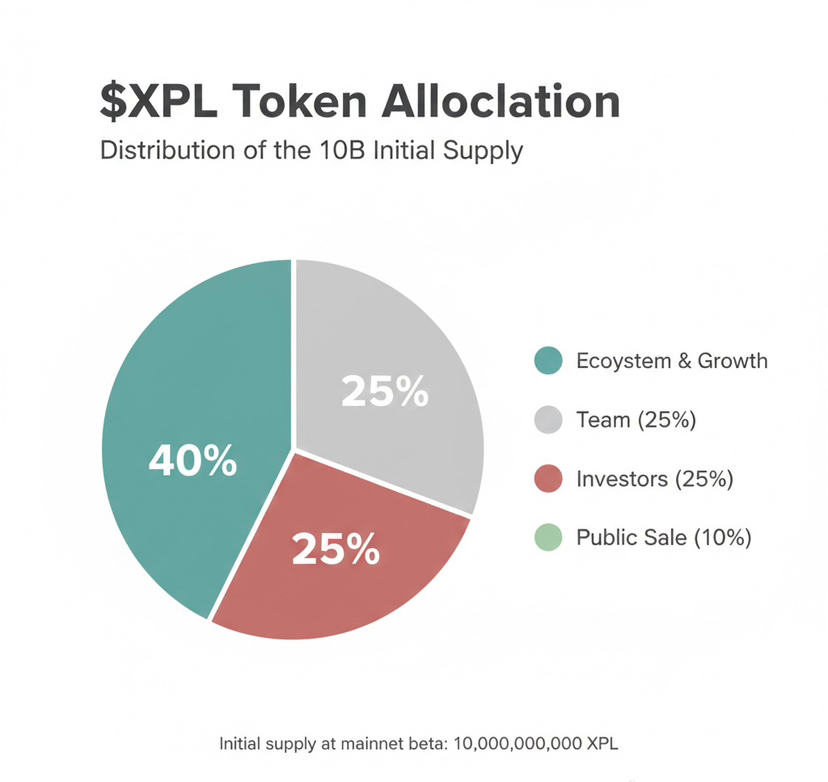
They’re building what essentially functions as a universal translator for blockchain networks. When a user wants to move an asset from one chain to another, Plasma’s protocol breaks down that request into a series of verifiable steps. First, the asset is locked on the source chain through a smart contract that ensures it can’t be double-spent or manipulated. Validators on the Plasma network then confirm this lock, reaching consensus through a cryptographic process that requires multiple independent parties to agree on the state of the transaction. Once consensus is achieved, an equivalent representation of that asset is minted or released on the destination chain, with the entire process tracked and verified across the Plasma network’s distributed ledger.
The security model differs significantly from traditional bridge designs that have suffered numerous exploits costing billions of dollars. Rather than relying on a small set of multisig wallets or a single oracle system, Plasma distributes verification across a wider network of economically incentivized validators who
ens as collateral. If they approve fraudulent transactions or fail to properly verify state changes, they lose their staked assets, creating a direct financial incentive for honest behavior. This design makes it prohibitively expensive to attack the network, as compromising the system would require corrupting a supermajority of validators simultaneously, each of whom has significant capital at risk.
The Evolution From Concept to Working Protocol
The initial concept for Plasma emerged during a period when cross-chain bridges were experiencing repeated security failures, with hackers exploiting vulnerabilities in smart contracts and oracle systems to drain hundreds of millions from protocols that users trusted with their assets. The founding team recognized that these failures stemmed from fundamental design choices that prioritized speed and simplicity over security and decentralization. Many bridges operated with small validator sets or relied on off-chain components that created attack vectors, while others used wrapped tokens that introduced additional layers of complexity and risk.
We’re seeing the project’s development follow a methodical path focused on security audits and gradual deployment rather than rushing to market with an incomplete product. The team spent extensive time in testnet phases, inviting security researchers and white-hat hackers to probe the protocol for vulnerabilities before any significant value was secured by the system. This cautious approach reflected lessons learned from the industry’s painful history of bridge exploits and demonstrated a commitment to building infrastructure that could be trusted with substantial assets over the long term.
During the early development stages, Plasma’s architects made several key technical decisions that would shape the protocol’s capabilities. They chose to implement a hybrid consensus mechanism that combined elements of proof-of-stake with additional cryptographic verification layers, ensuring that validators couldn’t simply collude to approve invalid transactions even if they controlled a majority of staked tokens. The protocol also incorporated time-lock mechanisms that delay large transfers, giving the network additional time to detect and respond to potentially fraudulent activity before assets reach their final destination.
Token Economics and Network Incentives
The $XPL token serves multiple functions within the Plasma ecosystem, creating a closed-loop economy that aligns the interests of validators, liquidity providers, and users. Validators must stake $XPL to participate in the consensus process, with staking requirements scaled according to the value they’re validating and the chains they’re monitoring. This creates a direct relationship between a validator’s capital commitment and their influence over network operations, preventing attackers from gaining disproportionate control through Sybil attacks or other manipulation tactics.
Transaction fees collected by the protocol are denominated in $XPL, creating consistent demand for the token as network usage grows. These fees are distributed among validators proportional to their stake and performance, with additional rewards allocated to those who maintain high uptime and quickly respond to validation requests. The fee structure is designed to be dynamic, adjusting based on network congestion and the complexity of cross-chain operations, ensuring that validators are adequately compensated during high-demand periods while keeping costs reasonable during normal operation.
Beyond staking and fee payment, $XPL holders participate in governance decisions that shape the protocol’s evolution. This includes voting on which new blockchain networks to support, adjusting security parameters, and allocating treasury resources for development and ecosystem growth. The governance system uses time-weighted voting to prevent short-term speculators from dominating decisions, giving greater influence to long-term holders who have demonstrated commitment to the protocol’s success. This structure encourages thoughtful participation rather than reactionary voting based on immediate price movements.
Integration Strategy and Ecosystem Partnerships
Plasma’s approach to ecosystem development focuses on deep integration with established blockchain networks rather than attempting to create a proprietary ecosystem from scratch. The team recognized early that network effects and existing liquidity would determine which cross-chain protocols achieved meaningful adoption, making partnerships with major Layer 1 and Layer 2 networks essential to long-term viability. Rather than positioning itself as a competitor to these networks, Plasma offers complementary infrastructure that enhances their capabilities and expands their reach.
They’re pursuing integration partnerships that go beyond simple technical connections. Each supported blockchain requires custom development to account for its unique consensus mechanism, smart contract capabilities, and security model. The Plasma team works directly with core developers from partner networks to ensure that integrations maintain the security guarantees of both systems, conducting joint security audits and coordinating upgrade schedules to prevent compatibility issues. This collaborative approach has helped Plasma build trust within developer communities and position itself as infrastructure that blockchain ecosystems want to incorporate rather than viewing as a threat.
The protocol has also attracted attention from decentralized applications that operate across multiple chains and need reliable infrastructure for moving assets and data between environments. Decentralized exchanges, lending protocols, and gaming platforms have begun integrating Plasma’s settlement layer to offer users seamless cross-chain experiences without requiring them to manually bridge assets or maintain balances on multiple networks. These integrations demonstrate Plasma’s utility beyond simple token transfers, showing its potential as general-purpose infrastructure for the multi-chain future that many in the industry envision.
Technical Challenges and Solutions
Building cross-chain infrastructure presents numerous technical challenges that go beyond the complexity of operating a single blockchain network. Different chains finalize transactions at different speeds, use incompatible data structures, and offer varying levels of security guarantees. Plasma’s architecture needed to account for these differences while maintaining consistent security and user experience across all supported networks. This required developing abstraction layers that could translate between different blockchain paradigms without introducing vulnerabilities or creating bottlenecks.
One significant challenge involves handling chain reorganizations, which occur when a blockchain temporarily reverts recent blocks due to consensus conflicts or network issues. If Plasma validators approve a cross-chain transfer based on a transaction that later gets reverted, the protocol could end up in an inconsistent state with assets duplicated or lost. The team addressed this through probabilistic finality thresholds that require transactions to be buried under a sufficient number of subsequent blocks before validators will approve cross-chain transfers, with the depth requirement adjusted based on each chain’s historical reorganization patterns and security characteristics.
Another technical hurdle involves maintaining performance as the number of supported chains and transaction volume grows. Cross-chain verification requires validators to monitor multiple networks simultaneously, which creates scaling challenges as the protocol expands. Plasma implements a sharding approach where different validator subsets specialize in monitoring specific chains or chain combinations, with periodic rotation to prevent centralization. This allows the network to scale horizontally by adding more validators rather than requiring each individual validator to monitor every supported blockchain, distributing the computational and bandwidth requirements across the network.
Market Position and Competitive Landscape
The cross-chain infrastructure space has become increasingly crowded, with numerous projects competing to become the standard solution for blockchain interoperability. Some competitors focus on specific chain pairs or ecosystems, while others attempt to build universal solutions capable of connecting any blockchain. Plasma differentiates itself through its security-first approach and commitment to decentralization, accepting slower development and higher operational costs in exchange for stronger security guarantees that make the protocol suitable for securing significant value.
We’re seeing market dynamics shift as users and developers become more sophisticated in evaluating cross-chain solutions. Early enthusiasm for bridges that prioritized speed and ease of integration has given way to more careful analysis of security models and decentralization characteristics, especially following high-profile hacks that demonstrated the risks of trusting poorly designed infrastructure. This evolving market awareness creates opportunities for projects like Plasma that invested heavily in security architecture even when faster-to-market competitors were capturing initial attention and liquidity.
The competitive landscape also includes emerging standards and protocols that could eventually commoditize cross-chain infrastructure. Industry groups are working to establish interoperability standards that would allow different cross-chain protocols to work together or become interchangeable, which could reduce Plasma’s differentiation if it fails to establish strong network effects before these standards mature. The project’s response has been to focus on becoming the most battle-tested and secure implementation while actively participating in standards discussions to ensure its architecture remains compatible with emerging industry norms.
Regulatory Considerations and Compliance Framework
As blockchain infrastructure matures and secures increasing amounts of value, regulatory scrutiny intensifies. Plasma operates in a complex regulatory environment where different jurisdictions treat cross-chain protocols differently, with some viewing them as money transmission services while others consider them pure technology infrastructure. The project has taken a proactive approach to regulatory engagement, seeking legal guidance in major jurisdictions and implementing compliance features that can be activated when operating in regulated environments.
The decentralized nature of Plasma’s validator network complicates regulatory classification, as there’s no central entity controlling the protocol’s operation. This structure may provide some regulatory advantages compared to centralized bridges operated by identifiable companies, but it also creates uncertainty about how authorities will treat the protocol and its participants. Validators operating in jurisdictions with strict financial regulations face potential licensing requirements, while the protocol itself may need to implement transaction monitoring or reporting capabilities to remain accessible in certain markets.
If blockchain technology continues gaining mainstream adoption and regulatory frameworks become clearer, Plasma’s compliance-ready architecture could become a significant competitive advantage. The protocol includes optional modules for transaction screening and reporting that can be enabled by validators choosing to operate in regulated markets, allowing the network to serve both permissionless and compliance-focused users without compromising its core decentralization. This flexible approach positions Plasma to adapt as regulatory landscapes evolve, maintaining access to institutional users and traditional financial systems while preserving the censorship resistance that makes blockchain technology valuable.
Long-Term Vision and Future Development
The Plasma team envisions a future where cross-chain infrastructure becomes as invisible and reliable as the internet’s underlying protocols, with users moving assets and data between blockchain networks without needing to understand the technical complexity involved. Achieving this vision requires continued development of user-facing tools and developer frameworks that abstract away the protocol’s complexity, making it as simple to build multi-chain applications as it currently is to build on a single chain.
Future development roadmaps include expanding beyond asset transfers to support more complex cross-chain interactions like synchronized smart contract calls and cross-chain data messaging. These capabilities would enable entirely new categories of decentralized applications that leverage the unique properties of different blockchain networks simultaneously, using one chain for settlement, another for computation, and a third for data storage, all coordinated through Plasma’s infrastructure. This evolution from simple bridging to comprehensive cross-chain orchestration represents the protocol’s ambition to become foundational infrastructure for the entire blockchain ecosystem.
They’re also exploring integration with emerging technologies like zero-knowledge proofs, which could dramatically improve the efficiency and privacy of cross-chain operations. By generating cryptographic proofs that verify complex state transitions without revealing underlying transaction details, Plasma could enable private cross-chain transfers and reduce the amount of data validators need to process, improving both security and scalability. These advanced cryptographic techniques remain experimental, but their successful integration could position Plasma at the forefront of next-generation blockchain infrastructure.
The Path Forward
Plasma represents a significant bet that blockchain infrastructure will continue evolving toward greater interoperability rather than consolidating around a single dominant chain. This vision assumes that different blockchain networks will continue serving distinct purposes and communities, with cross-chain protocols like Plasma serving as connective tissue that allows value and information to flow freely between them. The alternative scenario, where one blockchain achieves overwhelming dominance and renders cross-chain infrastructure less relevant, would significantly impact Plasma’s long-term value proposition, making the project’s success dependent on the broader industry’s trajectory toward a multi-chain future.
The protocol’s development continues at a measured pace, with security audits and gradual feature rollouts taking precedence over aggressive marketing or token price speculation. This approach reflects a long-term orientation that prioritizes building reliable infrastructure over short-term adoption metrics, accepting slower growth in exchange for stronger security guarantees and more sustainable network economics. Whether this strategy succeeds depends on Plasma’s ability to attract enough liquidity and usage to justify its infrastructure investments before faster-moving competitors capture market share or before technological changes make its specific approach obsolete.
Looking years into the future, Plasma’s role in the blockchain ecosystem will likely be determined by factors beyond its technical merits alone. Network effects, regulatory developments, and the evolution of user preferences will all shape whether cross-chain infrastructure becomes commodity plumbing or differentiated technology that captures significant value. The project’s commitment to security and decentralization positions it well for scenarios where these characteristics matter most, but it remains vulnerable to market dynamics that prioritize convenience and speed over the long-term reliability that infrastructure projects require to justify their existence. The blockchain industry’s maturation will reveal whether Plasma’s vision of invisible, reliable cross-chain infrastructure becomes the foundation for a truly interconnected digital economy, or whether the future takes a different form that none of today’s builders fully anticipated.

