

The decline in this round is not large, but the amount of liquidation exceeds 50 million US dollars. The positions of users with higher density may be about to move out of the shock range in the gaming market.
Written by Frank, Foresight News
With the end of the National Day holiday and the U.S. market about to come out of the weekend, the crypto market, which has maintained low volatility for many days, also seems to be waking up.
Starting at 17:30 Beijing time, Bitcoin, which has failed to break through 28,000 USDT several times recently, began to fall from 27,800 USDT and fell to a low of 27,435 USDT. During the same period, Ethereum also fell below 1,600 USDT, reaching a low of around 1,583 USDT, a new low in nearly half a month.
At the same time, Coinglass data showed that the entire network had a liquidation of more than 50 million US dollars in the hour before and after this fluctuation, of which Bitcoin liquidation was about 9 million US dollars, Ethereum liquidation was about 8 million US dollars, and BCH liquidation was about 2.7 million US dollars.
In general, although the overall decline was not large, the amount of liquidation exceeded 50 million US dollars, which means that the position density per unit price was relatively large. This may indicate that under the background of continued low volatility, everyone has begun to gamble on the expected trend that the crypto market will soon move out of the shock range.
What are the reasons for the plunge?
Ethereum Foundation "selling coins"?
Just before this round of decline this afternoon, at 16:18:47, the Ethereum Foundation address exchanged 1,700 Ethereum for USDC through Uniswap.
Overall, the total amount of the transaction by the Ethereum Foundation is not large, so the impact of this move on market sentiment is far greater than the impact of actual selling pressure.
At the same time, some KOL analysts believe that the USDC sold by the Ethereum Foundation is currently in a multi-signature address. Based on the recent transactions of the multi-signature address, it is not ruled out that it will be purchased for rETH in the near future.
However, it is worth noting that since late August, Ethereum founder Vitalik Buterin has transferred ETH to Bitstamp, Coinbase, Kraken and other exchanges many times. According to incomplete statistics, the total amount has exceeded 2,900 ETH.
The potential impact of the Middle East conflict on the Fed's rate hike process
On October 7, the largest conflict in recent years broke out between Palestine and Israel, with a new round of military conflict between the Palestinian Islamic Resistance Movement (Hamas) and Israel, increasing the possibility that geopolitical risks in the Middle East will drag down global oil supplies.
As of around 7 p.m., U.S. WTI crude oil futures prices rose 3.78% to $85.92 per barrel; Brent crude oil futures prices rose 3.36% to $87.67 per barrel.
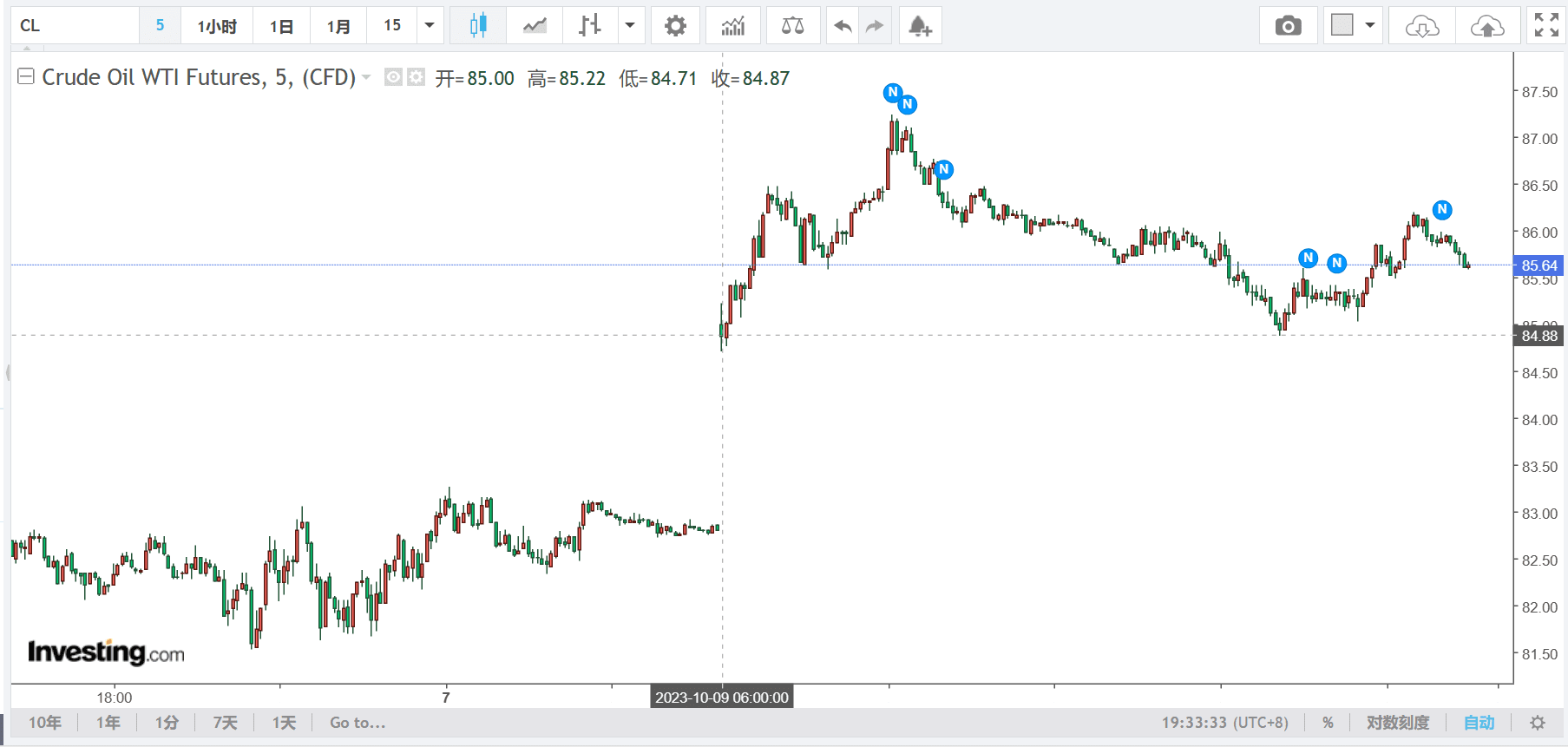
Alpine Macro, a global investment research firm, pointed out that if the conflict expands, it may cause oil prices to continue to rise. In the most extreme case, if Israel attacks Iran's nuclear facilities, oil prices may soar to more than $150 per barrel.
This will undoubtedly make the US's anti-inflation process worse, and in turn increase the possibility that the Federal Reserve will choose to continue raising interest rates in the future. Therefore, as a "risky asset", Bitcoin's decline seems understandable due to the strengthening expectations of interest rate hikes.
However, the duality of Bitcoin as a "safe haven asset" and a "risk asset" has always been a paradoxical topic. You know, despite the current geopolitical turmoil, Bitcoin has not seen a sharp rise due to its "safe haven asset" attributes.
But in the first week of 2020, the situation in the Middle East also escalated suddenly (Iranian senior military officer Soleimani was killed in a US missile attack). Bitcoin soared by more than 5% that day amid the tense situation, and then continued to rise, perfectly proving the safe-haven asset attributes of "digital gold".
US stocks weakened before the market opened
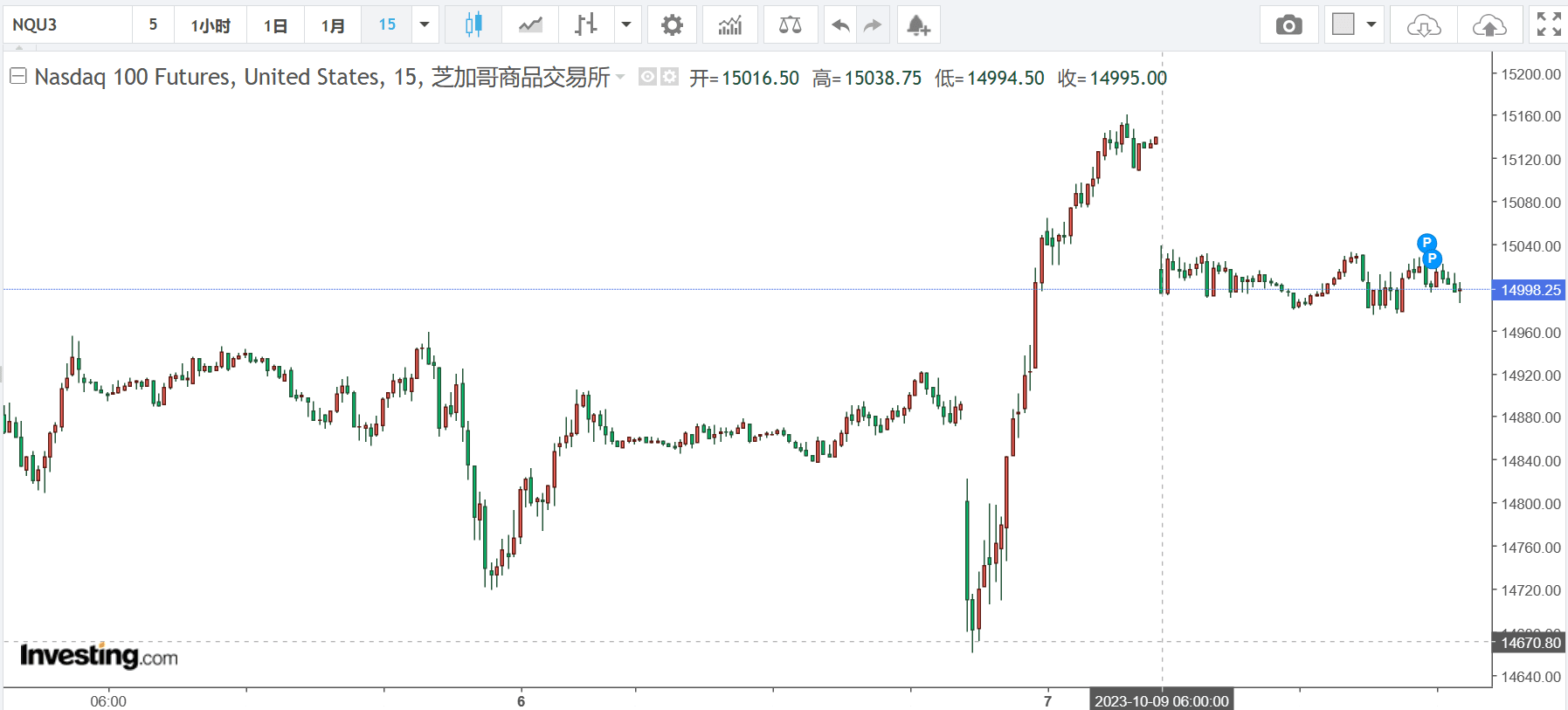
It is worth noting the correlation between Bitcoin and the crypto market and the U.S. stock market. Although the U.S. stock market has not yet opened, the three major U.S. stock index futures fell sharply as soon as they opened today. The Nasdaq futures opened down 0.6% and the S&P 500 index futures opened down 0.7%.
Nasdaq 100 E-mini futures were still down as much as -0.75% as of 7 p.m.
Last week's non-farm data exceeded expectations
In addition, the non-farm payrolls for September announced last week showed 336,000 new jobs, which was lower than the 170,000 expected by major supermarkets. However, the crypto market fell sharply and then rose on the day the non-farm data was released, which basically digested the impact of the unexpected data.