

正觉之路
527 Posts
正觉之路
从佛法的“无我”观来看区块链和比特币。
Occasional Trader
9.1 Years
174 Following
179 Followers
57 Liked
Posts
All
Quotes

香港王富贵
·
--
《Binance Life》10 quotes, each one filled with light and strength @CZ
1. Don’t waste time
“Not making a list” is more important than having a to-do list
Time is the most limited resource. What matters is not what you do, but what you don’t
Eighty percent of human communication is gossip—cut it directly
2. Don’t just focus on money—create value
If you can create 10 points of value, but you only take 8 or even 5, keep it up long-term and the money will grow to unimaginable levels
Making money isn’t about earning the most from a single deal; it’s about leaving room each time, so people are willing to cooperate with you in the long run
3. Hold the line
Never touch the moral red line
Treat users: always do what’s right, not what’s easy
Protect your users, and your success and wealth will exceed imagination
4. Showing up is 80% of success
Never interrupt your momentum
5. What if life reaches rock bottom?
Keep walking—you’ll come out
A positive mindset often leads to better results
6. Focus
Success isn’t about how many things you do. It depends on how well and how deeply you do a few things
Clear away distractions
7. Build long-term, win-win relationships
Winning in the short term can destroy winning in the long run
Learn to play the infinite game
8. Money isn’t the limited resource—reputation is
Make the most of limited resources: time, health, energy, and connections
9. Carry things yourself
Don’t just do tasks—own your matters
Don’t just build walls—think about building a cathedral
Take full responsibility for the outcomes
10. If you can, you must
If you’re still able, keep doing
When you have resources, influence, and capability, do a bit more for the world
#我的币安人生 $BNB
1. Don’t waste time
“Not making a list” is more important than having a to-do list
Time is the most limited resource. What matters is not what you do, but what you don’t
Eighty percent of human communication is gossip—cut it directly
2. Don’t just focus on money—create value
If you can create 10 points of value, but you only take 8 or even 5, keep it up long-term and the money will grow to unimaginable levels
Making money isn’t about earning the most from a single deal; it’s about leaving room each time, so people are willing to cooperate with you in the long run
3. Hold the line
Never touch the moral red line
Treat users: always do what’s right, not what’s easy
Protect your users, and your success and wealth will exceed imagination
4. Showing up is 80% of success
Never interrupt your momentum
5. What if life reaches rock bottom?
Keep walking—you’ll come out
A positive mindset often leads to better results
6. Focus
Success isn’t about how many things you do. It depends on how well and how deeply you do a few things
Clear away distractions
7. Build long-term, win-win relationships
Winning in the short term can destroy winning in the long run
Learn to play the infinite game
8. Money isn’t the limited resource—reputation is
Make the most of limited resources: time, health, energy, and connections
9. Carry things yourself
Don’t just do tasks—own your matters
Don’t just build walls—think about building a cathedral
Take full responsibility for the outcomes
10. If you can, you must
If you’re still able, keep doing
When you have resources, influence, and capability, do a bit more for the world
#我的币安人生 $BNB

何毅财经课堂
·
--
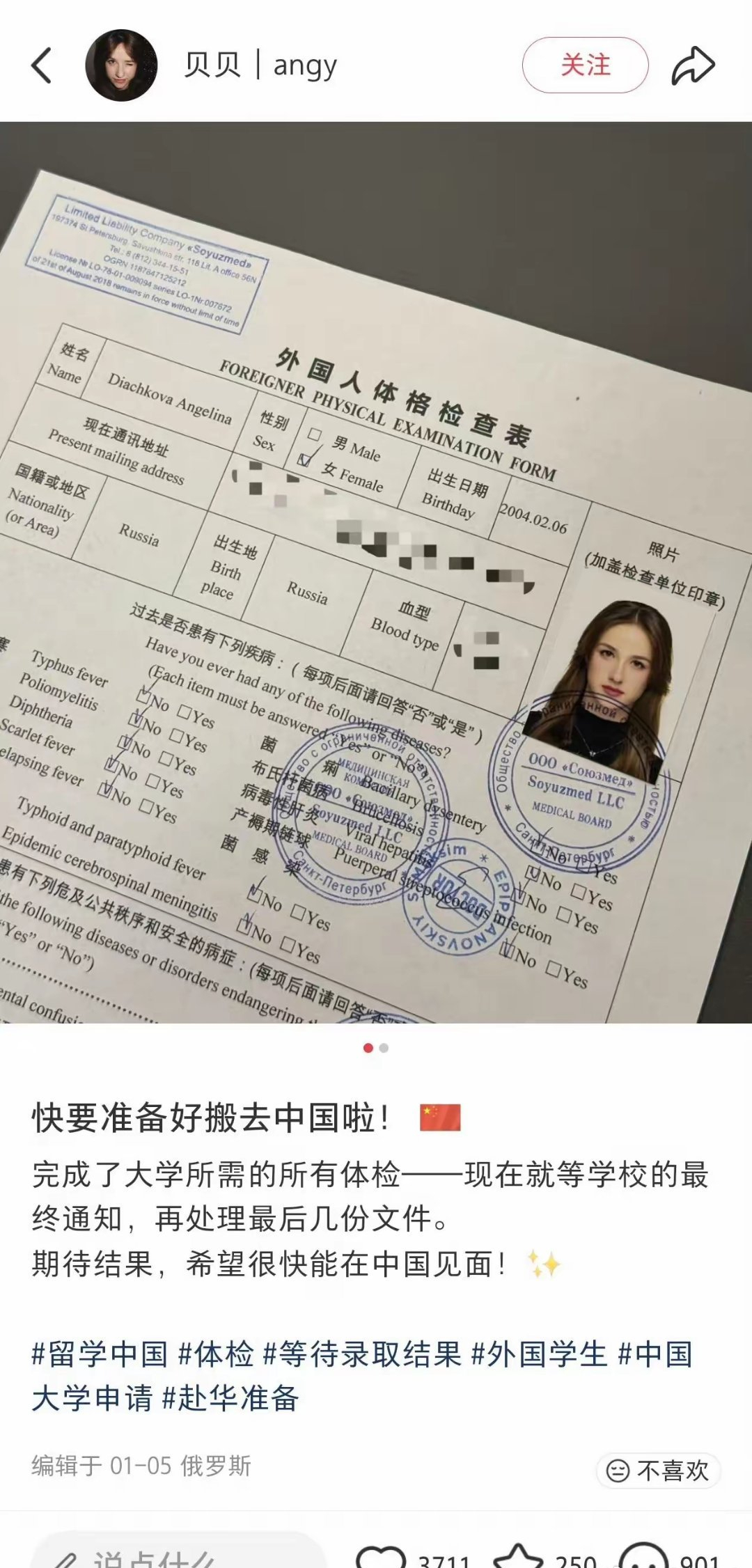
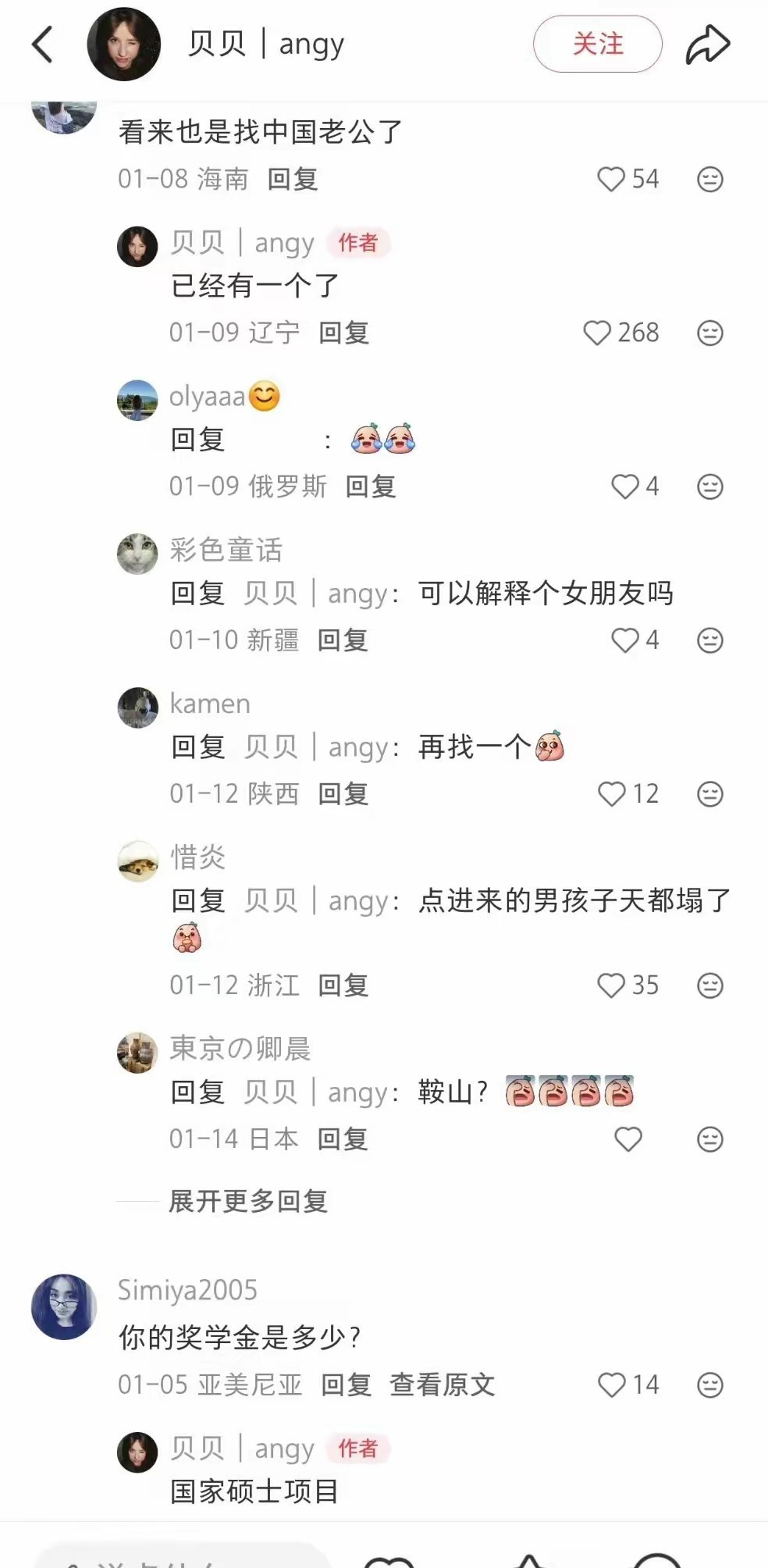
It should have an impact on the Chinese marriage and love market.
Quoted content has been removed

看不懂的sol
·
--
Play big, starting today at the golden anchor price of 5200; for every 1% increase, I will add 0.2 bitcoins (regardless of price, regardless of quantity).
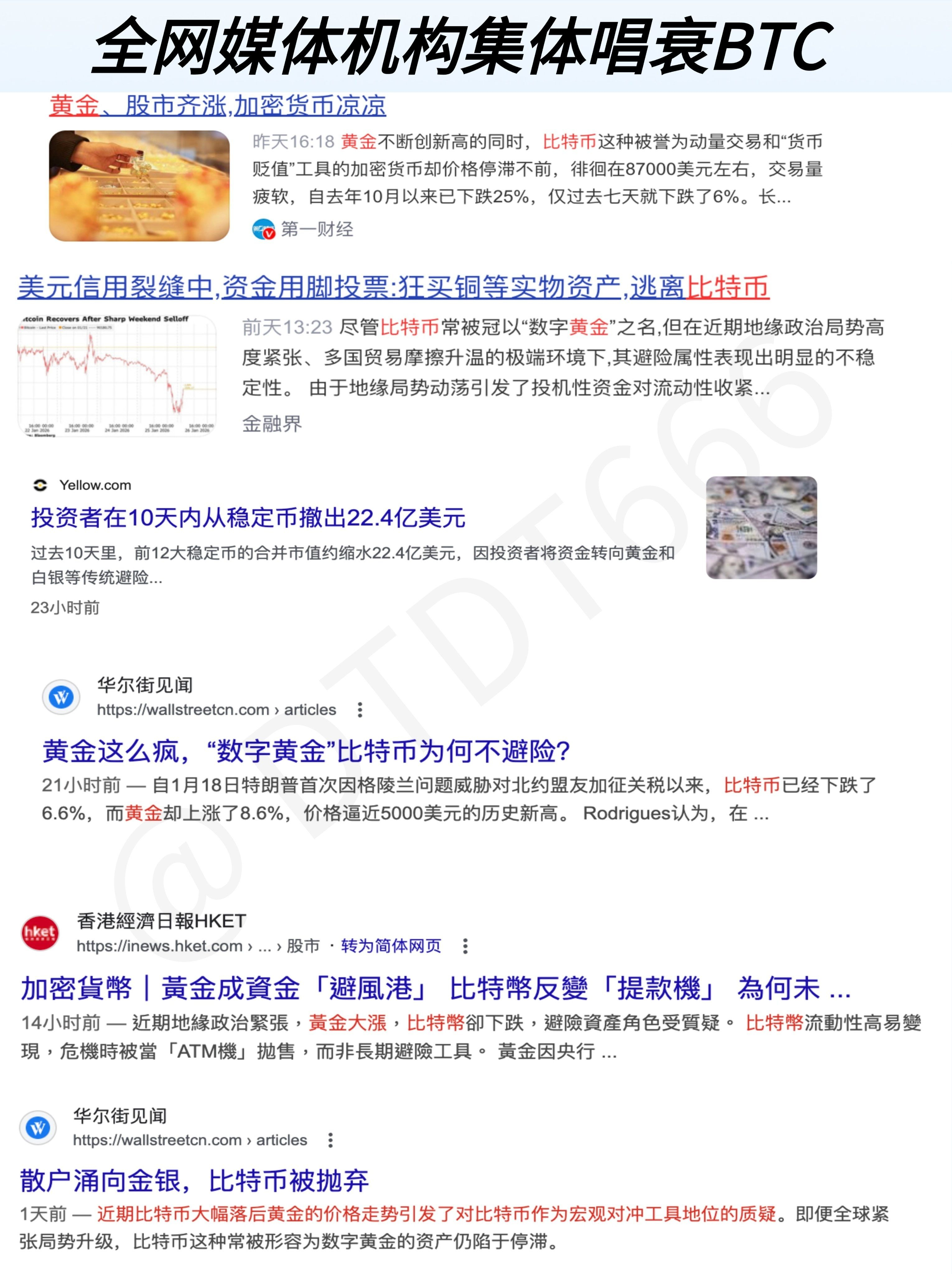
When I open my phone and see notifications all saying 'gold and silver soaring' and 'bitcoin being abandoned,' from official media to lesser-known self-media, from institutional research reports to chat groups, everyone is repeating the same rhetoric.
Everyone is raising a toast to the victory of gold and silver.
At times like this, I tend to turn off the screen, refuse the noise, and think for a while.
I don't quite believe in this collective chorus.
When everyone is packed on the same boat, shouting in the same direction, that boat is often the farthest from the shore.
Gold is great, but its story is written in millennia-old textbooks, it’s the old anchor that everyone instinctively clutches in times of panic.
As for bitcoin… it feels like a new story that hasn’t been fully told, the plot is always bumpy, some exit midway, and some call it a scam... But I firmly believe!!!
While others seek familiar security in fear, I am thinking: perhaps real opportunities are always hidden in that 'strangeness' that makes most people uncomfortable.
Add position
Add position
Add position
Strategy: Starting today at the golden anchor price of 5200; for every 1% increase, I will add 0.2 bitcoins (regardless of price, regardless of quantity).
When I open my phone and see notifications all saying 'gold and silver soaring' and 'bitcoin being abandoned,' from official media to lesser-known self-media, from institutional research reports to chat groups, everyone is repeating the same rhetoric.
Everyone is raising a toast to the victory of gold and silver.
At times like this, I tend to turn off the screen, refuse the noise, and think for a while.
I don't quite believe in this collective chorus.
When everyone is packed on the same boat, shouting in the same direction, that boat is often the farthest from the shore.
Gold is great, but its story is written in millennia-old textbooks, it’s the old anchor that everyone instinctively clutches in times of panic.
As for bitcoin… it feels like a new story that hasn’t been fully told, the plot is always bumpy, some exit midway, and some call it a scam... But I firmly believe!!!
While others seek familiar security in fear, I am thinking: perhaps real opportunities are always hidden in that 'strangeness' that makes most people uncomfortable.
Add position
Add position
Add position
Strategy: Starting today at the golden anchor price of 5200; for every 1% increase, I will add 0.2 bitcoins (regardless of price, regardless of quantity).

不悔财经
·
--
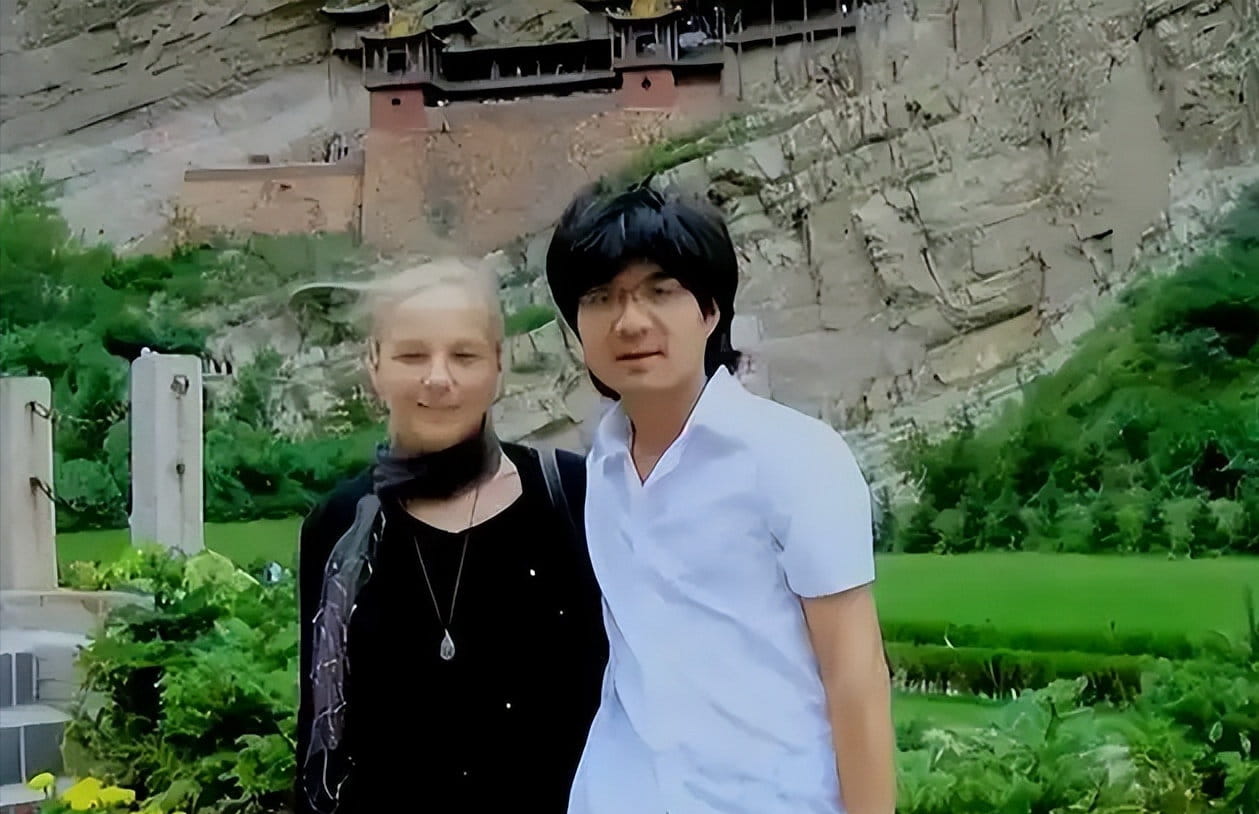
In 2008, 28-year-old Wang Di, an only child from Beijing, insisted on marrying a 50-year-old German woman named Wute, despite fierce opposition from his family. His mother fainted upon hearing the news, and his father angrily threatened to sever ties. However, Wang Di was resolute: even if he never had children, he wanted to be with her for life.
Wang Di came from a well-off family; both parents were cultured individuals, and he was fascinated by cultural relics from a young age. After majoring in cultural relics in university, he went to Germany for further studies, eager to delve deeper into the field. This study abroad journey led him to a fateful connection with Wute—she was a professor of cultural relic restoration at a university in Berlin, specializing in the restoration of lost Chinese cultural relics.
Wute was skilled in restoration techniques but struggled with ancient texts due to her lack of Chinese language skills. She met Wang Di through a student recommendation. Wang Di helped her translate documents, and Wute taught him practical skills. The two often talked late into the night, discussing cultural relic designs and life insights, comforting each other in a foreign land, and gradually developing feelings.
Wang Di confessed his feelings, and although Wute was touched, she had many concerns; the 22-year age difference made her fear of holding him back. However, Wang Di's determination moved her, and they became a couple, receiving blessings from friends and family in Germany. Yet, when the news reached Beijing, it ignited a family storm.
Wang Di brought Wute back to meet his parents. When his mother saw that her future daughter-in-law was older than herself, she fainted from anxiety. His father slammed the table, forcing him to choose, while relatives took turns persuading him, accusing him of ruining his life and cutting off the family line. Wute, unable to bear the pressure on him, suggested breaking up, but Wang Di was determined not to let go.
Wang Di secretly obtained a marriage certificate with Wute, and they settled in Germany after marriage. He gave up a high-paying job to accompany Wute in cultural relic restoration, taking on household chores and caring for her, even growing a beard to appear more mature. Wute also learned to cook Beijing dishes, striving to bridge the gap between them and quietly maintain their relationship.
In 2012, Wang Di's father visited Germany and saw that the couple lived harmoniously. Wute not only had excellent cooking skills but could also discuss the restoration of Dunhuang murals. She took care of Wang Di meticulously, gradually softening the elder's heart. Wute also diligently learned to make Beijing flaky cakes to send back home, slowly easing the relationship between mother-in-law and daughter-in-law, as well as between father-in-law and daughter-in-law.
In 2022, Wute was invited to participate in the restoration of cultural relics at the Jinhua Museum, and the couple accepted an interview with CCTV, holding hands to express their love. Now, after more than a decade, they have no children but are raising a kitten, building a cultural bridge between China and Germany, and breaking all societal doubts with their enduring happiness.
Wang Di came from a well-off family; both parents were cultured individuals, and he was fascinated by cultural relics from a young age. After majoring in cultural relics in university, he went to Germany for further studies, eager to delve deeper into the field. This study abroad journey led him to a fateful connection with Wute—she was a professor of cultural relic restoration at a university in Berlin, specializing in the restoration of lost Chinese cultural relics.
Wute was skilled in restoration techniques but struggled with ancient texts due to her lack of Chinese language skills. She met Wang Di through a student recommendation. Wang Di helped her translate documents, and Wute taught him practical skills. The two often talked late into the night, discussing cultural relic designs and life insights, comforting each other in a foreign land, and gradually developing feelings.
Wang Di confessed his feelings, and although Wute was touched, she had many concerns; the 22-year age difference made her fear of holding him back. However, Wang Di's determination moved her, and they became a couple, receiving blessings from friends and family in Germany. Yet, when the news reached Beijing, it ignited a family storm.
Wang Di brought Wute back to meet his parents. When his mother saw that her future daughter-in-law was older than herself, she fainted from anxiety. His father slammed the table, forcing him to choose, while relatives took turns persuading him, accusing him of ruining his life and cutting off the family line. Wute, unable to bear the pressure on him, suggested breaking up, but Wang Di was determined not to let go.
Wang Di secretly obtained a marriage certificate with Wute, and they settled in Germany after marriage. He gave up a high-paying job to accompany Wute in cultural relic restoration, taking on household chores and caring for her, even growing a beard to appear more mature. Wute also learned to cook Beijing dishes, striving to bridge the gap between them and quietly maintain their relationship.
In 2012, Wang Di's father visited Germany and saw that the couple lived harmoniously. Wute not only had excellent cooking skills but could also discuss the restoration of Dunhuang murals. She took care of Wang Di meticulously, gradually softening the elder's heart. Wute also diligently learned to make Beijing flaky cakes to send back home, slowly easing the relationship between mother-in-law and daughter-in-law, as well as between father-in-law and daughter-in-law.
In 2022, Wute was invited to participate in the restoration of cultural relics at the Jinhua Museum, and the couple accepted an interview with CCTV, holding hands to express their love. Now, after more than a decade, they have no children but are raising a kitten, building a cultural bridge between China and Germany, and breaking all societal doubts with their enduring happiness.
不悔财经
·
--
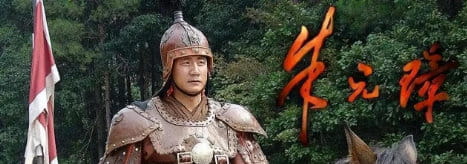
The emperors of the Ming Dynasty all had the surname Zhu. The character "Zhu" is homophonous with "pig," and common people directly called out the name when they slaughtered pigs to sell meat, which violated the taboo of "killing Zhu." Zhu Yuanzhang, who came from a grassroots background, was well aware of the hardships of the common people. He needed to maintain the dignity of imperial power while not wanting to make things difficult for the citizens, so he cleverly altered a character to resolve this taboo issue.
Zhu Yuanzhang spent his early years mingling in the markets and had once engaged in the business of slaughtering pigs and selling meat. He understood that this skill was the foundation of the livelihood for the lower classes. After ascending the throne, although rules became more numerous and names became a top priority, he did not issue strict orders to prohibit the mention of the word "pig"; rather, it was the taboo culture formed top-down in the court that made the common people consciously restrain themselves.
Butchers on the streets dared not openly shout "kill pigs" and changed their titles; some called them "fat livestock," while others used the ancient character "豕." In markets, pork was often referred to as "white strips" or "red fat." Even students in schools and monks in temples were particularly cautious when mentioning related terms, fearing punishment for their words.
There was a butcher named Lao Zhang whose son accidentally shouted "kill pigs" in the market and caught the attention of the patrolling officers, scaring the whole family into silence about the word "pig." It was even more so in the countryside, where the elderly advised children to avoid the word. Telling stories or imitating pig sounds was strictly prohibited, and the taboo gradually integrated into daily life.
Although Zhu Yuanzhang valued the avoidance of taboo, he allowed some leniency with the character "pig." He understood that if the slaughtering and sale of pigs were banned, the livelihoods of the people would be hard to sustain, leading to social chaos. Therefore, he did not issue a prohibition but merely tacitly allowed the use of alternative names to avoid it, leaving room for survival.
To completely resolve the awkwardness, Zhu Yuanzhang simply changed the character "pig" to "豕," which retained the original meaning of livestock while avoiding the taboo. This change allowed butchers to carry on their business without needing to use euphemisms and maintained a balance between imperial power and the livelihood of the people.
In contrast, during the later period of the Ming Dynasty, Emperor Zhengde Zhu Houzhao, because he belonged to the pig zodiac, issued a ban on pigs, prohibiting their breeding and slaughter. In just a few months, this disrupted the livelihoods of the people, leading to an eventual cessation of the ban. In comparison, Zhu Yuanzhang's method of changing characters displayed the practicality and insight of a grassroots emperor.
Although the trend of avoiding taboos in the Ming Dynasty permeated daily life, it did not cut off the way for the common people to survive. Butchers continued to set up stalls, just with changed titles, while students and officials avoided taboo words in their writings, and life continued to flow steadily in the crevices between rules and livelihood, concealing the survival wisdom of the ancients.
Zhu Yuanzhang spent his early years mingling in the markets and had once engaged in the business of slaughtering pigs and selling meat. He understood that this skill was the foundation of the livelihood for the lower classes. After ascending the throne, although rules became more numerous and names became a top priority, he did not issue strict orders to prohibit the mention of the word "pig"; rather, it was the taboo culture formed top-down in the court that made the common people consciously restrain themselves.
Butchers on the streets dared not openly shout "kill pigs" and changed their titles; some called them "fat livestock," while others used the ancient character "豕." In markets, pork was often referred to as "white strips" or "red fat." Even students in schools and monks in temples were particularly cautious when mentioning related terms, fearing punishment for their words.
There was a butcher named Lao Zhang whose son accidentally shouted "kill pigs" in the market and caught the attention of the patrolling officers, scaring the whole family into silence about the word "pig." It was even more so in the countryside, where the elderly advised children to avoid the word. Telling stories or imitating pig sounds was strictly prohibited, and the taboo gradually integrated into daily life.
Although Zhu Yuanzhang valued the avoidance of taboo, he allowed some leniency with the character "pig." He understood that if the slaughtering and sale of pigs were banned, the livelihoods of the people would be hard to sustain, leading to social chaos. Therefore, he did not issue a prohibition but merely tacitly allowed the use of alternative names to avoid it, leaving room for survival.
To completely resolve the awkwardness, Zhu Yuanzhang simply changed the character "pig" to "豕," which retained the original meaning of livestock while avoiding the taboo. This change allowed butchers to carry on their business without needing to use euphemisms and maintained a balance between imperial power and the livelihood of the people.
In contrast, during the later period of the Ming Dynasty, Emperor Zhengde Zhu Houzhao, because he belonged to the pig zodiac, issued a ban on pigs, prohibiting their breeding and slaughter. In just a few months, this disrupted the livelihoods of the people, leading to an eventual cessation of the ban. In comparison, Zhu Yuanzhang's method of changing characters displayed the practicality and insight of a grassroots emperor.
Although the trend of avoiding taboos in the Ming Dynasty permeated daily life, it did not cut off the way for the common people to survive. Butchers continued to set up stalls, just with changed titles, while students and officials avoided taboo words in their writings, and life continued to flow steadily in the crevices between rules and livelihood, concealing the survival wisdom of the ancients.

当铺财经A
·
--
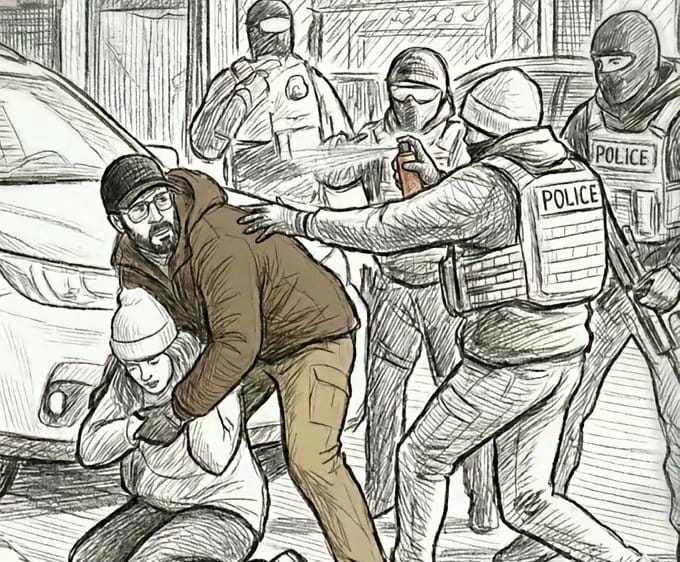
He just wanted to protect a woman who was sprayed with pepper spray.
The incident is that simple, yet the Republicans twisted it into him wanting to shoot at ICE, 1 against 6 [Shit-posting Dog]
Loli Island, so dark, yet no one is held accountable.
Such a person was shot dead by law enforcement on the street.
In this country, there really is no path left for good people.
The incident is that simple, yet the Republicans twisted it into him wanting to shoot at ICE, 1 against 6 [Shit-posting Dog]
Loli Island, so dark, yet no one is held accountable.
Such a person was shot dead by law enforcement on the street.
In this country, there really is no path left for good people.
Quoted content has been removed
不悔财经
·
--
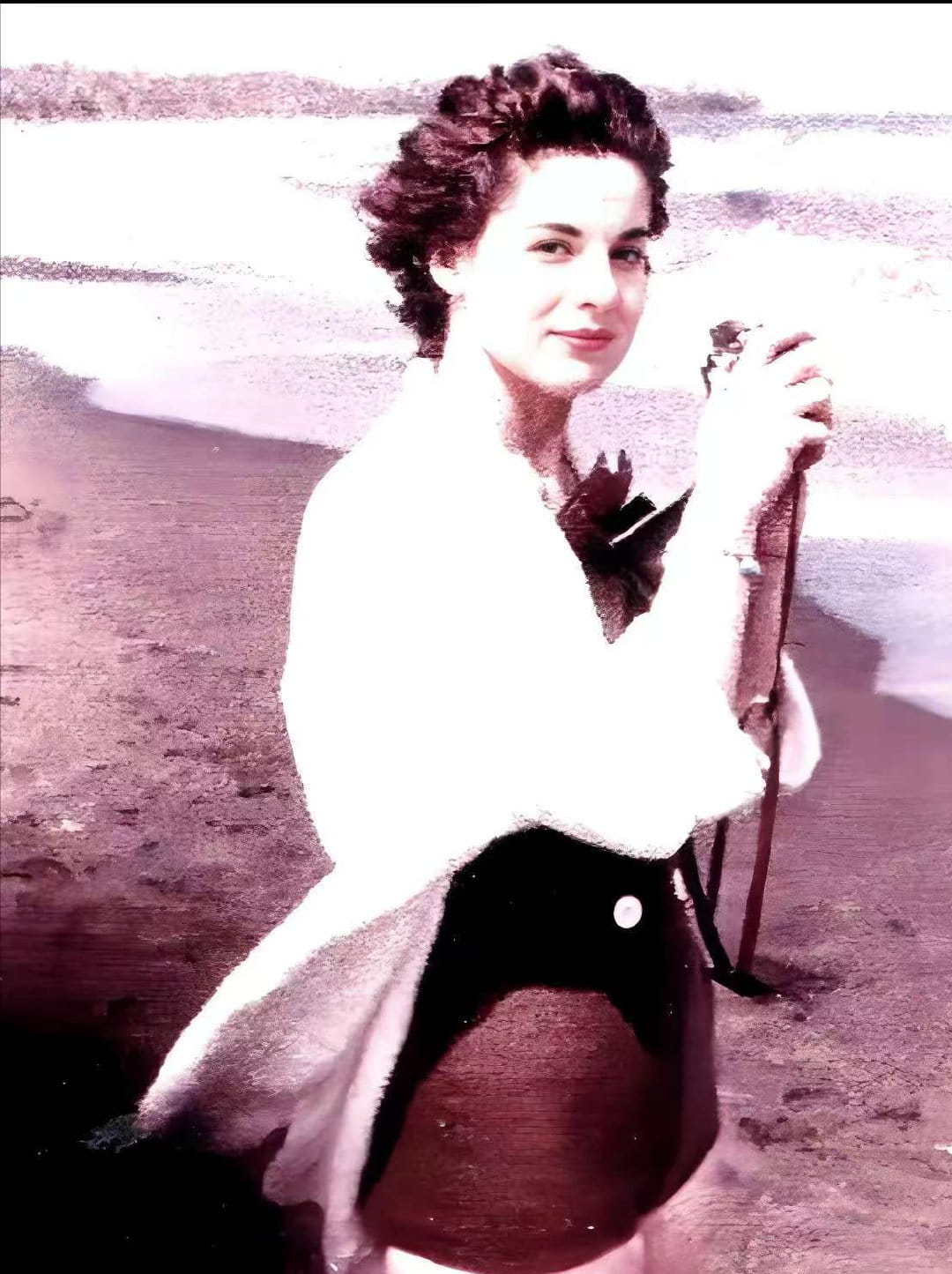
In 1959, Castro overthrew the U.S.-backed dictatorship, steering Cuba towards socialism, becoming a thorn in the side of the United States. The CIA tailored a seduction assassination plan, dispatching a female agent under the alias Mary to infiltrate as a journalist, attempting to poison him and silence him, but due to an unexpected moment of tenderness, the human triumph over the mission was staged.
Mary was fluent in Spanish and strikingly beautiful, spending three months gaining Castro's trust. She avoided political discussions, listened to his ideas for governance, and deliberately shaped an image of understanding him, gradually breaking down his defenses, as their professional relationship developed into a personal friendship, with the assassination opportunity quietly maturing.
On the night of the operation, Mary hid the deadly powder, planning to poison his drink. After an intimate moment, Castro poured himself some rum and instinctively pushed a sweet drink towards her, softly advising her. This tender gesture shattered her defenses, allowing her to recognize Castro's sincerity, rather than the "dictator" portrayed by U.S. propaganda.
Mary broke down in tears, pouring out the poison and confessing her identity and mission. Castro calmly stated that she was merely a tool being used, without pursuing any consequences, instead secretly arranging for her to leave Cuba to avoid disaster. This assassination plan ended abruptly, becoming an absurd yet warm footnote in the power struggle of the Cold War.
This incident reflects the brutality of the Cold War intelligence warfare and the complexity of human nature. The numerous assassination attempts by the United States against Castro were all due to the curse of hegemonic logic, while Mary's choice illuminated the human brilliance within the cold game, also witnessing Castro's charisma and the righteous foundation of his anti-American struggle.
Mary was fluent in Spanish and strikingly beautiful, spending three months gaining Castro's trust. She avoided political discussions, listened to his ideas for governance, and deliberately shaped an image of understanding him, gradually breaking down his defenses, as their professional relationship developed into a personal friendship, with the assassination opportunity quietly maturing.
On the night of the operation, Mary hid the deadly powder, planning to poison his drink. After an intimate moment, Castro poured himself some rum and instinctively pushed a sweet drink towards her, softly advising her. This tender gesture shattered her defenses, allowing her to recognize Castro's sincerity, rather than the "dictator" portrayed by U.S. propaganda.
Mary broke down in tears, pouring out the poison and confessing her identity and mission. Castro calmly stated that she was merely a tool being used, without pursuing any consequences, instead secretly arranging for her to leave Cuba to avoid disaster. This assassination plan ended abruptly, becoming an absurd yet warm footnote in the power struggle of the Cold War.
This incident reflects the brutality of the Cold War intelligence warfare and the complexity of human nature. The numerous assassination attempts by the United States against Castro were all due to the curse of hegemonic logic, while Mary's choice illuminated the human brilliance within the cold game, also witnessing Castro's charisma and the righteous foundation of his anti-American struggle.
我的佰万计划
·
--
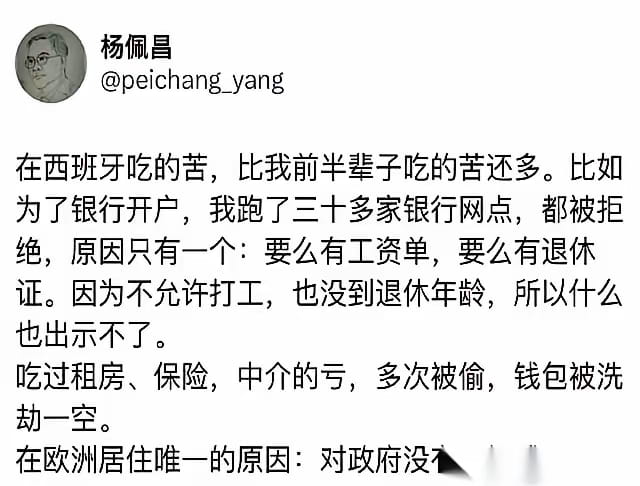
You say it's funny, a PhD from Peking University, an expert who has studied European economics for a lifetime, goes to Spain, runs through more than 30 banks, and can't even open an account.
When I saw this news, I had just finished working overtime and was slumped on the subway, almost dropping my phone in shock.
This is just the appetizer.
He said himself that when renting, the agent treated him like a pig to be butchered, and when buying insurance, he discovered it was all just word games. The most ridiculous part is that he gets robbed and stolen from every few days. Wallets, phones, passports, all lost in turns.
This is not just going to Spain; it's like going to the West for scriptures, facing 81 difficulties, not a single one less.
Logically speaking, a normal person would have lost their mind by now.
Did you think he would cry out, "I want to go home"?
No.
He wrote a short essay, listing all the above-mentioned misfortunes, and then made a stunning conclusion:
"Although I have been stolen from, robbed, and deceived here, I have no fear of the government here."
I was stunned at that moment.
What kind of spirit is this? Is this an ultimate mentality of "as long as you don’t bother me, you can hit me or scold me"?
The robber on the street snatching your bag, the agent openly cheating you out of money—aren't these more concrete and real fears? In an environment that can't even guarantee your personal and property safety, you talk to me about having no fear of an abstract 'government'?
This is like a person whose house is on fire every day. Instead of putting out the fire, he stands in the yard proudly saying, "Look, our house isn't haunted!"
For a vague and imagined 'freedom from fear,' he embraces various concrete fears in real life.
To put it simply, some intellectuals, the more books they read, the more they drift away from reality.
They can understand the most complex economic models but cannot comprehend the most basic report of life itself.
When I saw this news, I had just finished working overtime and was slumped on the subway, almost dropping my phone in shock.
This is just the appetizer.
He said himself that when renting, the agent treated him like a pig to be butchered, and when buying insurance, he discovered it was all just word games. The most ridiculous part is that he gets robbed and stolen from every few days. Wallets, phones, passports, all lost in turns.
This is not just going to Spain; it's like going to the West for scriptures, facing 81 difficulties, not a single one less.
Logically speaking, a normal person would have lost their mind by now.
Did you think he would cry out, "I want to go home"?
No.
He wrote a short essay, listing all the above-mentioned misfortunes, and then made a stunning conclusion:
"Although I have been stolen from, robbed, and deceived here, I have no fear of the government here."
I was stunned at that moment.
What kind of spirit is this? Is this an ultimate mentality of "as long as you don’t bother me, you can hit me or scold me"?
The robber on the street snatching your bag, the agent openly cheating you out of money—aren't these more concrete and real fears? In an environment that can't even guarantee your personal and property safety, you talk to me about having no fear of an abstract 'government'?
This is like a person whose house is on fire every day. Instead of putting out the fire, he stands in the yard proudly saying, "Look, our house isn't haunted!"
For a vague and imagined 'freedom from fear,' he embraces various concrete fears in real life.
To put it simply, some intellectuals, the more books they read, the more they drift away from reality.
They can understand the most complex economic models but cannot comprehend the most basic report of life itself.
财经单挑社
·
--
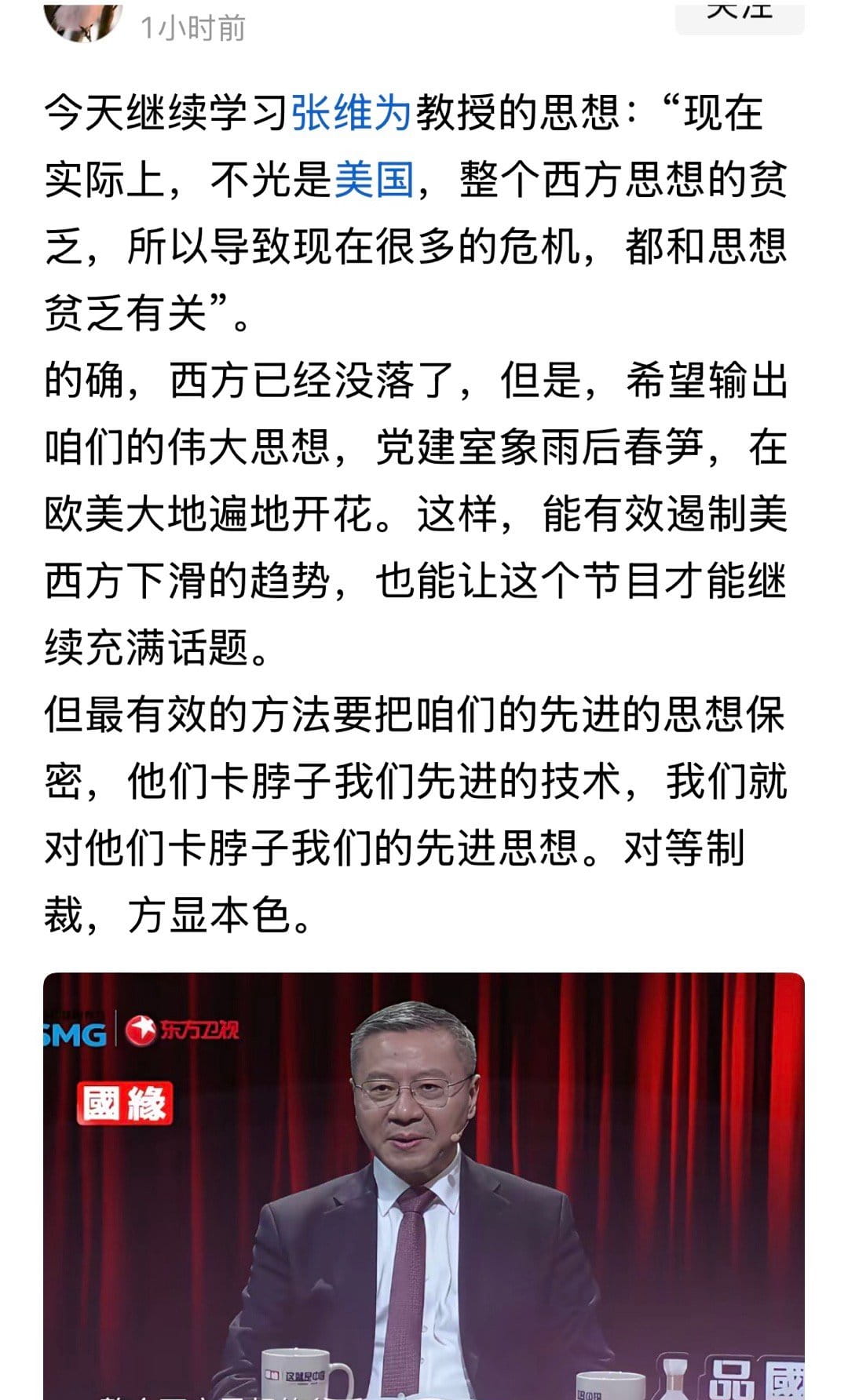
Foreign capitalist countries lack ideals and beliefs; their original intention is money! Our socialist thoughts are not lacking; they simply do not have them at all.
当铺财经A
·
--
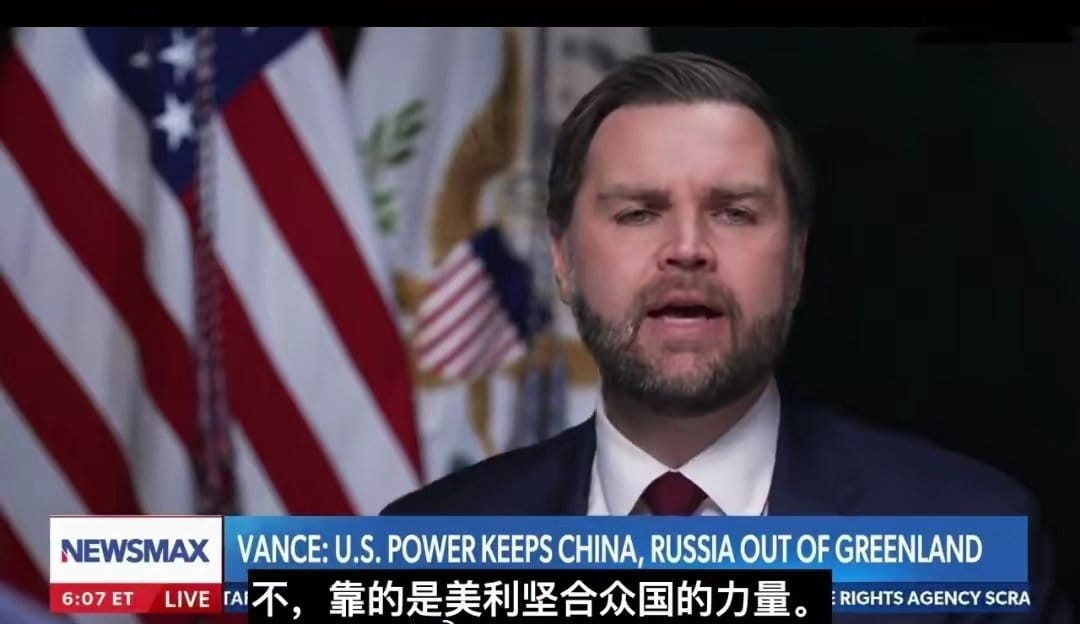
On January 23, the乡巴佬 said in an interview:
"Everyone knows that China and Russia have national security strategies over there. Everyone knows that if they could, they would undoubtedly occupy Greenland without hesitation. So, who exactly is stopping China and Russia from invading Greenland? Is it Denmark? No, it relies on the United States of America."[挖鼻]
To seize other countries' land, any nonsense can be fabricated.
"Everyone knows that China and Russia have national security strategies over there. Everyone knows that if they could, they would undoubtedly occupy Greenland without hesitation. So, who exactly is stopping China and Russia from invading Greenland? Is it Denmark? No, it relies on the United States of America."[挖鼻]
To seize other countries' land, any nonsense can be fabricated.
不悔财经
·
--
In 650 AD, Songtsen Gampo passed away, and according to tradition, the Tubo people forced Princess Wencheng to be buried with him. Emperor Gaozong of Tang was enraged and issued an edict for Tubo to return the princess to Tang, but Princess Wencheng firmly rejected this: "I will not go back!" Behind this decision lies a sense of national responsibility that transcends personal life and death.
During the Zhenguan era, the Tang dynasty was at its peak, and after Songtsen Gampo unified Tubo, he sent envoys to seek marriage twice. Lu Dongzan used his exceptional wisdom to pass Emperor Taizong's test, ultimately facilitating the marriage alliance. In 641, Princess Wencheng, carrying scriptures, Buddha statues, and skilled artisans, entered Tibet, opening a new era of cultural exchange between Tang and Tubo.
In the nine years after entering Tibet, Princess Wencheng became an ambassador of civilization. She brought farming tools and taught the Tubo people to cultivate grains and vegetables; she promoted milling and brewing techniques, innovating food processing methods. She also assisted in the construction of the Jokhang Temple, introduced Buddhist scriptures, and promoted cultural enlightenment in Tibet. Songtsen Gampo even changed into Tang clothing and sent his sons to Chang'an for education.
When Songtsen Gampo suddenly passed away at the age of 34, the young Mangsong Mangzan ascended the throne, while real power was held by Lu Dongzan. Tubo tradition required the queen to be buried with the king, a decision that hurt the Tang dynasty deeply. Li Zhi viewed this as a provocation to the authority of the dynasty and urgently summoned the princess back to Tang, attempting to intimidate Tubo.
At that time, Tubo was deeply divided; the elders insisted on tradition, while the people who benefited from the princess and Buddhist followers firmly opposed it. Lu Dongzan was also unwilling to escalate the conflict between Tang and Tubo, yet Princess Wencheng chose to stay. She understood that she was not only a queen but also a bond of peace between the two families. Leaving at that moment would likely nullify years of integration.
In the following more than thirty years, Princess Wencheng rooted herself in Tubo, continuing to write the chapters of peace. She continued to spread irrigation and textile techniques, mediate tribal disputes, and maintain communication between Tang and Tubo through letters. Even when conflicts erupted between the two sides due to the Tuyuhun in 670, she still endeavored to mediate and ease the tense border situation.
She was revered by the Tubo people as the incarnation of "Green Tara," assisting in the creation of the Tibetan script and perfecting the calendar, embodying her mission of marriage alliance throughout her life. In 680, Princess Wencheng passed away from smallpox at the age of 56, having spent nearly forty years solidifying the foundation of integration between the Han and Tibetan peoples. Her decision had nothing to do with compromise, but was solely to protect the bond of homeland that transcends the plateau.
During the Zhenguan era, the Tang dynasty was at its peak, and after Songtsen Gampo unified Tubo, he sent envoys to seek marriage twice. Lu Dongzan used his exceptional wisdom to pass Emperor Taizong's test, ultimately facilitating the marriage alliance. In 641, Princess Wencheng, carrying scriptures, Buddha statues, and skilled artisans, entered Tibet, opening a new era of cultural exchange between Tang and Tubo.
In the nine years after entering Tibet, Princess Wencheng became an ambassador of civilization. She brought farming tools and taught the Tubo people to cultivate grains and vegetables; she promoted milling and brewing techniques, innovating food processing methods. She also assisted in the construction of the Jokhang Temple, introduced Buddhist scriptures, and promoted cultural enlightenment in Tibet. Songtsen Gampo even changed into Tang clothing and sent his sons to Chang'an for education.
When Songtsen Gampo suddenly passed away at the age of 34, the young Mangsong Mangzan ascended the throne, while real power was held by Lu Dongzan. Tubo tradition required the queen to be buried with the king, a decision that hurt the Tang dynasty deeply. Li Zhi viewed this as a provocation to the authority of the dynasty and urgently summoned the princess back to Tang, attempting to intimidate Tubo.
At that time, Tubo was deeply divided; the elders insisted on tradition, while the people who benefited from the princess and Buddhist followers firmly opposed it. Lu Dongzan was also unwilling to escalate the conflict between Tang and Tubo, yet Princess Wencheng chose to stay. She understood that she was not only a queen but also a bond of peace between the two families. Leaving at that moment would likely nullify years of integration.
In the following more than thirty years, Princess Wencheng rooted herself in Tubo, continuing to write the chapters of peace. She continued to spread irrigation and textile techniques, mediate tribal disputes, and maintain communication between Tang and Tubo through letters. Even when conflicts erupted between the two sides due to the Tuyuhun in 670, she still endeavored to mediate and ease the tense border situation.
She was revered by the Tubo people as the incarnation of "Green Tara," assisting in the creation of the Tibetan script and perfecting the calendar, embodying her mission of marriage alliance throughout her life. In 680, Princess Wencheng passed away from smallpox at the age of 56, having spent nearly forty years solidifying the foundation of integration between the Han and Tibetan peoples. Her decision had nothing to do with compromise, but was solely to protect the bond of homeland that transcends the plateau.
财经小马达
·
--
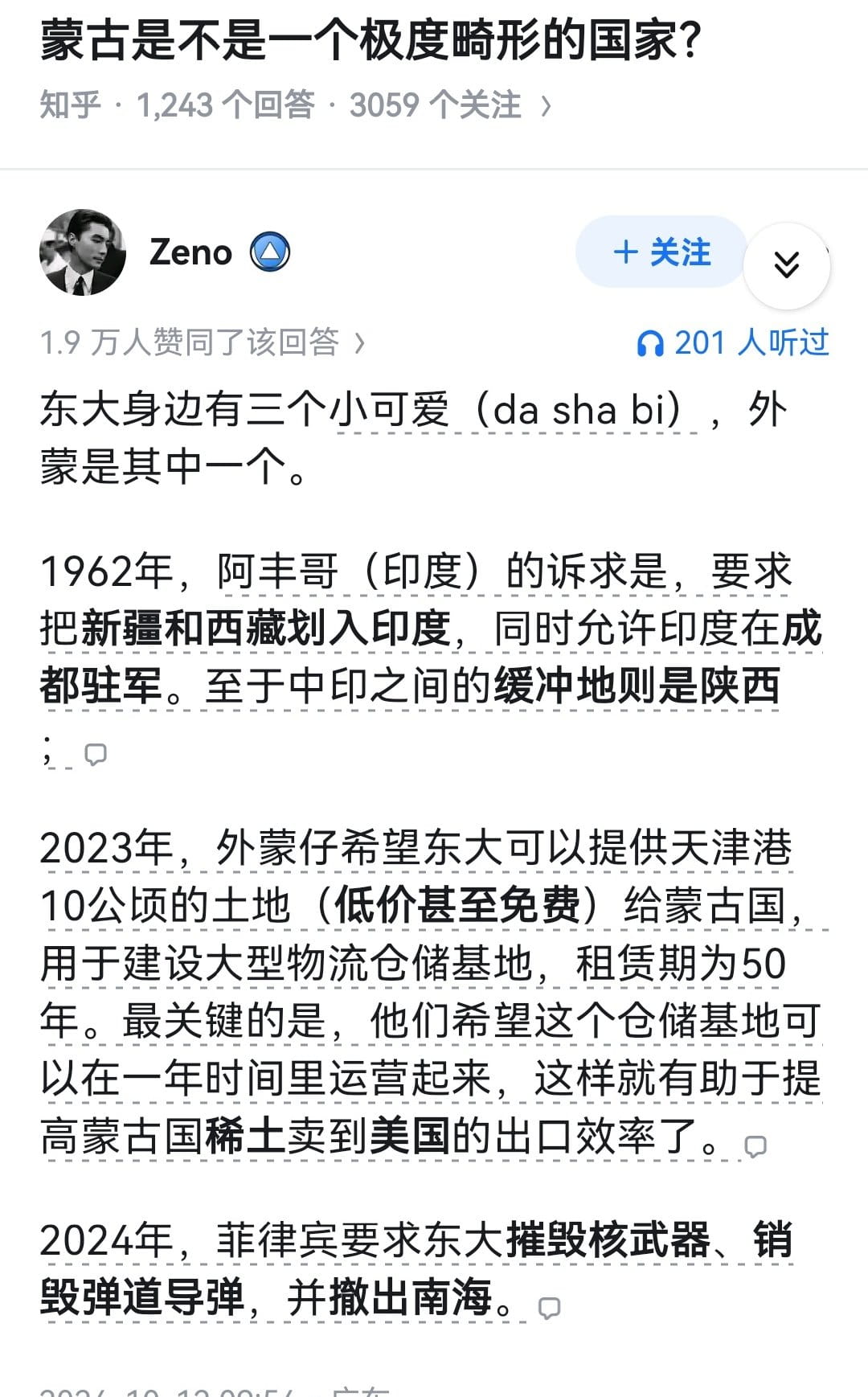
Is Mongolia an extremely distorted country?
不悔财经
·
--
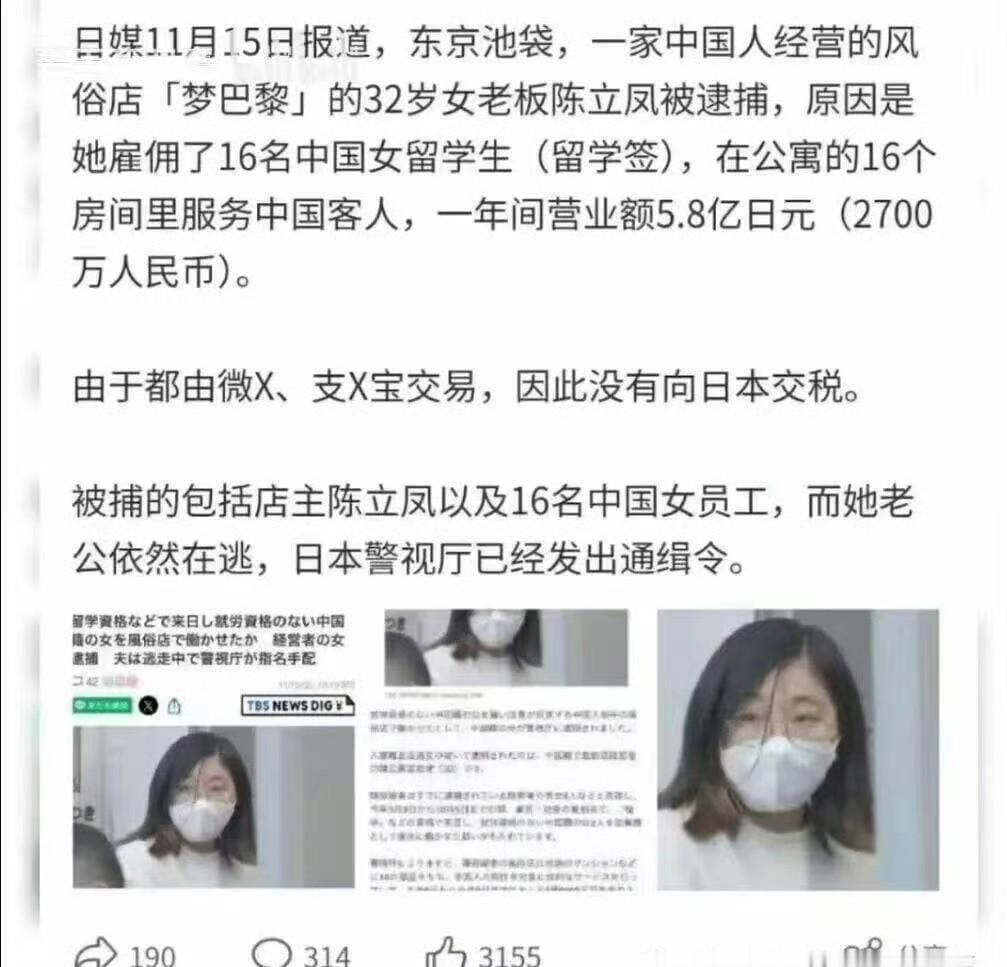
Is it true?
Suddenly, it feels a bit terrifying when I think about it! I would rather believe this is fake news released by Japanese media.
Suddenly, it feels a bit terrifying when I think about it! I would rather believe this is fake news released by Japanese media.

陆希说美股
·
--
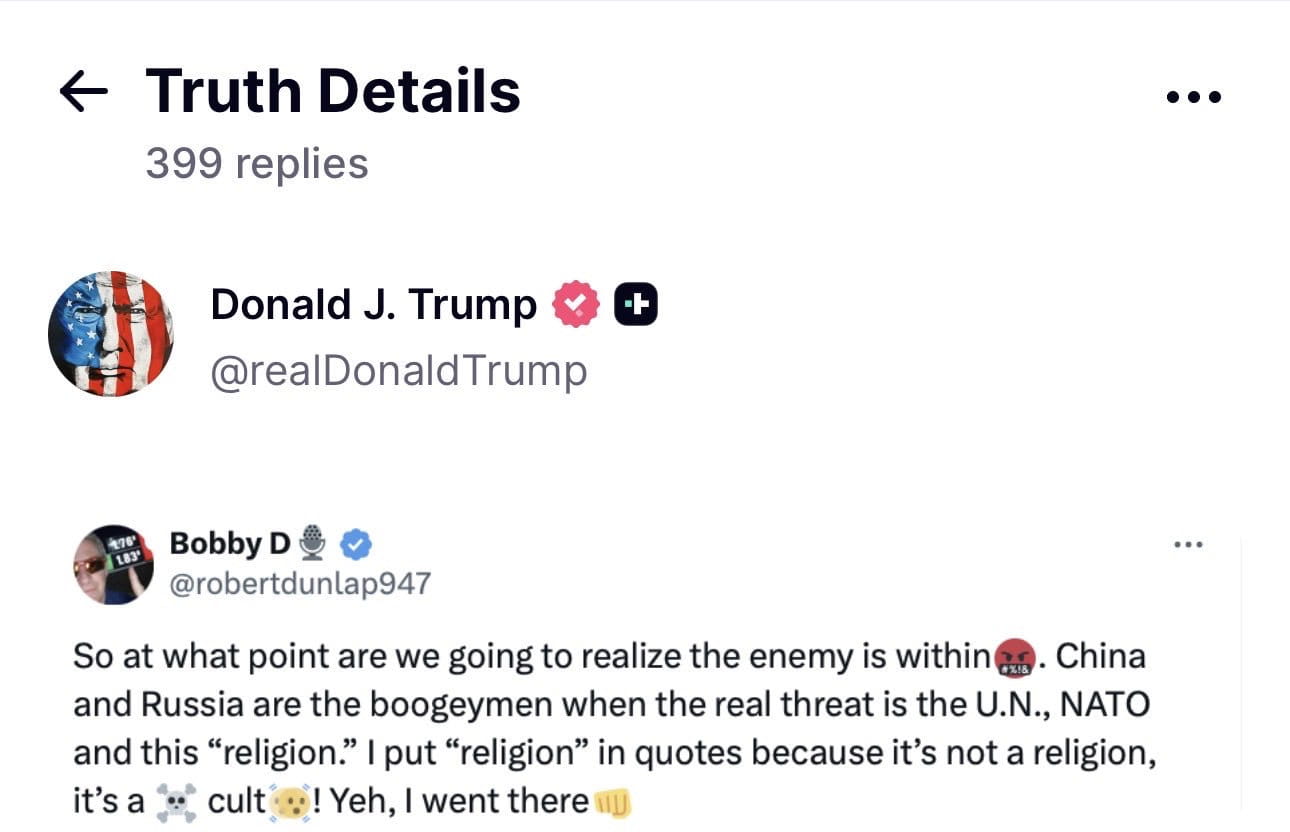
Ah, this, A-Chuan forwarded a post from a netizen, claiming that China and Russia are not enemies of the United States, but NATO and the United Nations are:
"When will we finally realize that the real enemies are within? China and Russia are portrayed as scary 'villains', but the real threats are actually the United Nations, NATO, and this so-called '39'.
I put '39' in quotes because it is not a religion at all, but a cult. Yes, I said it."
"When will we finally realize that the real enemies are within? China and Russia are portrayed as scary 'villains', but the real threats are actually the United Nations, NATO, and this so-called '39'.
I put '39' in quotes because it is not a religion at all, but a cult. Yes, I said it."
不悔财经
·
--
In 1973, a woman from Guangxi claimed to be Chairman Mao's 'daughter of Guangxi.' The staff suspected she was a fraud, but Chairman Mao urgently instructed, 'Let her come, I want to meet her.'
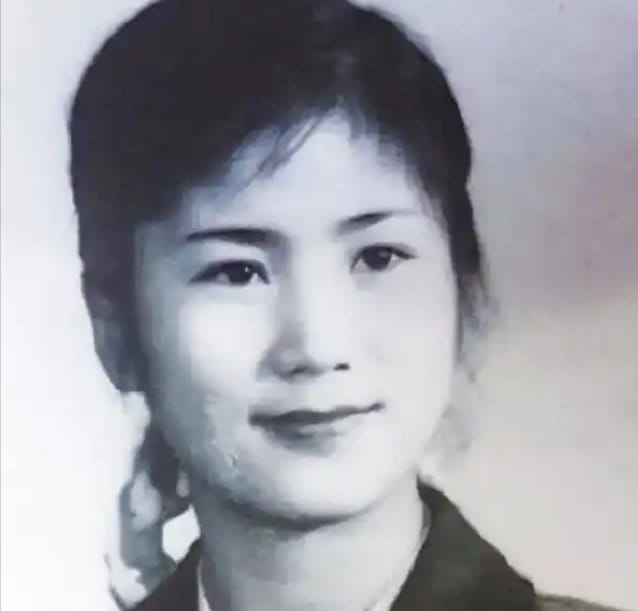
The woman's name is Cen Rongduan, a Zhuang girl. At 19 years old in 1958, she was a dancer in the Air Force's art troupe, dreaming day and night to see the leader.
At a dance party in Zhongnanhai, she was selected as a dancer and, taking advantage of a break, gathered her courage to request a meeting with the Chairman. To her surprise, her wish was granted, initiating a special friendship.
When Chairman Mao asked about her surname and learned it was Cen, he smiled and said this surname is common in Guangxi, and that it is not listed in 'Hundred Family Surnames,' needing to check 'Thousand Family Surnames' to find it.
The Chairman was well-versed in Guangxi's folklore, reminiscing about the old stories of the Yao people's uprising in Daiteng Gorge, praising her dancing posture as light as walking on clouds, and renamed her Cen Yunduan.
Chairman Mao personally inscribed the three characters 'Daiteng Gorge' as a gift; this honor made her colleagues in the art troupe envious, and Cen Yunduan became one of his frequently chosen dance partners.
At every dance party, the Chairman would chat with her about family matters and history, also gifting her a collection of Lu Xun's essays criticizing Confucianism, with inscriptions on the title page to his comrade, treating her like a younger generation.
Later, due to work transfers, Cen Yunduan moved between Fujian and Guangxi, and after parting from the Chairman, it was eight years before they met again. The longing grew deeper, yet opportunities to reunite were hard to find.
In 1973, she took pen to write a letter, signing it 'daughter of Guangxi,' and after sending it, she felt anxious, fearing she would be forgotten or seen as a fraud.
After reading the letter, Chairman Mao recalled the past and immediately instructed a reply inviting her to Beijing. During the Spring Festival of 1974, Cen Yunduan went to Beijing, and the ailing Chairman called her by her childhood name.
The two reminisced about the past, and the Chairman made a pact with her to meet every two years, joking that the one who broke the promise would be fined a hundred airplanes, a hundred cannons, and a hundred pounds of pork.
This warm yet bittersweet reunion brought tears to everyone present, showcasing the sincere friendship that transcended blood ties.
In 1975, she visited Beijing again, but Chairman Mao's health had severely weakened, needing assistance even to read documents, so she could only silently accompany him.
After Chairman Mao's passing, Cen Yunduan paid her respects as a representative of Guangxi, donating the authentic inscription of 'Daiteng Gorge' to her hometown museum, preserving the memory.
That letter signed 'daughter of Guangxi' was included in 'Guangxi Cultural History,' becoming the warmest historical mark of that era, witnessing the deep and affectionate years.
The woman's name is Cen Rongduan, a Zhuang girl. At 19 years old in 1958, she was a dancer in the Air Force's art troupe, dreaming day and night to see the leader.
At a dance party in Zhongnanhai, she was selected as a dancer and, taking advantage of a break, gathered her courage to request a meeting with the Chairman. To her surprise, her wish was granted, initiating a special friendship.
When Chairman Mao asked about her surname and learned it was Cen, he smiled and said this surname is common in Guangxi, and that it is not listed in 'Hundred Family Surnames,' needing to check 'Thousand Family Surnames' to find it.
The Chairman was well-versed in Guangxi's folklore, reminiscing about the old stories of the Yao people's uprising in Daiteng Gorge, praising her dancing posture as light as walking on clouds, and renamed her Cen Yunduan.
Chairman Mao personally inscribed the three characters 'Daiteng Gorge' as a gift; this honor made her colleagues in the art troupe envious, and Cen Yunduan became one of his frequently chosen dance partners.
At every dance party, the Chairman would chat with her about family matters and history, also gifting her a collection of Lu Xun's essays criticizing Confucianism, with inscriptions on the title page to his comrade, treating her like a younger generation.
Later, due to work transfers, Cen Yunduan moved between Fujian and Guangxi, and after parting from the Chairman, it was eight years before they met again. The longing grew deeper, yet opportunities to reunite were hard to find.
In 1973, she took pen to write a letter, signing it 'daughter of Guangxi,' and after sending it, she felt anxious, fearing she would be forgotten or seen as a fraud.
After reading the letter, Chairman Mao recalled the past and immediately instructed a reply inviting her to Beijing. During the Spring Festival of 1974, Cen Yunduan went to Beijing, and the ailing Chairman called her by her childhood name.
The two reminisced about the past, and the Chairman made a pact with her to meet every two years, joking that the one who broke the promise would be fined a hundred airplanes, a hundred cannons, and a hundred pounds of pork.
This warm yet bittersweet reunion brought tears to everyone present, showcasing the sincere friendship that transcended blood ties.
In 1975, she visited Beijing again, but Chairman Mao's health had severely weakened, needing assistance even to read documents, so she could only silently accompany him.
After Chairman Mao's passing, Cen Yunduan paid her respects as a representative of Guangxi, donating the authentic inscription of 'Daiteng Gorge' to her hometown museum, preserving the memory.
That letter signed 'daughter of Guangxi' was included in 'Guangxi Cultural History,' becoming the warmest historical mark of that era, witnessing the deep and affectionate years.

小Pa财经
·
--
(Trans) I always thought Norman Bethune was just a good person, like the kind depicted in textbooks, a stereotypical good person.
Until today, I realized that this is not a story of "good people doing good deeds" at all.
This is a story of a top-tier expert delivering a dimensional attack.
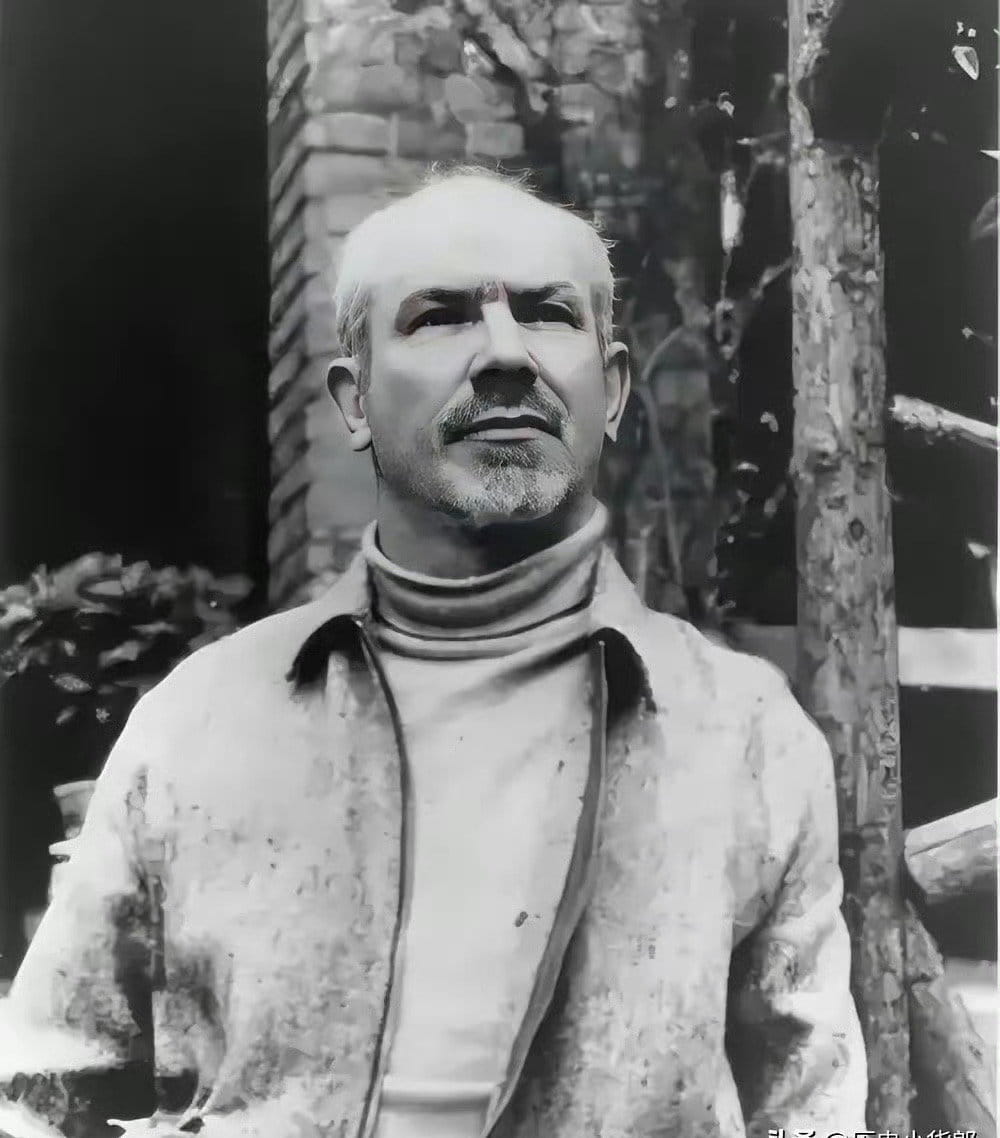
Bethune came from a privileged background and received the finest medical education in the world. He was an authoritative expert in thoracic surgery at the time, a figure standing at the pinnacle of the medical community in Europe and America. He gained a remarkable reputation at a young age, holding the resources and achievements that others could only dream of.
He was not a doctor who entered the field halfway, nor was he an ordinary doctor who could only provide simple treatments. He was proficient in the core techniques of thoracic surgery and had personally improved over a dozen surgical instruments, some of which still hold reference value in the medical field today. His professional capabilities were among the top tier globally at that time.
In Canada, he owned his own private clinic, earning a substantial income and enjoying a comfortable life. He also served as the chief physician in several well-known hospitals, surrounded by a top medical team and the most advanced medical equipment, with a future and life that could be deemed perfect and smooth.
He could have lived a stable life in his beautiful existence, but after hearing about the difficult situation of China’s war of resistance, he resolutely gave up everything, bringing a large amount of medical supplies across the ocean to this war-torn land. His arrival represented the influx of top medical resources to a barren battlefield.
At that time, the medical conditions on the front lines of China’s war of resistance could only be described as appalling. There were no sterile operating rooms, no adequate medicines, no professional surgical instruments, and even the basic disinfection conditions were hard to meet. Severely injured soldiers often had to wait in pain for their fate to be decided.
Bethune was not deterred by the dire circumstances. He brought medical staff to quickly set up field operating rooms. Even with the sound of cannon fire not far away and dust flying around him, he could focus on performing surgeries, saving one vibrant life after another with every rise and fall of the scalpel.
He performed dozens of surgeries every day, often working for over ten hours continuously. When hungry, he nibbled on some dry rations, and when tired, he would take a short nap beside the operating table, refusing to stop despite the bloodshot eyes. He treated not only soldiers but also ordinary civilians, never differentiating between their status.
He did not merely complete surgeries; he also carried the intention of imparting knowledge, personally training frontline medical staff hand-in-hand. He wrote easy-to-understand medical textbooks, standardized the battlefield rescue process, and imparted his top skills to Chinese medical practitioners without reservation.
Noticing that frontline medical staff lacked professional knowledge, he conducted targeted training, personally demonstrating every detail from wound care to surgical techniques, from disinfection processes to drug usage, striving to enable more people to master rescue skills and fundamentally improve the medical difficulties on the battlefield.
He brought not only medical supplies and surgical treatment but also an advanced battlefield medical system. This system could maximize the utilization of limited resources and reduce the mortality rate of the injured, which was the most urgently needed and precious gift for battlefield medicine in China at that time.
Many people only know of his selfless dedication but overlook the top professional support behind that dedication. Without solid medical skills, even the greatest goodwill would struggle to save so many lives in dire situations. His kindness was always backed by top capabilities.
His dimensional attack was the crushing of advanced medical standards over backward battlefield medicine, the professional quality of top practitioners countering the suffering of war, and the transcendence of selfless patterns over narrow personal interests. This strength and vision carry far more weight than simply being labeled a good person.
The few brief strokes in textbooks can only outline his kindness but fail to showcase his strength. His greatness can never be summarized by merely calling him a good person; it is the professional commitment of a top-tier expert, the humanitarian spirit of a doctor transcending borders, and the courage to advance despite knowing the dangers ahead.
He ultimately succumbed to an infection while treating injured soldiers and forever stayed on the land of China that he rushed to. He left behind not only the noble reputation of saving lives but also top-notch medical experience and a spirit of selfless dedication, which nourishes generation after generation.
We should not only confine him to a stereotypical good person image but should see the professional brilliance of him as a top physician, recognize his abandonment of a prosperous life to face suffering, and appreciate the hope and vitality he brought to this land through his professional skills.
His arrival was a ray of light during dark times, and this light came not only from his goodwill but also from his top-notch professional power. This kind of dimensional attack-like contribution is worth being remembered forever, worth being understood more comprehensively, and worth being etched in the hearts of every generation.
Until today, I realized that this is not a story of "good people doing good deeds" at all.
This is a story of a top-tier expert delivering a dimensional attack.
Bethune came from a privileged background and received the finest medical education in the world. He was an authoritative expert in thoracic surgery at the time, a figure standing at the pinnacle of the medical community in Europe and America. He gained a remarkable reputation at a young age, holding the resources and achievements that others could only dream of.
He was not a doctor who entered the field halfway, nor was he an ordinary doctor who could only provide simple treatments. He was proficient in the core techniques of thoracic surgery and had personally improved over a dozen surgical instruments, some of which still hold reference value in the medical field today. His professional capabilities were among the top tier globally at that time.
In Canada, he owned his own private clinic, earning a substantial income and enjoying a comfortable life. He also served as the chief physician in several well-known hospitals, surrounded by a top medical team and the most advanced medical equipment, with a future and life that could be deemed perfect and smooth.
He could have lived a stable life in his beautiful existence, but after hearing about the difficult situation of China’s war of resistance, he resolutely gave up everything, bringing a large amount of medical supplies across the ocean to this war-torn land. His arrival represented the influx of top medical resources to a barren battlefield.
At that time, the medical conditions on the front lines of China’s war of resistance could only be described as appalling. There were no sterile operating rooms, no adequate medicines, no professional surgical instruments, and even the basic disinfection conditions were hard to meet. Severely injured soldiers often had to wait in pain for their fate to be decided.
Bethune was not deterred by the dire circumstances. He brought medical staff to quickly set up field operating rooms. Even with the sound of cannon fire not far away and dust flying around him, he could focus on performing surgeries, saving one vibrant life after another with every rise and fall of the scalpel.
He performed dozens of surgeries every day, often working for over ten hours continuously. When hungry, he nibbled on some dry rations, and when tired, he would take a short nap beside the operating table, refusing to stop despite the bloodshot eyes. He treated not only soldiers but also ordinary civilians, never differentiating between their status.
He did not merely complete surgeries; he also carried the intention of imparting knowledge, personally training frontline medical staff hand-in-hand. He wrote easy-to-understand medical textbooks, standardized the battlefield rescue process, and imparted his top skills to Chinese medical practitioners without reservation.
Noticing that frontline medical staff lacked professional knowledge, he conducted targeted training, personally demonstrating every detail from wound care to surgical techniques, from disinfection processes to drug usage, striving to enable more people to master rescue skills and fundamentally improve the medical difficulties on the battlefield.
He brought not only medical supplies and surgical treatment but also an advanced battlefield medical system. This system could maximize the utilization of limited resources and reduce the mortality rate of the injured, which was the most urgently needed and precious gift for battlefield medicine in China at that time.
Many people only know of his selfless dedication but overlook the top professional support behind that dedication. Without solid medical skills, even the greatest goodwill would struggle to save so many lives in dire situations. His kindness was always backed by top capabilities.
His dimensional attack was the crushing of advanced medical standards over backward battlefield medicine, the professional quality of top practitioners countering the suffering of war, and the transcendence of selfless patterns over narrow personal interests. This strength and vision carry far more weight than simply being labeled a good person.
The few brief strokes in textbooks can only outline his kindness but fail to showcase his strength. His greatness can never be summarized by merely calling him a good person; it is the professional commitment of a top-tier expert, the humanitarian spirit of a doctor transcending borders, and the courage to advance despite knowing the dangers ahead.
He ultimately succumbed to an infection while treating injured soldiers and forever stayed on the land of China that he rushed to. He left behind not only the noble reputation of saving lives but also top-notch medical experience and a spirit of selfless dedication, which nourishes generation after generation.
We should not only confine him to a stereotypical good person image but should see the professional brilliance of him as a top physician, recognize his abandonment of a prosperous life to face suffering, and appreciate the hope and vitality he brought to this land through his professional skills.
His arrival was a ray of light during dark times, and this light came not only from his goodwill but also from his top-notch professional power. This kind of dimensional attack-like contribution is worth being remembered forever, worth being understood more comprehensively, and worth being etched in the hearts of every generation.

PANews
·
--
Musk: Don't rely on analogies, think from first principles!
In an interview, Musk pointed out that most people tend to think about problems by relying on "analogies" to attribute reasons, meaning they copy others' approaches—if others do it this way, so will I.
However, Musk immediately proposed his own way of thinking, which is the "first principle" approach, breaking things down to their most fundamental parts, starting from the essence of things, and then deducing step by step to rebuild understanding.
He used the example of "electric vehicle batteries": for instance, everyone says that batteries are expensive as a matter of course because they have always been this expensive for a long time.
But if you start from the "first principles", you should ask: what are batteries actually made of? What are the real market prices of these materials (cobalt, nickel, aluminum, etc.)? Then you will find that the raw material value is far lower than imagined; it's just that no one has calculated this or restructured this pathway.
True innovation should not just be about "rephrasing the knowledge", but starting from the ground up to overturn old understandings.
In an interview, Musk pointed out that most people tend to think about problems by relying on "analogies" to attribute reasons, meaning they copy others' approaches—if others do it this way, so will I.
However, Musk immediately proposed his own way of thinking, which is the "first principle" approach, breaking things down to their most fundamental parts, starting from the essence of things, and then deducing step by step to rebuild understanding.
He used the example of "electric vehicle batteries": for instance, everyone says that batteries are expensive as a matter of course because they have always been this expensive for a long time.
But if you start from the "first principles", you should ask: what are batteries actually made of? What are the real market prices of these materials (cobalt, nickel, aluminum, etc.)? Then you will find that the raw material value is far lower than imagined; it's just that no one has calculated this or restructured this pathway.
True innovation should not just be about "rephrasing the knowledge", but starting from the ground up to overturn old understandings.
Log in to explore more content