
NI Intelligence
497 Posts

NI Intelligence
Crypto content creator . Market trends, altcoin gems & on-chain insights 📈 . Ni Intelligence — where data meets conviction . Not financial advice. DYOR.
15 Following
226 Followers
850 Liked
Posts
All
Quotes
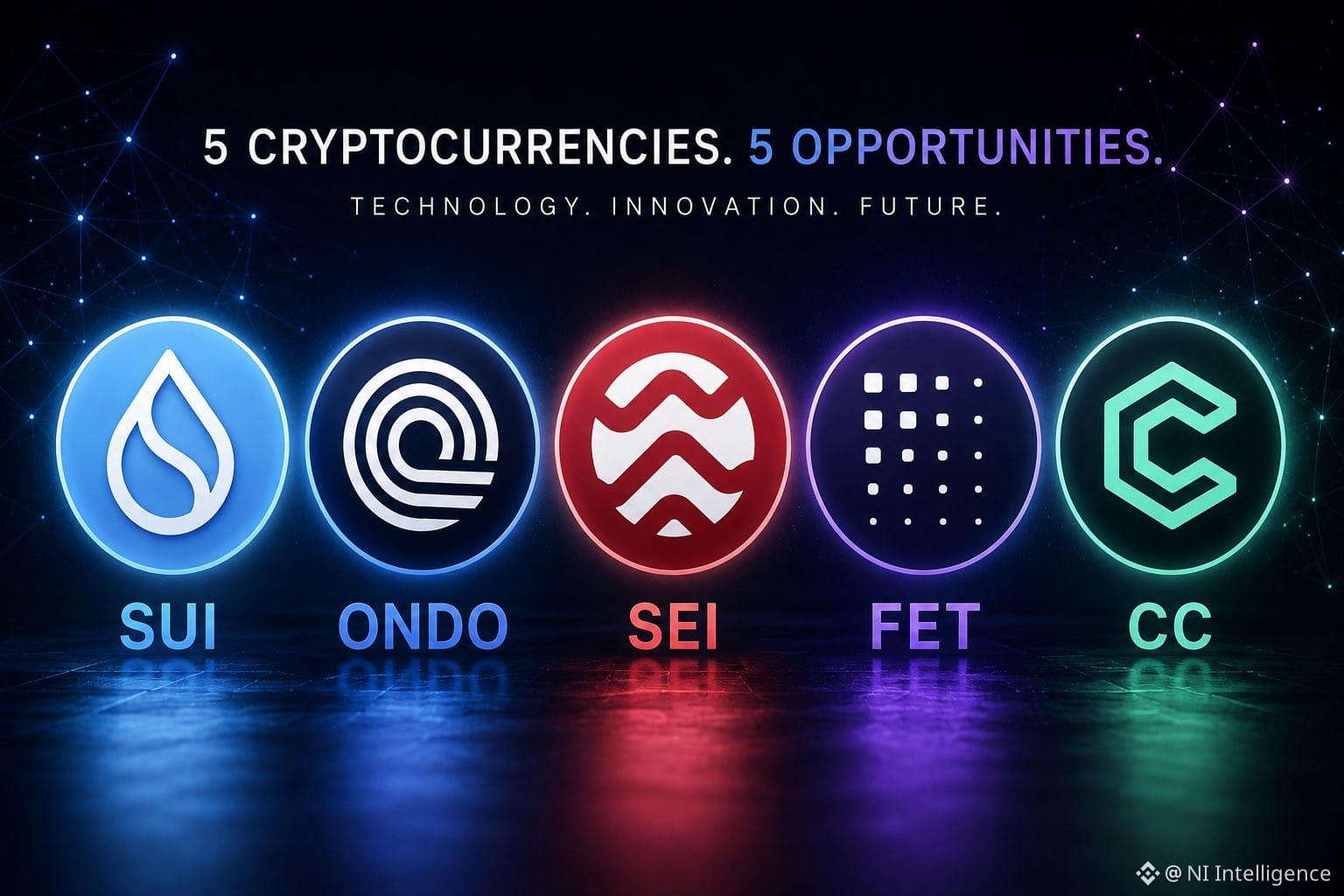
🔥 5 Cryptocurrencies. 5 Potential Opportunities.
The next big crypto narrative could come from unexpected places. 👀
$SUI — High-performance Layer-1
$ONDO — Tokenized Real-World Assets (RWA)
$SEI — High-speed trading-focused blockchain
$FET — AI & decentralized intelligence
$CC — Emerging Web3 ecosystem
Each project has a different narrative, but all are worth watching as the market evolves. 📈
Which one has the strongest potential in your opinion? 👇
#altcoins #NiIntelligence
The next big crypto narrative could come from unexpected places. 👀
$SUI — High-performance Layer-1
$ONDO — Tokenized Real-World Assets (RWA)
$SEI — High-speed trading-focused blockchain
$FET — AI & decentralized intelligence
$CC — Emerging Web3 ecosystem
Each project has a different narrative, but all are worth watching as the market evolves. 📈
Which one has the strongest potential in your opinion? 👇
#altcoins #NiIntelligence
Why I’m Holding ENA, FET & POL 📌
I’m holding ENA, FETand POLbecause I see three different long-term narratives:
$ENA — exposure to Ethena’s synthetic-dollar ecosystem. My thesis is long-term growth in DeFi and stablecoin demand.
$FET — I’m betting on decentralized AI, autonomous agents and AI infrastructure becoming a major crypto narrative.
$POL — Polygon’s ecosystem and scaling infrastructure give me exposure to long-term blockchain adoption.
I’m fully aware these are high-risk assets. Execution, regulation, dilution, competition and market cycles can all hurt the thesis.
🎯 My long-term targets (speculative):
ENA: $1–$2+
FET: $1–$3+
POL: $0.80–$2+
I’m not expecting overnight gains. I’m holding for the multi-year thesis, while staying ready to change my view if the fundamentals break.
Which one would you hold long term? 👀
#altcoins
I’m holding ENA, FETand POLbecause I see three different long-term narratives:
$ENA — exposure to Ethena’s synthetic-dollar ecosystem. My thesis is long-term growth in DeFi and stablecoin demand.
$FET — I’m betting on decentralized AI, autonomous agents and AI infrastructure becoming a major crypto narrative.
$POL — Polygon’s ecosystem and scaling infrastructure give me exposure to long-term blockchain adoption.
I’m fully aware these are high-risk assets. Execution, regulation, dilution, competition and market cycles can all hurt the thesis.
🎯 My long-term targets (speculative):
ENA: $1–$2+
FET: $1–$3+
POL: $0.80–$2+
I’m not expecting overnight gains. I’m holding for the multi-year thesis, while staying ready to change my view if the fundamentals break.
Which one would you hold long term? 👀
#altcoins
What do you think about $ONDO ??
NI Intelligence
·
--
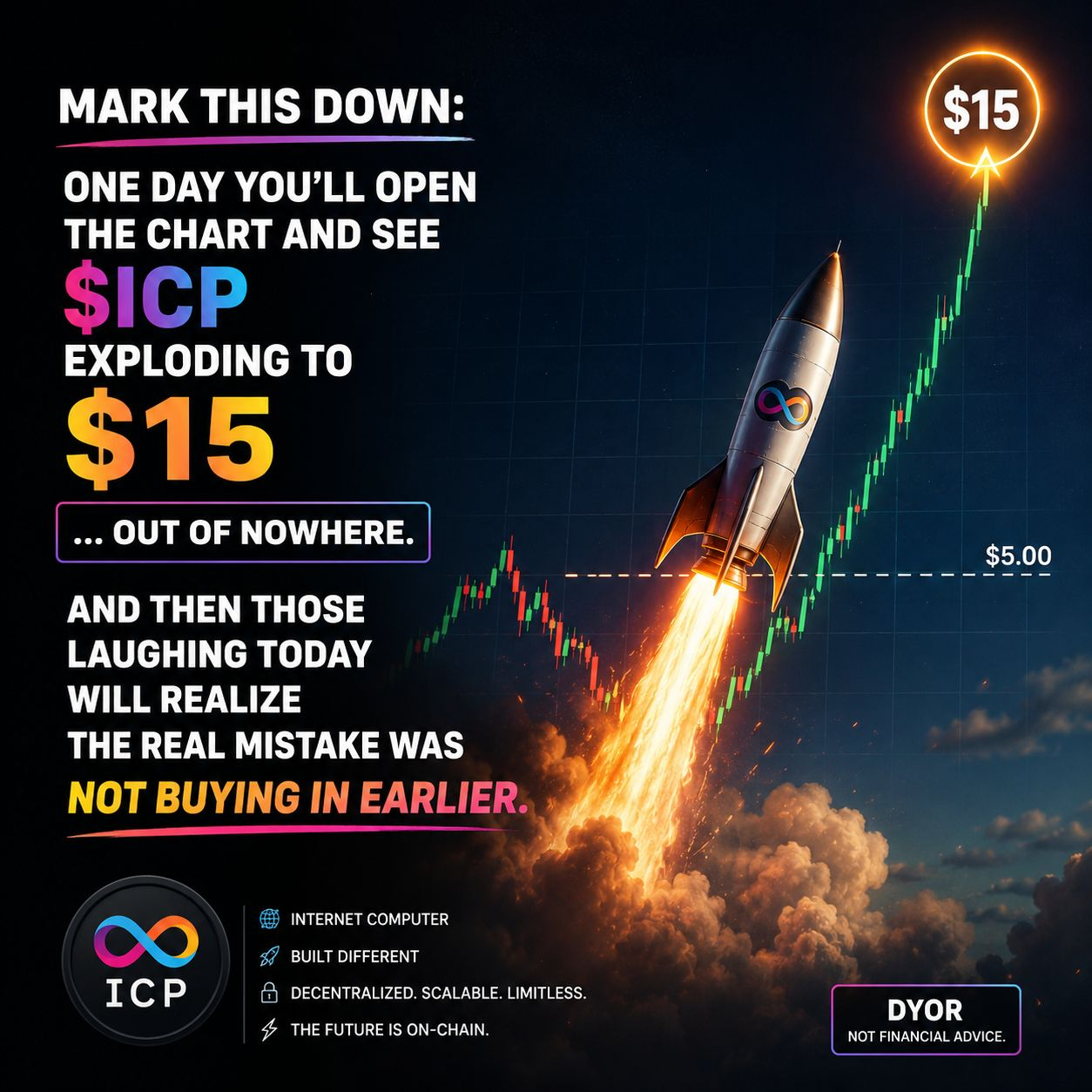
Mark this down: one day you'll open the chart and see $ICP exploding to $15 ... out of nowhere.
And then those laughing today will realize the real mistake was not buying in earlier..
And then those laughing today will realize the real mistake was not buying in earlier..
Do you think $UNI reach this target 🎯
NI Intelligence
·
--
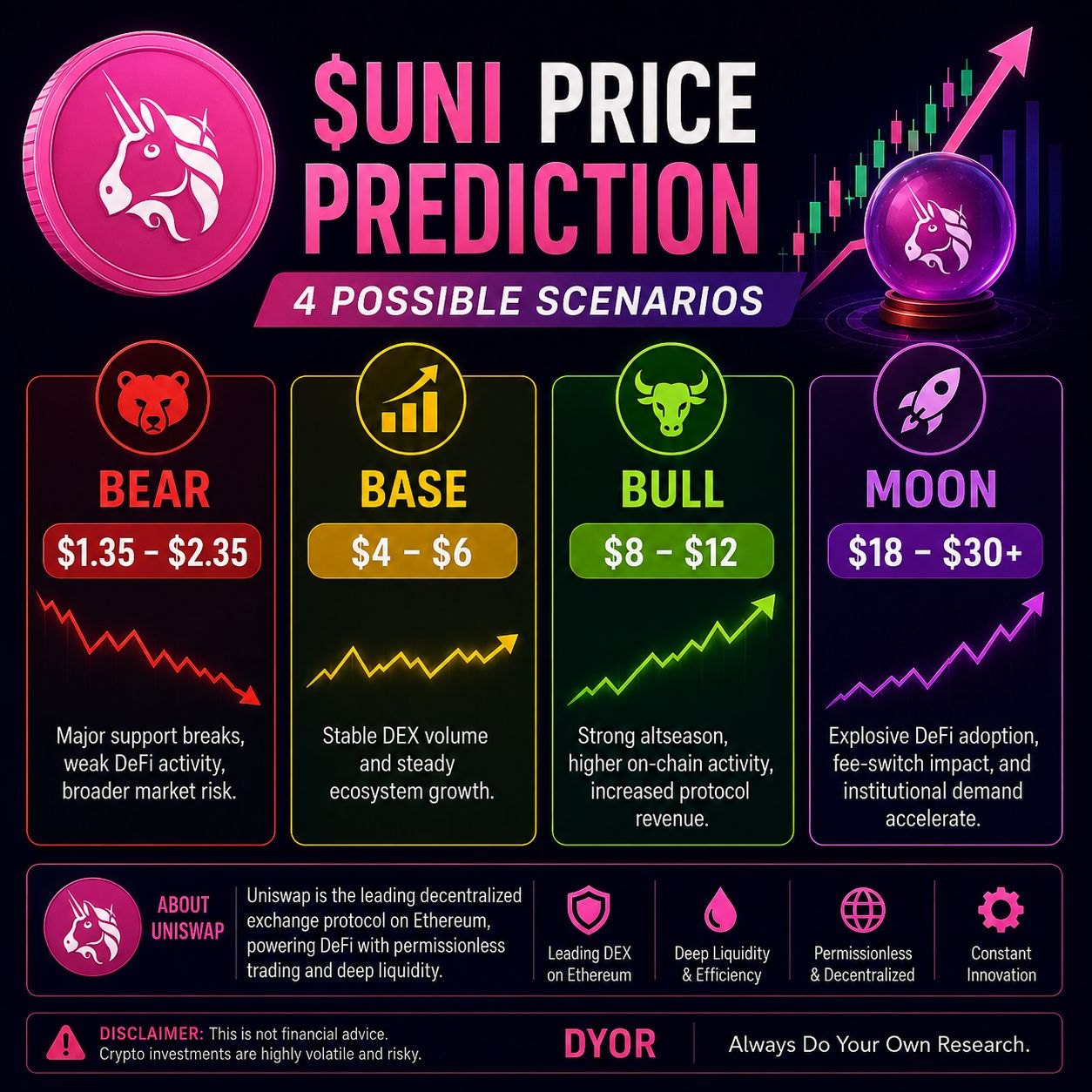
$UNI Which Price Scenario Plays Out?
Uniswap is sitting at a key crossroads, with 4 possible paths ahead:
Bear: $1.35–$2.35
Base: $4–$6
Bull: $8–$12
Moon: $18–$30+
DeFi adoption, DEX volume, protocol revenue, and the fee-switch narrative could be major catalysts.
🎯 Where do you see $UNI going next?
#cryptouniverseofficial #NiIntelligence #altcoins
Uniswap is sitting at a key crossroads, with 4 possible paths ahead:
Bear: $1.35–$2.35
Base: $4–$6
Bull: $8–$12
Moon: $18–$30+
DeFi adoption, DEX volume, protocol revenue, and the fee-switch narrative could be major catalysts.
🎯 Where do you see $UNI going next?
#cryptouniverseofficial #NiIntelligence #altcoins
$ENA to $1??
Think About Market Cap First! 👀
A cheap-looking price can be misleading. With 9.83B ENA in circulating supply, a $1 target implies a market cap of roughly $9.8B.
That's about 8x ENA's current $1.2B market cap, pushing it toward top-20 territory. Note: total supply is 15B, so unlocks could add dilution pressure over time.
Can $ENA pump? Yes 🔥
Is $1 easy? Not necessarily — that's a big cap to climb.
Smart traders study market cap, not just price.
Realistic under a strong market, or moonboy fantasy? What's your take? 👀
#altcoins #cryptouniverseofficial
Think About Market Cap First! 👀
A cheap-looking price can be misleading. With 9.83B ENA in circulating supply, a $1 target implies a market cap of roughly $9.8B.
That's about 8x ENA's current $1.2B market cap, pushing it toward top-20 territory. Note: total supply is 15B, so unlocks could add dilution pressure over time.
Can $ENA pump? Yes 🔥
Is $1 easy? Not necessarily — that's a big cap to climb.
Smart traders study market cap, not just price.
Realistic under a strong market, or moonboy fantasy? What's your take? 👀
#altcoins #cryptouniverseofficial
🔥Is $OP One of the Most Underrated L2 Plays?
⚙️ What it does: Ethereum scaling via OP Mainnet + the modular OP Stack powering the Superchain.
🚀 Why interesting: Growing Superchain adoption + OP token buybacks using 50% of incoming Superchain revenue.
🎯 Catalysts: Interoperability, new OP Chains, enterprise adoption.
⚠️ Risk: Medium–High — competition, token supply dynamics & execution risk.
💭 Could $OP surprise the market? DYOR.
⚙️ What it does: Ethereum scaling via OP Mainnet + the modular OP Stack powering the Superchain.
🚀 Why interesting: Growing Superchain adoption + OP token buybacks using 50% of incoming Superchain revenue.
🎯 Catalysts: Interoperability, new OP Chains, enterprise adoption.
⚠️ Risk: Medium–High — competition, token supply dynamics & execution risk.
💭 Could $OP surprise the market? DYOR.
$ONDO vs $WLD Which Has the Stronger 2026 Narrative?
⚡ Speed:
ONDO → RWA-focused infrastructure
WLD → Human-first World Chain
💰 Fees:
ONDO → Chain-dependent
WLD → Designed for low-cost access
🌐 Ecosystem:
ONDO → RWAs, tokenized stocks & Treasuries
WLD → World ID, World App & Mini Apps
🎯 Use Case:
ONDO → Tokenized real-world finance
WLD → Digital identity + financial access
📈 Price Outlook:
ONDO $0.50–$0.80
WLD $0.80–$1.20 (opinion)
Which one has stronger long-term potential? 👀
⚡ Speed:
ONDO → RWA-focused infrastructure
WLD → Human-first World Chain
💰 Fees:
ONDO → Chain-dependent
WLD → Designed for low-cost access
🌐 Ecosystem:
ONDO → RWAs, tokenized stocks & Treasuries
WLD → World ID, World App & Mini Apps
🎯 Use Case:
ONDO → Tokenized real-world finance
WLD → Digital identity + financial access
📈 Price Outlook:
ONDO $0.50–$0.80
WLD $0.80–$1.20 (opinion)
Which one has stronger long-term potential? 👀
$SUI at $10 ??
A cheap-looking price can trick you. SUI trades around $0.65 with a circulating supply of 4.07B tokens (total supply 10B — unlocks ahead mean dilution risk). At $10, that implies a market cap of roughly $40B+, versus its current $2.7B cap (rank #28-34). That's nearly 15x growth from here — putting SUI near the size of established top-15 majors.
Can $SUI pump? Yes, potentially. 🔥
Is $10 easy? Not necessarily — it demands a massive market cap expansion.
Smart traders study market cap, not just price.
Do you think SUI can 15x from here? 👀
#NiIntelligence
A cheap-looking price can trick you. SUI trades around $0.65 with a circulating supply of 4.07B tokens (total supply 10B — unlocks ahead mean dilution risk). At $10, that implies a market cap of roughly $40B+, versus its current $2.7B cap (rank #28-34). That's nearly 15x growth from here — putting SUI near the size of established top-15 majors.
Can $SUI pump? Yes, potentially. 🔥
Is $10 easy? Not necessarily — it demands a massive market cap expansion.
Smart traders study market cap, not just price.
Do you think SUI can 15x from here? 👀
#NiIntelligence
$ICP to $20 ??
Think About Market Cap First! 👀
A cheap-looking price can be misleading. ICP has 560M coins circulating, so a $20 price would imply roughly an $11.2B market cap.
That's about 9x its current $1.24B market cap. ICP also has no fixed max supply — it inflates 3.6%/year, adding mild dilution risk over time
Can $ICP pump? Yes, potentially. 🔥
Is $20 easy? Not necessarily — it needs a major re-rating.
Smart traders study market cap, not just price.
Where do you see ICP by cycle end? 👀
#altcoins #cryptouniverseofficial
Think About Market Cap First! 👀
A cheap-looking price can be misleading. ICP has 560M coins circulating, so a $20 price would imply roughly an $11.2B market cap.
That's about 9x its current $1.24B market cap. ICP also has no fixed max supply — it inflates 3.6%/year, adding mild dilution risk over time
Can $ICP pump? Yes, potentially. 🔥
Is $20 easy? Not necessarily — it needs a major re-rating.
Smart traders study market cap, not just price.
Where do you see ICP by cycle end? 👀
#altcoins #cryptouniverseofficial
$TAO Might be the most underappreciated AI infrastructure bet right 👍 now.
This week alone:
→ Teutonic-I: First 10B model, ranking #1 on 8 of 11 benchmarks while beating larger decentralized models.
→ Vidaio: Powering PIP Studios’ AI video platform for clients including Sony, Paramount, Amazon, Universal and Netflix.
→ Hippius: Encrypted decentralized cloud storage is now live.
→ OpenRoboto: Open Data Pool launched with real-world robotics training data.
→ Green Compute: 250 RTX 5090 GPUs worth $3M coming online, powered by 100% green energy.
Bittensor isn't just building AI models. It's building an open marketplace for AI compute, data, storage, robotics and intelligence.
This week alone:
→ Teutonic-I: First 10B model, ranking #1 on 8 of 11 benchmarks while beating larger decentralized models.
→ Vidaio: Powering PIP Studios’ AI video platform for clients including Sony, Paramount, Amazon, Universal and Netflix.
→ Hippius: Encrypted decentralized cloud storage is now live.
→ OpenRoboto: Open Data Pool launched with real-world robotics training data.
→ Green Compute: 250 RTX 5090 GPUs worth $3M coming online, powered by 100% green energy.
Bittensor isn't just building AI models. It's building an open marketplace for AI compute, data, storage, robotics and intelligence.
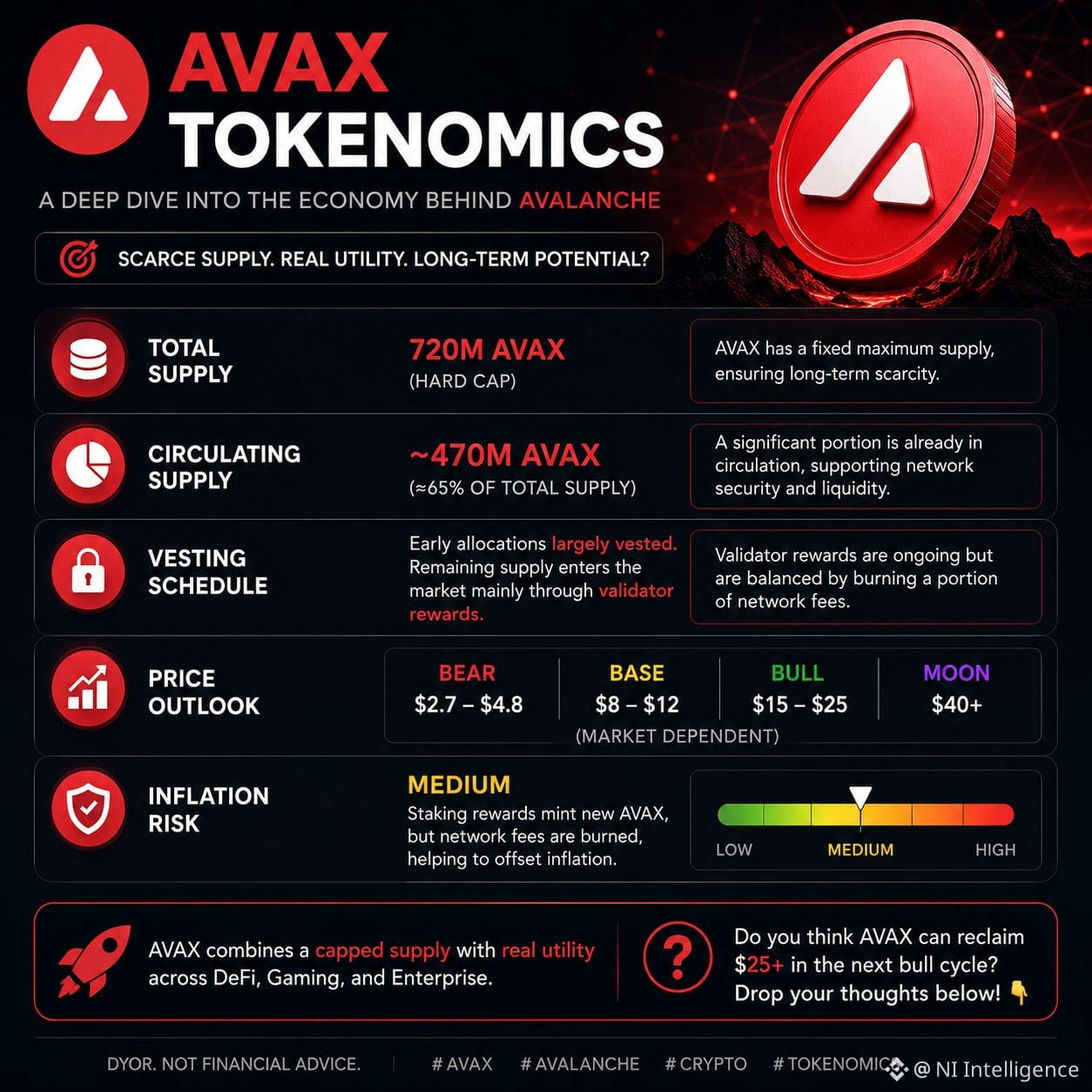
🚨 Could $AVAX Be Undervalued? Let’s Look at the Tokenomics!
$AVAX has a 720M max supply, with ~470M circulating. 🔥
The capped supply supports scarcity, while staking rewards add some inflation. Network fee burns can help offset part of that pressure.
🎯 Potential Scenarios:
Bear: $2.7–4.8
Base: $8–12
Bull: $15–25
Moon: $40+
Do you think $AVAX can hit $25+? 👇
#altcoins #NiIntelligence #cryptouniverseofficial
$AVAX has a 720M max supply, with ~470M circulating. 🔥
The capped supply supports scarcity, while staking rewards add some inflation. Network fee burns can help offset part of that pressure.
🎯 Potential Scenarios:
Bear: $2.7–4.8
Base: $8–12
Bull: $15–25
Moon: $40+
Do you think $AVAX can hit $25+? 👇
#altcoins #NiIntelligence #cryptouniverseofficial
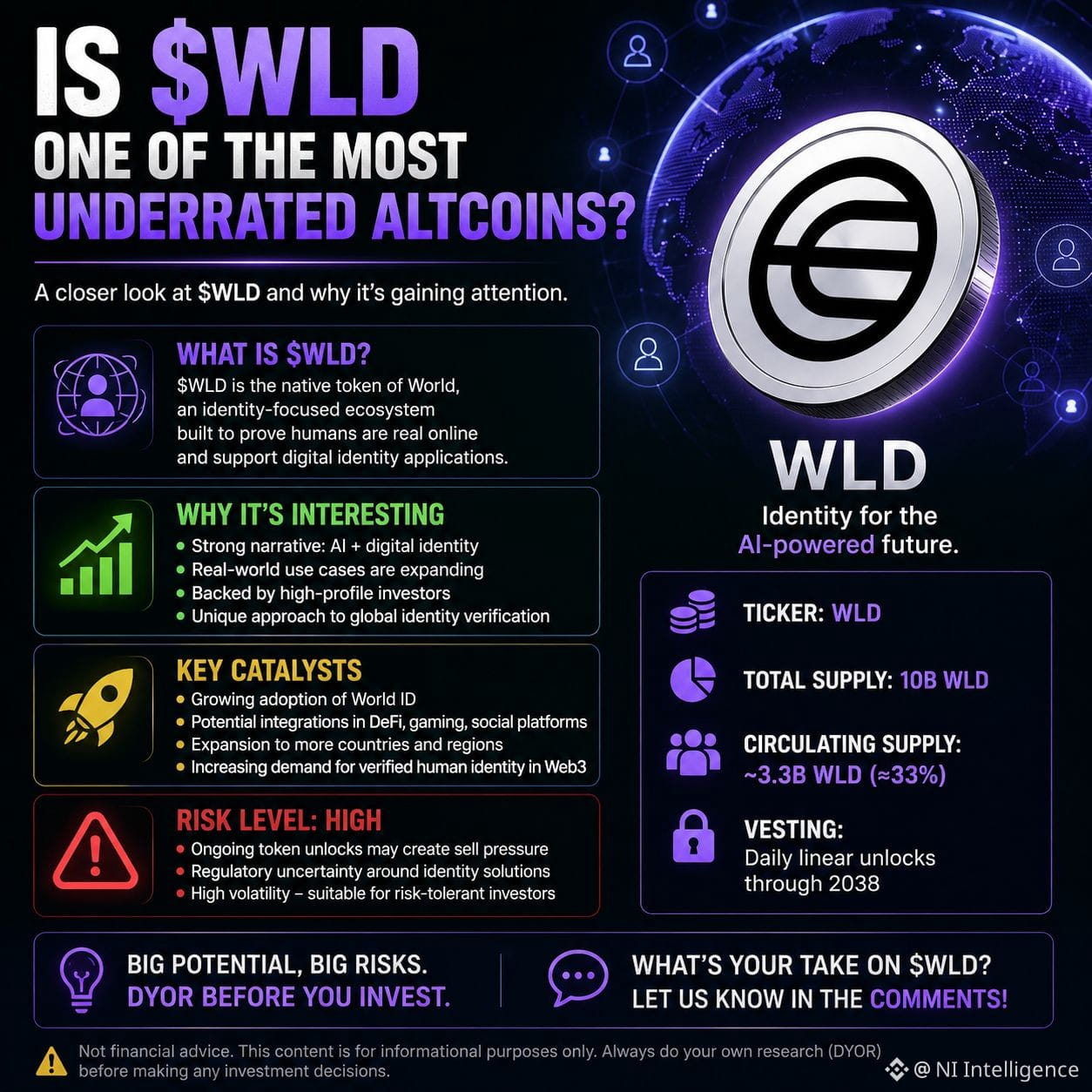
🚨Is $WLD One of the Most Underrated Altcoins?
$WLD powers World’s identity-focused ecosystem, aiming to prove humans are real online while enabling digital identity applications.
🔹 Catalyst: AI + digital identity narrative
🔹 Interest: Growing real-world use cases
🔹 Risk: 🔴 High — ongoing unlocks and volatility remain key concerns
Not financial advice. DYOR before investing.
Could $WLD surprise the market in the next cycle? 👀
#altcoins #NiIntelligence #cryptouniverseofficial
$WLD powers World’s identity-focused ecosystem, aiming to prove humans are real online while enabling digital identity applications.
🔹 Catalyst: AI + digital identity narrative
🔹 Interest: Growing real-world use cases
🔹 Risk: 🔴 High — ongoing unlocks and volatility remain key concerns
Not financial advice. DYOR before investing.
Could $WLD surprise the market in the next cycle? 👀
#altcoins #NiIntelligence #cryptouniverseofficial
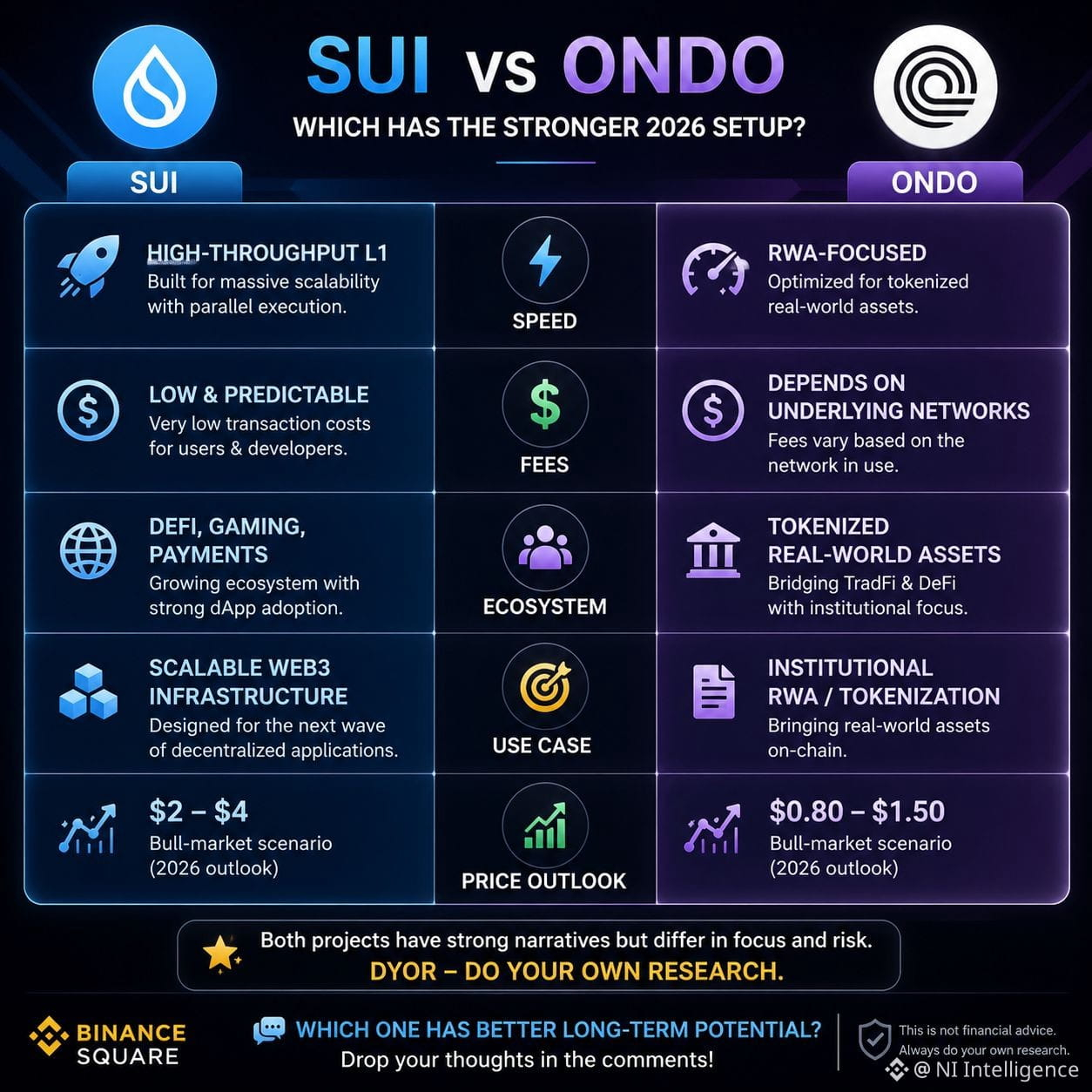
🔥$SUI vs $ONDO Two Different Narratives, One Big Question!
⚡ SUI → High-speed L1, DeFi, gaming & scalable Web3
🏦 ONDO → RWA tokenization & institutional adoption
SUI Outlook → $2–$4
ONDO Outlook → $0.80–$1.50
Both have strong narratives, but their use cases and risk profiles are very different.
Price ranges are speculative, not financial advice. DYOR.
Which one would you choose for the next market cycle — SUI or ONDO? 👇
#altcoins #cryptouniverseofficial #NiIntelligence
⚡ SUI → High-speed L1, DeFi, gaming & scalable Web3
🏦 ONDO → RWA tokenization & institutional adoption
SUI Outlook → $2–$4
ONDO Outlook → $0.80–$1.50
Both have strong narratives, but their use cases and risk profiles are very different.
Price ranges are speculative, not financial advice. DYOR.
Which one would you choose for the next market cycle — SUI or ONDO? 👇
#altcoins #cryptouniverseofficial #NiIntelligence
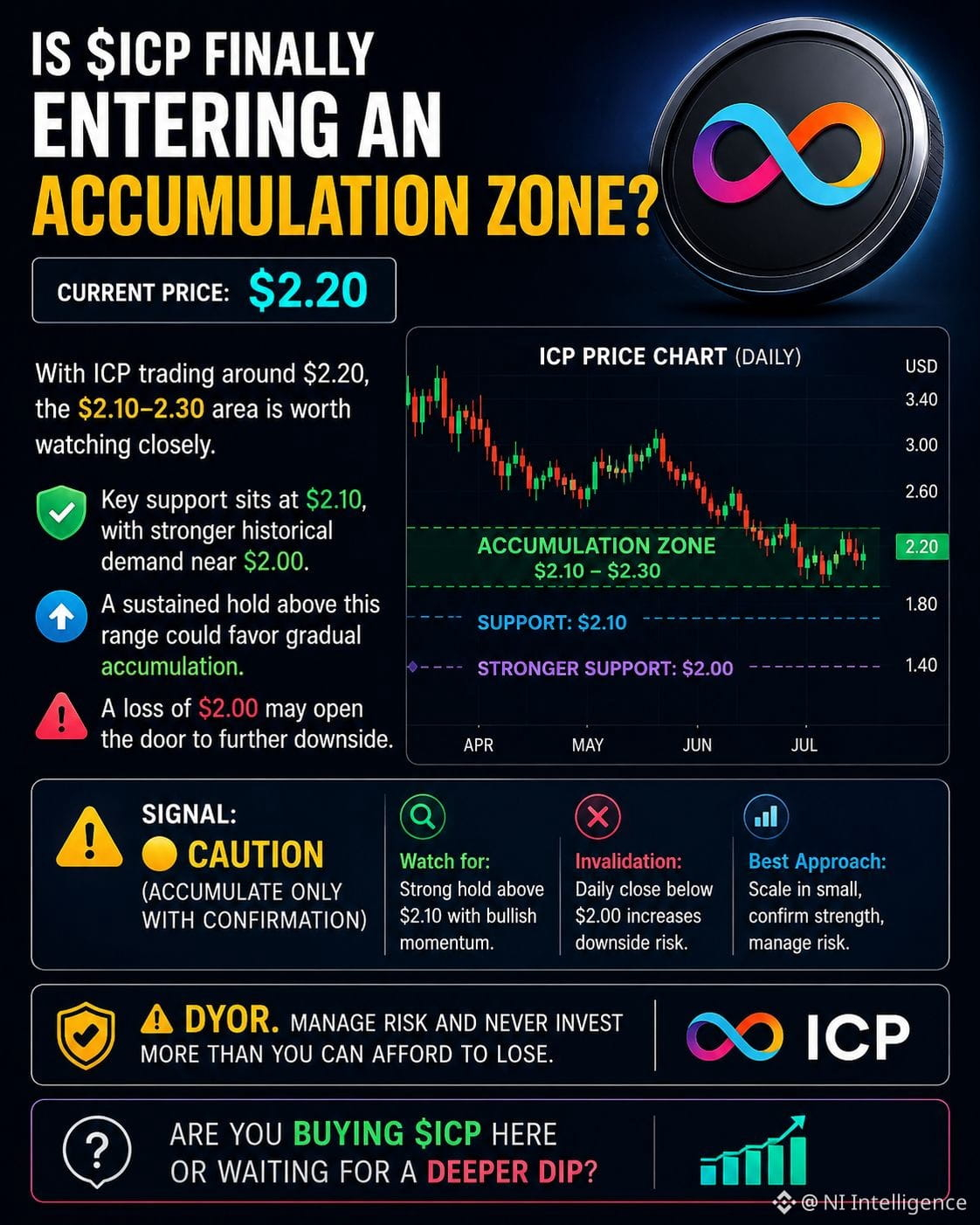
$ICP at $2.20 — Opportunity or Trap?
The $2.10–$2.30 zone could become an interesting area for $ICP watchers. 📊
🟢 Above $2.30 → bullish confirmation
🟡 $2.10–$2.30 → accumulation zone to monitor
🔴 Below $2.00 → risk of deeper correction
For now, patience may be more valuable than chasing the move. 👀
DYOR & manage your risk.
Would you accumulate $ICP here, or wait for confirmation? 🚀
#altcoins #cryptouniverseofficial #NiIntelligence
The $2.10–$2.30 zone could become an interesting area for $ICP watchers. 📊
🟢 Above $2.30 → bullish confirmation
🟡 $2.10–$2.30 → accumulation zone to monitor
🔴 Below $2.00 → risk of deeper correction
For now, patience may be more valuable than chasing the move. 👀
DYOR & manage your risk.
Would you accumulate $ICP here, or wait for confirmation? 🚀
#altcoins #cryptouniverseofficial #NiIntelligence
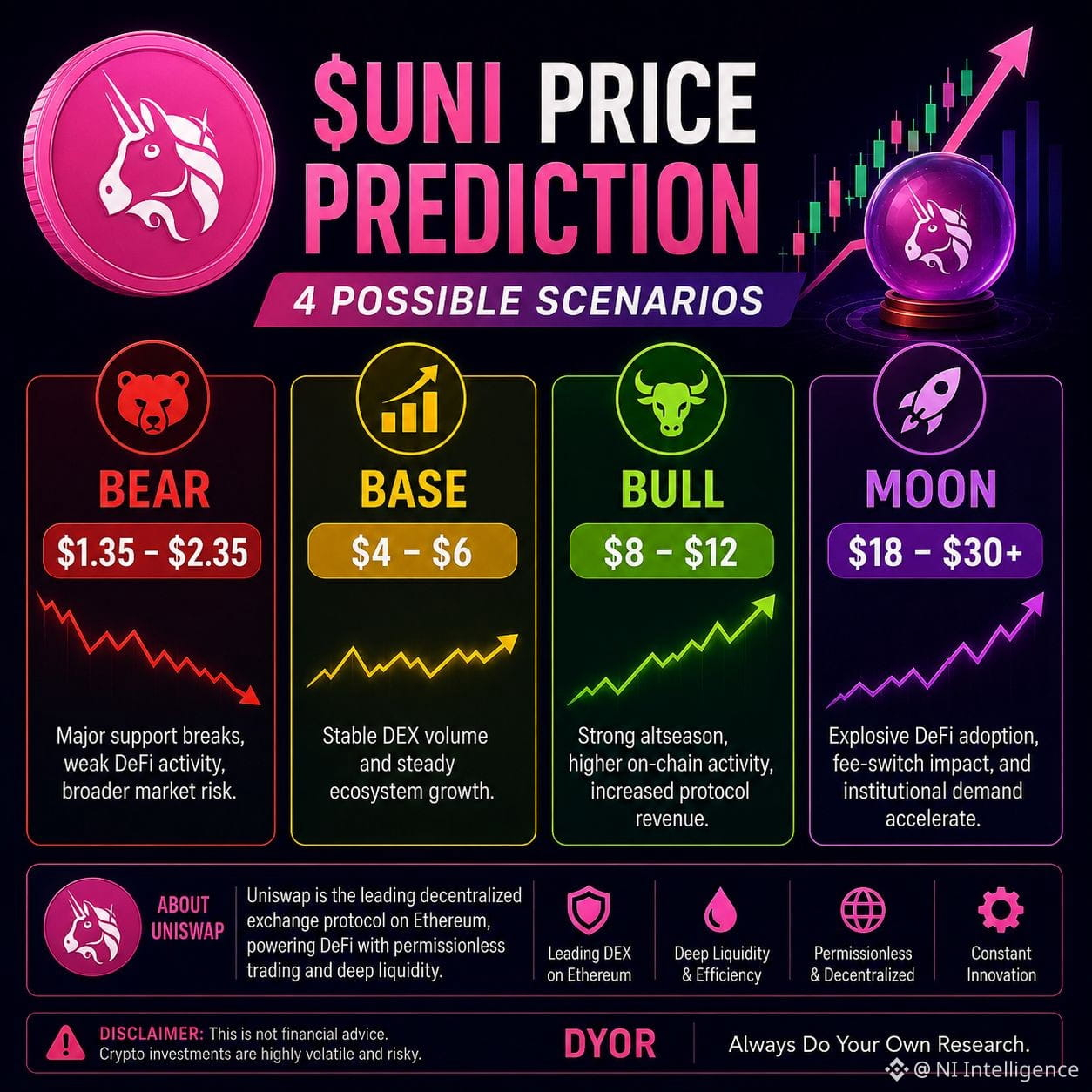
$UNI Which Price Scenario Plays Out?
Uniswap is sitting at a key crossroads, with 4 possible paths ahead:
Bear: $1.35–$2.35
Base: $4–$6
Bull: $8–$12
Moon: $18–$30+
DeFi adoption, DEX volume, protocol revenue, and the fee-switch narrative could be major catalysts.
🎯 Where do you see $UNI going next?
#cryptouniverseofficial #NiIntelligence #altcoins
Uniswap is sitting at a key crossroads, with 4 possible paths ahead:
Bear: $1.35–$2.35
Base: $4–$6
Bull: $8–$12
Moon: $18–$30+
DeFi adoption, DEX volume, protocol revenue, and the fee-switch narrative could be major catalysts.
🎯 Where do you see $UNI going next?
#cryptouniverseofficial #NiIntelligence #altcoins
$WLD Then vs Now — Has the Story Changed?
🕐 1 Year Ago (Jul 2025): $0.95 Heavy token unlock concerns, AI narrative driving speculation, mixed investor confidence.
📍 Today (Aug 2026): $0.34 Unlock pressure easing, expanding World ID ecosystem, sentiment shifting toward long-term utility over hype.
🔮 Looking Ahead: If user adoption and AI identity demand continue to grow, WLD could see stronger fundamentals than price currently reflects.
DYOR. Are you accumulating $WLD or waiting for more confirmation?
#altcoins #NiIntelligence
🕐 1 Year Ago (Jul 2025): $0.95 Heavy token unlock concerns, AI narrative driving speculation, mixed investor confidence.
📍 Today (Aug 2026): $0.34 Unlock pressure easing, expanding World ID ecosystem, sentiment shifting toward long-term utility over hype.
🔮 Looking Ahead: If user adoption and AI identity demand continue to grow, WLD could see stronger fundamentals than price currently reflects.
DYOR. Are you accumulating $WLD or waiting for more confirmation?
#altcoins #NiIntelligence
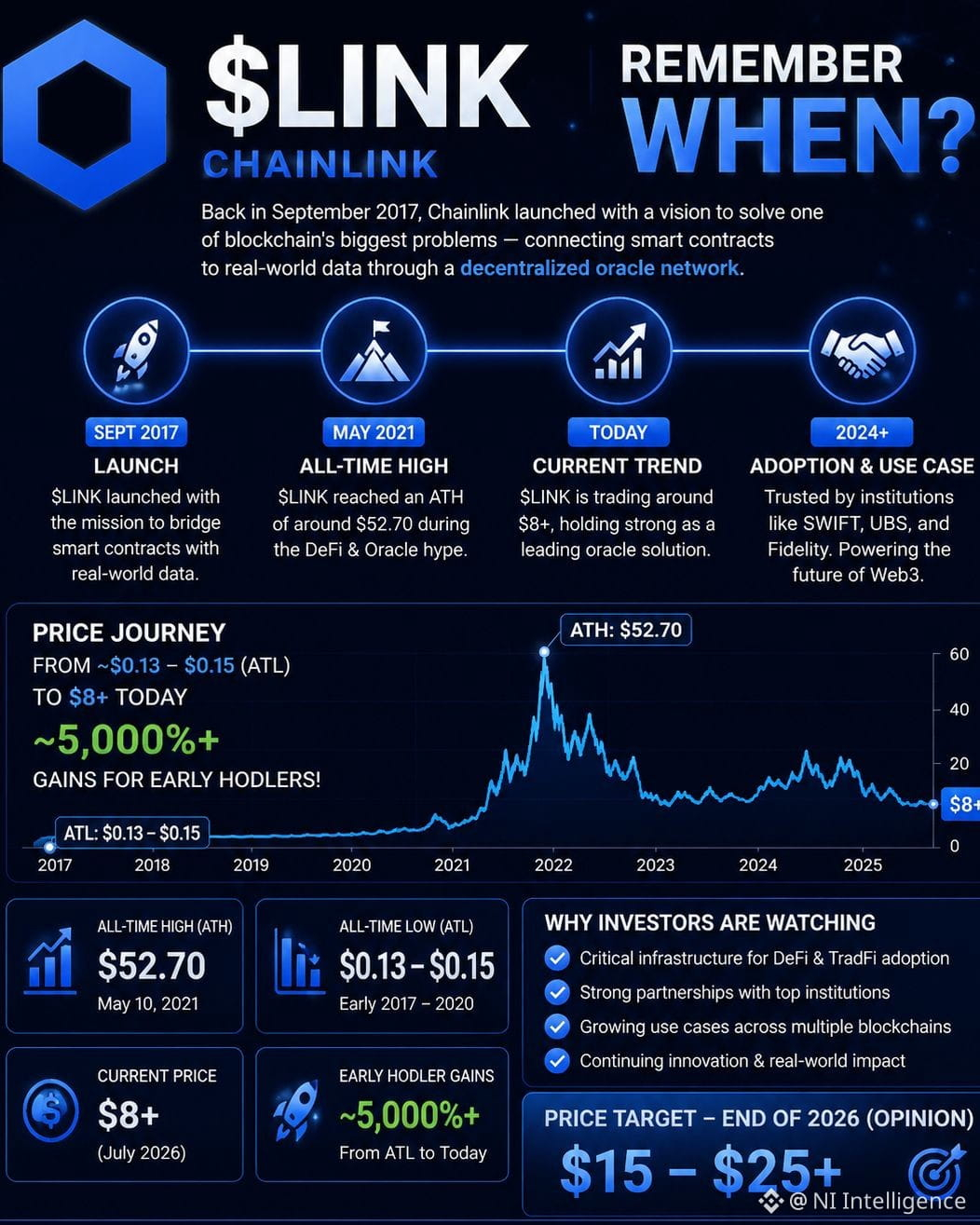
$LINK Wasn't Always a Blue-Chip Crypto…
In 2017, Chainlink was just an ambitious idea: connect blockchain smart contracts with real-world data.
Fast forward to today 👀
$0.13–$0.15 early ATL
$52.70 ATH
$8+ range today
5,000%+ gain from early ATL
From being overlooked to becoming key oracle infrastructure — $LINK has come a long way.
The big question now: Is the next chapter even bigger? 🔥
#NiCrypto #altcoins
In 2017, Chainlink was just an ambitious idea: connect blockchain smart contracts with real-world data.
Fast forward to today 👀
$0.13–$0.15 early ATL
$52.70 ATH
$8+ range today
5,000%+ gain from early ATL
From being overlooked to becoming key oracle infrastructure — $LINK has come a long way.
The big question now: Is the next chapter even bigger? 🔥
#NiCrypto #altcoins
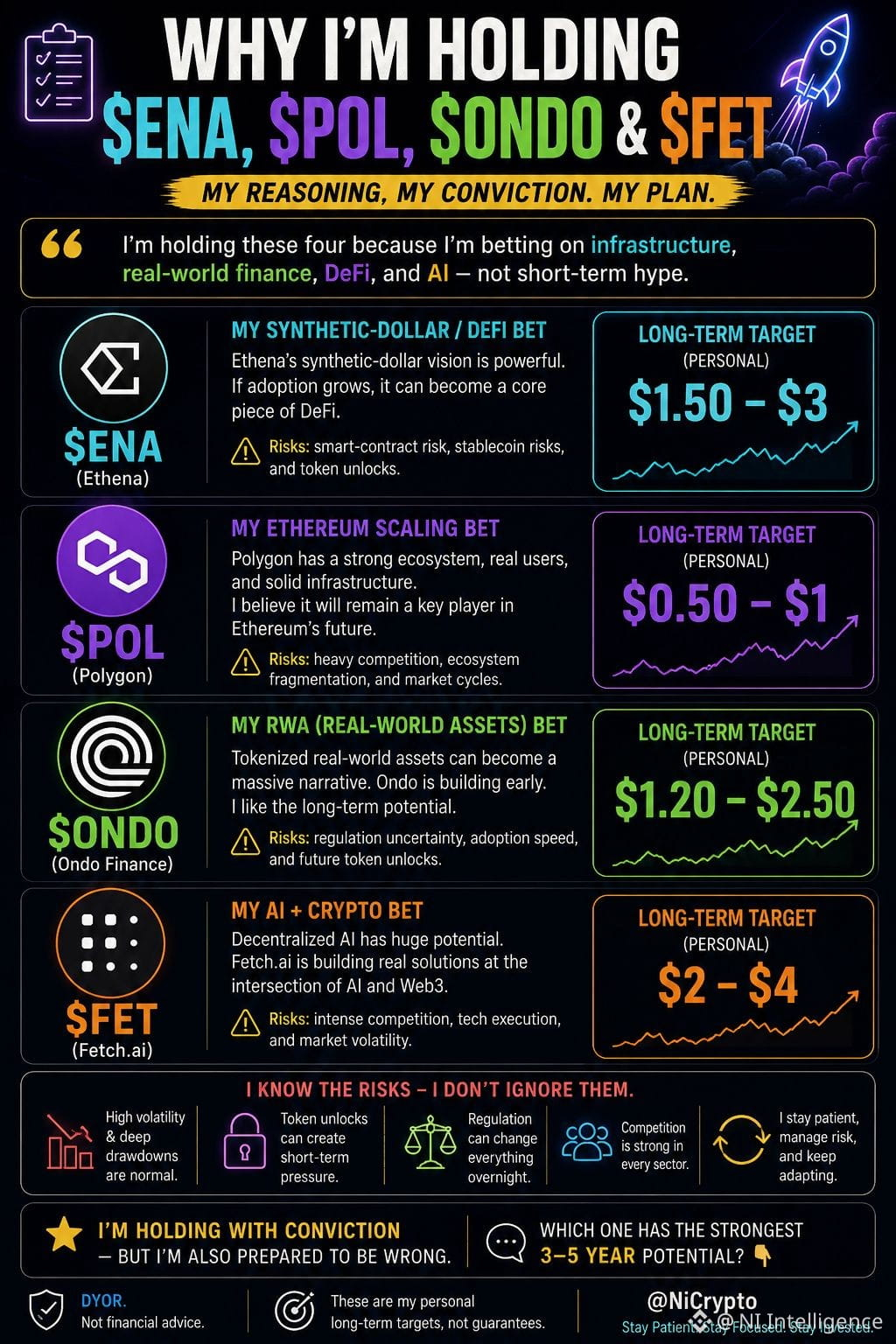
🔥 4 COINS I’M HOLDING FOR THE LONG TERM
I’m not chasing hype—I’m betting on strong narratives:
$ENA — DeFi
$POL — Ethereum infrastructure
$ONDO — RWA
$FET — AI + Web3
🎯 My targets:
ENA $1.5–3
POL $0.5–1
ONDO $1.2–2.5
FET $2–4
High risk, high volatility—but I believe the upside could be worth it. 📈
Which one are you holding? 👀
#altcoins #cryptouniverseofficial #NiIntelligence
I’m not chasing hype—I’m betting on strong narratives:
$ENA — DeFi
$POL — Ethereum infrastructure
$ONDO — RWA
$FET — AI + Web3
🎯 My targets:
ENA $1.5–3
POL $0.5–1
ONDO $1.2–2.5
FET $2–4
High risk, high volatility—but I believe the upside could be worth it. 📈
Which one are you holding? 👀
#altcoins #cryptouniverseofficial #NiIntelligence
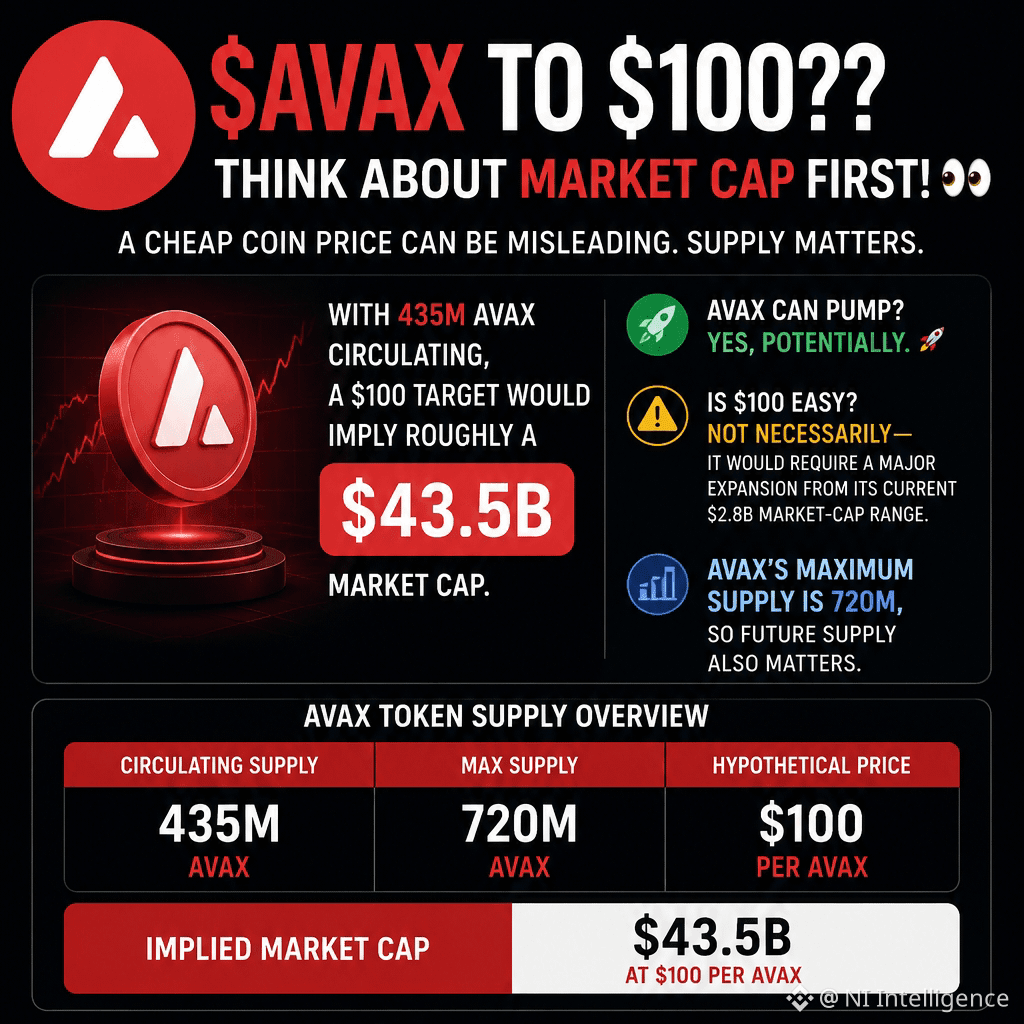
$AVAX at $100 HERE’S THE NUMBER MOST PEOPLE IGNORE.🚀
A $100 price tag sounds huge—but the real story is the market cap. 👀
With 435M AVAX circulating, $100 would mean roughly a $43.5B market cap.
That’s a massive valuation, but in a strong bull market, major ecosystem growth and adoption could make it possible. 🚀
So don’t ask only, “Can AVAX hit $100?”
Ask: “Can Avalanche grow into a $43.5B network?” 🤔
Bullish or too ambitious? 👇
#altcoins #cryptouniverseofficial
A $100 price tag sounds huge—but the real story is the market cap. 👀
With 435M AVAX circulating, $100 would mean roughly a $43.5B market cap.
That’s a massive valuation, but in a strong bull market, major ecosystem growth and adoption could make it possible. 🚀
So don’t ask only, “Can AVAX hit $100?”
Ask: “Can Avalanche grow into a $43.5B network?” 🤔
Bullish or too ambitious? 👇
#altcoins #cryptouniverseofficial
WHY I’M HOLDING $ENA, $POL, $ONDO & $FET
I’m holding these four because I’m betting on infrastructure, real-world finance, DeFi, and AI—not short-term hype.
🔵 $ENA — My synthetic-dollar/DeFi bet. I see strong potential if Ethena continues expanding, but smart-contract, stablecoin and token-unlock risks remain.
🎯 Long-term target: $1.50–$3
🟣 $POL — My Ethereum scaling bet. Polygon’s ecosystem and infrastructure give me long-term conviction, although competition is intense.
🎯 Long-term target: $0.50–$1
🟢 $ONDO — My RWA bet. Tokenized real-world assets could become a major crypto narrative, but regulation and future unlocks are risks I’m watching.
🎯 Long-term target: $1.20–$2.50
🟠 $FET — My AI + crypto bet. I believe decentralized AI could become a major sector, but competition and execution risk are real.
🎯 Long-term target: $2–$4
⚠️ These are my personal long-term targets, not guarantees. I know all four can experience huge volatility and deep drawdowns.
I’m holding with conviction—but I’m also prepared to be wrong.
Which one has the strongest 3–5 year potential? 👇
#altcoins #cryptouniverseofficial
I’m holding these four because I’m betting on infrastructure, real-world finance, DeFi, and AI—not short-term hype.
🔵 $ENA — My synthetic-dollar/DeFi bet. I see strong potential if Ethena continues expanding, but smart-contract, stablecoin and token-unlock risks remain.
🎯 Long-term target: $1.50–$3
🟣 $POL — My Ethereum scaling bet. Polygon’s ecosystem and infrastructure give me long-term conviction, although competition is intense.
🎯 Long-term target: $0.50–$1
🟢 $ONDO — My RWA bet. Tokenized real-world assets could become a major crypto narrative, but regulation and future unlocks are risks I’m watching.
🎯 Long-term target: $1.20–$2.50
🟠 $FET — My AI + crypto bet. I believe decentralized AI could become a major sector, but competition and execution risk are real.
🎯 Long-term target: $2–$4
⚠️ These are my personal long-term targets, not guarantees. I know all four can experience huge volatility and deep drawdowns.
I’m holding with conviction—but I’m also prepared to be wrong.
Which one has the strongest 3–5 year potential? 👇
#altcoins #cryptouniverseofficial
Log in to explore more content