Binance Square

MAYA_

Alhamdulillah always and forever. X 👉 @MayaM2001M
Притежател на XRP
Притежател на XRP
Високочестотен трейдър
3.3 години
650 Следвани
27.3K+ Последователи
133.8K+ Харесано
1.8K+ Споделено
Публикации
PINNED
·
--
B
XPLUSDT
Затворена
PNL
+1,67USDT
·
--
Execution Era is coming to an end, The reality of Vanarchain and Web3 Intelligence#Vanar @Vanar is essentially a bridge between ordinary people and big brands. Their main goal is to bring Web3 and AI technology within everyone's reach at an affordable cost by reducing complexity. Web3 has come a long way in a very short time, but if you look at the pattern of this progress, one thing becomes clear — at almost every step, we have taken performance as the main criterion. Sometimes TPS, sometimes gas fee, sometimes finality. We considered the chain that was ahead in that particular metric to be the future leader. In the beginning, Ethereum was programmable money, then Solana was the symbol of speed, then Aptos, Sui, Arbitrum — all told the story of being fast, cheap, scalable. This competition was reasonable for a while. But today we have come to a place where almost all the big chains are fast, cheap and efficient. As a result, fast no longer means anything separately, execution is no longer a moat in the real sense. Within this reality, the perspective that Vanarchain is bringing forward is a reflection of the changing needs of the times. Because the way Web3 was created, it was mainly for people. People will open a wallet, click a button, sign a transaction, execute the chain—the job is done. In this model, the chain's responsibility was only execution. Why the decision was made, what the previous experience was, what the impact might be in the future — all this was limited to the user's head or off-chain system. That's why stateless blockchain has worked well so far. But the user is changing. Now, not only humans, but AI agents are coming to Web3. AI agents are not chatbots, they are autonomous actors. They make decisions one transaction at a time, over time, remember previous work, change their plans based on external signals, and even learn from their mistakes. These behaviors do not naturally fit into transaction-based, stateless infrastructure. What we see in today's reality is — the logic of the agent is off-chain, in memory centralized database or vector store, reasoning in a closed LLM API, and blockchain only comes at the end and settles. That is, the chain only seals. This is not AI-native Web3, it is AI-dependent Web3. @Vanar raises the uncomfortable but urgent question right here, that we are deploying more and more intelligent actors in an infrastructure that is itself fundamentally unintelligent. Although it may be hard to hear, this is the reality. From here it is clear why intelligence is becoming the new bottleneck. Previously, the limitations were throughput, cost and speed. Now the limitations are context, continuity and explainability. Suppose an AI agent makes a financial decision — naturally, the question will arise, why this decision? What data did it look at? Did any previous events affect it? Was there a policy violation? Stateless chains cannot answer these questions. And in the future, these questions will no longer be optional. Regulators, users, DAOs, counterparties — everyone will want answers. In this context, Vanarchain's unique position can be understood. They did not enter the execution race. This is a big risk on the one hand, and a big differentiation on the other. Their basic assumption is very simple but profound—if intelligence is really important, it should be inside the protocol, not outside. Their architecture is based on this idea. In Neutron, they have considered memory not just as state but as context and meaning. Transactions, files, interactions—everything is being stored semantically, so that agents can not only retrieve data later, but also remember it. In Kayon, they have tried to bring reasoning into the protocol, not off-chain. It is undoubtedly expensive, complex and slow to develop, but in the long-term it is explainable, auditable and trust-minimized —which is essential for compliance-ready AI. Flows gives agents not only the power to make decisions, but also conditional workflow, feedback loops and outcome-based adaptation, with an audit trail of everything. And Axon tries to make this entire stack practical — because adoption does not come without abstraction. But here is where you need to be careful. This path is not easy. On-chain reasoning is inherently expensive, bringing explainable AI and decentralization together is incredibly difficult from an engineering perspective, and without developer adoption, even the best technology becomes ineffective. So, the vision is very strong, but the execution challenge is just as big. Whether Vanarchain succeeds or not will depend on how pragmatic they can be and how easy they can make it for developers. The $VANRY token is directly related to all of this. If Vanarchain really works and this intelligence layer starts to be used, then VANRY will not be just a gas token. It can become a medium for inference fees, memory access, agent execution fuel, governance, and cross-chain intelligence settlement. Then, just as ETH is execution gas, VANRY is intelligence fuel—this comparison will have real meaning. But if usage does not come, then the token will remain just a speculative asset, gradually losing the edge of the “AI chain” label and not accruing value in the long run. The future of the token here depends entirely on whether intelligence is actually used or not. Ultimately, Vanarchain’s vision is timely and points to real problems. This is not superficial marketing. They are philosophically different, technically risky, and almost binary in terms of outcomes. VANRY has upside, but it won’t come in execution speed or just partnership announcements, it will come when intelligence truly starts to compound. The first chapter of Web3 was execution. The next chapter will be systems that can remember, reason, and explain their decisions. Not all chains will get there, not all projects will. Vanarchain is trying. Whether they will succeed or not — only time will tell. #vanar

Execution Era is coming to an end, The reality of Vanarchain and Web3 Intelligence

#Vanar

@Vanarchain is essentially a bridge between ordinary people and big brands. Their main goal is to bring Web3 and AI technology within everyone's reach at an affordable cost by reducing complexity. Web3 has come a long way in a very short time, but if you look at the pattern of this progress, one thing becomes clear — at almost every step, we have taken performance as the main criterion. Sometimes TPS, sometimes gas fee, sometimes finality. We considered the chain that was ahead in that particular metric to be the future leader. In the beginning, Ethereum was programmable money, then Solana was the symbol of speed, then Aptos, Sui, Arbitrum — all told the story of being fast, cheap, scalable. This competition was reasonable for a while. But today we have come to a place where almost all the big chains are fast, cheap and efficient. As a result, fast no longer means anything separately, execution is no longer a moat in the real sense.
Within this reality, the perspective that Vanarchain is bringing forward is a reflection of the changing needs of the times. Because the way Web3 was created, it was mainly for people. People will open a wallet, click a button, sign a transaction, execute the chain—the job is done. In this model, the chain's responsibility was only execution. Why the decision was made, what the previous experience was, what the impact might be in the future — all this was limited to the user's head or off-chain system. That's why stateless blockchain has worked well so far.
But the user is changing. Now, not only humans, but AI agents are coming to Web3. AI agents are not chatbots, they are autonomous actors. They make decisions one transaction at a time, over time, remember previous work, change their plans based on external signals, and even learn from their mistakes. These behaviors do not naturally fit into transaction-based, stateless infrastructure.
What we see in today's reality is — the logic of the agent is off-chain, in memory centralized database or vector store, reasoning in a closed LLM API, and blockchain only comes at the end and settles. That is, the chain only seals. This is not AI-native Web3, it is AI-dependent Web3. @Vanarchain raises the uncomfortable but urgent question right here, that we are deploying more and more intelligent actors in an infrastructure that is itself fundamentally unintelligent. Although it may be hard to hear, this is the reality.
From here it is clear why intelligence is becoming the new bottleneck. Previously, the limitations were throughput, cost and speed. Now the limitations are context, continuity and explainability. Suppose an AI agent makes a financial decision — naturally, the question will arise, why this decision? What data did it look at? Did any previous events affect it? Was there a policy violation? Stateless chains cannot answer these questions. And in the future, these questions will no longer be optional. Regulators, users, DAOs, counterparties — everyone will want answers.
In this context, Vanarchain's unique position can be understood. They did not enter the execution race. This is a big risk on the one hand, and a big differentiation on the other. Their basic assumption is very simple but profound—if intelligence is really important, it should be inside the protocol, not outside. Their architecture is based on this idea.
In Neutron, they have considered memory not just as state but as context and meaning. Transactions, files, interactions—everything is being stored semantically, so that agents can not only retrieve data later, but also remember it. In Kayon, they have tried to bring reasoning into the protocol, not off-chain. It is undoubtedly expensive, complex and slow to develop, but in the long-term it is explainable, auditable and trust-minimized —which is essential for compliance-ready AI. Flows gives agents not only the power to make decisions, but also conditional workflow, feedback loops and outcome-based adaptation, with an audit trail of everything. And Axon tries to make this entire stack practical — because adoption does not come without abstraction.
But here is where you need to be careful. This path is not easy. On-chain reasoning is inherently expensive, bringing explainable AI and decentralization together is incredibly difficult from an engineering perspective, and without developer adoption, even the best technology becomes ineffective. So, the vision is very strong, but the execution challenge is just as big. Whether Vanarchain succeeds or not will depend on how pragmatic they can be and how easy they can make it for developers.
The $VANRY token is directly related to all of this. If Vanarchain really works and this intelligence layer starts to be used, then VANRY will not be just a gas token. It can become a medium for inference fees, memory access, agent execution fuel, governance, and cross-chain intelligence settlement. Then, just as ETH is execution gas, VANRY is intelligence fuel—this comparison will have real meaning. But if usage does not come, then the token will remain just a speculative asset, gradually losing the edge of the “AI chain” label and not accruing value in the long run. The future of the token here depends entirely on whether intelligence is actually used or not.
Ultimately, Vanarchain’s vision is timely and points to real problems. This is not superficial marketing. They are philosophically different, technically risky, and almost binary in terms of outcomes. VANRY has upside, but it won’t come in execution speed or just partnership announcements, it will come when intelligence truly starts to compound.
The first chapter of Web3 was execution. The next chapter will be systems that can remember, reason, and explain their decisions. Not all chains will get there, not all projects will. Vanarchain is trying. Whether they will succeed or not — only time will tell.
#vanar
·
--
$ETH has lost its important trendline support, which is a big warning sign for investors. Given the current downward trend in the market, it is believed that the price of Ethereum may soon fall to the $2000 level. 👉 Therefore, traders should tread very carefully in the current situation. #PreciousMetalsTurbulence #FedHoldsRates
$ETH has lost its important trendline support, which is a big warning sign for investors. Given the current downward trend in the market, it is believed that the price of Ethereum may soon fall to the $2000 level.

👉 Therefore, traders should tread very carefully in the current situation.

#PreciousMetalsTurbulence
#FedHoldsRates
S
XPLUSDT
Затворена
PNL
+0,54USDT
·
--
Senate Democrats have reached a deal with President Trump that would fund the government and avoid a looming government shutdown that could have caused administrative gridlock and public suffering across the country, leaders said, expressing optimism that a unanimous decision would be reached at the successful conclusion of talks tonight. #WhoIsNextFedChair $BTC #FedHoldsRates
Senate Democrats have reached a deal with President Trump that would fund the government and avoid a looming government shutdown that could have caused administrative gridlock and public suffering across the country, leaders said, expressing optimism that a unanimous decision would be reached at the successful conclusion of talks tonight.

#WhoIsNextFedChair
$BTC
#FedHoldsRates
B
XPLUSDT
Затворена
PNL
+0,33USDT
·
--
Aave taught trust, and Plasma $XPL implemented it on the network#plasma $XPL @Plasma is a Layer-2 scaling solution. It acts as an additional layer on top of the main blockchain. Its main goal is to keep the main chain free from additional pressure. Plasma XPL basically uses small chains that are connected to the main chain but can process transactions independently. By “The Aave effect” we usually understand a situation where a protocol or network is able to attract a large amount of capital in a very short time through its credibility, brand value and user confidence. Aave was not just a lending protocol at one time, it gradually became a symbol of trust in the DeFi industry. It reached a point where people would deposit capital there without asking too many questions whenever a new market, new chain or new pool was launched. Because they trusted the entire system, not the protocol. This effect is not limited to the increase in the price of the token or the performance of any one asset. It works across the entire network— increasing liquidity, generating developer interest, growing the ecosystem, and building a solid foundation for long-term sustainability. We’re seeing just such a network-level effect in the case of Plasma. When Plasma launched last September, $1.3 billion in deposits in the first hour wasn’t just a big number, it was a very clear signal. This wasn’t just retail FOMO, nor was it slow user onboarding. This was instant institutional-grade confidence. Reaching $6.6 billion in deposits in just 48 hours meant people didn’t just look at the platform and leave—they made a decision and committed. There are very few networks in the history of DeFi that have been able to build this much liquidity depth so quickly after launch. Here’s why. The current crypto market is nothing like the bull markets of the past. Once upon a time, just a concept, a website, and a token were all that was needed to create a valuation. Those days are over. Today’s market requires liquidity proof, real demand, and most importantly, network-level trust. Plasma is right in the middle of this change, when the market is slowly becoming quality-driven again. So the saying “Aave effect isn’t just for assets, it’s for networks too” is not only relevant for Plasma, but also meets the demands of the time. @Plasma has never presented itself as just a token. From the beginning, it has wanted to build itself as a liquidity network, a settlement layer, and a capital efficiency-focused ecosystem. This position is what has set Plasma apart from many other projects. Many may ask, is this just hype ? But some real things go beyond hype. Such large amounts of capital cannot come so quickly if people don’t believe in risk-adjusted returns. The momentum of the first hour may be emotional, but reaching $6.6 billion continuously for 48 hours means that the second phase, more calculated participants have arrived. On top of that, the more liquidity increases, the more utility the protocol has, and when utility increases, new liquidity comes in. #Plasma has entered the loop of this network effect. This traction can qualitatively change the future of Plasma. When a network can maintain such a large liquidity at launch, trust itself becomes a kind of infrastructure. There is no fear of integrating new protocols, it is easier to build institutional partnerships, and even the regulatory narrative is relatively strong. Developers also always go towards liquidity. Plasma has capital ready, users ready, and the yield mechanism is active. This means that things like DeFi apps, structured products, or RWA integration are very likely to choose Plasma as a base layer in the future. All of this also has a direct impact on the role of the $XPL token. When a network has more TVL, more activity, and more protocol dependency, the native token is no longer just for speculation. It becomes a governance tool, an incentive engine, and part of network security. As a result, the demand narrative for XPL gradually shifts from price-based to utility-based. The biggest thing is that such liquidity-heavy networks are less dependent on market cycles. While hype-driven projects survive in bull markets, they get lost in bear markets. But networks like Plasma can retain users even in difficult times with yield and utility. This makes a huge qualitative difference in the long run. Finally, it can be said that such launches create an institutional memory in the market. When someone hears the name Plasma in the future, they will remember not just a token, but the network that raised $6.6 billion at launch. This memory is the most powerful asset for future adoption. The cryptocurrency market is very volatile. This analysis is based on technology. It is important to do your own research before making any investment. #Plasma

Aave taught trust, and Plasma $XPL implemented it on the network

#plasma $XPL

@Plasma is a Layer-2 scaling solution. It acts as an additional layer on top of the main blockchain. Its main goal is to keep the main chain free from additional pressure. Plasma XPL basically uses small chains that are connected to the main chain but can process transactions independently.
By “The Aave effect” we usually understand a situation where a protocol or network is able to attract a large amount of capital in a very short time through its credibility, brand value and user confidence. Aave was not just a lending protocol at one time, it gradually became a symbol of trust in the DeFi industry. It reached a point where people would deposit capital there without asking too many questions whenever a new market, new chain or new pool was launched. Because they trusted the entire system, not the protocol.
This effect is not limited to the increase in the price of the token or the performance of any one asset. It works across the entire network— increasing liquidity, generating developer interest, growing the ecosystem, and building a solid foundation for long-term sustainability. We’re seeing just such a network-level effect in the case of Plasma.
When Plasma launched last September, $1.3 billion in deposits in the first hour wasn’t just a big number, it was a very clear signal. This wasn’t just retail FOMO, nor was it slow user onboarding. This was instant institutional-grade confidence. Reaching $6.6 billion in deposits in just 48 hours meant people didn’t just look at the platform and leave—they made a decision and committed. There are very few networks in the history of DeFi that have been able to build this much liquidity depth so quickly after launch.
Here’s why. The current crypto market is nothing like the bull markets of the past. Once upon a time, just a concept, a website, and a token were all that was needed to create a valuation. Those days are over. Today’s market requires liquidity proof, real demand, and most importantly, network-level trust. Plasma is right in the middle of this change, when the market is slowly becoming quality-driven again. So the saying “Aave effect isn’t just for assets, it’s for networks too” is not only relevant for Plasma, but also meets the demands of the time.
@Plasma has never presented itself as just a token. From the beginning, it has wanted to build itself as a liquidity network, a settlement layer, and a capital efficiency-focused ecosystem. This position is what has set Plasma apart from many other projects.
Many may ask, is this just hype ? But some real things go beyond hype. Such large amounts of capital cannot come so quickly if people don’t believe in risk-adjusted returns. The momentum of the first hour may be emotional, but reaching $6.6 billion continuously for 48 hours means that the second phase, more calculated participants have arrived. On top of that, the more liquidity increases, the more utility the protocol has, and when utility increases, new liquidity comes in. #Plasma has entered the loop of this network effect.
This traction can qualitatively change the future of Plasma. When a network can maintain such a large liquidity at launch, trust itself becomes a kind of infrastructure. There is no fear of integrating new protocols, it is easier to build institutional partnerships, and even the regulatory narrative is relatively strong.
Developers also always go towards liquidity. Plasma has capital ready, users ready, and the yield mechanism is active. This means that things like DeFi apps, structured products, or RWA integration are very likely to choose Plasma as a base layer in the future.
All of this also has a direct impact on the role of the $XPL token. When a network has more TVL, more activity, and more protocol dependency, the native token is no longer just for speculation. It becomes a governance tool, an incentive engine, and part of network security. As a result, the demand narrative for XPL gradually shifts from price-based to utility-based.
The biggest thing is that such liquidity-heavy networks are less dependent on market cycles. While hype-driven projects survive in bull markets, they get lost in bear markets. But networks like Plasma can retain users even in difficult times with yield and utility. This makes a huge qualitative difference in the long run.
Finally, it can be said that such launches create an institutional memory in the market. When someone hears the name Plasma in the future, they will remember not just a token, but the network that raised $6.6 billion at launch. This memory is the most powerful asset for future adoption.
The cryptocurrency market is very volatile. This analysis is based on technology. It is important to do your own research before making any investment.
#Plasma
·
--
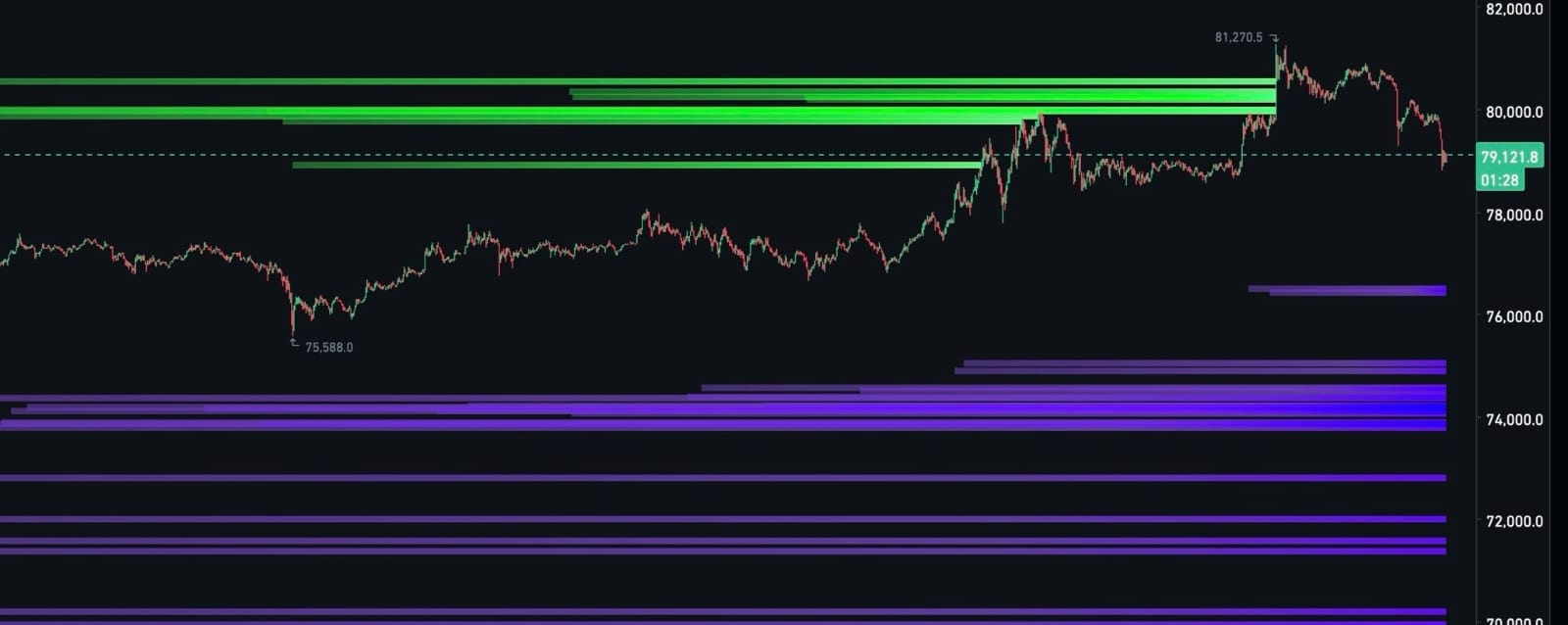
The crypto market has seen significant volatility in the past hour. The sudden price drop has resulted in the cancellation of nearly $167 million in long positions. Traders have been facing huge financial losses due to excessive leverage. Investors need to be extremely cautious in the current volatile market. #USIranStandoff $BTC #WhoIsNextFedChair
The crypto market has seen significant volatility in the past hour. The sudden price drop has resulted in the cancellation of nearly $167 million in long positions. Traders have been facing huge financial losses due to excessive leverage. Investors need to be extremely cautious in the current volatile market.

#USIranStandoff
$BTC
#WhoIsNextFedChair
B
XPLUSDT
Затворена
PNL
+0,17USDT
·
--
Crypto policymaking in the United States is taking a new turn. Robinhood CEO Vlad Tenev has met directly with the US government to discuss the Crypto Market Structure Act. 👉 This indicates that crypto is no longer something to ignore, but now it is time to bring it into the policy framework.🚀🚀🚀 #ClawdbotSaysNoToken $BTC #USIranStandoff
Crypto policymaking in the United States is taking a new turn. Robinhood CEO Vlad Tenev has met directly with the US government to discuss the Crypto Market Structure Act.

👉 This indicates that crypto is no longer something to ignore, but now it is time to bring it into the policy framework.🚀🚀🚀

#ClawdbotSaysNoToken
$BTC
#USIranStandoff
B
VANRYUSDT
Затворена
PNL
+0,15USDT
·
--
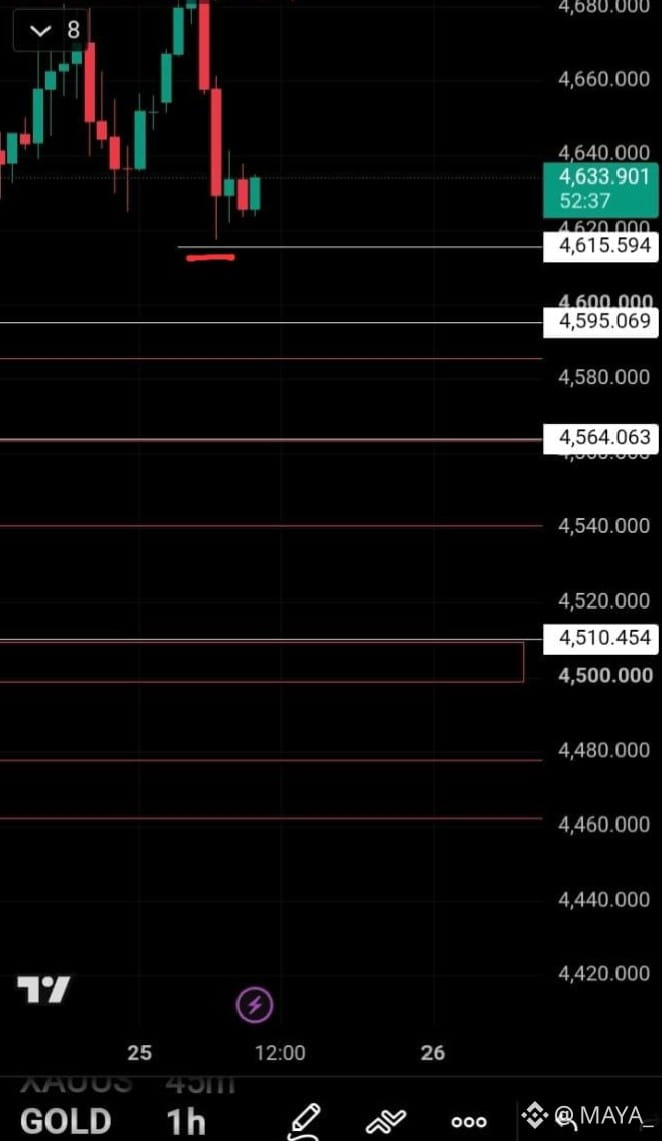
When #GOLD and #Silver fell 8-10% in an hour, all the charts, support-resistance, RSI, trendlines, nothing worked. What seemed like a sure setup, broke in an instant. 👉 The market showed that technicals are not always ready to handle the real storm. #TokenizedSilverSurge $BTC
When #GOLD and #Silver fell 8-10% in an hour, all the charts, support-resistance, RSI, trendlines, nothing worked. What seemed like a sure setup, broke in an instant.

👉 The market showed that technicals are not always ready to handle the real storm.

#TokenizedSilverSurge
$BTC
B
XPLUSDT
Затворена
PNL
+0,33USDT
·
--
US SEC Chairman Paul Atkins said regulators are ready to bring clear and realistic rules to the cryptocurrency sector, which will provide greater protection for investors and increase transparency in the market, while also not hindering innovation. #USIranStandoff $BTC #FedHoldsRates
US SEC Chairman Paul Atkins said regulators are ready to bring clear and realistic rules to the cryptocurrency sector, which will provide greater protection for investors and increase transparency in the market, while also not hindering innovation.

#USIranStandoff
$BTC
#FedHoldsRates
S
VANRYUSDT
Затворена
PNL
+0,92USDT
·
--
🔥Trade. Rank. Win🔥 Trade Spot on #Binance with at least $20 and climb the leaderboard. Top 100 traders will share $2,000 USDC- 👉 1–10: $60 👉 11–50: $22.50 👉 51–100: $10 Start trading now - https://binance.onelink.me/mL1z/bl8zxica?af_force_deeplink=true
🔥Trade. Rank. Win🔥
Trade Spot on #Binance with at least $20 and climb the leaderboard.

Top 100 traders will share $2,000 USDC-
👉 1–10: $60
👉 11–50: $22.50
👉 51–100: $10

Start trading now - https://binance.onelink.me/mL1z/bl8zxica?af_force_deeplink=true
B
XPLUSDT
Затворена
PNL
+1,67USDT
·
--
#GOLD is collapsing fast! Over $3 trillion has disappeared from the market in just one hour. 👉 Investors are shocked, panic is spreading, and everyone is watching closely. #GoldOnTheRise $BTC #FedHoldsRates
#GOLD is collapsing fast! Over $3 trillion has disappeared from the market in just one hour.

👉 Investors are shocked, panic is spreading, and everyone is watching closely.

#GoldOnTheRise
$BTC
#FedHoldsRates
B
VANRYUSDT
Затворена
PNL
+0,15USDT
·
--
Бичи
$BTC has now hit $85K. 🚀 Small investors are selling in a bit of panic but big players are slowly buying. Every fall is actually a preparation for a big rise. Big opportunities are coming in the crypto world, just be patient. 👉 $180K is on the way — stay tuned 🔥🔥🔥🔥 #StrategyBTCPurchase $BTC
$BTC has now hit $85K. 🚀
Small investors are selling in a bit of panic but big players are slowly buying.
Every fall is actually a preparation for a big rise.
Big opportunities are coming in the crypto world, just be patient.

👉 $180K is on the way — stay tuned 🔥🔥🔥🔥

#StrategyBTCPurchase
$BTC
B
VANRYUSDT
Затворена
PNL
+0,37USDT
·
--
#dusk $DUSK The partnership between @Dusk_Foundation and @tradeon21x (21X) is seen as a significant milestone in the European tokenized securities market. The main reason for this is that 21X is the first firm in the European Union to obtain a DLT-TSS license to handle fully tokenized securities. Dusk’s inclusion as a trade participant on this platform means that Dusk Network is directly connected to the real financial infrastructure — a major opportunity for the project. The most important benefit of this partnership is the real-world application. While many blockchain projects are still in the experimental stage, Dusk is now directly participating in a regulated and licensed market. This will make Dusk’s technology—particularly its privacy-preserving smart contracts and zero-knowledge infrastructure—available to real investors, issuers, and financial institutions. The implications for the $DUSK token can be seen in several ways. First, it will increase network utility. If Dusk Network is actively used on 21X’s platform, the demand for DUSK will increase for transaction fees, staking, and network security. Privacy is a major challenge when tokenizing real financial assets such as shares, bonds, or funds, and Dusk is able to solve this problem—which is what sets the project apart from others. Second, institutional acceptance. Since 21X operates in the EU’s regulated environment, this partnership will help establish Dusk as a “regulation-friendly blockchain.” In the future, other financial institutions, exchanges, or tokenization platforms may also turn to Dusk. This credibility strengthens DUSK’s long-term value proposition. {future}(DUSKUSDT) Third, brand and narrative strength. Narratives are very important in the crypto market. Currently, the three narratives that are very strong are Tokenized-securities, RWA, and Regulated-DeFi. By partnering with 21X, Dusk has moved directly into the center of these important narratives, further enhancing the project’s relevance to investors. #Dusk
#dusk $DUSK

The partnership between @Dusk and @tradeon21x (21X) is seen as a significant milestone in the European tokenized securities market. The main reason for this is that 21X is the first firm in the European Union to obtain a DLT-TSS license to handle fully tokenized securities. Dusk’s inclusion as a trade participant on this platform means that Dusk Network is directly connected to the real financial infrastructure — a major opportunity for the project.

The most important benefit of this partnership is the real-world application. While many blockchain projects are still in the experimental stage, Dusk is now directly participating in a regulated and licensed market. This will make Dusk’s technology—particularly its privacy-preserving smart contracts and zero-knowledge infrastructure—available to real investors, issuers, and financial institutions.

The implications for the $DUSK token can be seen in several ways. First, it will increase network utility. If Dusk Network is actively used on 21X’s platform, the demand for DUSK will increase for transaction fees, staking, and network security. Privacy is a major challenge when tokenizing real financial assets such as shares, bonds, or funds, and Dusk is able to solve this problem—which is what sets the project apart from others.

Second, institutional acceptance. Since 21X operates in the EU’s regulated environment, this partnership will help establish Dusk as a “regulation-friendly blockchain.” In the future, other financial institutions, exchanges, or tokenization platforms may also turn to Dusk. This credibility strengthens DUSK’s long-term value proposition.
Third, brand and narrative strength. Narratives are very important in the crypto market. Currently, the three narratives that are very strong are Tokenized-securities, RWA, and Regulated-DeFi. By partnering with 21X, Dusk has moved directly into the center of these important narratives, further enhancing the project’s relevance to investors.
#Dusk
·
--
Dusk $DUSK : A timely step to take smart contract development from complexity to simplicity#Dusk $DUSK Blockchain technology is gradually moving out of the experimental realm and into the real world. The biggest obstacle to this transition is the developer experience or DX. The reality is that complex tooling, unnecessary repetitive code, weak standards, and lack of coordination between on-chain and off-chain logic have made smart contract development unnecessarily difficult. In many cases, more time is spent on glue code, interface matching, and data transformation than on the core business logic. In this context, the emergence of Dusk Forge in the @Dusk_Foundation ecosystem and its official transfer under the Dusk Foundation is undoubtedly a strategic and far-sighted decision. Bringing Forge under the Foundation does not just mean a change of ownership. This means that the tool is no longer dependent on any one person or small team, but is part of the official developer toolchain of the Dusk Network. This ensures long-term maintenance, a clear roadmap, and the trust of the open source community. Blockchain history has shown that developer tools that are under the supervision of a reliable foundation stand the test of time and gain widespread acceptance. The v0.2 release of Dusk Forge should therefore not be seen as just a version update. The features added in this version solve some fundamental problems that have long plagued WASM-based smart contract development. In particular, data-driver, trait support, and automatic conversion between JSON and rkyv — these things greatly reduce the complexity of the daily work of developers. Previously, to create WASM smart contracts in Dusk, the same interface had to be written in multiple places. WASM exports, Rust wrappers, and off-chain data encoding and decoding — all of the same information had to be defined repeatedly. As a result, small changes in one place would lead to inconsistencies in other places, which gradually led to bugs, security risks, and slowed down development. This process would become even more frustrating for new developers. Dusk Forge has made a fundamental change here. Here, the contract module is considered the “single source of truth”. The #[contract] macro automatically generates WASM exports and JSON schemas for functions and events from the Rust contract module. As a result, developers no longer have to separately maintain glue code or manual interfaces. They can focus directly on business logic and data structures. This is a practical and effective application of the DRY principle of modern software engineering. One of the most notable additions in the v0.2 version is the automatically generated data-driver WASM, which translates between JSON and rkyv. In reality, wallets, explorers, frontends, or CLI tools typically rely on JSON, and rkyv is used for efficient on-chain performance. Previously, developers had to manually write code to bridge the gap between the two. Now, Forge does it all —inputs, outputs, and events — making Dusk much more user-friendly for toolmakers. Additionally, the addition of trait support makes it much easier to design reusable smart contracts. Rust’s powerful trait system allows us to separate common patterns that can be used across multiple contracts. This allows us to create ERC-style standards, governance or voting logic, and even NFT-related features in a cleaner and more secure way. Security is also improved by allowing us to reuse well-audited code once. Wallets, Explorers, and the entire tooling ecosystem will benefit directly from these changes. Developers no longer have to write custom parsers, Explorer can understand event structures on its own, and the gateway to creating new tools is much easier. History has shown that no blockchain can grow without strong tooling — this is one of the reasons for Ethereum’s success. The open source culture is also important here. Public recognition of contributors and an emphasis on community-driven development show that Dusk wants to build a long-lasting ecosystem, where the power lies not in a single individual but in the community as a whole. Although this initiative does not directly affect the price of the $DUSK token, its impact is clear. An improved developer experience means more developers, more applications, more network usage, and ultimately, an increase in the real utility of the token. From this perspective, Dusk Forge is a fundamental growth driver. All in all, Dusk Forge v0.2 is a tools update that expresses a clear vision. Dusk Network is committed to listening to developers, making smart contract development as easy and natural as possible, and believing that investing in the right tooling is key to long-term success. From this perspective, this is undoubtedly a timely initiative that is solving a real problem and has the potential to bring significant benefits to the Dusk ecosystem in the future. #dusk

Dusk $DUSK : A timely step to take smart contract development from complexity to simplicity

#Dusk $DUSK

Blockchain technology is gradually moving out of the experimental realm and into the real world. The biggest obstacle to this transition is the developer experience or DX. The reality is that complex tooling, unnecessary repetitive code, weak standards, and lack of coordination between on-chain and off-chain logic have made smart contract development unnecessarily difficult. In many cases, more time is spent on glue code, interface matching, and data transformation than on the core business logic.
In this context, the emergence of Dusk Forge in the @Dusk ecosystem and its official transfer under the Dusk Foundation is undoubtedly a strategic and far-sighted decision.
Bringing Forge under the Foundation does not just mean a change of ownership. This means that the tool is no longer dependent on any one person or small team, but is part of the official developer toolchain of the Dusk Network. This ensures long-term maintenance, a clear roadmap, and the trust of the open source community. Blockchain history has shown that developer tools that are under the supervision of a reliable foundation stand the test of time and gain widespread acceptance.
The v0.2 release of Dusk Forge should therefore not be seen as just a version update. The features added in this version solve some fundamental problems that have long plagued WASM-based smart contract development. In particular, data-driver, trait support, and automatic conversion between JSON and rkyv — these things greatly reduce the complexity of the daily work of developers.
Previously, to create WASM smart contracts in Dusk, the same interface had to be written in multiple places. WASM exports, Rust wrappers, and off-chain data encoding and decoding — all of the same information had to be defined repeatedly. As a result, small changes in one place would lead to inconsistencies in other places, which gradually led to bugs, security risks, and slowed down development. This process would become even more frustrating for new developers.
Dusk Forge has made a fundamental change here. Here, the contract module is considered the “single source of truth”. The #[contract] macro automatically generates WASM exports and JSON schemas for functions and events from the Rust contract module. As a result, developers no longer have to separately maintain glue code or manual interfaces. They can focus directly on business logic and data structures. This is a practical and effective application of the DRY principle of modern software engineering.
One of the most notable additions in the v0.2 version is the automatically generated data-driver WASM, which translates between JSON and rkyv. In reality, wallets, explorers, frontends, or CLI tools typically rely on JSON, and rkyv is used for efficient on-chain performance. Previously, developers had to manually write code to bridge the gap between the two. Now, Forge does it all —inputs, outputs, and events — making Dusk much more user-friendly for toolmakers.
Additionally, the addition of trait support makes it much easier to design reusable smart contracts. Rust’s powerful trait system allows us to separate common patterns that can be used across multiple contracts. This allows us to create ERC-style standards, governance or voting logic, and even NFT-related features in a cleaner and more secure way. Security is also improved by allowing us to reuse well-audited code once.
Wallets, Explorers, and the entire tooling ecosystem will benefit directly from these changes. Developers no longer have to write custom parsers, Explorer can understand event structures on its own, and the gateway to creating new tools is much easier. History has shown that no blockchain can grow without strong tooling — this is one of the reasons for Ethereum’s success.
The open source culture is also important here. Public recognition of contributors and an emphasis on community-driven development show that Dusk wants to build a long-lasting ecosystem, where the power lies not in a single individual but in the community as a whole.
Although this initiative does not directly affect the price of the $DUSK token, its impact is clear. An improved developer experience means more developers, more applications, more network usage, and ultimately, an increase in the real utility of the token. From this perspective, Dusk Forge is a fundamental growth driver.
All in all, Dusk Forge v0.2 is a tools update that expresses a clear vision. Dusk Network is committed to listening to developers, making smart contract development as easy and natural as possible, and believing that investing in the right tooling is key to long-term success. From this perspective, this is undoubtedly a timely initiative that is solving a real problem and has the potential to bring significant benefits to the Dusk ecosystem in the future.
#dusk
·
--
Modernity, Technical Capabilities, and Future Prospects of Native Tokens - plasma $XPL
MAYA_
·
--
Plasma $XPL : Modernity, Technical Capabilities, and Future Prospects of Native Tokens
#plasma

@Plasma $XPL is a high-performance blockchain system whose main goal is to ensure fast transactions, keep fees low, and at the same time maintain strong security. The main objective of Plasma is to create a scalable network that can be used in real life.
The current blockchain ecosystem is changing very quickly and competition is increasing day by day. While first-generation blockchains like Bitcoin and Ethereum are undoubtedly strong in terms of security and decentralization, there are still several limitations in terms of scaling, speed, and transaction costs. The idea of ​​a Layer-2 solution has come to the fore with the aim of overcoming these limitations, where Plasma technology plays an important role.
In this context, stress testing, Plasma scaling, consensus, and security — these four aspects form the technical foundation of Plasma and directly impact the future acceptance and value potential of its native token XPL.
Stress Testing : The Real Test of Modern Blockchain
Today, a blockchain project is not just good on paper. To be usable in reality, the network has to show its ability to survive even in difficult situations. Being able to handle a sudden influx of users, keeping the network operational despite possible attacks, and maintaining consensus and data integrity are all now very important.
This is where the need for stress testing becomes clear. In the case of Plasma XPL, stress testing is used to check the TPS limit by sending millions or billions of transactions simultaneously. At the same time, it is also tested whether the entire network is working properly even if some nodes are ineffective, or whether fake and malicious transactions can be detected.
If Plasma XPL can consistently pass such tough stress tests, then the confidence of developers increases, large projects and dApps are interested in coming to this network, and the amount of network usage naturally increases. This directly impacts the demand for the XPL token. Stress testing is therefore a fundamental pillar of network reliability.
Plasma Scaling : A Real Solution to Current and Future Demand
One of the biggest challenges in the current blockchain industry is the scaling trilemma—achieving security, decentralization, and scaling at the same time. Plasma Scaling can provide a realistic and effective solution to this problem.
In Plasma XPL, transactions are processed off the main chain and the load is shared using multiple child chains or side processes. Ultimately, only the final results are submitted to the main layer. This greatly reduces the pressure on the main network.
This approach is particularly relevant today, as fast and low-cost transactions are essential in Web3 applications, gaming, DeFi, NFTs, and micropayments. The more effective scaling is, the more users and applications will join the Plasma network. This will increase the amount of XPL used as transaction fees, and the entire network economy will be stronger.
For this reason, XPL has the potential to gradually become a powerful utility-driven token rather than just a speculative token.
Consensus : The right balance of speed and stability
While the Proof of Work–based consensus model was once effective, it is now facing various questions in terms of energy consumption and efficiency. The lightweight and fast consensus model used in Plasma XPL is therefore much more suitable for today.
This consensus system provides fast finality, relatively low energy consumption, and greatly reduces the possibility of network forks. As a result, the network becomes more stable and reliable.
A strong consensus system means increased trust at the user and institutional levels. It creates the ability to handle large volume transactions. If XPL validators play an important role in staking or governance, this consensus model can also increase the incentive to hold tokens.
Security : The Key to Long-Term Survival
Currently, risks such as cyberattacks, smart contract exploits, and double-spend are major threats to the blockchain world. Plasma XPL’s multi-layered security framework —which includes strong cryptography, fraud proof, decentralized nodes, and regular stress testing — is effective enough to address these risks.
An old but true saying goes, “A blockchain that is not secure is not a token that is sustainable.” Strong security means keeping user funds safe, gaining the courage to tap into a large capital network, and increasing the tendency to hold tokens in the long term. Together, XPL can gradually establish itself as a trusted digital asset.
All things considered, stress testing, Plasma scaling, consensus, and security — these four aspects are not only important for Plasma $XPL , but are absolutely essential in the current reality of the blockchain industry.
The stronger this technical foundation, the more acceptance the Plasma network will gain.
The cryptocurrency market is highly volatile. This analysis is based on technology. It is important to do your own research before making any investment.
#Plasma
·
--
Vanar Chain is laying the foundation for a future where humans and AI work together#Vanar @Vanar $VANRY essentially means that human civilization is entering a new stage where AI will no longer be limited to being a mechanical assistant following human instructions. Rather, AI is gradually transforming into an autonomous entity that can make its own decisions, adapt to real-world situations, and work independently to achieve specific goals. This type of AI is called an Agentic Entity—a digital assistant that does not follow humans, but works alongside them. @Vanar is not just observing this change. They believe that it is essential to create a strong and reliable technological foundation for this new era. That is why they want to take on the responsibility of building the blockchain infrastructure necessary for the AI-dependent society of the future. This discussion will analyze — what is the underlying purpose and philosophical position of Vanar Chain, how logical its technical and economic arguments are, and where does it stand with the reality of the current blockchain industry. From AI-Assistant to AI-Collaborative : A Fundamental Transformation Most of the AI ​​systems we use today — such as chatbots, search assistants, or recommendation engines — are Reactive AI. That is, they do not take any initiative on their own. They only act when instructed by the user. This type of AI— waits for user instructions. does not set its own goals. is not capable of making independent decisions. Their role is much like a digital employee —they work, but they do not make decisions. They are followers, not collaborators. In contrast, Agentic AI is an artificial intelligence system that can set goals on its own, create step-by-step plans, analyze the real environment and change decisions, and work on an equal footing with humans. At this stage, AI is no longer just a tool, it becomes an active participant or actor. When Vanar Chain says that “agentic power is starting to go mainstream,” they are hinting at a future where AI agents will transact on their own, execute smart contracts, and directly participate in economic activity. That is, AI will no longer be just part of technology— it will also be part of the economy. Vanar Chain $VANRY ’s Core Message and Philosophical Position Vanar Chain has essentially taken a deep and visionary position. In their view, the future Internet will no longer be limited to humans, but will be an Agent-Driven Web. The current Web3 framework is largely confined to DeFi, NFTs, and Gaming. However, Vanar Chain believes that the next big change will come when Autonomous Agents and Blockchain come together to form a new digital economy. In this new economy, AI agents will use smart contracts themselves, collect and verify data, make decisions, and operate automatically across multiple blockchains. This is a form of internet where humans are not the only users— AI is also an active participant. Vanar Chain is not on a path to quickly gaining popularity by creating a specific AI application. Their vision is deeper and longer-term. They believe that building a sustainable future requires building a solid foundation first. That’s why Vanar Chain wants to build an AI-Ready Layer-1 Blockchain Infrastructure — a foundation layer where AI agents have their own on-chain identities, their decisions and actions are protected, and all economic transactions are transparent and verifiable. Just as HTTP built the foundation of the Internet, Vanar Chain wants to build a foundational blockchain layer for the future AI Economy. Why Agentic AI is Incomplete Without Blockchain If AI makes its own decisions, spends its own money, and executes its own contracts, the question naturally arises — who will verify that the AI ​​is working correctly ? Who will take responsibility for wrong decisions? It’s very difficult to build this trust in a centralized server or institution-based system. This is where blockchain comes in. Blockchain provides an immutable ledger, transparent processes, and smart contract-based control system. Vanar Chain wants to convey that the more independent AI becomes, the more important it is to keep its activities in a more transparent and decentralized framework. Vanar Chain’s Technical and Economic Basis: AI agents require fast transactions, low costs, and uninterrupted network stability. Gas fees and congestion in networks like Ethereum pose major obstacles in this regard. Vanar Chain presents itself as a Layer-1 blockchain that is capable of ensuring high-throughput, low-latency, and AI-friendly environments. Here, smart contracts act as a kind of digital law and contract for AI. If AI is a collaborator, it must obey the rules and act according to the established conditions—this is the framework Vanar Chain wants to build more effectively. The $VANRY token is not just a trading asset. It is an important part of the AI ​​agents’ gas fees, payment for automated services, network security through staking, and governance. In the future, AI agents will earn, spend, and invest VANRY themselves—signifying a fundamental shift from a human-centric economy to an AI-assisted economy. Conclusion Vanar Chain envisions a future where AI is no longer just a human assistant, but an economic, technological, and social collaborator. This future requires a trustless infrastructure, a transparent economy, and the ability to automate tasks. Vanar Chain wants to establish itself as the foundation of this future. The cryptocurrency market is highly volatile. This analysis is based on technology. It is important to do your own research before making any investments. #vanar

Vanar Chain is laying the foundation for a future where humans and AI work together

#Vanar

@Vanarchain $VANRY essentially means that human civilization is entering a new stage where AI will no longer be limited to being a mechanical assistant following human instructions. Rather, AI is gradually transforming into an autonomous entity that can make its own decisions, adapt to real-world situations, and work independently to achieve specific goals. This type of AI is called an Agentic Entity—a digital assistant that does not follow humans, but works alongside them.
@Vanarchain is not just observing this change. They believe that it is essential to create a strong and reliable technological foundation for this new era. That is why they want to take on the responsibility of building the blockchain infrastructure necessary for the AI-dependent society of the future.
This discussion will analyze — what is the underlying purpose and philosophical position of Vanar Chain, how logical its technical and economic arguments are, and where does it stand with the reality of the current blockchain industry.
From AI-Assistant to AI-Collaborative : A Fundamental Transformation
Most of the AI ​​systems we use today — such as chatbots, search assistants, or recommendation engines — are Reactive AI. That is, they do not take any initiative on their own. They only act when instructed by the user.
This type of AI—
waits for user instructions.
does not set its own goals.
is not capable of making independent decisions.
Their role is much like a digital employee —they work, but they do not make decisions. They are followers, not collaborators.
In contrast, Agentic AI is an artificial intelligence system that can set goals on its own, create step-by-step plans, analyze the real environment and change decisions, and work on an equal footing with humans. At this stage, AI is no longer just a tool, it becomes an active participant or actor.
When Vanar Chain says that “agentic power is starting to go mainstream,” they are hinting at a future where AI agents will transact on their own, execute smart contracts, and directly participate in economic activity. That is, AI will no longer be just part of technology— it will also be part of the economy.
Vanar Chain $VANRY ’s Core Message and Philosophical Position
Vanar Chain has essentially taken a deep and visionary position. In their view, the future Internet will no longer be limited to humans, but will be an Agent-Driven Web.
The current Web3 framework is largely confined to DeFi, NFTs, and Gaming. However, Vanar Chain believes that the next big change will come when Autonomous Agents and Blockchain come together to form a new digital economy.
In this new economy, AI agents will use smart contracts themselves, collect and verify data, make decisions, and operate automatically across multiple blockchains. This is a form of internet where humans are not the only users— AI is also an active participant.
Vanar Chain is not on a path to quickly gaining popularity by creating a specific AI application. Their vision is deeper and longer-term. They believe that building a sustainable future requires building a solid foundation first.
That’s why Vanar Chain wants to build an AI-Ready Layer-1 Blockchain Infrastructure — a foundation layer where AI agents have their own on-chain identities, their decisions and actions are protected, and all economic transactions are transparent and verifiable.
Just as HTTP built the foundation of the Internet, Vanar Chain wants to build a foundational blockchain layer for the future AI Economy.
Why Agentic AI is Incomplete Without Blockchain
If AI makes its own decisions, spends its own money, and executes its own contracts, the question naturally arises — who will verify that the AI ​​is working correctly ? Who will take responsibility for wrong decisions?
It’s very difficult to build this trust in a centralized server or institution-based system. This is where blockchain comes in.
Blockchain provides an immutable ledger, transparent processes, and smart contract-based control system. Vanar Chain wants to convey that the more independent AI becomes, the more important it is to keep its activities in a more transparent and decentralized framework.
Vanar Chain’s Technical and Economic Basis:
AI agents require fast transactions, low costs, and uninterrupted network stability. Gas fees and congestion in networks like Ethereum pose major obstacles in this regard. Vanar Chain presents itself as a Layer-1 blockchain that is capable of ensuring high-throughput, low-latency, and AI-friendly environments.
Here, smart contracts act as a kind of digital law and contract for AI. If AI is a collaborator, it must obey the rules and act according to the established conditions—this is the framework Vanar Chain wants to build more effectively.
The $VANRY token is not just a trading asset. It is an important part of the AI ​​agents’ gas fees, payment for automated services, network security through staking, and governance. In the future, AI agents will earn, spend, and invest VANRY themselves—signifying a fundamental shift from a human-centric economy to an AI-assisted economy.
Conclusion
Vanar Chain envisions a future where AI is no longer just a human assistant, but an economic, technological, and social collaborator. This future requires a trustless infrastructure, a transparent economy, and the ability to automate tasks.
Vanar Chain wants to establish itself as the foundation of this future.
The cryptocurrency market is highly volatile. This analysis is based on technology. It is important to do your own research before making any investments.
#vanar
·
--
Plasma $XPL : Modernity, Technical Capabilities, and Future Prospects of Native Tokens#plasma @Plasma $XPL is a high-performance blockchain system whose main goal is to ensure fast transactions, keep fees low, and at the same time maintain strong security. The main objective of Plasma is to create a scalable network that can be used in real life. The current blockchain ecosystem is changing very quickly and competition is increasing day by day. While first-generation blockchains like Bitcoin and Ethereum are undoubtedly strong in terms of security and decentralization, there are still several limitations in terms of scaling, speed, and transaction costs. The idea of ​​a Layer-2 solution has come to the fore with the aim of overcoming these limitations, where Plasma technology plays an important role. In this context, stress testing, Plasma scaling, consensus, and security — these four aspects form the technical foundation of Plasma and directly impact the future acceptance and value potential of its native token XPL. Stress Testing : The Real Test of Modern Blockchain Today, a blockchain project is not just good on paper. To be usable in reality, the network has to show its ability to survive even in difficult situations. Being able to handle a sudden influx of users, keeping the network operational despite possible attacks, and maintaining consensus and data integrity are all now very important. This is where the need for stress testing becomes clear. In the case of Plasma XPL, stress testing is used to check the TPS limit by sending millions or billions of transactions simultaneously. At the same time, it is also tested whether the entire network is working properly even if some nodes are ineffective, or whether fake and malicious transactions can be detected. If Plasma XPL can consistently pass such tough stress tests, then the confidence of developers increases, large projects and dApps are interested in coming to this network, and the amount of network usage naturally increases. This directly impacts the demand for the XPL token. Stress testing is therefore a fundamental pillar of network reliability. Plasma Scaling : A Real Solution to Current and Future Demand One of the biggest challenges in the current blockchain industry is the scaling trilemma—achieving security, decentralization, and scaling at the same time. Plasma Scaling can provide a realistic and effective solution to this problem. In Plasma XPL, transactions are processed off the main chain and the load is shared using multiple child chains or side processes. Ultimately, only the final results are submitted to the main layer. This greatly reduces the pressure on the main network. This approach is particularly relevant today, as fast and low-cost transactions are essential in Web3 applications, gaming, DeFi, NFTs, and micropayments. The more effective scaling is, the more users and applications will join the Plasma network. This will increase the amount of XPL used as transaction fees, and the entire network economy will be stronger. For this reason, XPL has the potential to gradually become a powerful utility-driven token rather than just a speculative token. Consensus : The right balance of speed and stability While the Proof of Work–based consensus model was once effective, it is now facing various questions in terms of energy consumption and efficiency. The lightweight and fast consensus model used in Plasma XPL is therefore much more suitable for today. This consensus system provides fast finality, relatively low energy consumption, and greatly reduces the possibility of network forks. As a result, the network becomes more stable and reliable. A strong consensus system means increased trust at the user and institutional levels. It creates the ability to handle large volume transactions. If XPL validators play an important role in staking or governance, this consensus model can also increase the incentive to hold tokens. Security : The Key to Long-Term Survival Currently, risks such as cyberattacks, smart contract exploits, and double-spend are major threats to the blockchain world. Plasma XPL’s multi-layered security framework —which includes strong cryptography, fraud proof, decentralized nodes, and regular stress testing — is effective enough to address these risks. An old but true saying goes, “A blockchain that is not secure is not a token that is sustainable.” Strong security means keeping user funds safe, gaining the courage to tap into a large capital network, and increasing the tendency to hold tokens in the long term. Together, XPL can gradually establish itself as a trusted digital asset. All things considered, stress testing, Plasma scaling, consensus, and security — these four aspects are not only important for Plasma $XPL , but are absolutely essential in the current reality of the blockchain industry. The stronger this technical foundation, the more acceptance the Plasma network will gain. The cryptocurrency market is highly volatile. This analysis is based on technology. It is important to do your own research before making any investment. #Plasma

Plasma $XPL : Modernity, Technical Capabilities, and Future Prospects of Native Tokens

#plasma

@Plasma $XPL is a high-performance blockchain system whose main goal is to ensure fast transactions, keep fees low, and at the same time maintain strong security. The main objective of Plasma is to create a scalable network that can be used in real life.
The current blockchain ecosystem is changing very quickly and competition is increasing day by day. While first-generation blockchains like Bitcoin and Ethereum are undoubtedly strong in terms of security and decentralization, there are still several limitations in terms of scaling, speed, and transaction costs. The idea of ​​a Layer-2 solution has come to the fore with the aim of overcoming these limitations, where Plasma technology plays an important role.
In this context, stress testing, Plasma scaling, consensus, and security — these four aspects form the technical foundation of Plasma and directly impact the future acceptance and value potential of its native token XPL.
Stress Testing : The Real Test of Modern Blockchain
Today, a blockchain project is not just good on paper. To be usable in reality, the network has to show its ability to survive even in difficult situations. Being able to handle a sudden influx of users, keeping the network operational despite possible attacks, and maintaining consensus and data integrity are all now very important.
This is where the need for stress testing becomes clear. In the case of Plasma XPL, stress testing is used to check the TPS limit by sending millions or billions of transactions simultaneously. At the same time, it is also tested whether the entire network is working properly even if some nodes are ineffective, or whether fake and malicious transactions can be detected.
If Plasma XPL can consistently pass such tough stress tests, then the confidence of developers increases, large projects and dApps are interested in coming to this network, and the amount of network usage naturally increases. This directly impacts the demand for the XPL token. Stress testing is therefore a fundamental pillar of network reliability.
Plasma Scaling : A Real Solution to Current and Future Demand
One of the biggest challenges in the current blockchain industry is the scaling trilemma—achieving security, decentralization, and scaling at the same time. Plasma Scaling can provide a realistic and effective solution to this problem.
In Plasma XPL, transactions are processed off the main chain and the load is shared using multiple child chains or side processes. Ultimately, only the final results are submitted to the main layer. This greatly reduces the pressure on the main network.
This approach is particularly relevant today, as fast and low-cost transactions are essential in Web3 applications, gaming, DeFi, NFTs, and micropayments. The more effective scaling is, the more users and applications will join the Plasma network. This will increase the amount of XPL used as transaction fees, and the entire network economy will be stronger.
For this reason, XPL has the potential to gradually become a powerful utility-driven token rather than just a speculative token.
Consensus : The right balance of speed and stability
While the Proof of Work–based consensus model was once effective, it is now facing various questions in terms of energy consumption and efficiency. The lightweight and fast consensus model used in Plasma XPL is therefore much more suitable for today.
This consensus system provides fast finality, relatively low energy consumption, and greatly reduces the possibility of network forks. As a result, the network becomes more stable and reliable.
A strong consensus system means increased trust at the user and institutional levels. It creates the ability to handle large volume transactions. If XPL validators play an important role in staking or governance, this consensus model can also increase the incentive to hold tokens.
Security : The Key to Long-Term Survival
Currently, risks such as cyberattacks, smart contract exploits, and double-spend are major threats to the blockchain world. Plasma XPL’s multi-layered security framework —which includes strong cryptography, fraud proof, decentralized nodes, and regular stress testing — is effective enough to address these risks.
An old but true saying goes, “A blockchain that is not secure is not a token that is sustainable.” Strong security means keeping user funds safe, gaining the courage to tap into a large capital network, and increasing the tendency to hold tokens in the long term. Together, XPL can gradually establish itself as a trusted digital asset.
All things considered, stress testing, Plasma scaling, consensus, and security — these four aspects are not only important for Plasma $XPL , but are absolutely essential in the current reality of the blockchain industry.
The stronger this technical foundation, the more acceptance the Plasma network will gain.
The cryptocurrency market is highly volatile. This analysis is based on technology. It is important to do your own research before making any investment.
#Plasma
·
--
#vanar $VANRY @Vanar $VANRY ’s Model Context Protocol is highly relevant to today’s technological needs, as it directly addresses the biggest problems of modern workflows. One of the biggest challenges in today’s fast-paced technology world is maintaining coordination between different tools and systems. Vanarchain $VANRY’s Model Context Protocol has emerged as a practical and timely solution. Usually, moving work from one tool to another requires repeated copy-pasting, losing previous context, or having to reinterpret the same information. This protocol eliminates those unnecessary complications by connecting tools directly and securely to Minineutron, resulting in a natural and clean workflow. The biggest strength of this model is its ability to retain context. When no information or context is lost in the middle, decision-making is much faster and more accurate. By not having to explain the same thing over and over again, the opportunity for misunderstandings is reduced and the speed of work of the team or system naturally increases. Especially where multiple tools, agents, or processes work together, such context-aware communication systems make an effective difference. In terms of security, @Vanar $VANRY's protocol is also fully compatible with current needs. The direct and controlled communication system reduces the risk of data leaks and makes it easier to prevent unauthorized access. Since all tools are connected within the same workflow, the user does not have to change platforms repeatedly, which also greatly reduces the possibility of human error. #Vanar
#vanar $VANRY

@Vanarchain $VANRY ’s Model Context Protocol is highly relevant to today’s technological needs, as it directly addresses the biggest problems of modern workflows.
One of the biggest challenges in today’s fast-paced technology world is maintaining coordination between different tools and systems. Vanarchain $VANRY ’s Model Context Protocol has emerged as a practical and timely solution. Usually, moving work from one tool to another requires repeated copy-pasting, losing previous context, or having to reinterpret the same information. This protocol eliminates those unnecessary complications by connecting tools directly and securely to Minineutron, resulting in a natural and clean workflow.

The biggest strength of this model is its ability to retain context. When no information or context is lost in the middle, decision-making is much faster and more accurate. By not having to explain the same thing over and over again, the opportunity for misunderstandings is reduced and the speed of work of the team or system naturally increases. Especially where multiple tools, agents, or processes work together, such context-aware communication systems make an effective difference.

In terms of security, @Vanarchain $VANRY 's protocol is also fully compatible with current needs. The direct and controlled communication system reduces the risk of data leaks and makes it easier to prevent unauthorized access. Since all tools are connected within the same workflow, the user does not have to change platforms repeatedly, which also greatly reduces the possibility of human error.
#Vanar
B
VANRYUSDT
Затворена
PNL
+0,37USDT
·
--
#plasma $XPL The risk of network attacks is no longer a theoretical issue in today's digital world — it is a real and everyday challenge. Keeping this reality in mind, Plasma XPL has designed its defense system with utmost importance. The core strength of any modern digital infrastructure is its security and reliability, and @Plasma has adopted a multi-dimensional security strategy to strengthen that foundation. Today, DDoS attacks, man-in-the-middle attacks, data tampering, or node-level vulnerabilities—these threats can quickly and unexpectedly damage the network. Plasma XPL addresses these risks in an integrated manner, not in isolation. A multi-layered security approach ensures protection at each level, so that even if one layer is compromised, the entire system is not at risk. Encryption-based data protection ensures that information is protected during exchange, and the network monitoring system constantly monitors traffic and detects suspicious activity. Another important strength of Plasma XPL is its automatic defense mechanism. The system is able to respond automatically when unusual traffic or suspicious behavior is detected, which in many cases allows attacks to be contained before they even begin. This proactive approach not only reduces damage, but also maintains the continuity and stability of the network. Modern cyber attacks are no longer simple or predictable, they are increasingly intelligent, adaptive and capable of changing quickly. In this reality, old or static security models are no longer effective. @Plasma $XPL therefore emphasizes updatable and adaptive security strategies, so that new threats can be analyzed quickly and necessary measures can be taken. #Plasma
#plasma $XPL
The risk of network attacks is no longer a theoretical issue in today's digital world — it is a real and everyday challenge. Keeping this reality in mind, Plasma XPL has designed its defense system with utmost importance. The core strength of any modern digital infrastructure is its security and reliability, and @Plasma has adopted a multi-dimensional security strategy to strengthen that foundation.

Today, DDoS attacks, man-in-the-middle attacks, data tampering, or node-level vulnerabilities—these threats can quickly and unexpectedly damage the network. Plasma XPL addresses these risks in an integrated manner, not in isolation. A multi-layered security approach ensures protection at each level, so that even if one layer is compromised, the entire system is not at risk. Encryption-based data protection ensures that information is protected during exchange, and the network monitoring system constantly monitors traffic and detects suspicious activity.

Another important strength of Plasma XPL is its automatic defense mechanism. The system is able to respond automatically when unusual traffic or suspicious behavior is detected, which in many cases allows attacks to be contained before they even begin. This proactive approach not only reduces damage, but also maintains the continuity and stability of the network. Modern cyber attacks are no longer simple or predictable, they are increasingly intelligent, adaptive and capable of changing quickly. In this reality, old or static security models are no longer effective.

@Plasma $XPL therefore emphasizes updatable and adaptive security strategies, so that new threats can be analyzed quickly and necessary measures can be taken.
#Plasma
B
XPLUSDT
Затворена
PNL
+1,67USDT
·
--
Pair: $FARTCOIN /USDT Direction: long Leverage: Cross 25X Entry: 0.2933 TP1: 0.2950 TP2: 0.3000 TP3: 0.3050 TP4: 0.3100 SL: 0.2788 #binance
Pair: $FARTCOIN /USDT
Direction: long
Leverage: Cross 25X

Entry: 0.2933

TP1: 0.2950
TP2: 0.3000
TP3: 0.3050
TP4: 0.3100

SL: 0.2788

#binance
Влезте, за да разгледате още съдържание
Разгледайте най-новите крипто новини
⚡️ Бъдете част от най-новите дискусии в криптовалутното пространство
💬 Взаимодействайте с любимите си създатели
👍 Насладете се на съдържание, което ви интересува
Имейл/телефонен номер
Карта на сайта
Предпочитания за бисквитки
Правила и условия на платформата