
jinxfi
288 Paylaşımlar

jinxfi
I'm always with you, even when we're worlds apart.
3 İzlənilir
4.9K+ İzləyicilər
311 Bəyəndi
Postlar
Tərcüməyə bax
The smallest details in a transaction model can sometimes have bigger consequences than the headline features.
Dusk uses a nonce tied to the sender account, and that value increments when a transaction is successfully executed. Its simple job is important: the network can distinguish a new transaction from an already-used one instead of treating identical requests as independent actions.
I like how boring this mechanism is.
Good transaction infrastructure often needs rules that users never think about until something goes wrong. Nonces provide a clear sequence for what an account has already executed.
But theres another side to that simplicity.
When transactions from the same account depend on an ordered nonce sequence, independent actions cant always behave as if they are completely unrelated. The ordering rule gives execution structure, but it can also impose constraints on how transactions move through the system.
So does account-level nonce ordering give Dusk the right transaction discipline, or could strict sequencing become friction when financial applications need more parallel execution??
#dusk @Dusk $DUSK
Dusk uses a nonce tied to the sender account, and that value increments when a transaction is successfully executed. Its simple job is important: the network can distinguish a new transaction from an already-used one instead of treating identical requests as independent actions.
I like how boring this mechanism is.
Good transaction infrastructure often needs rules that users never think about until something goes wrong. Nonces provide a clear sequence for what an account has already executed.
But theres another side to that simplicity.
When transactions from the same account depend on an ordered nonce sequence, independent actions cant always behave as if they are completely unrelated. The ordering rule gives execution structure, but it can also impose constraints on how transactions move through the system.
So does account-level nonce ordering give Dusk the right transaction discipline, or could strict sequencing become friction when financial applications need more parallel execution??
#dusk @Dusk $DUSK
Better discipline
0%
Parallelism matters more
0%
Depends on the app
0%
Too much sequencing friction
0%
0 Səslər • Səsvermə bağlanıb
Tərcüməyə bax
I was thinking about what happens when a transaction reaches Dusk.
At first, it feels like there is only one question:
**“Should the network accept this?”**
But looking closer, there are actually two different questions.
First, does the transaction follow the protocol’s rules?
Then, assuming it does, do participants agree on the state that results from it?
That distinction is easy to miss because, from the outside, both steps lead toward the same outcome: an accepted state.
But architecturally, they are different jobs.
If something goes wrong, separating them makes it easier to ask what actually failed. Was the transaction invalid? Or was it valid, but did participants disagree about the resulting state?
I think that separation is a strong design choice.
But it also creates a new question.
Every boundary between responsibilities is another handoff. And every handoff needs to behave correctly when something unexpected happens.
So I keep coming back to this:
**Does separating validity from consensus make Dusk easier to reason about under failure, or does every additional boundary create another place where the system can break?**
#Dusk @Dusk $DUSK
At first, it feels like there is only one question:
**“Should the network accept this?”**
But looking closer, there are actually two different questions.
First, does the transaction follow the protocol’s rules?
Then, assuming it does, do participants agree on the state that results from it?
That distinction is easy to miss because, from the outside, both steps lead toward the same outcome: an accepted state.
But architecturally, they are different jobs.
If something goes wrong, separating them makes it easier to ask what actually failed. Was the transaction invalid? Or was it valid, but did participants disagree about the resulting state?
I think that separation is a strong design choice.
But it also creates a new question.
Every boundary between responsibilities is another handoff. And every handoff needs to behave correctly when something unexpected happens.
So I keep coming back to this:
**Does separating validity from consensus make Dusk easier to reason about under failure, or does every additional boundary create another place where the system can break?**
#Dusk @Dusk $DUSK
Easier to isolate failures
0%
Clearer system boundaries
0%
More coordination risks
0%
Both equally
0%
0 Səslər • Səsvermə bağlanıb
Tərcüməyə bax
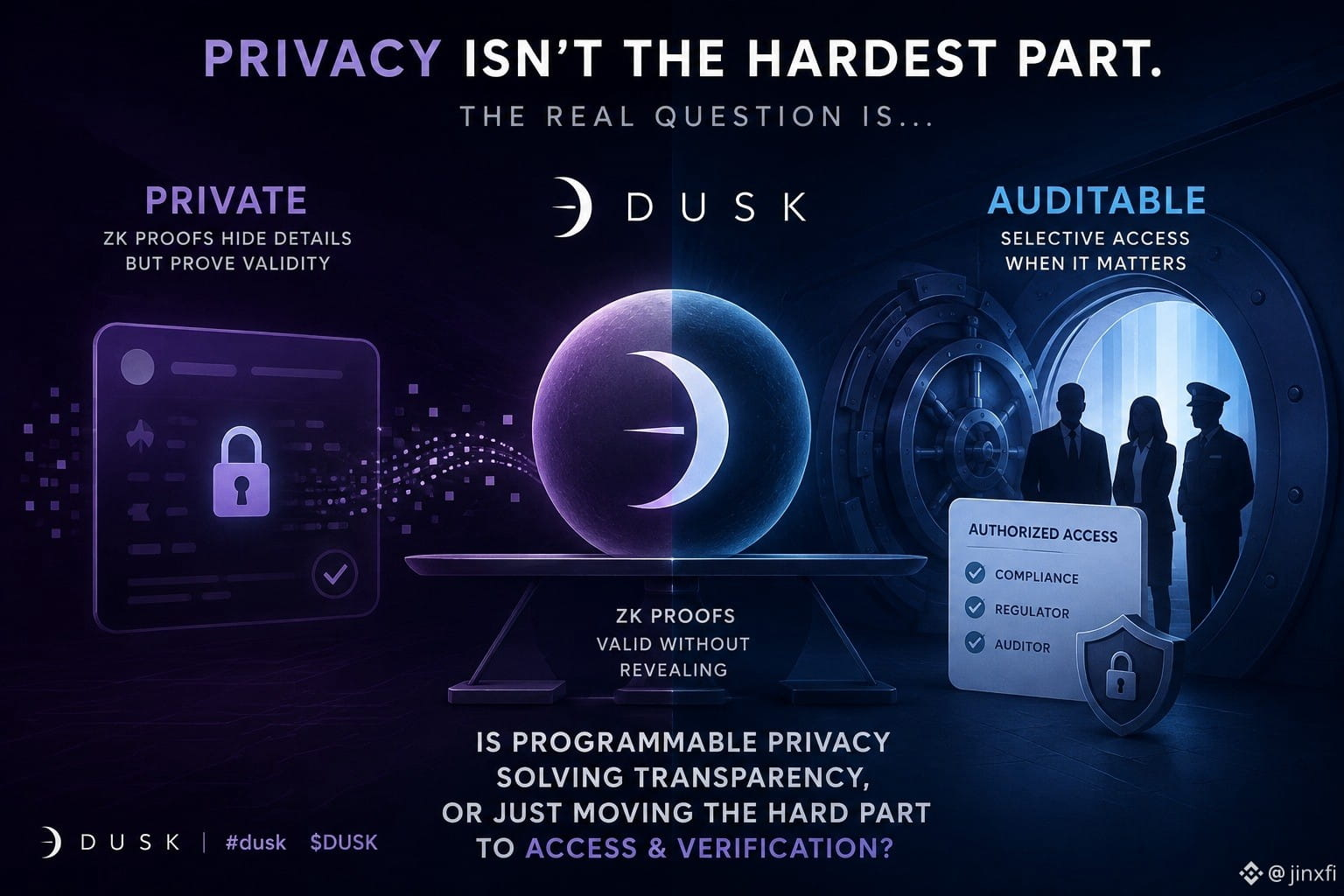
The more I read about @Dusk _Foundation, the more I think privacy itself isn't the hardest part.
Dusk uses ZK proofs to keep transaction details private while still proving that the transaction is valid.
That sounds useful for regulated finance, where you may not want every transaction detail visible to everyone.
But then comes the bigger question:
If the details are hidden, who can see them when they need to?
I like that Dusk treats privacy and auditability as things that can work together.
But the more selective the visibility becomes, the more important the rules around access become.
So I keep wondering:
Is programmable privacy really solving the transparency problem for regulated markets, or is it simply moving the hard part to access and verification?
#dusk @Dusk $DUSK
Dusk uses ZK proofs to keep transaction details private while still proving that the transaction is valid.
That sounds useful for regulated finance, where you may not want every transaction detail visible to everyone.
But then comes the bigger question:
If the details are hidden, who can see them when they need to?
I like that Dusk treats privacy and auditability as things that can work together.
But the more selective the visibility becomes, the more important the rules around access become.
So I keep wondering:
Is programmable privacy really solving the transparency problem for regulated markets, or is it simply moving the hard part to access and verification?
#dusk @Dusk $DUSK
Tərcüməyə bax
Something else i keep thinking about with TermMax is transaction ordering.
The protocol can have carefully defined lending and borrowing mechanics, but the transaction still has to make it through a blockchain environment where ordering can matter.
That creates a different kind of risk.
MEV isnt necessarily a failure of the lending design itself. Its a consequence of how transactions are processed around that design, and it can affect execution through things like unfavorable ordering or slippage.
I think thats an important distinction because a protocol can have sound financial mechanics and still expose users to execution-level problems.
So should protocol analysis treat transaction ordering as part of TermMax’s core risk model, or as a separate risk created by the surrounding execution environment??
@TermMax #TermMax
The protocol can have carefully defined lending and borrowing mechanics, but the transaction still has to make it through a blockchain environment where ordering can matter.
That creates a different kind of risk.
MEV isnt necessarily a failure of the lending design itself. Its a consequence of how transactions are processed around that design, and it can affect execution through things like unfavorable ordering or slippage.
I think thats an important distinction because a protocol can have sound financial mechanics and still expose users to execution-level problems.
So should protocol analysis treat transaction ordering as part of TermMax’s core risk model, or as a separate risk created by the surrounding execution environment??
@TermMax #TermMax
Core protocol risk
100%
Execution-layer risk
0%
Both matter equally
0%
Depends on the mechanism
0%
1 Səslər • Səsvermə bağlanıb
Tərcüməyə bax
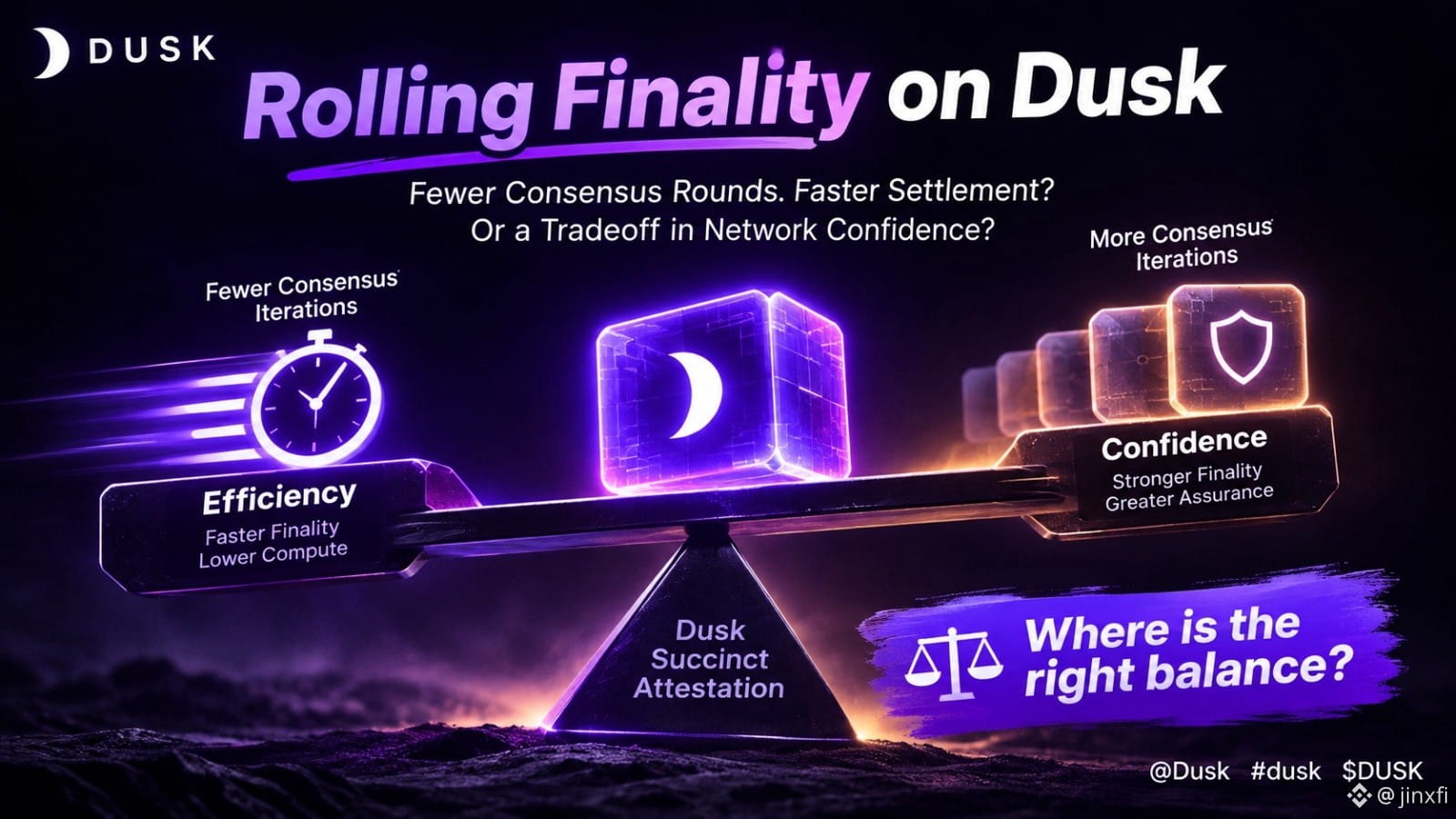
I kept thinking “fast finality” was mostly about getting a block confirmed quicker then I looked at how Dusk describes rolling finality, and thats not really the interesting part.
Dusk's Succinct Attestation consensus doesnt just aim to reach finality in seconds. The whitepaper describes rolling finality as a way to limit how many consensus iterations are needed before a block becomes final.
That small distinction matters.
Instead of repeatedly spending network resources proving the same block final, the process moves forward while keeping the finalization work bounded. I like that design for financial infrastructure because settlement isnt very useful if every extra step adds another layer of waiting and computation.
But theres a question underneath it.
The fewer consensus iterations you need, the more efficient finality becomes. At the same time, those iterations are part of what gives the network confidence that a block should be final.
so where is the right balance??
Does limiting finalization rounds make Dusk better suited to financial settlement, or does efficiency eventually become a tradeoff against how much consensus work is desirable??
@Dusk #dusk $DUSK
Dusk's Succinct Attestation consensus doesnt just aim to reach finality in seconds. The whitepaper describes rolling finality as a way to limit how many consensus iterations are needed before a block becomes final.
That small distinction matters.
Instead of repeatedly spending network resources proving the same block final, the process moves forward while keeping the finalization work bounded. I like that design for financial infrastructure because settlement isnt very useful if every extra step adds another layer of waiting and computation.
But theres a question underneath it.
The fewer consensus iterations you need, the more efficient finality becomes. At the same time, those iterations are part of what gives the network confidence that a block should be final.
so where is the right balance??
Does limiting finalization rounds make Dusk better suited to financial settlement, or does efficiency eventually become a tradeoff against how much consensus work is desirable??
@Dusk #dusk $DUSK
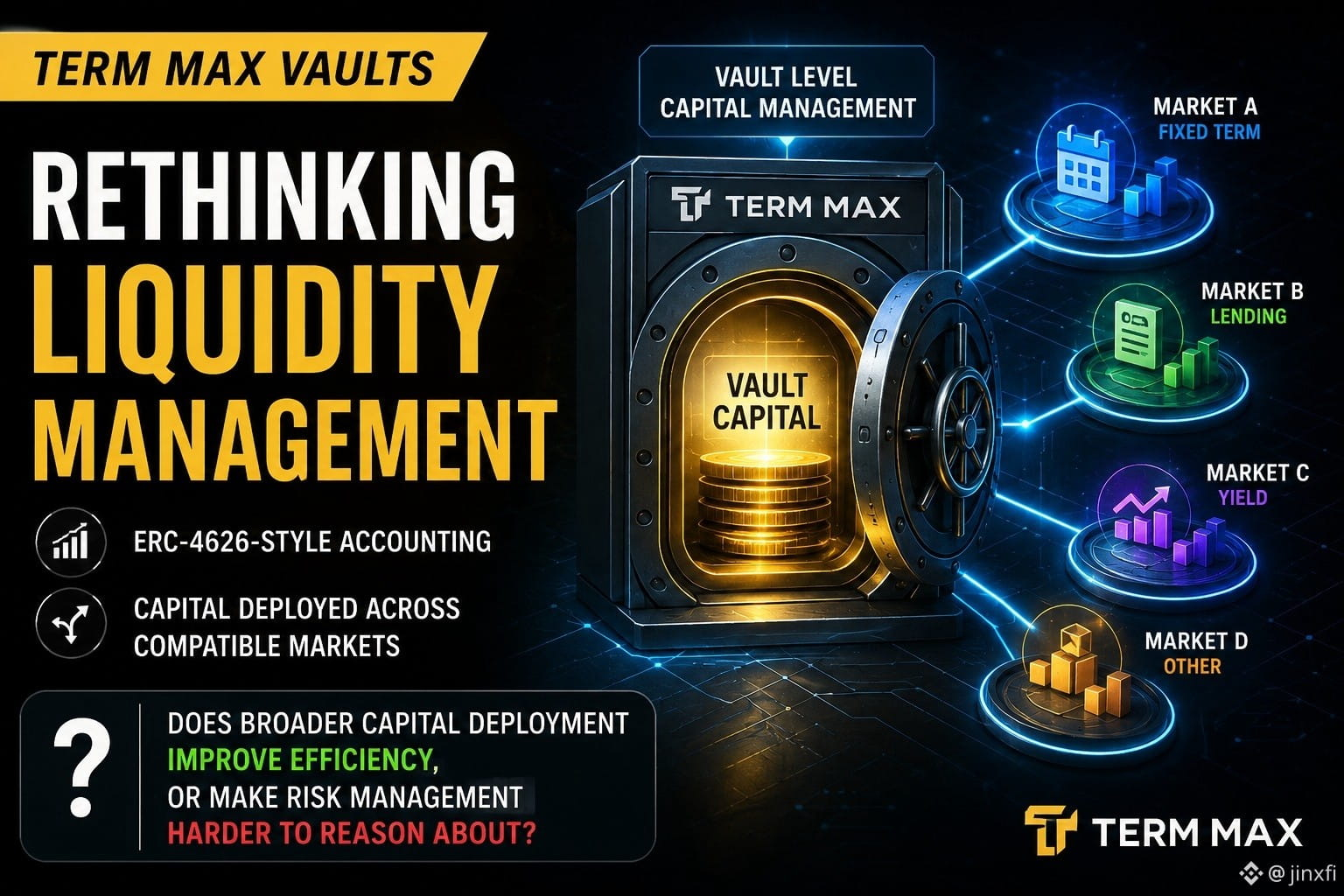
TermMax’ın vault strukturu mənə “likvidlik menecmenti”nin əslində nə demək olduğunu yenidən düşünməyə vadar etdi.
Vault sadəcə kapitalı park etmək üçün başqa bir yer deyil. Dizayn ERC-4626 üslublu mühasibatdan istifadə edir və hər bir bazar mövqeyini tamamilə təcrid olunmuş kimi qəbul etmək əvəzinə, kapitalın uyğun bazarlar üzrə yerləşdirilməsinə imkan verir.
Mən bu ayrımı bəyənirəm, çünki kapitalın idarə edilməsi fərdi bazar səviyyəsindən yuxarıda baş verə bilər.
Amma sual da məhz burada çətinləşir.
Bir vault neçə bazarla qarşılıqlı əlaqədə ola bilirsə, kapital bir o qədər faydalı ola bilər; bununla belə, həmin kapitalın hara yerləşdirilməsinə dair qərar da daha vacib olur.
Daha geniş kapital yerləşdirilməsi həqiqətən səmərəliliyi artırır, yoxsa riskin idarə edilməsini anlamağı daha da çətinləşdirir??
@TermMax #TermMax
Vault sadəcə kapitalı park etmək üçün başqa bir yer deyil. Dizayn ERC-4626 üslublu mühasibatdan istifadə edir və hər bir bazar mövqeyini tamamilə təcrid olunmuş kimi qəbul etmək əvəzinə, kapitalın uyğun bazarlar üzrə yerləşdirilməsinə imkan verir.
Mən bu ayrımı bəyənirəm, çünki kapitalın idarə edilməsi fərdi bazar səviyyəsindən yuxarıda baş verə bilər.
Amma sual da məhz burada çətinləşir.
Bir vault neçə bazarla qarşılıqlı əlaqədə ola bilirsə, kapital bir o qədər faydalı ola bilər; bununla belə, həmin kapitalın hara yerləşdirilməsinə dair qərar da daha vacib olur.
Daha geniş kapital yerləşdirilməsi həqiqətən səmərəliliyi artırır, yoxsa riskin idarə edilməsini anlamağı daha da çətinləşdirir??
@TermMax #TermMax
Tərcüməyə bax
I went digging into why Dusk rewards voters for supporting candidates from earlier, failed iterations.
At first, the process looks simple:
Proposal → Validation → Ratification
But the interesting part is what happens when an iteration fails.
Instead of letting the failed block disappear, Dusk gives later committees a reason to bring it back.
What surprised me is that this voter reward was added for a specific reason: to encourage future committees to vote on candidates from previous iterations.
So the protocol added a financial incentive to make recovering a failed block worth doing.
That makes a failed iteration less like a dead end and more like something the network is still willing to recover.
The interesting question is:
iIs Dusk smartly rewarding committees for finishing unfinished work, or does it show that recovery needs a financial push in the first place?
#dusk @Dusk $DUSK
Make it short
At first, the process looks simple:
Proposal → Validation → Ratification
But the interesting part is what happens when an iteration fails.
Instead of letting the failed block disappear, Dusk gives later committees a reason to bring it back.
What surprised me is that this voter reward was added for a specific reason: to encourage future committees to vote on candidates from previous iterations.
So the protocol added a financial incentive to make recovering a failed block worth doing.
That makes a failed iteration less like a dead end and more like something the network is still willing to recover.
The interesting question is:
iIs Dusk smartly rewarding committees for finishing unfinished work, or does it show that recovery needs a financial push in the first place?
#dusk @Dusk $DUSK
Make it short
Smart recovery incentive
0%
Necessary financial push
0%
Better without rewards
0%
depend on incentive
0%
0 Səslər • Səsvermə bağlanıb
Tərcüməyə bax
I started looking at TMX governance differently once i noticed what staking is supposed to change.
TMX holders can participate in governance, but staking can also provide enhanced governance rights around things like market risk parameters and curator whitelisting.
Thats more interesting to me than simply having another voting system.
Those decisions can directly affect how fixed-rate markets are managed, so governance becomes connected to actual protocol configuration rather than just broad proposals.
The positive is obvious: people with longer-term participation can have more influence.
But that creates a harder question. More concentrated decision-making can improve accountability, or it can make the quality of a smaller group’s judgement matter alot more.
Does enhanced governance produce better protocol decisions, or just make governance power more concentrated??
@TermMax #TermMax
TMX holders can participate in governance, but staking can also provide enhanced governance rights around things like market risk parameters and curator whitelisting.
Thats more interesting to me than simply having another voting system.
Those decisions can directly affect how fixed-rate markets are managed, so governance becomes connected to actual protocol configuration rather than just broad proposals.
The positive is obvious: people with longer-term participation can have more influence.
But that creates a harder question. More concentrated decision-making can improve accountability, or it can make the quality of a smaller group’s judgement matter alot more.
Does enhanced governance produce better protocol decisions, or just make governance power more concentrated??
@TermMax #TermMax
Better decisions
100%
More concentrated power
0%
Depends on design
0%
Both can happen
0%
1 Səslər • Səsvermə bağlanıb
Tərcüməyə bax
Something about native issuance on Dusk kept bothering me.
I used to think tokenization and native issuance were basically the same thing with different wording. They arent.
Tokenization starts with an existing asset and creates an onchain representation of it. Native issuance goes further: the security itself can have its lifecycle structured onchain from the point of issuance.
Dusk's Zedger design is interesting here because it isnt limited to holding a tokenized representation. The whitepaper describes support for securities that are either tokenized or natively issued, with lifecycle functions such as minting, burning and corporate actions built into the asset model.
That sounds cleaner to me.
But it also creates a harder question. If more of the security lifecycle moves onto the chain, more of that lifecycle has to fit the rules of the issuer, venue and jurisdiction. The technical capability alone doesnt make the asset native in practice.
thats the part I keep coming back to.
Does moving the security lifecycle closer to the chain make regulated markets genuinely more native, or does it simply move more regulatory complexity into the asset itself??
@Dusk $DUSK #dusk
I used to think tokenization and native issuance were basically the same thing with different wording. They arent.
Tokenization starts with an existing asset and creates an onchain representation of it. Native issuance goes further: the security itself can have its lifecycle structured onchain from the point of issuance.
Dusk's Zedger design is interesting here because it isnt limited to holding a tokenized representation. The whitepaper describes support for securities that are either tokenized or natively issued, with lifecycle functions such as minting, burning and corporate actions built into the asset model.
That sounds cleaner to me.
But it also creates a harder question. If more of the security lifecycle moves onto the chain, more of that lifecycle has to fit the rules of the issuer, venue and jurisdiction. The technical capability alone doesnt make the asset native in practice.
thats the part I keep coming back to.
Does moving the security lifecycle closer to the chain make regulated markets genuinely more native, or does it simply move more regulatory complexity into the asset itself??
@Dusk $DUSK #dusk
More native
0%
More complexity
0%
Both
0%
Too early to tell
0%
0 Səslər • Səsvermə bağlanıb
Tərcüməyə bax
I keep thinking scalability gets described too narrowly in blockchain.
A chain can process more transactions and still be awkward for financial applications if execution becomes unpredictable as activity grows.
What interested me in Dusk is that scalability is treated as a systems problem rather than just a bigger throughput number. The architecture separates concerns across consensus, networking and execution, which gives each layer a more specific job.
That sounds cleaner than simply chasing a headline TPS figure.
But there’s a question underneath it. Financial applications dont just need capacity when demand is low. They need the system to remain predictable when multiple workflows compete for resources at the same time.
Higher theoretical capacity is useful. Predictable capacity is harder.
So is Dusk's layered approach actually a better path toward scalable financial infrastructure, or does separating the system into more specialized components just create more complexity to manage??
#dusk @Dusk $DUSK
A chain can process more transactions and still be awkward for financial applications if execution becomes unpredictable as activity grows.
What interested me in Dusk is that scalability is treated as a systems problem rather than just a bigger throughput number. The architecture separates concerns across consensus, networking and execution, which gives each layer a more specific job.
That sounds cleaner than simply chasing a headline TPS figure.
But there’s a question underneath it. Financial applications dont just need capacity when demand is low. They need the system to remain predictable when multiple workflows compete for resources at the same time.
Higher theoretical capacity is useful. Predictable capacity is harder.
So is Dusk's layered approach actually a better path toward scalable financial infrastructure, or does separating the system into more specialized components just create more complexity to manage??
#dusk @Dusk $DUSK
Better scalability
0%
More complexity
0%
Depends on execution
0%
Too early to tell
0%
0 Səslər • Səsvermə bağlanıb
@Dusk şəbəkə qatına bir az vaxt ayırdım və özümü istifadəçilərin çoxunun heç vaxt görmədiyi bir şeyə daha çox diqqət yetirərkən tapdım: bloklar şəbəkə daxilində necə hərəkət edir.
Kadcast sadəcə hər bir mesajı qoşulmuş bütün peer-lərə ötürməkdən fərqli olaraq, Kademlia tipli yönləndirməyə əsaslanan strukturlaşdırılmış peer-to-peer dizaynından istifadə edir. Məqsəd yayılmanı daha hədəflənmiş etmək və şəbəkə boyunca baş verən lazımsız, təkrarlanan kommunikasiya miqdarını azaltmaqdır.
Bu, bir backend detalı kimi səslənir.
Çox güman ki, elə deyil.
Maliyyə fəaliyyəti ilə məşğul olan bir zəncir üçün şəbəkə səmərəliliyi zamanla istifadəçi təcrübəsinin bir hissəsinə çevrilir. Əgər node-lar eyni məlumatı təkrar-təkrar dövrəyə salmaq üçün daha az səy sərf edirsə, şəbəkənin faydalı işi görməyə daha çox yeri qalır; kommunikasiya yükü isə azalır.
Mənim daha az əmin olduğum hissə isə kompromistdir. Daha strukturlaşdırılmış yayılma sistemi tullantını azalda bilər, amma həm də şəbəkənin necə təşkil olunduğu və node-ların bir-biri ilə necə əlaqə qurduğu barədə daha çox fərziyyə gətirir.
Bəs daha ağıllı blok yayılması maliyyə üzrə hesablaşma üçün bazanı həqiqətən mənalı şəkildə yaxşılaşdırır, yoxsa əlavə şəbəkə strukturu miqyas artdıqca idarə edilməsi daha çətin olan bir mürəkkəblik yaradır??
#dusk @Dusk $DUSK
Kadcast sadəcə hər bir mesajı qoşulmuş bütün peer-lərə ötürməkdən fərqli olaraq, Kademlia tipli yönləndirməyə əsaslanan strukturlaşdırılmış peer-to-peer dizaynından istifadə edir. Məqsəd yayılmanı daha hədəflənmiş etmək və şəbəkə boyunca baş verən lazımsız, təkrarlanan kommunikasiya miqdarını azaltmaqdır.
Bu, bir backend detalı kimi səslənir.
Çox güman ki, elə deyil.
Maliyyə fəaliyyəti ilə məşğul olan bir zəncir üçün şəbəkə səmərəliliyi zamanla istifadəçi təcrübəsinin bir hissəsinə çevrilir. Əgər node-lar eyni məlumatı təkrar-təkrar dövrəyə salmaq üçün daha az səy sərf edirsə, şəbəkənin faydalı işi görməyə daha çox yeri qalır; kommunikasiya yükü isə azalır.
Mənim daha az əmin olduğum hissə isə kompromistdir. Daha strukturlaşdırılmış yayılma sistemi tullantını azalda bilər, amma həm də şəbəkənin necə təşkil olunduğu və node-ların bir-biri ilə necə əlaqə qurduğu barədə daha çox fərziyyə gətirir.
Bəs daha ağıllı blok yayılması maliyyə üzrə hesablaşma üçün bazanı həqiqətən mənalı şəkildə yaxşılaşdırır, yoxsa əlavə şəbəkə strukturu miqyas artdıqca idarə edilməsi daha çətin olan bir mürəkkəblik yaradır??
#dusk @Dusk $DUSK
Better efficiency
0%
Stronger settlement
0%
Complexity risk
0%
Both matter
0%
0 Səslər • Səsvermə bağlanıb
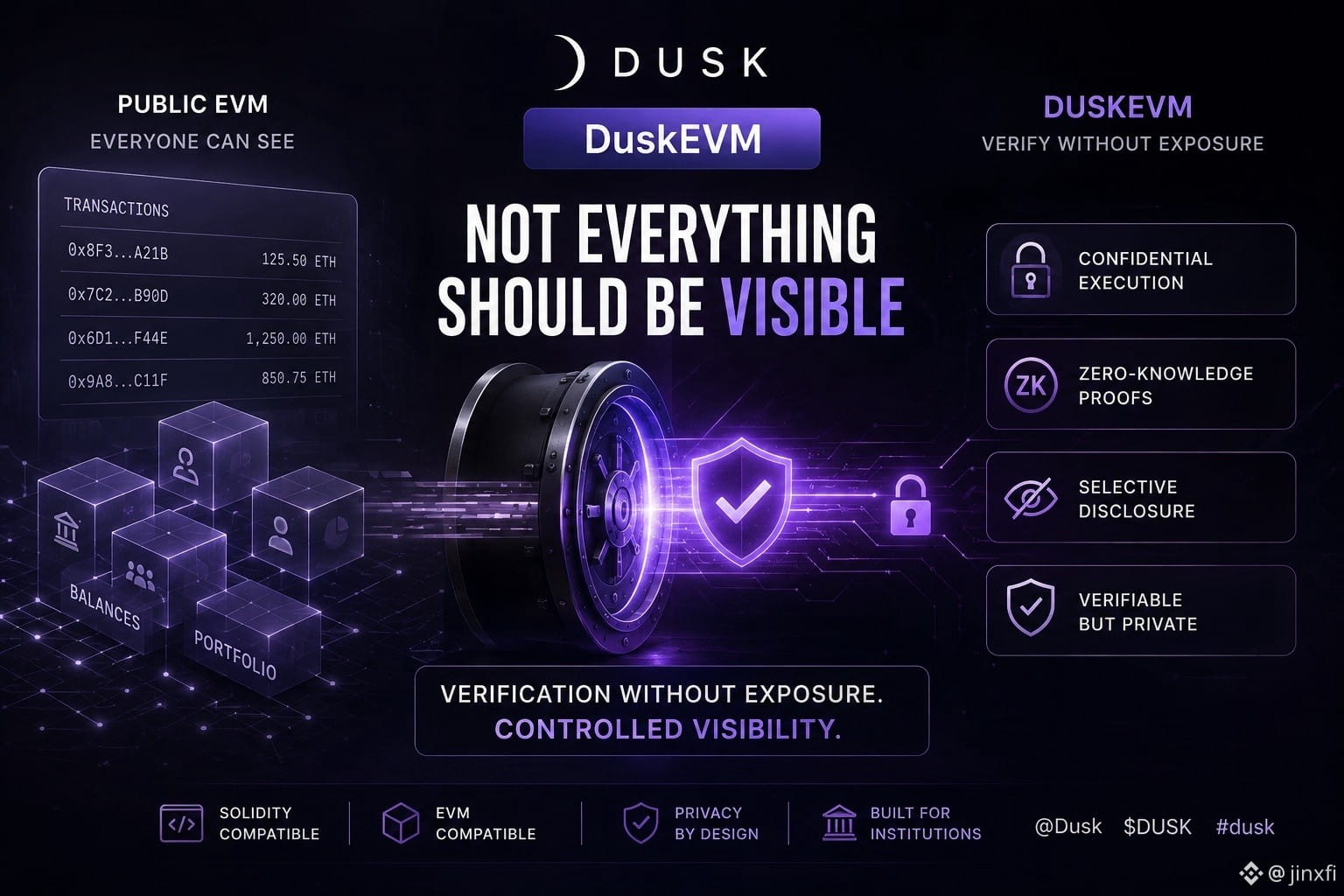
Əksər EVM tətbiqləri şəffaflığı bir funksiya kimi qəbul edir. Amma institusional maliyyədə bu fərziyyə parçalanmağa başlayır.
DeFi ictimai balanslar və əməliyyatlarla yaxşı işləyir. İnsttiusiyalar çox vaxt fərqli bir şeyə ehtiyac duyur: portfelin hamısını, balans hesabatını və ya qarşı tərəfləri üzə çıxarmadan, bir ticarətin etibarlı olduğunu sübut etmək.
Məhz burada DuskEVM maraqlı olur.
Dusk tanış Solidity və EVM mühitini saxlayır, lakin yoxlamanı görünürlükdən ayırmaq üçün konfidentsial icra, şifrələmə və sıfır bilik (zero-knowledge) sübutlarından istifadə edir.
Şəbəkə, əsas məlumatı hamıya göstərmədən qaydalara əməl olunduğunu yoxlaya bilər.
Bu fərq önəmlidir.
Şəxsi məlumatlılıq yoxlamadan imtina demək deyil. Bu, dövlətin sübut edilə bilən qalması ilə yanaşı, kimin nəyi görəcəyini idarə etmək ola bilər.
Əsl çətinlik isə sübutun yaradılması, performans, inteqrasiya və seçmə açıqlanmanın miqyasda etibarlı şəkildə işləməsinə nail olmaqdır.
Tokenləşdirilmiş aktivlər və institusional blokçeyn mənimsənilməsi artdıqca sual bəlkə də maliyyə məlumatının onçeyndə olub-olmamasının sualı olmayacaq.
Sualların mahiyyəti həmin məlumatın nə qədər hissəsinin həqiqətən görünən olmasının lazım olduğu ola bilər.
Növbəti EVM dizayn problemi icra olmaya da bilər.
O, idarə olunan görünürlük ola bilər.
@Dusk $DUSK #dusk
DeFi ictimai balanslar və əməliyyatlarla yaxşı işləyir. İnsttiusiyalar çox vaxt fərqli bir şeyə ehtiyac duyur: portfelin hamısını, balans hesabatını və ya qarşı tərəfləri üzə çıxarmadan, bir ticarətin etibarlı olduğunu sübut etmək.
Məhz burada DuskEVM maraqlı olur.
Dusk tanış Solidity və EVM mühitini saxlayır, lakin yoxlamanı görünürlükdən ayırmaq üçün konfidentsial icra, şifrələmə və sıfır bilik (zero-knowledge) sübutlarından istifadə edir.
Şəbəkə, əsas məlumatı hamıya göstərmədən qaydalara əməl olunduğunu yoxlaya bilər.
Bu fərq önəmlidir.
Şəxsi məlumatlılıq yoxlamadan imtina demək deyil. Bu, dövlətin sübut edilə bilən qalması ilə yanaşı, kimin nəyi görəcəyini idarə etmək ola bilər.
Əsl çətinlik isə sübutun yaradılması, performans, inteqrasiya və seçmə açıqlanmanın miqyasda etibarlı şəkildə işləməsinə nail olmaqdır.
Tokenləşdirilmiş aktivlər və institusional blokçeyn mənimsənilməsi artdıqca sual bəlkə də maliyyə məlumatının onçeyndə olub-olmamasının sualı olmayacaq.
Sualların mahiyyəti həmin məlumatın nə qədər hissəsinin həqiqətən görünən olmasının lazım olduğu ola bilər.
Növbəti EVM dizayn problemi icra olmaya da bilər.
O, idarə olunan görünürlük ola bilər.
@Dusk $DUSK #dusk
Tərcüməyə bax
I was digging through @Dusk consensus docs today, and the part that caught me wasn't the privacy side.
It was how much emphasis Dusk puts on what happens after a transaction is accepted.
Succinct Attestation is designed to give Dusk deterministic finality once a block is ratified. That means the transaction isn't just becoming “more likely” to stay there as more blocks arrive. It reaches a defined final state.
That sounds like a technical detail until you think about financial assets.
If you're settling a tokenized security or a delivery-versus-payment transaction, uncertainty around whether the ledger state can still change becomes an operational problem.
So I started looking at Dusk less as a privacy chain and more as a settlement system.
The interesting question for me is whether deterministic finality actually becomes more important than privacy once real financial assets start moving onchain.
Because hiding a transaction is useful.
But knowing exactly when that transaction is final may be just as important.
#dusk $DUSK @Dusk
It was how much emphasis Dusk puts on what happens after a transaction is accepted.
Succinct Attestation is designed to give Dusk deterministic finality once a block is ratified. That means the transaction isn't just becoming “more likely” to stay there as more blocks arrive. It reaches a defined final state.
That sounds like a technical detail until you think about financial assets.
If you're settling a tokenized security or a delivery-versus-payment transaction, uncertainty around whether the ledger state can still change becomes an operational problem.
So I started looking at Dusk less as a privacy chain and more as a settlement system.
The interesting question for me is whether deterministic finality actually becomes more important than privacy once real financial assets start moving onchain.
Because hiding a transaction is useful.
But knowing exactly when that transaction is final may be just as important.
#dusk $DUSK @Dusk
Deterministic finality
0%
Privacy
0%
Both equally
0%
Fast settlement
0%
0 Səslər • Səsvermə bağlanıb
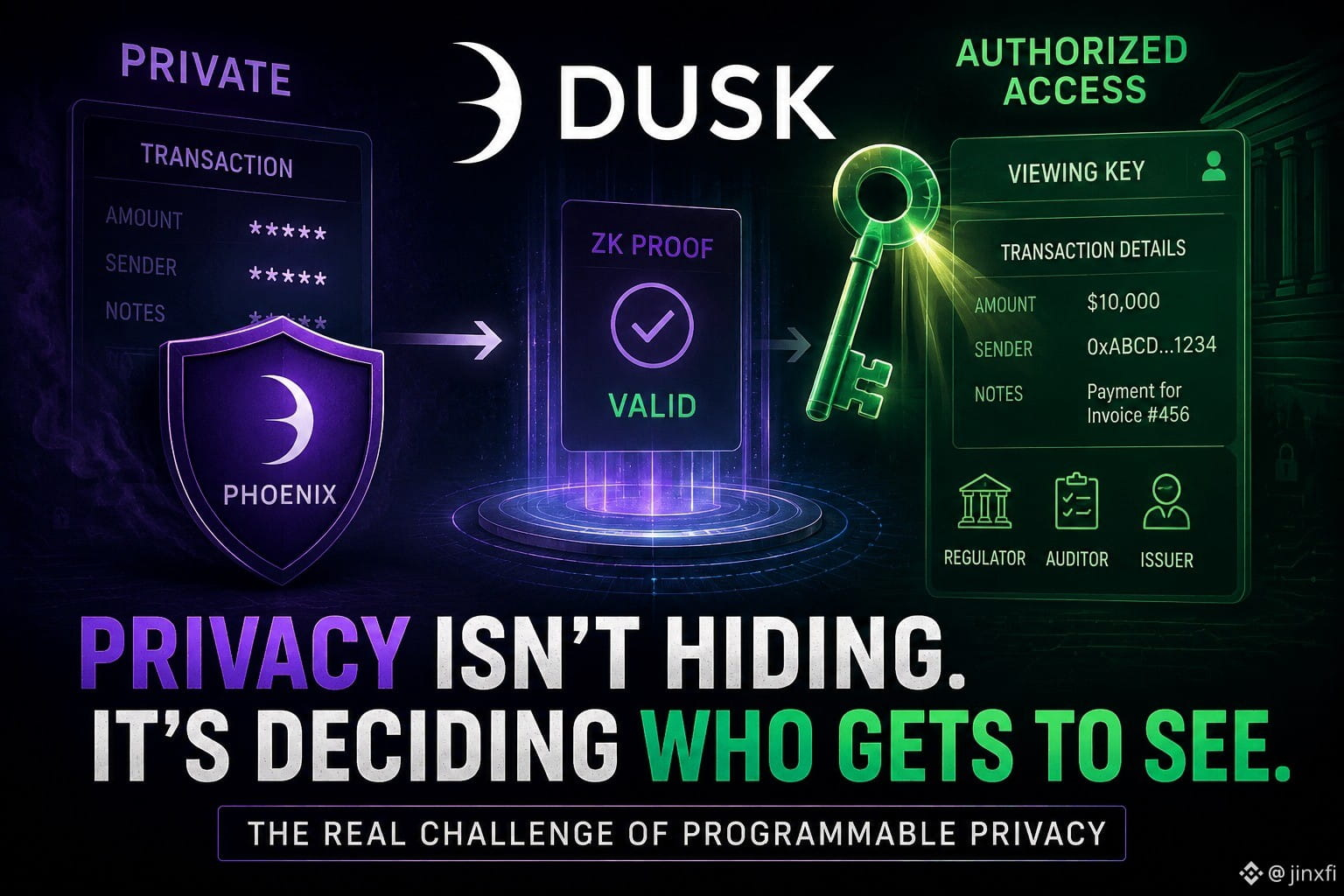
Dusk-un əməliyyat sənədlərini nəzərdən keçirmək üçün bir az vaxt sərf etdim və məni dayandıran hissə ZK sübutunun özü olmadı.
Söhbət əməliyyat məxfi olduqdan sonra baş verənlərdən gedirdi.
Phoenix məbləği, göndəricini və xüsusi qeydləri ictimai müşahidəçilərdən gizlədir, amma Dusk həmçinin səlahiyyətli tərəf həqiqətən dəlilə ehtiyac duyduqda görünmə açarları (viewing keys) və seçmə açıqlamaları dəstəkləyir.
Bu isə “məxfilik = heç kim heç nə görə bilmir” modelindən daha maraqlı bir yanaşma yaradır.
Tənzimləyici, auditor və ya emitent bazarın qalan hissəsi görmədən nəsə görməyə ehtiyac duya bilər.
Yəni real dizayn problemi əməliyyatı gizlətmək deyil.
Gizli məlumatı kimə göstərməli olduqlarını və hansı məqsədlə olduğunu müəyyənləşdirməkdir.
Elə buradan başlayaraq məxfilik daha çox ikili (bəli/xeyr) açar kimi deyil, daha çox giriş-nəzarəti (access-control) problemi kimi görünməyə başlayır.
Məni düşündürür: institusional məxfilik nə qədərinin həqiqətən kriptoqrafiyadan asılıdır, nə qədərinin isə açıqlanma qaydalarından?
#dusk $DUSK @Dusk
Söhbət əməliyyat məxfi olduqdan sonra baş verənlərdən gedirdi.
Phoenix məbləği, göndəricini və xüsusi qeydləri ictimai müşahidəçilərdən gizlədir, amma Dusk həmçinin səlahiyyətli tərəf həqiqətən dəlilə ehtiyac duyduqda görünmə açarları (viewing keys) və seçmə açıqlamaları dəstəkləyir.
Bu isə “məxfilik = heç kim heç nə görə bilmir” modelindən daha maraqlı bir yanaşma yaradır.
Tənzimləyici, auditor və ya emitent bazarın qalan hissəsi görmədən nəsə görməyə ehtiyac duya bilər.
Yəni real dizayn problemi əməliyyatı gizlətmək deyil.
Gizli məlumatı kimə göstərməli olduqlarını və hansı məqsədlə olduğunu müəyyənləşdirməkdir.
Elə buradan başlayaraq məxfilik daha çox ikili (bəli/xeyr) açar kimi deyil, daha çox giriş-nəzarəti (access-control) problemi kimi görünməyə başlayır.
Məni düşündürür: institusional məxfilik nə qədərinin həqiqətən kriptoqrafiyadan asılıdır, nə qədərinin isə açıqlanma qaydalarından?
#dusk $DUSK @Dusk
Daha çox kontent araşdırmaq üçün daxil olun