@TermMax Risk in DeFi isn't an afterthought. It's the whole game.
When I dug into TermMax, I realized lending and borrowing isn't just about yield or loans.
It's about how well you manage downside.
It all starts with collateral.
Want to borrow? Lock an asset as security first.
That’s the market’s backstop if things go wrong.
But it's not 1:1.
If I deposit $20,000 in BTC, I can't borrow $20,000.
Protocols build in a safety buffer.
That’s LTV - Loan-to-Value.
It measures your debt vs your collateral.
$20,000 BTC collateral → $10,000 loan = 50% LTV.
Lower LTV = Bigger safety cushion.
If BTC drops, that cushion shrinks. Fast.
Here’s where TermMax gets specific:
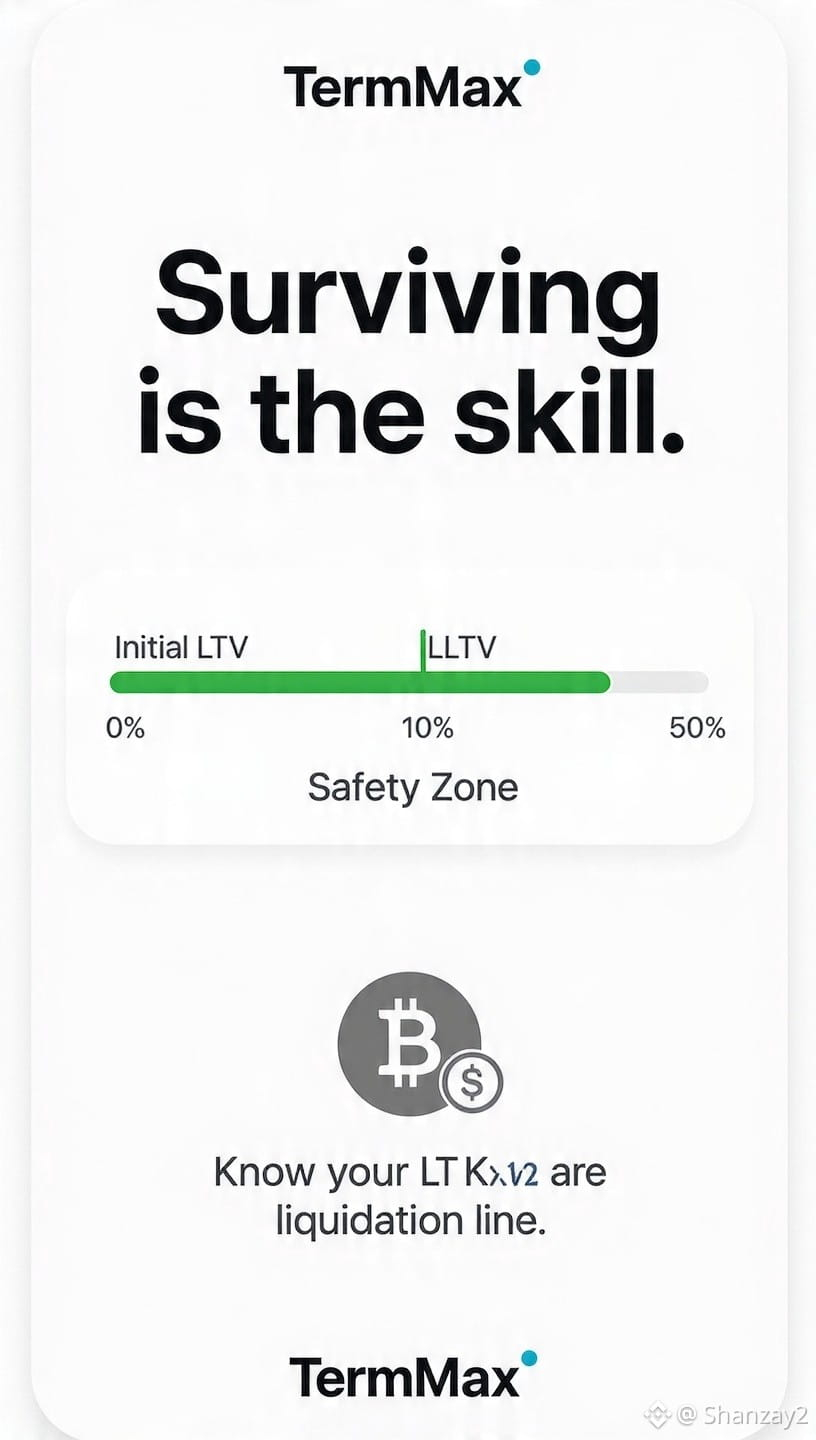
Initial LTV: The max you can borrow on Day 1.
Liquidation LTV (LLTV): The hard line where liquidation triggers.
The space between them? That’s your safety zone.
The flow is simple:
Collateral → Initial LTV Cap → Market Moves → Liquidation Buffer → Risk Control
I like this because risk is hardcoded from the start.
Borrowers get clear leverage limits.
Lenders get real assets backing their capital.
But let’s be real:
Fixed rates don't mean fixed prices.
Your collateral still floats.
In crypto, things move fast.
So know your LTV.
Know your liquidation line.
Before you deploy a single dollar.
In DeFi, chasing high returns is easy.
Surviving is the skill.
Do you check your liquidation price before you borrow, or after?
#termmax #TermMax
When I dug into TermMax, I realized lending and borrowing isn't just about yield or loans.
It's about how well you manage downside.
It all starts with collateral.
Want to borrow? Lock an asset as security first.
That’s the market’s backstop if things go wrong.
But it's not 1:1.
If I deposit $20,000 in BTC, I can't borrow $20,000.
Protocols build in a safety buffer.
That’s LTV - Loan-to-Value.
It measures your debt vs your collateral.
$20,000 BTC collateral → $10,000 loan = 50% LTV.
Lower LTV = Bigger safety cushion.
If BTC drops, that cushion shrinks. Fast.
Here’s where TermMax gets specific:
Initial LTV: The max you can borrow on Day 1.
Liquidation LTV (LLTV): The hard line where liquidation triggers.
The space between them? That’s your safety zone.
The flow is simple:
Collateral → Initial LTV Cap → Market Moves → Liquidation Buffer → Risk Control
I like this because risk is hardcoded from the start.
Borrowers get clear leverage limits.
Lenders get real assets backing their capital.
But let’s be real:
Fixed rates don't mean fixed prices.
Your collateral still floats.
In crypto, things move fast.
So know your LTV.
Know your liquidation line.
Before you deploy a single dollar.
In DeFi, chasing high returns is easy.
Surviving is the skill.
Do you check your liquidation price before you borrow, or after?
#termmax #TermMax