Son bir neçə gün ərzində BabylonLabs_io-dan Trustless Bitcoin Vaults (TBV) üzrə texniki sənədləri geri-geri nəzərdən keçirdim. Əvvəlcə yalnız qaytarılma (redemption) axınını anlamaq istəyirdim. Amma bir söz məni daim daha dərinlərinə apardı: “translation”.
Mən səhifələri yenidən oxudum, BitVM3-ə iki dəfə baxdım və hətta rəsmi axın sxemini də yenidən nəzərdən keçirdim. Əvvəlcə elə düşündüm ki, Bitcoin Script-də nəsə qaçırmışam. Amma sonra daha böyük mənzərə aydın oldu.
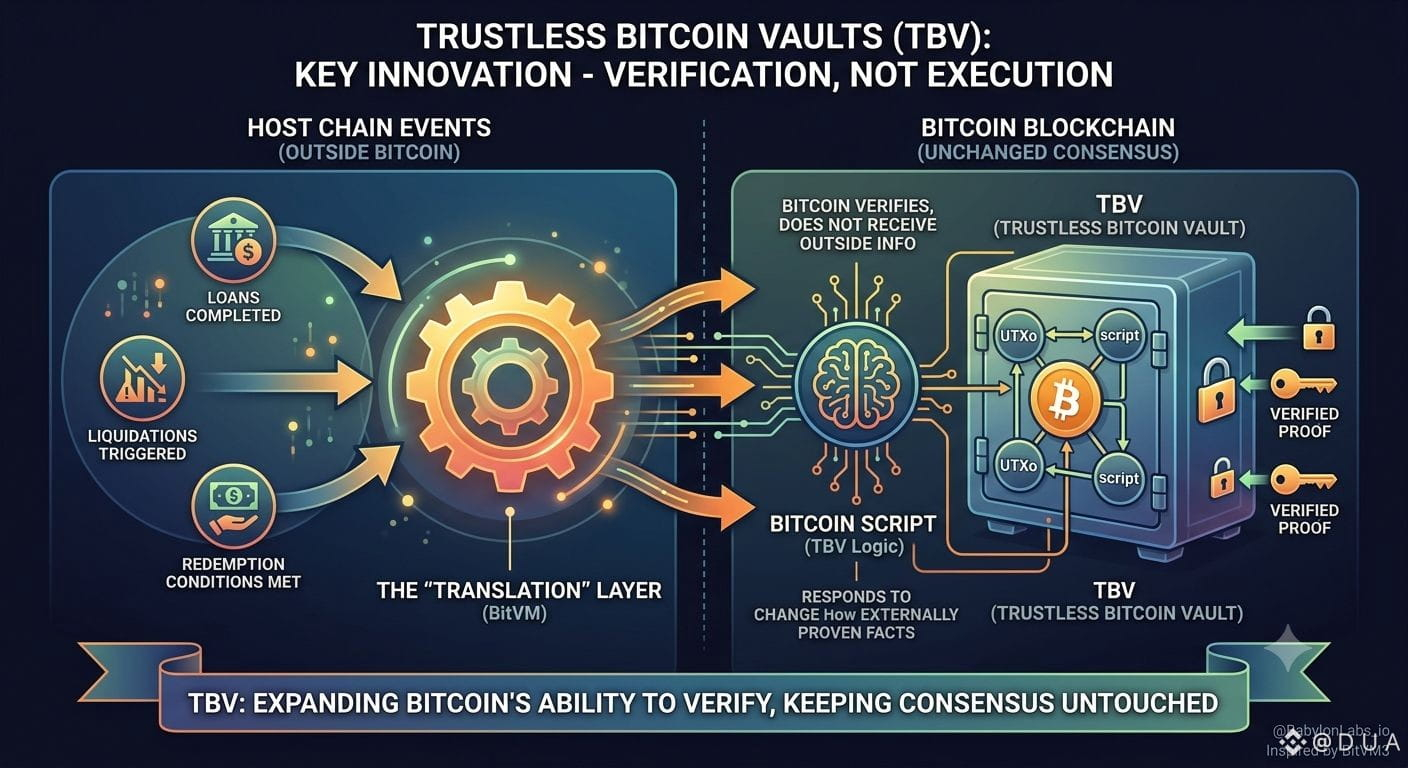
Buradakı “translation” Bitcoin-ə məlumat ötürmək haqqında deyil. Bu, artıq host zəncirində baş vermiş bir hadisəni Bitcoin-in yoxlaya biləcəyi bir şeyə çevirmək haqqındadır. Əsl dönüş budur.
Uzun müddət BTC-nin maliyyə istifadələrində əsas məhdudiyyətinin cross-chain əlaqələnmə və ya custody olduğunu düşünürdüm. İndi isə daha dərin problemi görürəm: Bitcoin-in kənardan məlumat qəbul etməsinə ehtiyac yoxdur; Bitcoin kənar hadisələrin həqiqətən də doğru olduğunu yoxlamaq üçün bir mexanizmə ehtiyac duyur.
İstər kreditin tamamlanması, istər ləğvetmənin (liquidation) işə düşməsi, istərsə də qaytarılma şərtinin yerinə yetirilməsi olsun — bu addımlar Bitcoin consensus-dan kənarda baş verir. Kimsə artıq bir hadisənin baş verdiyini iddia etdiyi üçün Bitcoin UTXO-ların necə xərclənəcəyini dəyişməyəcək.
Buna görə TBV bu qədər vacib hiss olunur. O, Bitcoin-i smart contract zəncirinə çevirməyə çalışmır. O, öz konsensusunu toxunulmaz saxlayaraq, Bitcoin-in kənardan sübut olunmuş faktlara cavab verməsi üçün bir yol qurur.
TBV Bitcoin-in icrasını genişləndirmir. Bitcoin-in yoxlama imkanını genişləndirir. Və dizaynın ən vacib hissəsi də bu ola bilər.@BabylonLabs_io #baby $BABY
Mən səhifələri yenidən oxudum, BitVM3-ə iki dəfə baxdım və hətta rəsmi axın sxemini də yenidən nəzərdən keçirdim. Əvvəlcə elə düşündüm ki, Bitcoin Script-də nəsə qaçırmışam. Amma sonra daha böyük mənzərə aydın oldu.
Buradakı “translation” Bitcoin-ə məlumat ötürmək haqqında deyil. Bu, artıq host zəncirində baş vermiş bir hadisəni Bitcoin-in yoxlaya biləcəyi bir şeyə çevirmək haqqındadır. Əsl dönüş budur.
Uzun müddət BTC-nin maliyyə istifadələrində əsas məhdudiyyətinin cross-chain əlaqələnmə və ya custody olduğunu düşünürdüm. İndi isə daha dərin problemi görürəm: Bitcoin-in kənardan məlumat qəbul etməsinə ehtiyac yoxdur; Bitcoin kənar hadisələrin həqiqətən də doğru olduğunu yoxlamaq üçün bir mexanizmə ehtiyac duyur.
İstər kreditin tamamlanması, istər ləğvetmənin (liquidation) işə düşməsi, istərsə də qaytarılma şərtinin yerinə yetirilməsi olsun — bu addımlar Bitcoin consensus-dan kənarda baş verir. Kimsə artıq bir hadisənin baş verdiyini iddia etdiyi üçün Bitcoin UTXO-ların necə xərclənəcəyini dəyişməyəcək.
Buna görə TBV bu qədər vacib hiss olunur. O, Bitcoin-i smart contract zəncirinə çevirməyə çalışmır. O, öz konsensusunu toxunulmaz saxlayaraq, Bitcoin-in kənardan sübut olunmuş faktlara cavab verməsi üçün bir yol qurur.
TBV Bitcoin-in icrasını genişləndirmir. Bitcoin-in yoxlama imkanını genişləndirir. Və dizaynın ən vacib hissəsi də bu ola bilər.@BabylonLabs_io #baby $BABY