
The flippening is the moment when the value of all ETH exceeds the market capitalization of Bitcoin. Ethereum co-founder Joseph Lubin recently stated in an interview with CNBC that this could happen within the next year. Is there a chance that he is right?
 First, let's check the facts. In August 2025, both Bitcoin and Ethereum set new ATHs. However, the scale of this jump is definitely different. In the last 3 months, BTC has risen by less than 5%, while ETH has increased by over 70%. Is Lubin telling the truth?!
Bitcoin - the immortal charm of vintage
Bitcoin still has strong assets. It is the cryptocurrency that even those outside the industry recognize. It is also digital gold for those who prefer tried and tested solutions. MicroStrategy and others continue to add BTC to their balances. And BTC cannot be printed.
Despite these advantages, Bitcoin also has its limitations. No smart contracts, low throughput, seasonally high fees... Sometimes it resembles a classic car from the '60s - beautiful, worth a lot of money, but not always practical in today's times. It remains king, but in the world of Web3 and DeFi, it is as useful as a PC 386 in today's office.
🔥Binance account with a lifetime 20% discount on fees! Check it out!🔥
Ethereum - machine of innovation
Ethereum has one fundamental advantage over Bitcoin - it allows for the creation of smart contracts. Thanks to this, it has become the number 1 intelligent chain, far ahead of BSC, XRP, or Solana. The market value of ETH is greater than all of these coins combined, and its share in the total TVL of all networks is over 60%.
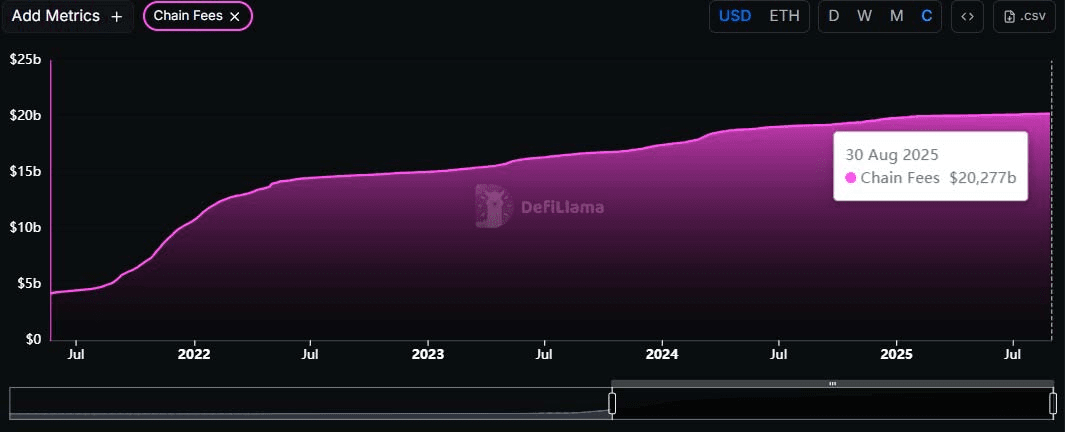
The network supports tens of thousands of decentralized applications. Since its inception, it has generated over 20 billion dollars in fees! Ethereum operates like Switzerland of the digital world - a neutral place where anyone can grow their business for a small fee.
 This is where the future of finance, gaming, and tokenization is built. Indeed, the main network is not particularly efficient, but thanks to Layer 2 solutions, it allows for combining fire with water. By using them, we can perform transactions for pennies while inheriting the security and stability of the main Ethereum chain.
Solana and BSC can be much more efficient and faster, but it comes at a price. Ethereum remains the absolute leader in terms of security and decentralization. The number of validators in this network exceeds a million, making it one of the most resilient blockchain platforms to attacks. In the world of finance, this is fundamental.
Tokenomics also plays in favor of ETH. Each transaction burns a portion of the tokens, and the supply periodically becomes deflationary. By summer 2025, daily burning exceeds the issuance of ETH.
Perhaps most importantly - after the transition to Proof of Stake, about 30% of the total ETH supply is staked. Staking allows for returns of 2-3% to even 5-6% annually, depending on the chosen option. This may not be much for us, but for institutions operating with millions, these are very attractive returns on a deflationary asset.
In the end - constant development. We had to wait a bit for the Pectra update, but it brought powerful changes. Along with facilitating staking, it reduced costs for L2 networks and gave regular accounts almost the functionality of smart contracts.
What does Ethereum need?
Ethereum is important and useful, but today it cannot win against Bitcoin. It will only prevail when it combines return on capital, innovation, and utility in a single value flow. It must become a protocol that is useful and profitable, while being almost invisible to the user.
Earning potential. ETFs were the first step, but the revolution will be the combination of staking profits with protection against ETH price drops. Etherfi, KelpDAO, Renzo, and Bedrock are already working on such a solution.
Innovation. This is not about a single brilliant feature, but about the further expansion of the ecosystem. DeFi as a source of liquidity, RWA as a bridge to the real economy, stablecoins as everyday currency. And all of this is based on cheap and fast Layer 2.
Utility. It means a growing number of microtransactions, from payments for content to real-time settlements between companies. Available to everyone, even if the user doesn't know what ETH is.
Future scenarios
The flippening will only happen when Ethereum stops being an 'investment asset' and becomes an operating system for the digital economy. Otherwise - no chances.
Optimistic scenario (2026-2027): Ethereum receives a growing stream of capital from ETFs and staking, attracting more institutions to asset tokenization and cementing its position as the largest 'layer of trust'.
Neutral scenario (2028-2030): Ethereum is growing, but slowly, struggling with the complexity of the system. The flippening occurs when regulators allow banks to introduce ETH staking products.
Pessimistic scenario: Ethereum gets lost in the maze of L2, UX remains too complicated, and competitors - especially Solana - steal some of the most important narratives. Bitcoin maintains its status as digital gold and rises to 1 million dollars.
As can be seen, the chances of Ethereum surpassing Bitcoin in the near future are slim. Even successful altseason will not be enough. However, it is important to note another change - the Ethereum mainnet is increasingly becoming a network for Layer 2 and institutions, and less so for the regular user. And behind institutions come serious money.