
#bitcoindropsbelow$78k
bitcoindropsbelow$78k
113,699 baxış
Müzakirə edir: 54
Populyar
Sonuncu
·
--
Bitcoinin 78K dollardan aşağı düşməsi avtomatik olaraq panikaya düşmək üçün səbəb deyil.
Məni daha çox qiymətin 76K–75K dollarlıq dəstək zonasında necə reaksiya verəcəyi maraqlandırır.
Alıcılar həmin zonanı qoruyub 78,8K–79,8K dollar səviyyələrini geri alsalar, bərpa cəhdi görə bilərik.
Amma güclü satış təzyiqi ilə dəstək qırılarsa, düşən bıçağı tutmaqdansa gözləməyi üstün tutaram.
Səviyyələr emosiyalardan daha vacibdir. Hazırda BTC barədə fikriniz nədir?
$BTC
#Bitcoin78K-danAşağıDüşür
{spot}(BTCUSDT)
Bitcoinin 78K dollardan aşağı düşməsi avtomatik olaraq panikaya düşmək üçün səbəb deyil.
Məni daha çox qiymətin 76K–75K dollarlıq dəstək zonasında necə reaksiya verəcəyi maraqlandırır.
Alıcılar həmin zonanı qoruyub 78,8K–79,8K dollar səviyyələrini geri alsalar, bərpa cəhdi görə bilərik.
Amma güclü satış təzyiqi ilə dəstək qırılarsa, düşən bıçağı tutmaqdansa gözləməyi üstün tutaram.
Səviyyələr emosiyalardan daha vacibdir. Hazırda BTC barədə fikriniz nədir?
$BTC
#Bitcoin78K-danAşağıDüşür
Crypto Lover 55:
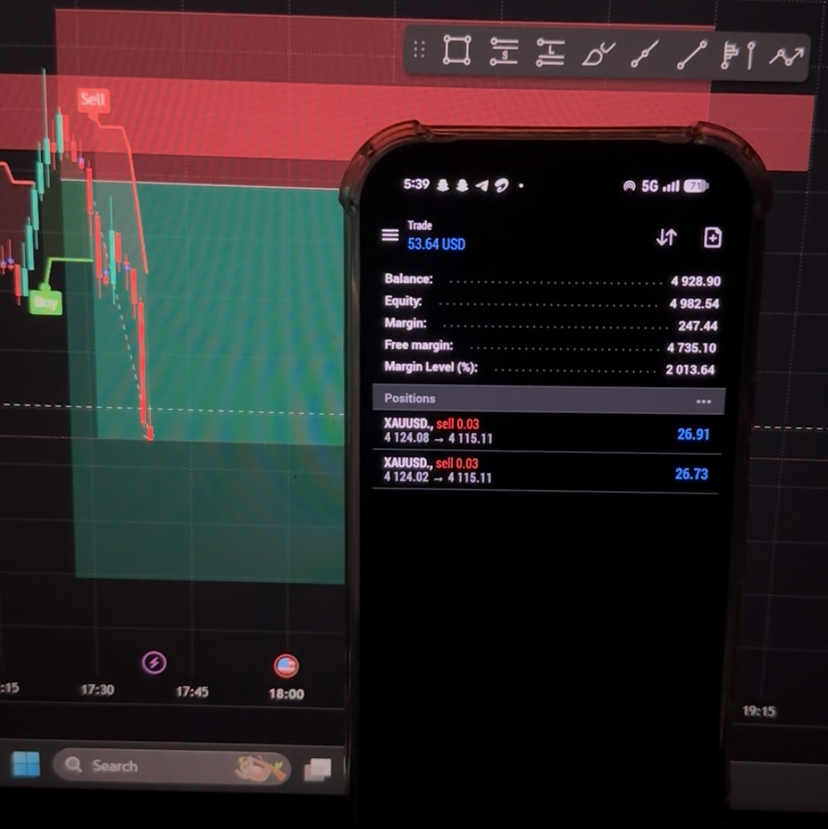
sell
1
2
463

·
--
Azalma
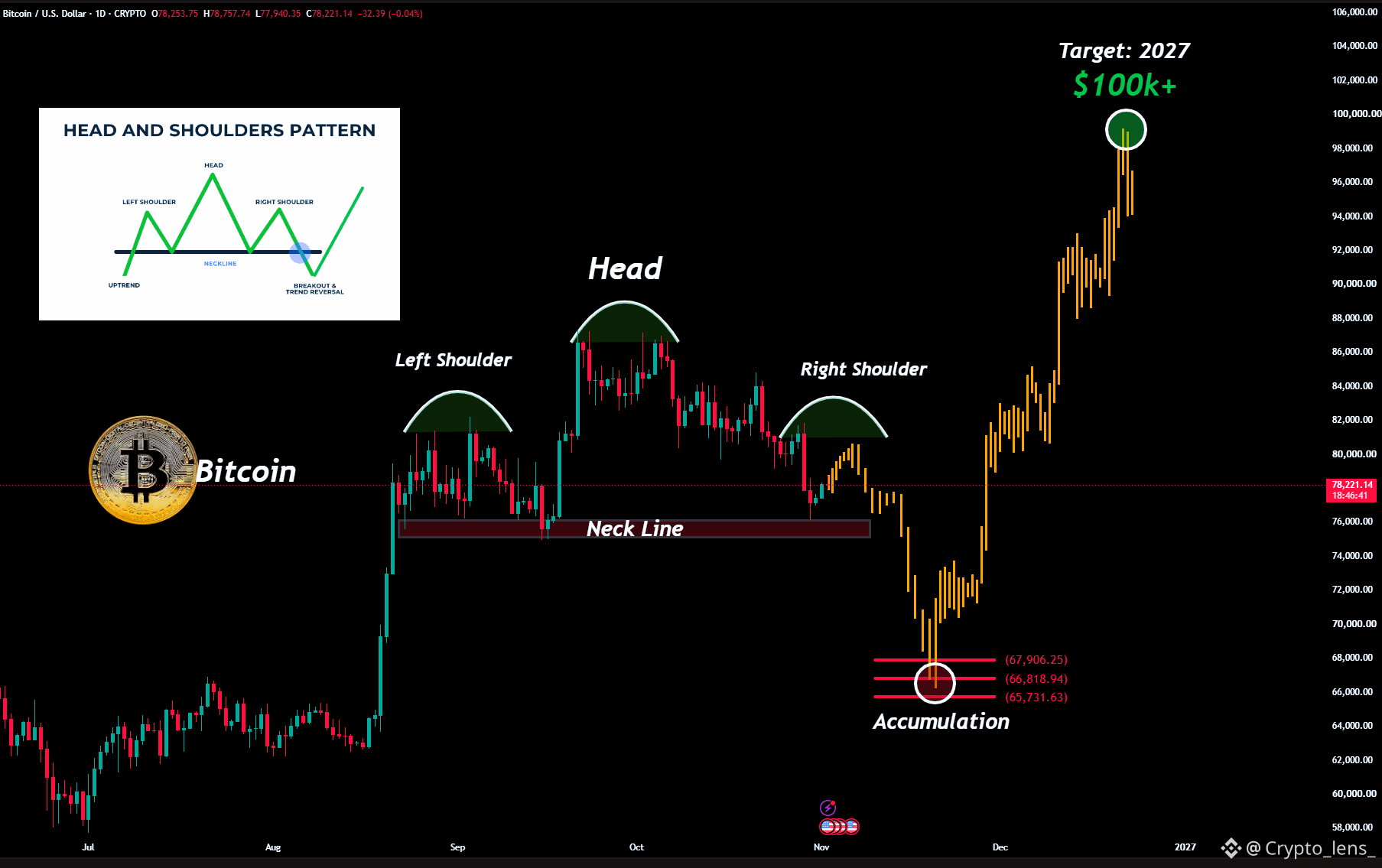
🚨BİTCOİNİN ƏN TƏHLÜKƏLİ PATTERNİ ARTıq TƏSDİQLƏNİB.
Tarix təkrarlanır. Hər şey proqnozlaşdırdığım kimi cərəyan edir.
Bu uğursuz bərpa rallisinə aldanmayın. Bir daha xəbərdarlıq edirəm.
Gələn həftə Bitcoin 80K dollar həddini aşa bilməyəcək və birbaşa 65K dollara düşəcək.
78K dollar → 80K dollar → 75K dollar → 65K dollar → Yeni öküz bazarı
Bu paylaşımı yadda saxlayın. Gələn həftə yenidən yoxlayın.
Məni izləyin və bildirişləri aktiv edin. Gecikməyin.
Növbəti yenilik nə olursa olsun, onu ilk olaraq burada paylaşacağam.
$BTC
Lashawn Cobler P03y:
When is the bullrun
58
8
226
247k

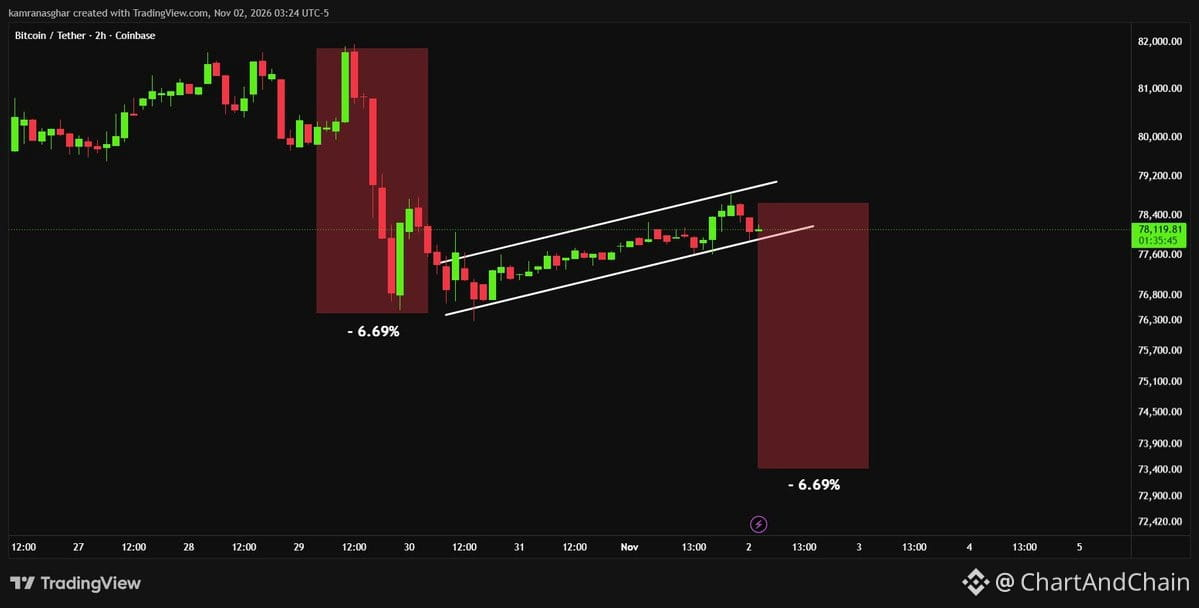
$BTC hazırda kanal dəstəyini yoxlayır.
$78K səviyyəsini itirsək, növbəti dayanacaq $70K olacaq. Amma $79K səviyyəsini geri alsaq, eniş ssenarisi qüvvədən düşəcək və yenidən oyuna qayıdacağıq.
İzləmək üçün aydın səviyyələr — dəstəyin qorunması və ya qırılması növbəti gedişatı müəyyən edəcək.
$BTC hazırda kanal dəstəyini yoxlayır.
$78K səviyyəsini itirsək, növbəti dayanacaq $70K olacaq. Amma $79K səviyyəsini geri alsaq, eniş ssenarisi qüvvədən düşəcək və yenidən oyuna qayıdacağıq.
İzləmək üçün aydın səviyyələr — dəstəyin qorunması və ya qırılması növbəti gedişatı müəyyən edəcək.
$78K səviyyəsini itirsək, növbəti dayanacaq $70K olacaq. Amma $79K səviyyəsini geri alsaq, eniş ssenarisi qüvvədən düşəcək və yenidən oyuna qayıdacağıq.
İzləmək üçün aydın səviyyələr — dəstəyin qorunması və ya qırılması növbəti gedişatı müəyyən edəcək.
360

Məqalə
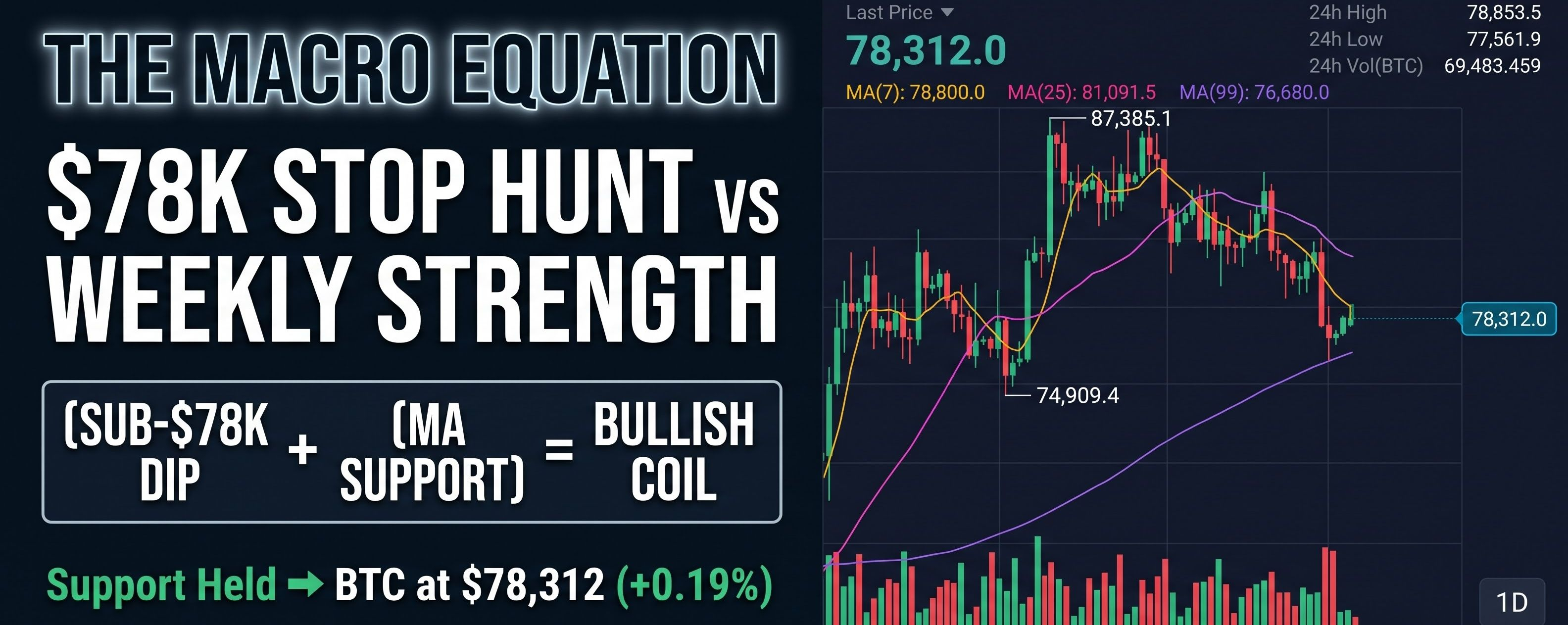
🚨 MAKRO TƏNLİK: Gündəlik eniş və həftəlik güc 🚨#bitcoindropsbelow$78k #bitcoinclosesabove50weekmafor7thstraightweek Gəlin bu zaman çərçivəsi divergensiyasını sırf riyaziyyatla hesablayaq 🧮👇
(78 min dollarlıq stop ovçuluğu) + (7 həftəlik hərəkətli orta dəstəyi) = yüksəliş yönümlü sıxılma 📈
Aktiv üzrə məlumat:
(Katalizator) = BTC 78.000 dollardan aşağı düşərək son 24 saatın minimumu olan 77.561,9 dollara çatdı. Ayılar sevindi, lakin alıcılar panikanı dərhal udaraq qiyməti yenidən 78.312,0 dollara qaldırdı.
Əsas nəticə:
(Siqnal) ➔ Gün ərzindəki səs-küyə məhəl qoymayın. Daha geniş perspektivdən baxanda, Bitcoin ardıcıl 7-ci həftə 50 həftəlik Hərəkətli Ortadan yuxarıda bağlanaraq mühüm struktur mərhələsinə çatdı.
🚨 MAKRO TƏNLİK: Gündəlik eniş və həftəlik güc 🚨
#bitcoindropsbelow$78k #bitcoinclosesabove50weekmafor7thstraightweek Gəlin bu zaman çərçivəsi divergensiyasını sırf riyaziyyatla hesablayaq 🧮👇
(78 min dollarlıq stop ovçuluğu) + (7 həftəlik hərəkətli orta dəstəyi) = yüksəliş yönümlü sıxılma 📈
Aktiv üzrə məlumat:
(Katalizator) = BTC 78.000 dollardan aşağı düşərək son 24 saatın minimumu olan 77.561,9 dollara çatdı. Ayılar sevindi, lakin alıcılar panikanı dərhal udaraq qiyməti yenidən 78.312,0 dollara qaldırdı.
Əsas nəticə:
(Siqnal) ➔ Gün ərzindəki səs-küyə məhəl qoymayın. Daha geniş perspektivdən baxanda, Bitcoin ardıcıl 7-ci həftə 50 həftəlik Hərəkətli Ortadan yuxarıda bağlanaraq mühüm struktur mərhələsinə çatdı.
2.2k

·
--
Azalma
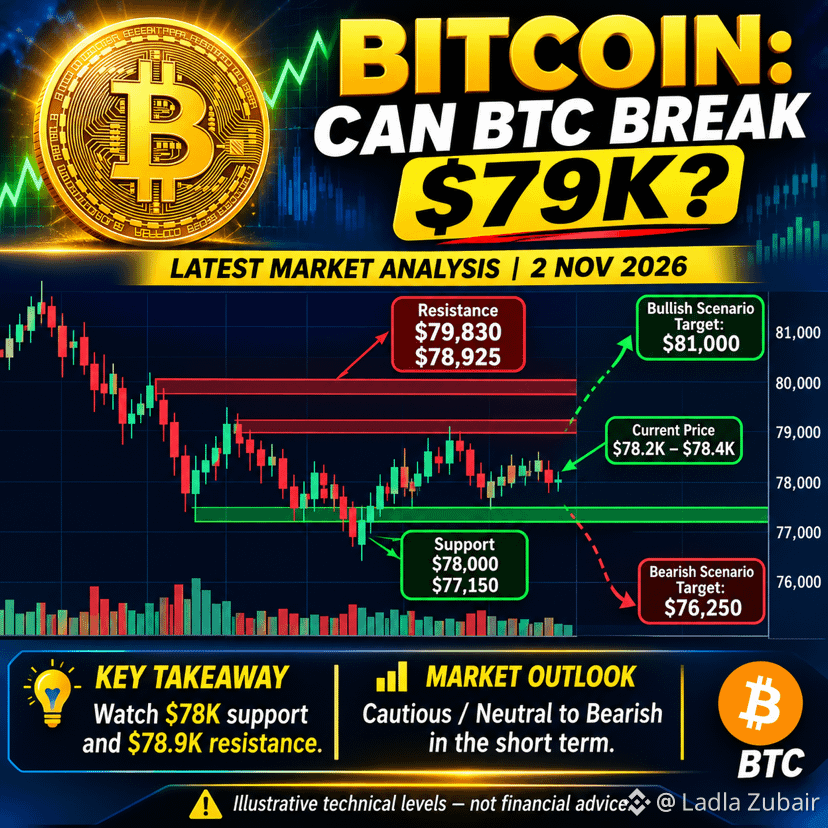
❓ $BTC Qiymət proqnozu: BTC 79 000 $-ı keçə, yoxsa 77 000 $-dan aşağı düşə bilər?
BTC BAZARININ ƏN SON TƏHLİLİ | 2 NOYABR 2026
Bitcoin (BTC) yenilənməsi: Bitcoin hazırda 78 200–78 400 $ civarında ticarət olunur və son satış təzyiqindən sonra cüzi bərpa nümayiş etdirir. Qısamüddətli trend dəyişkən olaraq qalır, alıcılar və satıcılar 78 000 $ səviyyəsi ətrafında mübarizə aparırlar. 
Əsas texniki səviyyələr:
Dəstək: 78 000 $ və 77 150 $
Müqavimət: 78 925 $ və 79 830 $
Artım hədəfi: müqavimət qırılarsa, 81 000 $.
Azalma hədəfi: əsas dəstək səviyyəsi qırılarsa, 76 250 $.
Bazar proqnozu: Neytraldan ehtiyatlıya doğru. 78 925 $-dan yuxarı davamlı hərəkət artım impulsunu gücləndirə bilər, 78 000 $-dan aşağı eniş isə satışların daha da artmasına səbəb ola bilər. 
{spot}(BTCUSDT)
#BinanceRestores28FiatWithdrawals #BinanceProcesses$4.65BWithdrawals #BitcoinDropsBelow$78K #EthereumSurpasses$2300 #BitcoinSpotETFsPost$203MWeeklyOutflow
❓ $BTC Qiymət proqnozu: BTC 79 000 $-ı keçə, yoxsa 77 000 $-dan aşağı düşə bilər?
BTC BAZARININ ƏN SON TƏHLİLİ | 2 NOYABR 2026
Bitcoin (BTC) yenilənməsi: Bitcoin hazırda 78 200–78 400 $ civarında ticarət olunur və son satış təzyiqindən sonra cüzi bərpa nümayiş etdirir. Qısamüddətli trend dəyişkən olaraq qalır, alıcılar və satıcılar 78 000 $ səviyyəsi ətrafında mübarizə aparırlar. 
Əsas texniki səviyyələr:
Dəstək: 78 000 $ və 77 150 $
Müqavimət: 78 925 $ və 79 830 $
Artım hədəfi: müqavimət qırılarsa, 81 000 $.
Azalma hədəfi: əsas dəstək səviyyəsi qırılarsa, 76 250 $.
Bazar proqnozu: Neytraldan ehtiyatlıya doğru. 78 925 $-dan yuxarı davamlı hərəkət artım impulsunu gücləndirə bilər, 78 000 $-dan aşağı eniş isə satışların daha da artmasına səbəb ola bilər. 
#BinanceRestores28FiatWithdrawals #BinanceProcesses$4.65BWithdrawals #BitcoinDropsBelow$78K #EthereumSurpasses$2300 #BitcoinSpotETFsPost$203MWeeklyOutflow
411

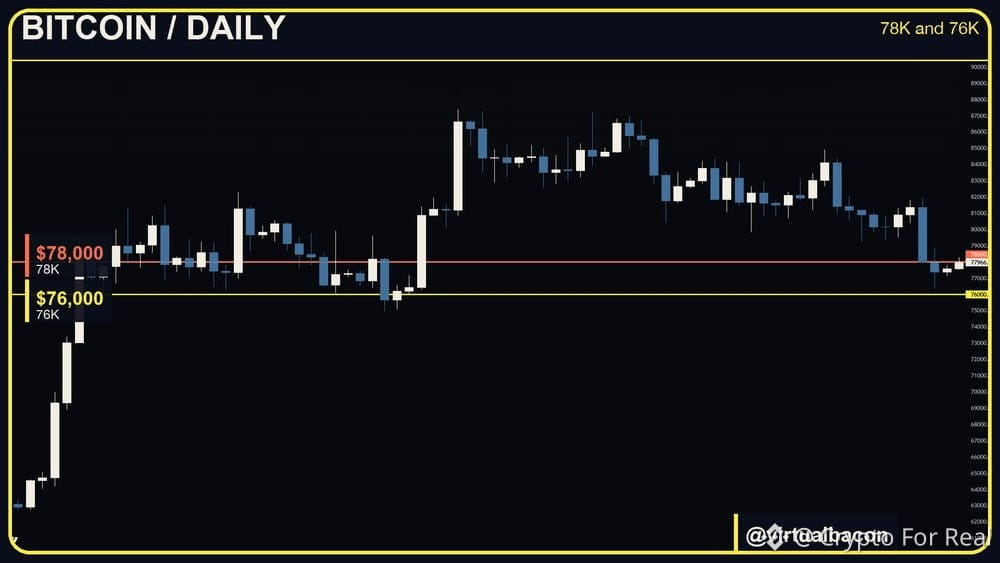
İnsanlar 76K-da, yoxsa 75K-da $BTC almaq barədə stress keçirirlər. Fərq cəmi 1,3%-dir.
Əgər öküz bazarının dəstək zolağının qorunacağına və hazırda yaxşı alış zonasında (76–78K aralığında) olduğumuza inanırsansa, bu barədə çox düşünməyi dayandır. Fərq əhəmiyyətsizdir.
Ya bu strukturun işlədiyinə inanırsan, ya da inanmırsan.
Əgər öküz bazarının dəstək zolağının qorunacağına və hazırda yaxşı alış zonasında (76–78K aralığında) olduğumuza inanırsansa, bu barədə çox düşünməyi dayandır. Fərq əhəmiyyətsizdir.
Ya bu strukturun işlədiyinə inanırsan, ya da inanmırsan.
443

Hazırda hamı $BTC-yə görə özünü itirib, amma açığı? Bu, əsl fəlakətdən çox tamaşaya bənzəyir.
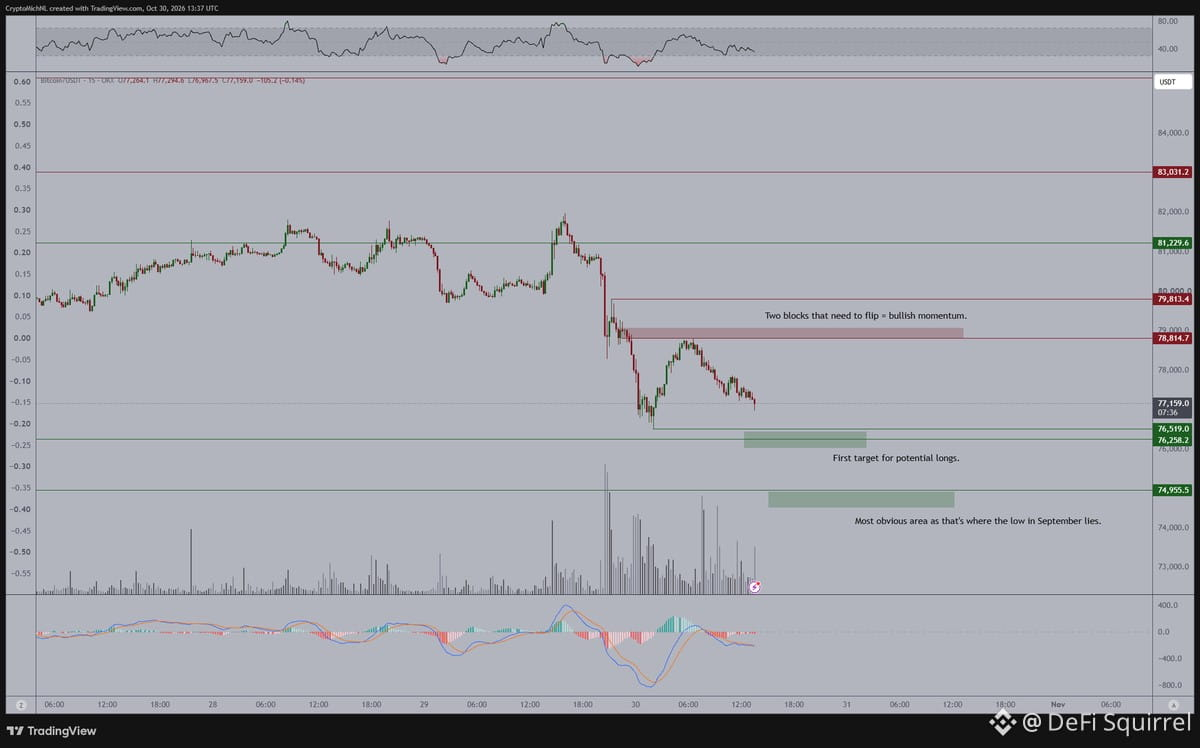
Bəli, $81k səviyyəsində bizi geri itələdilər, hamının gözlədiyi boşluğu doldurmaq üçün $76k-ya qədər düşdük, sonra isə $78k-də yenidən müqavimətlə qarşılaşdıq. Kriptoda klassik hərəkət. Amma məsələ budur — bütün bu xaosdan, xüsusən də ətrafda dolaşan haker hücumu söhbətlərindən sonra, short mövqedənsə, long mövqedə olmağa üstünlük verərdim. Bunu illərlə bu prosesləri izləməyin verdiyi təcrübə ilə qarışmış daxili hiss adlandırın.
İzlədiyim məqamlar:
Əvvəlcə, son minimumu götürüb-götürməyəcəyimizi və həqiqətən sıçrayış edib-etməyəcəyimizi görmək istəyirəm. Bazarın enişdən sonra dib axtarmağa başladığını adətən məhz onda anlayırsan.
Bu alınmasa? Onda yəqin ki, sentyabr ayındakı təxminən $75k minimumuna doğru gedəcəyik. Hamının zehnində işarələdiyi əsas səviyyə budur. Açığı, bu səviyyələr ətrafında mövqeyə mərhələli şəkildə girmək mənə ağılsızlıq kimi gəlmir — narahat olsa da, real fürsət adətən məhz burada olur.
Digər tərəfdən, kimsə impulsun geri qayıtmasından ciddi danışmazdan əvvəl $79k, ideal halda isə $80k səviyyəsini geri alıb dəstək kimi qoruyub saxlamağımız lazımdır.
Nəticə: hamı bazarların qorxulu olduğunu deyəndə, onlar həqiqətən də qorxulu görünür. Amma maraqlı imkanlar da məhz onda yaranır. Bu oyunu panika ilə fürsətin çox vaxt eyni sifətə büründüyünü anlayacaq qədər uzun müddətdir izləyən birinin şəxsi fikridir.
1
726

·
--
Azalma
01.11.2026 BTC 78K
Əvvəlki 82K uzun mövqe zərərlə bağlandı
İndi 74K-ya çatacağıq. Oradan isə 100 həftəlik MA-dan bir qədər yuxarıya, 93K-ya.
01.11.2026 BTC 78K
Əvvəlki 82K uzun mövqe zərərlə bağlandı
İndi 74K-ya çatacağıq. Oradan isə 100 həftəlik MA-dan bir qədər yuxarıya, 93K-ya.
Əvvəlki 82K uzun mövqe zərərlə bağlandı
İndi 74K-ya çatacağıq. Oradan isə 100 həftəlik MA-dan bir qədər yuxarıya, 93K-ya.
86


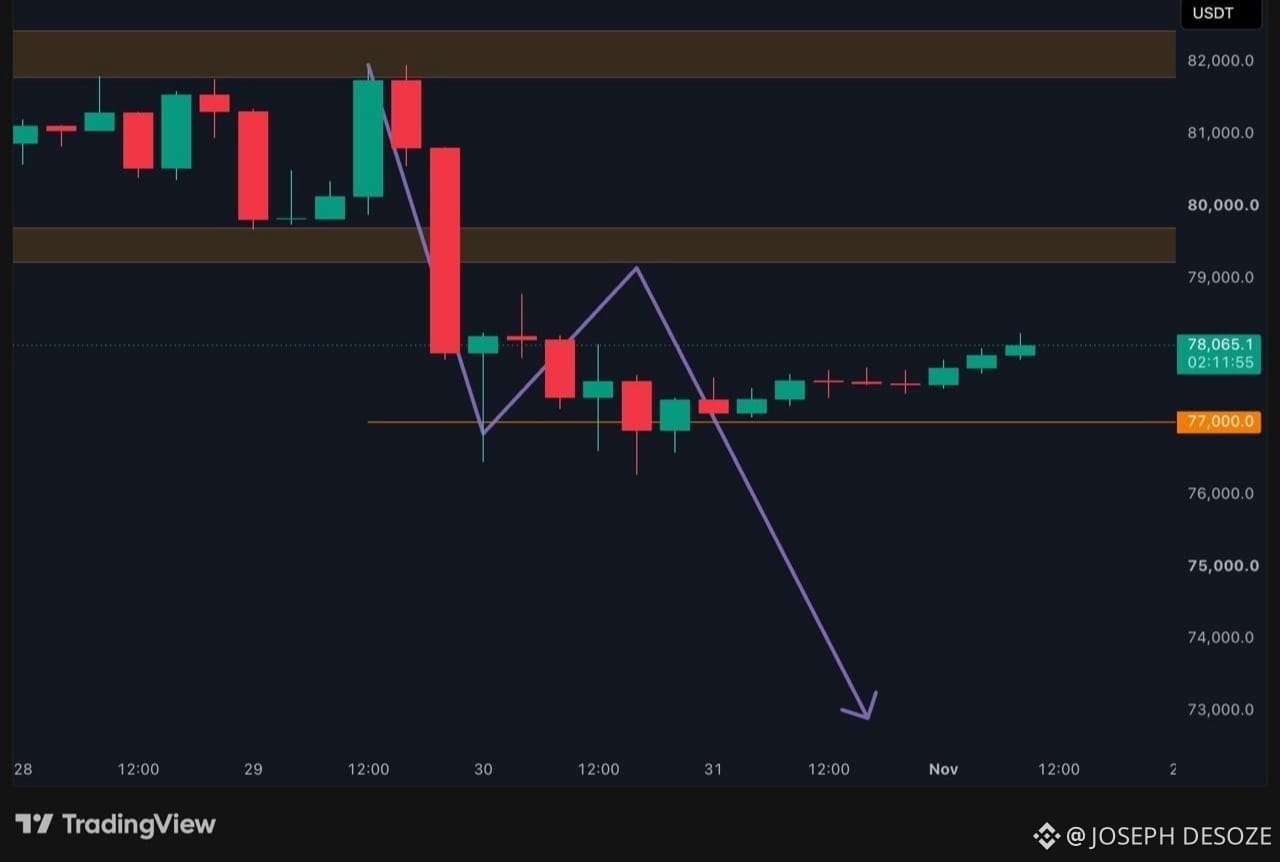
*💰 Bitcoin bizim $82K -> $77K hədəfimizə çatdı.*
*Daha sonra gözlənildiyi kimi, $76K-a düşməzdən əvvəl $78.5K - $79.5K zonasına yüksəldi.*
*$75K istiqamətində enməzdən əvvəl $78K - $79.5K zonasını yenidən test etdiyini görə bilərik.*
$BTC
{spot}(BTCUSDT)
#BTC
*💰 Bitcoin bizim $82K -> $77K hədəfimizə çatdı.*
*Daha sonra gözlənildiyi kimi, $76K-a düşməzdən əvvəl $78.5K - $79.5K zonasına yüksəldi.*
*$75K istiqamətində enməzdən əvvəl $78K - $79.5K zonasını yenidən test etdiyini görə bilərik.*
$BTC
#BTC
*Daha sonra gözlənildiyi kimi, $76K-a düşməzdən əvvəl $78.5K - $79.5K zonasına yüksəldi.*
*$75K istiqamətində enməzdən əvvəl $78K - $79.5K zonasını yenidən test etdiyini görə bilərik.*
$BTC
#BTC
1
369

·
--
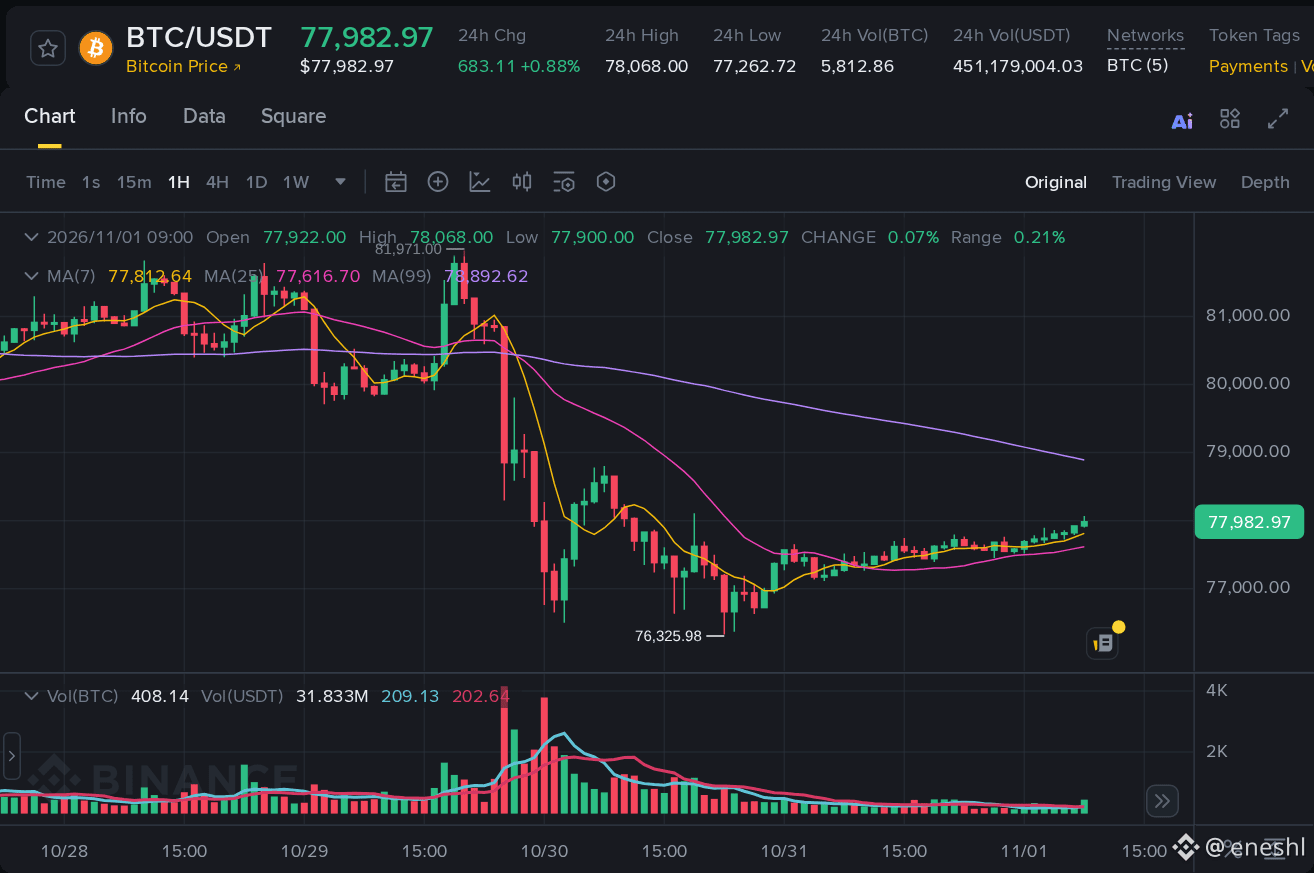
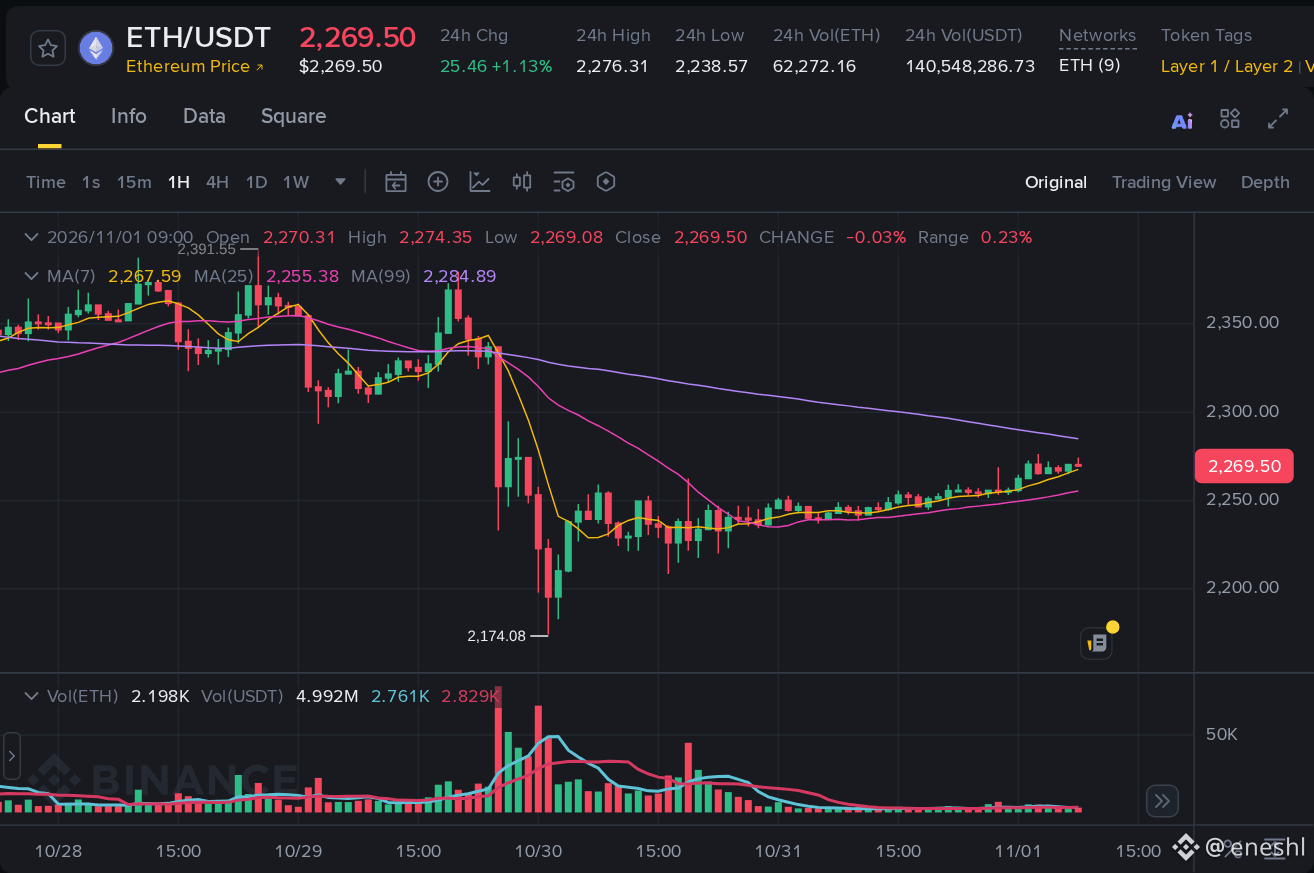
BTC hamının qırılacağını dediyi dəstəyi qorudu və indi sakitcə yenidən yüksəlir
Bu həftə qiymət hər dəfə aşağı düşəndə alıcılar ortaya çıxdı, bu gün isə sakit bazar günündə hər iki coin yaşıl zonadadır. Heç kimin diqqət yetirmədiyi vaxt alıcıların bazara girməsi adətən yaxşı əlamətdir.
Məncə, bu, ölü pişik sıçrayışı deyil, baza formalaşmasına oxşayır. $ETH yenidən yüksəlişə liderlik edir və hər hansı ciddi hərəkətdən əvvəl görmək istədiyim də budur. Bu zonada ETH-ni hələ də tədricən alıram. Daha ucuz qiymət gözləyirdinizsə, məncə, elə indi almaq olar.
$BTC üçün əsas səviyyə 78k-dır. Saatlıq qrafikdə bu səviyyənin üzərində aydın bağlanış olsa, əvvəlki qırılma səviyyəsi tezliklə yenidən gündəmə gələcək.
Sizcə, BTC bu həftə 78k səviyyəsini dəstəyə çevirəcək, yoxsa əvvəlcə bir dəfə də rədd ediləcək?
1
993

·
--
Məqalə
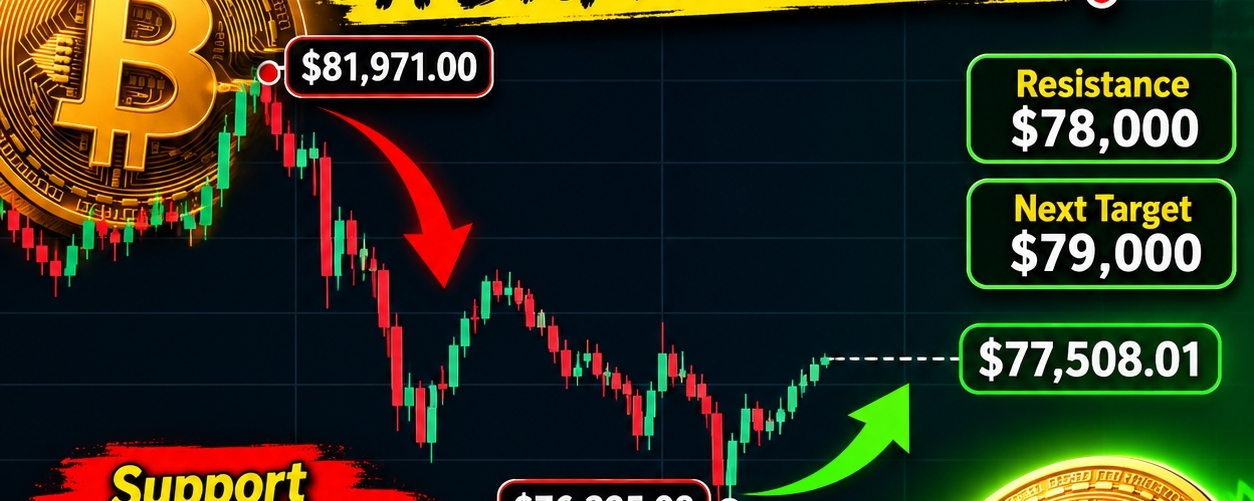
🚨 $BTC — BİTCOİN GÜCLÜ BƏRPA ÜÇÜN HAZIRDIRMI? 🚀Dostlar, Bitcoin hazırda maraqlı hərəkət edir! 👀
$BTC hazırda $81,971-dən $76,325 səviyyəsindəki son minimuma düşdükdən sonra $77,508 ətrafında ticarət olunur.
İndi alıcılar qiyməti daha da yüksəltməyə çalışırlar. 📈
🔥 Vacib səviyyələr:
🔹 Dəstək: $76,300
🔹 Müqavimət: $78,000
🔹 Növbəti hədəf: $79,000
BTC güclü alış təzyiqi ilə $78K səviyyəsini keçərsə, daha bir yüksəliş görə bilərik.
Amma satıcılar yenidən nəzarəti ələ alsalar, Bitcoin son vaxtlardakı dəstək səviyyəsinə qayıda bilər.
Mənim fikrimcə, $78K səviyyəsini diqqətlə izləyirəm. Növbəti hərəkət çox maraqlı ola bilər! 👀
🚨 $BTC — BİTCOİN GÜCLÜ BƏRPA ÜÇÜN HAZIRDIRMI? 🚀
Dostlar, Bitcoin hazırda maraqlı hərəkət edir! 👀
$BTC hazırda $81,971-dən $76,325 səviyyəsindəki son minimuma düşdükdən sonra $77,508 ətrafında ticarət olunur.
İndi alıcılar qiyməti daha da yüksəltməyə çalışırlar. 📈
🔥 Vacib səviyyələr:
🔹 Dəstək: $76,300
🔹 Müqavimət: $78,000
🔹 Növbəti hədəf: $79,000
BTC güclü alış təzyiqi ilə $78K səviyyəsini keçərsə, daha bir yüksəliş görə bilərik.
Amma satıcılar yenidən nəzarəti ələ alsalar, Bitcoin son vaxtlardakı dəstək səviyyəsinə qayıda bilər.
Mənim fikrimcə, $78K səviyyəsini diqqətlə izləyirəm. Növbəti hərəkət çox maraqlı ola bilər! 👀
151

·
--
*Bazar ertəsi bazar icmalı: BTC yenidən $78K-dan yuxarıda*
Sabahınız xeyir, kripto ailəsi!
Bazar bu gün, noyabrın 2-də cüzi bərpa nümayiş etdirir:
$BTC dünən gecə $77.6K-a düşdükdən sonra hazırda təxminən $78,268 (+0.8%) səviyyəsində ticarət olunur. İndi $78K-dan yuxarı mövqeyini möhkəm qoruyur.
$ETH 1.1% artaraq $2,299-a, $BNB isə $708-a yüksəlib. $SOL isə $93.1-ə qədər düşdükdən sonra təxminən $94.7 (-1.1%) səviyyəsində geridə qalır.
Yeni başlayanlara məsləhətim: Bazar belə qeyri-sabit olanda kredit çiynindən istifadə etməyin. Spot ticarət edib rahat olun — daha təhlükəsizdir. Mövqeyə girməzdən əvvəl $BTC-nin həcm artımı ilə $78,500-ü keçməsini gözləyin.
Bu gün nə alırsınız? Spot ticarət, yoxsa gözləyirsiniz?
$BTC $ETH $SOL $BNB #Write2Earn #BinanceSquare #CryptoUpdate
1
66

Məqalə
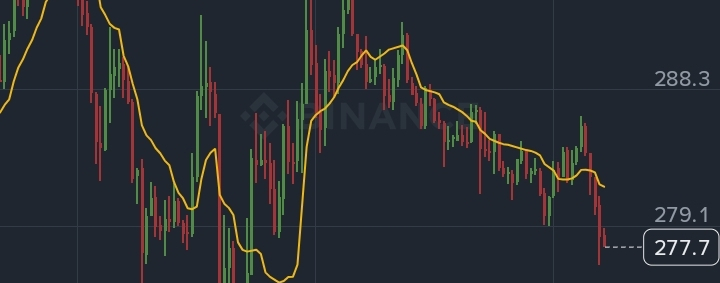
$BCHUSDT$BCH (Bitcoin Cash) qiymət proqnozu – 2 noyabr 2026
Binance ekran görüntünüzə, 1 saatlıq zaman intervalına və yoxlanmalı olan daha geniş bazar amillərinə əsasən.
Qısamüddətli eniş meyli
### 277.70 USDC
Qrafikiniz zəiflik göstərir.
### 1\. Ekran görüntünüzün texniki təhlili
* Cari qiymət: $277.70
* 24 saatlıq maksimum: $286.50
* 24 saatlıq minimum: $276.50
* VWAP (14): $281.80
* Qiymət VWAP-dan aşağıdır, bu da hazırda satıcıların bazara nəzarət etdiyini göstərir.
* Qrafikdə daha aşağı zirvələr və diblər görünür.
* Qiymət 24 saatlıq minimuma yaxınlaşır, buna görə də qiymətin kəskin enməsi mümkündür.
$BCHUSDT
$BCH (Bitcoin Cash) qiymət proqnozu – 2 noyabr 2026
Binance ekran görüntünüzə, 1 saatlıq zaman intervalına və yoxlanmalı olan daha geniş bazar amillərinə əsasən.
Qısamüddətli eniş meyli
### 277.70 USDC
Qrafikiniz zəiflik göstərir.
### 1\. Ekran görüntünüzün texniki təhlili
* Cari qiymət: $277.70
* 24 saatlıq maksimum: $286.50
* 24 saatlıq minimum: $276.50
* VWAP (14): $281.80
* Qiymət VWAP-dan aşağıdır, bu da hazırda satıcıların bazara nəzarət etdiyini göstərir.
* Qrafikdə daha aşağı zirvələr və diblər görünür.
* Qiymət 24 saatlıq minimuma yaxınlaşır, buna görə də qiymətin kəskin enməsi mümkündür.
365

$BTC bütün gün 77-78 min civarında yan hərəkət edir. Qiymət hərəkəti darıxdırıcıdır, amma yığırsınızsa, darıxdırıcı olması əslində yaxşıdır.
$BTC bütün gün 77-78 min civarında yan hərəkət edir. Qiymət hərəkəti darıxdırıcıdır, amma yığırsınızsa, darıxdırıcı olması əslində yaxşıdır.
60

Hack şokundan sonra $77K səviyyəsi qorundu
31 oktyabr: $76.3K minimumu qorundu, ETF-lərdən $643M xalis vəsait çıxışı təzyiq yaratdı
$BTC: dəstək $76.3K, müqavimət $78K
$ETH: dəstək $2,208, müqavimət $2,300
$78K-dan yuxarı bağlanış mənzərəni dəyişər
Bu günün 7 siqnalının hamısı hələ də açıqdır
Maliyyə məsləhəti deyil. Öz araşdırmanızı aparın.
Hack şokundan sonra $77K səviyyəsi qorundu
31 oktyabr: $76.3K minimumu qorundu, ETF-lərdən $643M xalis vəsait çıxışı təzyiq yaratdı
$BTC : dəstək $76.3K, müqavimət $78K
$ETH : dəstək $2,208, müqavimət $2,300
$78K-dan yuxarı bağlanış mənzərəni dəyişər
Bu günün 7 siqnalının hamısı hələ də açıqdır
Maliyyə məsləhəti deyil. Öz araşdırmanızı aparın.
3

Məqalə
Tərcüməyə bax
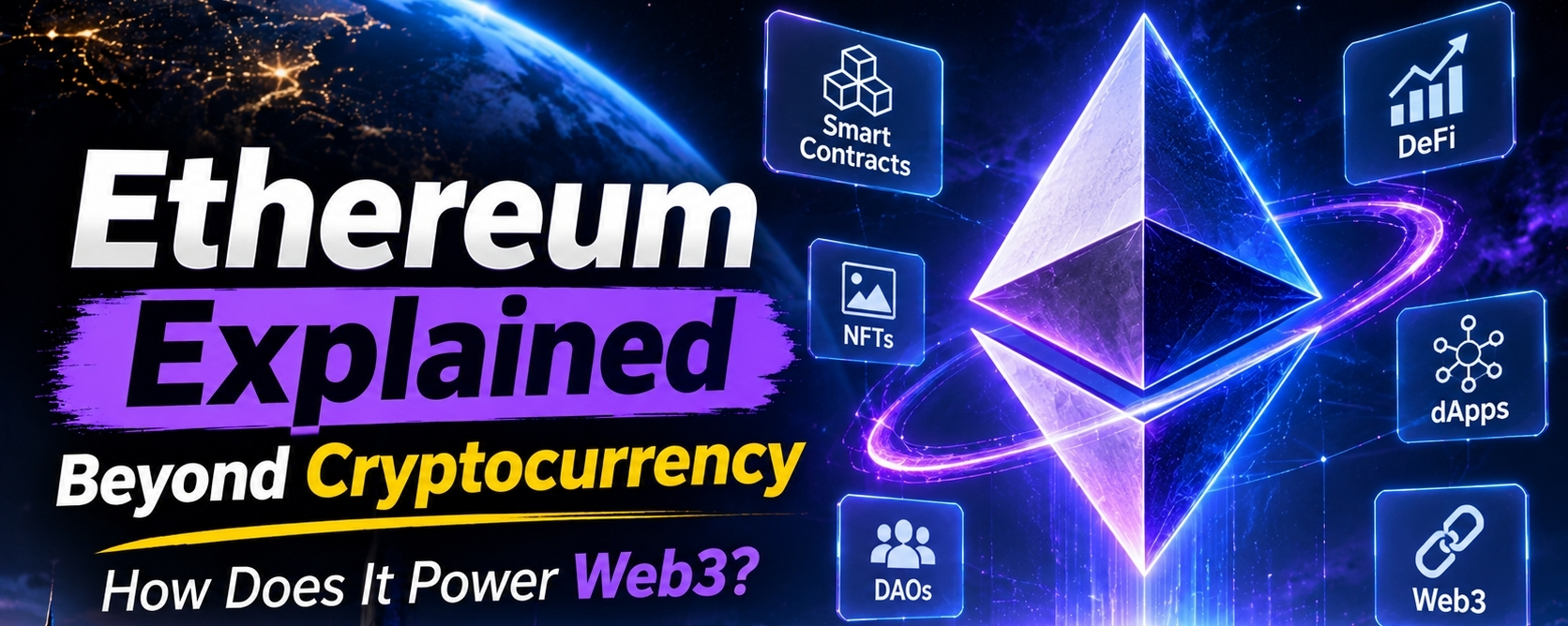
Ethereum Explained: Beyond Cryptocurrency — How Does It Power Web3?When people hear Ethereum, the first thing that usually comes to mind is ETH.
But Ethereum is much more than a cryptocurrency.
It is a programmable blockchain platform that allows developers to build decentralized applications, smart contracts, financial services, and digital ecosystems.
Let's understand what makes Ethereum so important to Web3.
1. What Is Ethereum?
Ethereum is a decentralized blockchain platform launched in 2015.
Unlike Bitcoin, which primarily focuses on peer-to-peer digital money, Ethereum was designed to support programmable applications.
Its native cryptocurrency is called Ether (ETH).
ETH is used for transaction fees, network participation, and other activities within the Ethereum ecosystem.
2. What Are Smart Contracts?
Smart contracts are programs that run on a blockchain.
They automatically execute predefined instructions when their conditions are met.
For example:
Imagine a decentralized application that allows users to exchange digital assets.
A smart contract can handle the exchange according to its programmed rules without requiring a traditional intermediary to process every step.
Smart contracts are one of the most important building blocks of Ethereum.
However, they must be designed carefully because programming errors can create security risks.
3. What Is the Ethereum Virtual Machine (EVM)?
The Ethereum Virtual Machine, commonly known as the EVM, is the execution environment for Ethereum smart contracts.
Think of it as the engine that processes smart contract operations.
When a user interacts with a decentralized application, the EVM processes the relevant instructions according to Ethereum's rules.
This makes it possible for developers to create applications that operate on a shared blockchain environment.
4. What Can You Build on Ethereum?
Ethereum supports a wide range of applications.
Decentralized Finance (DeFi)
Applications for lending, borrowing, exchanging assets, and other financial activities.
NFTs
Digital tokens that can represent ownership or other unique characteristics.
Decentralized Applications (dApps)
Applications that use smart contracts and blockchain infrastructure.
Decentralized Autonomous Organizations (DAOs)
Organizations that use blockchain-based rules and governance mechanisms.
Tokenization
Creating blockchain-based representations of assets and other forms of value.
These use cases have helped Ethereum develop a large ecosystem of developers and applications.
5. How Does Ethereum Reach Consensus?
Ethereum currently uses Proof of Stake.
Instead of relying on energy-intensive mining like Bitcoin, Ethereum uses validators who stake ETH to participate in network consensus.
Validators help propose and verify blocks according to the network's rules.
This mechanism is designed to secure the network while using substantially less energy than Proof of Work.
6. What Are Gas Fees?
Every operation on Ethereum requires computational resources.
Gas measures the computational work required to execute transactions and smart contracts.
Users pay transaction fees in ETH.
The amount depends on the computational resources required and network conditions.
More complex operations generally require more gas than simple transactions.
7. Why Is Ethereum Important to Web3?
Ethereum provides infrastructure for developers to build applications that operate without depending entirely on centralized platforms.
Its ecosystem has helped popularize:
- Smart contract development.
- Decentralized exchanges.
- DeFi protocols.
- NFT marketplaces.
- DAOs.
- Tokenized applications.
- Layer 2 scaling solutions.
Its influence extends beyond ETH itself.
8. Ethereum vs Bitcoin: Are They Competitors?
They share blockchain technology, but their primary goals are different.
Bitcoin focuses on decentralized digital money and a monetary system with a predetermined supply limit.
Ethereum focuses on programmable blockchain infrastructure and decentralized applications.
Comparing them only by their cryptocurrency prices misses the bigger technological differences.
They represent two different approaches to blockchain innovation.
Final Thoughts
Ethereum changed the way developers think about blockchain technology.
It demonstrated that blockchains could be used for much more than recording digital currency transactions.
From DeFi to NFTs and decentralized applications, Ethereum has become an important part of the Web3 ecosystem.
Understanding Ethereum means understanding a major part of how programmable blockchain technology works.
Let's discuss:
What do you find most interesting about Ethereum?
1. Smart contracts
2. DeFi ecosystem
3. NFTs
4. Layer 2 technology
5. Decentralized applications
Share your choice in the comments! 👇
#Ethereum #ETH #Web3 #Blockchain #CryptoEducation
Ethereum Explained: Beyond Cryptocurrency — How Does It Power Web3?
When people hear Ethereum, the first thing that usually comes to mind is ETH.
But Ethereum is much more than a cryptocurrency.
It is a programmable blockchain platform that allows developers to build decentralized applications, smart contracts, financial services, and digital ecosystems.
Let's understand what makes Ethereum so important to Web3.
1. What Is Ethereum?
Ethereum is a decentralized blockchain platform launched in 2015.
Unlike Bitcoin, which primarily focuses on peer-to-peer digital money, Ethereum was designed to support programmable applications.
Its native cryptocurrency is called Ether (ETH).
ETH is used for transaction fees, network participation, and other activities within the Ethereum ecosystem.
2. What Are Smart Contracts?
Smart contracts are programs that run on a blockchain.
They automatically execute predefined instructions when their conditions are met.
For example:
Imagine a decentralized application that allows users to exchange digital assets.
A smart contract can handle the exchange according to its programmed rules without requiring a traditional intermediary to process every step.
Smart contracts are one of the most important building blocks of Ethereum.
However, they must be designed carefully because programming errors can create security risks.
3. What Is the Ethereum Virtual Machine (EVM)?
The Ethereum Virtual Machine, commonly known as the EVM, is the execution environment for Ethereum smart contracts.
Think of it as the engine that processes smart contract operations.
When a user interacts with a decentralized application, the EVM processes the relevant instructions according to Ethereum's rules.
This makes it possible for developers to create applications that operate on a shared blockchain environment.
4. What Can You Build on Ethereum?
Ethereum supports a wide range of applications.
Decentralized Finance (DeFi)
Applications for lending, borrowing, exchanging assets, and other financial activities.
NFTs
Digital tokens that can represent ownership or other unique characteristics.
Decentralized Applications (dApps)
Applications that use smart contracts and blockchain infrastructure.
Decentralized Autonomous Organizations (DAOs)
Organizations that use blockchain-based rules and governance mechanisms.
Tokenization
Creating blockchain-based representations of assets and other forms of value.
These use cases have helped Ethereum develop a large ecosystem of developers and applications.
5. How Does Ethereum Reach Consensus?
Ethereum currently uses Proof of Stake.
Instead of relying on energy-intensive mining like Bitcoin, Ethereum uses validators who stake ETH to participate in network consensus.
Validators help propose and verify blocks according to the network's rules.
This mechanism is designed to secure the network while using substantially less energy than Proof of Work.
6. What Are Gas Fees?
Every operation on Ethereum requires computational resources.
Gas measures the computational work required to execute transactions and smart contracts.
Users pay transaction fees in ETH.
The amount depends on the computational resources required and network conditions.
More complex operations generally require more gas than simple transactions.
7. Why Is Ethereum Important to Web3?
Ethereum provides infrastructure for developers to build applications that operate without depending entirely on centralized platforms.
Its ecosystem has helped popularize:
- Smart contract development.
- Decentralized exchanges.
- DeFi protocols.
- NFT marketplaces.
- DAOs.
- Tokenized applications.
- Layer 2 scaling solutions.
Its influence extends beyond ETH itself.
8. Ethereum vs Bitcoin: Are They Competitors?
They share blockchain technology, but their primary goals are different.
Bitcoin focuses on decentralized digital money and a monetary system with a predetermined supply limit.
Ethereum focuses on programmable blockchain infrastructure and decentralized applications.
Comparing them only by their cryptocurrency prices misses the bigger technological differences.
They represent two different approaches to blockchain innovation.
Final Thoughts
Ethereum changed the way developers think about blockchain technology.
It demonstrated that blockchains could be used for much more than recording digital currency transactions.
From DeFi to NFTs and decentralized applications, Ethereum has become an important part of the Web3 ecosystem.
Understanding Ethereum means understanding a major part of how programmable blockchain technology works.
Let's discuss:
What do you find most interesting about Ethereum?
1. Smart contracts
2. DeFi ecosystem
3. NFTs
4. Layer 2 technology
5. Decentralized applications
Share your choice in the comments! 👇
#Ethereum #ETH #Web3 #Blockchain #CryptoEducation
28

·
--
🚨 SON DƏQİQƏ: BINANCE HÜCUMUNDAN SONRA CZ FBI-A VƏ ABŞ SƏLAHİYYƏTLİLƏRİNƏ TƏŞƏKKÜR EDİR!
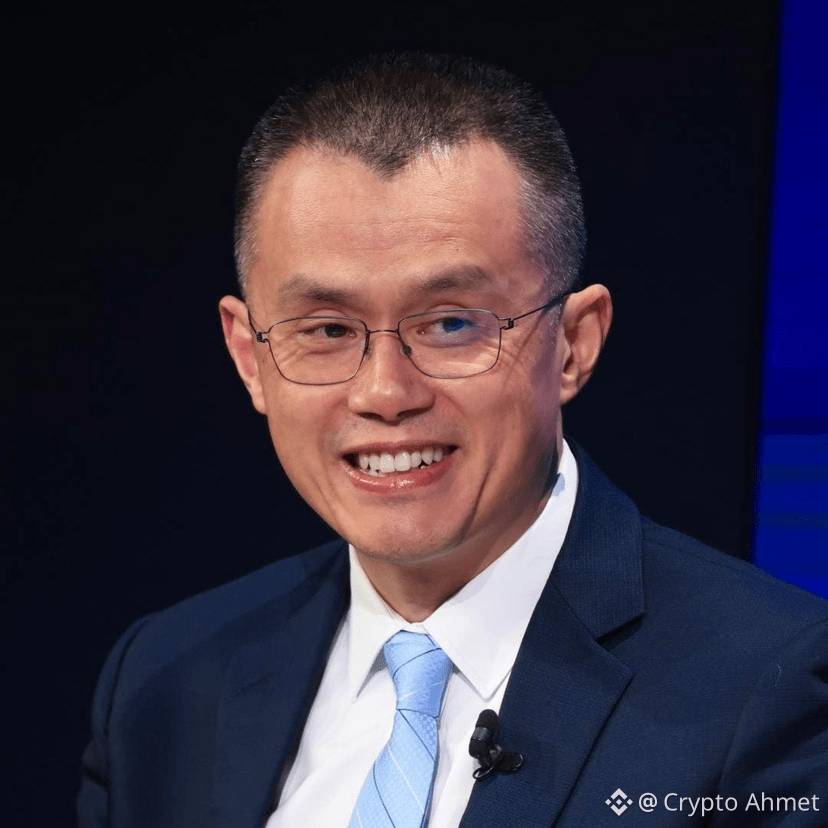
#Binance həmtəsisçi #CZ kütləvi hücumdan sonra oğurlanmış vəsaitlərin izlənməsi və dondurulması istiqamətində göstərdikləri səylərə görə FBI-a, ABŞ Məxfi Xidmətinə və IRS-ə təşəkkür edib.
CZ onların sürətli və əlaqələndirilmiş reaksiyasının Bitcoin-ə təzyiqin azalmasına kömək etdiyini bildirib.
BINANCE HÜCUMUNUN NƏTİCƏLƏRİNİN ARADAN QALDIRILMASINDA ABŞ SƏLAHİYYƏTLİLƏRİ ƏSAS ROL OYNAYIR! 🚨
$BNB $XRP $DOGE
#BitcoinDropsBelow$78K #BinanceProcesses$4.65BWithdrawals #BinanceRestores28FiatWithdrawals

Sheikh Rizon:
Bro i follow you,, you are a good parson of binance square ❤️❤️
21
2
133
55.7k

·
--
Artım
İndeks$TRUMP ABŞ dolları aralıq seçkilər ərəfəsində geriləyir.. çöküş ssenarisi
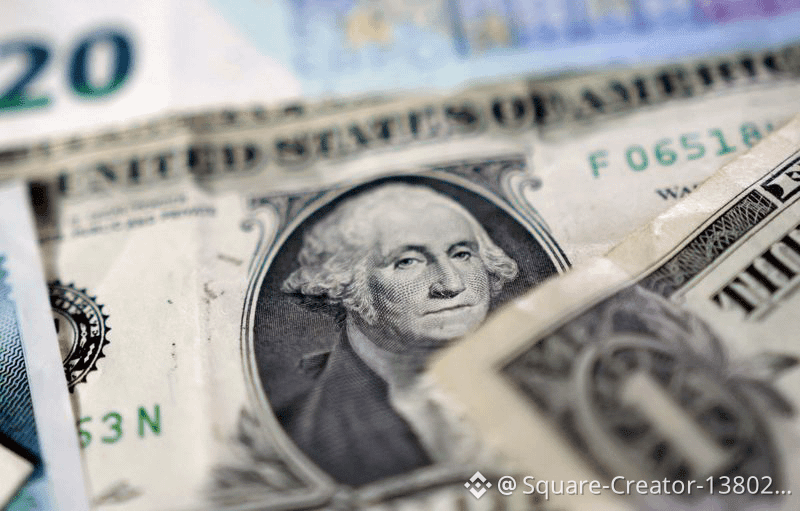
Dollar indeksi bu gün (dekabr fyuçersləri DXZ6) 0.19% azalaraq 101.550-yə düşüb və 101.545–101.850 aralığında dar diapazonda hərəkət edir. Reuters-in məlumatına görə, çərşənbə axşamı keçiriləcək ABŞ aralıq seçkiləri ərəfəsində dollar və əsas valyutalar gözləmə mövqeyindədir. Fitch Fransanın reytinq proqnozunu «mənfi»yə endirdikdən sonra avro 17 ayın minimum səviyyəsinə (1.1159–1.1182) yaxın qalır. İndeks 52 həftəlik maksimumdan (102.735) təxminən 1.2% aşağıdır, bankların ilin sonuna dair avro/dollar proqnozları isə 1.10–1.20 aralığındadır.
Bu gün dollarla nə baş verir?
Dollar indeksi fyuçersləri (DXZ6): 101.550 (-0.195, -0.19%), 101.545–101.850 aralığında; əvvəlki hesablanmış bağlanış qiyməti 101.745 olub.
Spot indeks (DXY): Reuters-in məlumatına görə, səhər təxminən 101.83–101.94 (spot qiymət fyuçerslərdən təxminən 0.3 yüksəkdir, buna görə onları müqayisə etməyin).
Avro/dollar: 1.1159–1.1182, 17 ayın minimum səviyyəsinə yaxın.
Funt sterlinq: təxminən 1.3387–1.3394 dollar.
Dollar/yen: 157.73–157.78. Yaponiya Bankı rüblük hesabatında Yaponiyada real faiz dərəcələrinin, xüsusilə uzunmüddətli dövrlərdə, son vaxtlar artdığını açıqlayıb.
Avstraliya dolları: Avstraliya Bankının qərarından əvvəl 0.7022–0.7033 (faiz dərəcəsinin 4.85%-ə qaldırılacağı gözlənilir).
Dollar niyə dəyişkənlik göstərir?
{future}(TRUMPUSDT)
$XAU
{future}(XAUUSDT)
#BinanceRestores28FiatWithdrawals #BinanceProcesses$4.65BWithdrawals #BitcoinDropsBelow$78K #BitcoinSpotETFsPost$203MWeeklyOutflow
İndeks$TRUMP ABŞ dolları aralıq seçkilər ərəfəsində geriləyir.. çöküş ssenarisi
Dollar indeksi bu gün (dekabr fyuçersləri DXZ6) 0.19% azalaraq 101.550-yə düşüb və 101.545–101.850 aralığında dar diapazonda hərəkət edir. Reuters-in məlumatına görə, çərşənbə axşamı keçiriləcək ABŞ aralıq seçkiləri ərəfəsində dollar və əsas valyutalar gözləmə mövqeyindədir. Fitch Fransanın reytinq proqnozunu «mənfi»yə endirdikdən sonra avro 17 ayın minimum səviyyəsinə (1.1159–1.1182) yaxın qalır. İndeks 52 həftəlik maksimumdan (102.735) təxminən 1.2% aşağıdır, bankların ilin sonuna dair avro/dollar proqnozları isə 1.10–1.20 aralığındadır.
Bu gün dollarla nə baş verir?
Dollar indeksi fyuçersləri (DXZ6): 101.550 (-0.195, -0.19%), 101.545–101.850 aralığında; əvvəlki hesablanmış bağlanış qiyməti 101.745 olub.
Spot indeks (DXY): Reuters-in məlumatına görə, səhər təxminən 101.83–101.94 (spot qiymət fyuçerslərdən təxminən 0.3 yüksəkdir, buna görə onları müqayisə etməyin).
Avro/dollar: 1.1159–1.1182, 17 ayın minimum səviyyəsinə yaxın.
Funt sterlinq: təxminən 1.3387–1.3394 dollar.
Dollar/yen: 157.73–157.78. Yaponiya Bankı rüblük hesabatında Yaponiyada real faiz dərəcələrinin, xüsusilə uzunmüddətli dövrlərdə, son vaxtlar artdığını açıqlayıb.
Avstraliya dolları: Avstraliya Bankının qərarından əvvəl 0.7022–0.7033 (faiz dərəcəsinin 4.85%-ə qaldırılacağı gözlənilir).
Dollar niyə dəyişkənlik göstərir?
$XAU
#BinanceRestores28FiatWithdrawals #BinanceProcesses$4.65BWithdrawals #BitcoinDropsBelow$78K #BitcoinSpotETFsPost$203MWeeklyOutflow
1
343
Daha çox kontent araşdırmaq üçün daxil olun
Binance Square-də qlobal kriptovalyuta istifadəçilərinə qoşulun
⚡️ Kriptovalyuta haqqında ən son və faydalı məlumatları əldə edin.
💬 Dünyanın ən böyük kriptovalyuta birjası tərəfindən etibar edilir.
👍 Doğrulanmış yaradıcılardan gələn real məlumatları kəşf edin.
E-poçt/Telefon nömrəsi
Trenddə olan mövzular
1
#BTCRebounds80K
2,158 baxış
Müzakirə edir: 210
2
#Binance98PercentReplenished
4,404 baxış
Müzakirə edir: 297
3
#USMidterms-WhatAreMarketsExpecting?
225,613 baxış
Müzakirə edir: 1,741
4
#USOctoberNFP-AreRateCutsStillPossible
329,351 baxış
Müzakirə edir: 2,616
5
#AMDBeatsExpectations-AINarrativeContinues
61,926 baxış
Müzakirə edir: 667
6
#CircleQ3Revenue865M
13,072 baxış
Müzakirə edir: 352
7
#BinanceIncidentReport
406,616 baxış
Müzakirə edir: 1,945
8
#USStocksOpenHigherAsDowGains1.9%
1,060 baxış
Müzakirə edir: 44
9
#ADPUSPrivateEmployersAdd86000JobsInOctober
482 baxış
Müzakirə edir: 24
10
#FrenchAssemblyPassesSelfCustodiedCryptoReportingAmendment
335 baxış
Müzakirə edir: 12