
#keybank
keybank
444 baxış
Müzakirə edir: 14
Populyar
Sonuncu

·
--
Məqalə
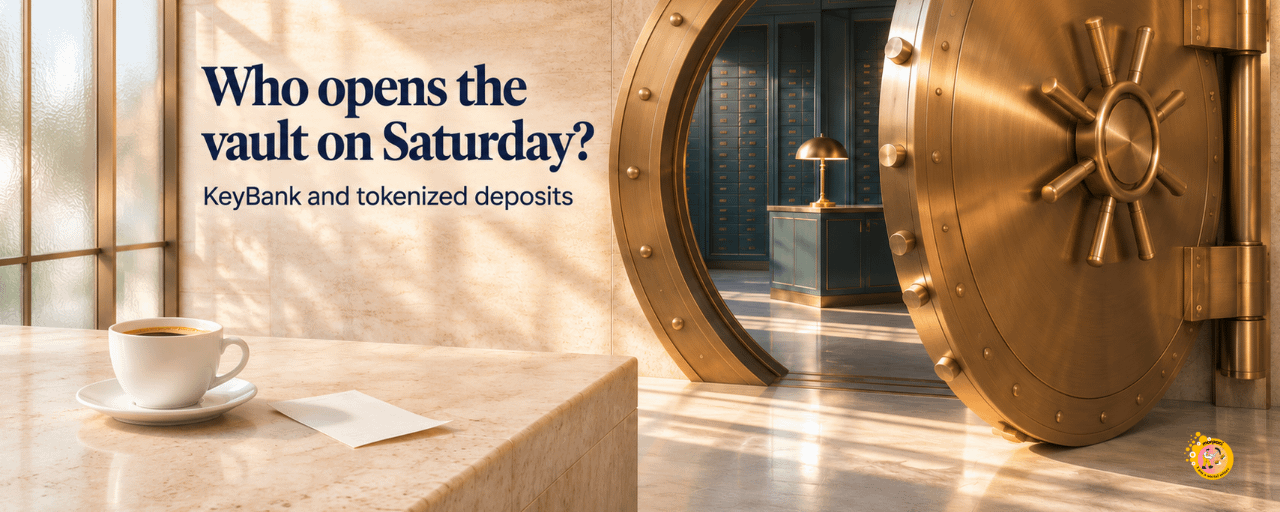
Şənbə günü seyfi kim açır?KeyBank və tokenləşdirilmiş depozitlər
Şənbə səhəridir. Təchizatçının masasının üstündə qəhvə var, bir gözü də hesabındadır. Bankın yeni depozit şəbəkəsi vasitəsilə ödəniş göndərilib. Ethereum bir qrup əməliyyatı təsdiqləyib. Sonra şəbəkə operatoru oflayn olur.
Təchizatçı ödənişinin həmin qrupa daxil olduğunu necə sübut edə bilər? Pulu adi bank hesabına köçürməyə ona kim kömək edə bilər?
Qəhvəni yenidən qızdırmaq kifayət qədər asandır. Bəs digər iki işin açarları kimdədir?
Mənim üçün maraqlı tərəfi də məhz #Web3Banking budur. Klivlenddə yerləşən #KeyBank öz tarixini 1825-ci ildən götürür. Onun ana şirkəti KeyCorp 2026-cı il sentyabrın 30-na təxminən 193 milyard dollar aktivə malik olduğunu bildirmişdi. Bitcoin ilk ağıla gələn şey ola bilər. KeyBank-ın iştirak etdiyi üç layihə müştərilərinin artıq bankda saxladıqları pulla bağlıdır.
Şənbə günü seyfi kim açır?
KeyBank və tokenləşdirilmiş depozitlər
Şənbə səhəridir. Təchizatçının masasının üstündə qəhvə var, bir gözü də hesabındadır. Bankın yeni depozit şəbəkəsi vasitəsilə ödəniş göndərilib. Ethereum bir qrup əməliyyatı təsdiqləyib. Sonra şəbəkə operatoru oflayn olur.
Təchizatçı ödənişinin həmin qrupa daxil olduğunu necə sübut edə bilər? Pulu adi bank hesabına köçürməyə ona kim kömək edə bilər?
Qəhvəni yenidən qızdırmaq kifayət qədər asandır. Bəs digər iki işin açarları kimdədir?
Mənim üçün maraqlı tərəfi də məhz #Web3Banking budur. Klivlenddə yerləşən #KeyBank öz tarixini 1825-ci ildən götürür. Onun ana şirkəti KeyCorp 2026-cı il sentyabrın 30-na təxminən 193 milyard dollar aktivə malik olduğunu bildirmişdi. Bitcoin ilk ağıla gələn şey ola bilər. KeyBank-ın iştirak etdiyi üç layihə müştərilərinin artıq bankda saxladıqları pulla bağlıdır.
2
125

·
--
Məqalə
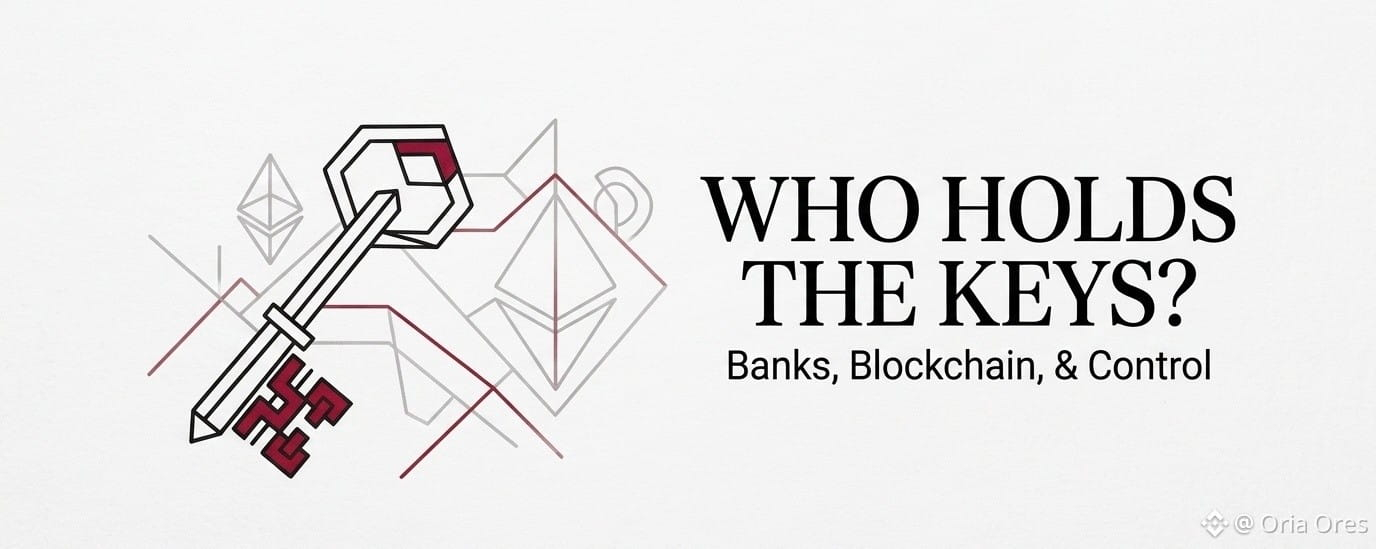
Bank blokçeynə keçəndə açarlar kimin əlində olur?Kriptovalyuta sahəsində kimdənsə nəzarət barədə soruşsanız, bir cavab alacaqsınız: özünə məxsus saxlama. Ənənəvi banklar isə bunun əksinə işləyir. Onların işi başqalarının pulunu saxlamaq və tənzimləyicilərə hesabat verməkdir. İki əsrlik tarixə malik bank blokçeyn şəbəkələrini sınaqdan keçirməyə başlayanda sual şəxsi açarı kimin saxlaması deyil. Söhbət nəzarətin bank, texnologiya təchizatçısı və dövlət nəzarətçiləri arasında necə bölüşdürülməsindən gedir. #Web3Banking
KeyBank-a (KeyCorp) nəzər salaq. Klivlenddə yerləşən və kökləri 1825 və 1849-cu illərə gedib çıxan bank 30 iyun 2026-cı il tarixinə təxminən 191 milyard dollar aktivə malik olduğunu bildirdi (Təsdiqlənib, KeyCorp, 2026). Bir çoxları KeyBank-ın artıq Bitcoin satıb-satmadığını soruşur, amma bu, əslində baş verənləri nəzərdən qaçırır. Pərakəndə kriptovalyuta ticarəti sadəcə vitrin xidmətidir. #KeyBank bankın balans hesabatının arxasındakı mexanizmləri araşdırır. 2025-ci ilin iyulunda dərc olunan hesabatda üçüncü tərəflər vasitəsilə Bitcoin ticarəti və saxlama xidmətləri planlarından bəhs edilirdi, lakin bu xidmətin işə salındığına dair heç bir sübut tapa bilmədik (2026-cı ilin noyabrına qədər tapılmayıb; tapılmaması mövcud olmadığı demək deyil). Əsl dəyişiklik daha səssiz baş verir: tokenləşdirilmiş depozitlər.
Bank blokçeynə keçəndə açarlar kimin əlində olur?
Kriptovalyuta sahəsində kimdənsə nəzarət barədə soruşsanız, bir cavab alacaqsınız: özünə məxsus saxlama. Ənənəvi banklar isə bunun əksinə işləyir. Onların işi başqalarının pulunu saxlamaq və tənzimləyicilərə hesabat verməkdir. İki əsrlik tarixə malik bank blokçeyn şəbəkələrini sınaqdan keçirməyə başlayanda sual şəxsi açarı kimin saxlaması deyil. Söhbət nəzarətin bank, texnologiya təchizatçısı və dövlət nəzarətçiləri arasında necə bölüşdürülməsindən gedir. #Web3Banking
KeyBank-a (KeyCorp) nəzər salaq. Klivlenddə yerləşən və kökləri 1825 və 1849-cu illərə gedib çıxan bank 30 iyun 2026-cı il tarixinə təxminən 191 milyard dollar aktivə malik olduğunu bildirdi (Təsdiqlənib, KeyCorp, 2026). Bir çoxları KeyBank-ın artıq Bitcoin satıb-satmadığını soruşur, amma bu, əslində baş verənləri nəzərdən qaçırır. Pərakəndə kriptovalyuta ticarəti sadəcə vitrin xidmətidir. #KeyBank bankın balans hesabatının arxasındakı mexanizmləri araşdırır. 2025-ci ilin iyulunda dərc olunan hesabatda üçüncü tərəflər vasitəsilə Bitcoin ticarəti və saxlama xidmətləri planlarından bəhs edilirdi, lakin bu xidmətin işə salındığına dair heç bir sübut tapa bilmədik (2026-cı ilin noyabrına qədər tapılmayıb; tapılmaması mövcud olmadığı demək deyil). Əsl dəyişiklik daha səssiz baş verir: tokenləşdirilmiş depozitlər.
42

·
--
Məqalə
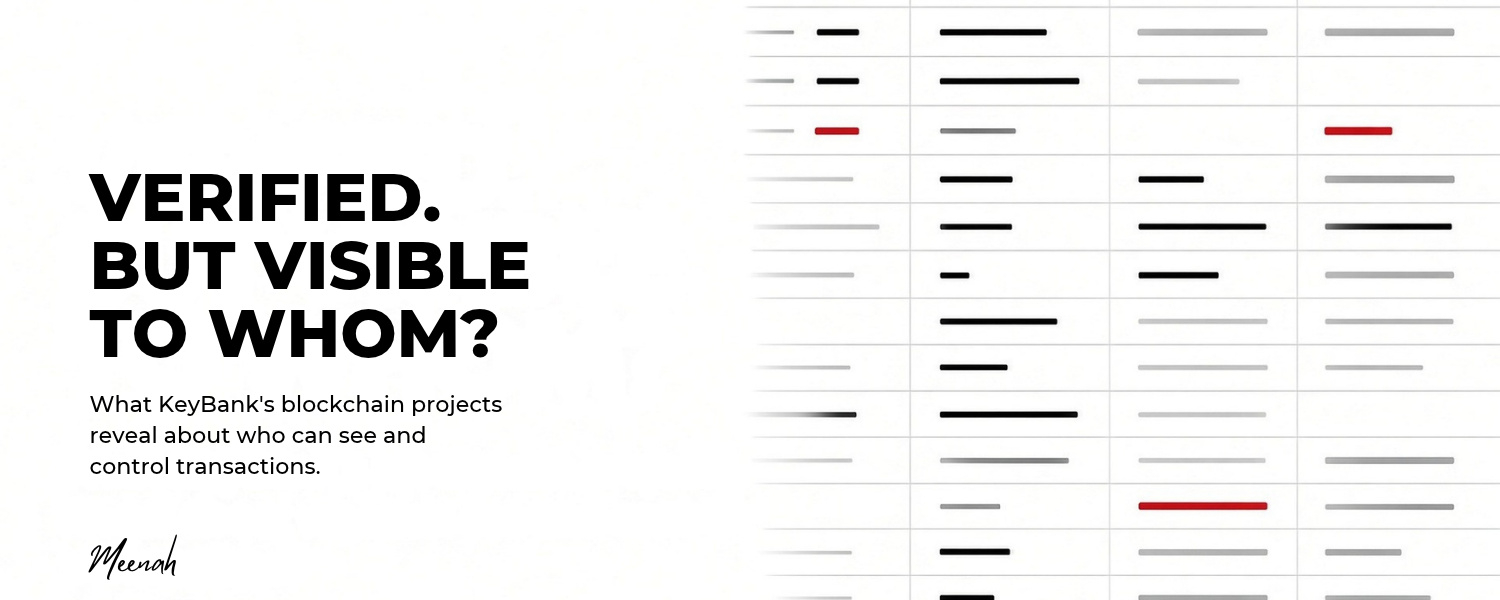
Bank bunu sübut edə bilər. Bəs siz görə bilərsiniz?Əməliyyatın təfərrüatlarını ictimaiyyətə açıqlamadan onu yoxlamaq mümkündür. Blokçeyn hər bir iştirakçıya əsas qeydlərə çıxış vermədən kriptoqrafik sübutları blokçeyndə qeydə ala bilər. Bank isə iştirakçılar üzərində nəzarəti əldən vermədən blokçeyn infrastrukturundan istifadə edə bilər.
Bu fərqlər bankların rəhbərlik etdiyi rəqəmsal pulun hansı istiqamətdə inkişaf etdiyini anlamaq üçün çox vacibdir.
#KeyBank Kökləri 1825-ci ilə gedib çıxır. Bu gün onun bir sıra blokçeyn təşəbbüslərində iştirakı ənənəvi maliyyə institutlarının institusional nəzarəti qoruyaraq rəqəmsal pula necə yanaşdığını göstərən faydalı nümunədir.
Bank bunu sübut edə bilər. Bəs siz görə bilərsiniz?
Əməliyyatın təfərrüatlarını ictimaiyyətə açıqlamadan onu yoxlamaq mümkündür. Blokçeyn hər bir iştirakçıya əsas qeydlərə çıxış vermədən kriptoqrafik sübutları blokçeyndə qeydə ala bilər. Bank isə iştirakçılar üzərində nəzarəti əldən vermədən blokçeyn infrastrukturundan istifadə edə bilər.
Bu fərqlər bankların rəhbərlik etdiyi rəqəmsal pulun hansı istiqamətdə inkişaf etdiyini anlamaq üçün çox vacibdir.
#KeyBank Kökləri 1825-ci ilə gedib çıxır. Bu gün onun bir sıra blokçeyn təşəbbüslərində iştirakı ənənəvi maliyyə institutlarının institusional nəzarəti qoruyaraq rəqəmsal pula necə yanaşdığını göstərən faydalı nümunədir.
MTBUS+1,06%
jennyjacob01 :
Interesting perspective. The real story isn't whether banks are entering crypto, but who controls the infrastructure, the keys, and ultimately the assets. Blockchain may change how banking works, but does it really change who holds the power?
4
5
183

·
--
Məqalə
Tərcüməyə bax
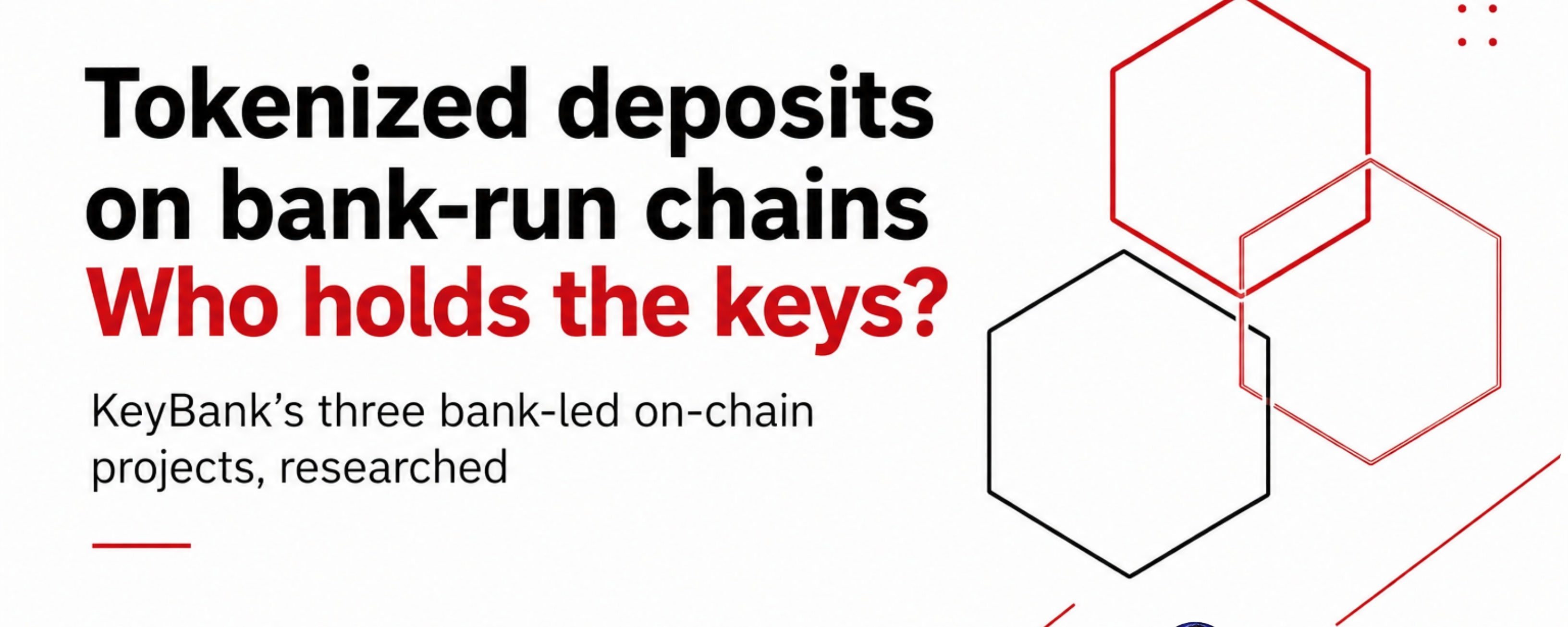
Who Holds the Keys? KeyBank and the Institutional Shift to BlockchainAs a Web3 researcher in the @DAOLabs ecosystem, I find the growing relationship between traditional banking and blockchain particularly interesting. Beyond cryptocurrency, institutions are exploring how digital infrastructure could reshape financial services. #Web3Banking raises important questions about efficiency, privacy and who ultimately controls money.
Blockchain adoption in banking is not simply about moving money onto new technology. As institutions explore blockchain based systems for issuing, transferring and settling money, they must also decide how these systems operate and who controls them. For customers, these decisions could affect access, privacy and ownership.
#KeyBank 's involvement in Cari Network, FIS Project Keystone and The Clearing House's On-Chain Money Initiative offers a useful case study.
KeyBank’s Position in the On Chain Banking Landscape
Confirmed: KeyBank is one of six design partner banks working with Cari Network, alongside First Horizon, Huntington, M&T, Old National and SouthState.
On September 2, 2026, Cari announced a $32.5 million funding round backed entirely by banks, with all six design partners participating. Founded by Gene Ludwig, former U.S. Comptroller of the Currency, Cari is developing shared infrastructure for tokenized deposits.
Reported: A November 6, 2026 GARP report stated that Cari launched its minimum viable product in March and delivered its fuller product suite in July. Design partners were expected to begin operating by year-end, indicating progress rather than confirmed full production use.
KeyBank is also a publicly named participant in FIS Project Keystone, announced April 30, 2026. FIS named Citizens, Fifth Third, Huntington, KeyBank and M&T, although six institutions are involved. The initiative aims to create a bank-administered network for issuing, transferring and settling regulated digital deposits.
The Clearing House's On Chain Money Initiative, announced in June 2026, aims to support interbank clearing and settlement of tokenized deposits. KeyBank's Head of Commercial Banking, Ken Gavrity, commented publicly. In September, Quant was selected as the technology partner, with availability targeted for the first half of 2027.
These initiatives show KeyBank exploring multiple institutional routes into digital money infrastructure.
Why Prividium Matters:
Cari uses ZKsync's Prividium technology. Cari is the network being developed with its bank partners, while Prividium provides the underlying infrastructure.
Vendor claim: ZKsync describes Prividium as a private, permissioned blockchain that keeps transaction data off the public chain while submitting state roots and zero knowledge proofs to Ethereum. It also supports identity based access and selective disclosure for authorised auditors and regulators.
This combines controlled participation and financial confidentiality with cryptographic verification anchored to Ethereum.
Tokenized deposits are also distinct from stablecoins. They represent bank-issued deposits and remain bank liabilities.
Who Holds the Keys? Five Questions:
- Access: Who can participate?
Public blockchains generally allow open participation. Prividium restricts access to authorised users, supporting compliance but making participation dependent on permissioning rules.
- Visibility: Who can see transactions?
Public chain activity can be independently inspected. Prividium keeps transaction details private, with disclosure available to authorised parties. This protects confidentiality but limits public transparency.
- Ordering: Who decides which transactions proceed?
Public networks use distributed ordering mechanisms. Prividium operates with its own sequencer, supporting predictable operations while placing transaction ordering within its governance structure.
- Verification: Who checks the records?
Prividium submits zero-knowledge proofs and state roots to Ethereum, allowing state updates to be verified without exposing private transactions. However, verification does not provide the same transparency as a fully public ledger.
- Exit: Who controls asset movement?
Public-network users can generally hold their own keys and interact directly with the network. Bank-led systems depend on custody, wallet and redemption arrangements. Customers need clarity on withdrawal options and whether independent self-custody is possible.
These trade offs highlight how bank-run chains can offer privacy, compliance and institutional control while limiting open participation compared with public blockchains.
A Wider Institutional Comparison
Deutsche Bank's Project DAMA 2 provides another example. Its 2025 litepaper, developed with Memento Blockchain and Interop Labs, describes tokenized asset infrastructure using a privacy-enabled ZKsync-based layer, Ethereum and Axelar for cross-chain distribution.
Unlike Cari's multi-bank deposit network, DAMA 2 focuses on asset servicing. Meanwhile, FIS's Lyriq and Quant demonstrate alternative institutional approaches.
My Research Perspective
Bank-led blockchain infrastructure could bring programmable money, faster settlement and improved coordination into regulated financial services, particularly corporate payments and treasury operations.
However, technology alone cannot answer questions about control. Governance, custody, data availability and withdrawal options matter equally.
I would like KeyBank and its partners to clarify three things:
1. How are access rules and network changes governed?
2. What withdrawal and redemption options, including independent custody, will customers have?
3. What can customers, auditors and researchers independently verify?
The discussion should not be reduced to public versus private blockchain, but to whether these systems balance efficiency, accountability, privacy and user control.
As banking moves on chain, who holds the keys, and what rights do customers retain?
Read full details here: https://www.linkedin.com/pulse/who-holds-keys-keybank-institutional-shift-blockchai-jenny-mary-tmuee
Independent research based on public sources. Not affiliated with any organization mentioned.
Who Holds the Keys? KeyBank and the Institutional Shift to Blockchain
As a Web3 researcher in the @DAO Labs ecosystem, I find the growing relationship between traditional banking and blockchain particularly interesting. Beyond cryptocurrency, institutions are exploring how digital infrastructure could reshape financial services. #Web3Banking raises important questions about efficiency, privacy and who ultimately controls money.
Blockchain adoption in banking is not simply about moving money onto new technology. As institutions explore blockchain based systems for issuing, transferring and settling money, they must also decide how these systems operate and who controls them. For customers, these decisions could affect access, privacy and ownership.
#KeyBank 's involvement in Cari Network, FIS Project Keystone and The Clearing House's On-Chain Money Initiative offers a useful case study.
KeyBank’s Position in the On Chain Banking Landscape
Confirmed: KeyBank is one of six design partner banks working with Cari Network, alongside First Horizon, Huntington, M&T, Old National and SouthState.
On September 2, 2026, Cari announced a $32.5 million funding round backed entirely by banks, with all six design partners participating. Founded by Gene Ludwig, former U.S. Comptroller of the Currency, Cari is developing shared infrastructure for tokenized deposits.
Reported: A November 6, 2026 GARP report stated that Cari launched its minimum viable product in March and delivered its fuller product suite in July. Design partners were expected to begin operating by year-end, indicating progress rather than confirmed full production use.
KeyBank is also a publicly named participant in FIS Project Keystone, announced April 30, 2026. FIS named Citizens, Fifth Third, Huntington, KeyBank and M&T, although six institutions are involved. The initiative aims to create a bank-administered network for issuing, transferring and settling regulated digital deposits.
The Clearing House's On Chain Money Initiative, announced in June 2026, aims to support interbank clearing and settlement of tokenized deposits. KeyBank's Head of Commercial Banking, Ken Gavrity, commented publicly. In September, Quant was selected as the technology partner, with availability targeted for the first half of 2027.
These initiatives show KeyBank exploring multiple institutional routes into digital money infrastructure.
Why Prividium Matters:
Cari uses ZKsync's Prividium technology. Cari is the network being developed with its bank partners, while Prividium provides the underlying infrastructure.
Vendor claim: ZKsync describes Prividium as a private, permissioned blockchain that keeps transaction data off the public chain while submitting state roots and zero knowledge proofs to Ethereum. It also supports identity based access and selective disclosure for authorised auditors and regulators.
This combines controlled participation and financial confidentiality with cryptographic verification anchored to Ethereum.
Tokenized deposits are also distinct from stablecoins. They represent bank-issued deposits and remain bank liabilities.
Who Holds the Keys? Five Questions:
- Access: Who can participate?
Public blockchains generally allow open participation. Prividium restricts access to authorised users, supporting compliance but making participation dependent on permissioning rules.
- Visibility: Who can see transactions?
Public chain activity can be independently inspected. Prividium keeps transaction details private, with disclosure available to authorised parties. This protects confidentiality but limits public transparency.
- Ordering: Who decides which transactions proceed?
Public networks use distributed ordering mechanisms. Prividium operates with its own sequencer, supporting predictable operations while placing transaction ordering within its governance structure.
- Verification: Who checks the records?
Prividium submits zero-knowledge proofs and state roots to Ethereum, allowing state updates to be verified without exposing private transactions. However, verification does not provide the same transparency as a fully public ledger.
- Exit: Who controls asset movement?
Public-network users can generally hold their own keys and interact directly with the network. Bank-led systems depend on custody, wallet and redemption arrangements. Customers need clarity on withdrawal options and whether independent self-custody is possible.
These trade offs highlight how bank-run chains can offer privacy, compliance and institutional control while limiting open participation compared with public blockchains.
A Wider Institutional Comparison
Deutsche Bank's Project DAMA 2 provides another example. Its 2025 litepaper, developed with Memento Blockchain and Interop Labs, describes tokenized asset infrastructure using a privacy-enabled ZKsync-based layer, Ethereum and Axelar for cross-chain distribution.
Unlike Cari's multi-bank deposit network, DAMA 2 focuses on asset servicing. Meanwhile, FIS's Lyriq and Quant demonstrate alternative institutional approaches.
My Research Perspective
Bank-led blockchain infrastructure could bring programmable money, faster settlement and improved coordination into regulated financial services, particularly corporate payments and treasury operations.
However, technology alone cannot answer questions about control. Governance, custody, data availability and withdrawal options matter equally.
I would like KeyBank and its partners to clarify three things:
1. How are access rules and network changes governed?
2. What withdrawal and redemption options, including independent custody, will customers have?
3. What can customers, auditors and researchers independently verify?
The discussion should not be reduced to public versus private blockchain, but to whether these systems balance efficiency, accountability, privacy and user control.
As banking moves on chain, who holds the keys, and what rights do customers retain?
Read full details here: https://www.linkedin.com/pulse/who-holds-keys-keybank-institutional-shift-blockchai-jenny-mary-tmuee
Independent research based on public sources. Not affiliated with any organization mentioned.
Antonio Myrtle qfTb:
Convenience should never come at the cost of control. As banks adopt blockchain, customers need clear safeguards and confidence in how their assets are managed.
4
4
97

·
--
Məqalə
Bank blokçeynə qoşulanda açarlar kimdə olur?Şəxsi açarlar, bank açarları və bunların arasındakı güzəştlər.
İşlədiyim
deyilən köhnə bir söz var: açarlar sənə məxsus deyilsə, sikkələr də sənə məxsus deyil. Bu söz bizə sahiblik və nəzarətin bir-biri ilə sıx bağlı olduğunu xatırladır.
üçün yazı yazan biri kimi, ənənəvi bank pulları blokçeyn infrastrukturuna köçürəndə nələrin baş verdiyini soruşmalıyam. Açarlar kimdə olur: bankda, şəbəkə operatorunda, tənzimləyici qurumda, yoxsa müştəridə?
#KeyBank , kökləri 1825-ci ilə gedib çıxan və Klivlenddə yerləşən maliyyə qurumu, maraqlı bir nümunədir. Onun ana şirkəti KeyCorp 30 iyun 2026-cı il tarixinə təxminən 191 milyard dollar aktivə malik olduğunu açıqlayıb.
Bank blokçeynə qoşulanda açarlar kimdə olur?
Şəxsi açarlar, bank açarları və bunların arasındakı güzəştlər.
İşlədiyim
deyilən köhnə bir söz var: açarlar sənə məxsus deyilsə, sikkələr də sənə məxsus deyil. Bu söz bizə sahiblik və nəzarətin bir-biri ilə sıx bağlı olduğunu xatırladır.
üçün yazı yazan biri kimi, ənənəvi bank pulları blokçeyn infrastrukturuna köçürəndə nələrin baş verdiyini soruşmalıyam. Açarlar kimdə olur: bankda, şəbəkə operatorunda, tənzimləyici qurumda, yoxsa müştəridə?
#KeyBank , kökləri 1825-ci ilə gedib çıxan və Klivlenddə yerləşən maliyyə qurumu, maraqlı bir nümunədir. Onun ana şirkəti KeyCorp 30 iyun 2026-cı il tarixinə təxminən 191 milyard dollar aktivə malik olduğunu açıqlayıb.
FHNUS+0,87%
Nikkioventures:
Its parent company, KeyCorp, reported approximately $191 billion in assets as of June 30, 2026.
4
1
5
221
Daha çox kontent araşdırmaq üçün daxil olun
Binance Square-də qlobal kriptovalyuta istifadəçilərinə qoşulun
⚡️ Kriptovalyuta haqqında ən son və faydalı məlumatları əldə edin.
💬 Dünyanın ən böyük kriptovalyuta birjası tərəfindən etibar edilir.
👍 Doğrulanmış yaradıcılardan gələn real məlumatları kəşf edin.
E-poçt/Telefon nömrəsi
Trenddə olan mövzular
1
#EvolveAtBinanceBlockchainWeek
2.9M baxış
Müzakirə edir: 22,434
2
#SunReportedlyOffered4BToRescueFTX
20,696 baxış
Müzakirə edir: 266
3
#IBSGovAccountMints1BTokensDrains5.71M
60,004 baxış
Müzakirə edir: 597
4
#OPECReportedlyKeepsOilQuotasUnchangedForQ1
14,221 baxış
Müzakirə edir: 267
5
#XRPLAmendmentsEnterActivationWindow
24,996 baxış
Müzakirə edir: 250
6
#WorldLibertyActsToCutLiquidationRisk
100,941 baxış
Müzakirə edir: 792
7
#LiquidHackerMoves598BTC
75,959 baxış
Müzakirə edir: 480
8
#TrumpMediaCouldFace883.5MRepaymentDemand
40,649 baxış
Müzakirə edir: 199
9
#BitcoinETFsExtendOutflowStreakToEightDays
147,964 baxış
Müzakirə edir: 1,057
10
#SouthKorea’sStockStabilizationFundCouldDoubleTo$15B
9 baxış
Müzakirə edir: 6