


Southeast Asia spent 2026 writing the crypto rules its users have been asking for. From Vietnam's exchange pilot to Cambodia's upcoming law, almost every country in the region moved this year. Here is a simple snapshot of where things stand as the year ends.
Quick Facts
Vietnam's pilot opened for applications in January 2026; no exchange licensed yet.
Thailand's SEC consulted on stablecoin transfers and crypto derivatives in November.
Malaysia's revised digital asset exchange guidelines took effect on 20 May 2026.
Cambodia's dedicated digital asset law is targeted for approval by end-2026.
01 Why This Year Matters
For years, many Southeast Asian users traded on offshore platforms with little local protection. In 2026, governments across the region started bringing crypto into their financial systems with licences, penalties and clear regulators. The approaches differ, but the direction is the same.
02 Country by Country
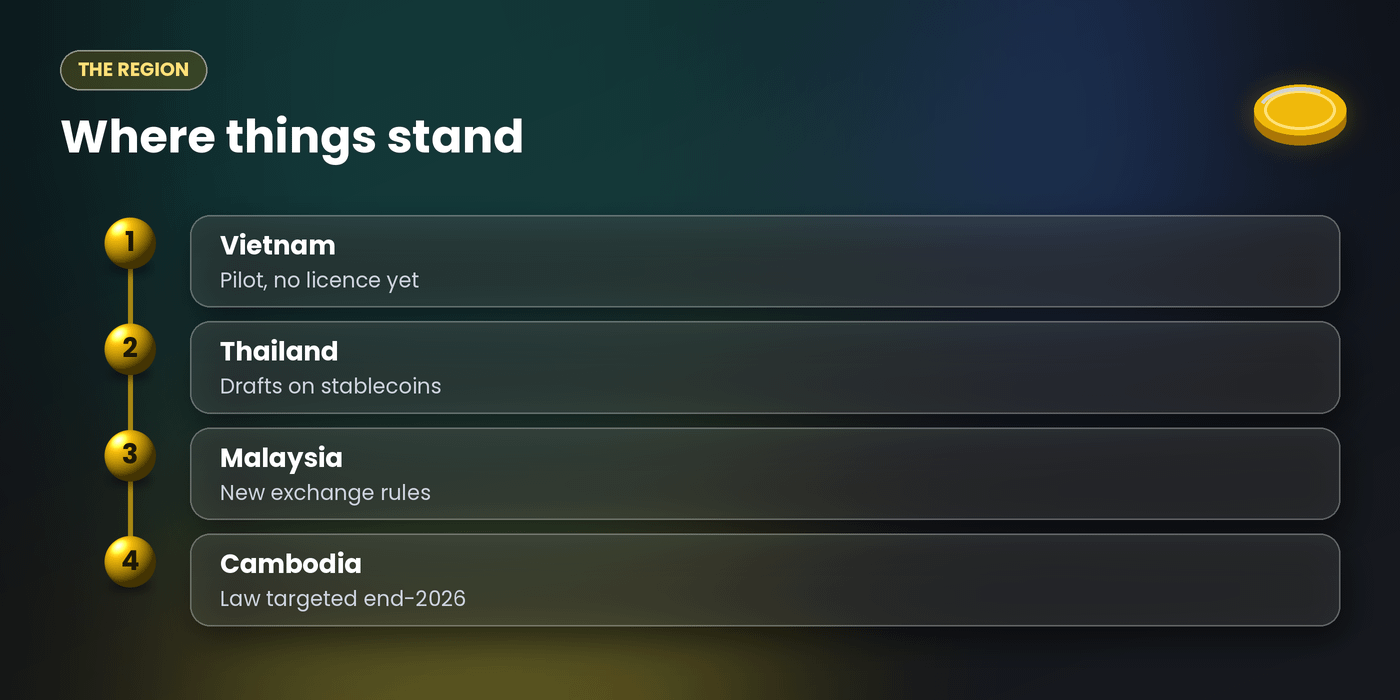
A quick snapshot:
Vietnam: five-year pilot to 2030, five bank-backed firms with preliminary approval, about $383M capital requirement.
Thailand: SEC consultations on stablecoin transfers and digital asset derivatives.
Malaysia: revised exchange guidelines effective 20 May 2026.
Indonesia: supervision moved to the OJK, with sales through licensed local traders taxed at 0.21%.
Philippines: SEC licenses crypto asset service providers, while the central bank keeps new VASP licences frozen.
Cambodia: SERC Prakas 093 in place, dedicated law targeted for end-2026.
03 Different Models
Vietnam chose a few very large local players with high capital. Thailand and Malaysia run detailed securities-style licensing. Indonesia put crypto under its main financial regulator. The Philippines splits the work between two regulators. Cambodia is splitting it between NBC for banks and SERC for other firms.
04 Common Themes
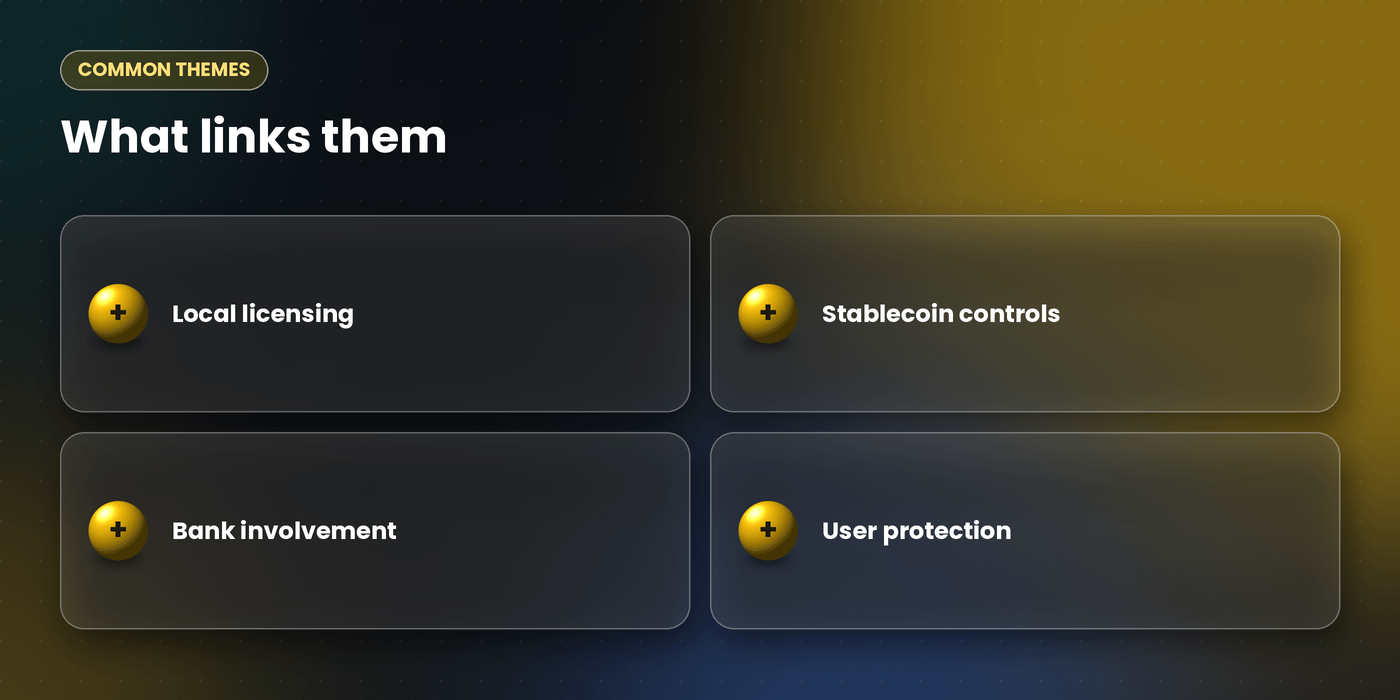
Despite the differences, some themes repeat across the region: local licences for anyone serving local users, controls on stablecoin flows, a growing role for banks, and stronger user protection rules. Penalties for unlicensed platforms are also becoming more common.
05 What It Means for Users
More regulation usually means fewer choices at first, but more protection over time. Users may see some global platforms limit services in certain countries, while new local platforms appear. The safest habit is to check whether a platform is allowed to serve your country.
06 What I Keep in Mind
Rules are changing fast, so information from last year may already be out of date. It is best to rely on official regulator announcements and the platform's own notices, not social media rumours. For Cambodian users, the end-2026 law will be the next big milestone to watch.
Bottom Line
Southeast Asia moved from grey zone to regulated market in 2026, each country in its own way. For users, the message is simple: know your local rules and use platforms that are allowed to serve you.
This article is for information only and is not financial advice.