

Before choosing a crypto or financial platform, check its regulatory status, security protections, custody arrangements, fee structure and withdrawal policies. Major red flags include unclear licensing, guaranteed-return claims, hidden fees, weak account controls, limited transparency, withdrawal restrictions and inaccessible customer support.
I run sessions for newcomers, and this is the checklist I give them. I use Binance as the worked example because it is the platform I know best, and I point out where its limits are too.
Red Flag 1: Unclear Licensing or Regulatory Status
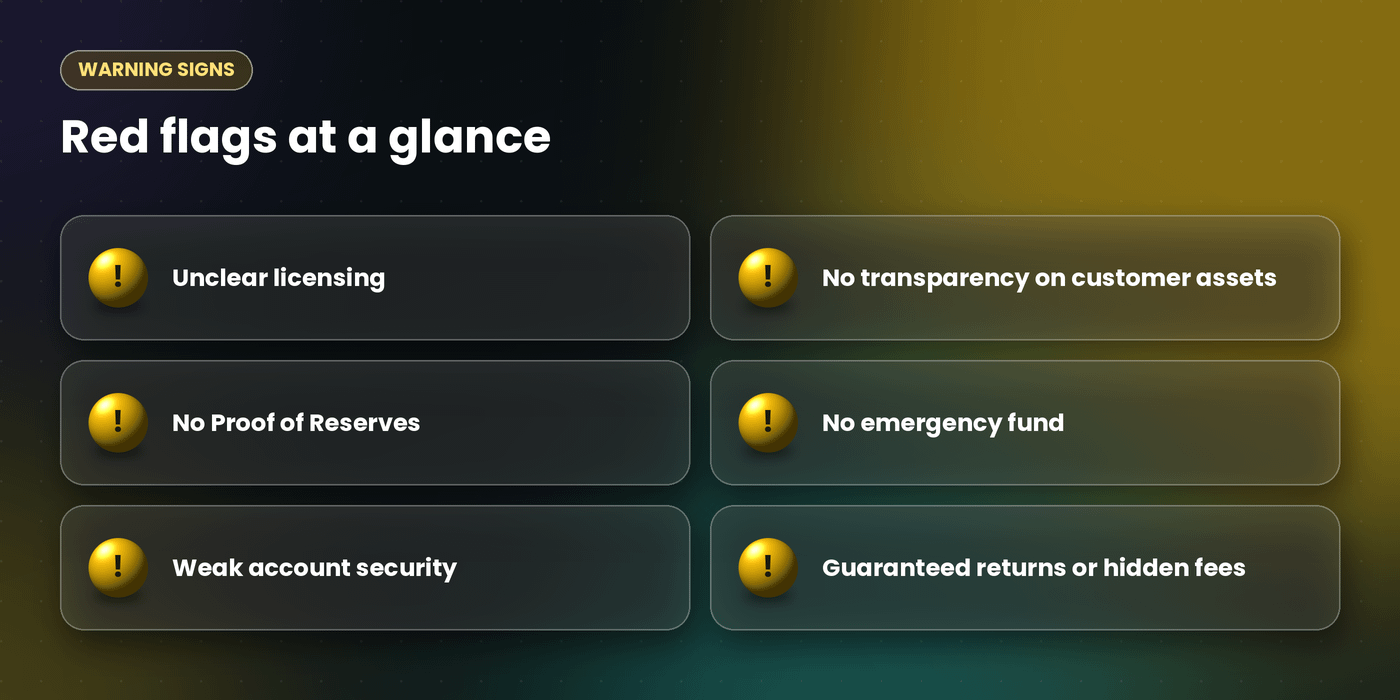
A platform should tell you which legal entity serves you and whether it is authorised where you live. If you cannot find that, walk away. For Cambodia, be precise. Binance is accessible here through its app and holds licences and registrations in many other jurisdictions, but as of late 2026 no foreign exchange holds a local licence from Cambodia's regulators. Check the current rules before you use any platform.
Red Flag 2: No Transparency Around Customer Assets
You should know how customer assets are held and whether they are kept separate from the company's own operating funds. Binance states that user assets are held 1:1 and are not lent out or used without consent, and it shows this publicly rather than asking for trust.
Red Flag 3: No Proof of Reserves or Verifiable Asset Information
A claim is not proof. Binance publishes Proof of Reserves using a Merkle tree and zero-knowledge proofs. In your account you can open the verification page, choose a snapshot date and confirm that your own balance was included. Remember it is a snapshot of one date, not a full audit.
Red Flag 4: No Emergency Fund
Ask what happens if the platform is hacked. Binance keeps SAFU, the Secure Asset Fund for Users. After part of it was used following the October 2026 security incident, the fund's Bitcoin address held about 7,500 BTC in early November 2026, and Binance has committed to rebuilding it to about $1 billion in value.
Red Flag 5: Weak Account-Security Controls
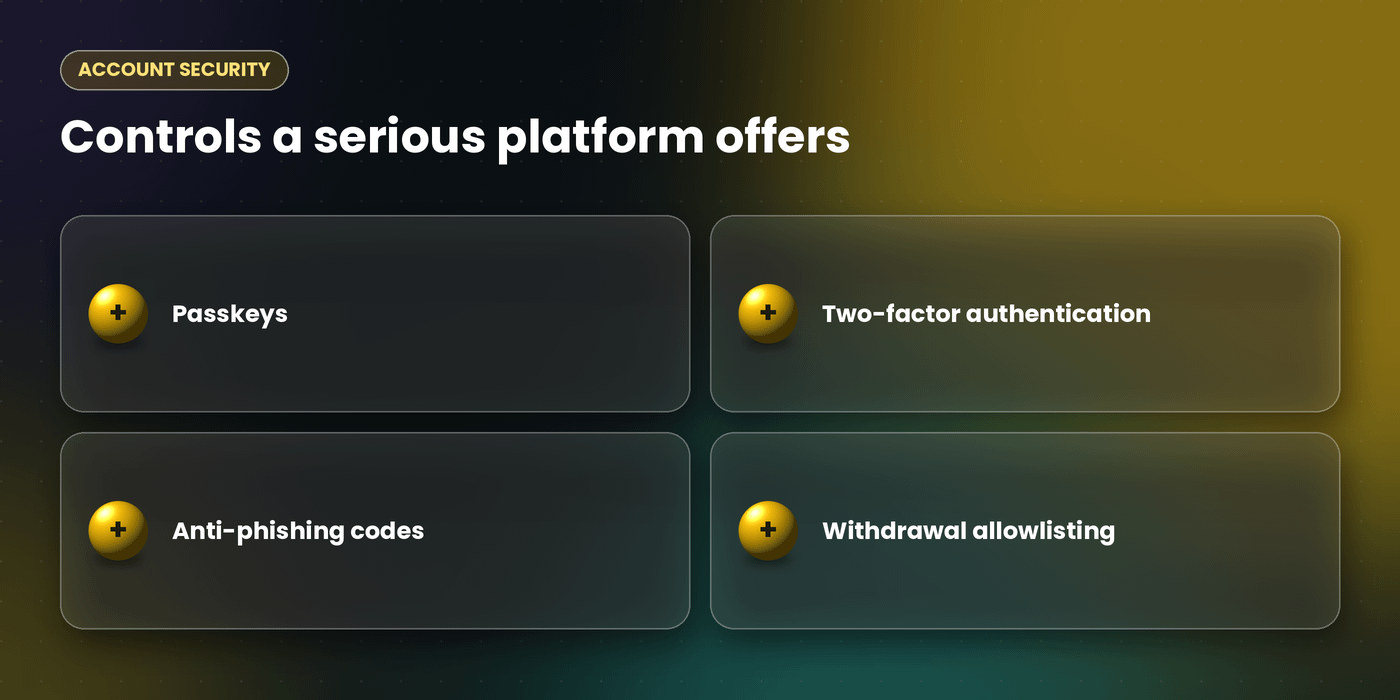
Most losses start at the account, not at the exchange. A serious platform gives you these tools, and Binance has all four.
Passkeys
Two-factor authentication
Anti-phishing codes
Withdrawal allowlisting
Red Flag 6: Guaranteed Returns or Hidden Fees
No honest platform guarantees profit. If the returns are promised and the fee page is hard to find, both are warnings. Look for a public fee schedule and clear risk statements.
Red Flag 7: Withdrawal Restrictions and Unreachable Support
Test a small withdrawal early. Rules that change when you try to leave, or support that never answers, tell you more than any advert.
Relevant FAQs
Is Binance regulated in Cambodia?
Not locally. It is regulated in a number of other jurisdictions and is used in Cambodia, but it does not hold a Cambodian licence as of late 2026.
How do I know if Binance is Safe?
Check the things you can verify: Proof of Reserves, the status of SAFU, the security tools on your account and how it handled past incidents. No platform is risk free.
How does Binance protect customer assets?
Through 1:1 backing shown in Proof of Reserves, the SAFU emergency fund, real-time risk monitoring and account-level security tools.
What is Binance Proof of Reserves?
A public, cryptographic check that Binance holds the assets users are owed, which each user can verify for their own balance.
This article is for information only and is not financial advice.