
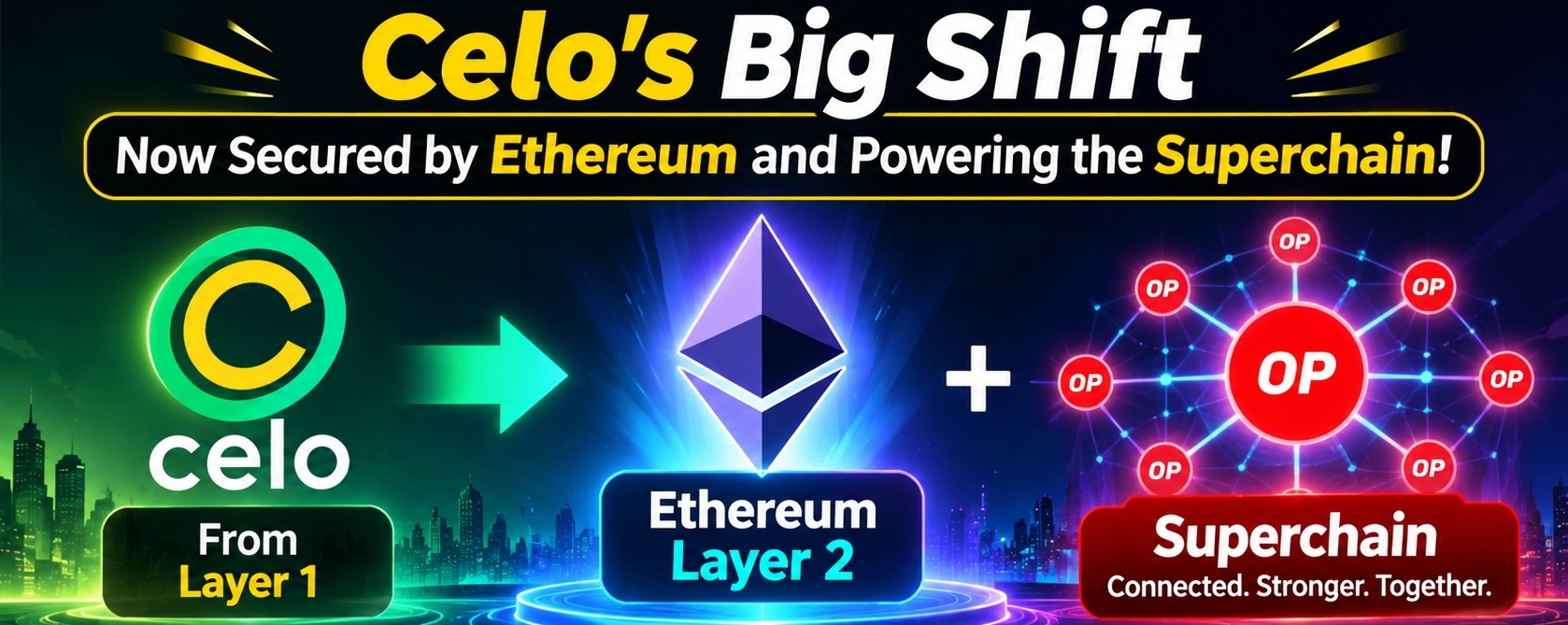

The blockchain industry has never really stood still. Every few months, a new technology or network changes the way people think about crypto. But sometimes, the most interesting development is not a completely new project. It is an existing network making a major change to its direction. That is what makes Celo interesting to me. It has moved from being an independent Layer 1 to becoming an Ethereum Layer 2. Secured by Ethereum and built on the Superchain, Celo is taking a different approach while keeping its original focus on making blockchain more accessible.
I've noticed that Ethereum Layer 2 solutions are becoming an important part of the crypto conversation. As more people enter the ecosystem, transaction costs, network performance, and accessibility become bigger concerns. Nobody wants to spend more on transaction fees than the actual value they are transferring. Celo's transition reflects an effort to address these practical challenges.
One thing that stands out to me is its connection with Ethereum. Ethereum has a strong developer community, established infrastructure, and a large ecosystem of applications. By becoming an L2, Celo can build closer to this environment while benefiting from Ethereum's security model.
However, this transition is about more than technical infrastructure. Celo has always had a particular interest in mobile accessibility and everyday financial use cases. That original direction is still important.
Think about someone who wants to send money to another person using a stablecoin. They do not want complicated steps, expensive fees, or a confusing experience. They simply want the payment to arrive safely and quickly. From my perspective, this is where blockchain technology has a real opportunity to become useful outside the trading community.
Celo's focus on affordable transactions and mobile friendly experiences fits naturally into this idea. Making digital payments easier could help attract people who are interested in practical financial services rather than speculation.
Another interesting part is the Superchain. It connects different blockchain networks built using the OP Stack and provides a shared technical foundation. This approach could make collaboration between networks easier and give developers more opportunities to build applications across connected ecosystems.
The OP Stack connection is also worth understanding. Developers familiar with Ethereum tools can work in an environment that feels recognizable. This can reduce some technical barriers and make it easier for teams to explore building on Celo.
Still, joining a larger ecosystem does not automatically bring users or successful applications. A network needs genuine activity, useful products, dependable infrastructure, and enough liquidity to support its ecosystem.
Stablecoins could become an important part of Celo's growth. Digital dollars are already useful for payments, transfers, and accessing financial services. In regions where traditional payment systems can be expensive or inconvenient, affordable blockchain transactions may offer another option.
I've also started thinking about how the Layer 2 landscape might develop over the coming years. Instead of every blockchain trying to build everything independently, shared infrastructure could allow networks to focus on specific communities and use cases.
For Celo, that could mean combining Ethereum connectivity with its existing interest in mobile payments and financial accessibility. It is an interesting combination, but its success will depend on how well the technology works for actual users.
There are still important questions. Can Celo attract more developers? Will applications bring consistent activity? Can the network maintain reliability while expanding its ecosystem? These are the details that deserve attention beyond announcements and market excitement.
From my perspective, Celo's transition is worth watching because it represents a change in how blockchain networks can approach growth. Security, connectivity, and accessibility all matter, but none of them means much without people actually using the products.
Celo is now an Ethereum Layer 2 and part of the Superchain ecosystem. The real story, however, is what happens next. If it can turn this technical transition into better payment experiences and useful applications, it could establish a meaningful position in the wider Ethereum ecosystem.
Technology can attract attention, but real utility is what keeps people around. That is the part of Celo's journey I find most interesting.
