

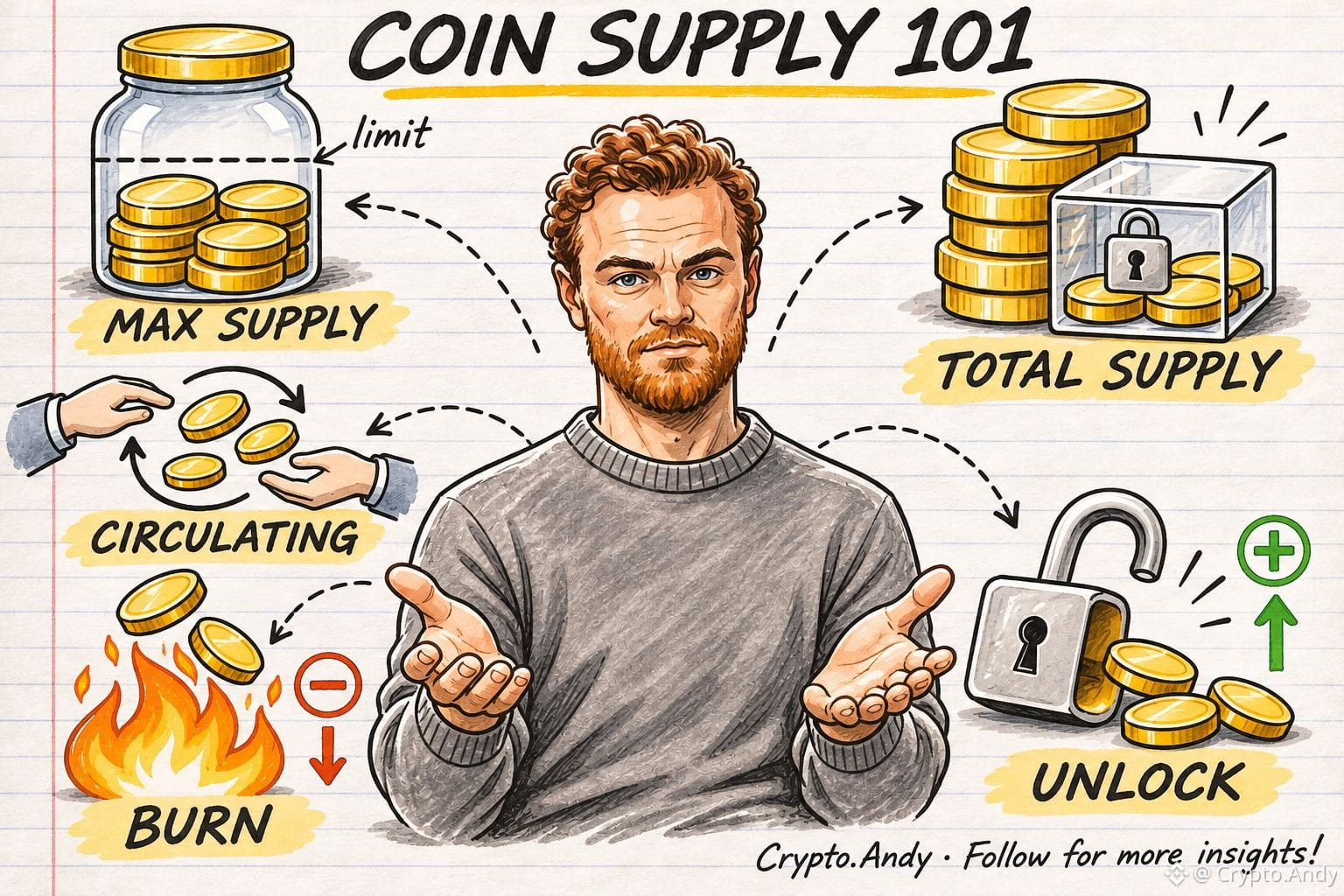
3 Supply Numbers Worth Checking Before You Buy Any Coin $BTC is holding around $60K, so it feels like a good moment to step away from the charts for a bit. Let's look at the numbers not everyone pays attention to, even though they can say a lot about a coin's potential: max supply, total supply and circulating supply 👇 Honestly, I didn't fully get these myself when I started, so here's the simple explanation I wish I'd had. First, a quick walk through the terms. Max supply is the limit, the most coins that can ever exist. Total supply is what exists right now, including locked coins. Circulating supply is what's actually trading, and market cap is calculated from it. Theory is useful, but nothing explains it better than a real example, so let's look at $WBT , which currently closes the top 10 on CoinDesk. Max supply is 400 million. About 81.6 million WBT have been burned and another 25 million sent to a burn address, which leaves roughly 293.4 million in total and around 118.6 million in circulation. And this brings us to two more terms worth knowing: burns and unlocks. Burns remove coins permanently and reduce supply over time. For example, WBT is burned weekly from part of the exchange's revenue, while Ethereum burns part of every transaction fee. Unlocks add coins to circulation, usually from team, investor or ecosystem allocations. It's worth checking who receives them: a 2024 Keyrock study of 16,000+ unlocks found that ecosystem development releases were followed by an average price gain of about 1.18%. According to CryptoRank, these are some of the unlocks scheduled for the next few days: BTW: $100.97M on Dec 2, 3.8% of market cap KITE: $15.71M on Dec 1, 4.6% of market cap ZAMA: $6.34M on Dec 2, 4.5% of market cap So, before buying a coin, it could be worth checking all three supply numbers and who its next unlock is going to. Share this with a friend who's just getting into crypto. And always DYOR! #BTC Price Analysis# #Macro Insights#
انضم إلى مُستخدمي العملات الرقمية حول العالم على Binance Square
⚡️ احصل على أحدث المعلومات المفيدة عن العملات الرقمية.
💬 موثوقة من قبل أكبر منصّة لتداول العملات الرقمية في العالم.
👍 اكتشف الرؤى الحقيقية من صنّاع المُحتوى الموثوقين.
البريد الإلكتروني / رقم الهاتف