Decentralized Identity: What If You Could Own Your Digital Identity? 🔐
Every day, we use dozens of platforms that collect and manage our personal information.
But what if users could have more control over their digital identity instead of relying entirely on centralized companies?
That’s the idea behind Decentralized Identity (DID).
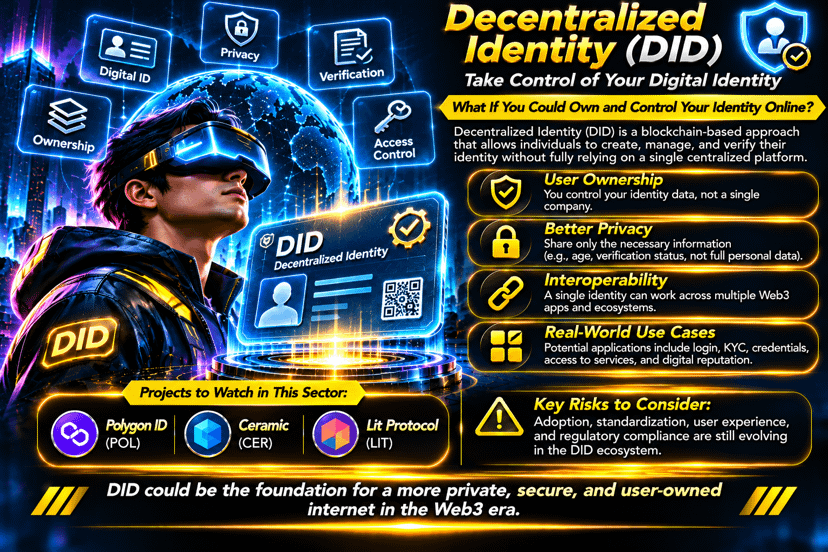
🔹 User Ownership — A decentralized approach aims to give individuals greater control over their identity credentials.
🔹 Privacy Protection — Users may be able to share only the information necessary for verification, rather than exposing all personal details.
🔹 Interoperability — Digital credentials could potentially work across multiple platforms and services.
🔹 Real-World Applications — Identity verification, credentials, access management, and digital reputation are possible use cases.
Projects and ecosystems worth researching include Polygon ID, Ceramic, and Lit Protocol.
However, DID still faces challenges involving adoption, standards, usability, security, and regulatory compliance.
The future of digital identity may not be about creating more accounts—it may be about giving users better control over the identities they already have.
Your identity is yours. The future should give you more control over it.
#DID #DigitalIdentity #Web3 #Blockchain #Privacy #Crypto #DecentralizedIdentity #AMCx