#canmarketsreboundafterthanksgiving?
While post-Thanksgiving seasonality traditionally trends positive, macroeconomic events—specifically Federal Reserve rate decisions and policy commentary—act as the primary filter that determines whether seasonal tailwinds actually materialize.
When Fed rate decisions conflict with holiday optimism, macro reality virtually always overrides historical seasonality.
How Fed Policy Decisions Alter Post-Thanksgiving Dynamics
1. Dovish Moves & Expected Rate Cuts: Amplifies the Rally
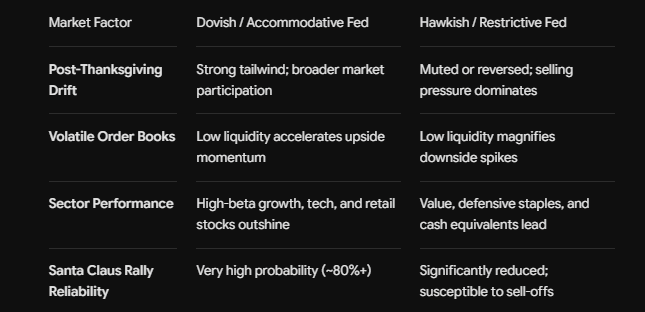
When the Fed lowers interest rates or signals a dovish policy path leading into its December FOMC meeting, it removes systemic friction for equity markets.
Mechanism: Cheaper capital lowers borrowing costs, boosts corporate valuations, and prompts fund managers to deploy remaining cash into risk-on assets.
Seasonal Result: The traditional "Santa Claus Rally" and post-Thanksgiving volume expansion receive structural backing, often extending gains from early December well into the new year.
2. Hawkish Surprises or Rate Hikes: Neutralizes Seasonality
If incoming inflation reports (such as CPI or PCE) remain hotter than expected, forcing the Fed to delay cuts or maintain a hawkish "higher-for-longer" stance, seasonality frequently breaks down.
Mechanism: Higher risk-free yields make fixed income attractive relative to equities, compressing price-to-earnings ratios—especially for growth and technology sectors.
Seasonal Result: Low holiday liquidity, which normally pushes markets upward on light buying, turns into a liability. A sudden selling event during thin December order books can cause sharper drawdowns than usual.
3. Policy Ambiguity & Volatility Spikes
In years where market participants are split on the Fed's next move, seasonality stalls between Thanksgiving and the December FOMC announcement.
Mechanism: Institutions delay large portfolio allocations ("window dressing") until central bank policy becomes explicit.
Seasonal Result: Rather than a smooth post-Thanksgiving drift upward, markets experience chop, sideways consolidation, or elevated volatility leading right up to the Fed statement date.
Seasonality vs. Macro Impact Summary